-
-
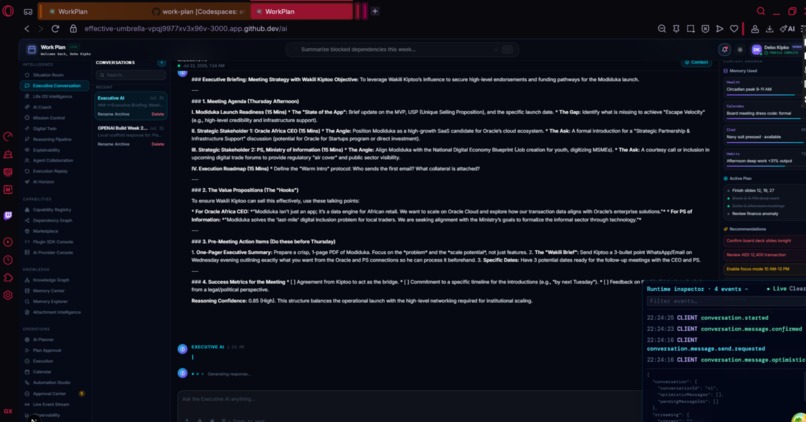
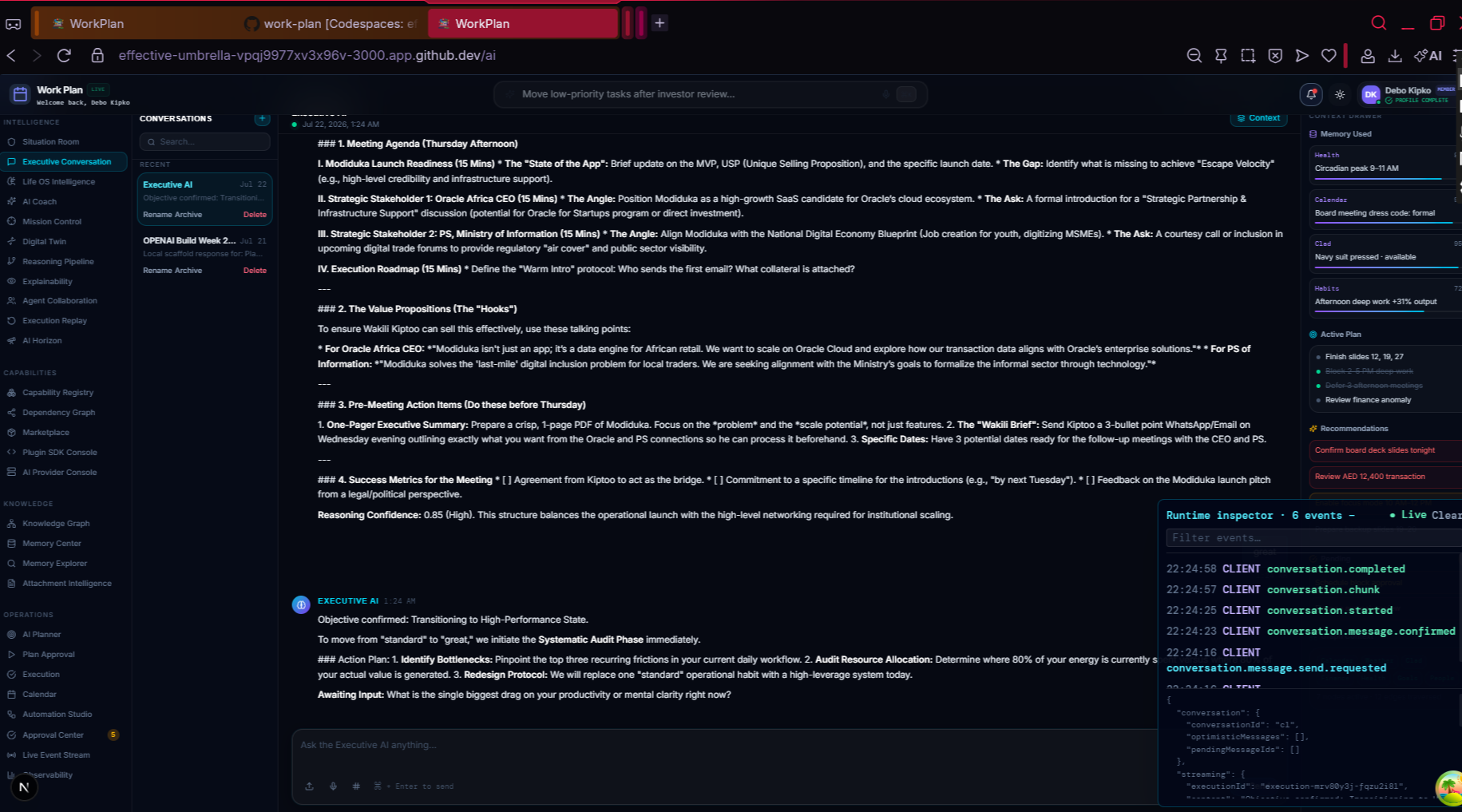
Serialized runtime projection state & Live event timeline during AI execution
-
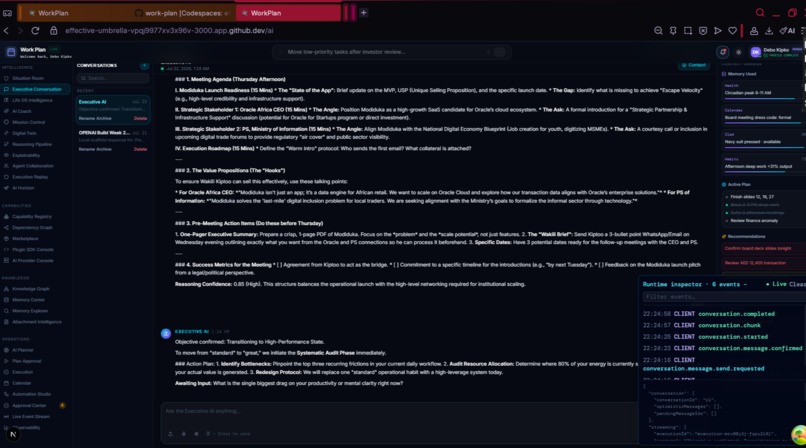
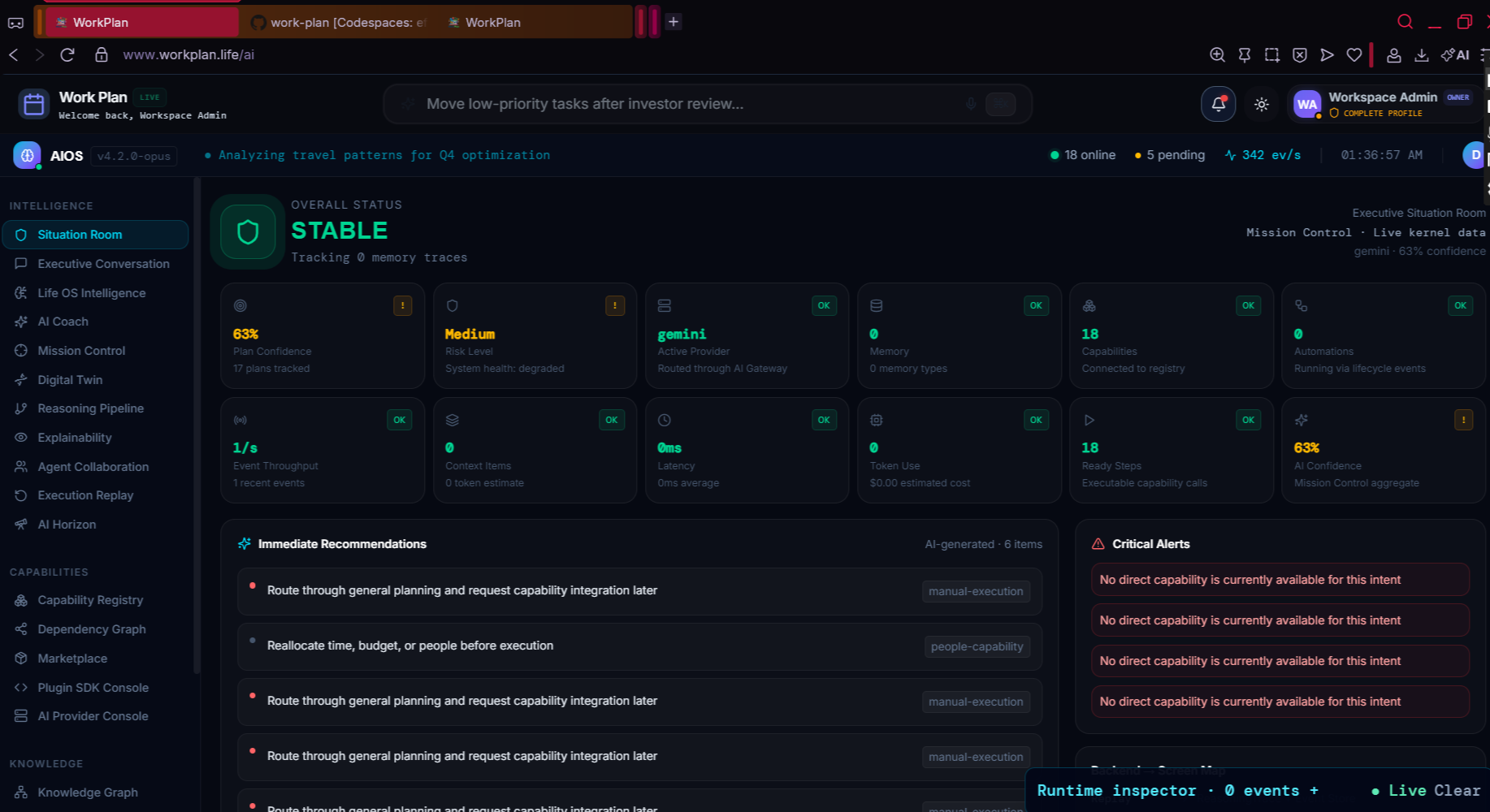
Runtime Inspector showing live EventBus 2 activity 1
-
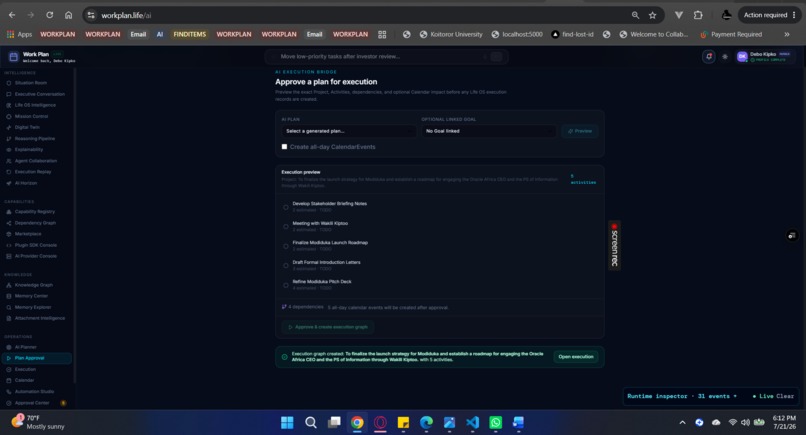
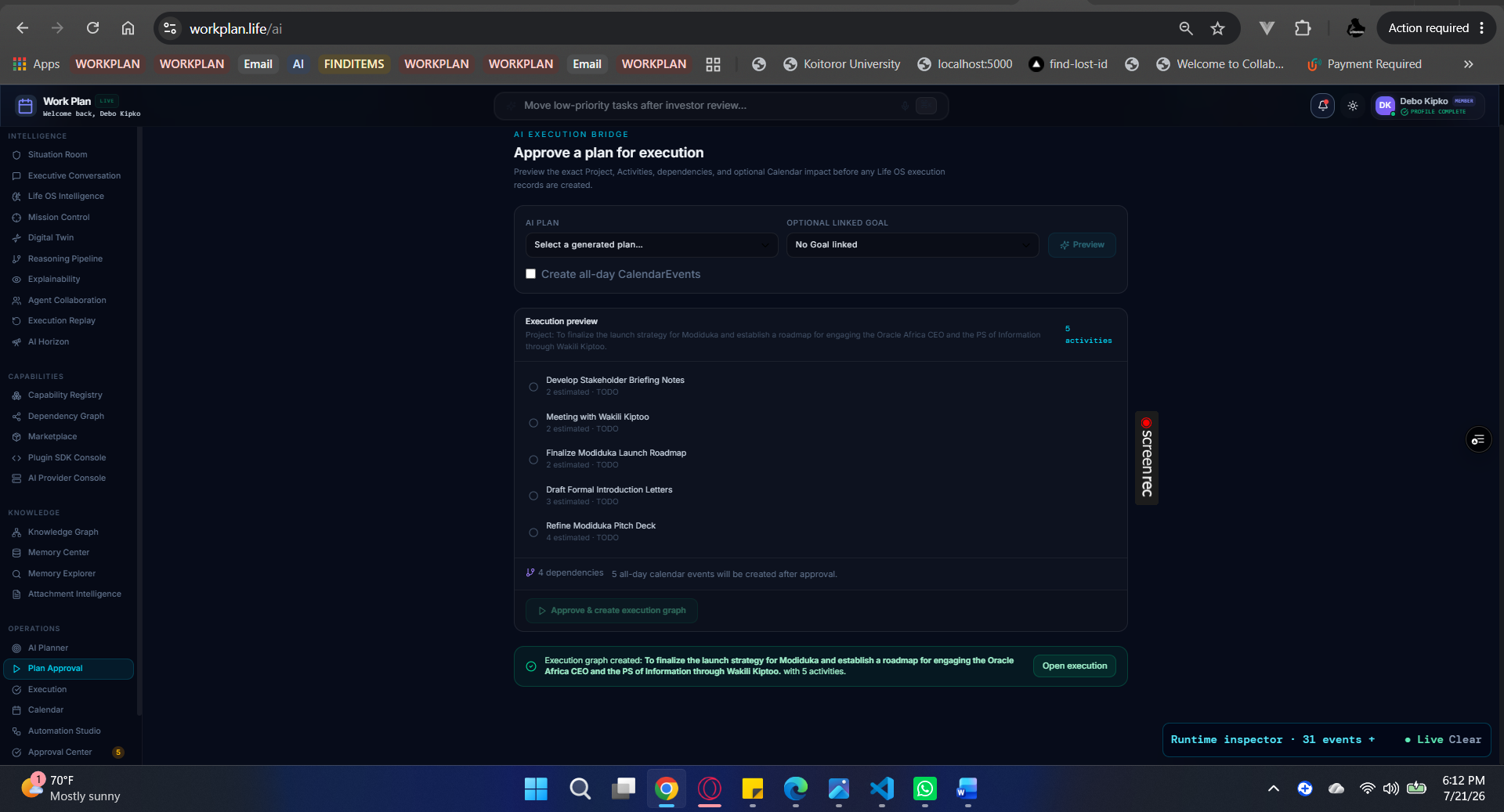
RuntimeEventStore preserving history across navigation 1
-
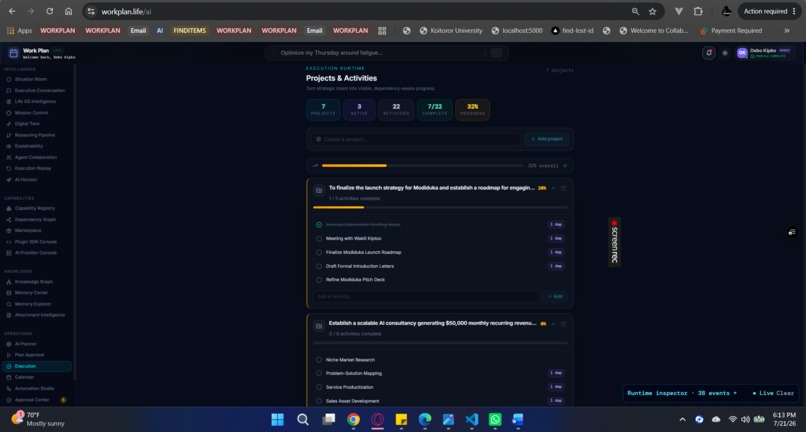
RuntimeEventStore preserving history across navigation 2
-
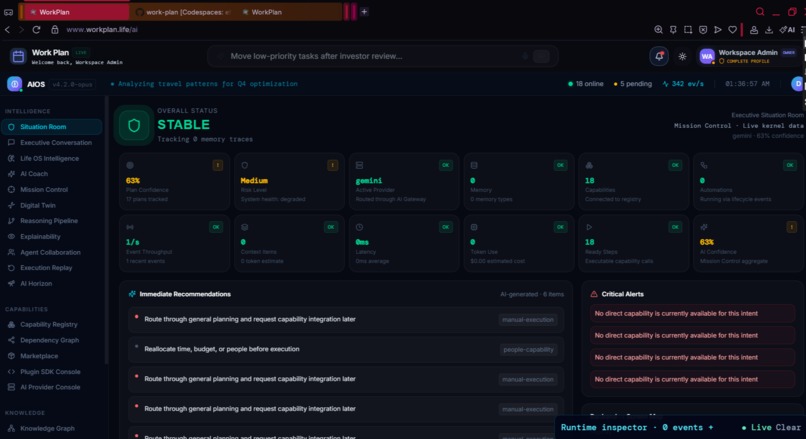
AI Runtime Inspector integrated into WorkPlan AI
-
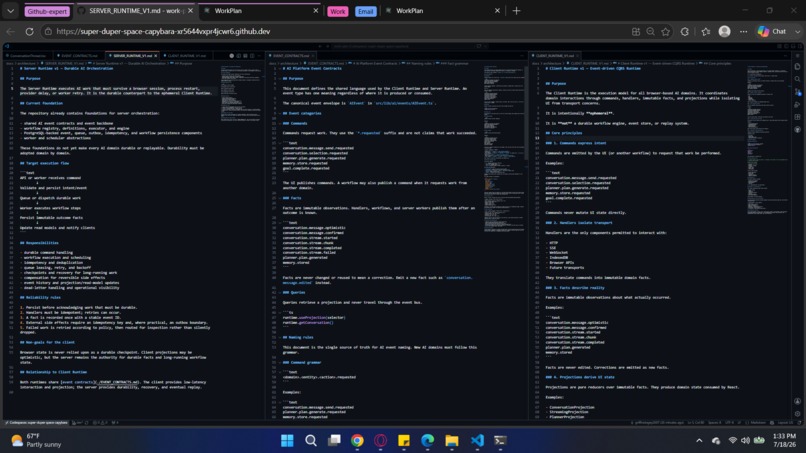
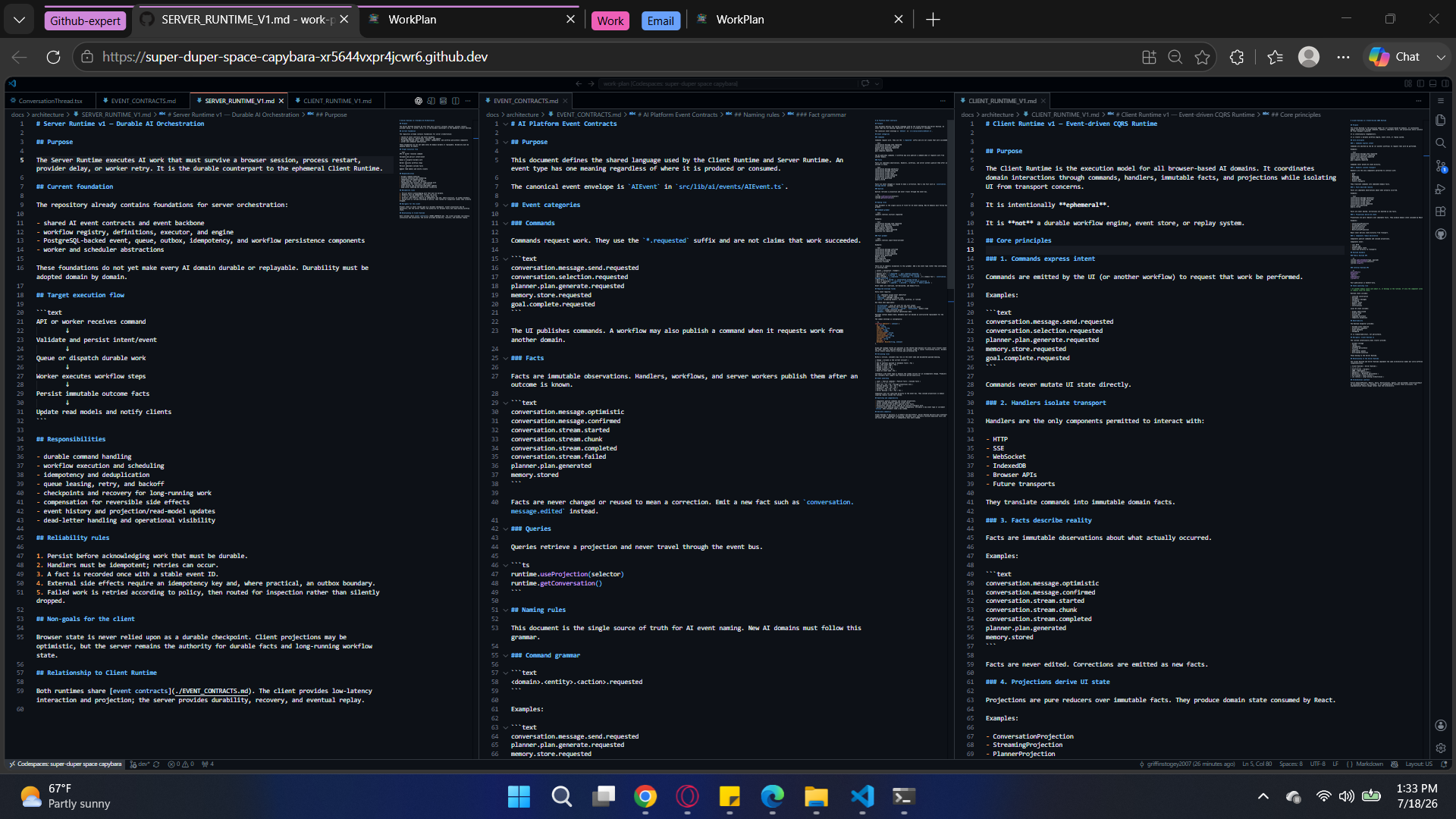
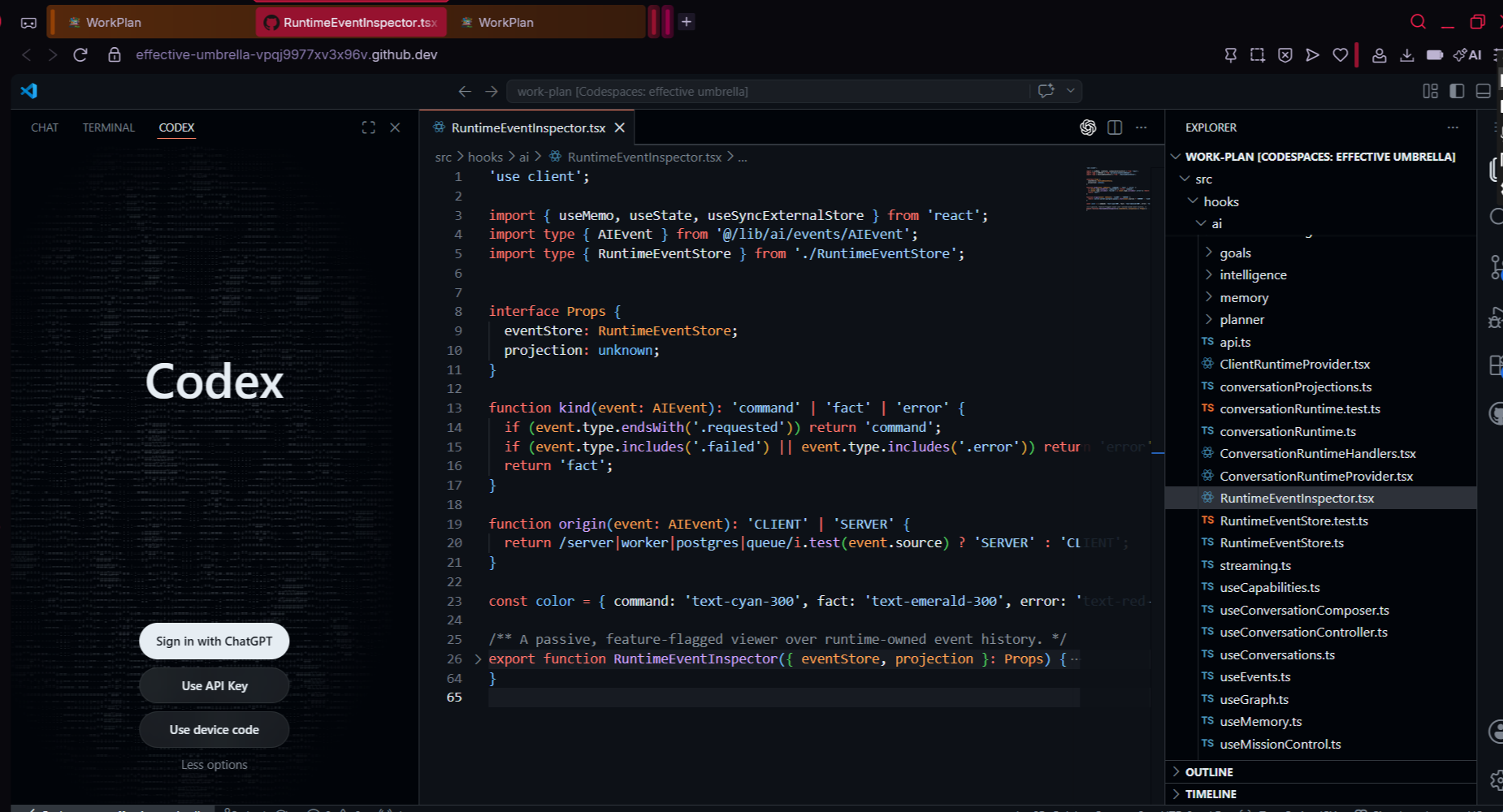
Codex-assisted runtime architecture documentation with Strongly typed Event Contracts
-
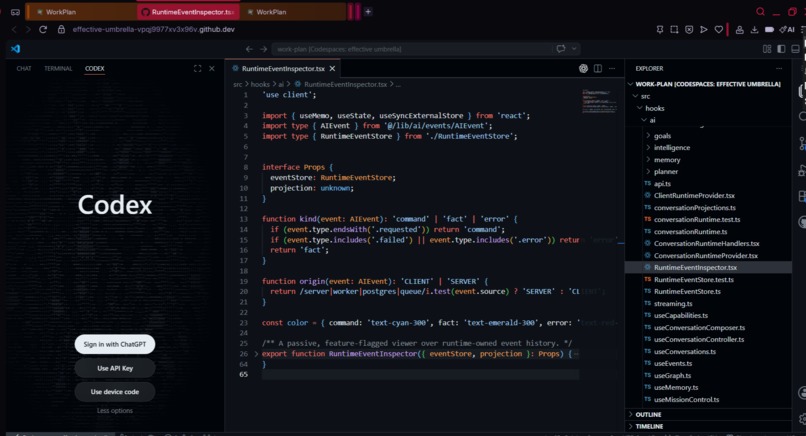
Modular AI Runtime Inspector Client Component
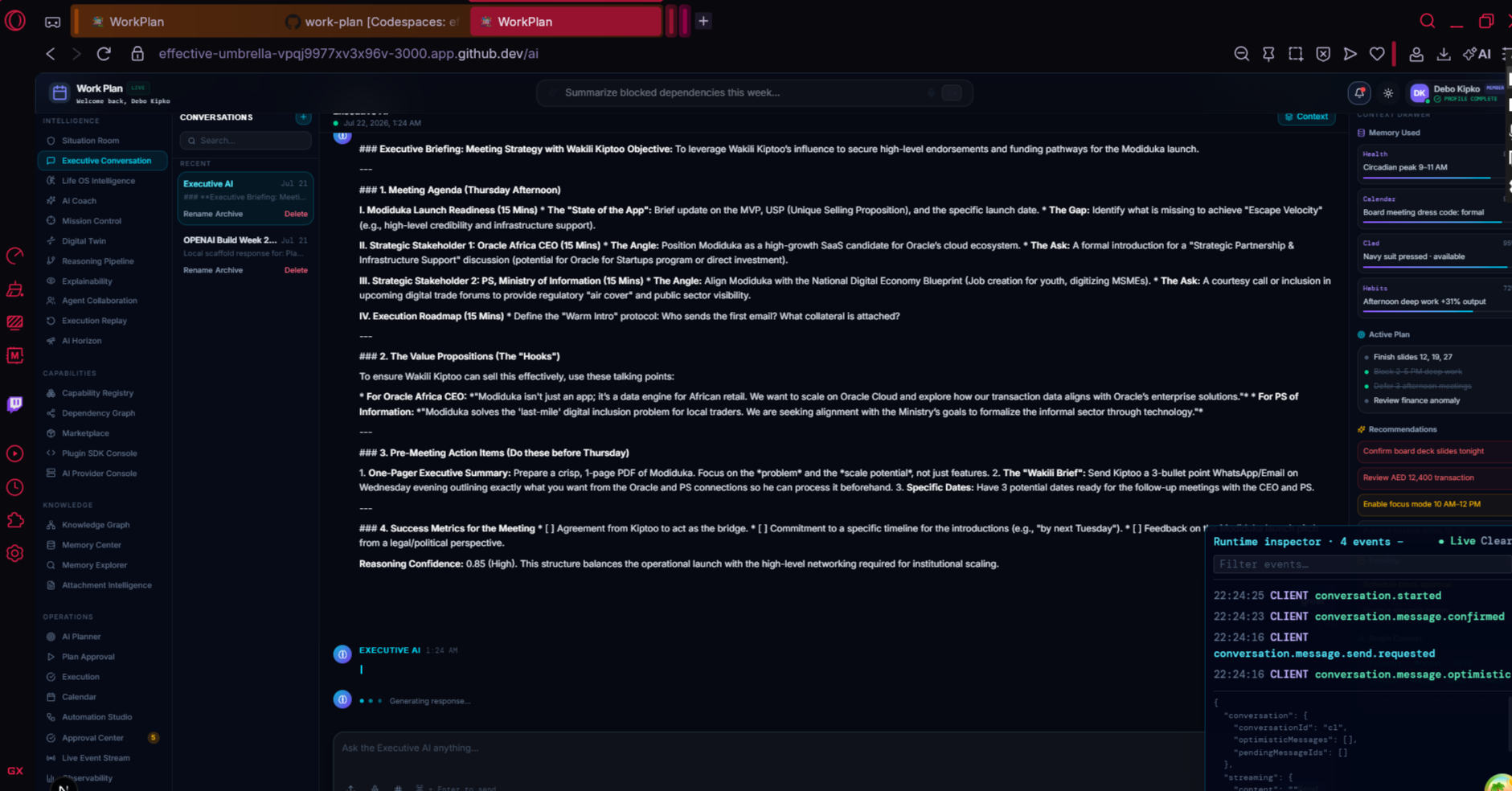

AI Runtime Inspector for Event-Driven AI Applications
Inspiration
As AI applications become more agentic and event-driven, debugging them becomes significantly harder. A single user interaction can trigger multiple asynchronous client and server events, AI workflows, state projections, and UI updates. Traditional debugging tools and console logs don't provide enough visibility into how these systems behave in real time.
I wanted to build something that brings the same level of observability to AI architectures that Chrome DevTools brings to the browser—making runtime behavior transparent, inspectable, and easier to reason about.
What it does
AI Runtime Inspector is a development-only observability tool for event-driven AI applications.
It passively captures events flowing through a shared EventBus and visualizes them alongside the application's runtime projection state. Instead of piecing together scattered console logs, developers can inspect runtime behavior through a unified interface.
The Runtime Inspector enables developers to:
- View a live timeline of runtime events
- Understand event ordering and propagation
- Inspect serialized runtime projection state
- Verify state transitions
- Debug client-side AI workflows
- Filter, pause, clear, and inspect individual runtime events
The inspector is backed by a runtime-scoped RuntimeEventStore that passively records EventBus activity. By separating event capture from the UI, it preserves the event timeline across client-side navigation while remaining completely isolated from application logic. Event history is intentionally bounded to the latest 200 events and is excluded from production builds.
How I built it
The Runtime Inspector was developed as part of the WorkPlan AI platform using a reactive, event-driven architecture.
Core architectural components include:
- Shared EventBus
- Strongly typed Event Contracts
- Client Runtime V1
- Server Runtime V1
- RuntimeEventStore
- Runtime projection state
- React
- TypeScript
- Next.js App Router
Rather than embedding debugging logic throughout the application, observability is implemented as a runtime capability. The Runtime Inspector is simply a passive consumer of runtime-owned event history, making it easy to extend while keeping application behavior unchanged.
GPT-5.6 and Codex were used throughout the project to help evolve the architecture, refine runtime abstractions, implement strongly typed event contracts, improve developer tooling, and document design decisions.
Challenges we ran into
The biggest challenge was building observability without affecting runtime behavior.
The inspector needed to:
- remain completely passive
- avoid introducing race conditions
- preserve event ordering
- survive client-side navigation
- safely serialize runtime state
- integrate cleanly with the EventBus
- remain development-only with zero production overhead
Designing the RuntimeEventStore was a key architectural milestone. It moved runtime history out of the UI and into the runtime itself, preserving a clean separation of concerns while maintaining the event timeline across navigation.
Accomplishments that I'm proud of
I'm proud of building a developer tool that integrates directly into an event-driven AI runtime without changing application behavior.
Some highlights include:
- A passive Runtime Inspector with zero production overhead
- A runtime-scoped
RuntimeEventStorethat preserves history across client-side navigation - Live EventBus tracing and runtime projection inspection
- Strongly typed event contracts supporting a shared runtime architecture
- A reusable observability foundation designed to evolve beyond client-side debugging
What I learned
Building AI Runtime Inspector reinforced that observability is becoming a first-class requirement for modern AI systems.
As applications become increasingly event-driven, understanding why something happened becomes just as important as knowing what happened. Separating observability from application logic results in cleaner architectures, better debugging experiences, and tooling that can evolve alongside the runtime itself.
This project also demonstrated the value of using GPT-5.6 and Codex as engineering collaborators—not only for implementation, but also for iterating on architecture, validating design decisions, and refining the overall developer experience.
What's next for AI Runtime Inspector for Event-Driven AI Applications
The current implementation focuses on client-side runtime observability.
Next, I plan to extend the Runtime Inspector into a unified client/server observability platform by adding:
- Server Runtime V1 event tracing
- End-to-end client/server event correlation
- Unified runtime timelines
- Time-travel debugging
- Event replay
- Distributed runtime support
- Multi-agent workflow observability
- Performance and latency metrics
The long-term vision is to evolve AI Runtime Inspector into a reusable observability platform for event-driven AI applications, bringing Chrome DevTools–style runtime inspection to increasingly autonomous AI systems.
Built With
- agentic-ai
- ai
- chatgpt
- codex
- debugging
- developer-experience
- developer-tools
- event-driven-architecture
- event-sourcing
- eventbus
- gpt-5.6
- next.js
- node.js
- observability
- openai
- react
- runtime
- runtime-inspector
- state-management
- typescript

Log in or sign up for Devpost to join the conversation.