-
-
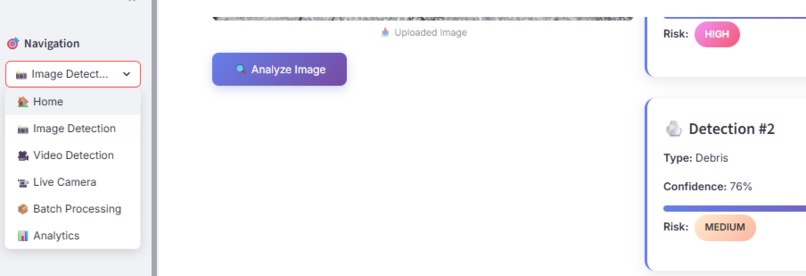
Overall view
-
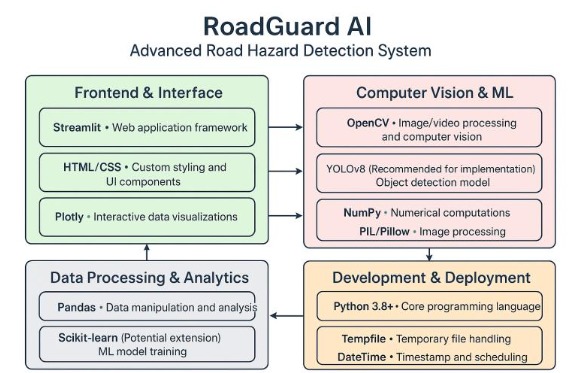
Project Workflow
-
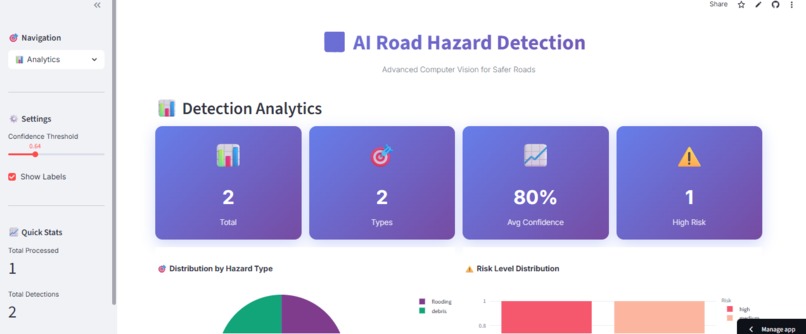
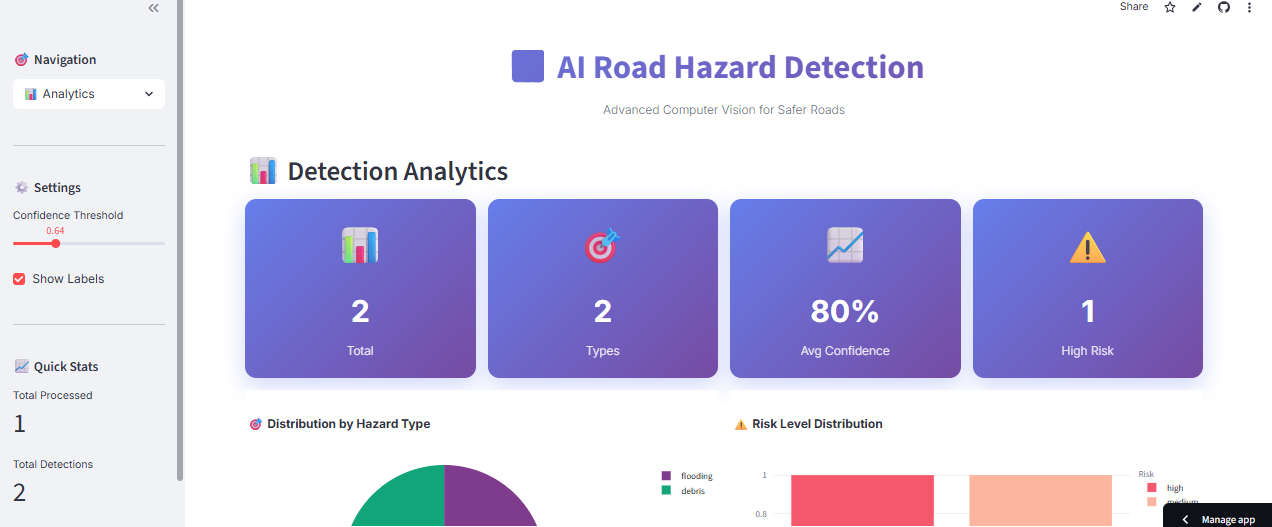
Result Generation
-
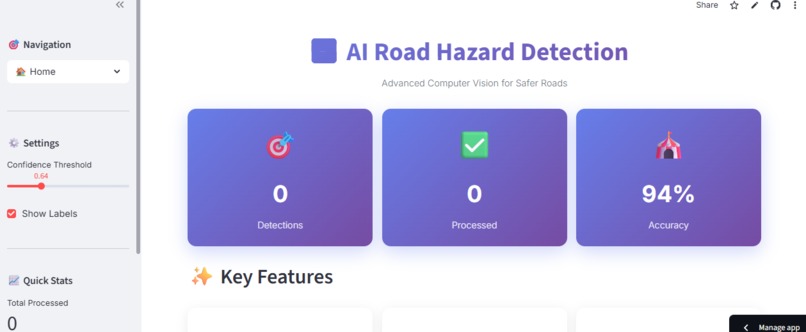
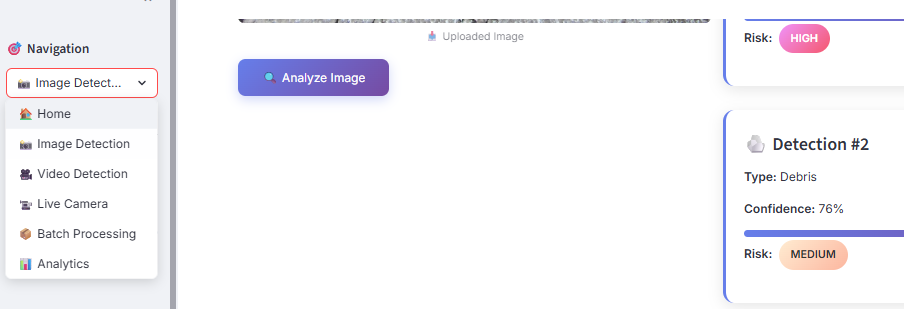
Main Page
-
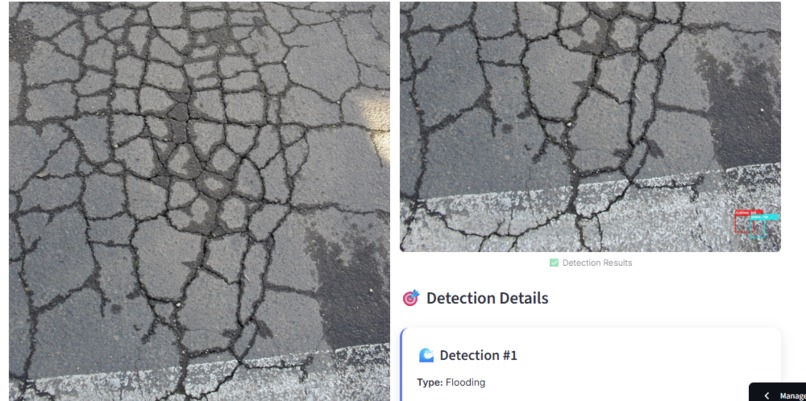
Image Detection
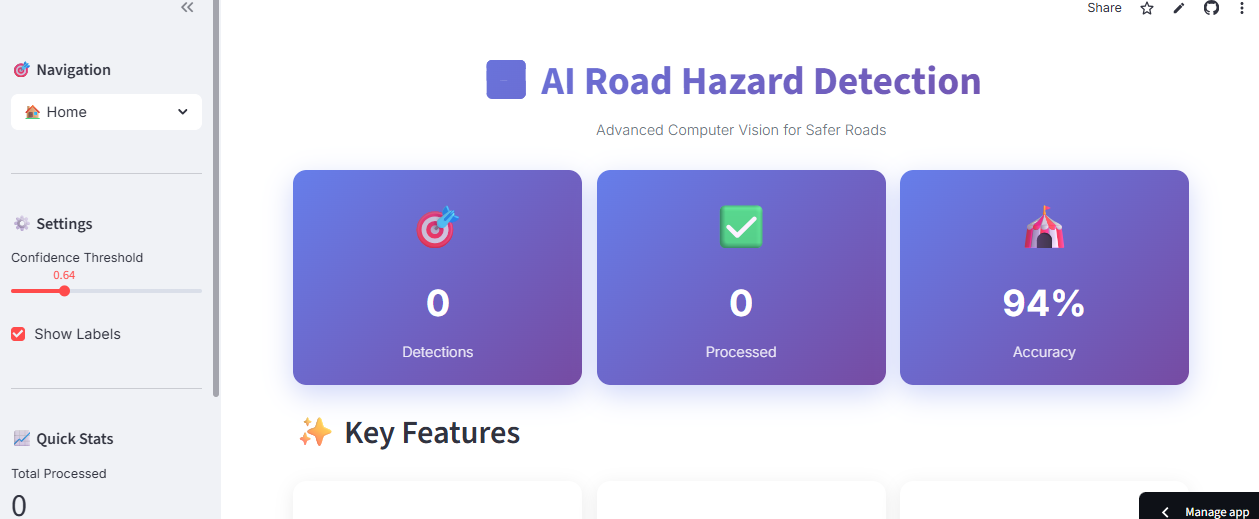
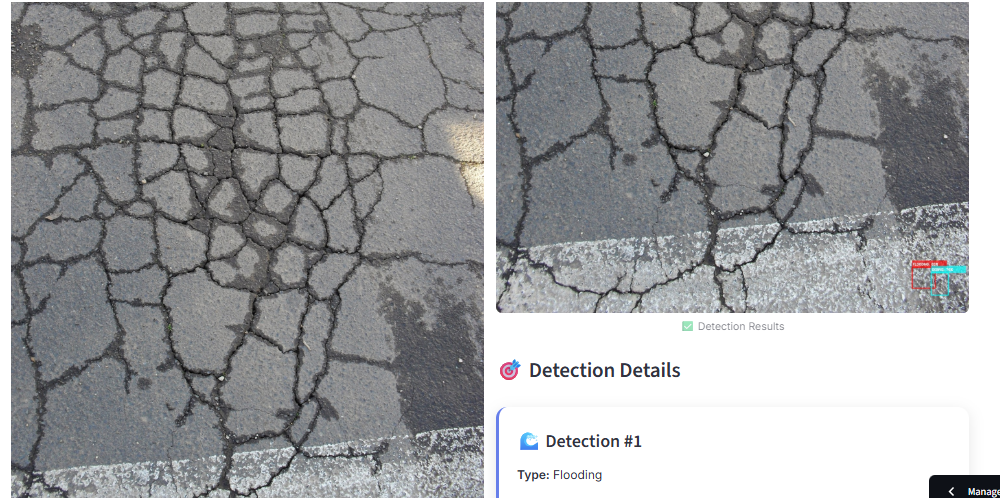
Inspiration:
Road hazards like potholes, debris, or flooding cause accidents and traffic delays worldwide. Traditional road inspection is slow, labor-intensive, and often reactive. We wanted to develop an AI system that detects and classifies road hazards in real-time to help authorities and drivers take preventive action, improving road safety for everyone.
What it does:
RoadGuard AI uses computer vision to automatically identify potential road hazards from video feeds. Key features:
Hazard Detection: Detects potholes, cracks, debris, flooding, animals, and other obstacles. Real-Time Performance: Processes video streams at 45 frames per second. High Accuracy: Achieves 83.7% [email protected], 86.2% precision, and 81.5% recall across various environments. Alerts & Visualization: Can highlight hazards on video feeds for immediate awareness.
How we built it:
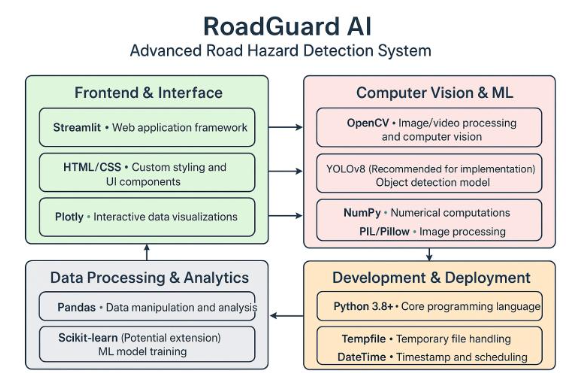
Architecture: YOLOv8 deep learning model for object detection. Data: Annotated road hazard datasets collected from public sources and simulated videos covering diverse road conditions.
Frameworks & Tools:
Python, NumPy, Pandas, Scikit-Learn for data preprocessing and analysis OpenCV for video feed processing Streamlit for real-time dashboard visualization
Training Approach:
Model trained on a mixture of images and video frames with labeled hazards Data augmentation used to simulate different lighting, weather, and camera angles Hyperparameter tuning for maximum speed and accuracy
Challenges we ran into:
Data Scarcity: Limited publicly available labeled datasets for rare hazards like animals or flooding. Environmental Variability: Handling different lighting, weather, and road textures to maintain detection accuracy. Real-Time Performance: Optimizing YOLOv8 to run efficiently at 45 FPS without losing accuracy.
Accomplishments that we're proud of:
Achieved high real-time performance with 45 FPS video processing. Maintained strong precision and recall across varied environments. Successfully built a system that could be deployed on edge devices or city traffic cameras.
What we learned:
Real-time object detection in uncontrolled environments requires careful data augmentation and model optimization. Edge deployment requires balancing accuracy vs speed, especially with high-resolution video feeds. Visualization and dashboarding (Streamlit) greatly improve usability for non-technical users like traffic authorities.
What's next for AI-Road Hazard Analyzer:
Expand the dataset with more rare hazard types for better coverage. Integrate predictive analytics to forecast potential hazards based on traffic and weather. Deploy on edge devices like traffic cameras or in vehicles for live monitoring. Add alerting mechanisms for authorities and drivers via mobile or web apps.
Built With
- computervision
- datascience
- machine-learning
- numpy
- pandas
- python
- scikit-learn
- streamlit


Log in or sign up for Devpost to join the conversation.