-
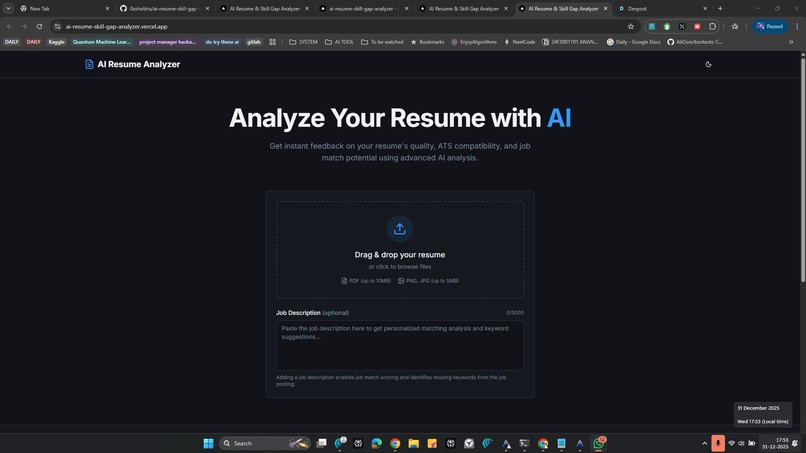
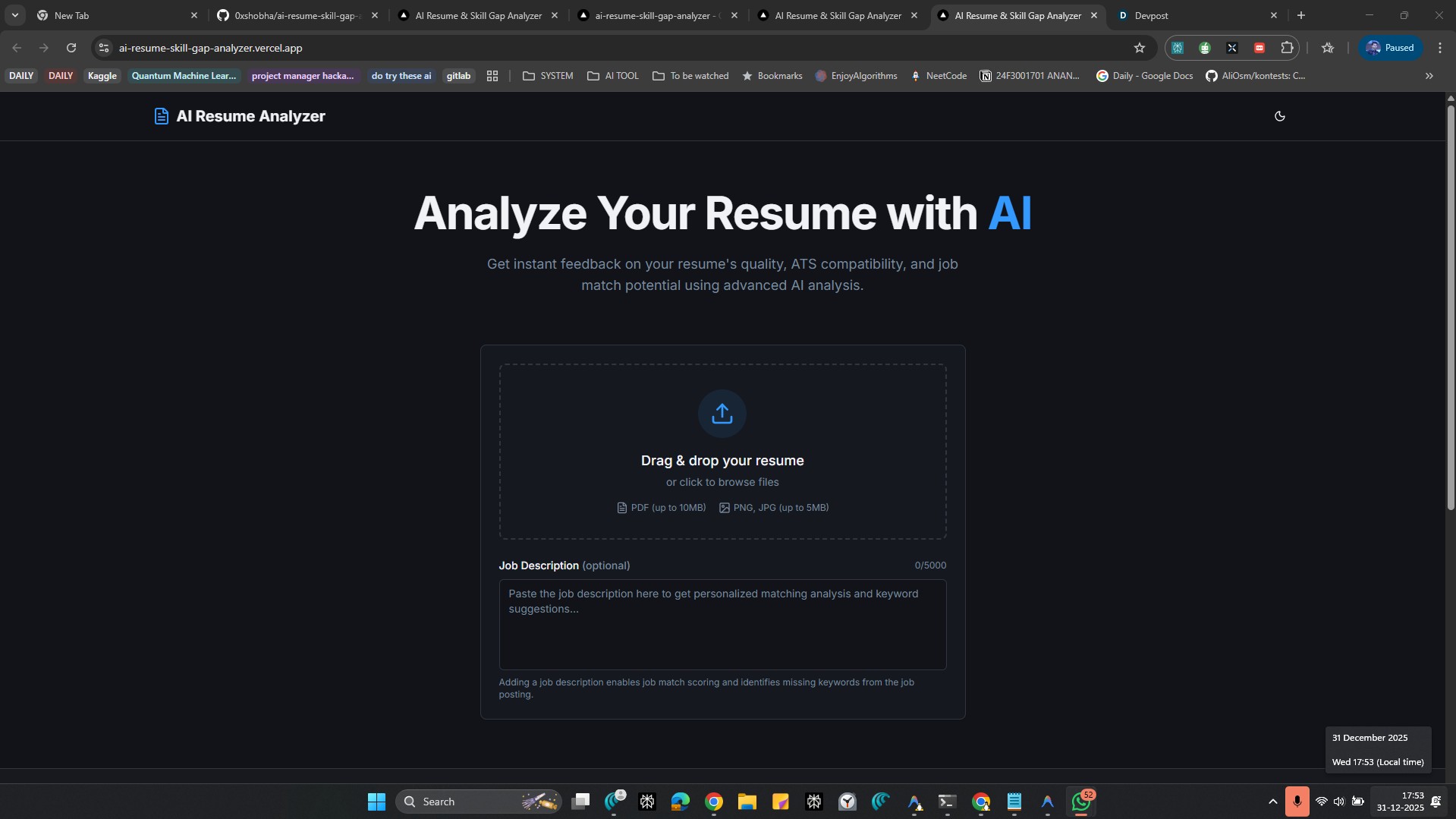
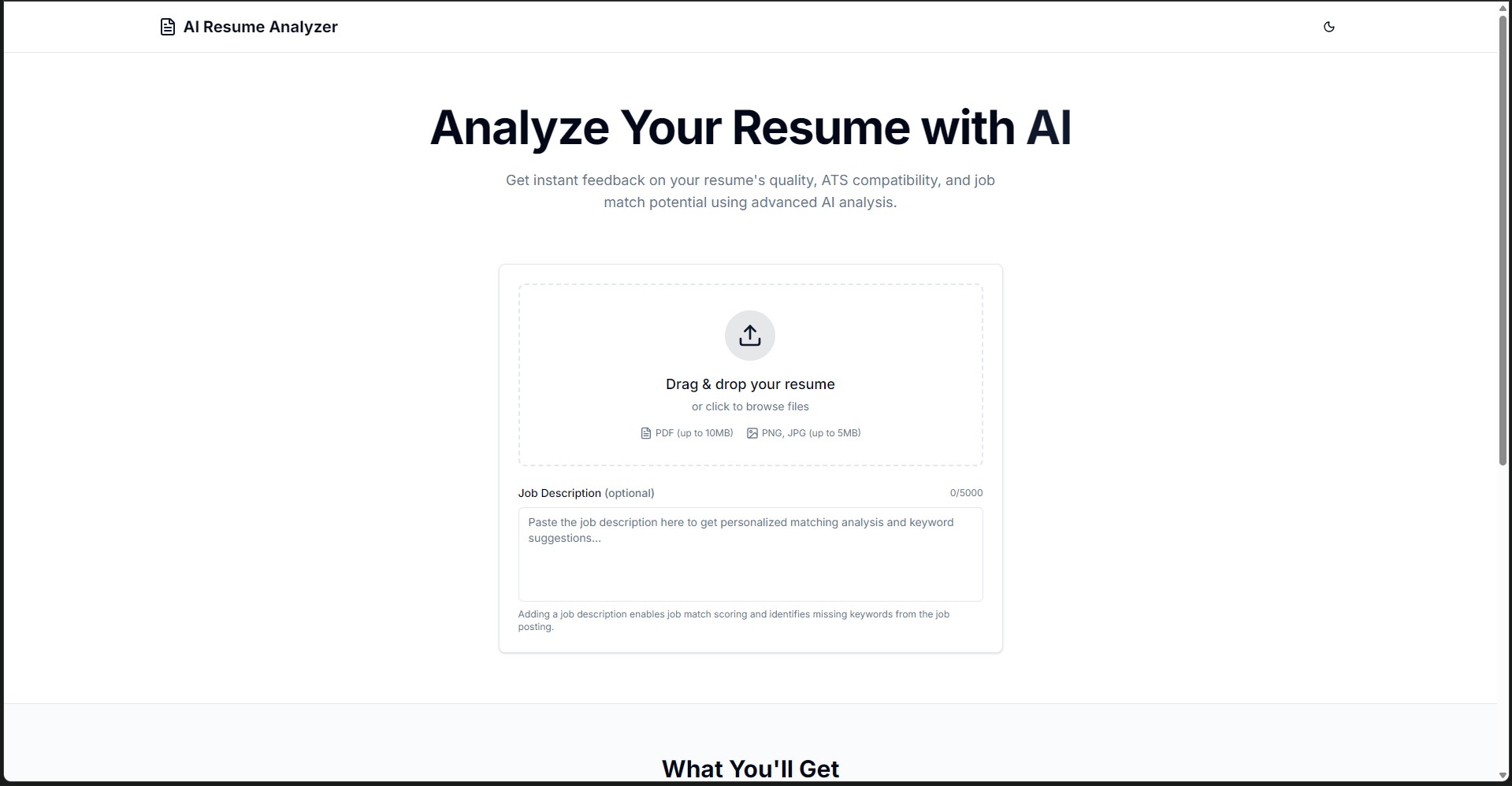
home page dark ui
-
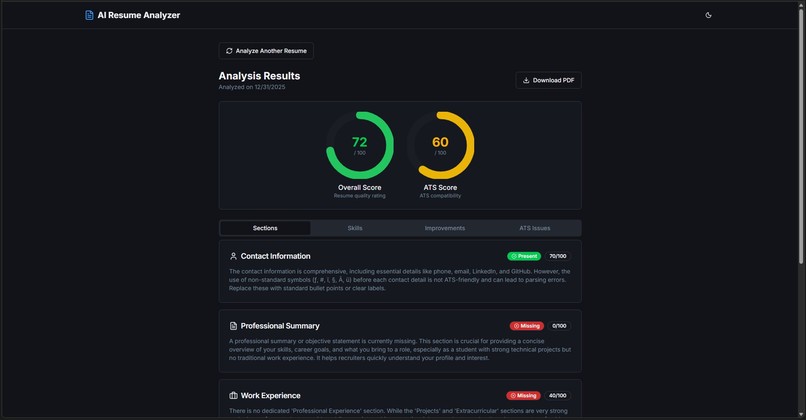
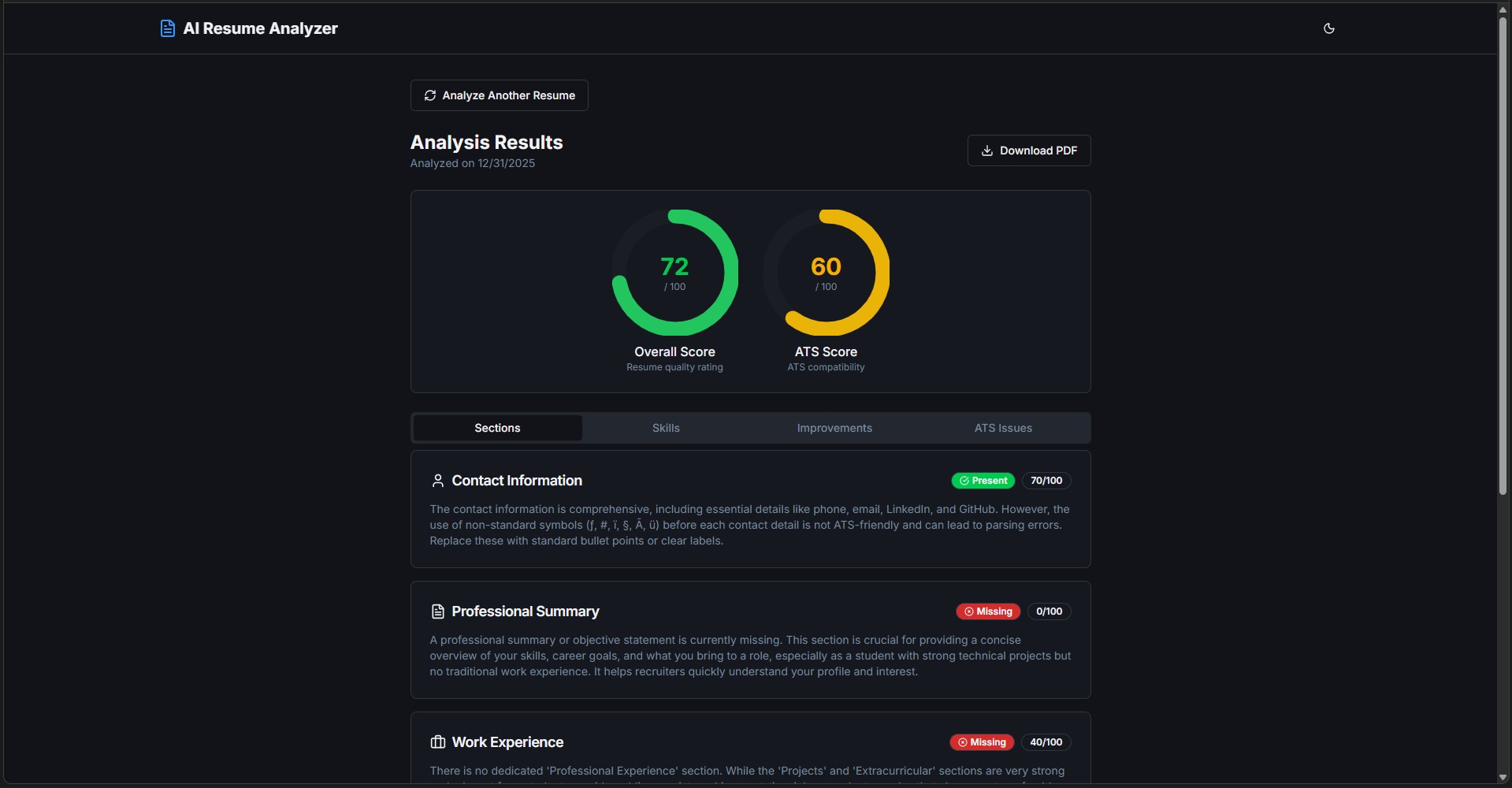
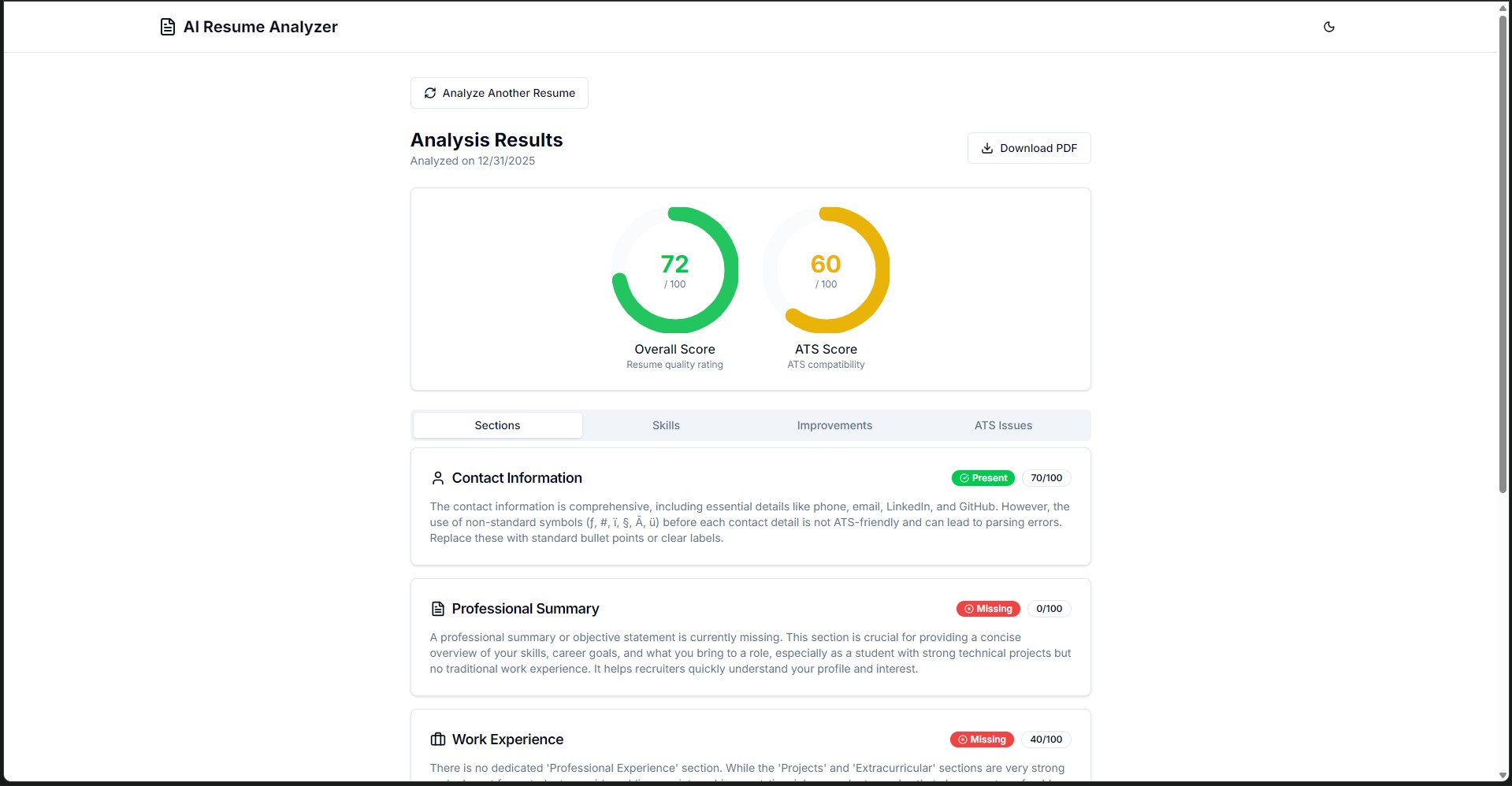
result dark ui
-
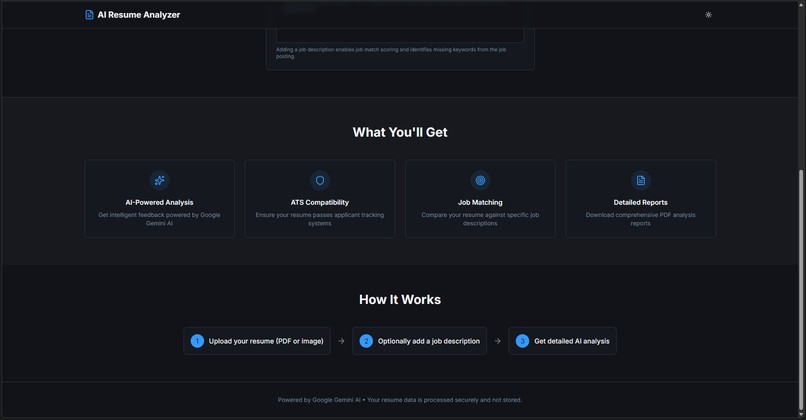
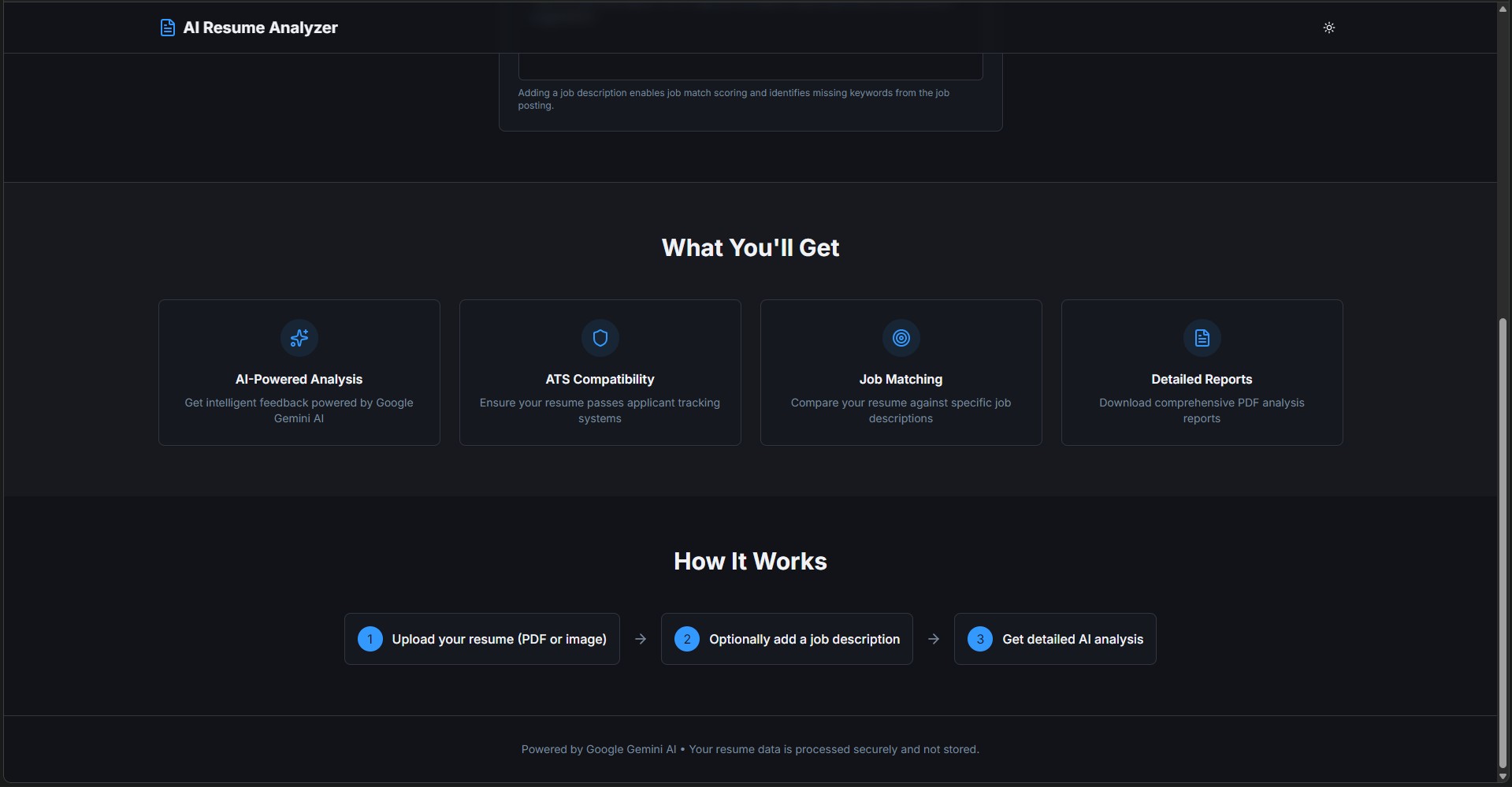
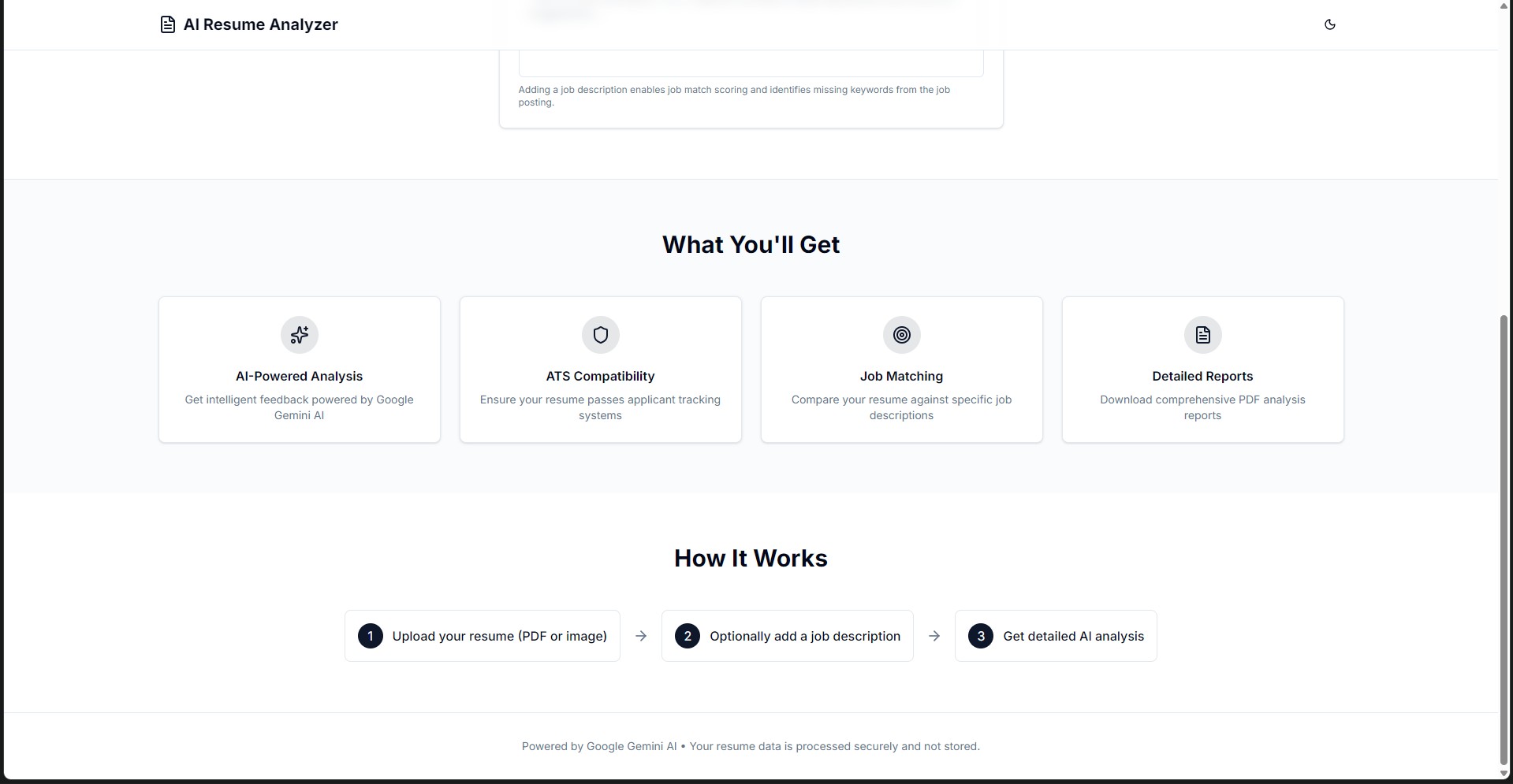
footer dark
-
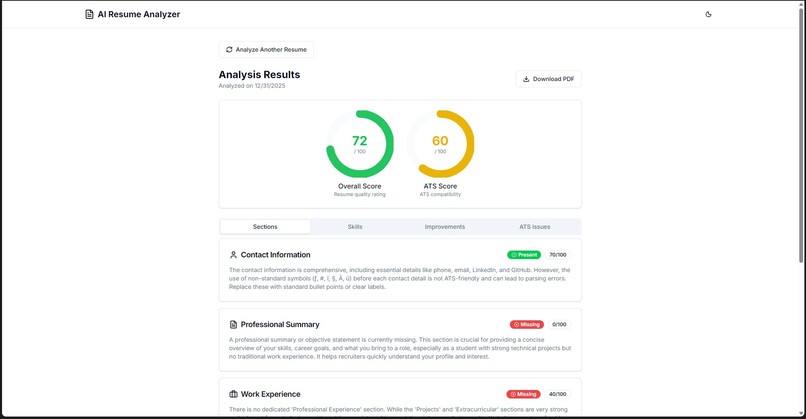
result white ui
-
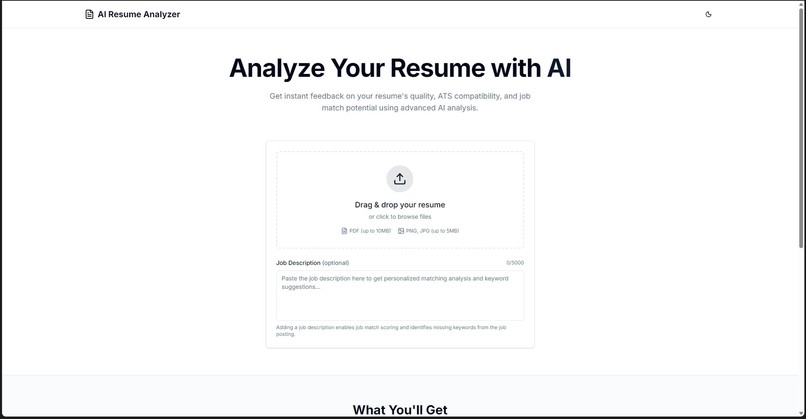
home page white ui
-
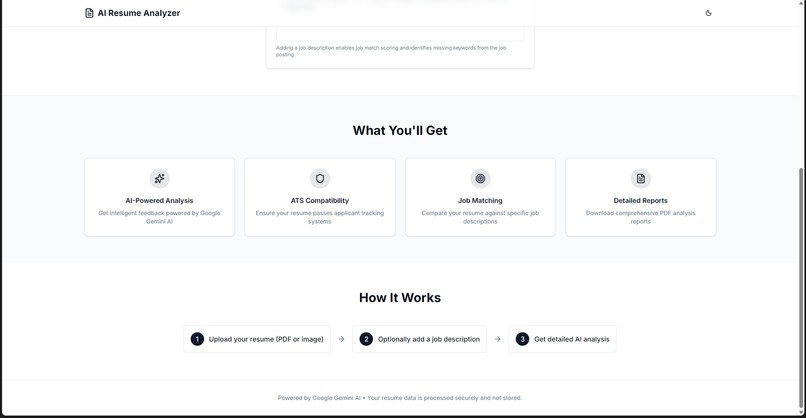
footer
Inspiration
The job market is more competitive than ever, and highly qualified candidates often get rejected simply because their resumes aren't optimized for Applicant Tracking Systems (ATS). Students and early-career professionals, in particular, struggle to identify exactly why they aren't getting interviews. We wanted to build a tool that demystifies this process—bridging the gap between a candidate's current resume and their dream job by providing instant, AI-powered feedback that is usually reserved for expensive career coaches.
What it does
ResumeGap AI is a privacy-first, intelligent resume analyzer.
- Universal Upload: Users can upload resumes in PDF or image (PNG/JPG) formats.
- Privacy-First OCR: We use client-side Optical Character Recognition (Tesseract.js) to extract text directly in the browser, ensuring user data isn't unnecessarily stored on our servers.
- Gemini-Powered Analysis: The text is analyzed by Google's Gemini 2.5 Flash model to evaluate:
- ATS Compatibility: How well a machine can read the resume.
- Content Quality: Impact, clarity, and formatting.
- Skill Gaps: Missing technical or soft skills based on industry standards.
- Instant Feedback: Users receive a detailed report with scores (0-100) and prioritized, actionable suggestions for improvement.
How we built it
- Frontend: Built with Next.js 14 (App Router) and TypeScript for performance and type safety.
- UI/UX: Designed with Tailwind CSS and shadcn/ui components for a premium, accessible, and responsive interface with dark mode support.
- AI Engine: Integrated Google Gemini API (Gemini 2.5 Flash) for its superior context window and reasoning capabilities to analyze resumes.
- Text Processing: Implemented Tesseract.js and PDF.js to handle complex resume layouts and extract text from flat images.
- Deployment: Hosted on Vercel with automatic CI/CD pipelines.
Challenges we ran into
- PDF Parsing Complexity: Resumes come in infinite formats (double columns, graphics, terrible layouts). Standard parsers often failed, so we implemented a hybrid approach using OCR for image-based PDFs to ensure we capture every word.
- Hydration Errors: We faced tricky React hydration mismatches due to browser extensions injecting code into the DOM, which we resolved by optimizing our layout rendering strategy.
- Prompt Engineering: getting the AI to give structured JSON output consistently while providing human-like advice took several iterations of prompt tuning.
Accomplishments that we're proud of
- Successfully adhering to a Privacy-First architecture where files are processed in memory and not permanently stored.
- Achieving a beautiful, professional UI that feels like a premium SaaS product.
- The speed of analysis—Gemini 2.5 Flash is incredibly fast, returning comprehensive reports in seconds.
- Fixing a major roadblock with API authentication and successfully migrating to the latest Gemini models during the hackathon.
What we learned
- The importance of Edge Computing and handling heavy processing (like OCR) on the client side to reduce server costs and improve privacy.
- How to effectively structure prompts for Large Language Models to get consistent, machine-readable data outputs.
- Advanced debugging techniques for Next.js hydration and server-side rendering issues.
What's next for ResumeGap AI
- LinkedIn Integration: Auto-import profiles for analysis.
- Direct PDF Editing: AI agents that not only suggest changes but rewrite the resume lines for you in real-time.
- Specific Job Matching: Upload a specific job description to see exactly how well you match that specific role.
Built With
- gemini
- nextjs
- node.js
- react
- tailwindcss
- tesseract.js
- typescript
- vercel


Log in or sign up for Devpost to join the conversation.