What it does## Inspiration
Job hunting today means fighting an invisible gatekeeper: the Applicant Tracking System (ATS). Great candidates get filtered out simply because their resume isn't formatted or worded the way an algorithm expects — long before a human ever sees it. I've experienced this frustration myself, sending out resumes and hearing nothing back, wondering if the problem was even reaching a person. I wanted to build a tool that gives job seekers the same insight recruiters and ATS software have, so they can fix issues before hitting submit instead of guessing after getting rejected.
What it does
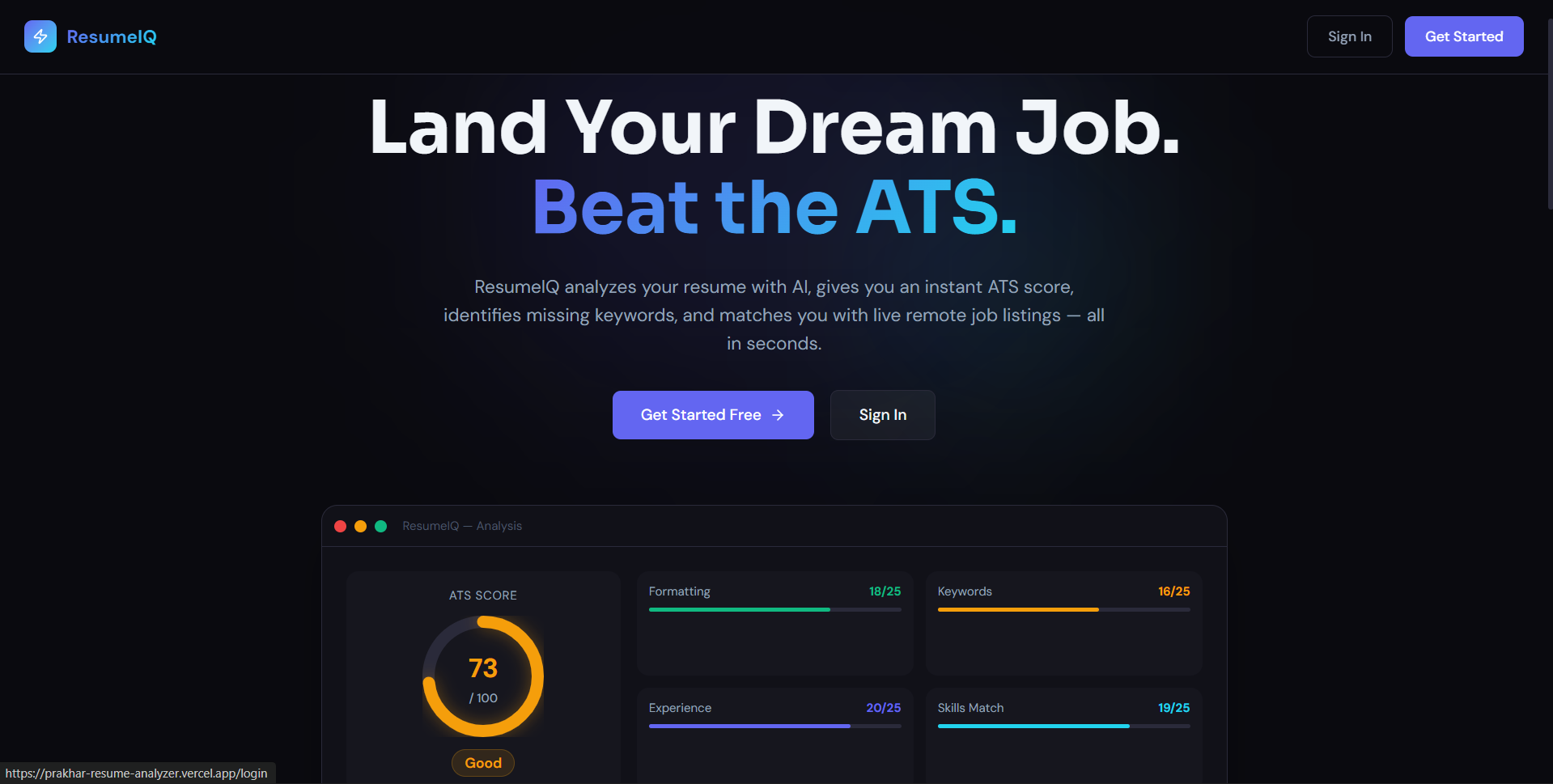
ResumeIQ analyzes a resume and instantly generates an ATS compatibility score, highlighting how well it's likely to perform against automated screening systems. It identifies missing keywords and skills relevant to a target role, so users know exactly what to add to improve their match rate. It also suggests relevant job matches based on the resume's content, helping users find roles that align with their existing skills and experience — all powered by Claude AI for accurate, context-aware analysis rather than simple keyword counting.
How we built it
The app is built with [your frontend stack — e.g., Next.js and Tailwind CSS] for a fast, responsive interface, deployed on Vercel. Resume parsing extracts text and structure from uploaded files, which is then sent to the Groq API for deep analysis — scoring ATS-friendliness, extracting keywords, and comparing them against job requirements. The backend orchestrates the parsing, prompt construction, and response handling to turn analysis into clear, actionable feedback for the user.
Challenges we ran into
One of the biggest challenges was designing prompts that get to produce consistent, structured, and genuinely useful ATS scoring rather than vague or generic feedback. Parsing resumes reliably was also tricky — resumes come in wildly different formats and layouts, and extracting clean text without losing structure took several iterations. Balancing analysis depth with speed, so users get meaningful feedback without long wait times, was another constraint we had to design around.
Accomplishments that we're proud of
We're proud of building an end-to-end pipeline — from resume upload to AI analysis to actionable output — that actually works reliably across different resume formats. Turning raw AI output into a clear, scannable ATS score and keyword breakdown that a non-technical user can immediately understand and act on was a meaningful design win.
What we learned
Building ResumeIQ deepened our understanding of prompt engineering for structured, reliable outputs from LLMs, as well as the practical challenges of parsing unstructured documents like resumes. We also learned a lot about designing AI-powered tools that feel trustworthy and transparent to users, rather than a black box.
What's next for ResumeIQ
Next, we want to add support for more file formats, deeper job-matching using real-time job board data, and personalized resume rewriting suggestions tailored to specific job postings.
Built With
- ai
- chromadb
- google-oauth
- groq
- hugging-face
- javascript
- langchain
- llm
- natural-language-processing
- next.js
- python
- react
- supabase
- tailwind
- tailwind-css
- vite
- vue

Log in or sign up for Devpost to join the conversation.