-
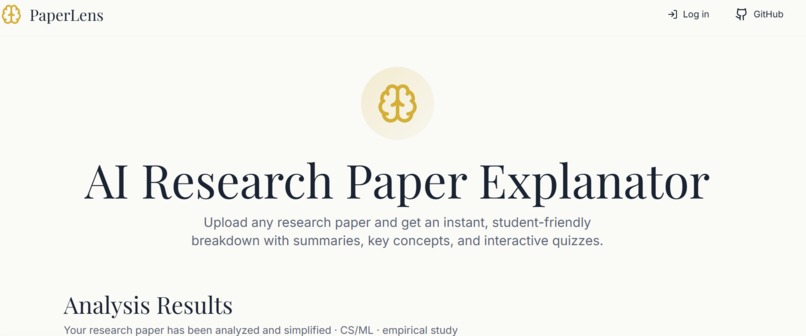
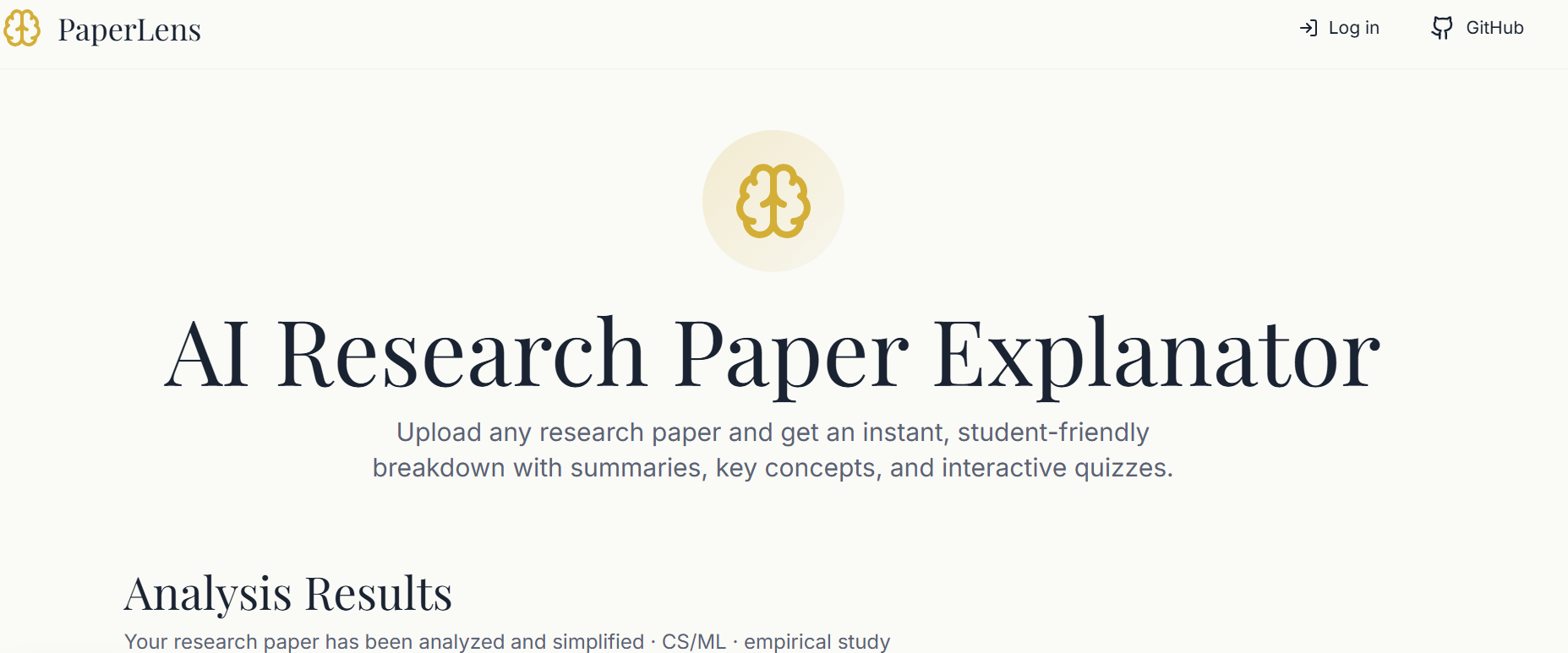
AI Research Paper Explanator
-
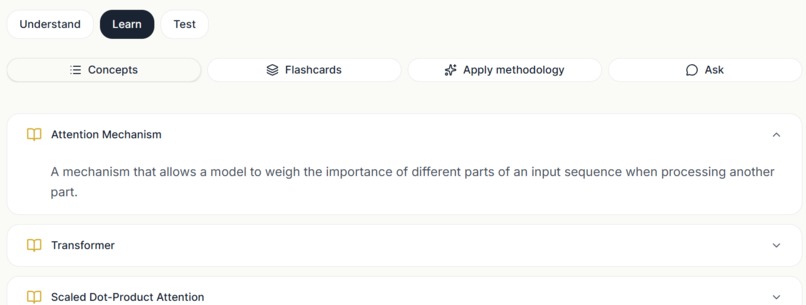
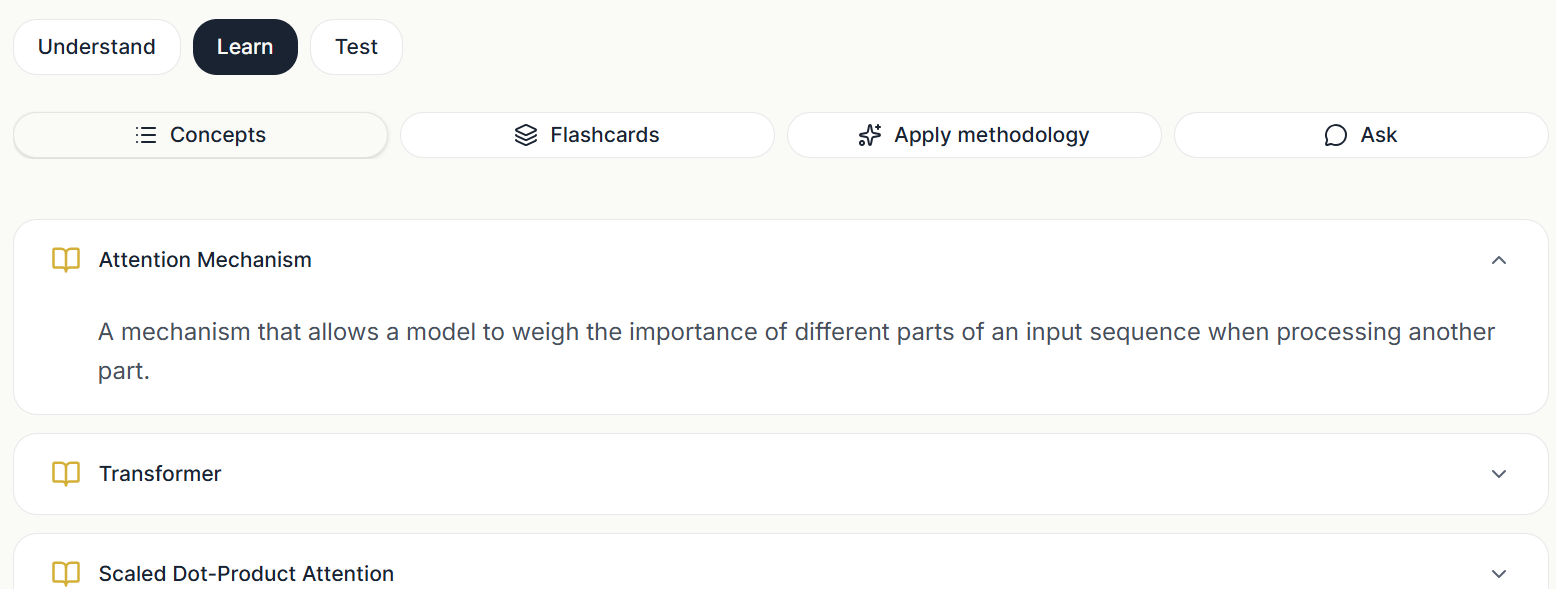
Key concepts
-
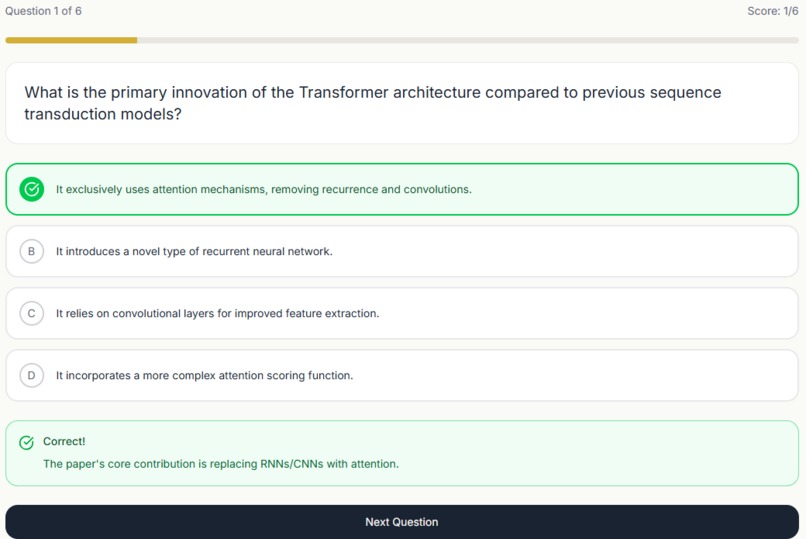
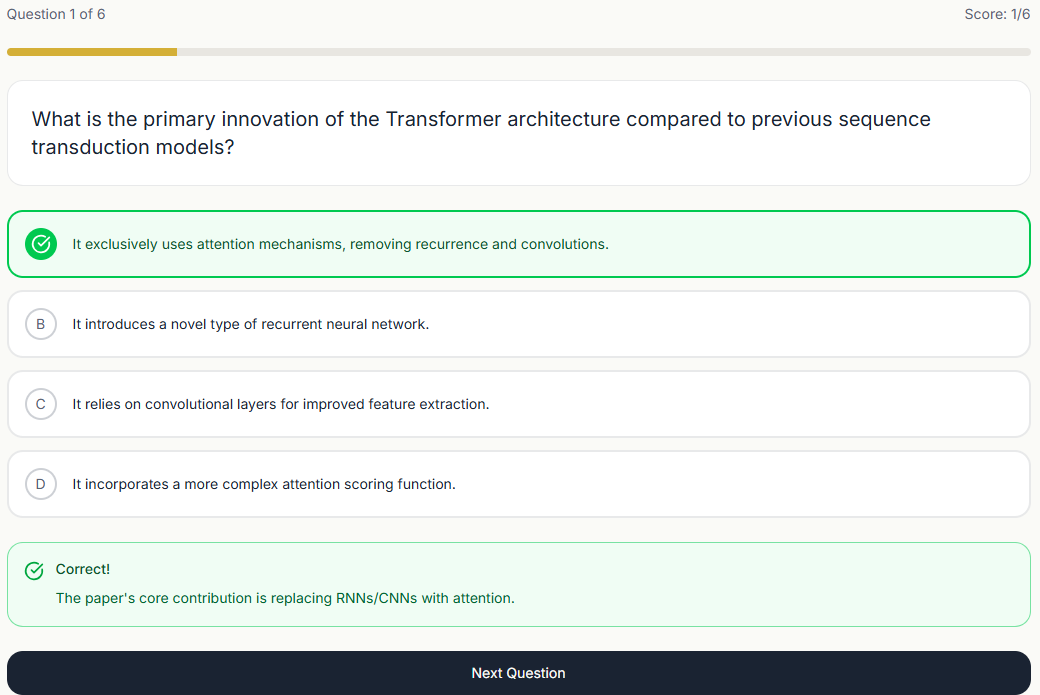
Quiz
Inspiration
Research papers are hard to read. We wanted a tool that turns dense academic text into clear explanations and helps students learn faster.
What it does
Upload a PDF and get a structured breakdown: argument spine, summary, key concepts, ELI12, flashcards, quizzes, and follow-up Q&A. You can choose Beginner, Intermediate, or Expert level. Share links, compare papers, and track progress with Auth0.
How we built it
Next.js 16, TypeScript, Tailwind, shadcn/ui, Google Gemini for analysis, Prisma + PostgreSQL for persistence, and Auth0 for auth. PDF parsing with pdf-parse, streaming responses for real-time feedback.
Challenges we ran into
Prisma 7 migration (datasource config), Auth0 middleware with Turbopack, and making the app work without a database when PostgreSQL isn’t available.
Accomplishments that we're proud of
Argument spine view, level-based explanations, spaced-repetition flashcards, cross-paper comparison, and a smooth streaming UX.
What we learned
Next.js 16 proxy vs middleware, Prisma 7 adapter setup, and how to keep the app usable when optional services (DB, Auth0) aren’t configured.
What's next for AI Research Paper Explanator
Citations, more export options (PDF/Notion), a browser extension for one-click paper analysis, and support for more document types (LaTeX, HTML).
Built With
- api
- auth0
- dotenv
- eslint
- framer-motion
- gemini
- googlegeminiapi
- javascript
- jsonrepair
- key
- lucide
- nanoid
- next.js-16
- pdf-parse
- postgresql
- prisma
- react
- react-dropzone
- shadcn/ui
- tailwind-css
- typescript
- vercel-ready

Log in or sign up for Devpost to join the conversation.