Inspiration
Building hyper-casual games usually requires writing extensive boilerplate code to handle physics, state machines, and hit-detection. We asked ourselves: "What if we could completely bypass traditional scripting? What if we could generate a fully functional, high-speed interactive loop using only natural language?" The inspiration came from wanting to push the boundaries of AI generation, proving it can handle strict timing and real-time database syncing for a fast-paced reaction game.
What it does
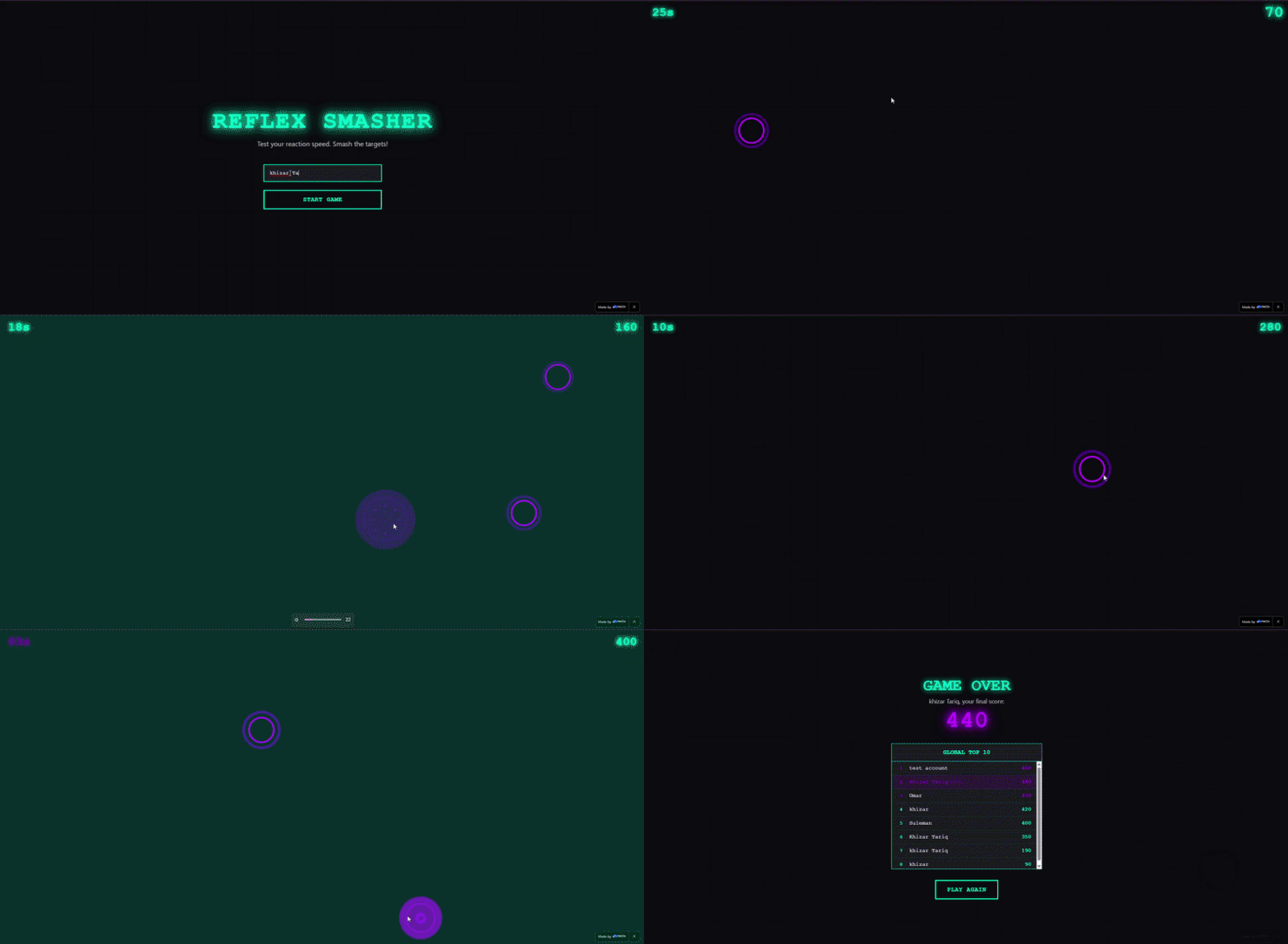
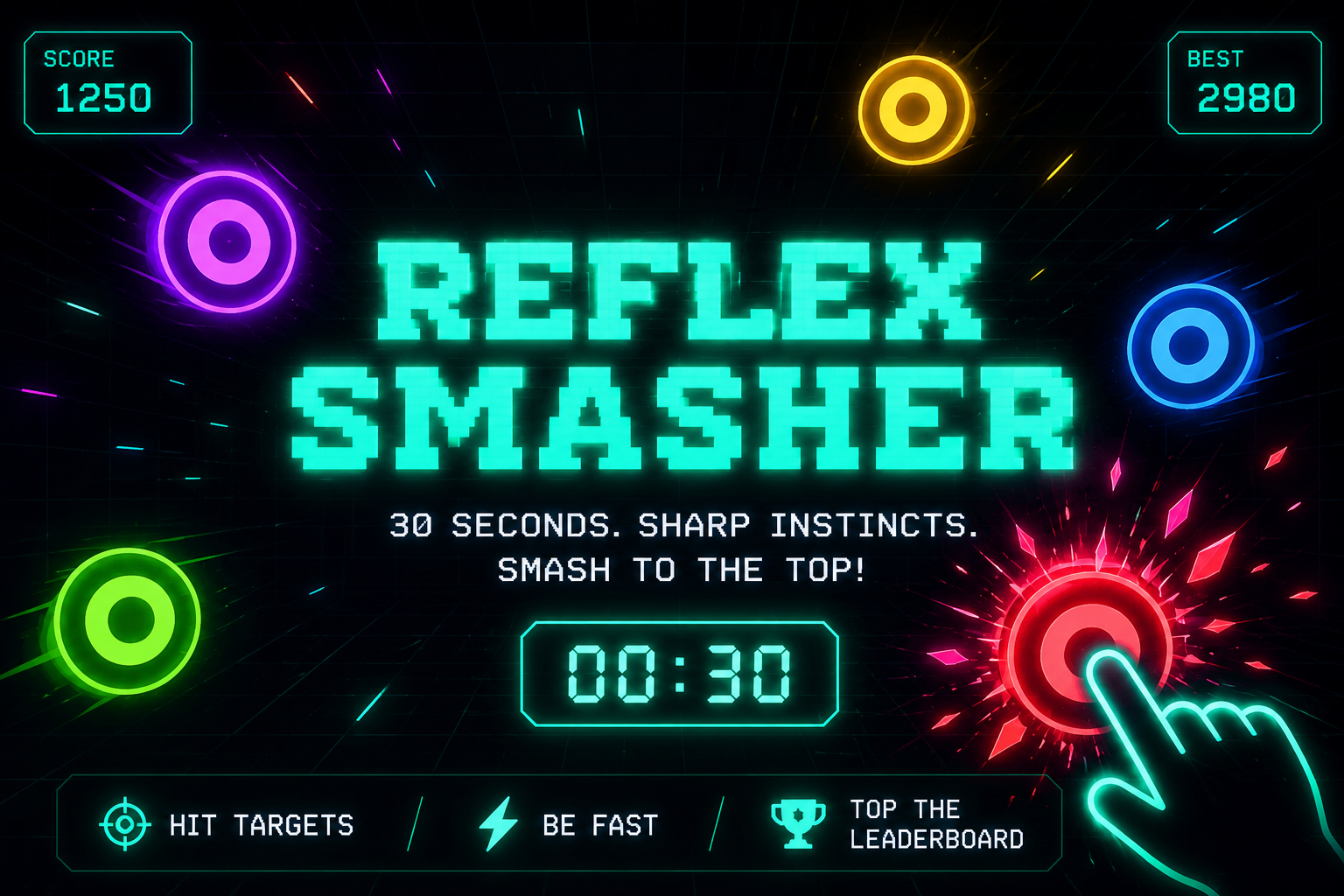
AI Reflex Smasher is a precision-based 2D reaction game where the environment and gameplay logic are entirely generated by AI.
- Dynamic Gameplay: As the strict 30-second countdown timer runs, the game procedurally spawns targets at randomized coordinates across the screen.
- The Reflex Mechanic: When the player successfully taps a target before it vanishes, custom pop-up animations and audio cues are triggered. Missed clicks result in instant visual penalties.
- High-Stakes End Screen: When the timer hits zero, the game ends. A dynamic global leaderboard appears, instantly syncing the player's score to a live backend database and ranking them against competitors in real time.
How we built it
- Master Prompting: We utilized MeDo's AI to scaffold the full-stack environment by structuring our initial prompt into distinct functional blocks such as UI, core logic, and backend systems.
- Asset Management: We used visual refinement tools to handle the instantiation of custom drop-shadows, gradients, and continuous environment looping without writing CSS manually.
- Game Logic: The core gameplay loop uses a strict state machine generated by AI to manage hit-detection, scoring, timing, and transitions between gameplay and leaderboard states.
- UI/UX: We pushed the platform's visual editor to create the polished end-screen report, dynamically injecting real-time database results into the interface.
Challenges we ran into
- Natural Language Translation: Relinquishing frame-by-frame control (like manually coding raycasts and interactions) was difficult. We had to figure out how to accurately describe strict interactive logic and state transitions using only text prompts.
- Latency Optimization: Ensuring that the real-time leaderboard sync didn’t introduce lag into the fast-paced gameplay loop required careful iteration and optimization.
Accomplishments that we're proud of
- Seamless Integration: The game feels native and responsive, successfully passing data from the high-speed frontend directly to an instantly updated global backend without noticeable lag.
- Visual Polish: The custom hit animations and looping environments successfully mask the "no-code" origins, giving the experience a professional, custom-built aesthetic.
- Full-Stack Execution: Proving that complex game states, real-time syncing, and responsive gameplay can be executed smoothly without traditional server scaffolding.
What we learned
Building this project deepened our understanding of MeDo's AI generation architecture and the intricacies of prompt engineering. We learned how to balance natural language instructions with visual refinement tools to achieve precise animation timings and responsive interactions. We also discovered that structuring prompts like technical specification documents yields the most cohesive full-stack results.
What's next for AI Reflex Smasher
- Combo Multipliers: Adding a streak system that grants bonus points for consecutive successful hits without missing.
- Dynamic Difficulty: Scaling target sizes and spawn speeds dynamically based on the player’s current score.
- Cross-Platform Porting: Exploring how to translate these 2D interactive mechanics into fully immersive AR experiences.
Built With
- medo

Log in or sign up for Devpost to join the conversation.