-
-
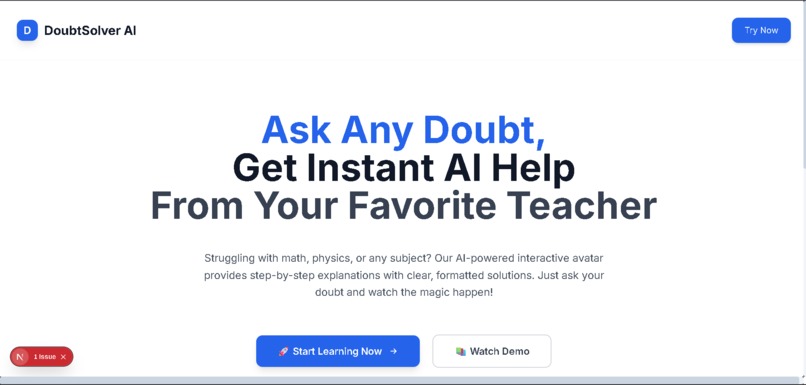
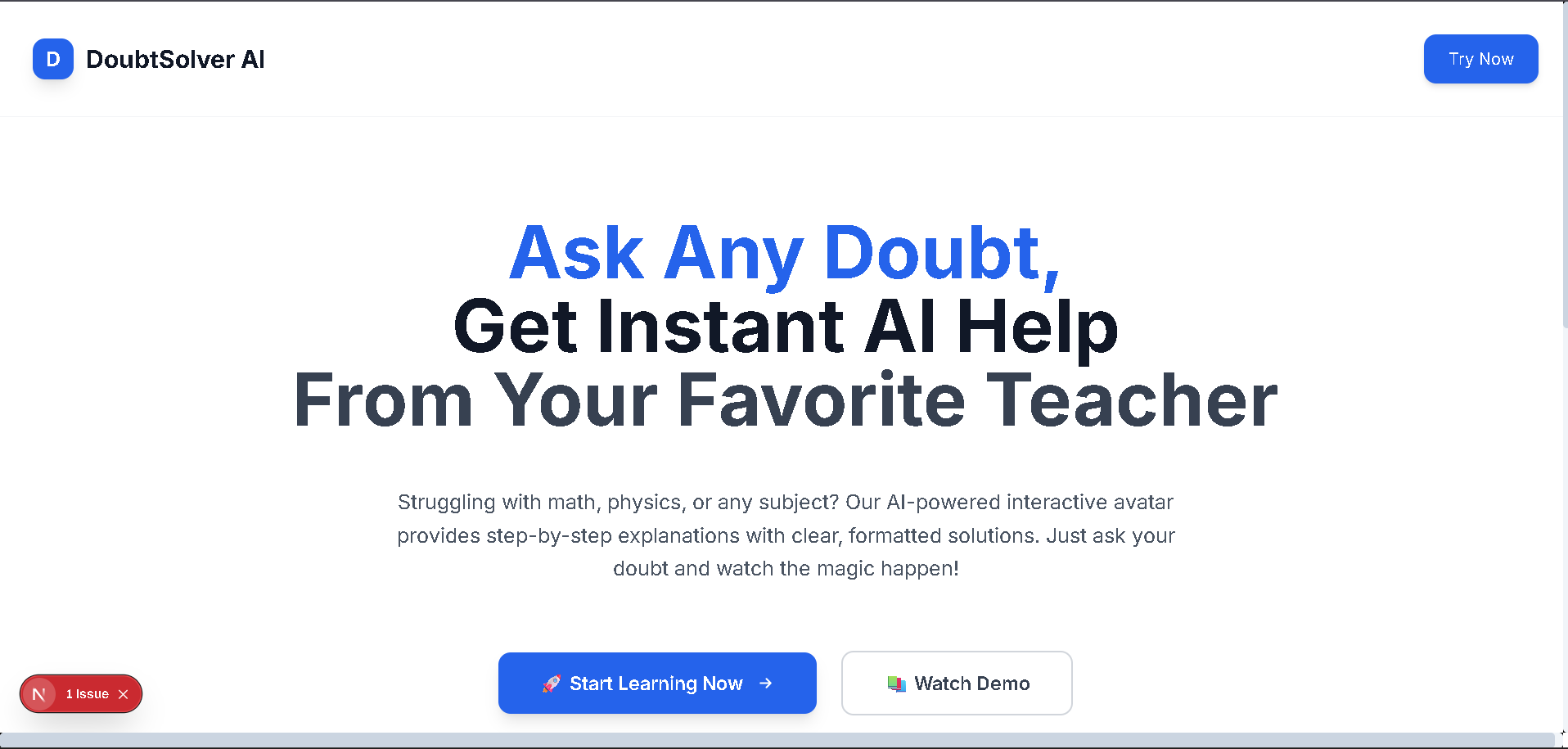
Home Page
-
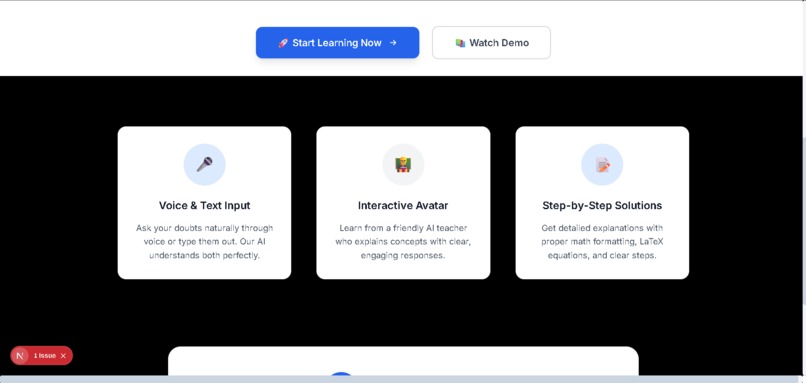
Home Page 2
-
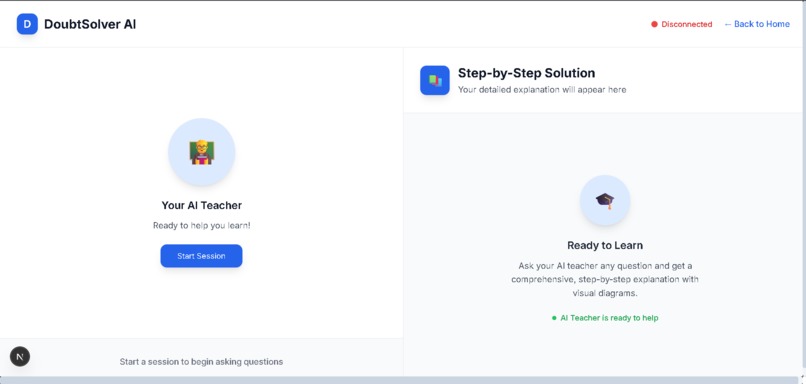
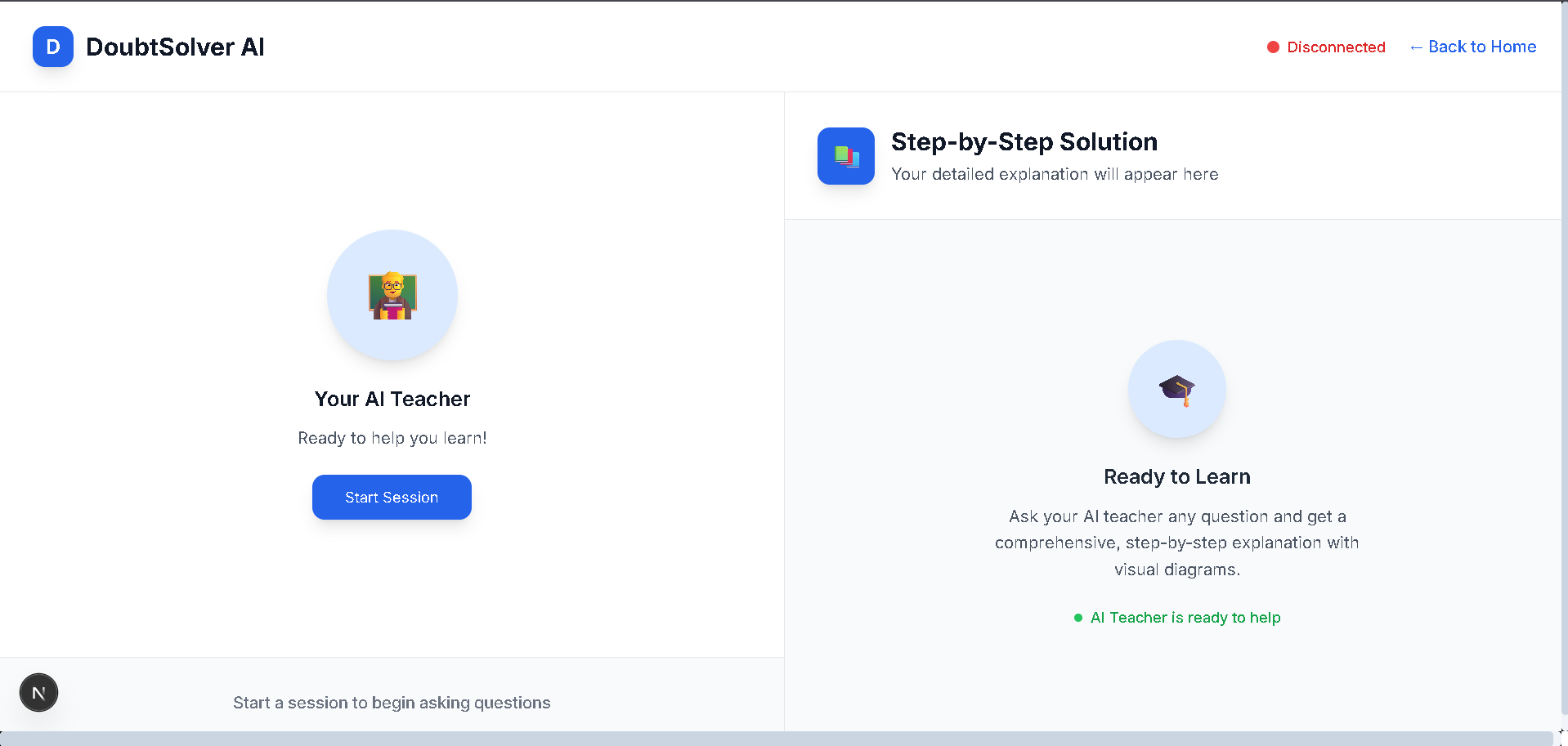
Solver Page
-
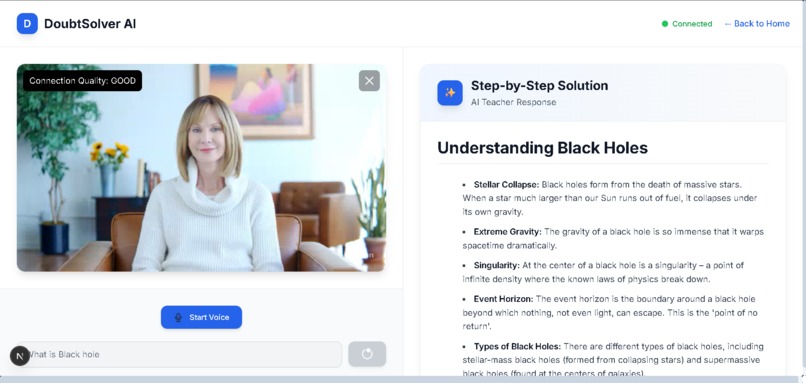
Solver Page after Question Submission
-
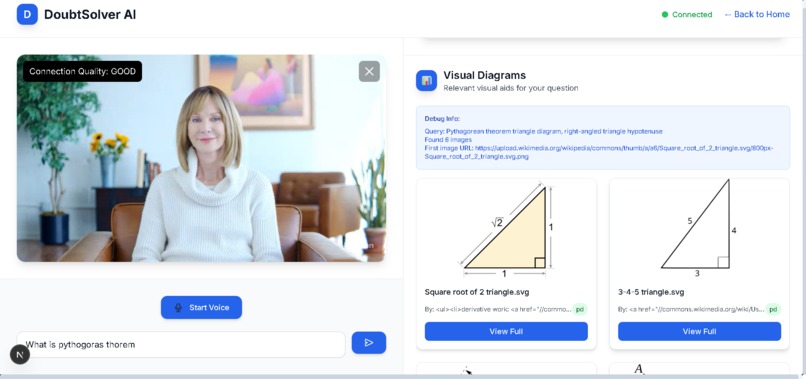
Solver Page after Question Submission and with visuals
Inspiration
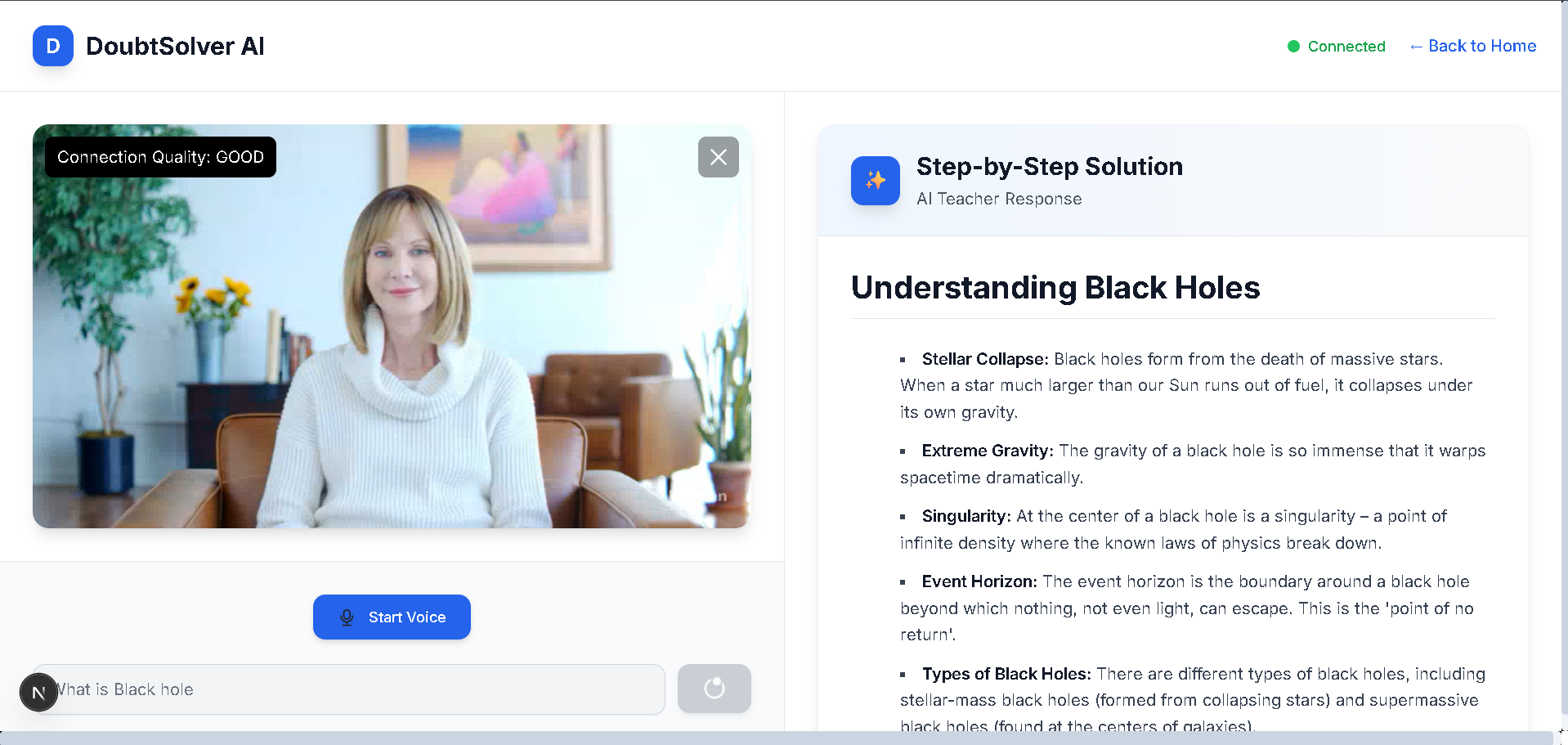
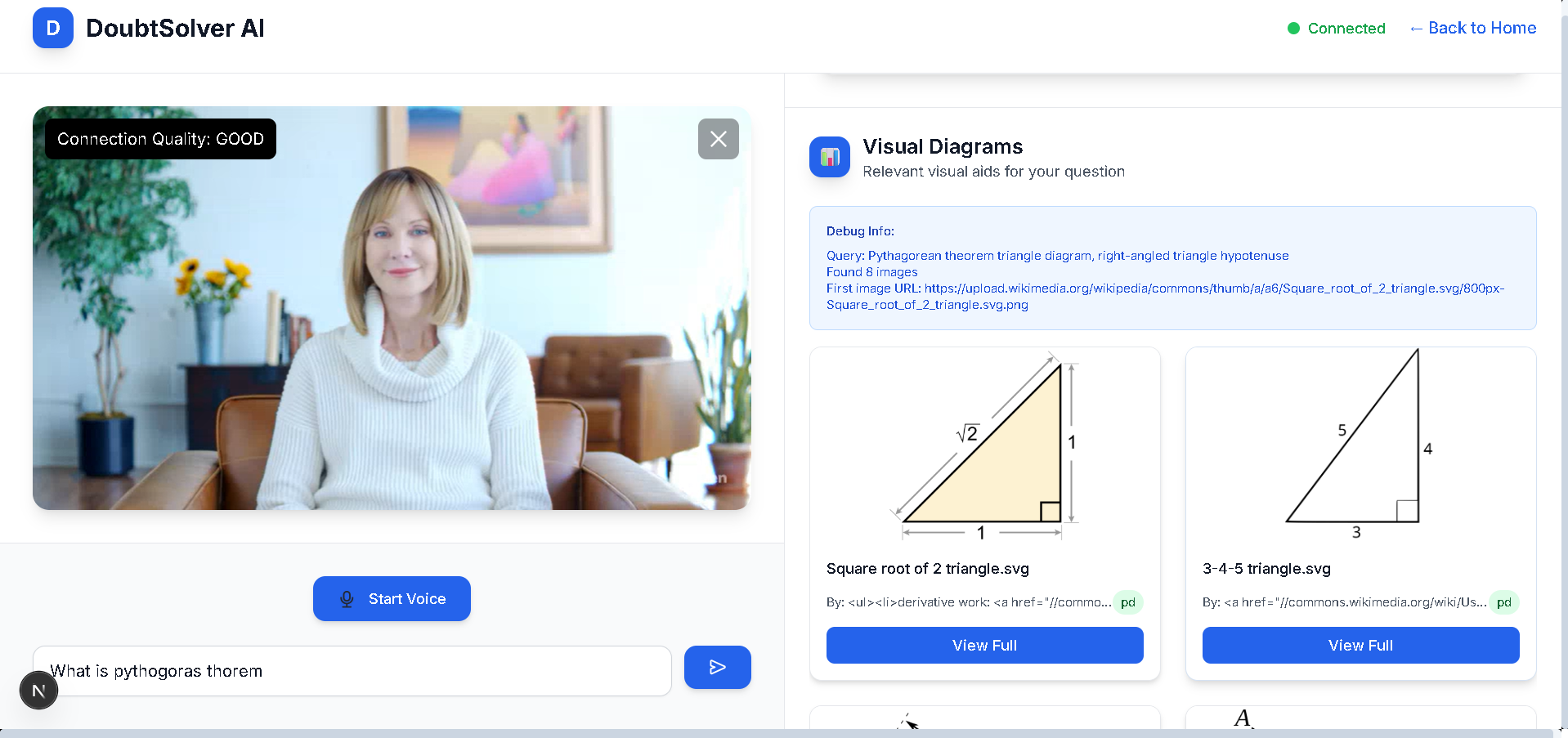
Every student has faced that frustrating moment: stuck on a concept late at night with no teacher around to help. Googling doesn’t always make sense, and scrolling through forums just adds confusion. We wanted to create something that feels as natural as turning to your favorite teacher for help — anytime, anywhere. That’s where the idea of AI-powered, real-time teaching avatars was born.
What it does
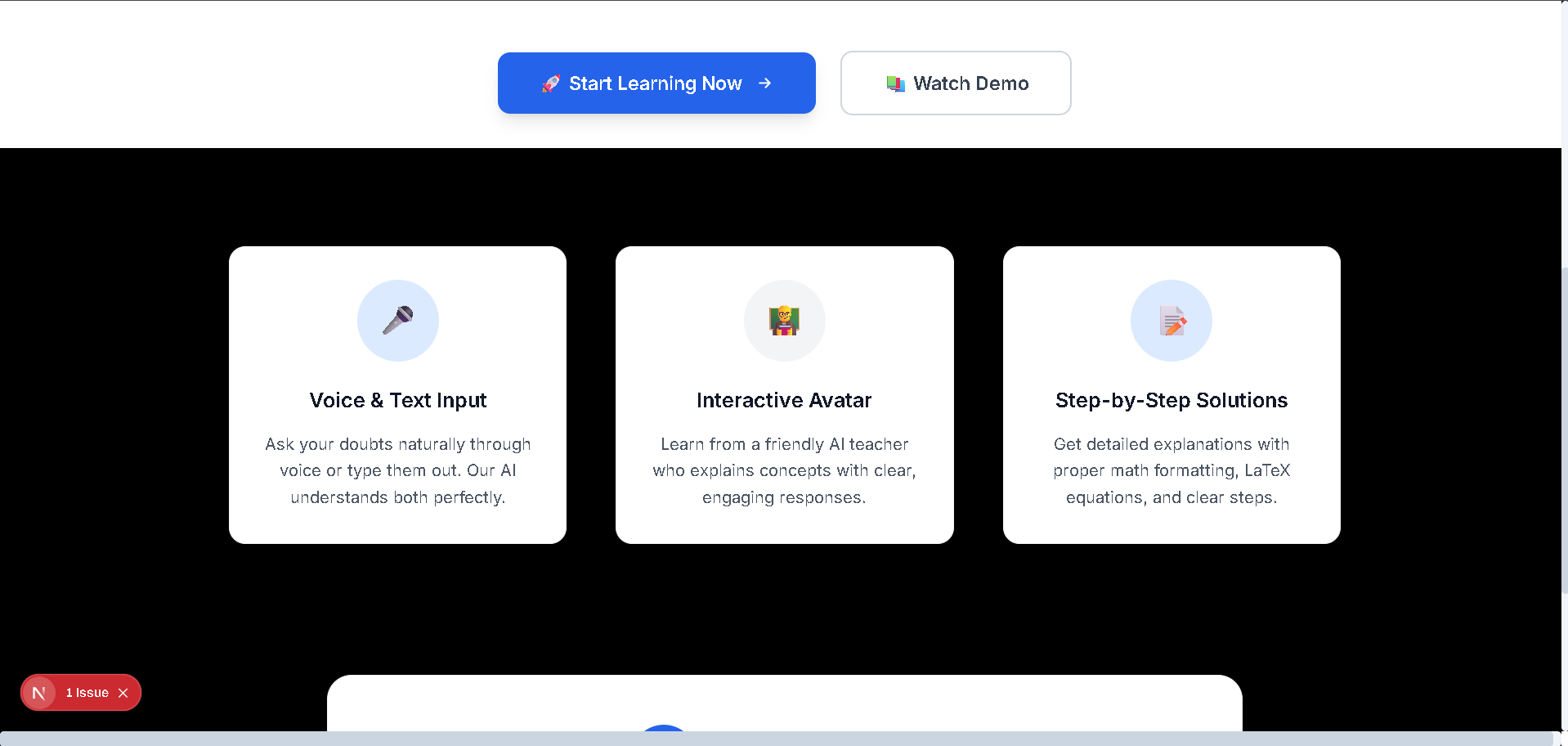
- Our platform allows students to ask doubts in real-time and instantly get answers explained by lifelike AI avatars of teachers.
- Students can type or speak their question.
- An AI avatar appears on screen — expressive, interactive, and natural.
- The avatar breaks down the concept step by step, adapting the explanation based on follow-up questions.
- It feels less like chatting with a chatbot and more like having your personal teacher sitting right beside you.
How we built it
- Frontend: Next.js + React for a smooth and interactive student interface.
- AI Processing: OpenAI APIs for understanding student queries and generating clear explanations.
- Avatars: Integrated Heygen SDK to bring AI avatars to life with realistic lip-sync, gestures, and expressions.
- Backend: Lightweight API routes to handle requests, retries, and ensure seamless communication.
- Deployment: Hosted on Vercel for fast, scalable, and hackathon-friendly deployment.
Challenges we ran into
- Getting real-time responses to sync perfectly with the avatar’s lip movement.
- Handling different types of student queries — from math equations to abstract theory — without losing clarity.
- Debugging build errors and dependency conflicts during deployment on Vercel (yes, we fought with package managers).
- Balancing tech complexity with user experience, so students feel guided, not overwhelmed.
Accomplishments that we're proud of
- We made it possible for students to see and hear an AI avatar teacher explain their doubts in real time.
- Achieved a natural, human-like interaction that feels supportive and not robotic.
- Built and deployed a working prototype within hackathon timelines.
- Most importantly: we turned a stressful, isolating student experience into something friendly, engaging, and confidence-boosting.
What we learned
- How to combine multiple cutting-edge technologies (OpenAI, Heygen SDK, Next.js) into a single seamless solution.
- The importance of user experience in education tech — students need empathy and clarity, not just raw answers.
- Deployment challenges taught us a lot about real-world dev ops and debugging under pressure.
- That even small improvements in how knowledge is delivered can have a massive impact on motivation and learning.
What's next for AI-Realtime-Doubt-Solver-Avatars
- Add multi-language support, so students worldwide can learn in their preferred language.
- Allow students to choose from different avatar personalities — strict teacher, friendly mentor, even subject experts.
- Integrate with school platforms so teachers can track which concepts students are struggling with.
- Explore VR/AR integrations to make learning even more immersive.
- And finally, refine the AI to not only explain answers, but also quiz students interactively to ensure true understanding.
Built With
- git
- github
- heygen-sdk
- heygen-sdk-(for-real-time-ai-avatars)-math-&-content-rendering:-react-markdown
- javascript
- javascript-frameworks-&-libraries:-next.js
- next.js
- npm
- openai-api
- pnpm
- react
- react-katex
- react-katex-(for-equations-and-math-formatting)-backend-&-api-handling:-next.js-api-routes-package-management:-pnpm-/-npm-cloud-&-hosting:-vercel-(for-deployment
- react-markdown
- scalability
- tailwindcss
- tailwindcss-ai-&-apis:-openai-api-(for-natural-language-understanding-&-explanations)
- typescript
- vercel


Log in or sign up for Devpost to join the conversation.