-
-
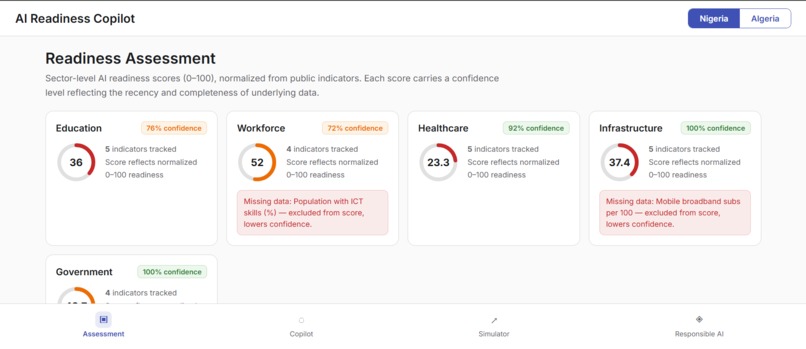
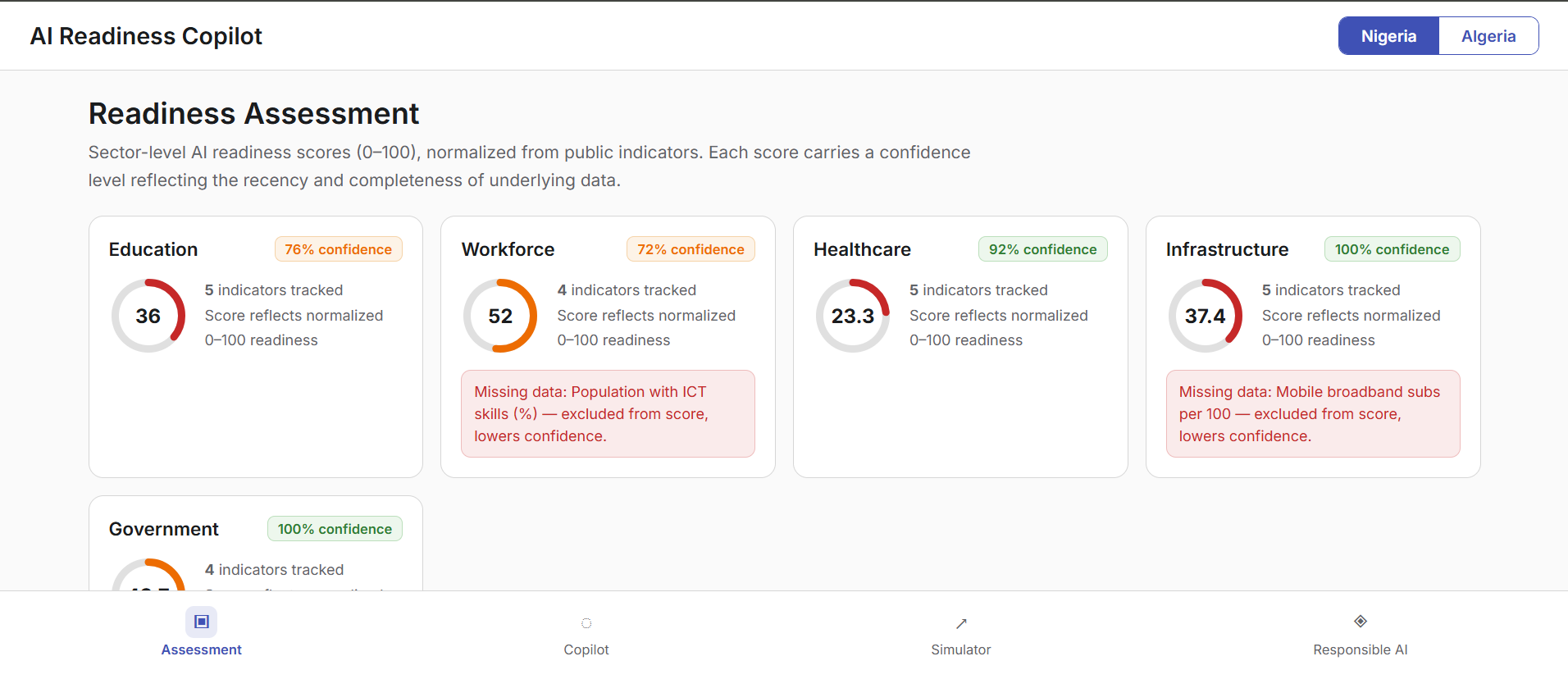
assessement
-
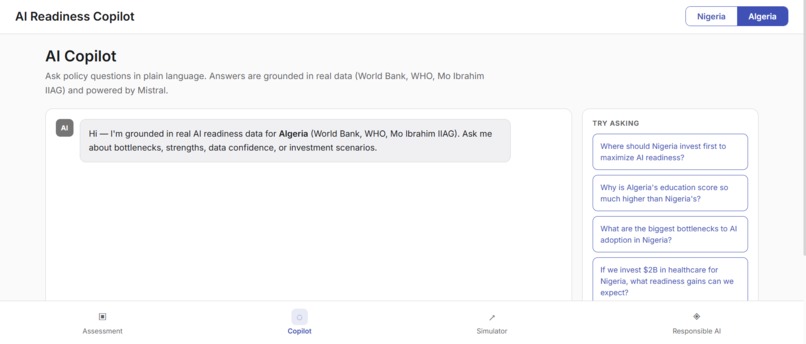
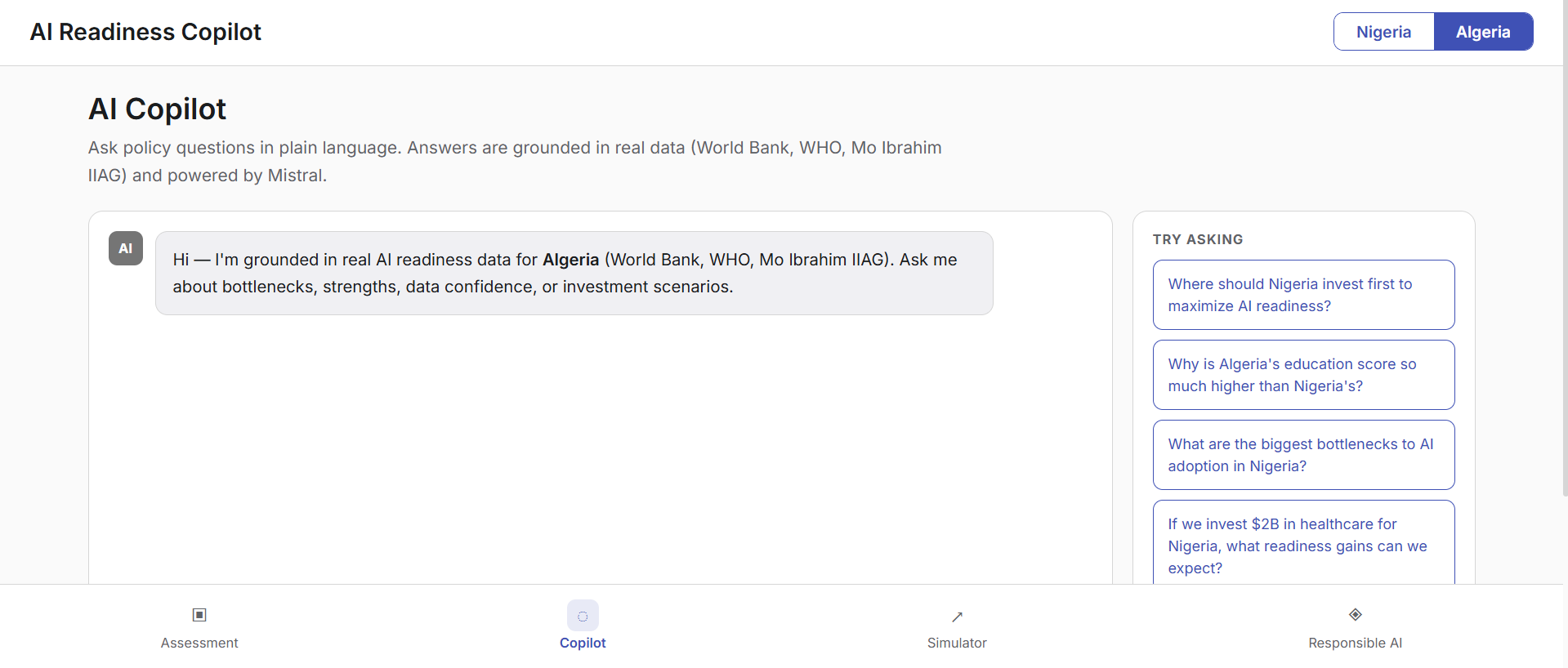
ai copilote
-
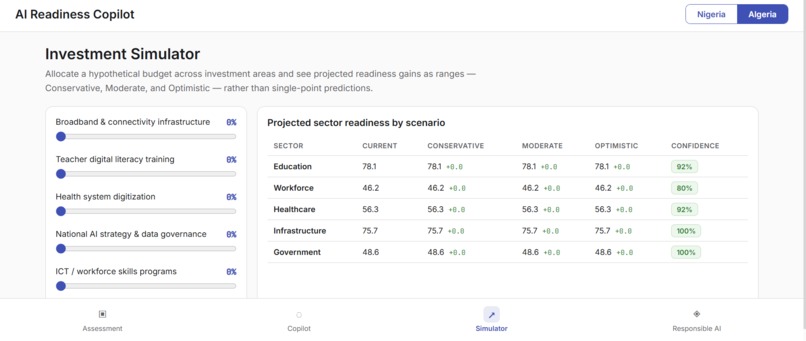
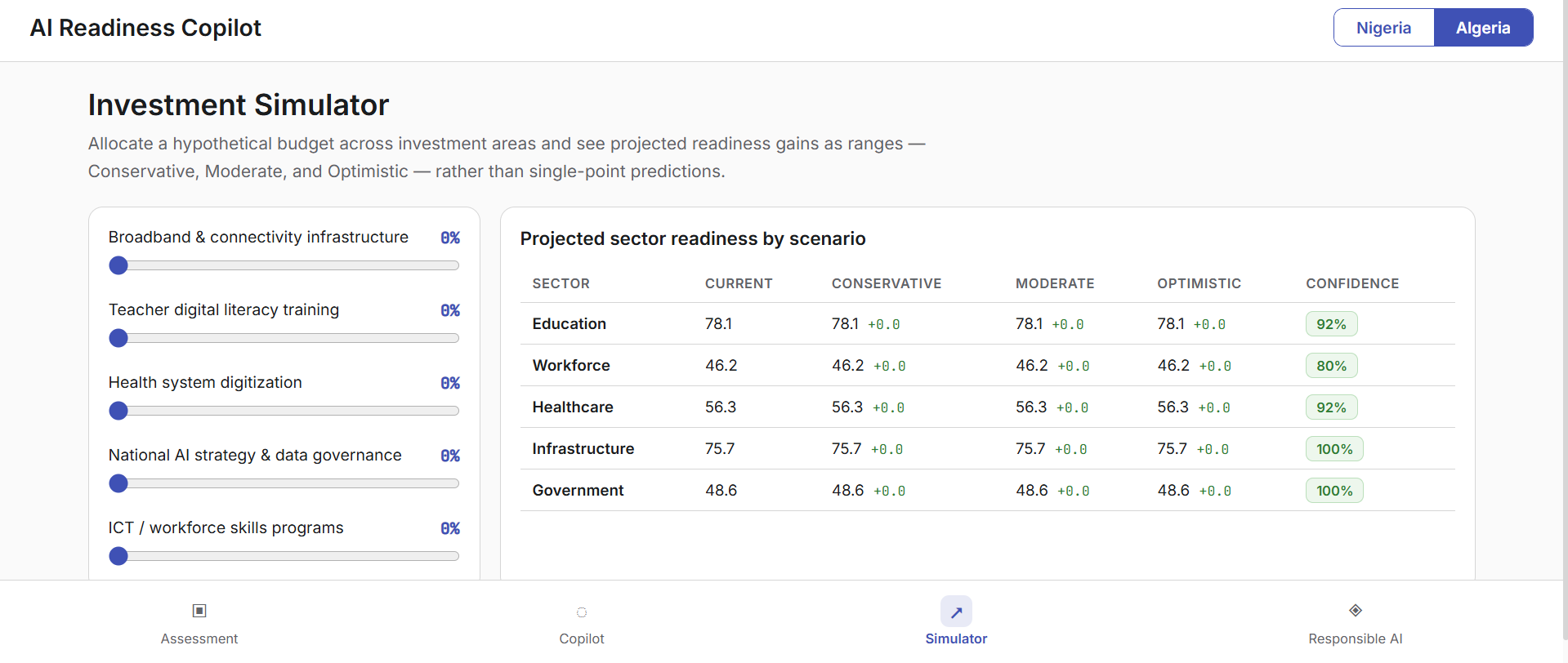
simulator
-
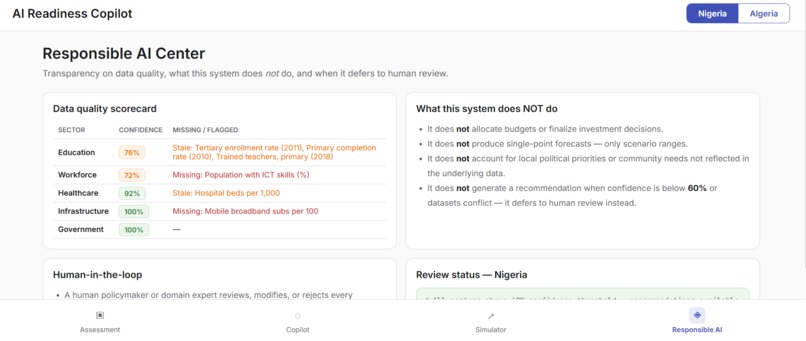
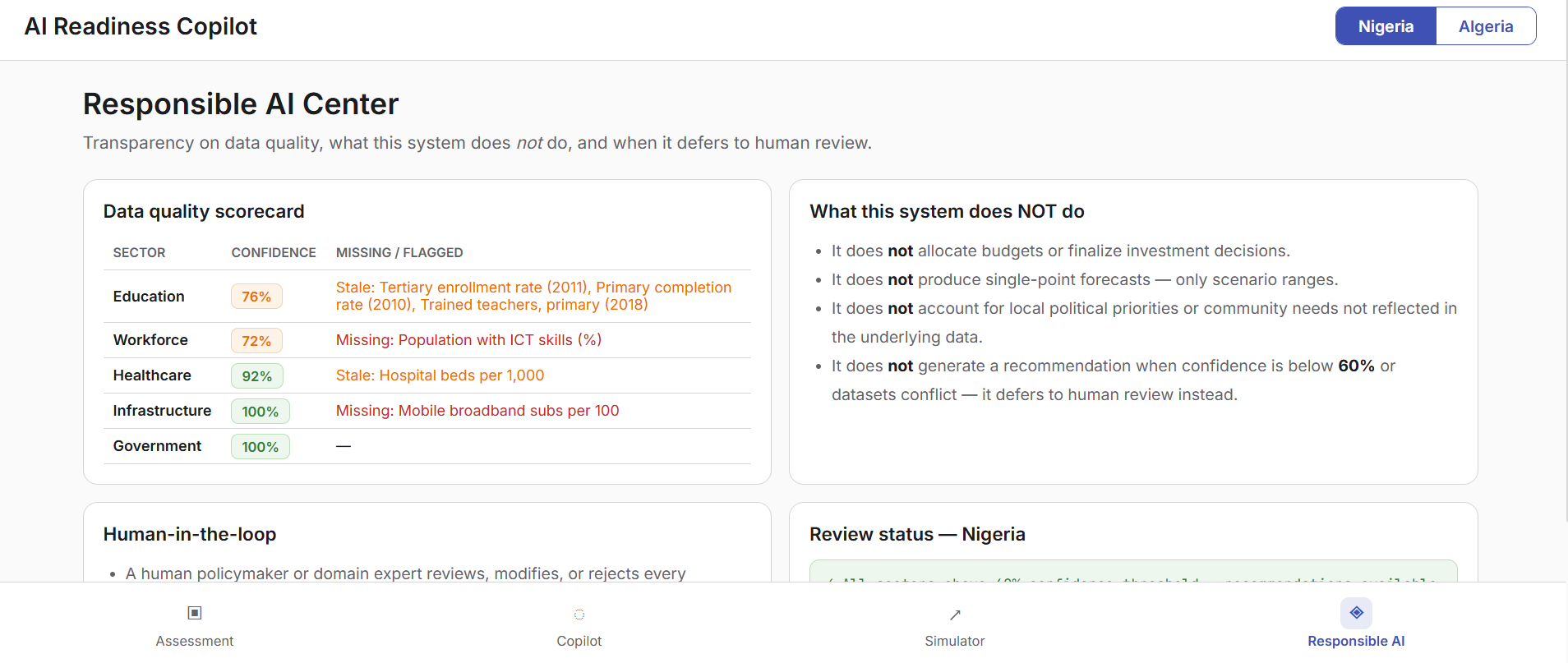
responsible ai
Inspiration
Why we chose AI readiness for Nigeria and Algeria: most global AI readiness tools focus on the US/Europe, leaving emerging economies underrepresented despite facing the most urgent infrastructure and policy decisions. As students from West and North Africa, we wanted to build something that reflects our region's real constraints and real data
What it does
our screens: Readiness Assessment (sector scores with confidence levels), AI Copilot (natural language Q&A), Investment Simulator (budget allocation -> ranged readiness projections with reasoning), and Responsible AI Center (confidence/data quality, non-goals, human review triggers).
How we built it
Data sourced from World Bank, national statistics bureaus (NBS Nigeria, ONS Algeria), ITU, UNESCO, Mo Ibrahim IIAG. Scoring methodology with weighted sector indicators. Frontend built as a web prototype demonstrating the four-screen flow.
Challenges we ran into
reconciling data availability/quality differences between Nigeria and Algeria, designing scenario ranges instead of single-point predictions, balancing AI reasoning depth with build-time constraints.
Accomplishments that we're proud of
We built a full data pipeline from scratch — pulling from four international sources, normalizing indicators into weighted sector scores, and surfacing confidence levels that reflect real data quality gaps. The investment simulator produces scenario ranges rather than point predictions, which required deliberate modeling choices at every step.
What we learned
how to translate raw public data into actionable policy reasoning, the importance of explicit non-goals and human-in-the-loop design in high-stakes decision support systems.
What's next for AI Readiness Copilot
Expanding coverage to all 54 African countries — not just Nigeria and Algeria. The scoring engine and data pipeline are already built to scale; it's a matter of sourcing and validating country-level indicator data. Connecting to live APIs so scores update automatically when new World Bank, WHO, or IIAG data is published — replacing the current static pipeline with real-time refreshes. Adding a policy recommendation engine that goes beyond comparison — suggesting specific, actionable investment priorities based on a country's unique bottleneck profile, budget constraints, and regional benchmarks. And partnering with African development institutions and ministries to validate the scoring methodology with domain experts on the ground — because the most important next step is making sure the people this tool is built for are the ones shaping how it works.


Log in or sign up for Devpost to join the conversation.