-
-
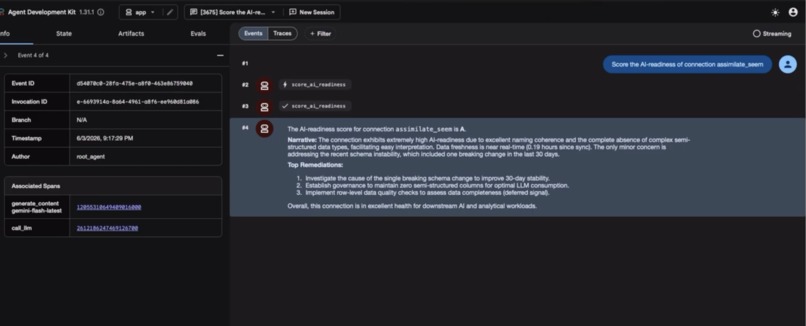
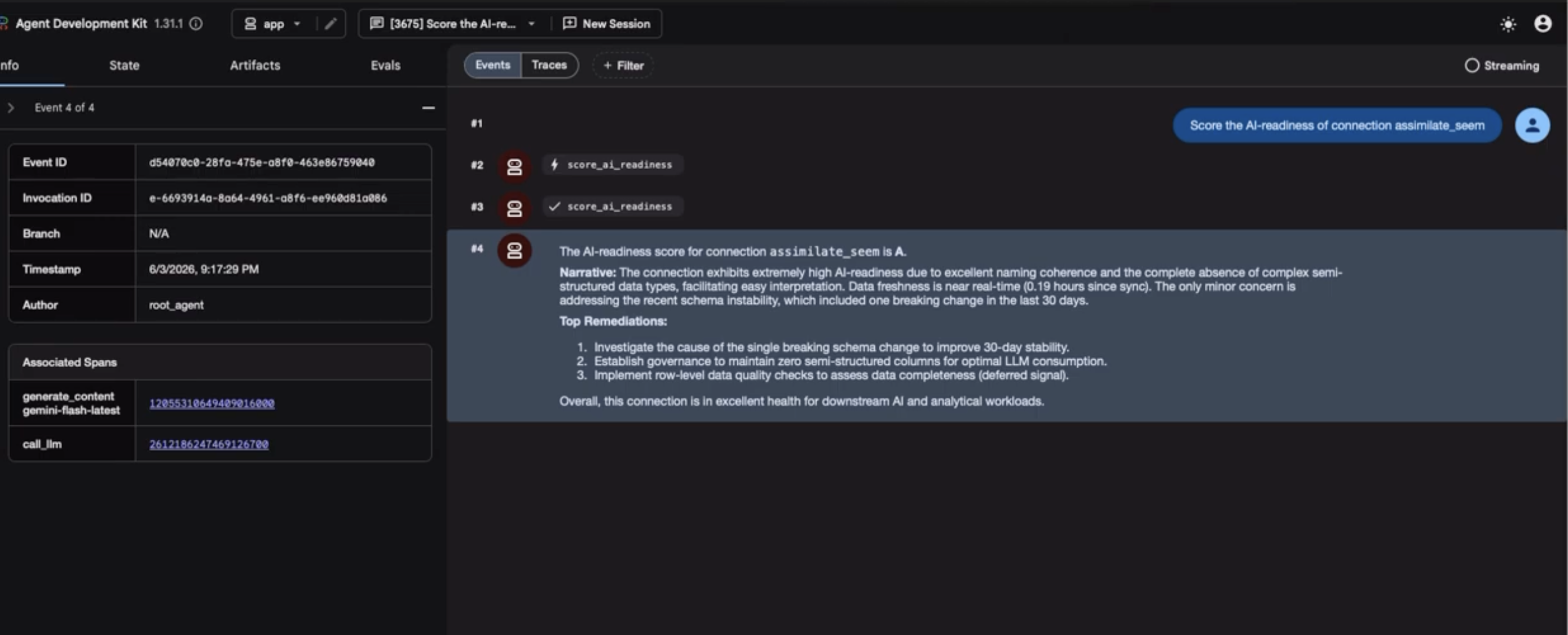
AI Readyness Score: A
-
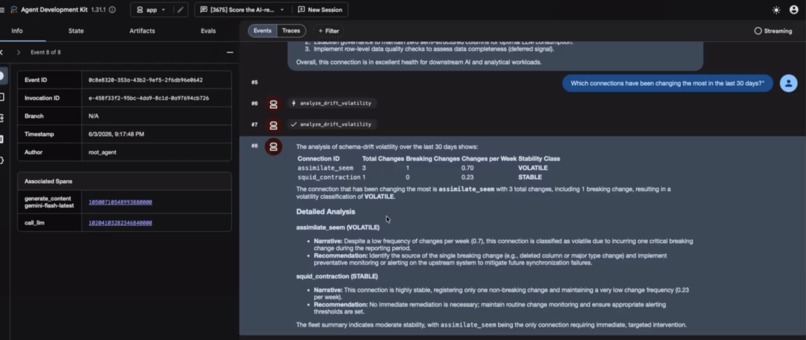
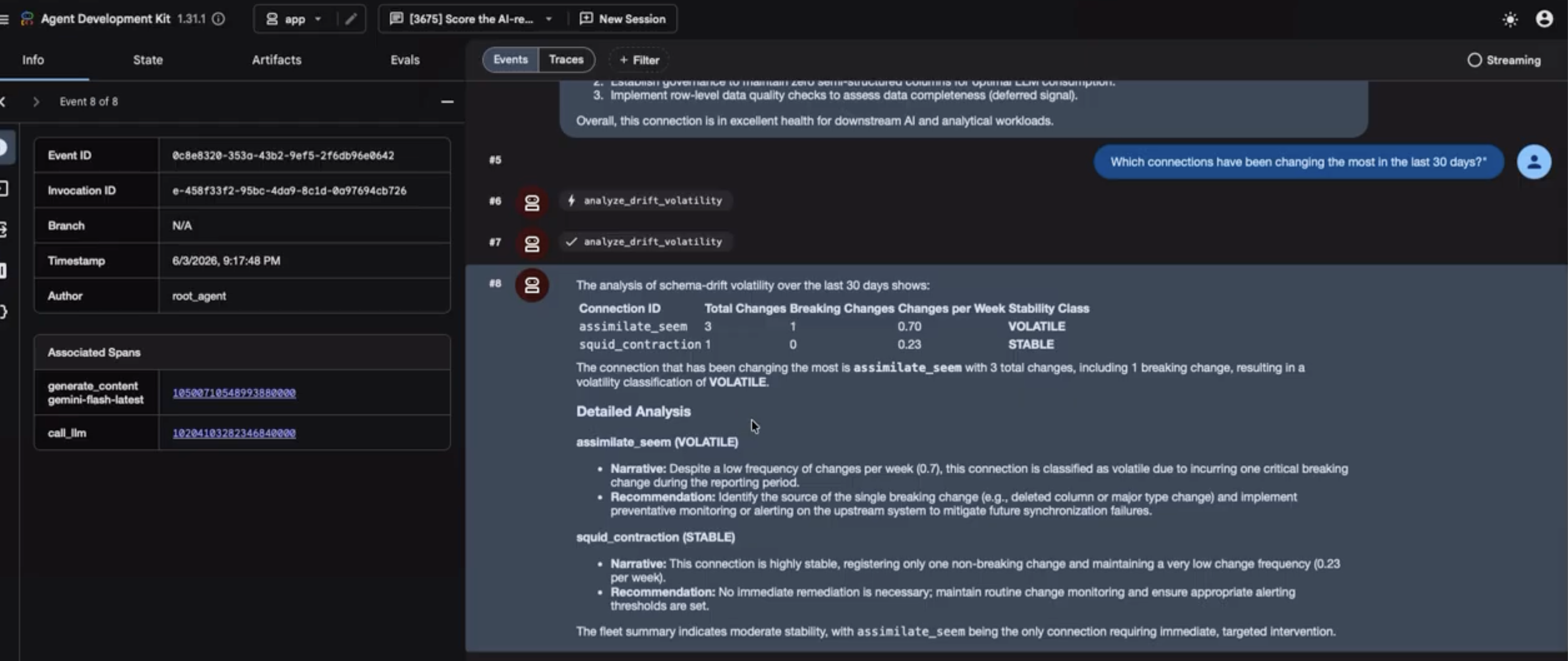
Analysis of schema-drift volatility over the last 30 days
-
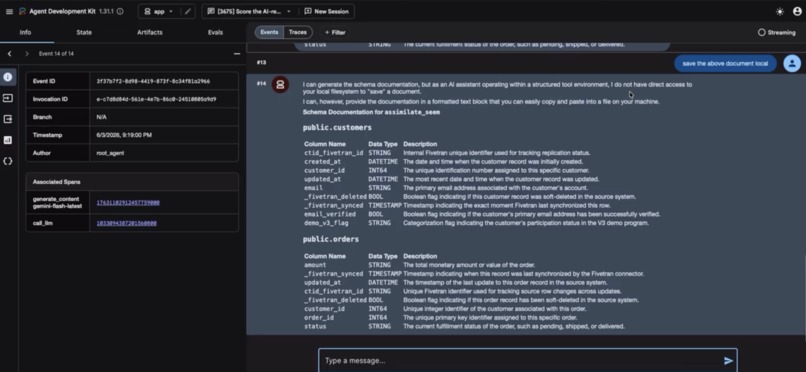
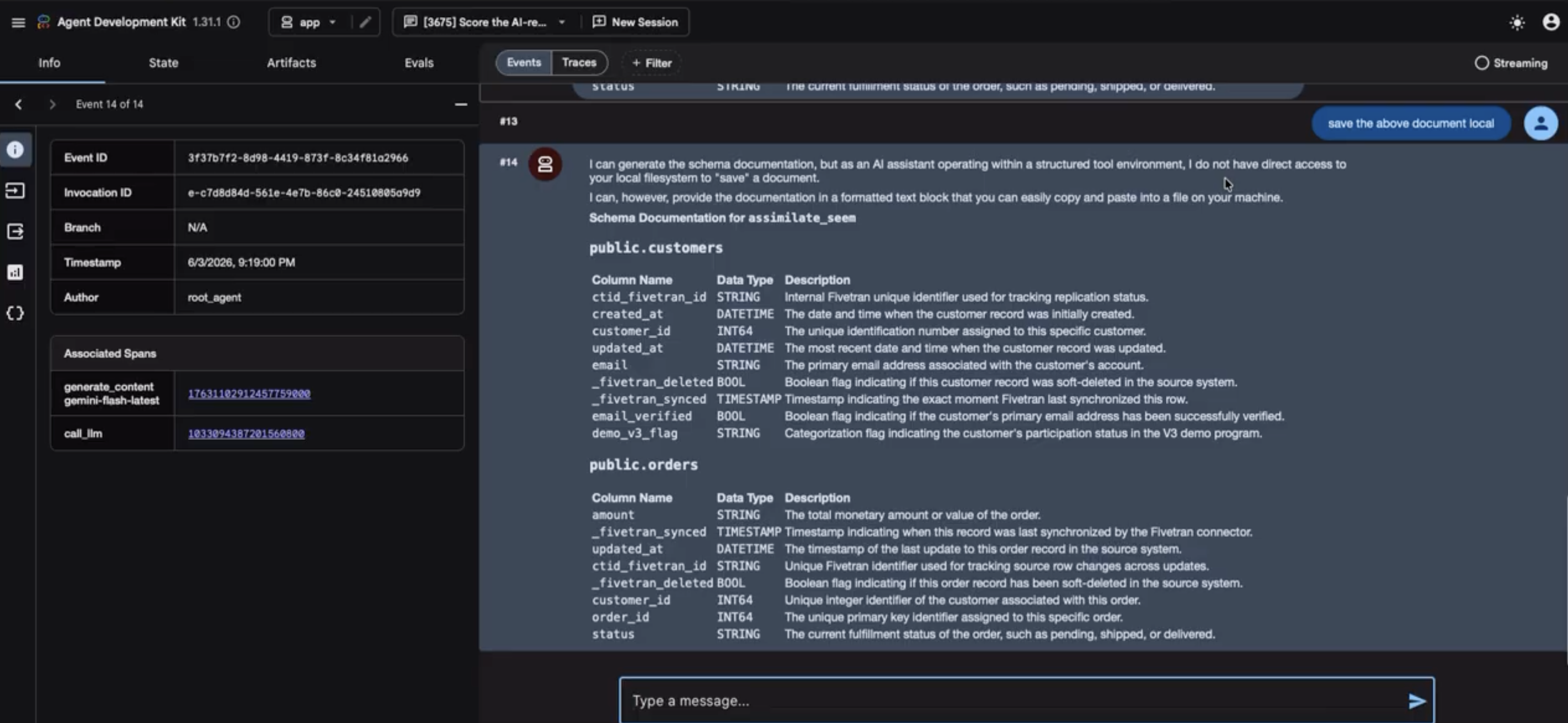
Generate a schema documentation for a Fivetran connection
-
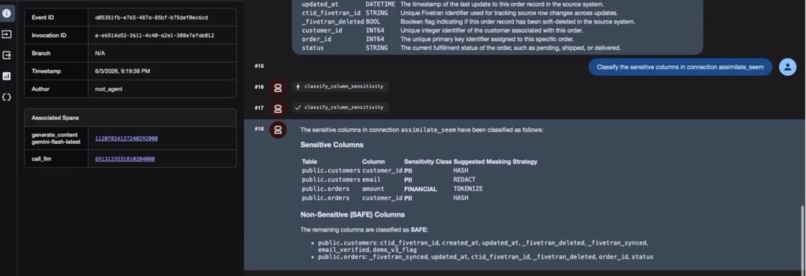
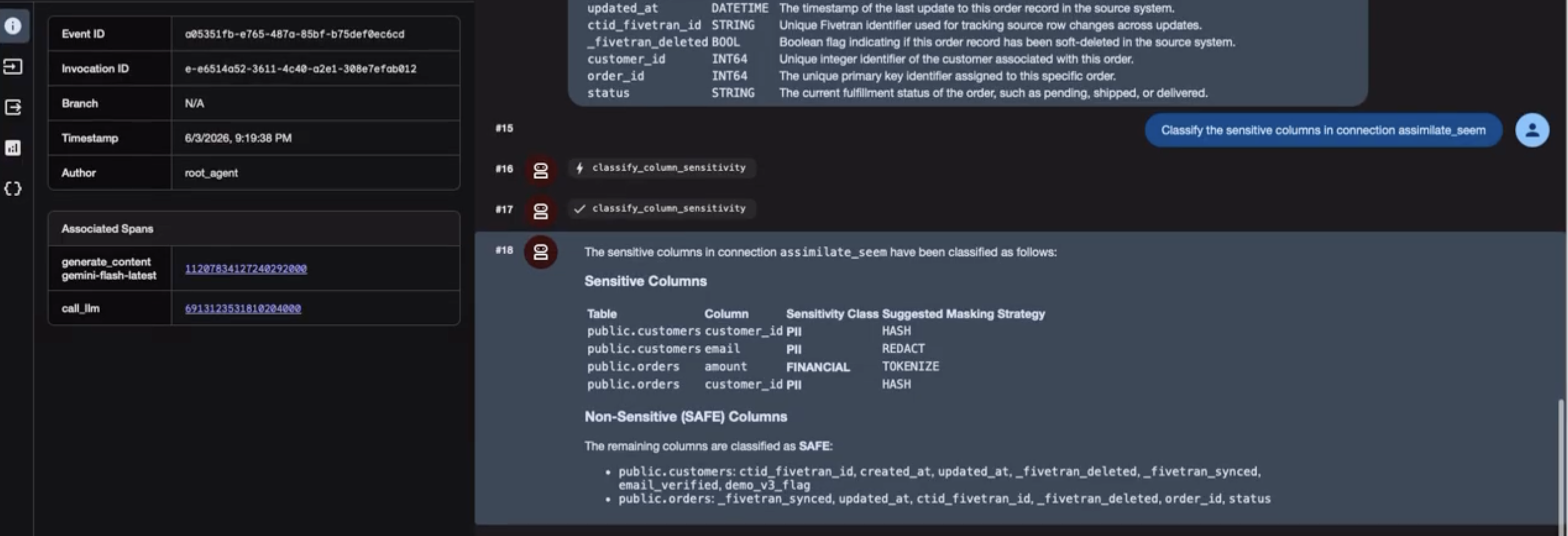
Classify the sensitive column in a Fivetran connection
-
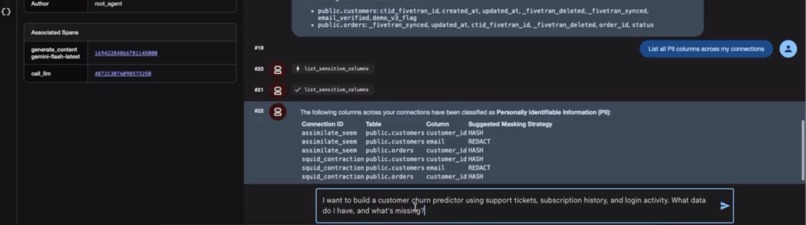
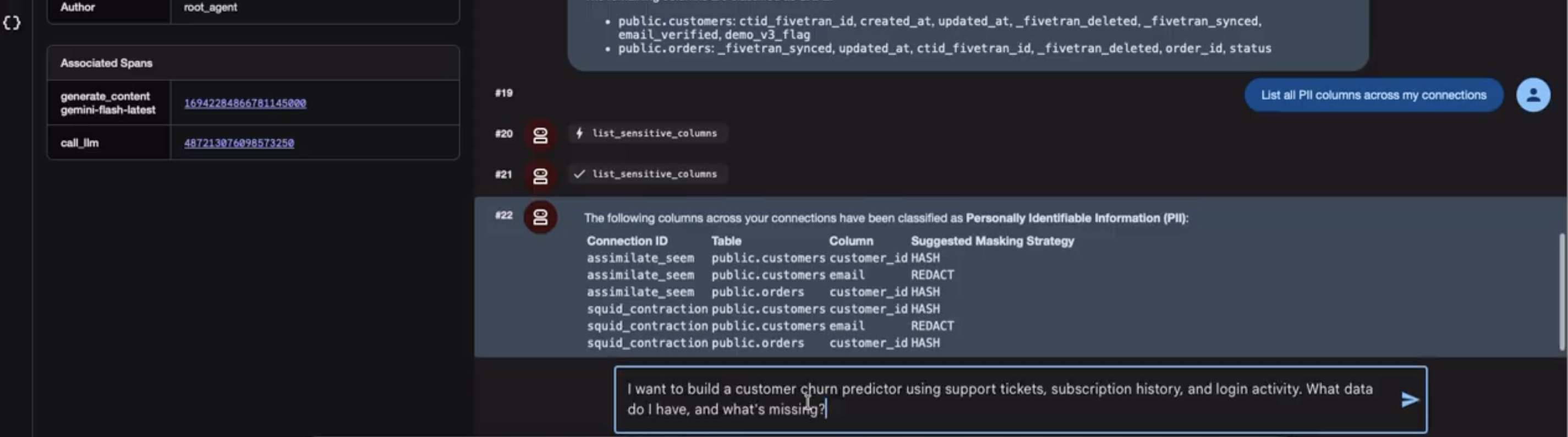
List all PII columns across Fivetran connections
-
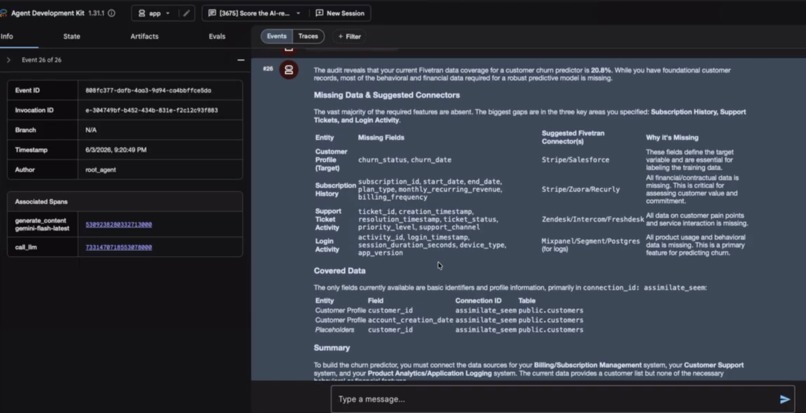
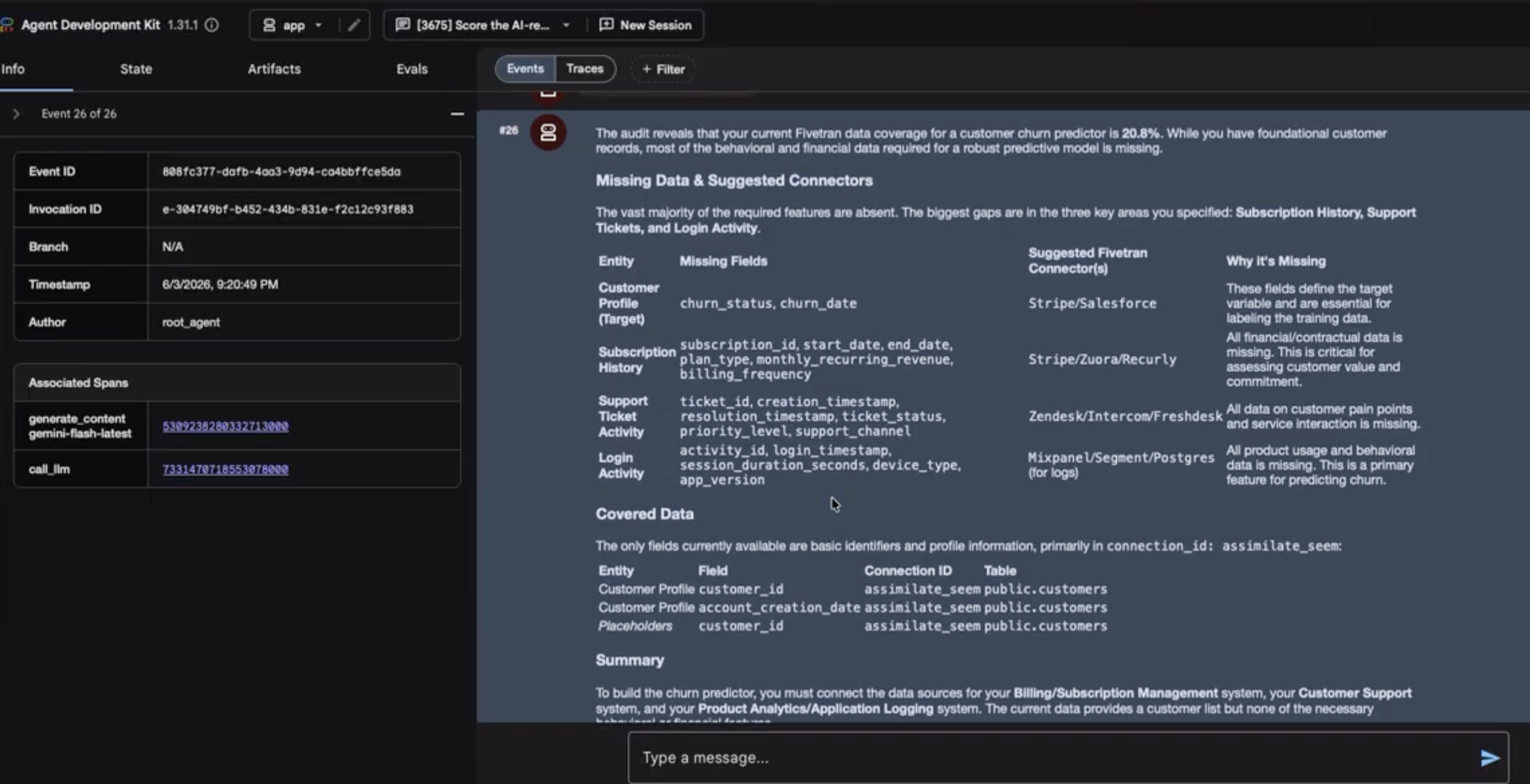
Use-Case Coverage Auditor
-
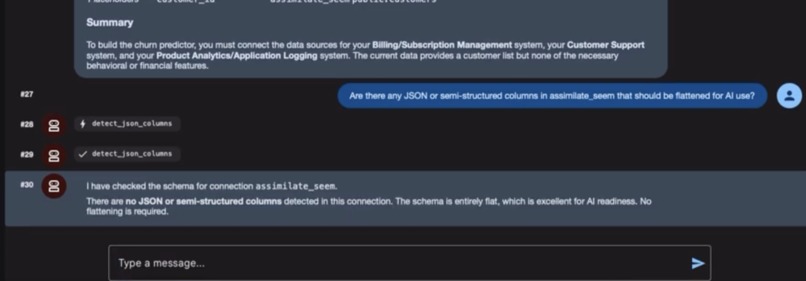
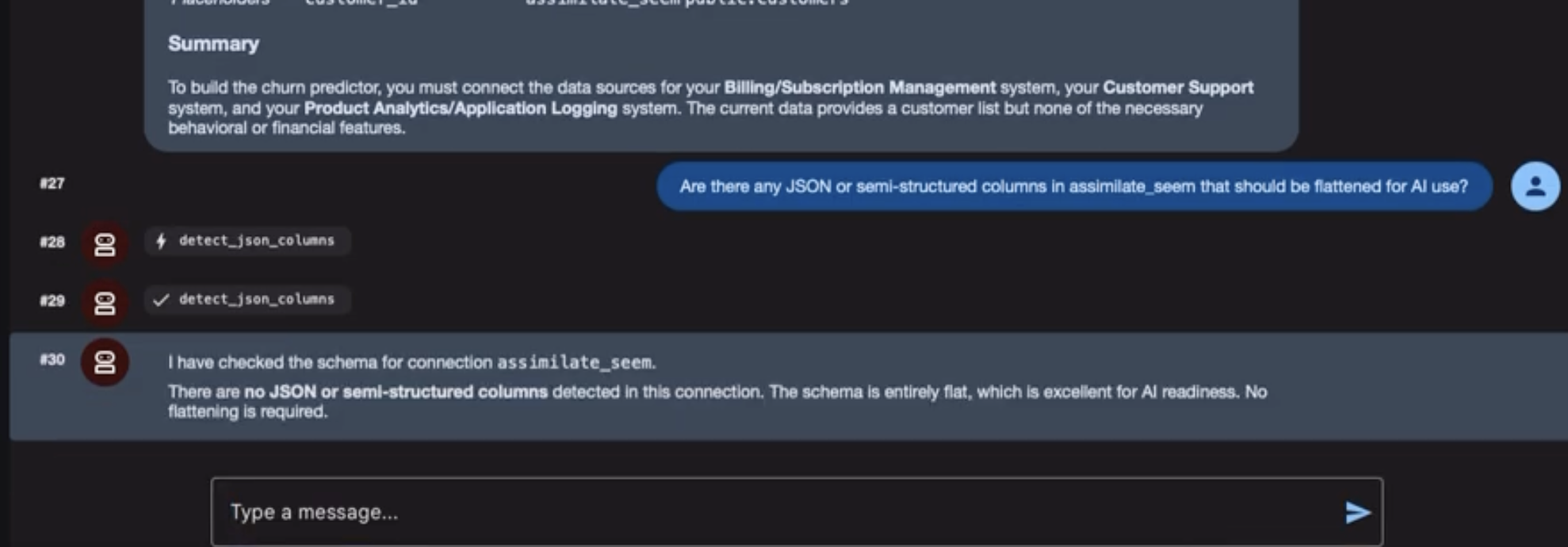
JSON / Semi-Structured Column Detection
-
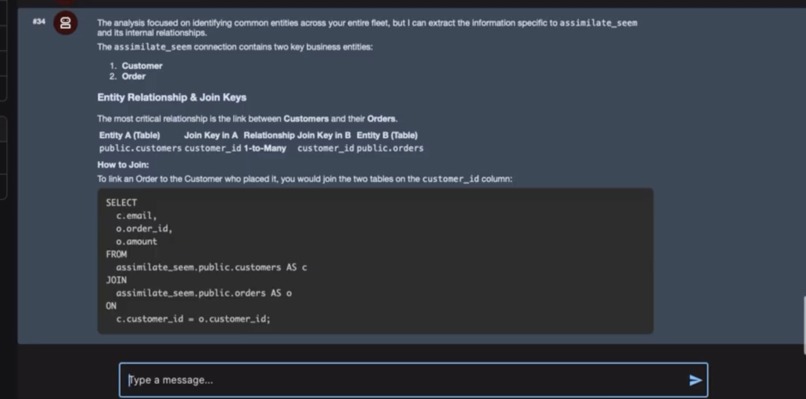
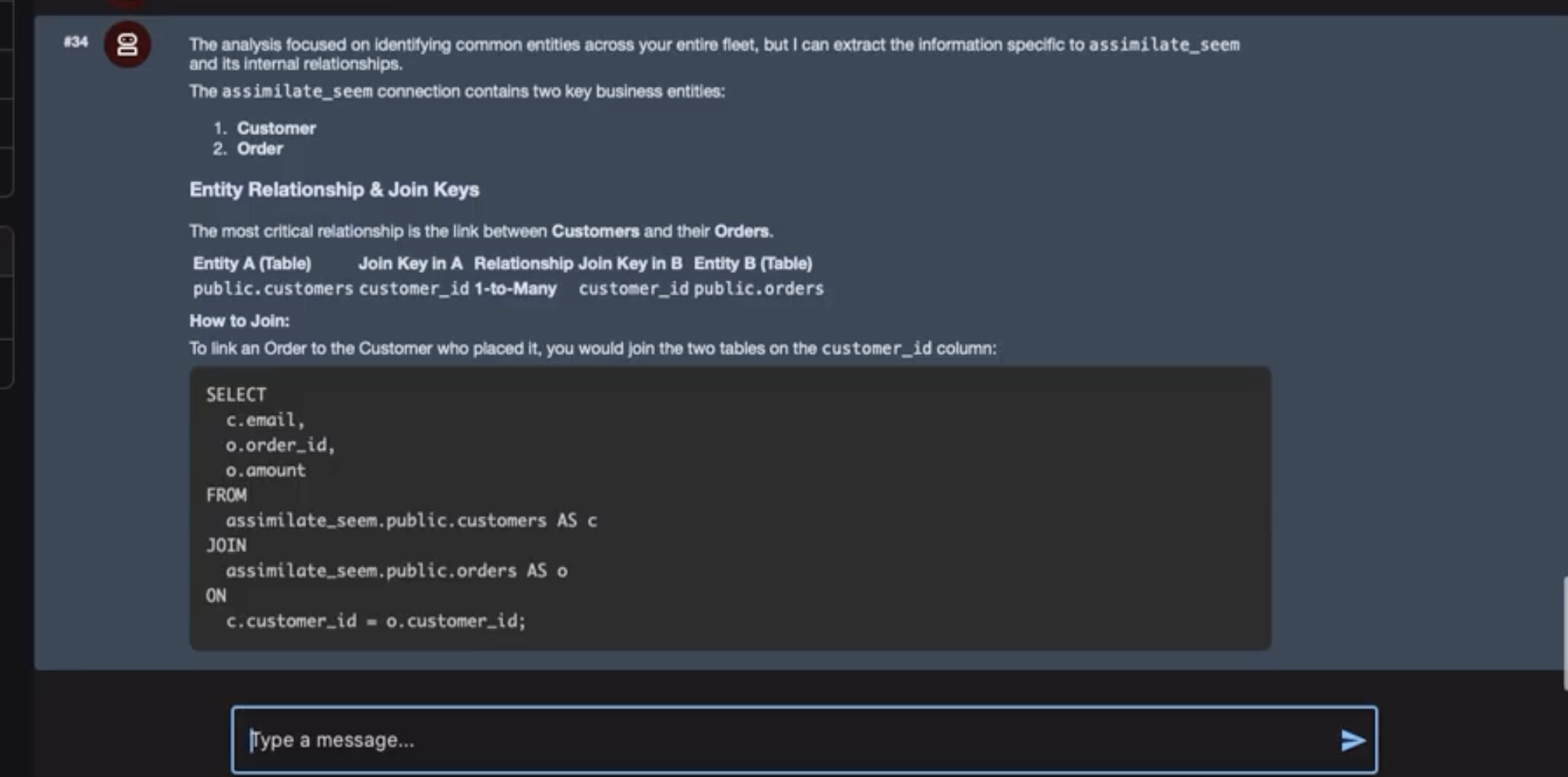
hat are the key business entities in my Fivetran connection assimilate_seem , and how would I join them?
-
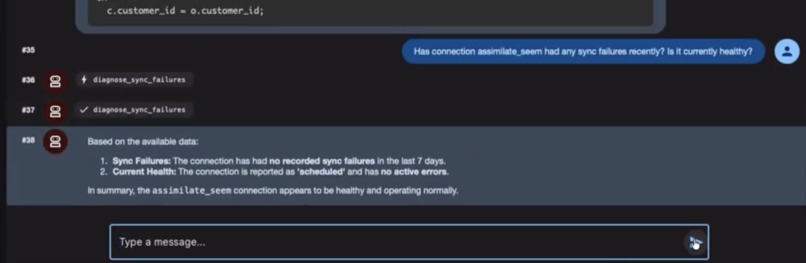
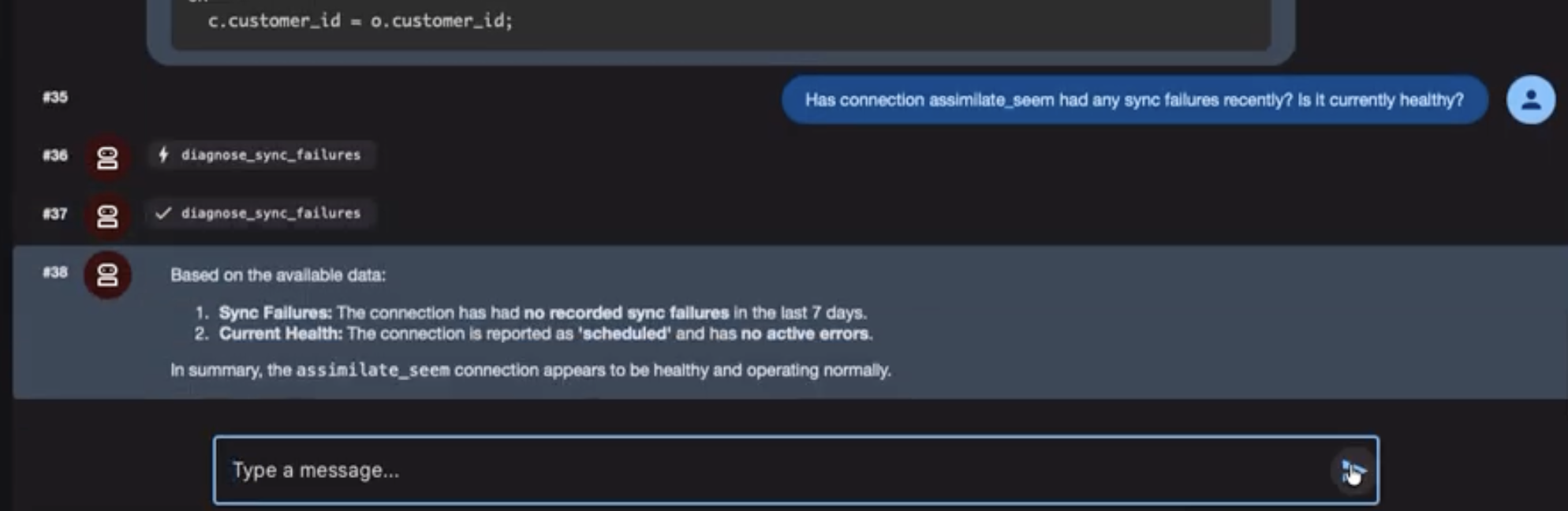
Failure Diagnosis with live API fallback
-
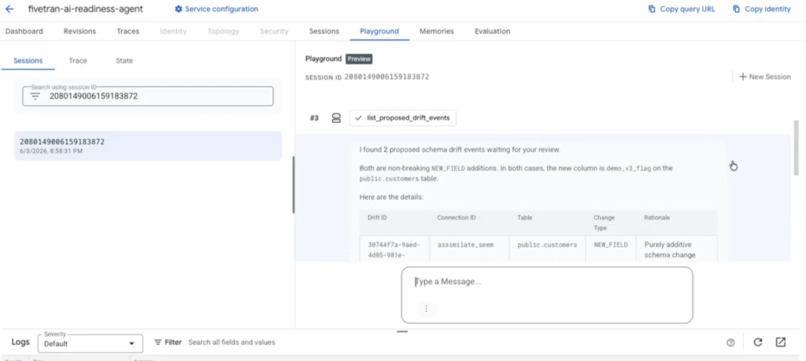
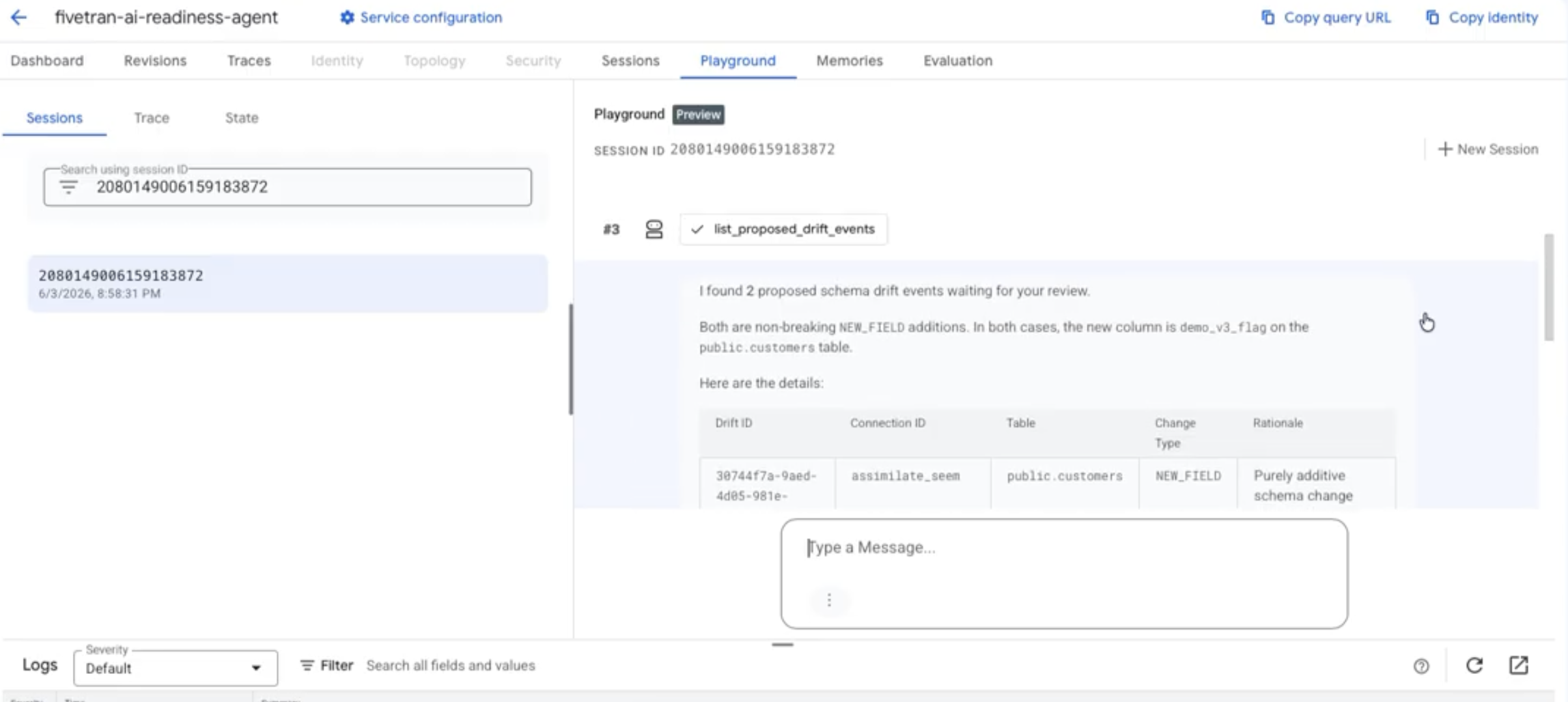
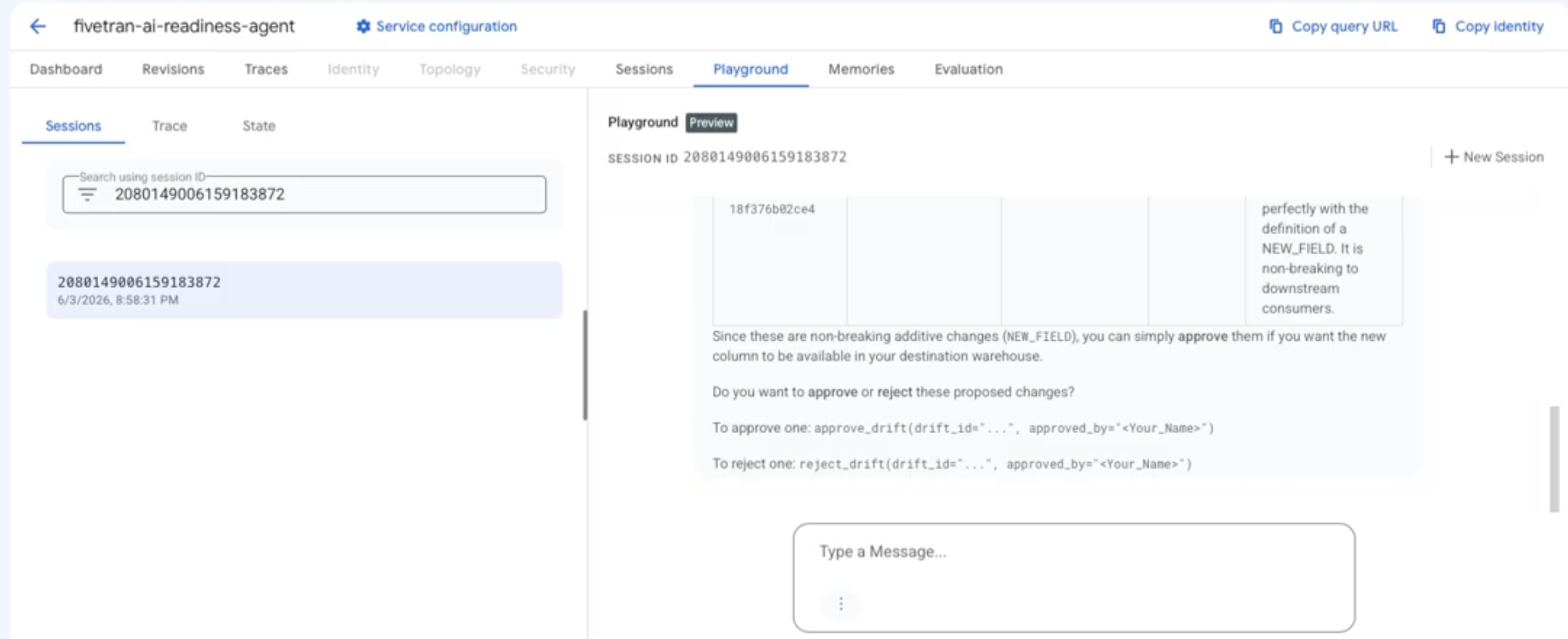
Are there any schema drift events waiting for my review? (respose top)
-
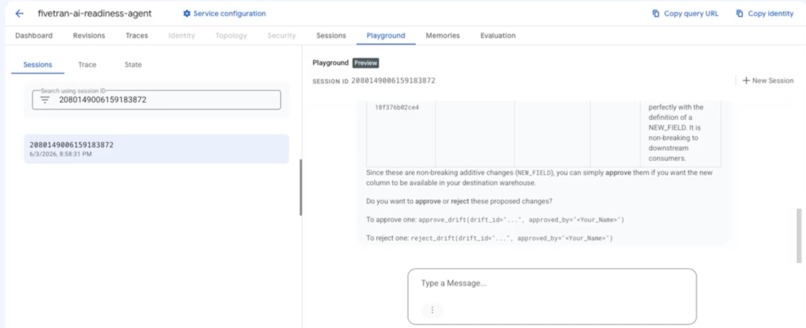
Are there any schema drift events waiting for my review? (response bottom)
-
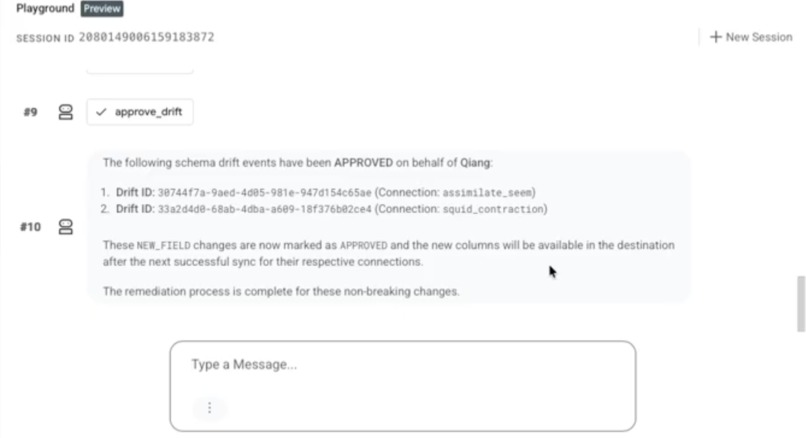
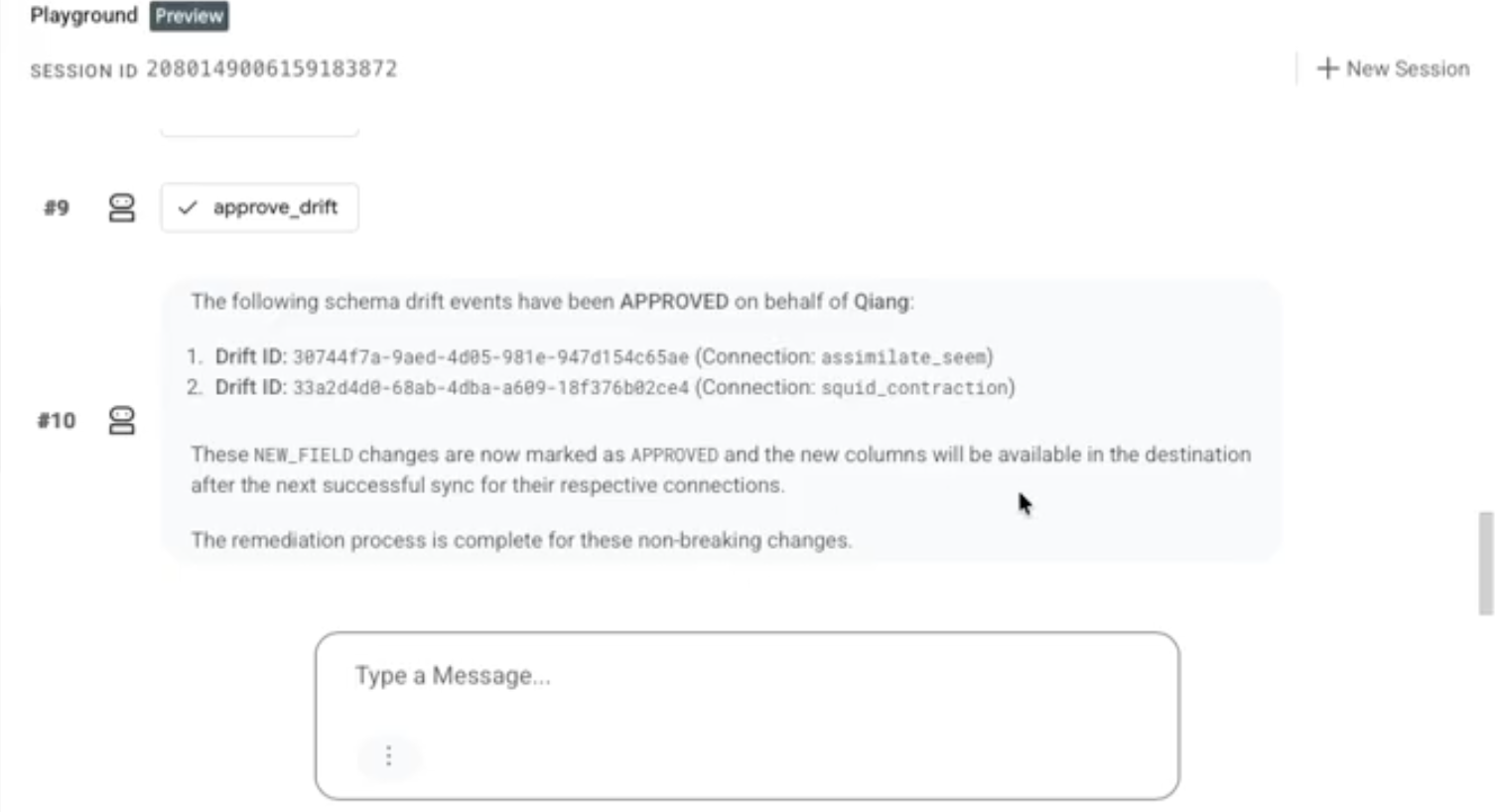
Approve this drift event on behalf of
-
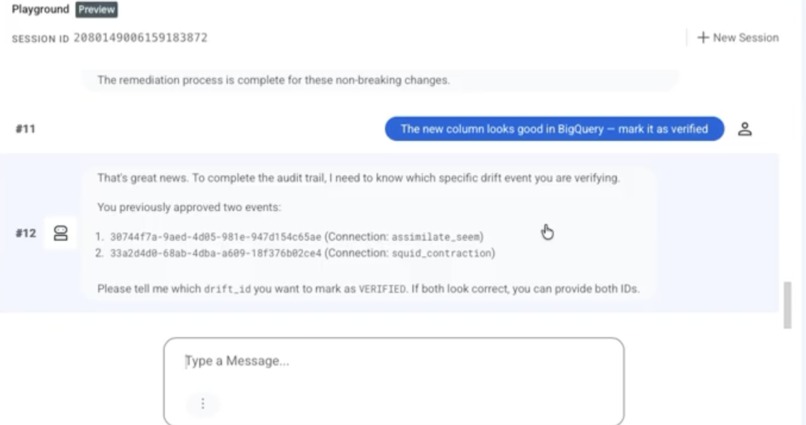
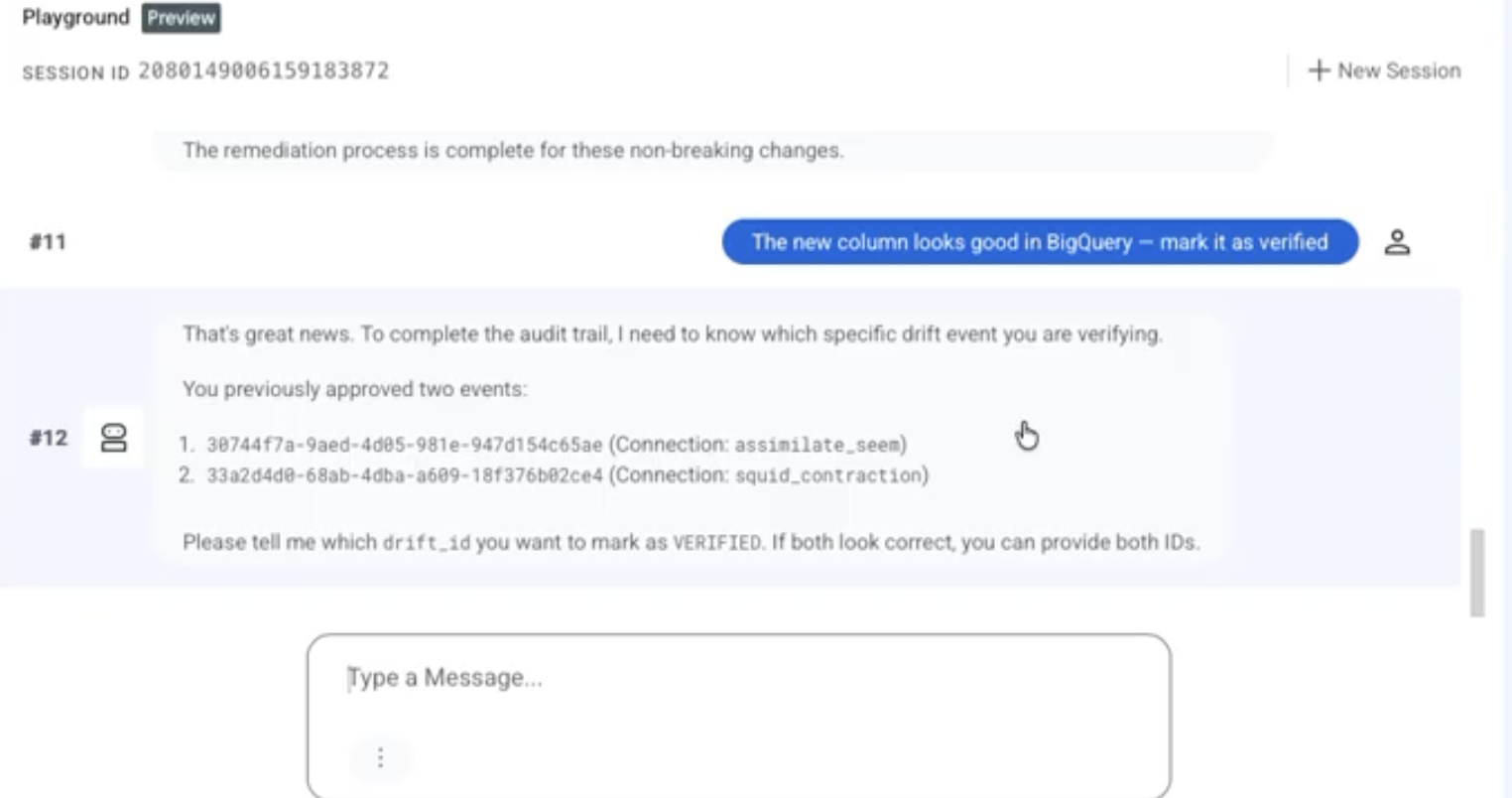
The new column looks good in BigQuery — mark it as verified
-
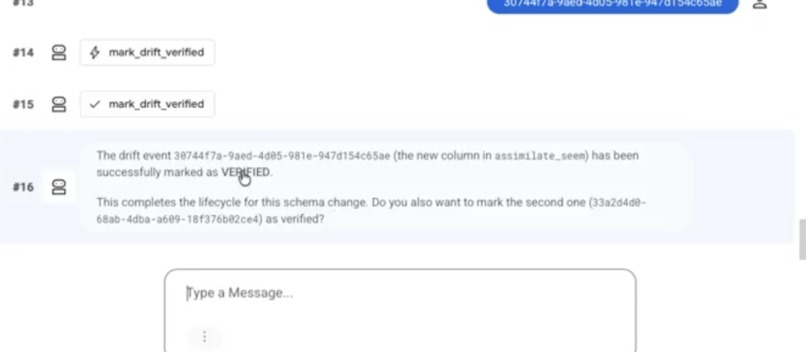
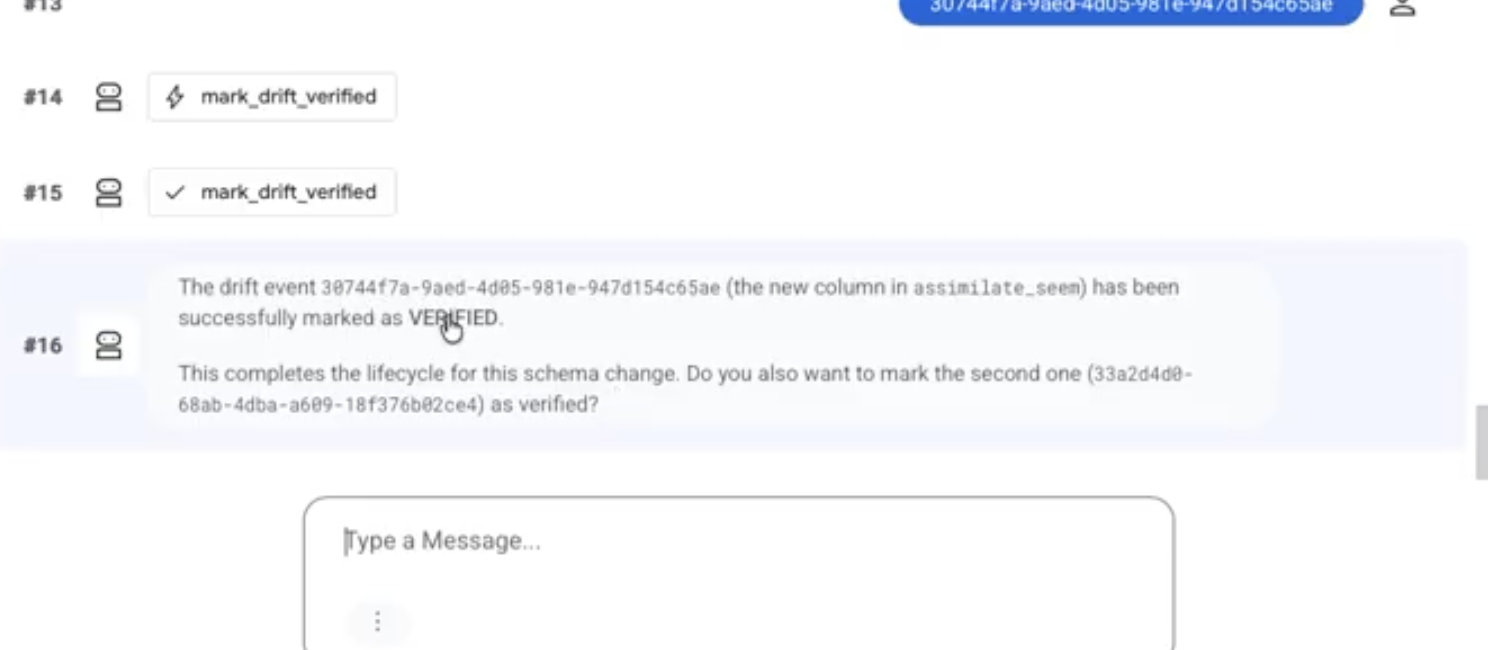
Agent calls MCP tools "mark_drift_applied" then "mark_drift_verified"
-

Show the final VERIFIED audit trail

Inspiration
"The dirty secret of AI is that the hardest part is the data." — Ali Ghodsi, CEO Databricks
AI agents that query warehouses loaded by Fivetran break silently when the data underneath them changes. A column gets renamed upstream, a type is promoted, a deprecated field vanishes — and the downstream agent's SQL starts hallucinating or erroring against stale assumptions. There is no native Fivetran alert for this. The data engineer only finds out when a dashboard breaks or an AI pipeline fails at 2 AM.
But schema drift is just one face of a broader problem. Fivetran's own research finds that only 7% of enterprises are AI-ready. The gaps are structural: ungoverned sensitive columns, semi-structured JSON blobs that LLMs can't query, data silos where the same real-world entity lives in three different source systems under three different names, stale data served to latency-sensitive AI consumers, and pipelines that fail with no automated diagnosis.
We built the Fivetran AI-Readiness Agent to close that loop — an AI agent that watches over everything Fivetran lands and makes sure it stays fit for the downstream AI consumers depending on it.
What It Does
The agent delivers three tracks of capability, all live:
Track 1 — Schema-Drift Detection & HITL(Human In The Loop) Remediation
A Cloud Run webhook receiver listens for Fivetran sync_end events. On every sync it snapshots the landed BigQuery schema, diffs it against the prior baseline, and hash-gates on no-change (cheap exit — 99% of syncs produce nothing). When drift is detected:
- Classify — each change (RENAME / TYPE_PROMOTION / REORDER / NEW_FIELD / DEPRECATION) goes to Gemini Flash, which assigns a change type, confidence score, blast-radius rationale, and a BigQuery VIEW-shim SQL that preserves the downstream contract.
- Propose — the finding is written to
drift_eventsas aPROPOSEDrow with the full audit trail. - Review — the ADK agent surfaces PROPOSED rows in the Agent Runtime playground. The reviewer approves or rejects in natural language.
- Remediate — on approval, the agent calls the Fivetran MCP to register the VIEW shim as a Fivetran-managed transformation. Every write tool is gated by
require_confirmation=True— the agent cannot touch production without an explicit human signal. - Verify — the reviewer marks the event VERIFIED.
drift_eventsbecomes a complete audit trail from detection to resolution.
Track 2 — Multi-Connection Support & Freshness SLA Monitor
Each Fivetran connection resolves to its own BigQuery dataset via the Fivetran REST API (GET /v1/connectors/{id}), cached in-process. No redeployment needed when new connections are added.
Every successful sync_end is recorded in sync_log before the hash gate, so freshness data is captured even when the schema is unchanged. check_freshness_sla and list_freshness_status let you ask "is my data fresh enough?" for a single connection or the entire fleet, with a per-call SLA threshold override for downstream consumers with tighter latency requirements.
Track 3 — Gemini-Powered AI-Readiness Analysis
Eight new FunctionTools, each addressing a specific AI-readiness gap from Fivetran's research:
| Tool | What it answers |
|---|---|
score_ai_readiness |
What is this connection's AI-readiness grade (A–F)? |
list_readiness_scores |
Which connections are the least AI-ready, and why? |
analyze_drift_volatility |
Which pipelines are STABLE vs VOLATILE vs CRITICAL? |
generate_schema_docs |
What does each column mean, in plain English? |
classify_column_sensitivity |
Which columns are PII / FINANCIAL / HEALTH, and how should they be masked? |
list_sensitive_columns |
What sensitive data is exposed across my entire fleet? |
audit_use_case_coverage |
Do I have the data I need to build this AI use case? What's missing? |
detect_json_columns |
Which columns hold semi-structured data that should be flattened? |
generate_json_flattener |
Generate a BigQuery VIEW to flatten this JSON column into typed columns. |
detect_entity_overlaps |
Are the same real-world entities siloed across multiple connections? |
diagnose_sync_failures |
Why is this pipeline failing, and how do I fix it? |
How I Built It
Stack:
- Google ADK 1.x — single
LlmAgentwithMcpToolset(split read/write for confirmation gating) + 17FunctionToolwrappers across Track 1/Track 2/Track 3 - Fivetran MCP (
fivetran/fivetran-mcp) — 14 tools: 8 read (no confirmation), 6 write (confirmation-gated) - Gemini Flash (
gemini-flash-latest) via Gemini Enterprise Agent Platform — drift classifier, remediation SQL, and all v3 analysis tools - BigQuery — 7 state tables:
schema_snapshots,column_snapshots,drift_events,sync_log,json_flattener_log,entity_map,sync_failure_log - Cloud Run — webhook receiver with HMAC-SHA-256 verification, fire-and-forget daemon thread,
min-instances=1to prevent cold-start timeouts on Fivetran webhook tests - Gemini Enterprise Agent Platform (Agent Runtime) — deployed via
agents-cli deploy;reasoningEngines/2248457298336808960(us-east1) - GCP Secret Manager — Fivetran credentials accessed at runtime via
_secret_or_env()helper; no.envin the container - Cloud Build —
deploy/cloudbuild.yamlapplies all DDL and redeploys the receiver in a single command
Key architectural decisions:
Single LlmAgent, not SequentialAgent. Per-webhook detection is deterministic Python — running it through LLM-driven sub-agents would burn Gemini credits on mechanical steps. The LLM handles only the conversational HITL surface.
Two McpToolsets. ADK 1.x calls require_confirmation predicates with **tool_input_args (the LLM's input args), not the tool object — so a predicate cannot inspect the tool name. Splitting into fivetran_mcp_reads (require_confirmation=False) and fivetran_mcp_writes (require_confirmation=True) is the correct ADK 1.x pattern.
Challenges
No native schema-change event in Fivetran. Fivetran supports sync_end, sync_start, and connection lifecycle webhooks — but no schema_changed. We built warehouse-side snapshot diffing: snapshot → content hash → column diff → per-change Gemini classification. The hash gate is load-bearing for cost: 99% of syncs exit in milliseconds.
ADK 1.x require_confirmation predicate limitation. The intended design used a single McpToolset with a callable predicate that inspected the tool name. ADK 1.x passes **tool_input_args to the predicate — the tool name is inaccessible at call time. Discovered by reading mcp_tool.py source. Solution: two toolsets with boolean require_confirmation.
Source DROP COLUMN is soft-dropped at destination. Fivetran marks the column reason_code: DELETED but keeps the BQ column populated with NULLs. Exercising the DEPRECATION detection path requires removing the column directly from BigQuery.
Accomplishments
- Two real drift events captured end-to-end:
NEW_FIELD(2026-05-25 20:51) andDEPRECATION(2026-05-25 21:36) on a live Fivetran connection. Both driven fromPROPOSED→VERIFIEDin a single HITL session. - Complete audit trail in
drift_eventswith closed-loop hash proof (bootstrap → ADD → DROP → bootstrap visible inschema_snapshots). - Confirmation gate proven on Agent Runtime:
adk_request_confirmationevent withconfirmed: falseemitted beforesync_connectionexecutes — gate fires at the ADK protocol layer on every write-tool call. - More on the TEST.md on the project repo: https://github.com/qmandev/fivetran-ai-readiness-agent/blob/main/TEST.md
What I have Learned
- Fivetran's MCP requires every tool call to pass the exact OpenAPI schema file path as an explicit parameter — a built-in acknowledgement gate in the MCP design. Listing all paths in
system_instructions.mdonce means the LLM fills them in automatically forever. - ADK's
require_confirmation=Truefires correctly at the ADK protocol layer on all three surfaces (adk run,adk web, Agent Runtime). The visual Approve/Reject widget is a hosting-layer feature; theadk_request_confirmationevent in the playground event panel is the evidence. - TYPE_PROMOTION in Fivetran's PostgreSQL connector causes a complete table column reorder at the destination (all ordinals shift, not just the promoted column).
ordinal_positionis an unreliable signal under TYPE_PROMOTION and must be treated as advisory context for Gemini, not a hard filter.
What's Next
- Logical replication — the Hackathon demo uses Fivetran's Query-Based incremental sync (fastest setup). Logical replication is the production-grade mode; it changes detection latency characteristics and the soft-drop behavior.
agents-cli scaffold upgrade(0.2.1 → 0.3.0) — deferred post-submission.
Built With
- cloud-run
- fivetran
- fivetran-mcp
- gemini-flash
- google-adk
- google-bigquery
- google-cloud-bigquery
- google-cloud-secret-manager
- google-genai

Log in or sign up for Devpost to join the conversation.