AI RAXBAR — From Repeated Operational Signals to Accountable Decisions
Inspiration
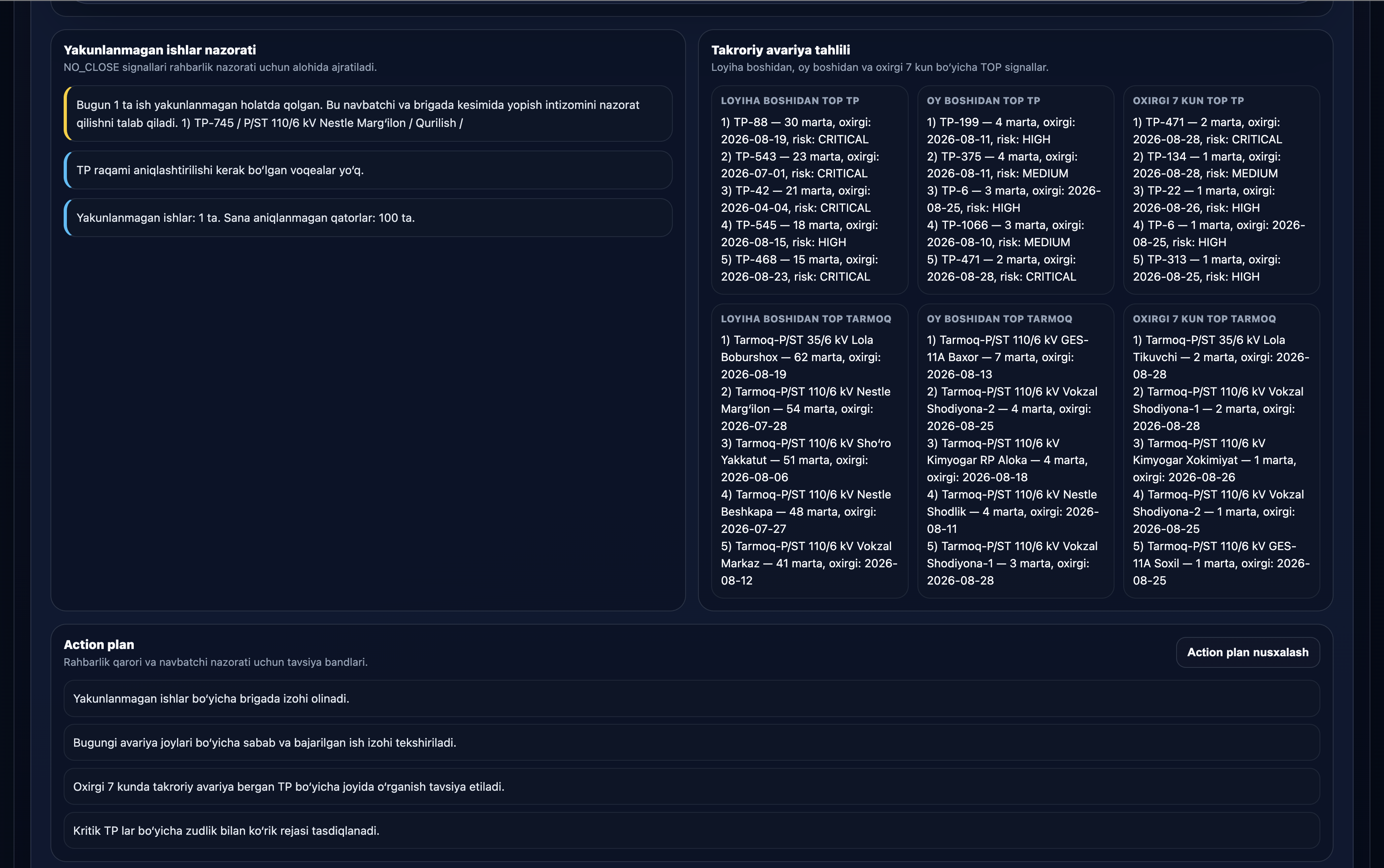
Electrical distribution operators deal with thousands of operational signals: outages, transformer risk, communication loss, maintenance backlogs, field complaints, and recurring failures.
The difficult part is not seeing an individual incident. It is recognizing when separate incidents across time are actually evidence of the same underlying operational problem — and then turning that evidence into a safe, accountable action.
AI RAXBAR was created to address that problem.
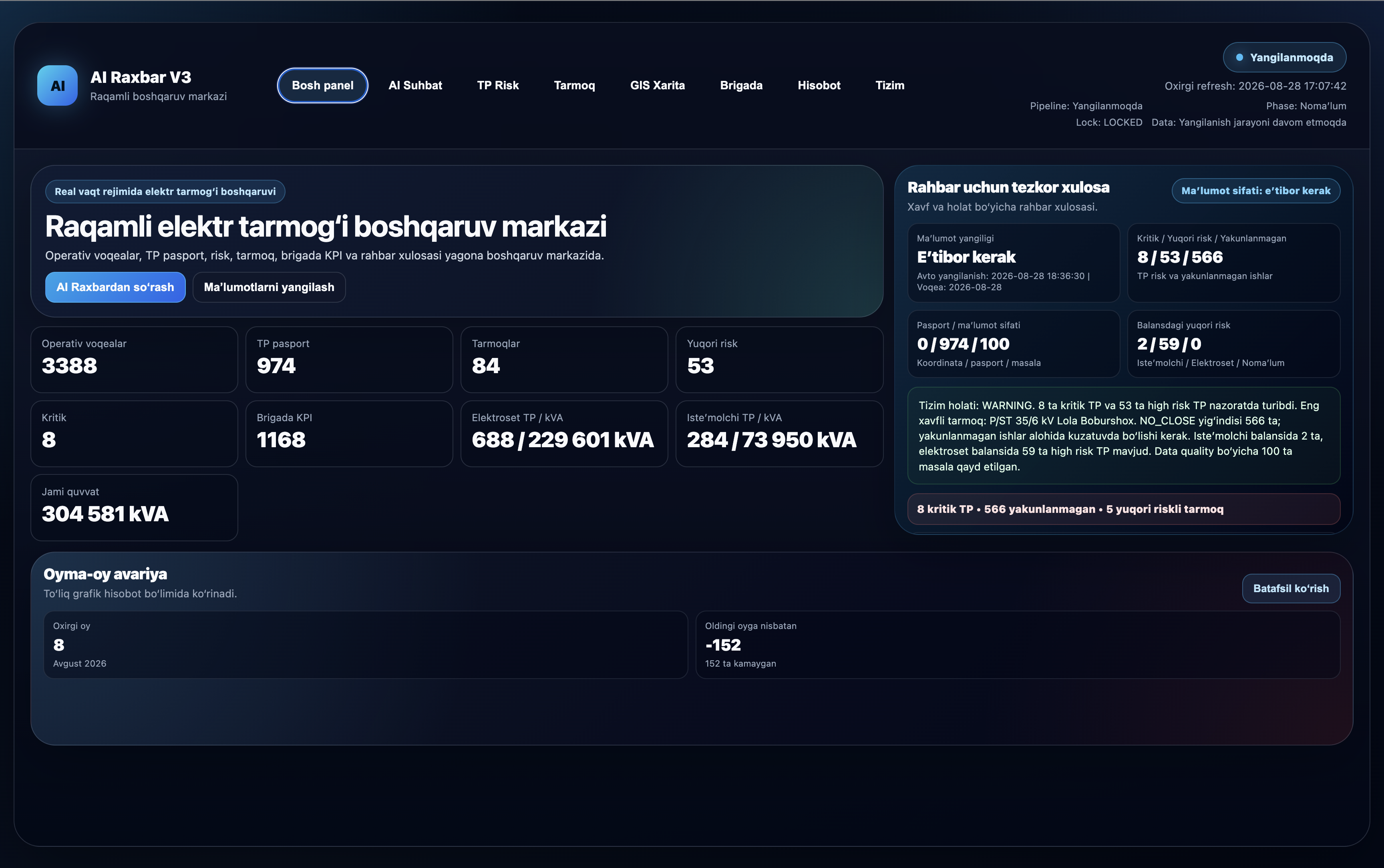
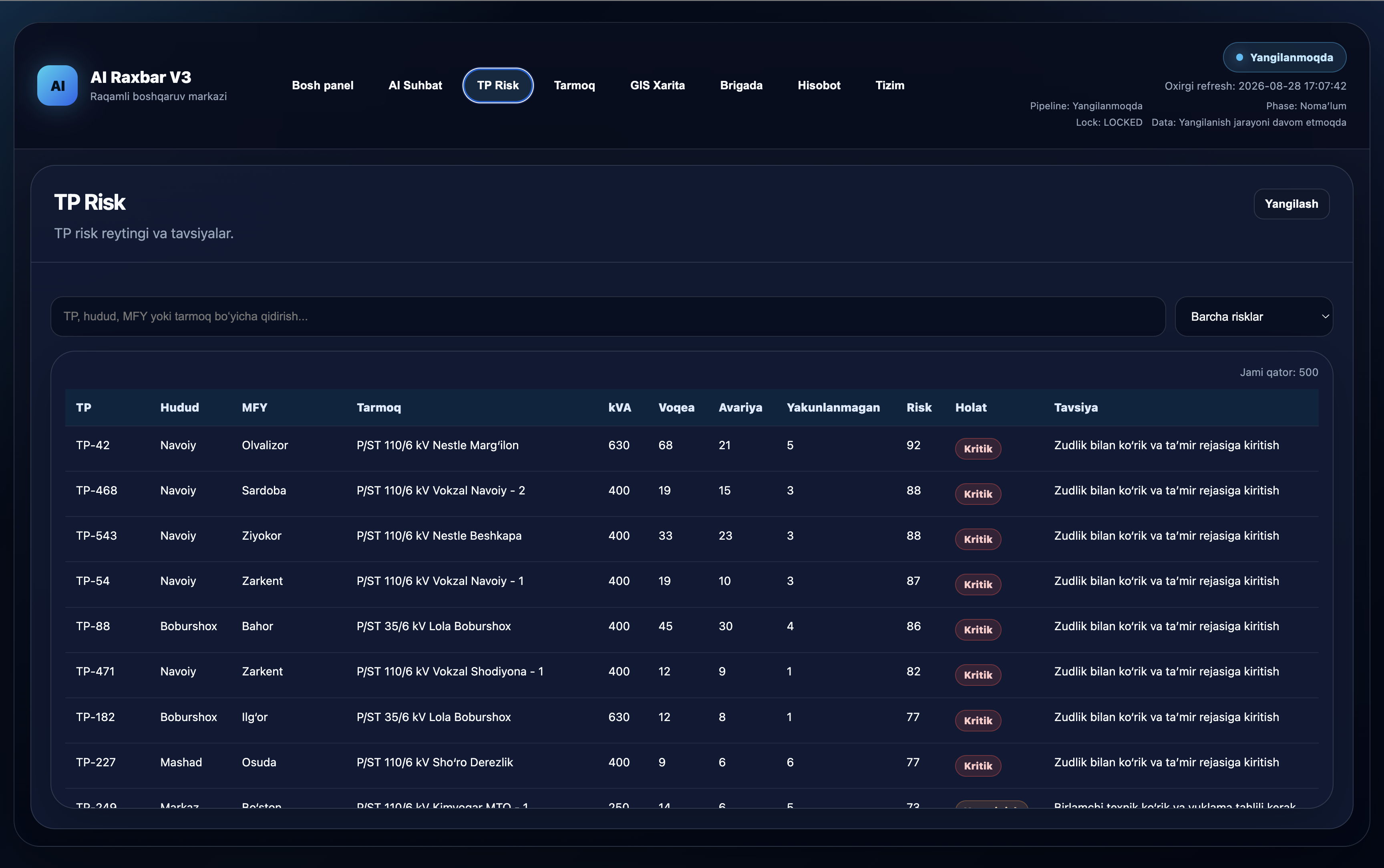
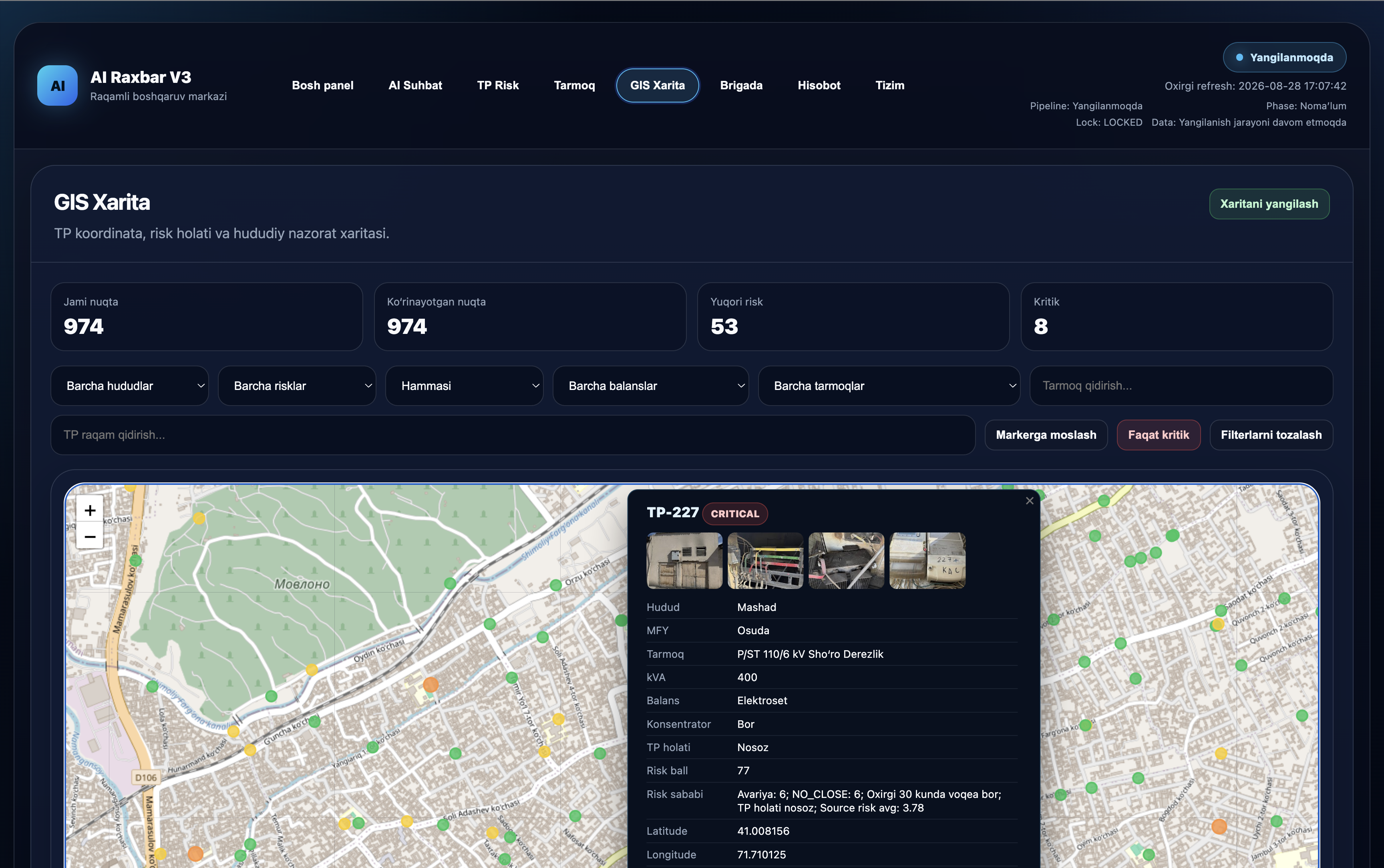
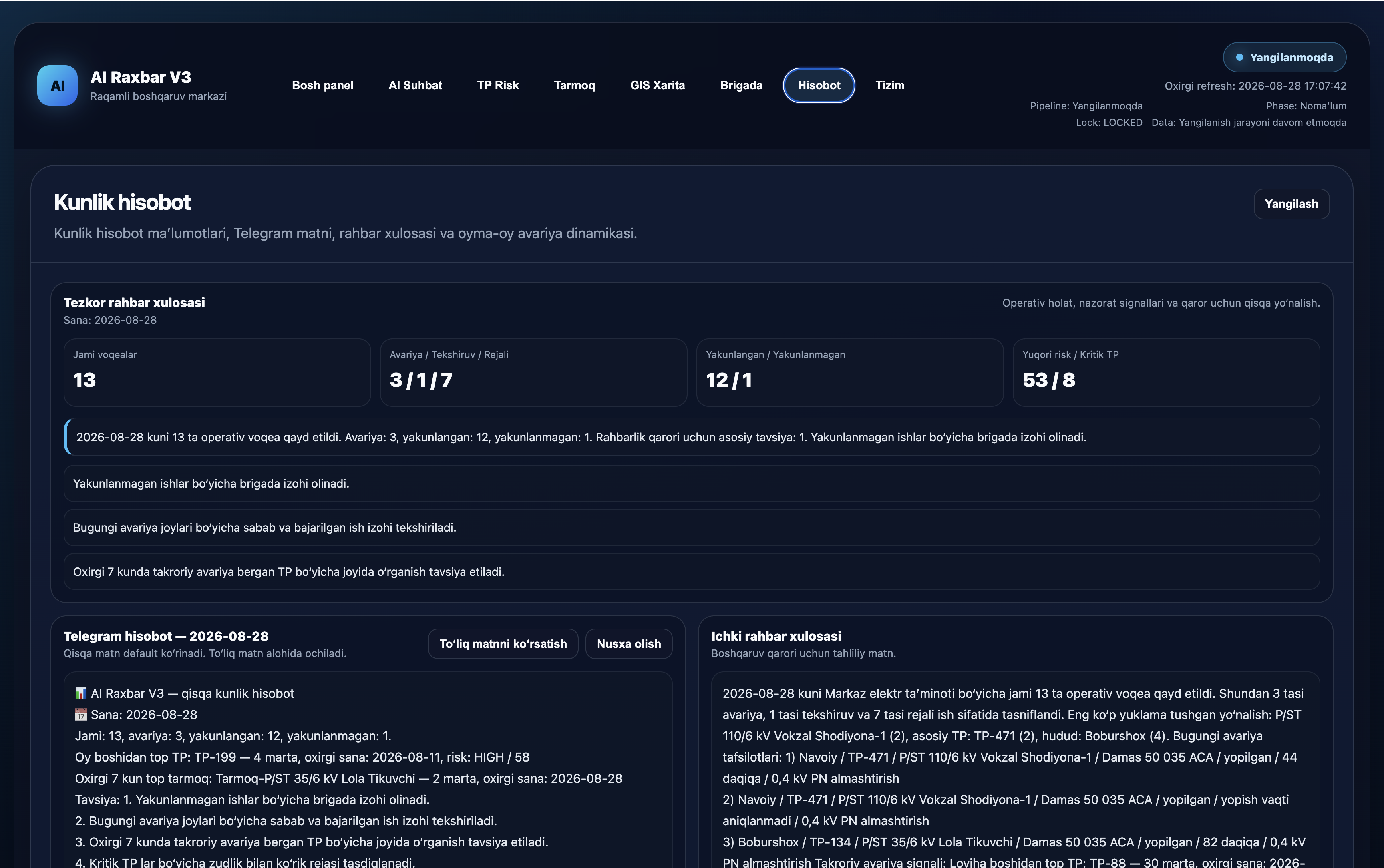
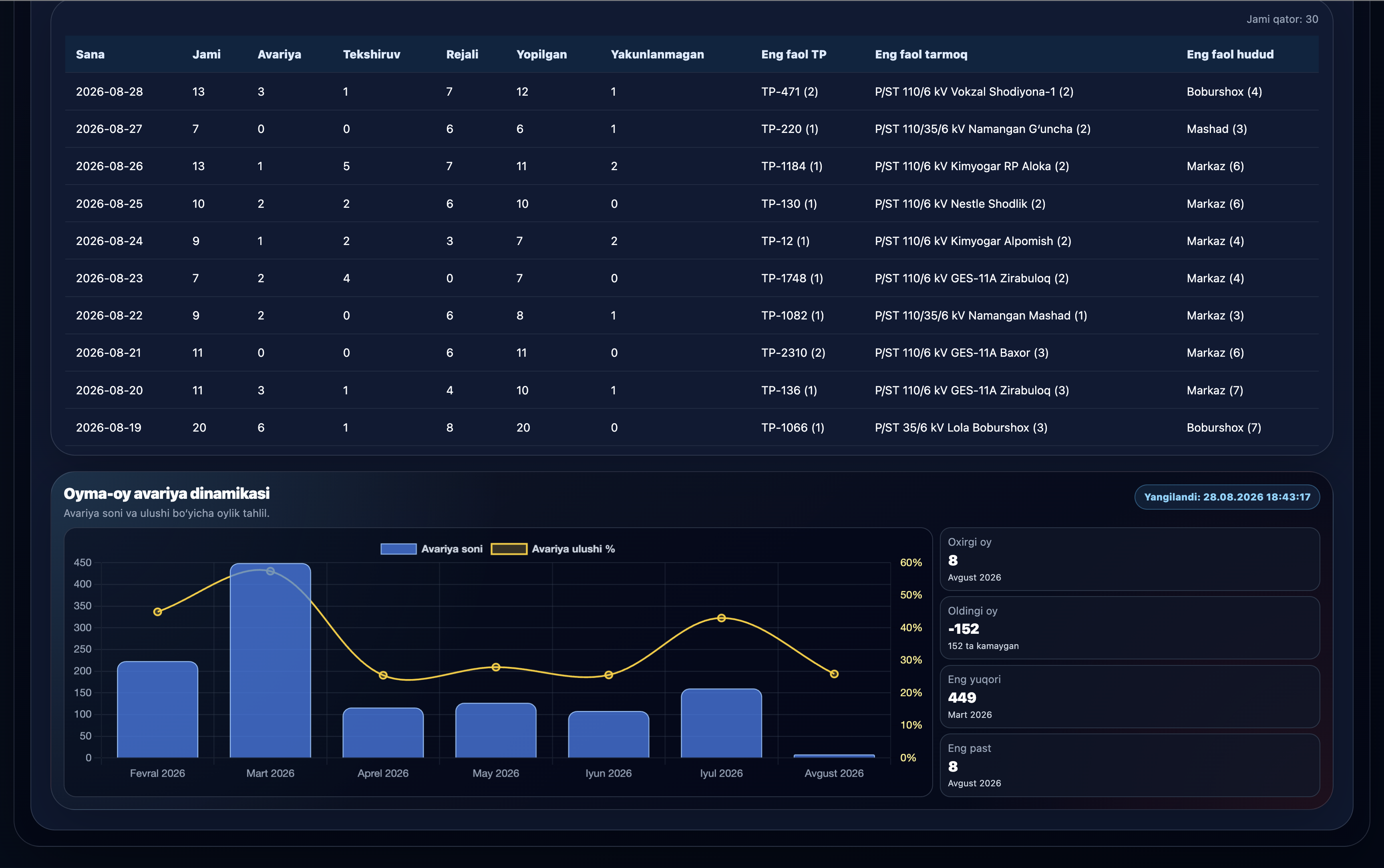
Before this hackathon, AI RAXBAR V3 already existed as an operational visibility platform for a real city electricity distribution environment. It brings together operational events, transformer assets, risk ranking, GIS context, outage history, and field operations.
The hackathon work adds a new and clearly separated layer: AI RAXBAR Agent.
Instead of only displaying operational information, the Agent correlates evidence, reasons about recurring patterns, proposes remediation, passes the proposal through deterministic safety policy, requires human authorization for high-impact actions, verifies the result, and records the workflow for audit.
What it does
AI RAXBAR Agent implements a controlled agentic workflow:
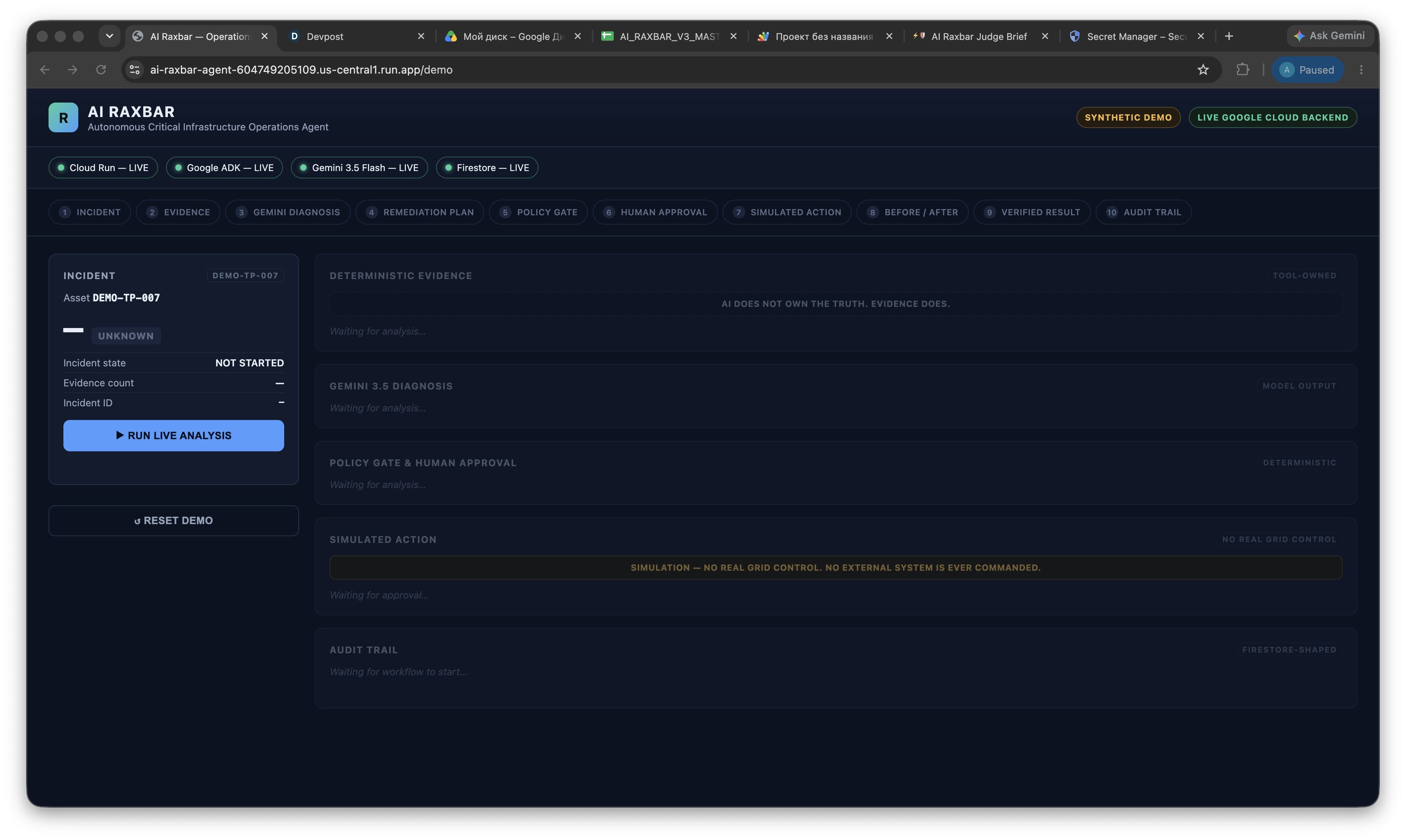
OBSERVE → DETECT → DIAGNOSE → PLAN → POLICY GATE → HUMAN APPROVAL → ACT (SIMULATED) → VERIFY → AUDIT
For the hackathon demonstration, the Agent operates on a synthetic electrical-grid incident.
It:
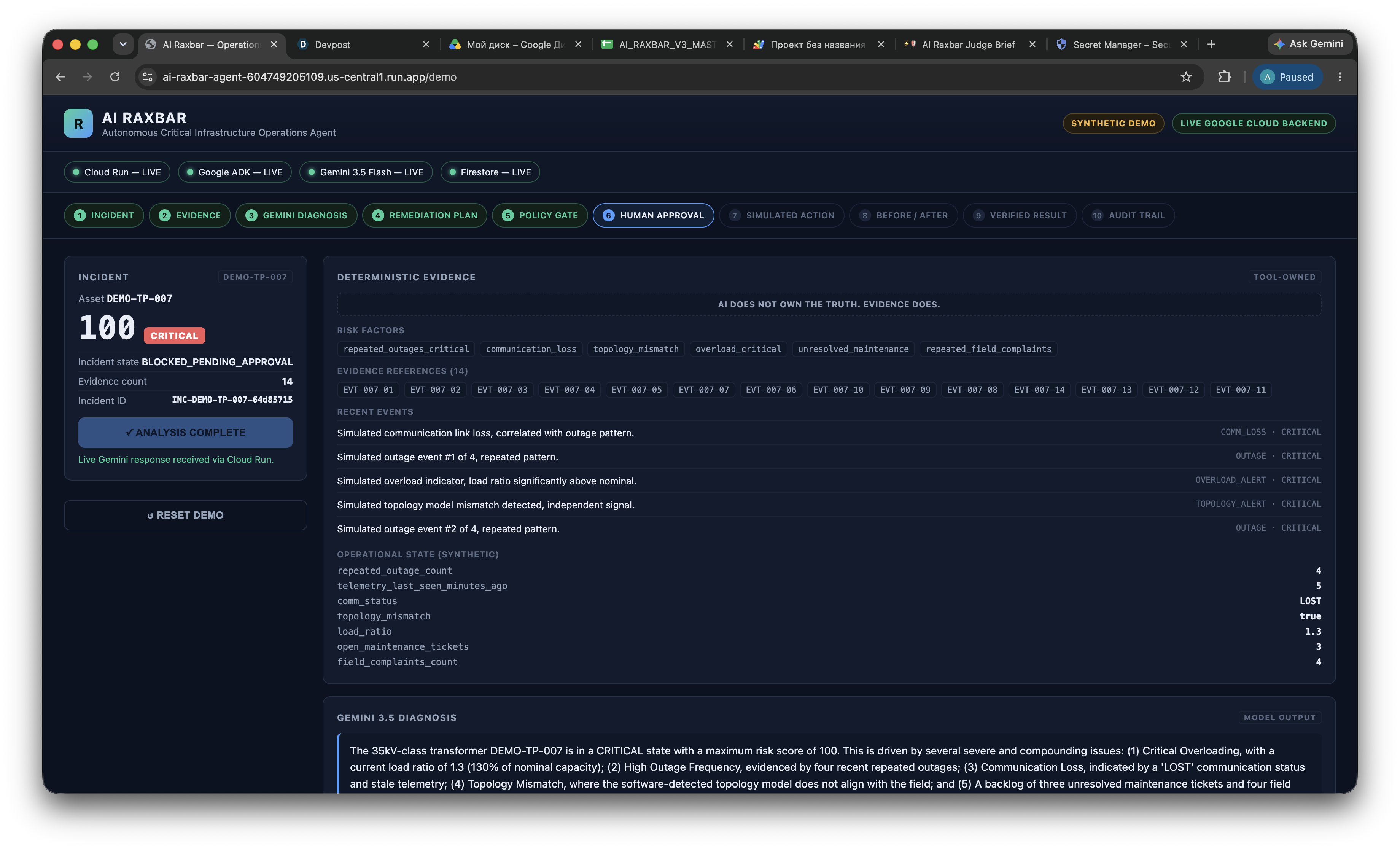
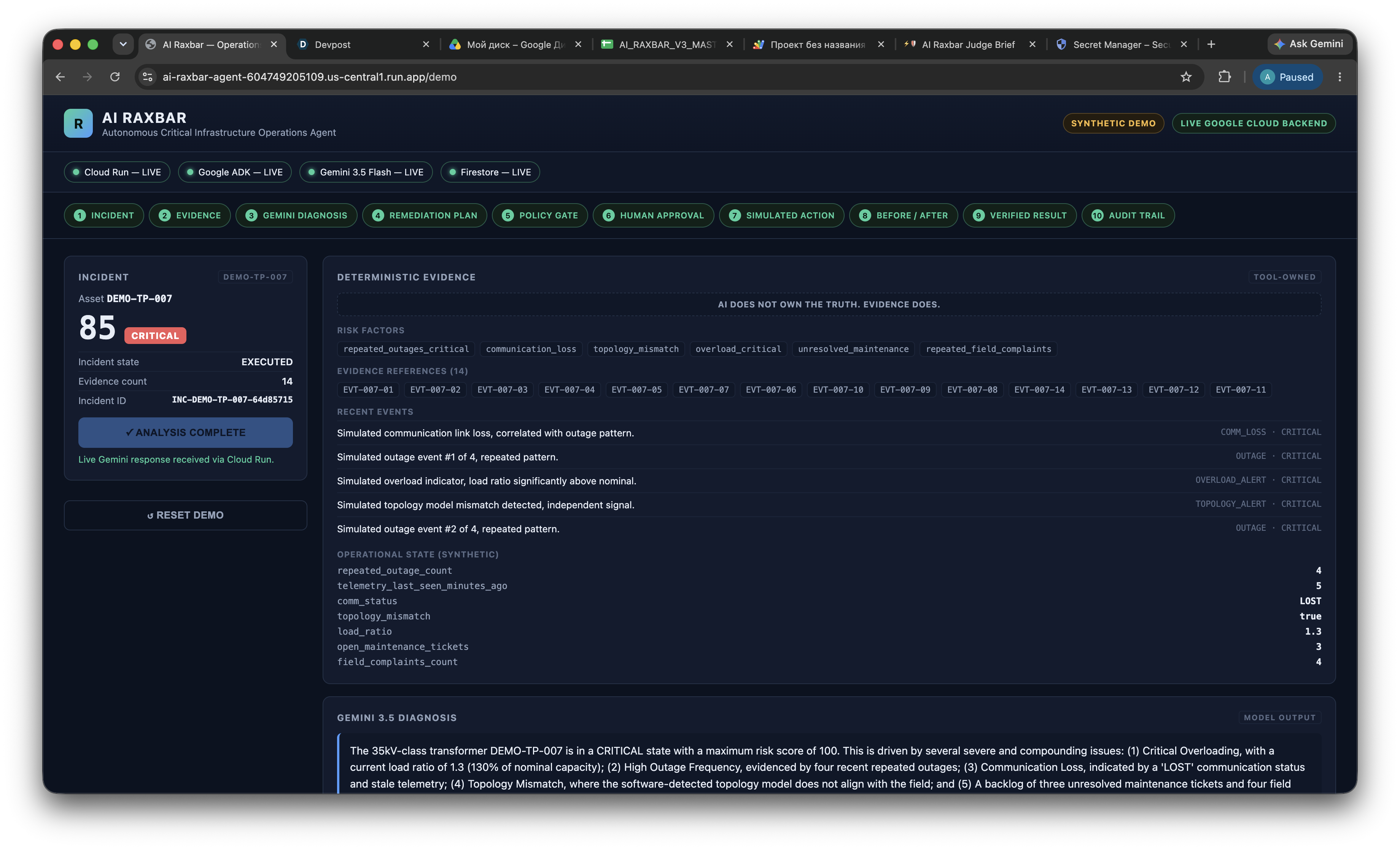
- Collects deterministic operational evidence about the asset.
- Detects a recurring failure pattern across multiple signals.
- Uses Gemini 3.5 Flash to produce a diagnosis and candidate remediation.
- Passes the recommendation through deterministic risk and policy logic.
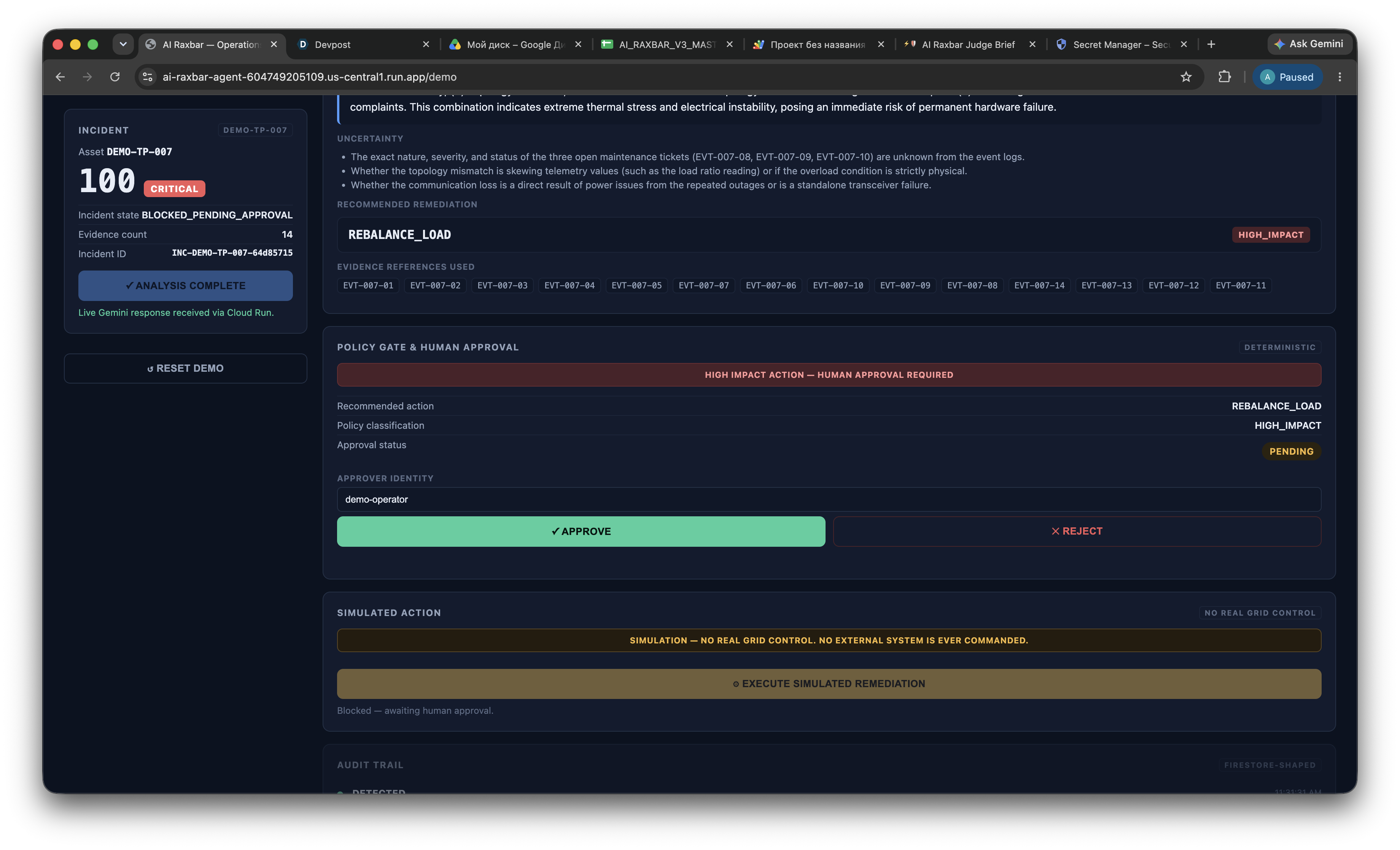
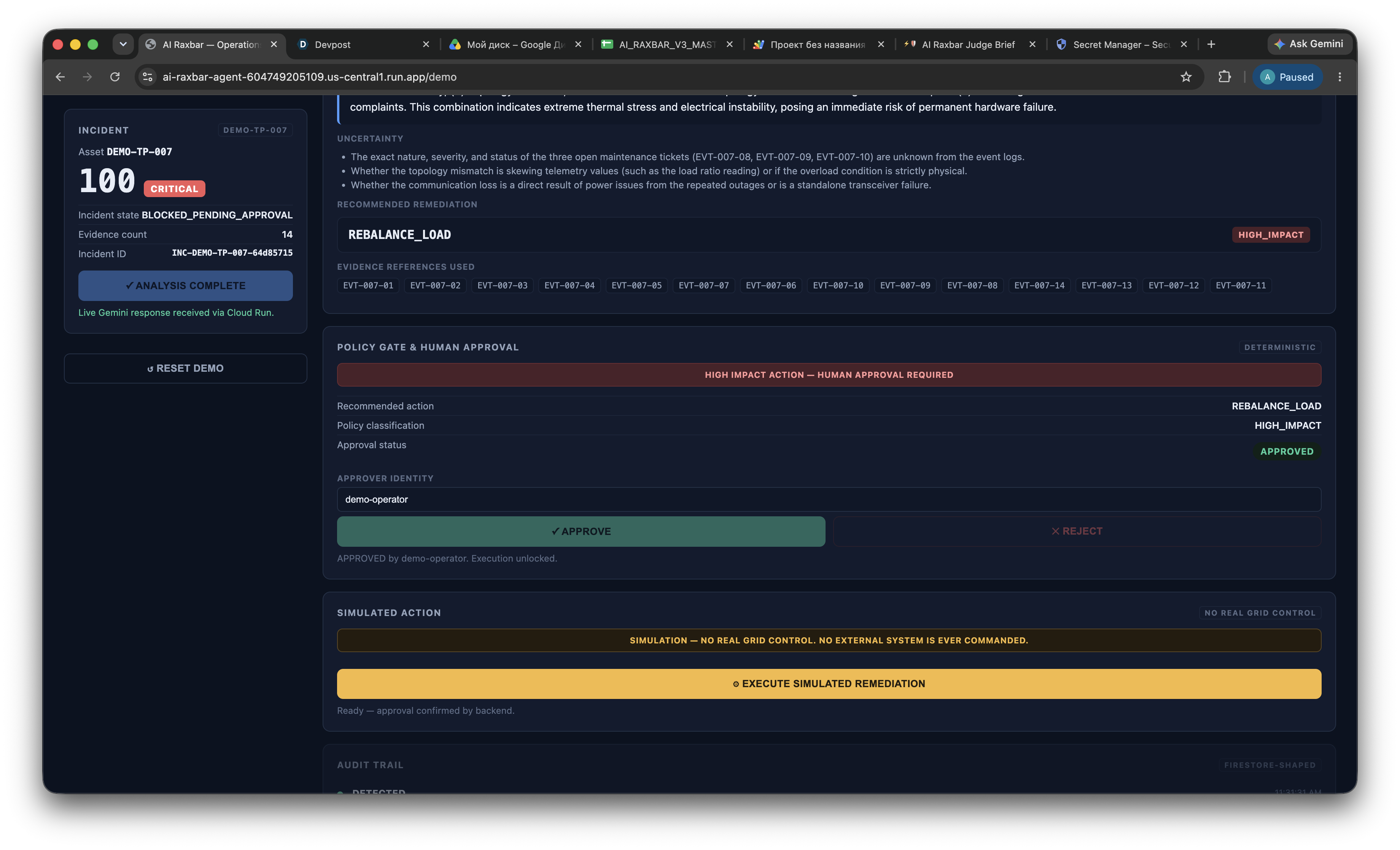
- Blocks high-impact remediation until explicit human approval is received.
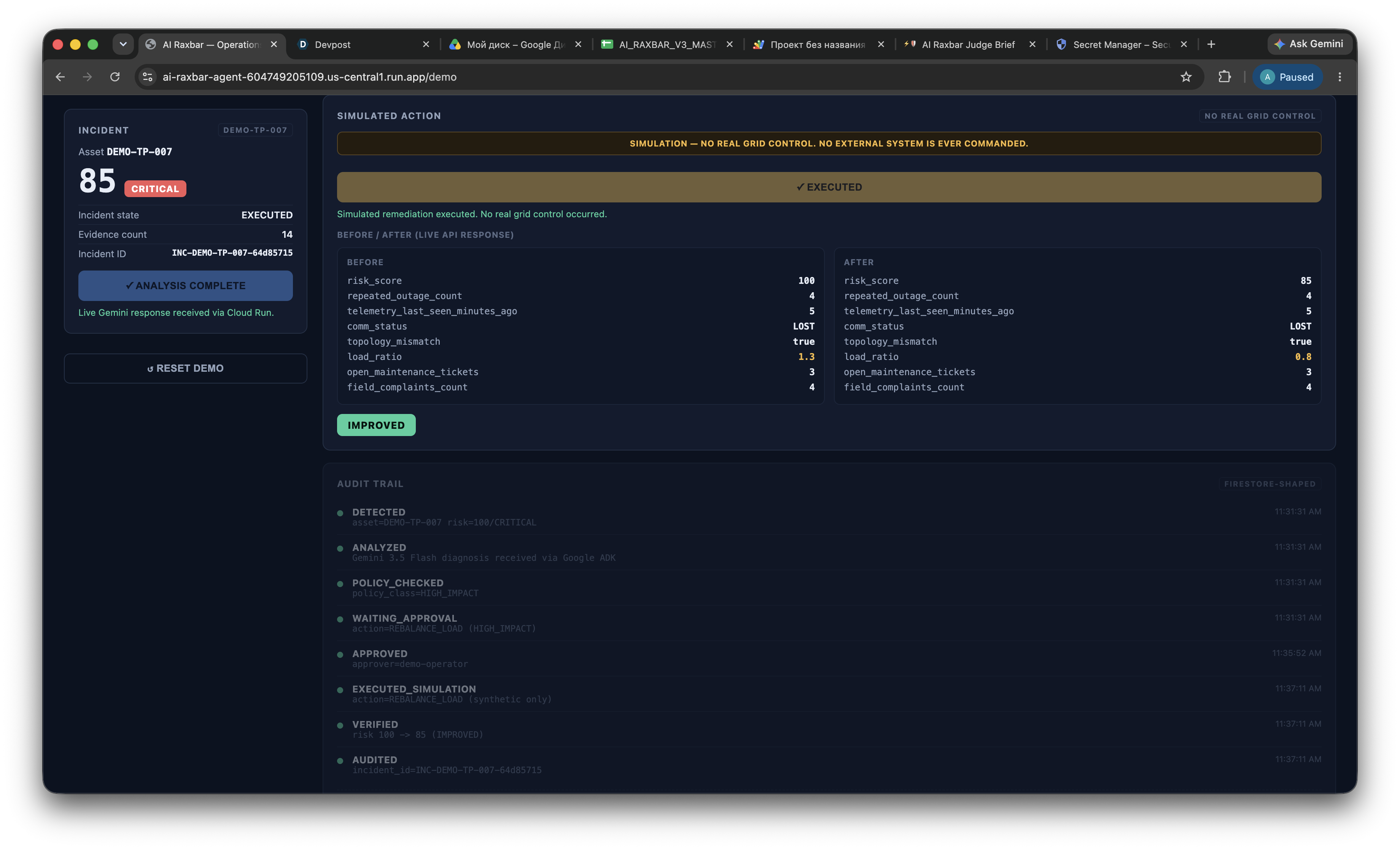
- Executes the approved remediation only against simulated in-memory state.
- Compares the before and after state to verify whether the intervention improved the situation.
- Writes approval, execution, verification, and evidence records to Firestore.
The model does not independently control infrastructure.
Gemini proposes. Deterministic policy governs. A human authorizes high-impact action. Evidence verifies the result.
The demonstrated action is intentionally simulated and does not control real electrical-grid equipment.
Why this is agentic
AI RAXBAR is designed as a multi-step operational decision workflow rather than a standard conversational chatbot.
The Agent gathers evidence, correlates events, invokes Gemini for reasoning, selects a candidate remediation, interacts with deterministic policy controls, waits for human authorization when required, continues execution after approval, verifies the resulting state, and persists an audit trail.
This separation is intentional: model reasoning is useful for understanding complex operational evidence, while safety-critical decisions remain governed by deterministic controls and human authority.
Architecture
The hackathon Agent uses:
- Gemini 3.5 Flash — diagnosis, reasoning, and candidate remediation
- Google Agent Development Kit (ADK) — agent workflow orchestration
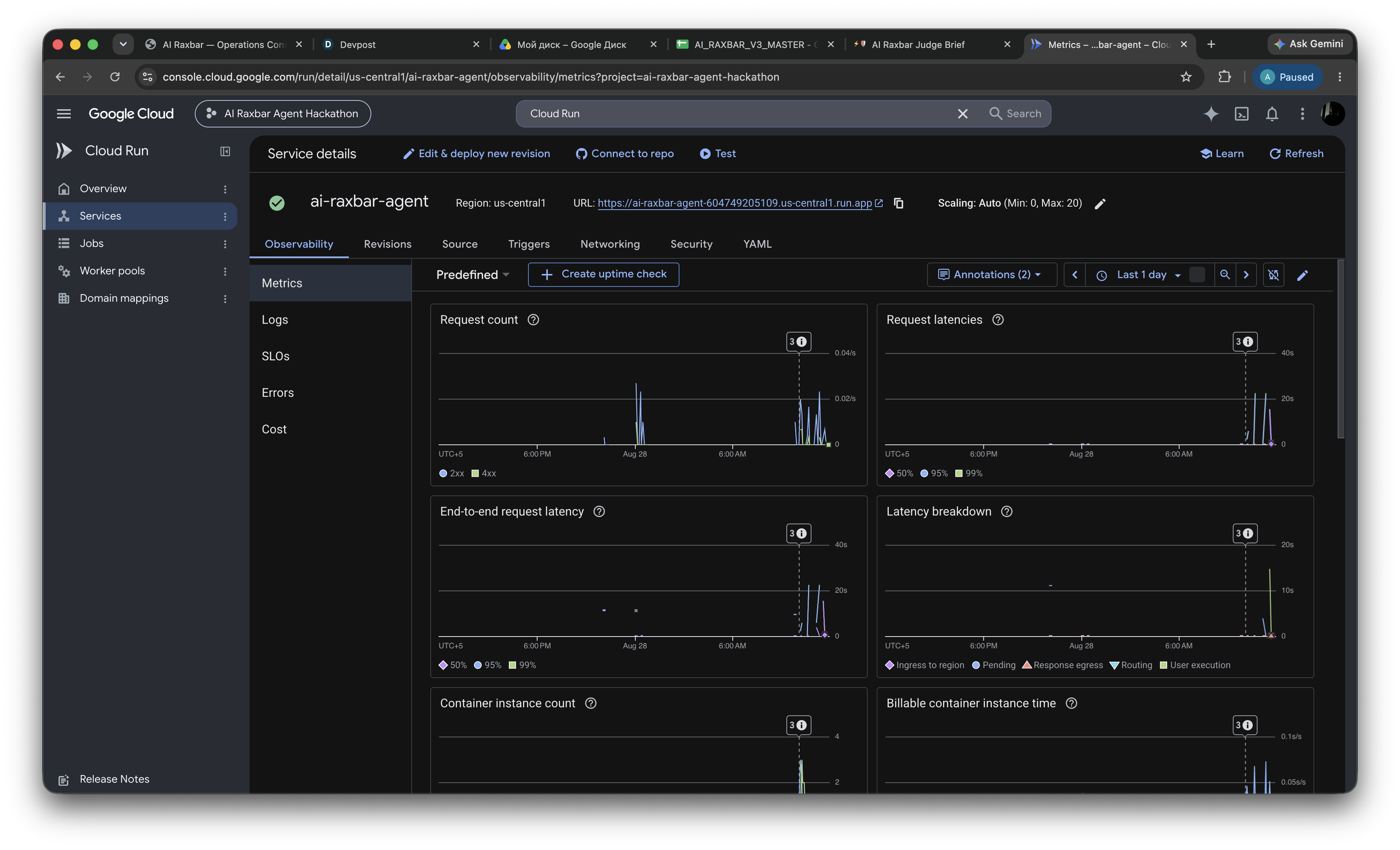
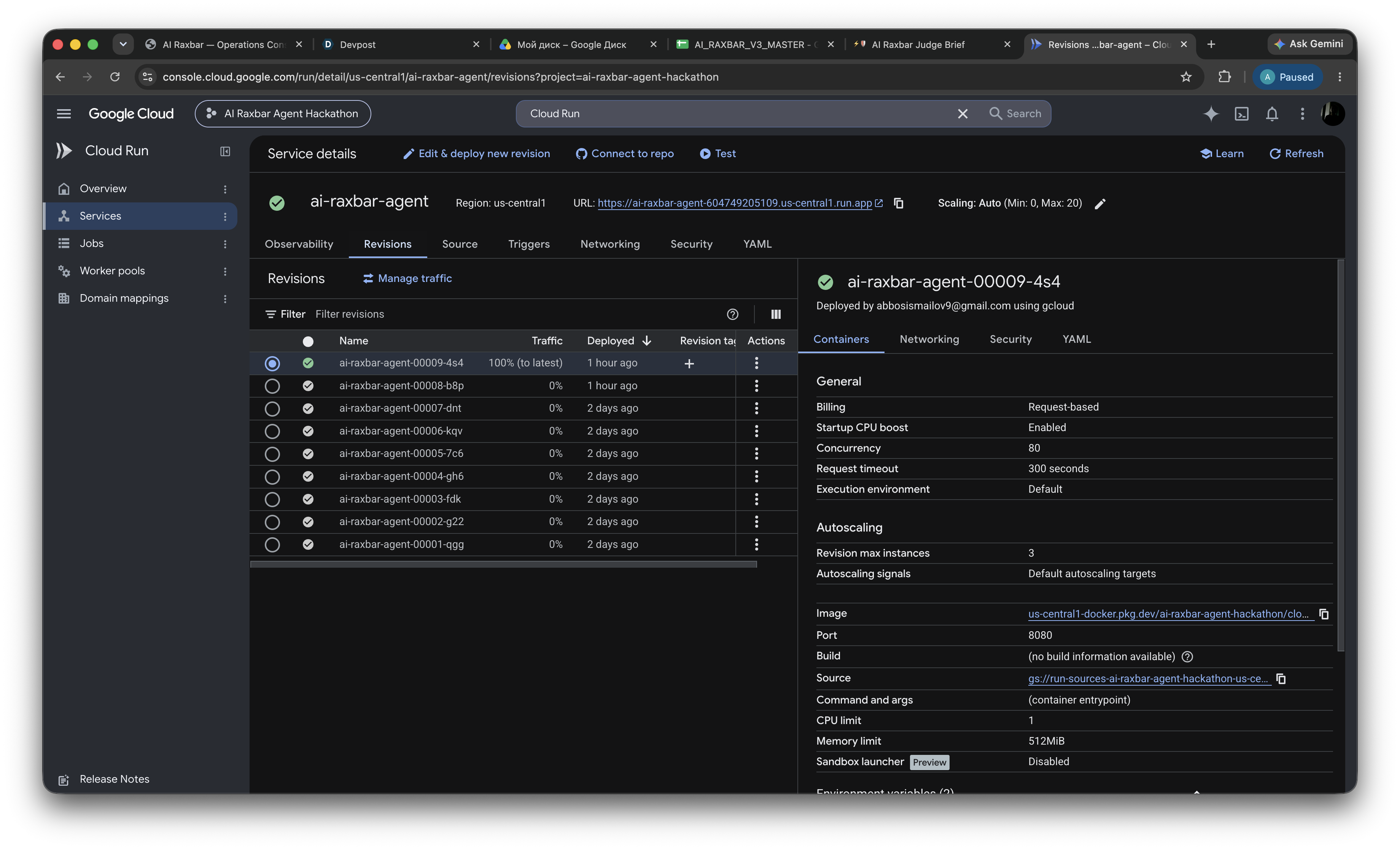
- Google Cloud Run — deployed backend runtime
- Firestore — persistent incident, approval, execution, and audit state
- Google Secret Manager — credential management without exposing secret values
- GitHub — source code, architecture documentation, safety documentation, and reproducible setup
The architecture deliberately separates trust boundaries:
Model-owned: reasoning and recommendation
System-owned: deterministic risk classification, policy enforcement, and verification
Human-owned: authorization of high-impact remediation
Evidence-owned: the records used to determine and audit what actually happened
What was built during the hackathon
AI RAXBAR V3 is the pre-existing operational platform and is presented as such.
The new hackathon work is the AI RAXBAR Agent and its agentic workflow, including:
- Gemini-powered diagnosis and remediation proposal
- Google ADK orchestration
- deterministic policy gating
- human-in-the-loop approval
- simulated remediation execution
- before/after verification
- Firestore audit trail
- Cloud Run deployment
- Secret Manager integration
- architecture and safety documentation
- reproducible deployment and demonstration workflow
This distinction is documented in the repository and demonstrated in the project video.
Challenges
The main challenge was not simply connecting an LLM to operational data.
The harder problem was defining what the model should be allowed to decide — and what it should never decide by itself.
For critical infrastructure, an opaque model that directly executes high-impact actions is not acceptable.
We therefore designed AI RAXBAR around explicit trust boundaries, deterministic policy enforcement, human authorization, verification, and auditable state transitions.
Another challenge was demonstrating a realistic critical-infrastructure workflow without creating risk to a real electrical network. The final demonstration therefore uses synthetic incident data and simulated remediation while preserving the architecture required for accountable operational decision-making.
What we learned
The most important lesson was that useful autonomy does not require removing humans from every decision.
For high-impact systems, stronger autonomy can come from automating evidence collection, correlation, diagnosis, planning, verification, and audit — while deliberately preserving human authority at the point where consequences become significant.
We also learned that an agent becomes substantially more trustworthy when model reasoning, deterministic controls, persistent state, and human authorization are treated as separate architectural responsibilities.
What's next
The next stage is to connect the Agent architecture to progressively richer operational data sources while preserving the same governance model.
Future work includes longer-running asynchronous incident monitoring, richer asset context, cross-system evidence correlation, persistent operational memory, and expanded verification workflows.
Real infrastructure control would only be considered behind additional authorization, security, testing, and operational safety layers.
Core principle
AI does not own the truth. Evidence does.
AI RAXBAR turns repeated operational signals into accountable decisions — combining Gemini reasoning with deterministic governance, human authority, verification, and an auditable Google Cloud architecture.

Log in or sign up for Devpost to join the conversation.