Inspiration
Professional conversations, whether in networking, interviews, or startup pitches, are often fast-paced and unstructured. Important details such as opportunities, feedback, or follow-ups can easily be forgotten once the conversation ends. We were inspired by the idea of turning these conversations into something actionable, especially for students and early-career professionals who rely heavily on making the most out of every interaction.
What it does
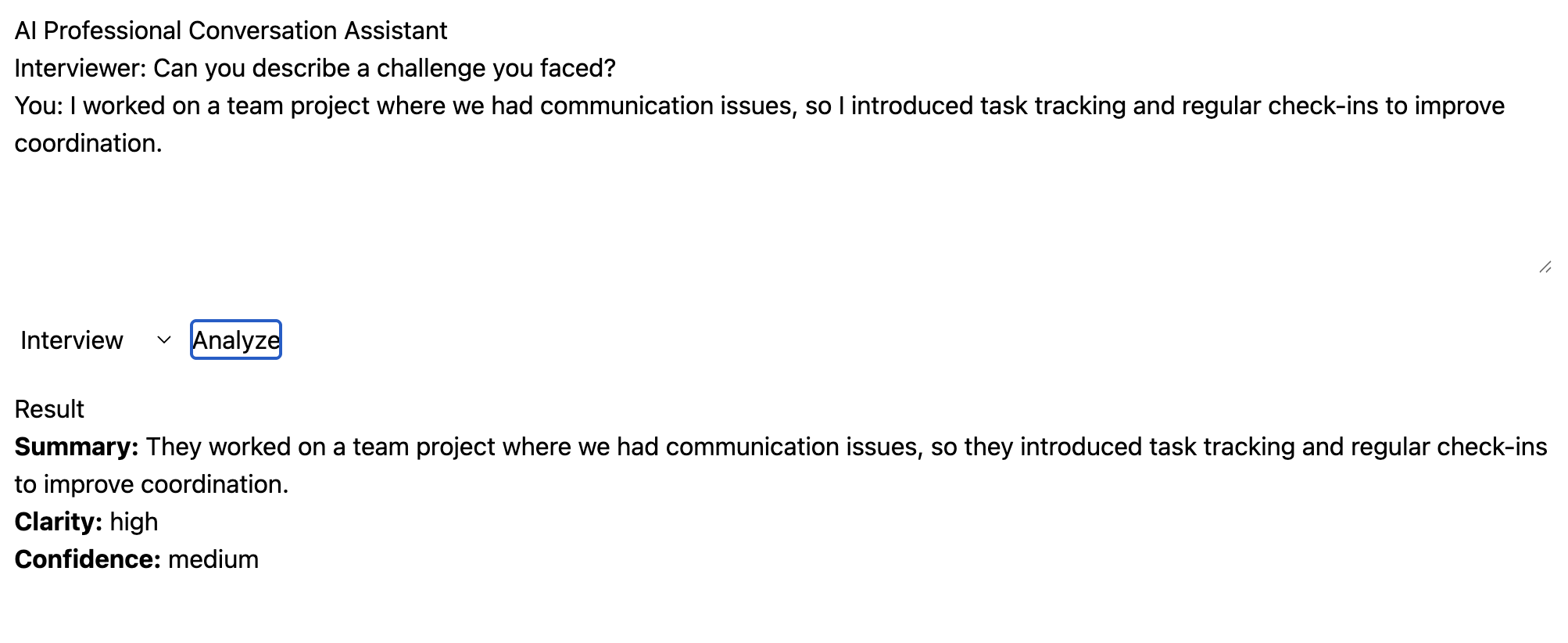
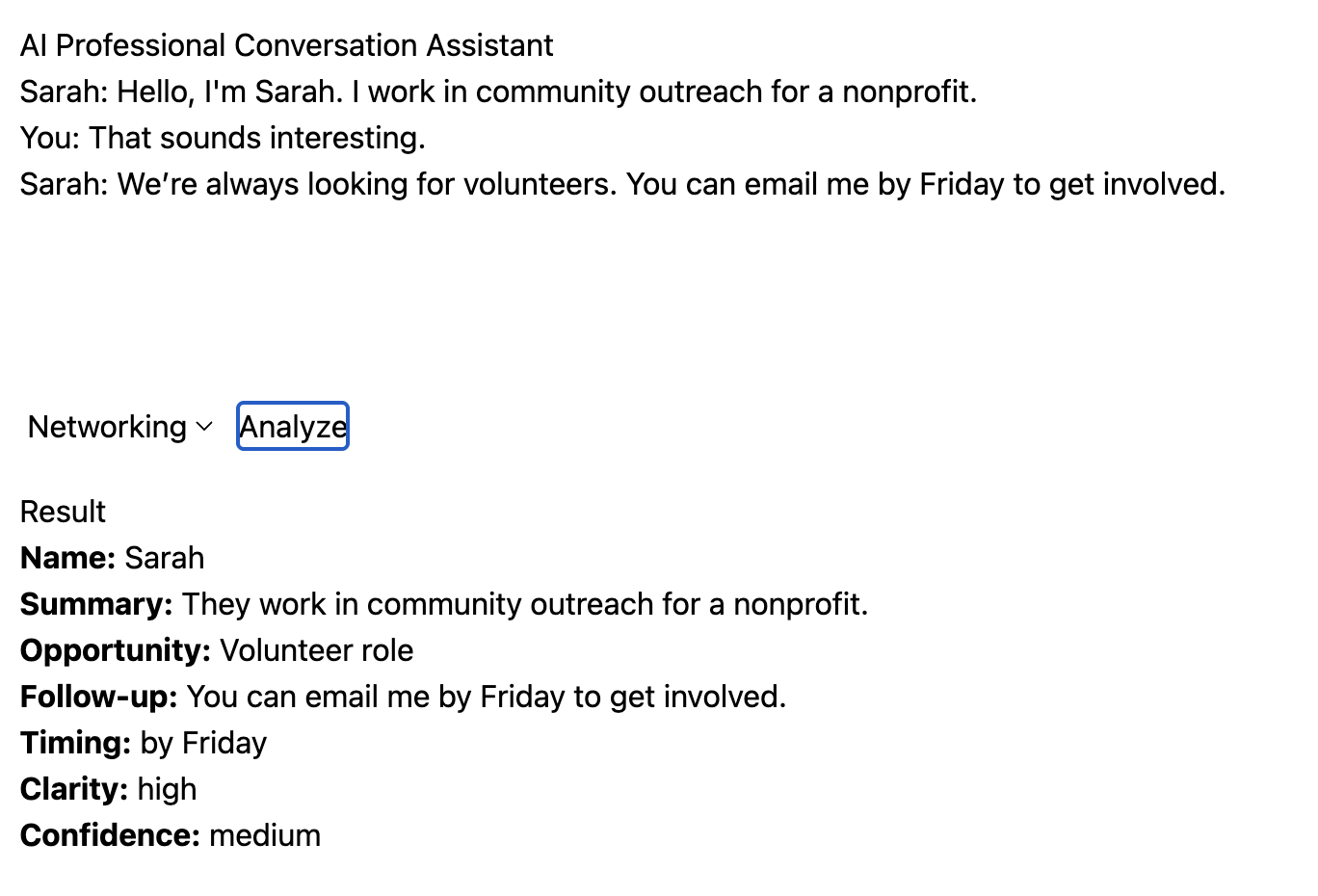
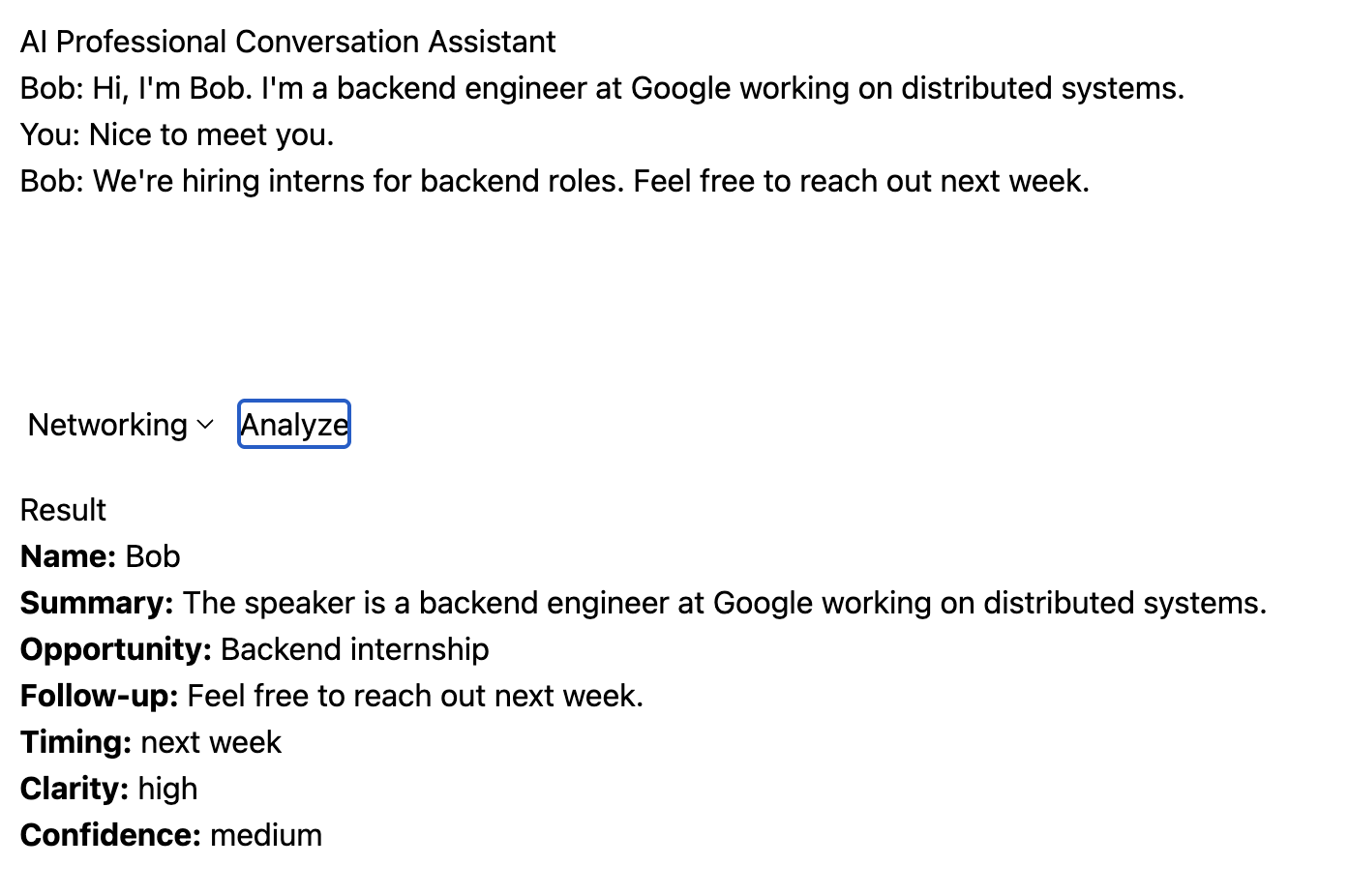
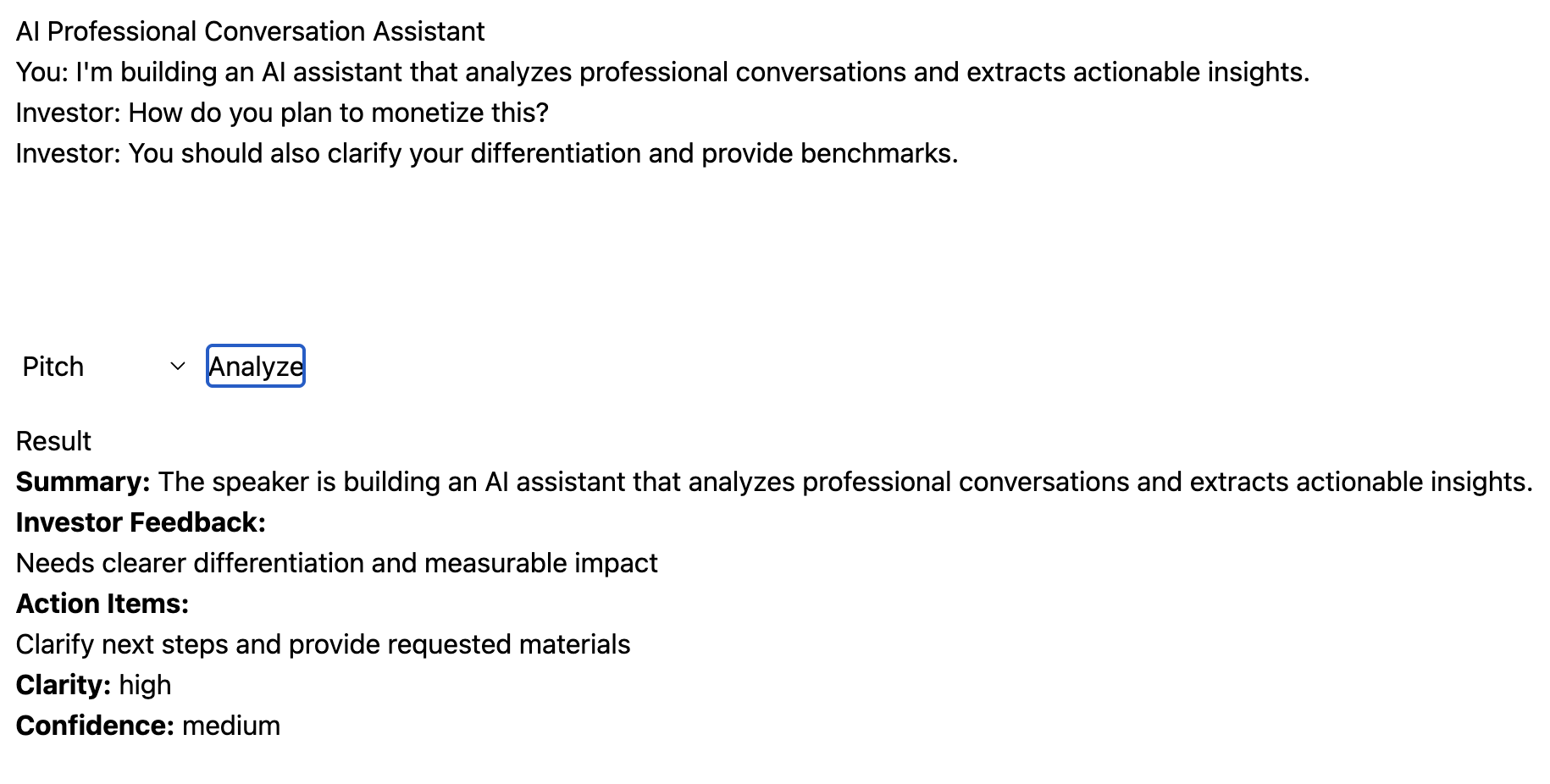
Our AI-powered assistant analyzes professional conversations and converts them into structured insights based on context. In networking scenarios, it identifies key details such as names, opportunities, and follow-ups. In interviews, it summarizes responses and evaluates speech clarity and confidence. In pitch settings, it extracts investor feedback and actionable next steps. Instead of leaving users with raw transcripts, the system provides concise and usable outputs that help them take immediate action.
How we built it
We built a full-stack application using React with Vite for the frontend and FastAPI for the backend. The core logic is implemented in Python, where we process conversation transcripts and extract relevant insights using rule-based natural language processing. The backend exposes an API that takes in a transcript and a mode, processes the input, and returns structured JSON. The frontend then displays these results in a clean and simple interface for the user.
Challenges we ran into
One of the main challenges was ensuring consistency across different conversation types while maintaining meaningful outputs. We also encountered difficulties in transforming natural speech into structured summaries without introducing awkward phrasing. Handling edge cases where conversations did not clearly include opportunities or follow-ups required additional logic. Additionally, integrating the frontend and backend smoothly within a limited timeframe required careful coordination.
Accomplishments that we're proud of
We are proud of building a fully functional full-stack product within a short timeframe. The system successfully adapts to multiple professional contexts and produces structured, actionable insights instead of raw text. We also created a clean and intuitive user interface that clearly demonstrates the value of the product in real-world scenarios.
What we learned
Through this project, we learned how to design systems that transform unstructured input into structured and meaningful outputs. We gained hands-on experience integrating a React frontend with a FastAPI backend and learned the importance of prioritizing usability and clarity over perfection during a hackathon. We also saw how small details in output formatting can significantly impact the overall quality of a product.
What's next for AI Professional Conversation Assistant
In the future, we plan to integrate real-time voice transcription so users can analyze live conversations instead of manually entering text. We also aim to improve the intelligence of the system by incorporating more advanced models for better accuracy and natural phrasing. Additionally, we want to personalize insights based on user goals and deploy the application to the cloud to make it widely accessible.

Log in or sign up for Devpost to join the conversation.