-
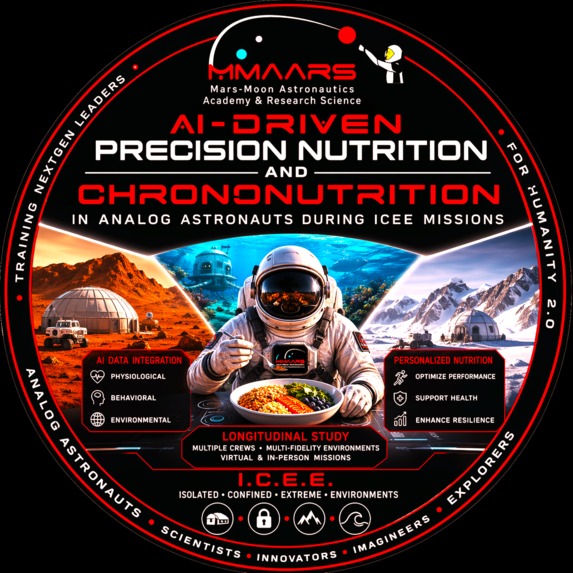
AI-Drvien Precision Nutrition & Chrononutrition
-
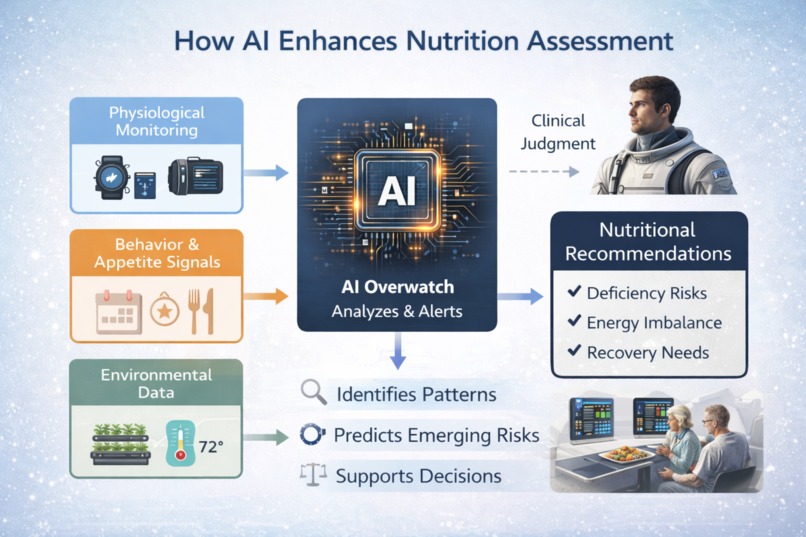
Fow Diagram of the Study Flow chart
-
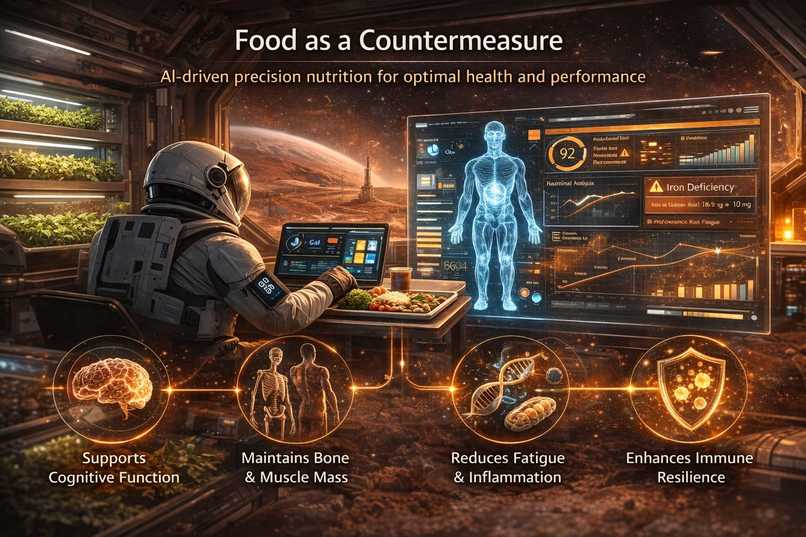
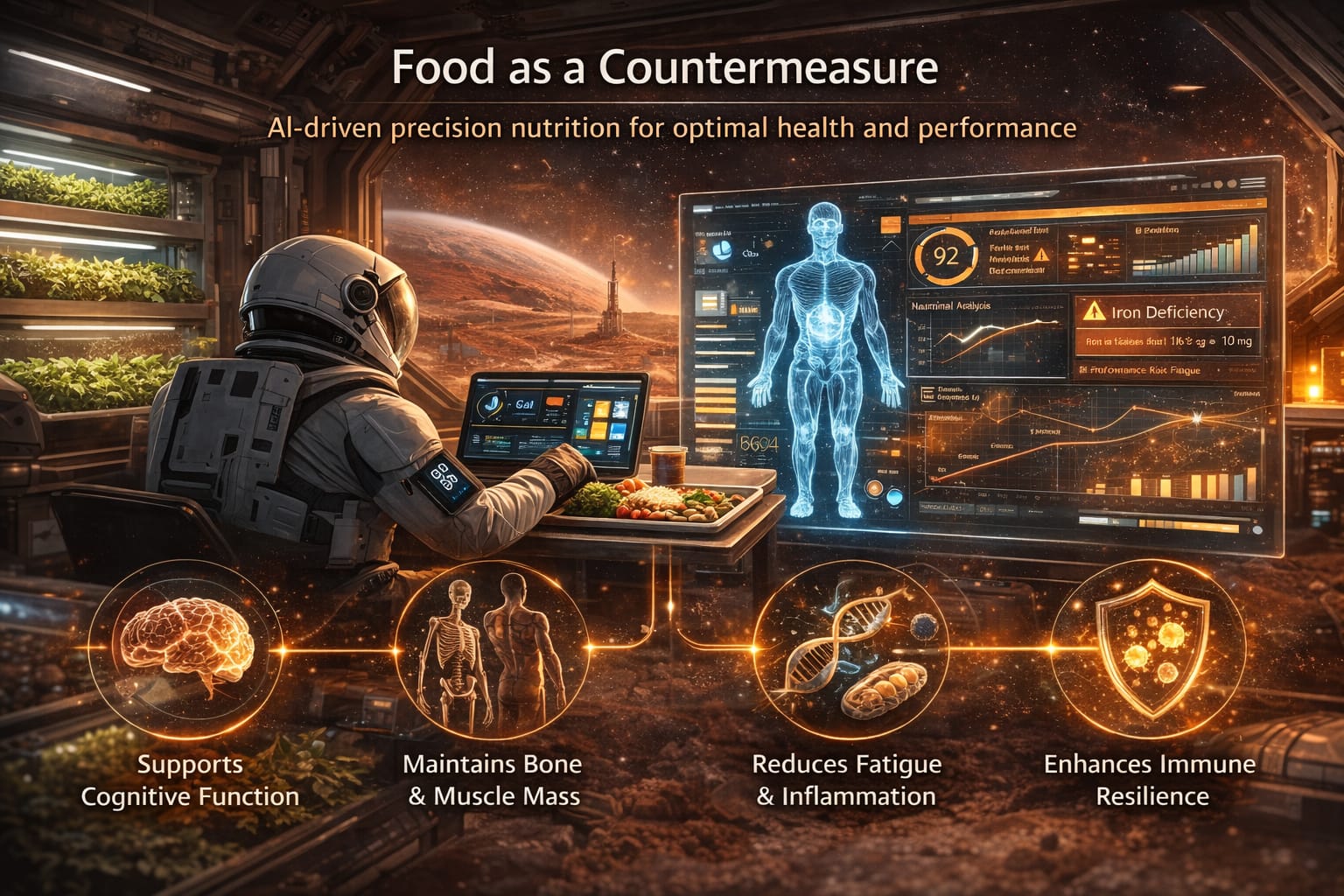
Food as Medicine and Mitigration Countermeasures for extreme enivronments and Space
-
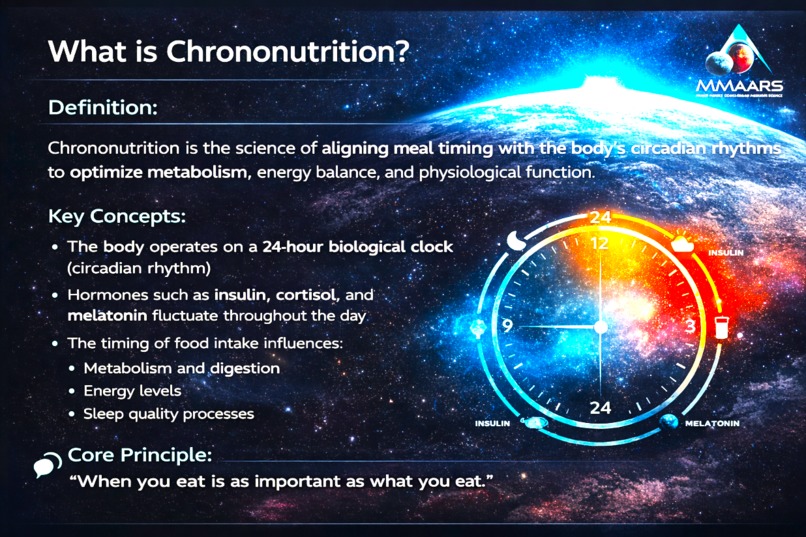
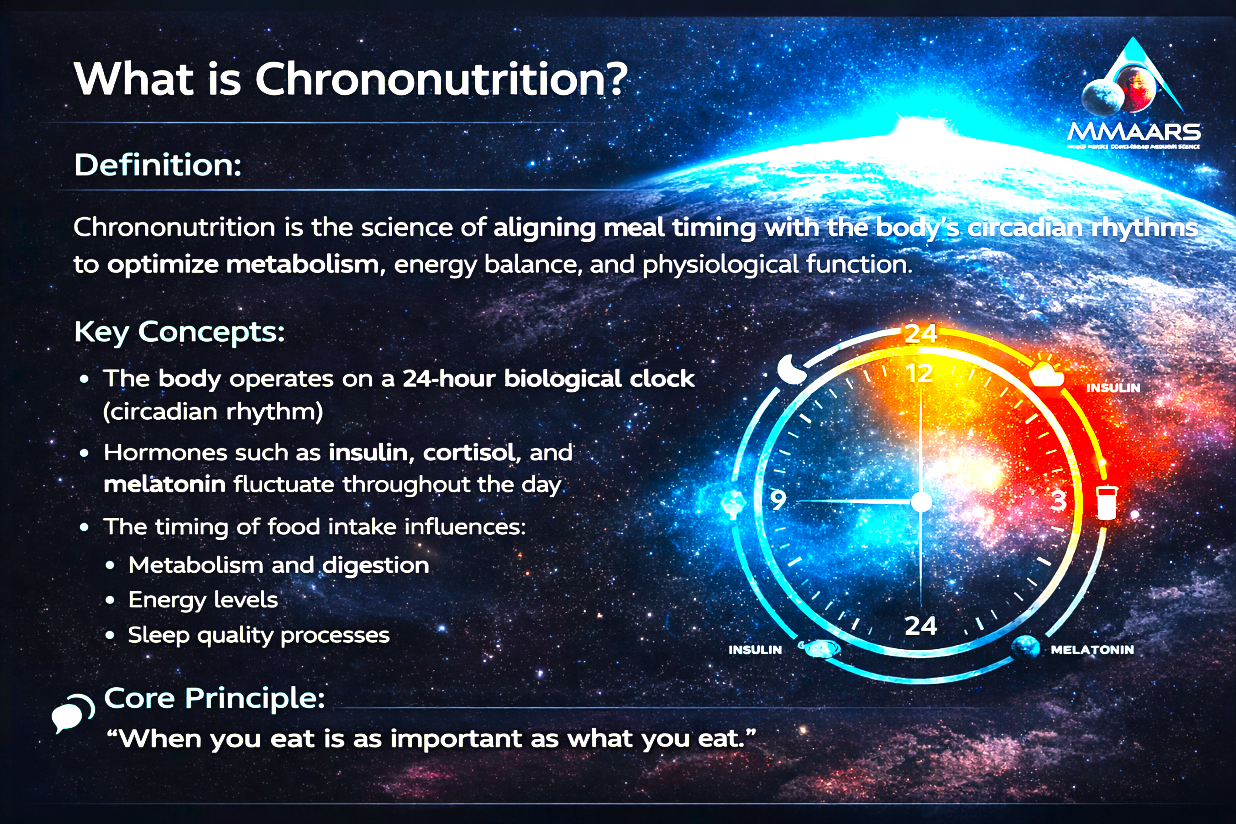
What is Chrononutrition
-
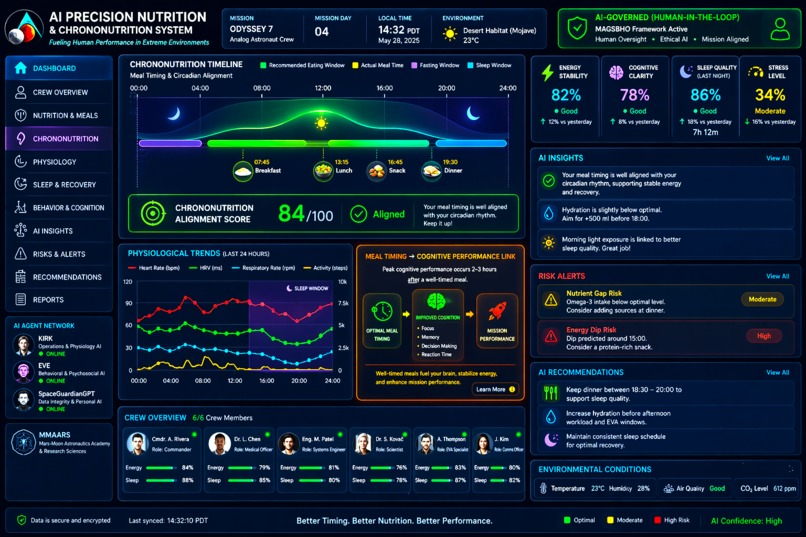
AI-driven precision nutrition & chrononutrition dashboard integrating multi-omics and real-time data to optimize human performance.
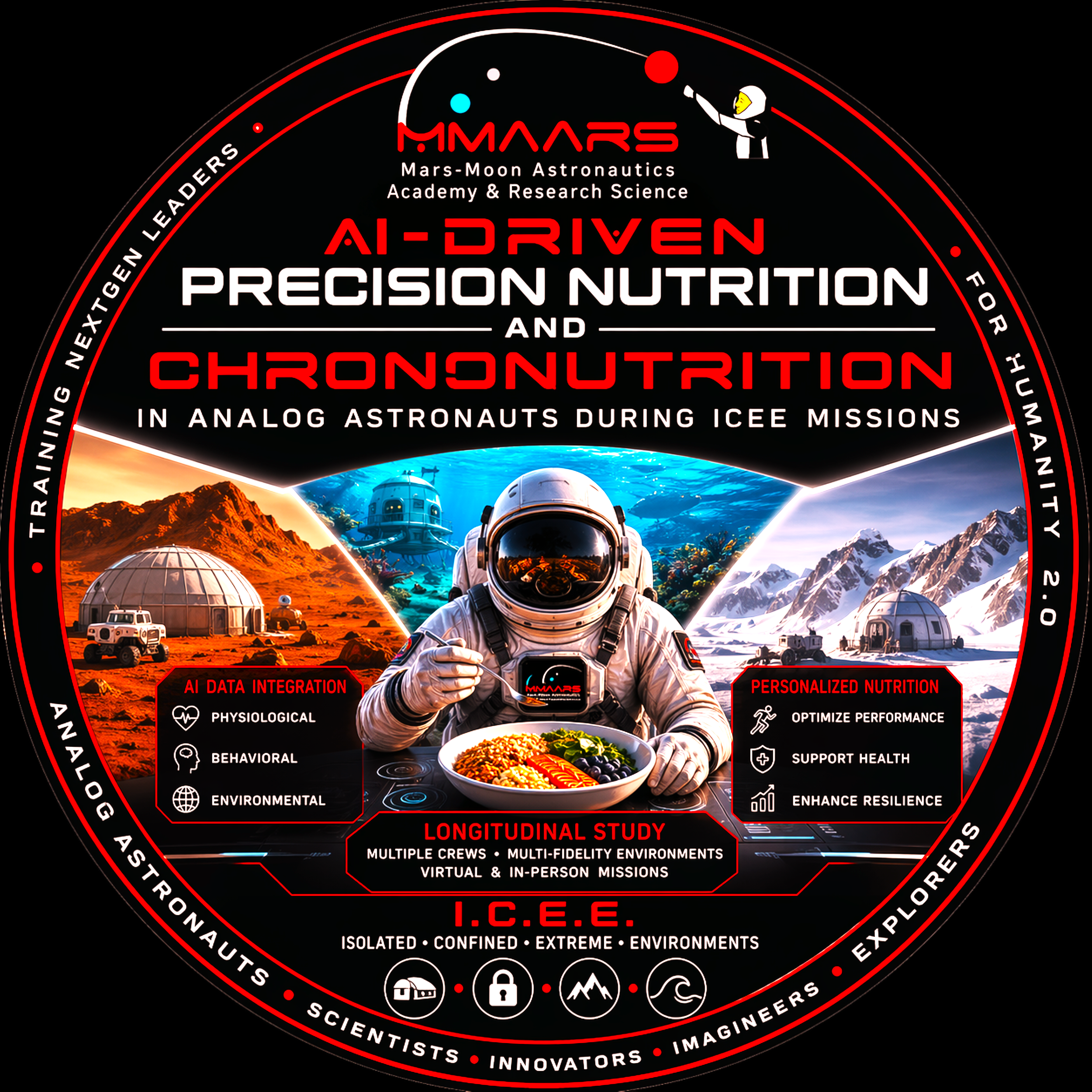
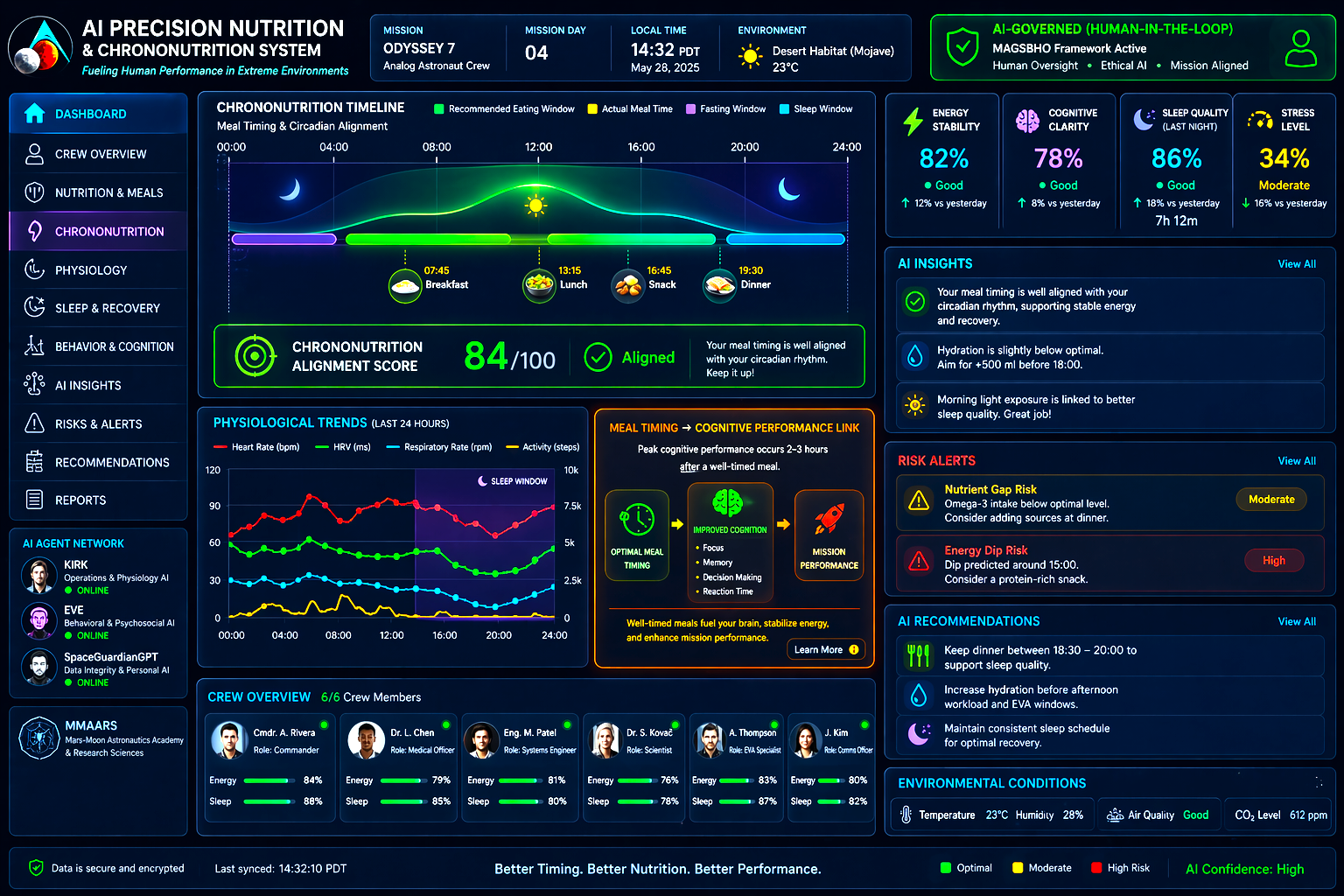
This project explores how artificial intelligence (AI)-driven precision nutrition and chrononutrition can optimize human health, cognitive performance, and resilience of analog astronaut crews in extreme environments, including Space. It is part of a longitudinal research initiative led by MMAARS (Mars-Moon Astronautics Academy and Research Sciences), focused on analog astronaut crews operating in I.C.E.E. (Isolated, Confined, and Extreme Environments) across both virtual and in-person multi-fidelity missions, for example, missions deployed to deserts, ocea/para, underwater, and high-altitude, polar regions, and aviation pilots on long-duration flights. Human spaceflight and analog missions expose crews to circadian disruption, metabolic strain, sleep fragmentation, and neurobehavioral stress, leading to reduced cognitive clarity, energy instability, and impaired recovery. Traditional nutrition models are static and fail to adapt to these dynamic conditions.
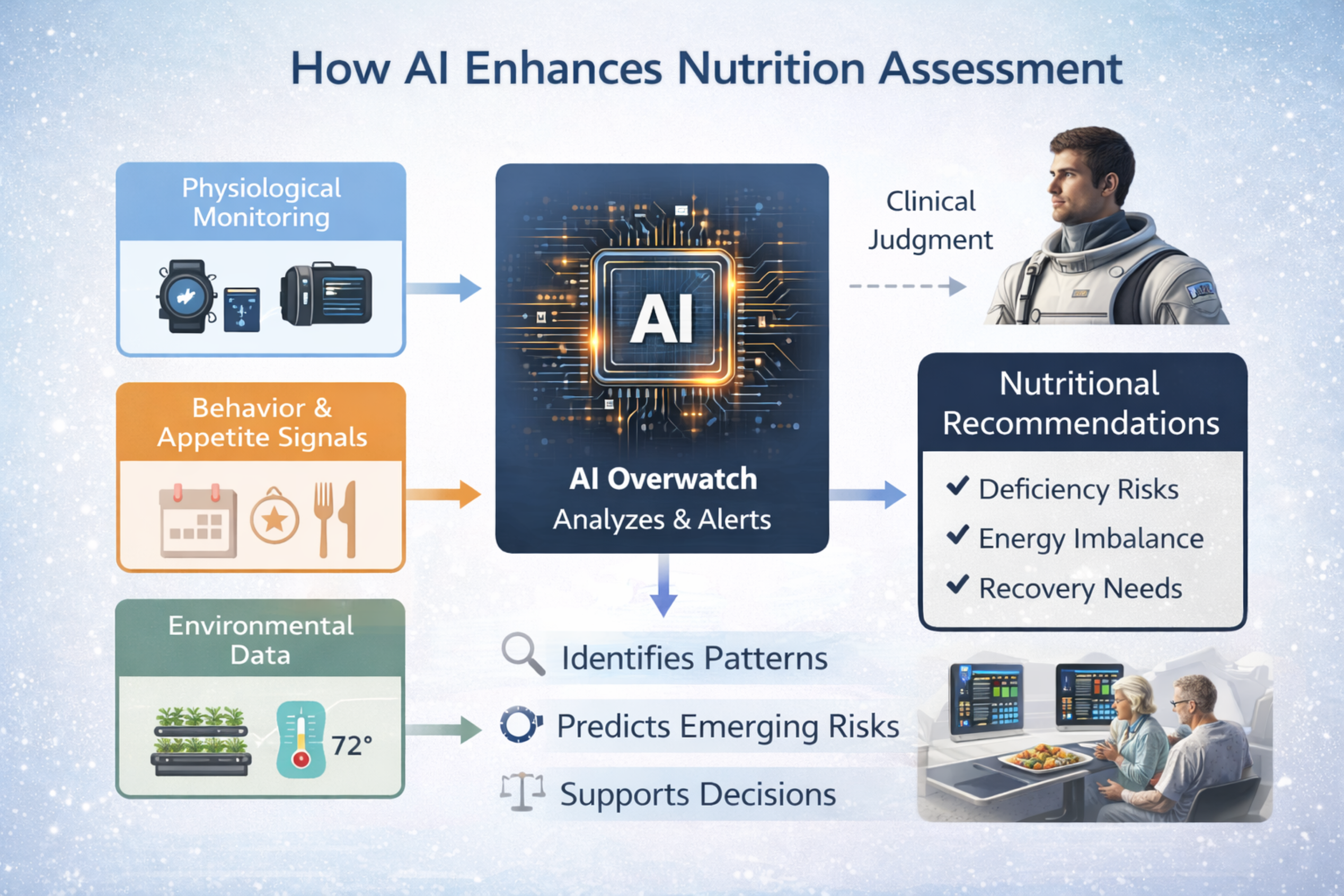
AI-DRIVEN PRECISION NUTRITION SYSTEM Our system uses AI to integrate three core data streams:
- Physiological monitoring (heart rate, heart rate variability, sleep, activity)
- Behavioral signals (appetite, mood, stress, cognitive clarity)
- Environmental data (habitat conditions, mission schedules)
AI continuously analyzes these inputs to: - Identify patterns - Predict emerging risks (nutrient deficiencies, energy imbalance, recovery needs) - Provide decision-support insights while maintaining human clinical authority This architecture transforms nutrition into a real-time, adaptive performance system, rather than a static support function.
CHRONONUTRITION AND BIOENERGETIC COHERENCE A key innovation is the integration of chrononutrition, defined as aligning food intake with the body’s circadian rhythms to optimize metabolic efficiency and physiological function.
Our research demonstrates that: - Circadian-aligned eating improves energy stability, sleep continuity, and cognitive clarity - Misaligned feeding correlates with fatigue, disrupted sleep, and reduced autonomic coherence These findings support the concept that meal timing acts as a biological signal influencing mitochondrial bioenergetics and systemic coherence.
AGENTIC AI AND HUMAN-IN-THE-LOOP GOVERNANCE The system operates within the MMAARS PROPRIETARY (IP) MAGSBHO (Multi-Agentic Artificial Intelligence Governance System for Behavioral Health and Operations) and ISPS-VETA (Integrated Space Psychiatry System – Virtual Embodiment Tele-Psychiatrist Avatar) frameworks. The THREE MAIN AGENTIC AIs are: - CREW AI KIRK: operational and physiological analysis - CREW AI EVE: behavioral and psychosocial monitoring - CREW PERSONAL AI SGG (SpaceGuardianGPT): personal data integrity and personal companion, support AI supports pattern recognition and insight generation, but does not prescribe or replace human decision-making, ensuring ethical, transparent, and controlled deployment.
VALIDATION IN MMAARS VIRTUAL ANALOG ASTRONAUT MISSIONS This system has been tested in MMAARS Virtual Analog Astronaut crews (N=24 across multiple missions) using a structured 2-day observational protocol: - Meal timing patterns recorded relative to wake/sleep cycles - Energy, focus, and fatigue trends tracked throughout the day - Sleep duration and fragmentation assessed - Biopsychosocial reflections captured across biological, psychological, and social domains
Preliminary Results show: - Peak cognitive performance occurs 2–3 hours after waking - Energy dips align with circadian misalignment and irregular meal timing - Sleep quality correlates with feeding windows and recovery cycles The study uses a three-phase Agentic AI architecture: - Individual self-observation (SpaceGuardianGPT) - Crew-level synthesis (KIRK) - System-level integration (EVE) - Expansion to In-Person Multi-Fidelity Missions The project is now expanding into real-world analog astronaut environments, including: - Desert habitats (MMAARS Mojave Basecamp) - Underwater aquanautics missions (MMAARS-Nautilus Ops) - High-altitude and hypoxic environments - Polar and extreme isolation settings
The in-person analog missions will incorporate: - Wearable biosensors - Multi-omics data (genomics, metabolomics, microbiome) - Environmental constraints and habitat systems - Mission workload and operational stressors This enables iterative validation of AI-driven nutrition in real operational conditions, bridging simulation and deployment.
IMPACT AND FUTURE APPLICATIONS This work redefines nutrition as a dynamic, AI-supported countermeasure for human performance and survival. We consider FOOD AS MEDICINE in our paradigm model, and it is personalized, preventative, and predictive to optimize health, mental cognition, wellness, and wellbeing.
APPLICATIONS INCLUDE - Long-duration spaceflight and planetary missions - Military and extreme operations - Remote and preventive healthcare - Circadian and sleep disorder management - Sustainable human habitats and food systems
By integrating AI-driven precision nutrition with chrononutrition, this system creates a scalable framework for personalized, adaptive health optimization both on Earth and beyond.
INSPRIATION: Human spaceflight and analog astronaut missions expose crews to extreme conditions that disrupt circadian rhythms, metabolism, sleep, and cognitive performance. We recognized that nutrition is not just sustenance—it is a critical, modifiable lever for human performance and survival. However, traditional nutrition approaches are static and fail to adapt to rapidly changing physiological and environmental demands. Our inspiration was to transform nutrition into a dynamic, AI-driven system that continuously adapts to the individual, while maintaining human-in-the-loop governance. By integrating precision nutrition with chrononutrition, we aim to support astronaut health, cognitive clarity, and resilience in extreme environments, with dual-use applications for Earth.
WHAT IT DOES: This project is an AI-driven precision nutrition and chrononutrition system designed for analog astronaut crews operating in Isolated, Confined, and Extreme Environments (I.C.E.E.). It: - Integrates physiological, behavioral, and environmental data - Identifies patterns and predicts risks such as energy imbalance, nutrient deficiencies, and recovery needs - Aligns food intake with circadian rhythms (chrononutrition) - Provides decision-support insights, while keeping humans in control The system operates under the MAGSBHO (Multi-Agentic Artificial Intelligence Governance System for Behavioral Health and Operations) and ISPS-VETA (Integrated Space Psychiatry System – Virtual Embodiment Tele-Psychiatrist Avatar) frameworks, ensuring ethical, transparent, and human-guided AI use.
HOW WE BUILT IT:
We developed this system within the MMAARS (Mars-Moon Astronautics Academy and Research Sciences) analog astronaut ecosystem, leveraging:
- Virtual analog astronaut missions to test early concepts
- A pilot testing protocol design in a structured 2-day observational study protocol tracking meal timing, energy,
cognition, and sleep
- Integration of wearable physiological data (heart rate, heart rate variability, sleep, activity)
= Behavioral and environmental logging aligned with mission schedules
We implemented a multi-agent AI architecture: - SpaceGuardianGPT for individual self-tracking - KIRK for crew-level pattern recognition - EVE for system-level biopsychosocial insights This created a human-in-the-loop AI system capable of analyzing complex, multi-modal data in real time.
CHALLENGES: - Data variability: High individual differences in nutrition, metabolism, and circadian responses - Data integration complexity: Combining physiological, behavioral, and environmental streams into a unified model - Ethical constraints: Ensuring AI does not overstep into clinical decision-making - Operational realism: Designing protocols that fit within real mission schedules and constraints - Translating research into application: Moving from observational data to actionable insights without over- interpreting results
ACCOMPLISHMENTS Successfully designed and deployed a chrononutrition study within MMAARS virtual analog astronaut crews Demonstrated that circadian-aligned eating improves energy, sleep, and cognitive clarity Built a multi-agent AI governance system (MAGSBHO) that maintains human oversight Created a scalable research framework transitioning from virtual to in-person analog missions Positioned nutrition as a core operational system, not just a support function
WHAT WE LEARNED - The timing of nutrition is as important as the composition - Human performance in extreme environments is deeply interconnected across biological, psychological, and social domains - AI is most effective as a decision-support tool, not a replacement for human judgment - Structured observational data can reveal meaningful patterns in human performance - Designing for space requires rethinking health as a dynamic, adaptive system
NEXT STEPS & FUTURE WORK: - Expand into in-person multi-fidelity analog missions (desert, underwater aquanautics, high-altitude, polar) - Integrate multi-omics data (genomics, metabolomics, microbiome) for deeper personalization - Develop real-time AI dashboards for mission operations - Incorporate digital twin modeling (VASTX) for predictive nutrition strategies - Advance ISPS-VETA integration for behavioral and mental health alignment - Validate under Institutional Review Board (IRB)-approved protocols - Translate findings into Earth-based healthcare and performance applications
Built With
- activity)
- analog-astronaut-mission-data-(mmaars-multi-fidelity-isolated
- artificial-intelligence-(ai)
- behavioral-data-tracking
- chronobiology-and-circadian-rhythm-modeling
- cloud-computing-(aws-or-google-cloud)
- confined
- dashboard-visualization-(streamlit-or-tableau)
- data-pipelines-(apis
- database-systems-(sql/nosql)
- digital-twin-modeling-(vastx-integration)
- environmental-sensor-integration
- heart-rate-variability
- human-in-the-loop-ai-governance-(magsbho-?-multi-agentic-artificial-intelligence-governance-system-for-behavioral-health-and-operations)
- isps-veta-(integrated-space-psychiatry-system-?-virtual-embodiment-tele-psychiatrist-avatar)
- machine-learning-(ml)
- multi-modal-data-fusion
- physiological-signal-processing-(heart-rate
- predictive-analytics
- python
- real-time-streaming)
- sleep
- time-series-modeling
- wearable-biosensors-(hexoskin/astroskin)

Log in or sign up for Devpost to join the conversation.