-
-
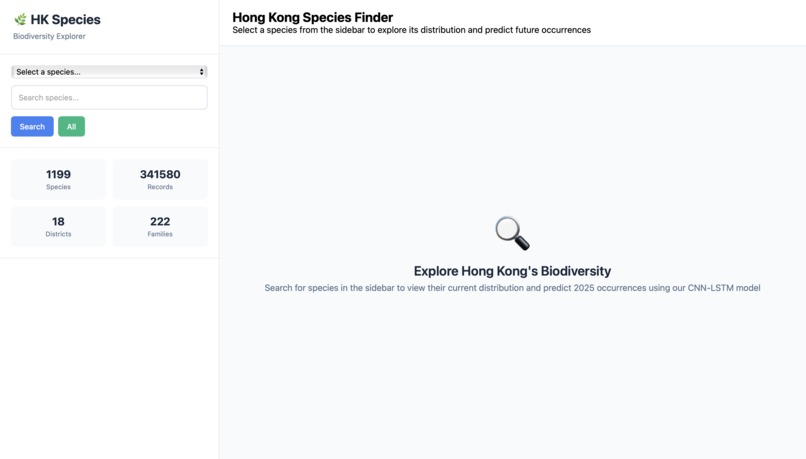
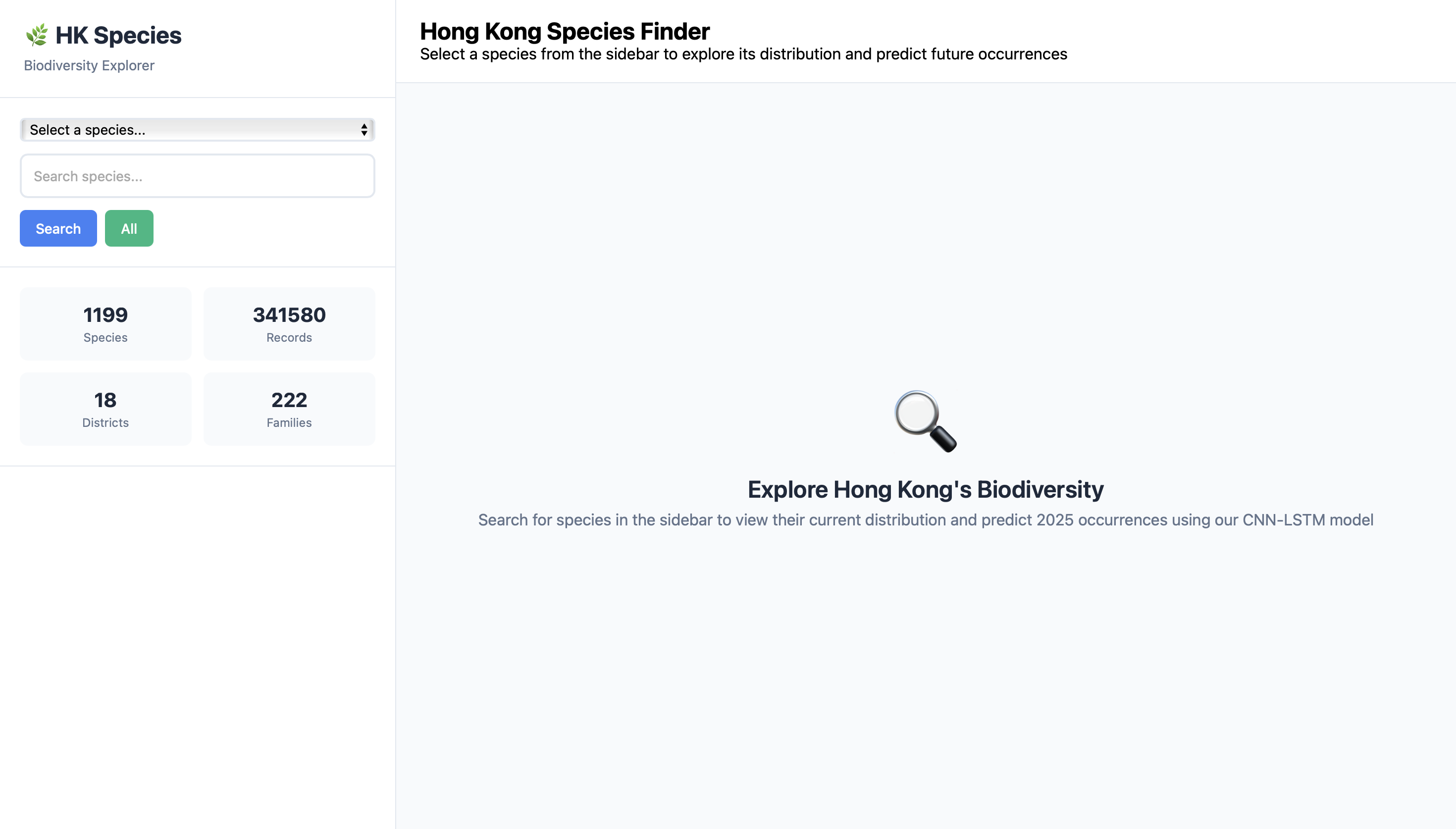
Initial
-
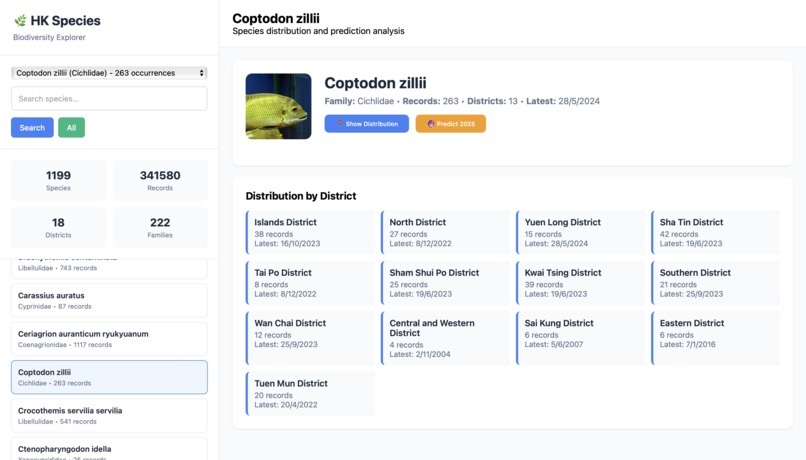
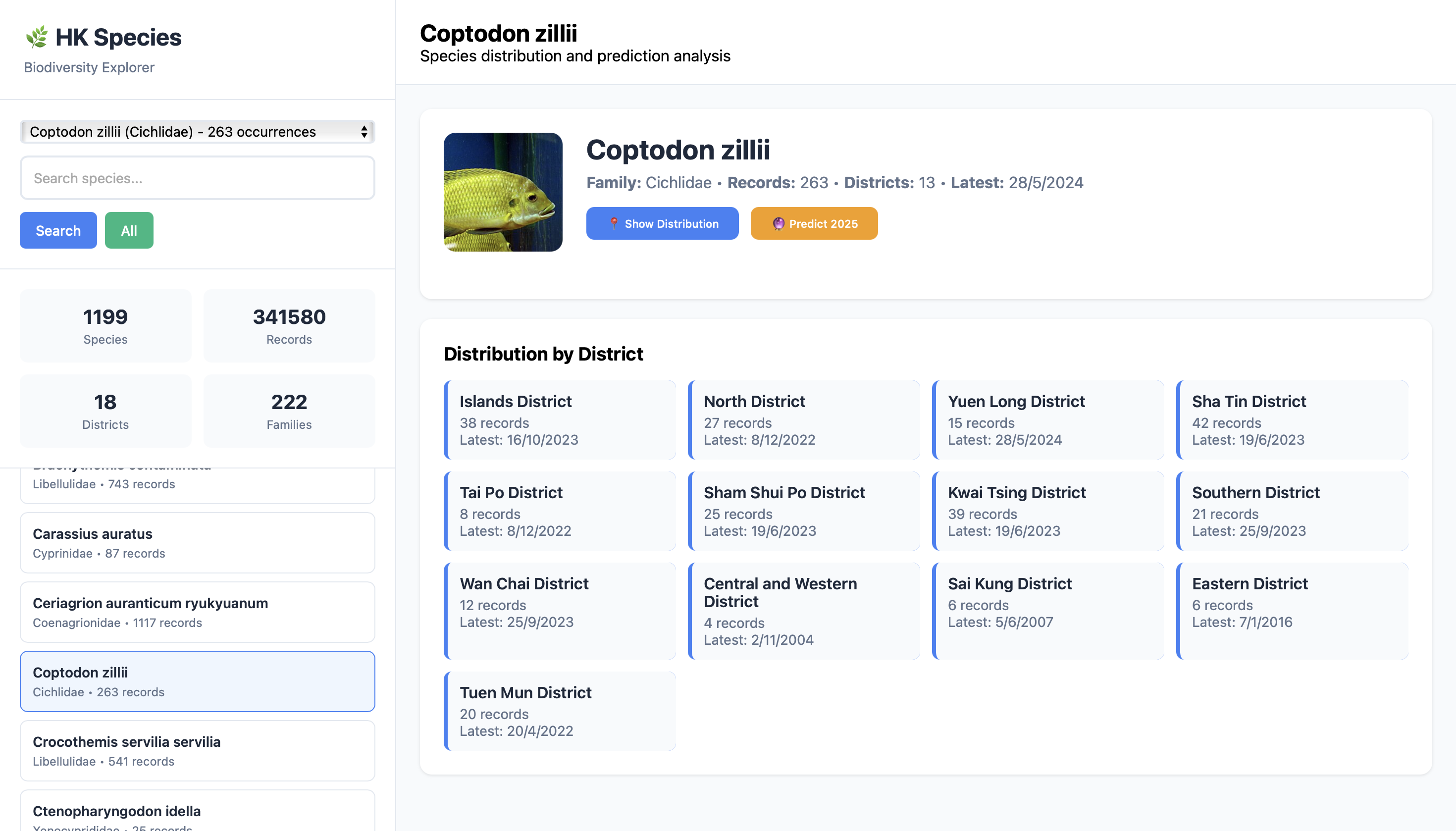
Search and display
-
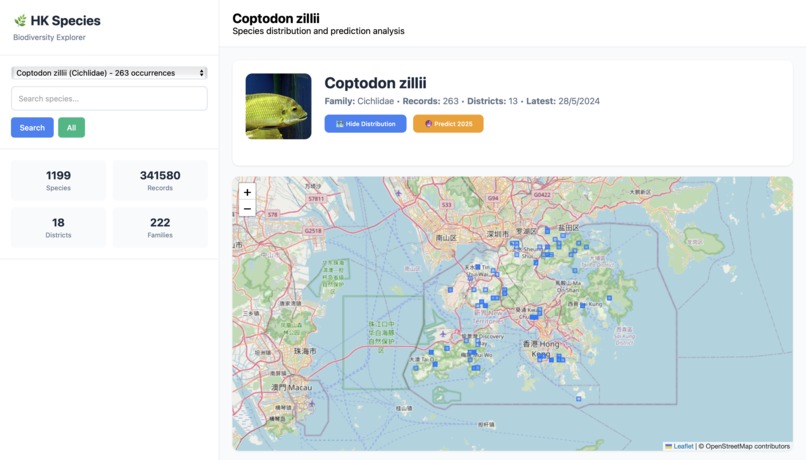
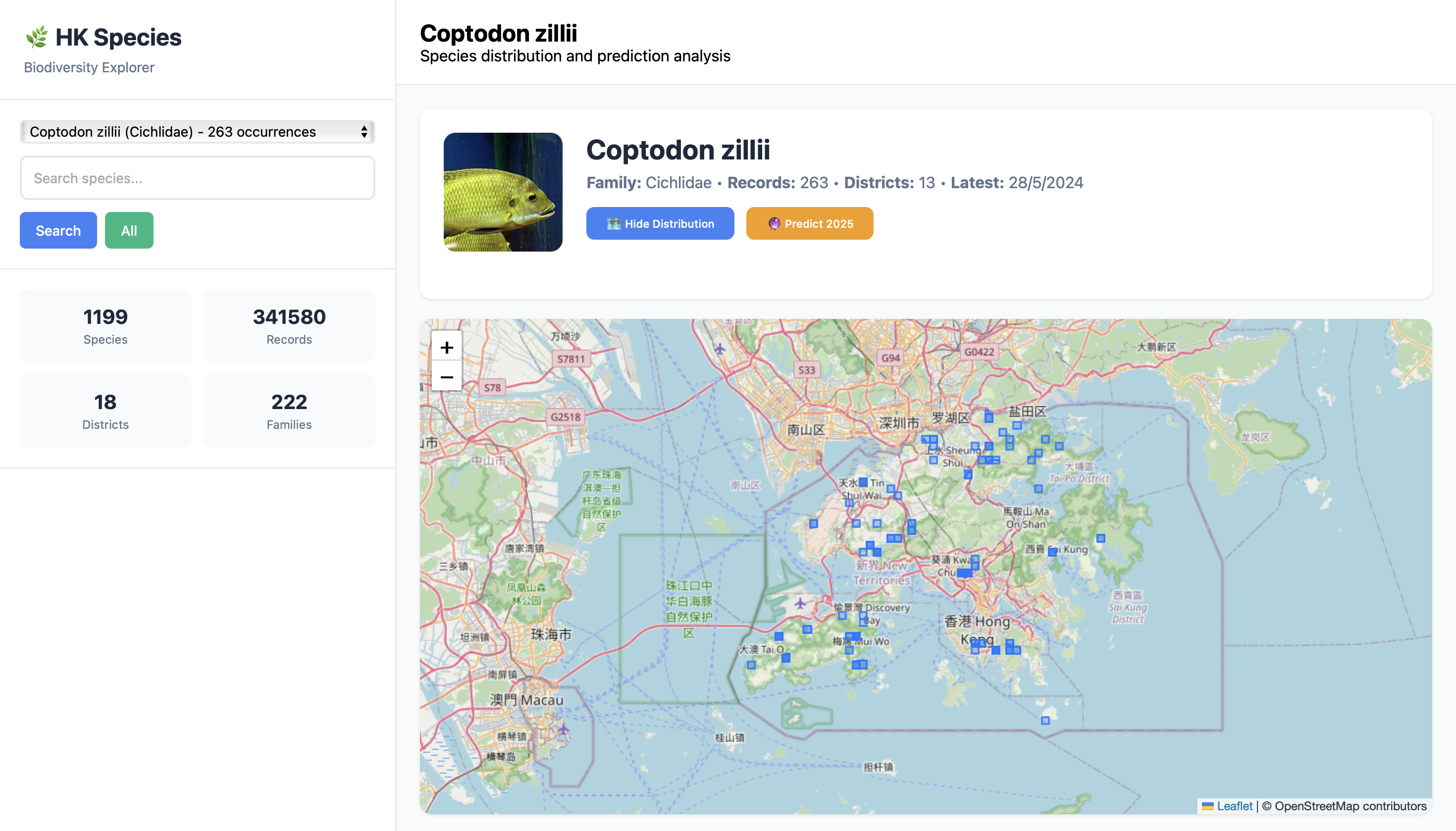
Past occurrences
-
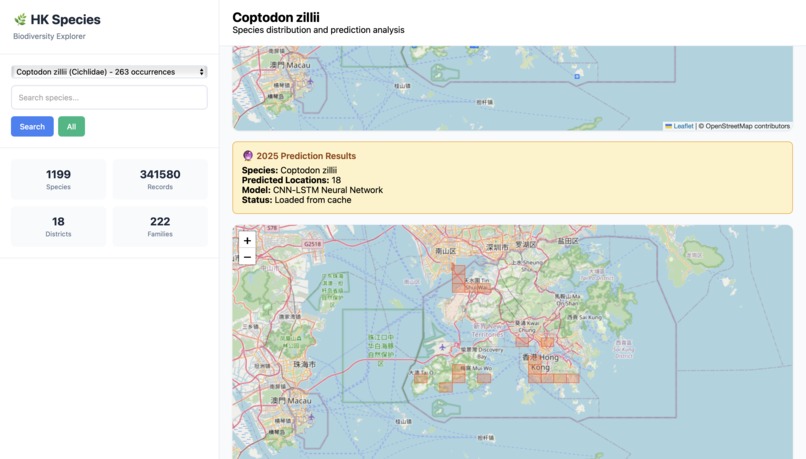
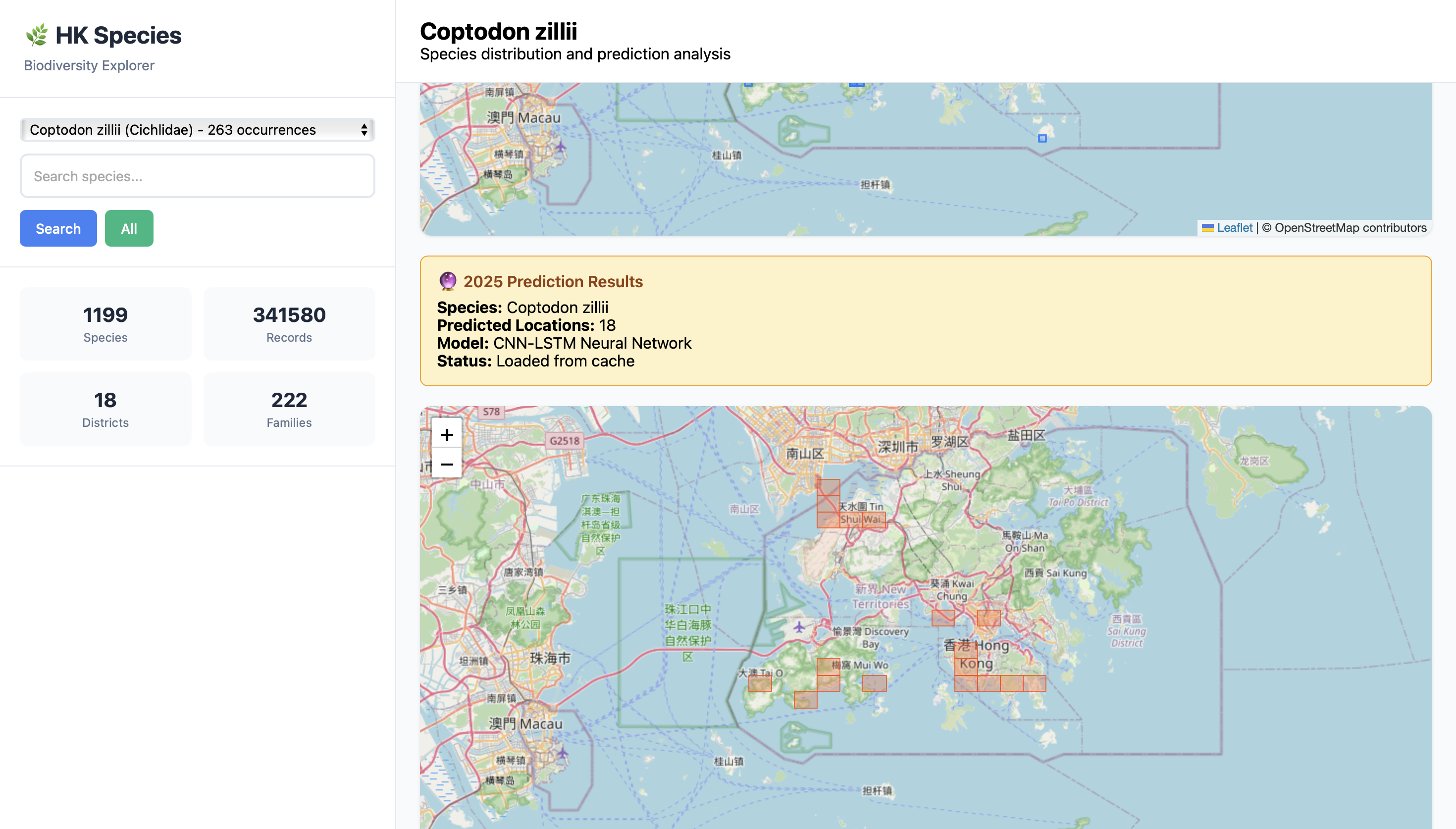
Predictions using past years
AI-Powered Wildlife Discovery Platform for Smart Eco-Tourism
An online platform with a predictive model for enthusiasts, environmental conservationists, and researchers to sight and conduct conservation planning.
Inspiration
Hong Kong is a busy city where most of the signature photos of Hong Kong show skyscrapers in Central and crowded streets around Nathan Road. The great variety of delicious gourmet and exotic street food always attracts tourists. However, what I love about Hong Kong is that not only does it provide a vibrant culture, but it is also surrounded by the humble but beautiful nature. Therefore, I aimed to bring the local fauna forward to be known and proud of being part of Hong Kong by aggregating Hong Kong species occurrence data from 2001 to 2024 and visualising them on an online application that includes maps and predicted occurrence in 2025.
What it does
This user-friendly, interactive application explores the Hong Kong biodiversity through maps. For tourists or even locals, they can easily search and explore the diverse fauna in Hong Kong. For researchers and conservationists, the historical data and predictions may help them with environmental monitoring and conservation planning.
How I built it
The first critical part of the project is data. Firstly, I identified the quality, publicly available data about occurrences of species from Esri. I explored the geospatial data visually together with additional topographic and district maps.
Once I decided that the data was useful to the project, I conducted exploratory data analysis to identify the crucial features for building the predictive model. At this stage, I have only built a baseline neural network model. What I have done so far has been in Jupyter notebooks.
I am not proficient in building frontend user interfaces and connecting them with the backend applications, although I have built simple frontend user interfaces using Streamlit and Azure before. I preferred focusing on my specialty of data wrangling and predictive modelling. Therefore, I asked for Amazon Q Developer to connect the pieces for me, including building functional scripts, designing the frontend user interface, sharing steps and instructions for setting up a Lightsail instance.
Surprising me with its capabilities, Amazon Q Developer efficiently learned and understood my code in the Jupyter notebooks and wrapped them with the necessary functions to build a data processing pipeline and also backend APIs. It is a super assistant that fills my knowledge gaps to become a full-stack developer.
Challenges I ran into
Given the complexity and data-demanding task, the application struggled to deploy using Render's free-tier services. Amazed by the quality work of Amazon Q Developer, I rejected the suggested option, which was to use Render's upgraded services, and learned about Amazon Lightsail. The Lightsail interface is user-friendly, and Amazon Q Developer provided detailed instructions for the deployment.
Accomplishments that I am proud of
Since I just graduated with a master's degree in predictive analytics, I did not have much experience in turning my learning into practical solutions. I used to confine my projects to Jupyter notebooks. Occasionally, I presented my findings and insights through Streamlit interface and Azure platform. However, the time required for me to learn how to deploy them onto a user-friendly interface was quite significant. With the help of Amazon Q Developer, I am grateful to see that my knowledge and skills can make an impact pragmatically, which also gives me confidence in practising data science.
What I learned
I have been using GitHub Copilot to boost coding efficiency in my data science projects. Exposed to Amazon Q Developer, I saw tremendous possibilities extending from my specialty in predictive modelling.
What's next for AI-Powered Wildlife Discovery Platform for Smart Eco-Tourism
After building the foundation of the application, I will focus on the performance of the neural network model through iterative tuning, while leaving the frontend user interface to Amazon Q Developer.
Updates
20251012
- A complex
Convolutional Neural Network with Long Short-Term Memory (CNN-LSTM)model has been implemented to generate predictions where both temporal and spatial information were considered. - An improved user interface by
Amazon Q Developerfor easier navigation.

Log in or sign up for Devpost to join the conversation.