-
-
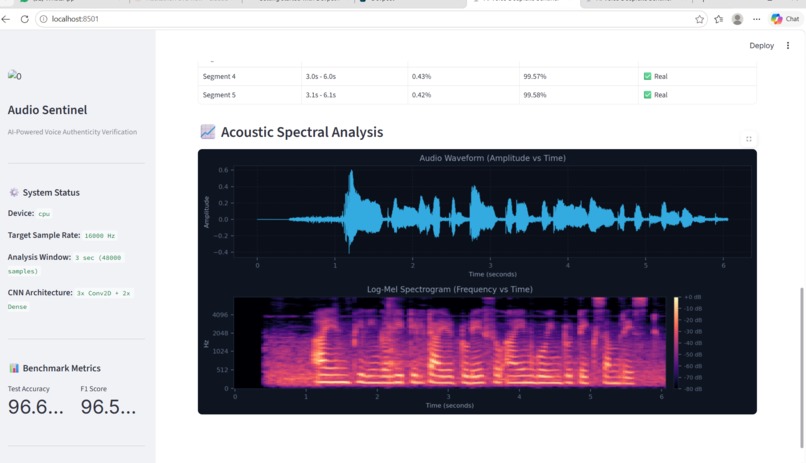
Audio Sentinel: Real-Time Voice Deepfake Detection and Risk Assessment Dashboard
-
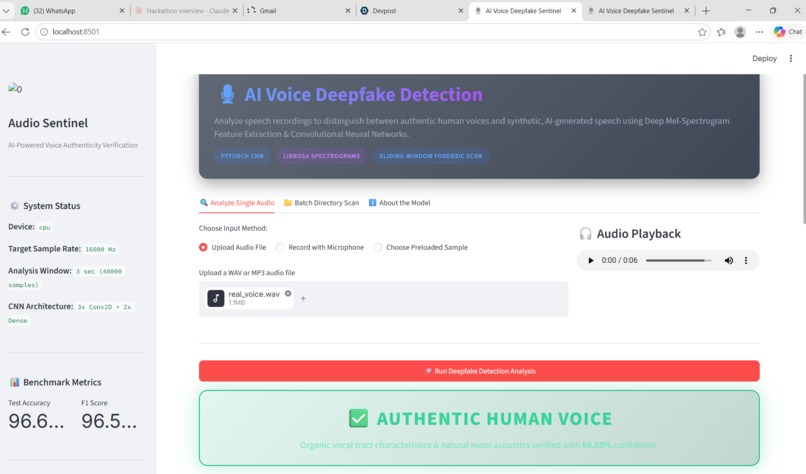
Audio Sentinel: Real-Time Voice Deepfake Detection and Risk Assessment Dashboard
-
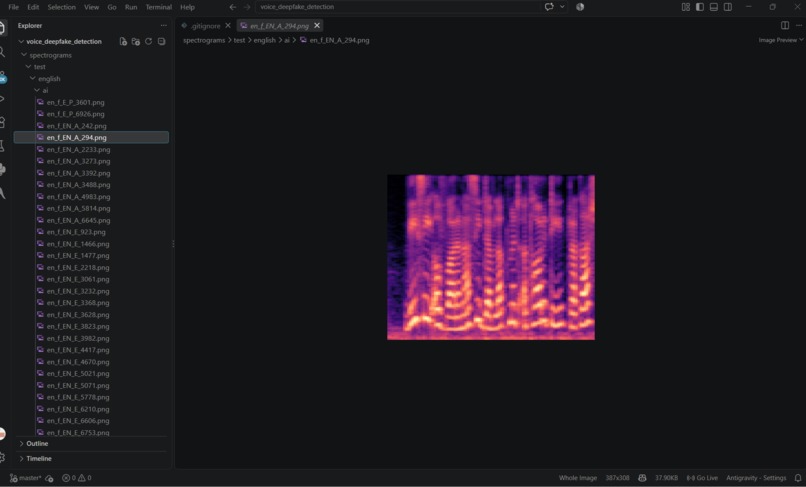
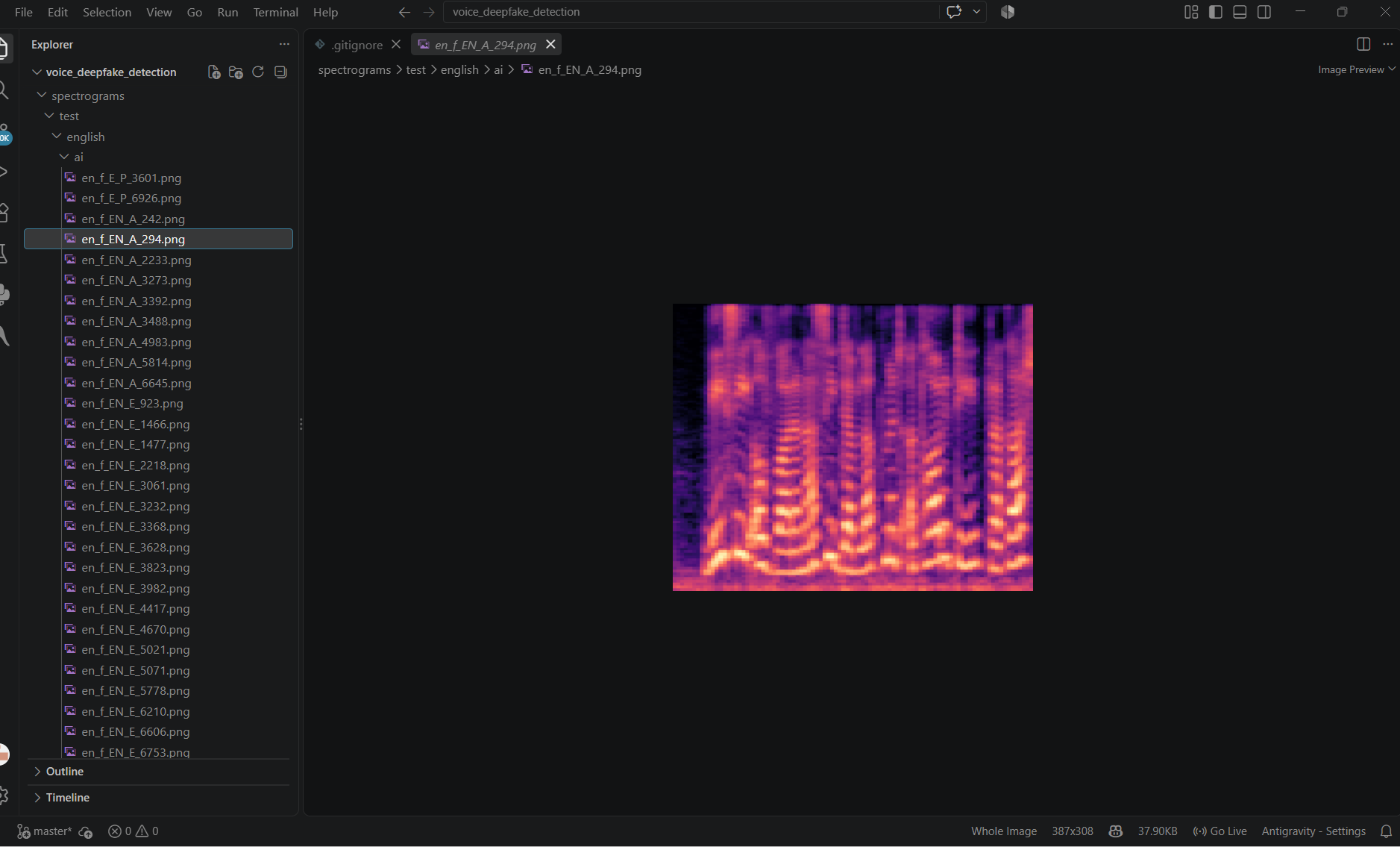
Dataset Audio Representation – Log-Mel Spectrogram
💡 What Inspired Me
I was inspired by the rapid growth of AI voice cloning technology. Today, AI-generated voices can sound very similar to real people and can potentially be misused for scams and voice impersonation.
This made me think: Can AI help identify a suspicious voice before it causes harm? That question motivated me to develop a voice deepfake detection and risk assessment system.
🛠️ How I Built It
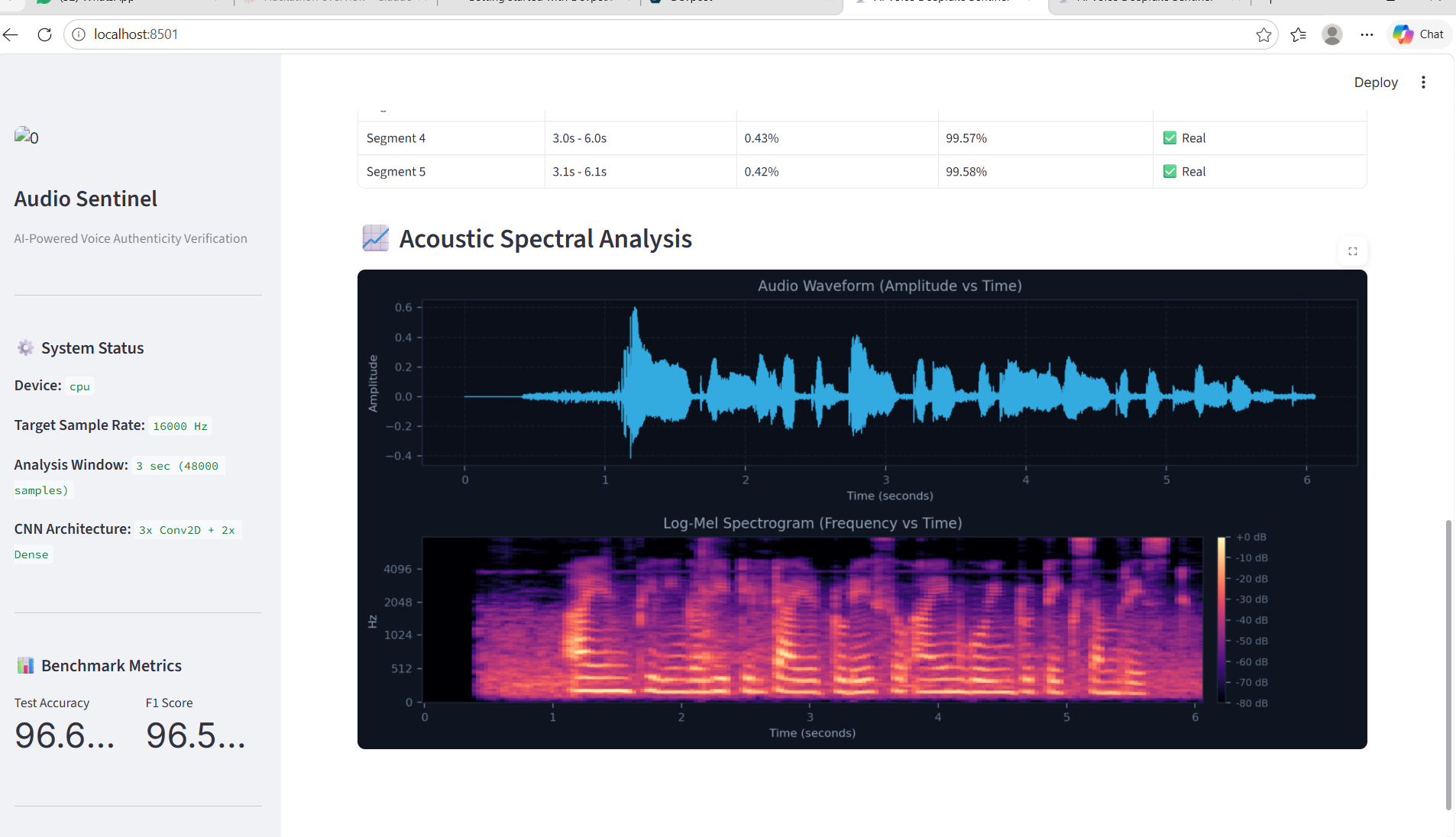
I started by collecting genuine and AI-generated speech samples and preparing them for analysis. I standardized the audio and worked with speech features such as Mel-spectrograms.
The current workflow is:
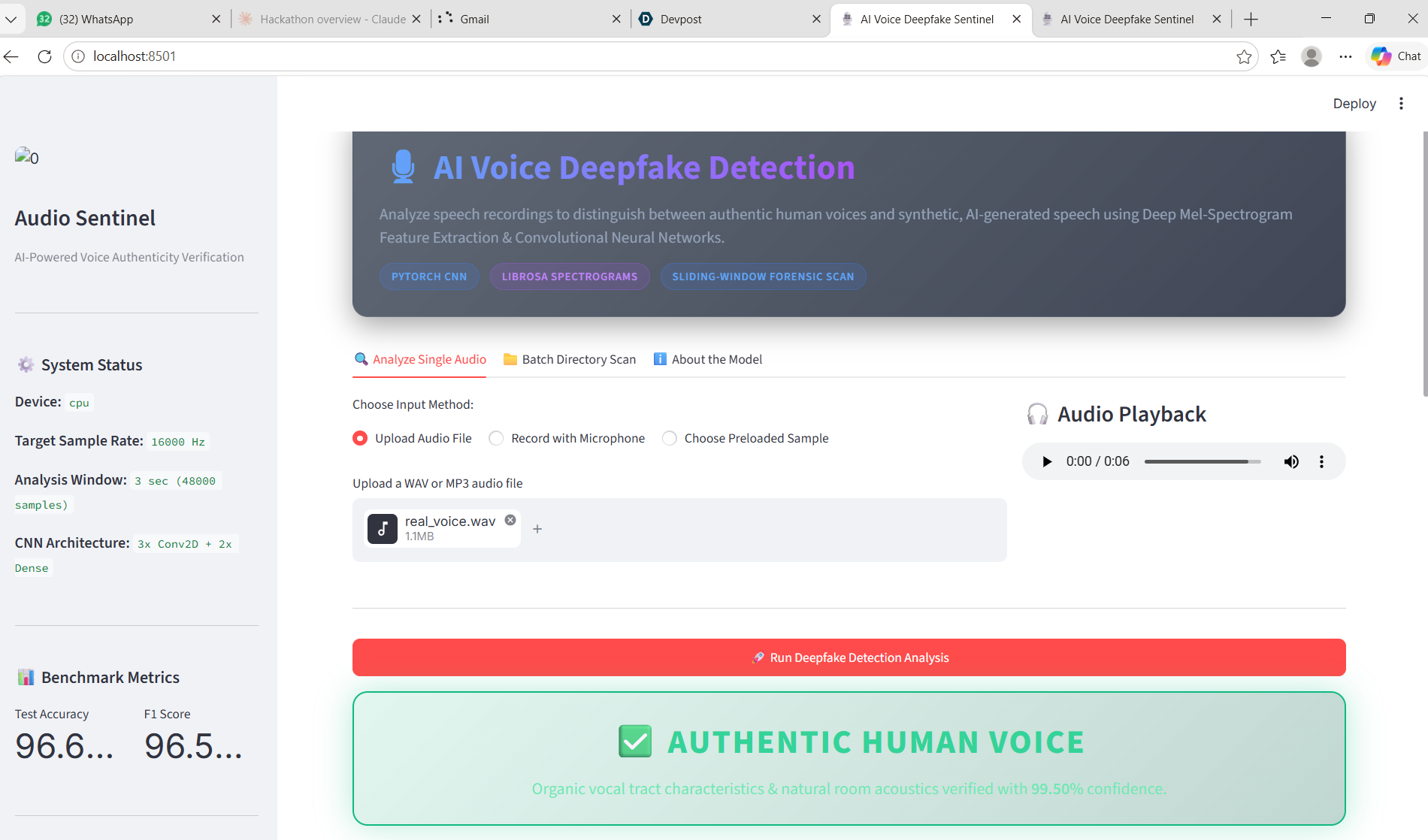
Voice Input → Audio Preprocessing → Mel-Spectrogram → CNN Model → AI Probability → Risk Score
I trained a CNN-based deep-learning model to identify patterns that can help distinguish genuine speech from AI-generated speech. Instead of giving only a Real/Fake result, the system also generates a risk score to make the result easier to understand.
I used Python, PyTorch, Librosa, and Streamlit to develop the prototype.
📚 What I Learned
While developing the project, I learned about audio preprocessing, Mel-spectrograms, CNN-based speech classification, dataset preparation, model training, and risk assessment.
I also learned that voice deepfake detection is challenging because background noise, recording quality, accents, and natural changes in a person's voice can affect the prediction.
⚠️ Challenges I Faced
Finding suitable datasets containing both real and AI-generated voices, especially for Indian languages, was one of the main challenges.
I also faced technical issues with audio libraries, dataset streaming, and FFmpeg/TorchCodec dependencies. Working through these problems helped me understand the practical challenges involved in developing an AI system.
Another challenge was avoiding false alarms caused by normal variations in human voices. Because of this, I treat the model output as a risk indicator rather than absolute proof.
🚀 Current Progress
My current prototype takes voice/audio input, analyzes it using a deep-learning model, estimates the probability of AI-generated speech, and produces a risk score.
My next goal is to extend the prototype toward continuous real-time analysis and additional verification mechanisms.
Built With
- audioprocessing
- cnn
- deeplearning
- librosa
- mel-spectrogram
- numpy
- pandas
- pytorch
- scikit-learn
- streamlit

Log in or sign up for Devpost to join the conversation.