Inspiration
In therapy, people who are objective about their situation and able to set specific goals tend to achieve better results. We created this tool to help people do exactly that.
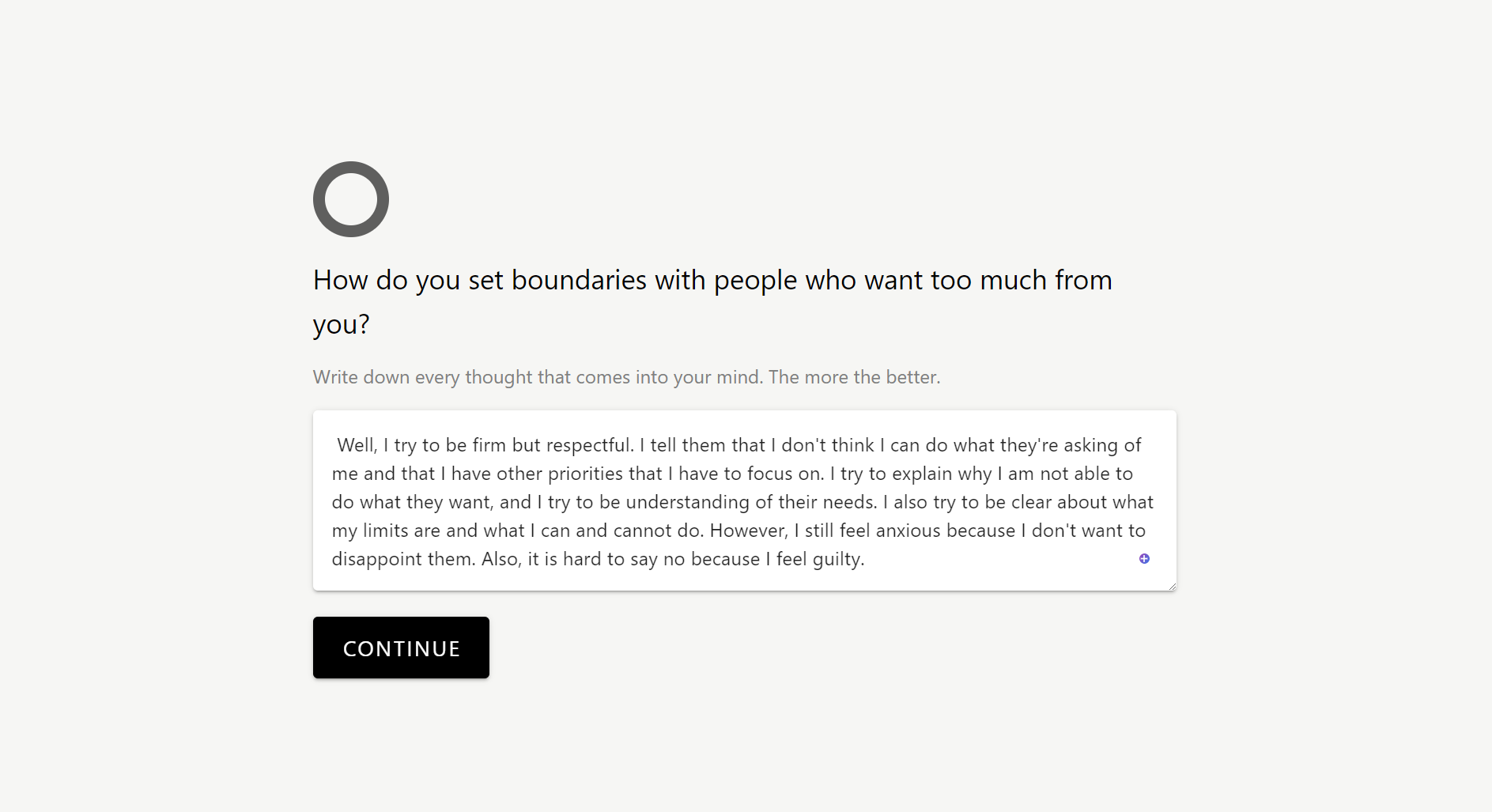
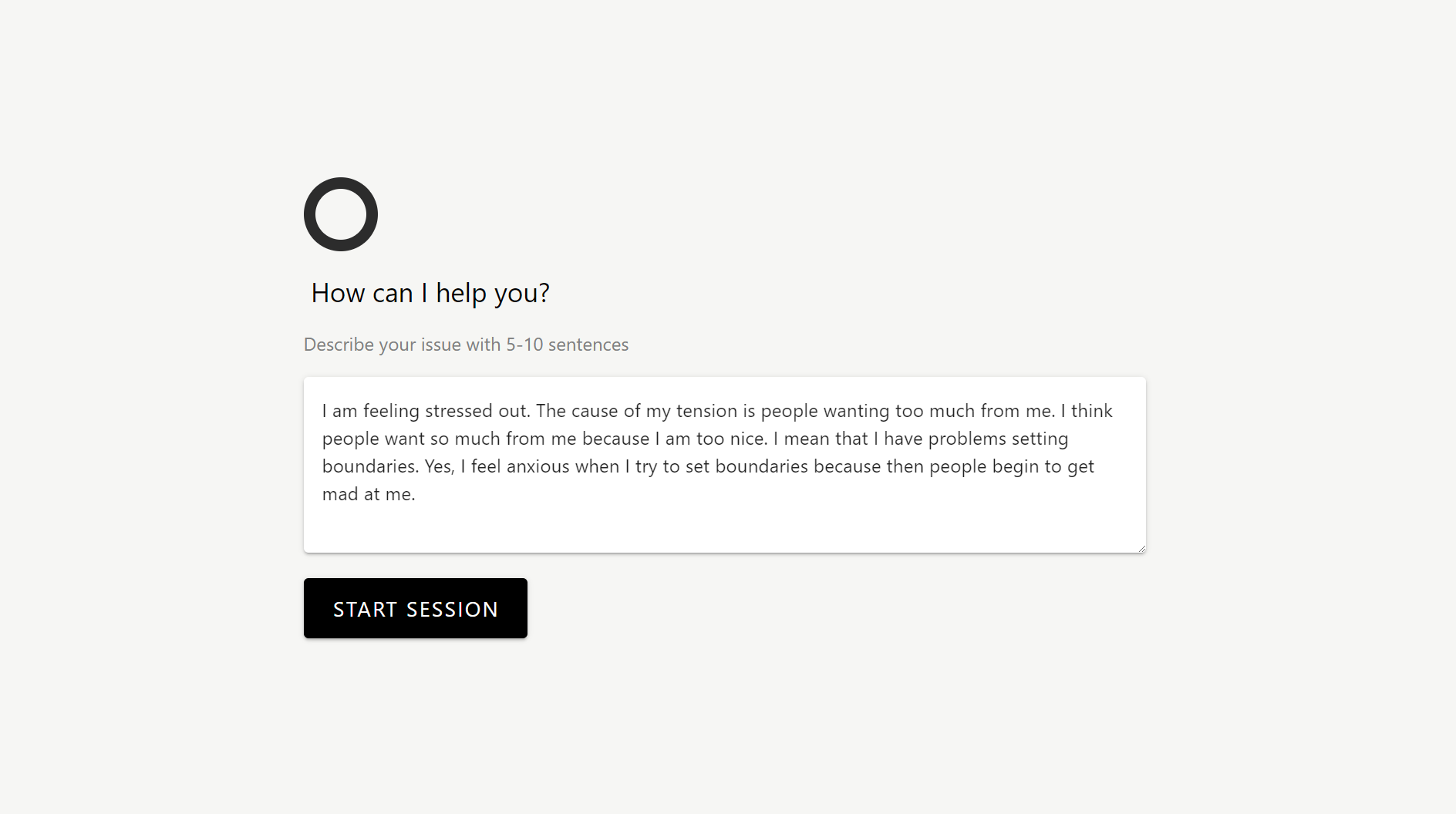
It analyzes the user's problem and then generates questions that will help:
- Assess the situation person faces more objectively.
- Analyze opportunities to change for the better
When it can be used
This tool is based on CBT and will be helpful in the following situations:
A person has a problem and doesn't know how to solve it. For example, "I can't keep up with deadlines," or "My parents are overprotective."
A person can't make a decision. "Should I move?", "Should I accept an offer from a new company?" etc.
A person can't sort out their thoughts. "I can't understand why I'm so uncomfortable being a dad," "Why have I become so irritable?" etc.
A person wants to improve their relationship. "I'm so jealous," "We fight all the time," "I'm not happy with my wife. I cheated, and I feel guilty",
How does it work
A typical session consists of three parts:
Analysis. This part includes questions that make the person analyze various aspects of the situation and draw an objective picture. The essence of this part is the transition from an emotional to a rational perception of reality.
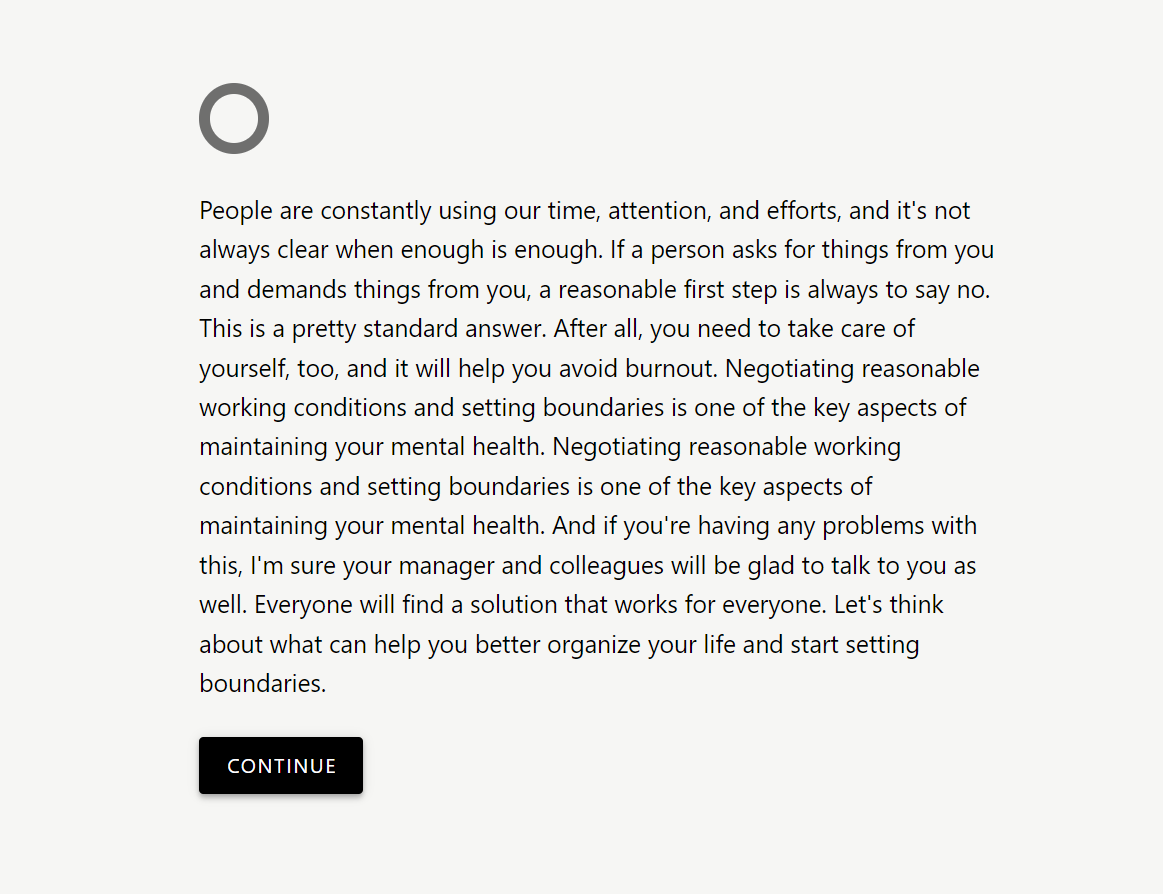
Empathy. It consists of a comprehensive generalizing statement aimed at supporting the client emotionally.
Decision. It consists of questions that allow the person to analyze the availability of resources and ways to solve the problem. Questions force the person to move from emotions to concrete steps toward the goal.
How we built it
We fine-tuned GPT-3 on a dataset that contains the following:
- Various problems that people face
- Sets of questions to improve one's understanding of their problem
- Sets of questions to help them develop new ideas on how to solve the problem
We also fine-tuned a model that expresses empathy and makes the user feel heard.
Challenges we ran into
It was hard to meet the deadline. Ideally, you should also build a reranking algorithm for this model and choose optimal hyperparameters.
What's next for AI-powered tool for self-analysis
We are a small startup from Ukraine, but with an ambitious goal — we want to make an AI that will supplement the therapy for people who don't have access to mental health care because of high prices and stigma.
If we win the hackathon, we will use the prize for that. Right now, we're in a public beta.
Built With
- gpt-3


Log in or sign up for Devpost to join the conversation.