-
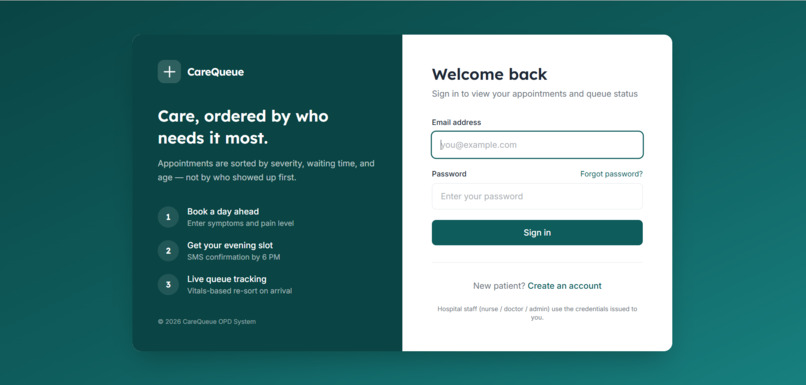
log in
-
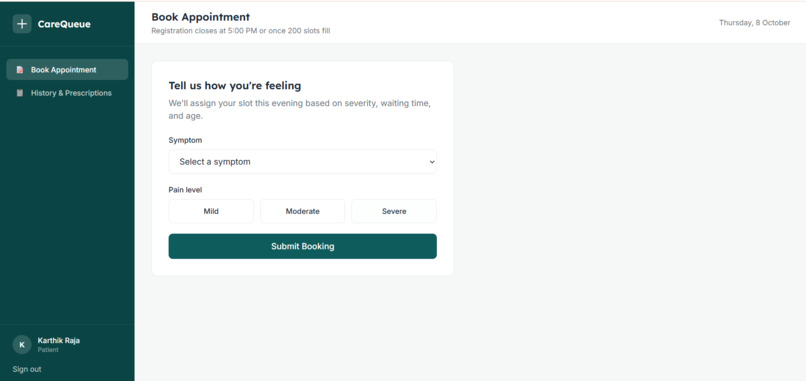
booking
-
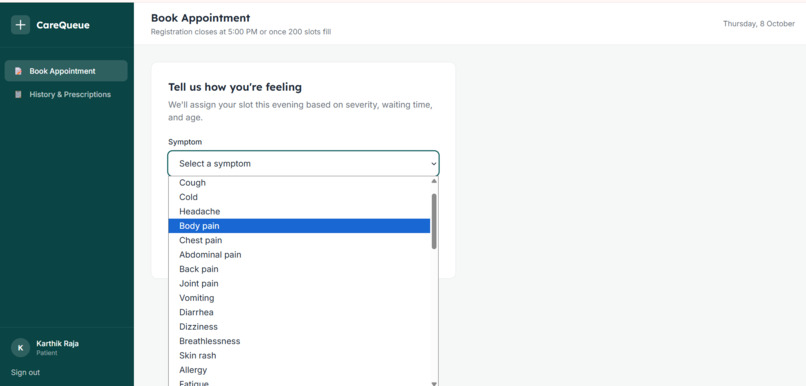
booking
-
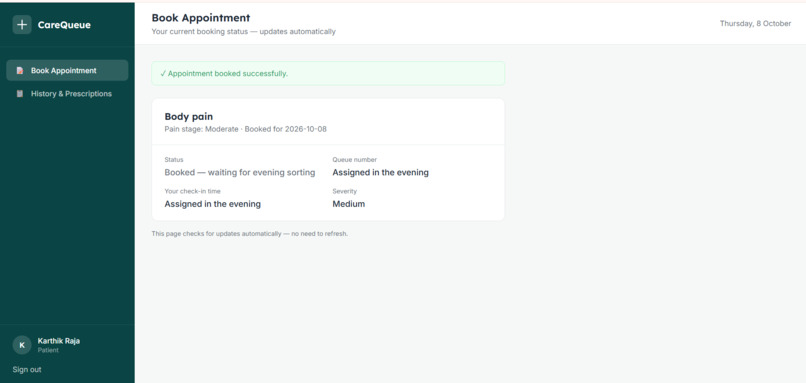
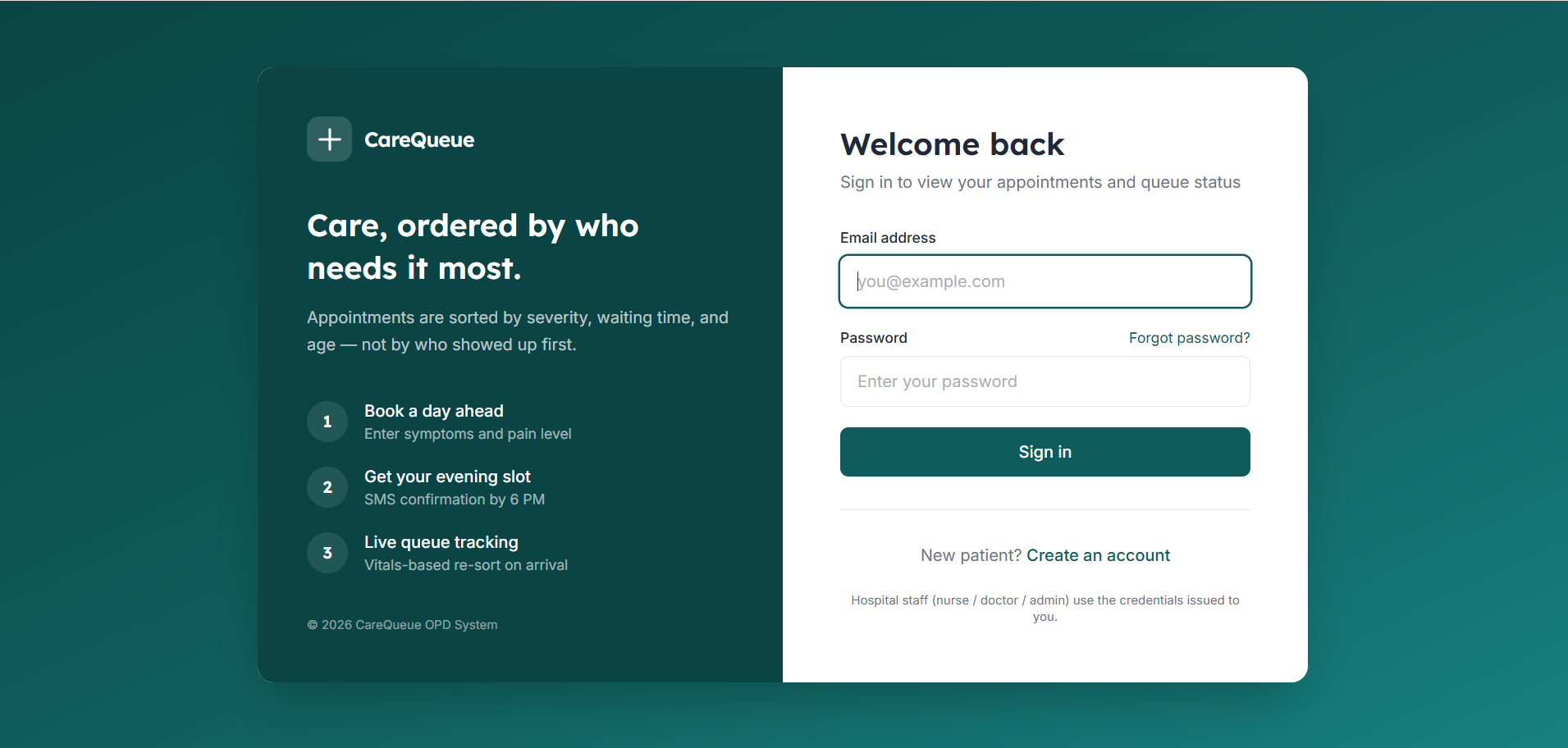
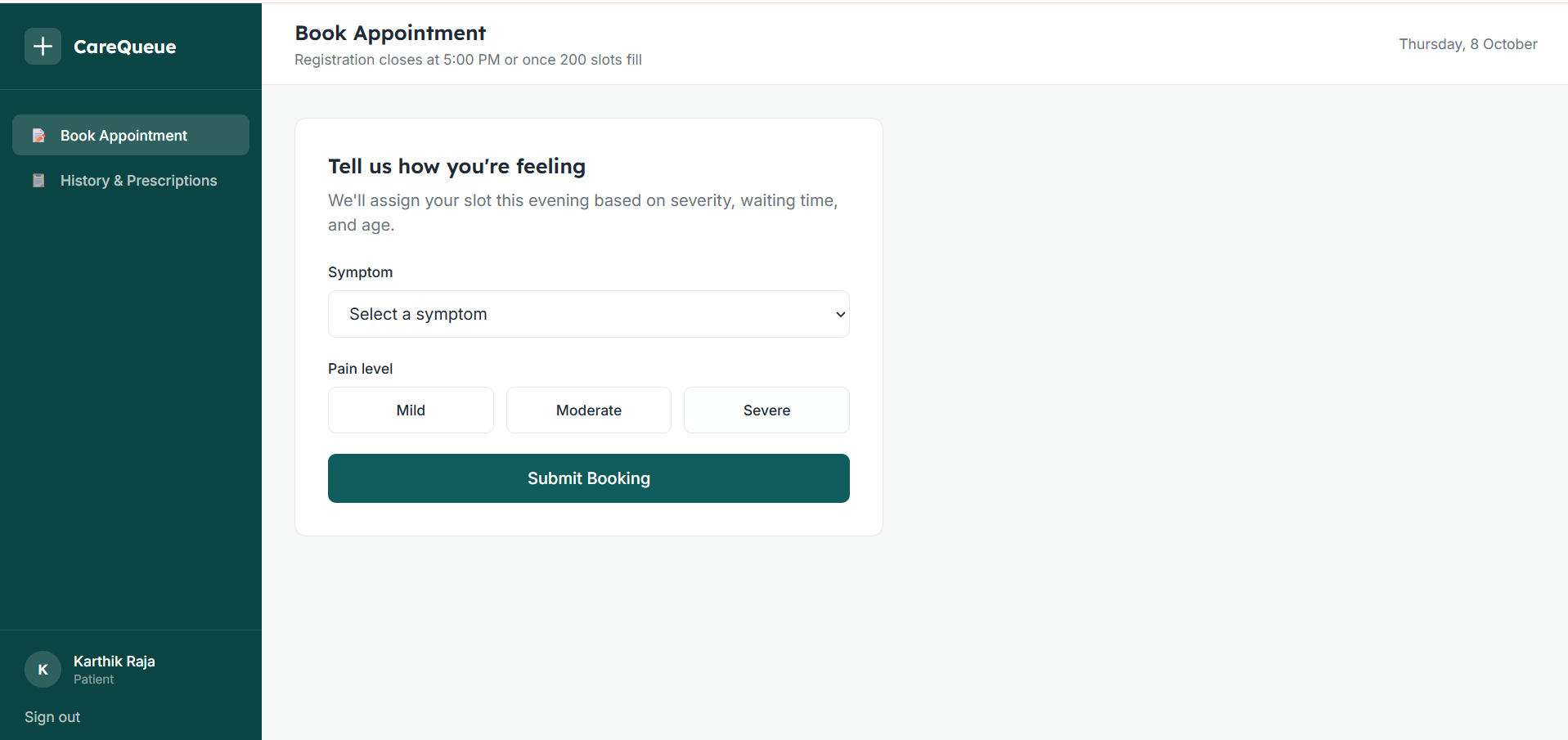
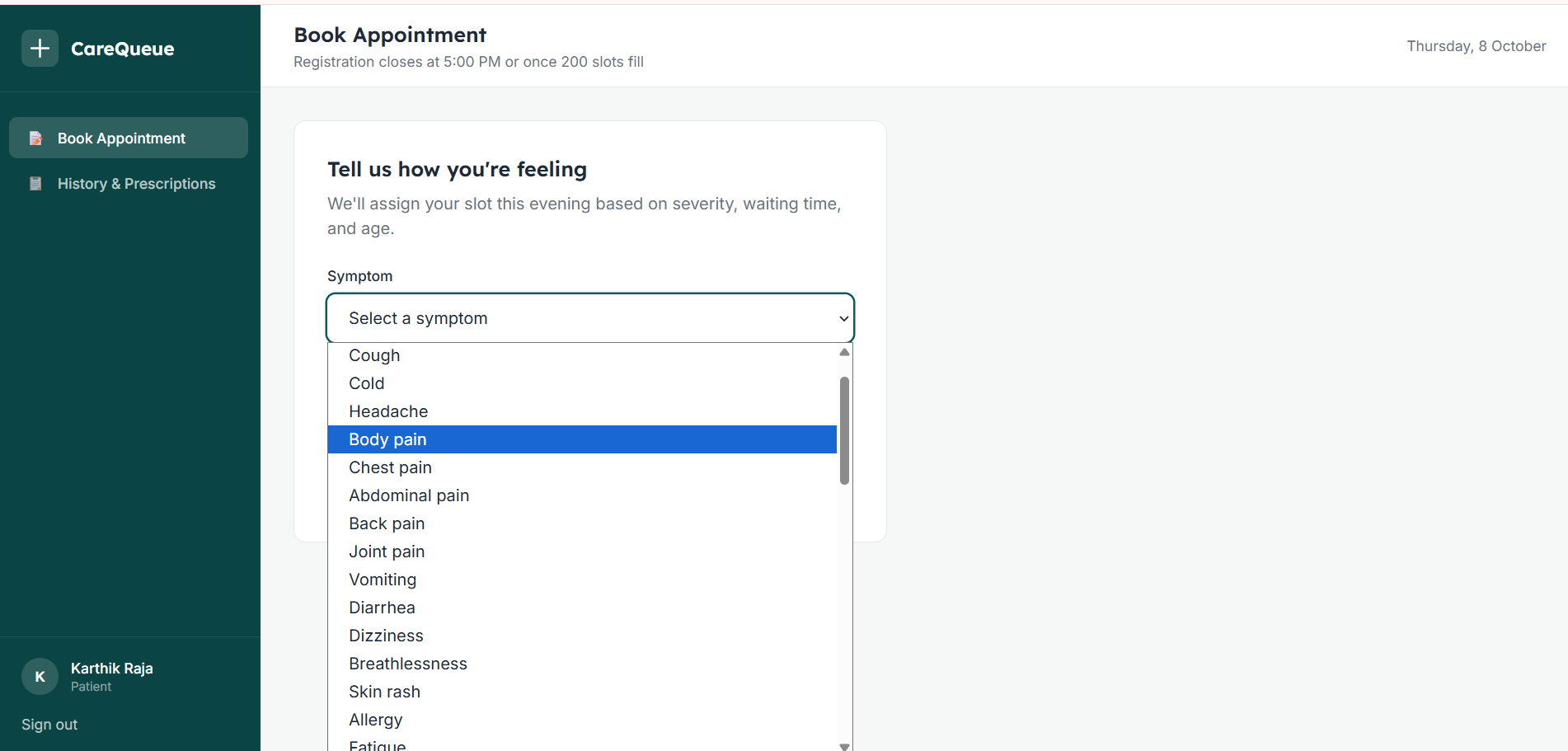
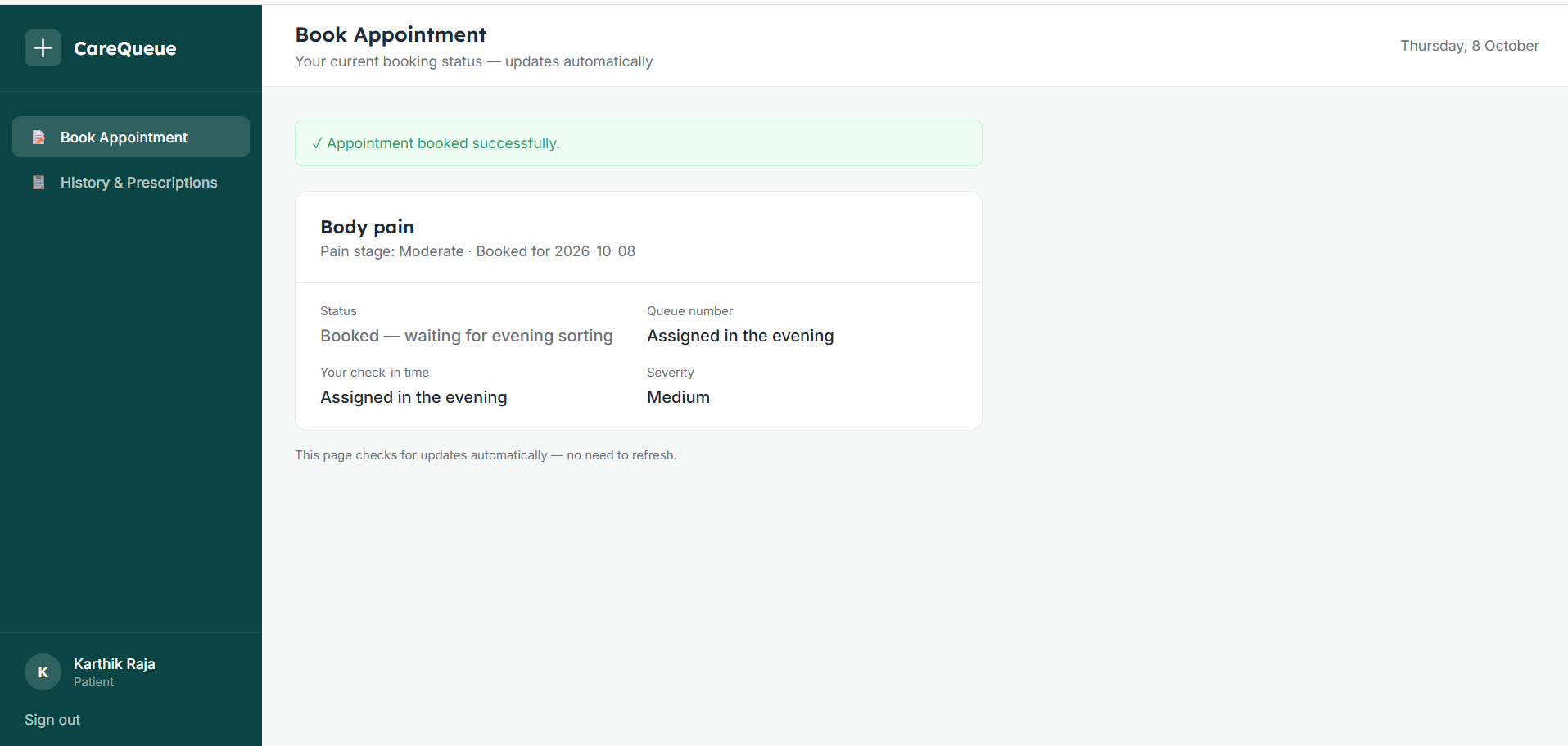
Outpatient departments in hospitals often manage a large number of patients every day. Traditional first-come, first-served queues do not always consider the patient's clinical severity. As a result, patients with more serious symptoms may have to wait behind patients with less urgent conditions. Manual queue management can also increase waiting time, create confusion, and make it difficult for healthcare staff to efficiently manage patient flow.
Our Solution
AI-Powered Smart OP Consultation Queue is an AI-assisted healthcare platform designed to intelligently prioritize outpatient consultations.
Instead of using only the appointment time, the system considers factors such as symptoms, pain level, clinical severity, waiting time, and patient age to generate a dynamic priority for each patient.
The system categorizes patients into priority levels such as:
High Priority – patients requiring earlier attention
Medium Priority – patients requiring moderate priority
Low Priority – patients with less urgent symptoms
The queue is dynamically organized using:
Clinical Severity → Waiting Time → Age
This allows the hospital staff to identify patients who may need earlier attention while maintaining a structured and transparent consultation process.
How AI Is Used
The AI component analyzes patient-provided symptoms and clinical information to assist in determining the patient's severity category. A machine learning classification model can be trained using relevant patient features and severity labels.
The AI output is used as a decision-support mechanism, not as a replacement for medical professionals. Doctors and nurses remain responsible for clinical decisions.
Target Users
Patients: Book outpatient appointments and track their queue status.
Nurses: Record symptoms, pain levels, and preliminary clinical information.
Doctors: View patients according to their dynamically calculated priority.
Hospital Administrators: Monitor patient flow and consultation statistics.
Technical Approach
The application follows a full-stack architecture.
Patient → Web Application → Backend → AI Severity Prediction → Priority Engine → Dynamic Queue → Doctor
The patient provides appointment and symptom information through the web application. The backend processes the information and sends relevant features to the AI model. The predicted severity is combined with waiting time and age to calculate the patient's queue priority.
Real-time updates allow patients and healthcare staff to see changes in queue position without manually refreshing the page.
Technologies Used
Frontend
React.js / Next.js
HTML
CSS
JavaScript
Backend
Node.js
Express.js
Database
MongoDB
AI / Machine Learning
Python
Scikit-learn
Classification model
Real-Time Communication
Socket.io
Deployment
Vercel
Render
Key Features
Patient appointment booking
Symptom and pain-level selection
AI-assisted severity classification
Dynamic patient prioritization
Waiting-time consideration
Age-based priority handling
Real-time queue updates
Patient dashboard
Nurse/triage dashboard
Doctor consultation queue
Consultation status tracking
What Inspired Us
We were inspired by the long waiting times and queue-management challenges commonly experienced in outpatient departments. A patient may arrive at the hospital with significant symptoms but still wait in the same queue as patients with less urgent conditions.
We wanted to explore how AI could be used responsibly to support healthcare staff in organizing outpatient queues more efficiently.
Challenges We Faced
One of the major challenges was designing a prioritization system that is simple enough to understand while still considering multiple patient factors.
Another challenge was integrating the AI prediction with the real-time queue. We designed the system so that the AI provides a severity indication, while the final queue priority is calculated using severity, waiting time, and age.
We also focused on making the system easy to use for patients, nurses, and doctors.
Real-World Impact
The proposed system can help hospitals manage outpatient queues more efficiently, reduce unnecessary waiting, and provide healthcare staff with better visibility of patient priorities.
By combining AI-assisted severity classification with real-time queue management, the platform demonstrates how AI can support healthcare workflows while keeping healthcare professionals in control of clinical decisions.
Future Scope
Future versions could incorporate larger and clinically validated datasets, explainable AI, multilingual patient interfaces, integration with electronic health records, predictive waiting-time estimation, and hospital-specific clinical protocols.
The system could also be evaluated with healthcare professionals before real-world clinical deployment.
Built With
- ai
- express.js
- healthcare
- javascript
- machine-learning
- mongodb
- next.js
- node.js
- python
- react
- real-time-systems
- rest-api
- scikit-learn
- socket.io
- web-application


Log in or sign up for Devpost to join the conversation.