-
-
AI-Powered Smart Issue Triage & Auto-Resolution Assistant
InspirationDuring collaborative software development, especially in fast-paced teams, managing issues efficiently becomes a major challenge. Many repositories face delays due to unassigned, mislabeled, or repetitive issues. Developers spend significant time manually triaging, categorizing, and responding to common problems instead of focusing on building features.
While working on personal and academic projects, I noticed how quickly issue tracking can become overwhelming — especially when multiple contributors are involved. Small but repetitive queries like setup errors, dependency conflicts, or documentation confusion often slow down productivity.
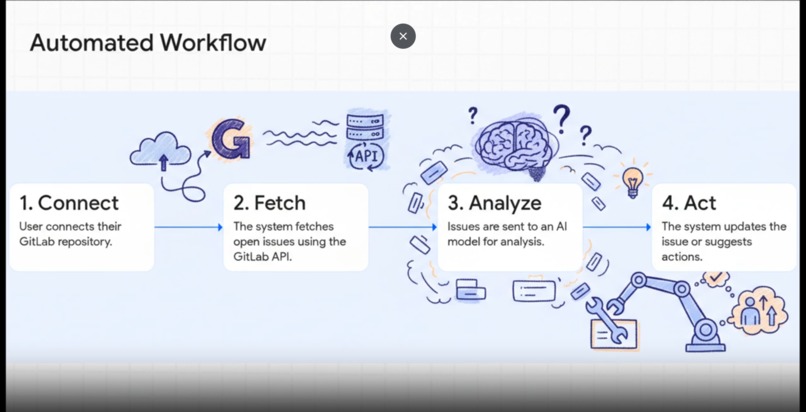
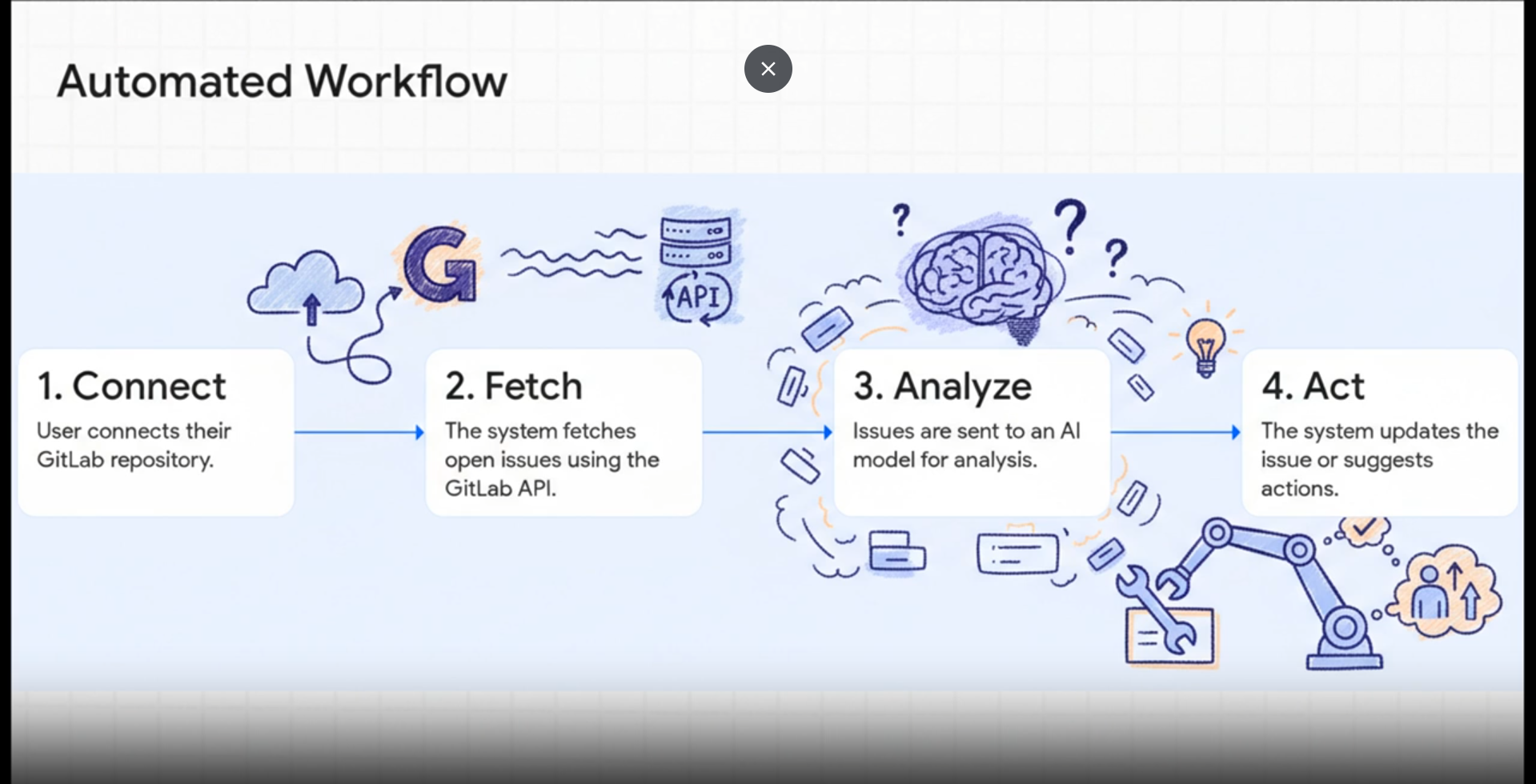
This inspired me to explore how AI can assist in automating issue triage, intelligently categorizing problems, suggesting possible solutions, and even auto-generating merge requests for common fixes.
By leveraging AI within GitLab’s ecosystem, the goal is to reduce manual overhead, improve response time, and help development teams focus on innovation rather than repetitive issue management.
If you want something slightly more powerful and impactful, here’s another version:
🚀 Stronger Version (More Vision-Oriented)
Modern development teams move fast, but issue management often becomes the bottleneck. Manual triage, delayed responses, and repetitive bug reports reduce productivity and slow down innovation.
Inspired by the increasing scale of open-source and collaborative projects, I wanted to build an AI assistant that acts like a smart project maintainer — automatically understanding issues, labeling them, prioritizing them, and even suggesting fixes.
The vision is to transform GitLab issue tracking from a reactive system into a proactive AI-driven workflow assistant that reduces developer burnout and accelerates proj

Log in or sign up for Devpost to join the conversation.