-
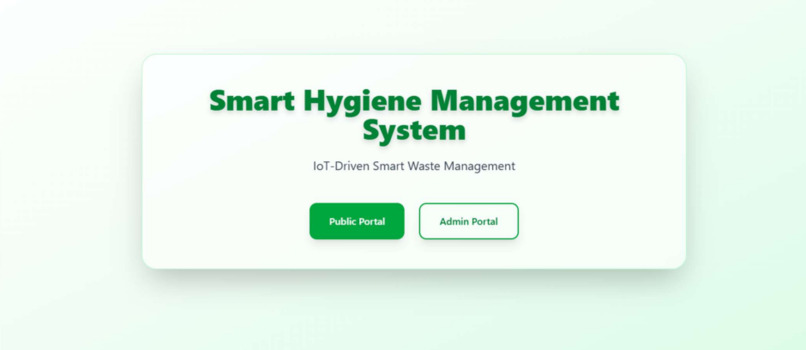
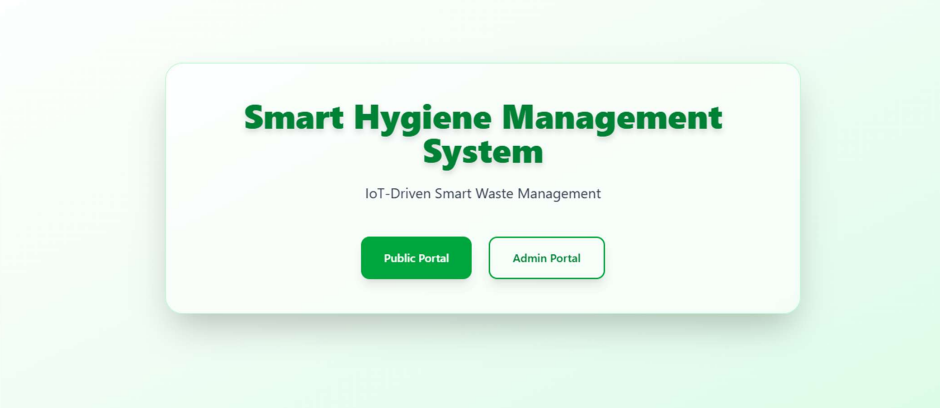
Landing Page
-
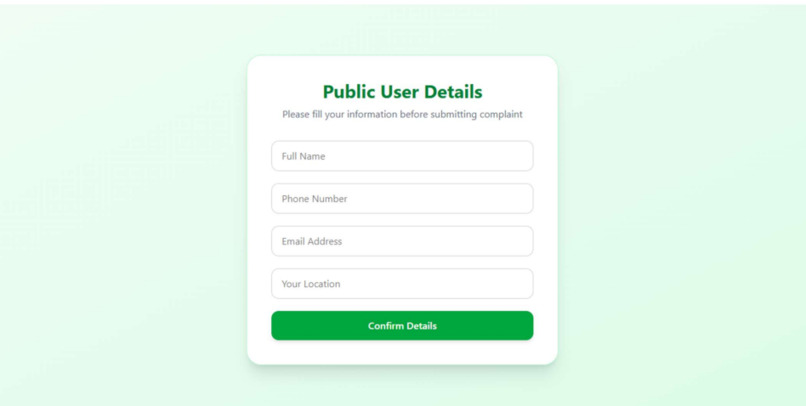
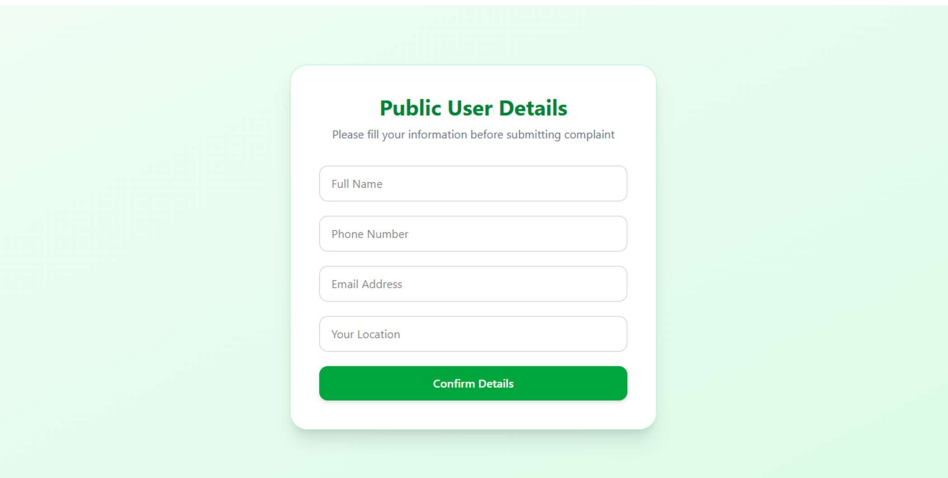
Public User Portal
-
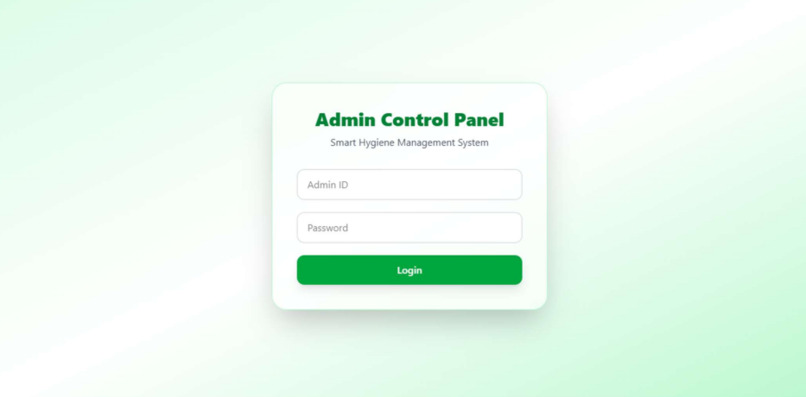
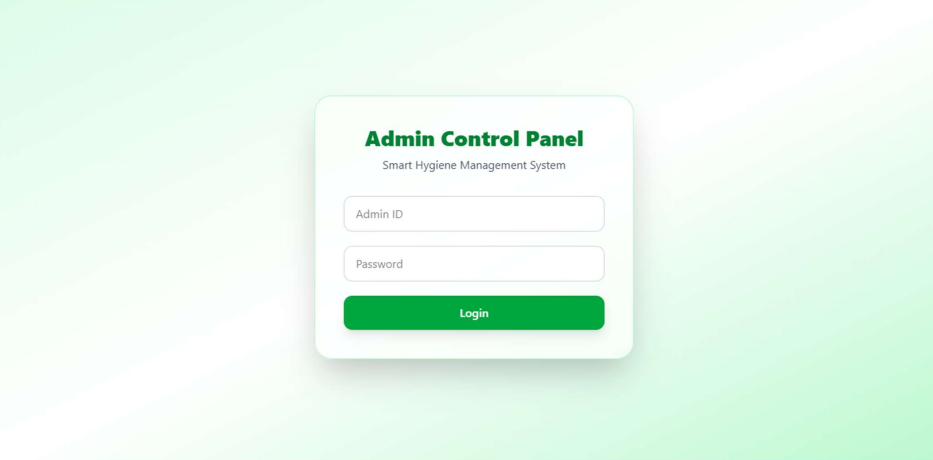
Admin Login Portal
-
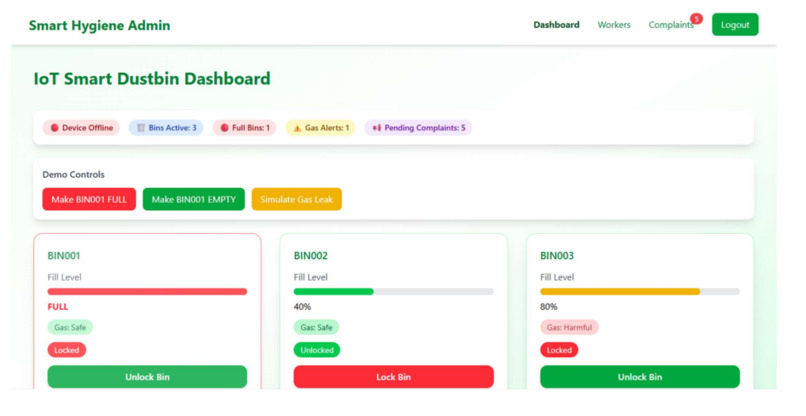
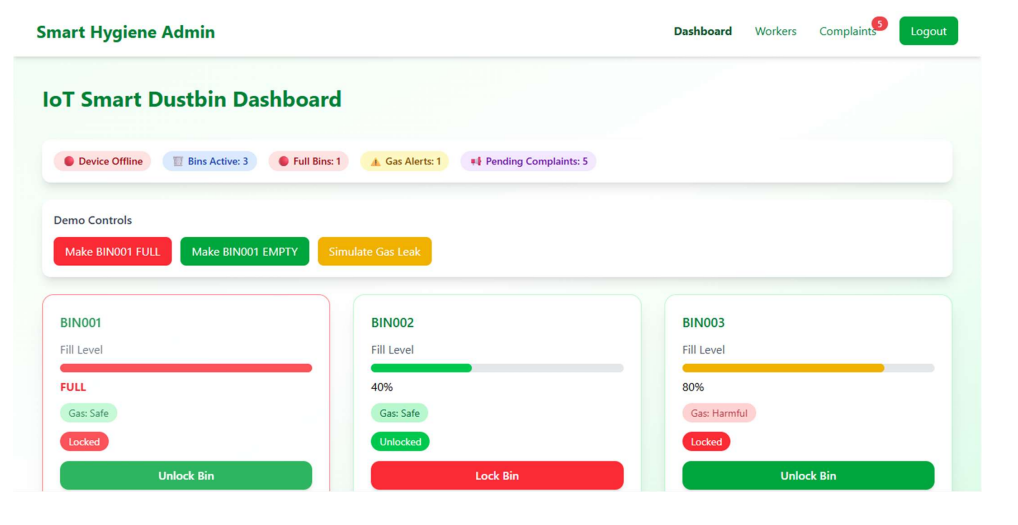
Admin Dashboard
-
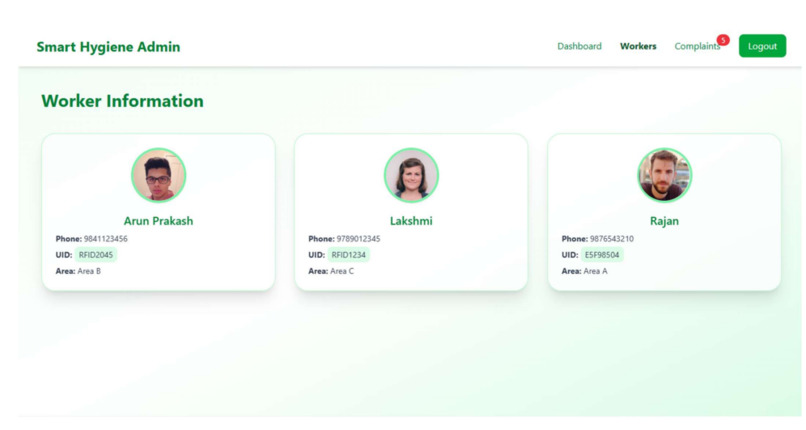
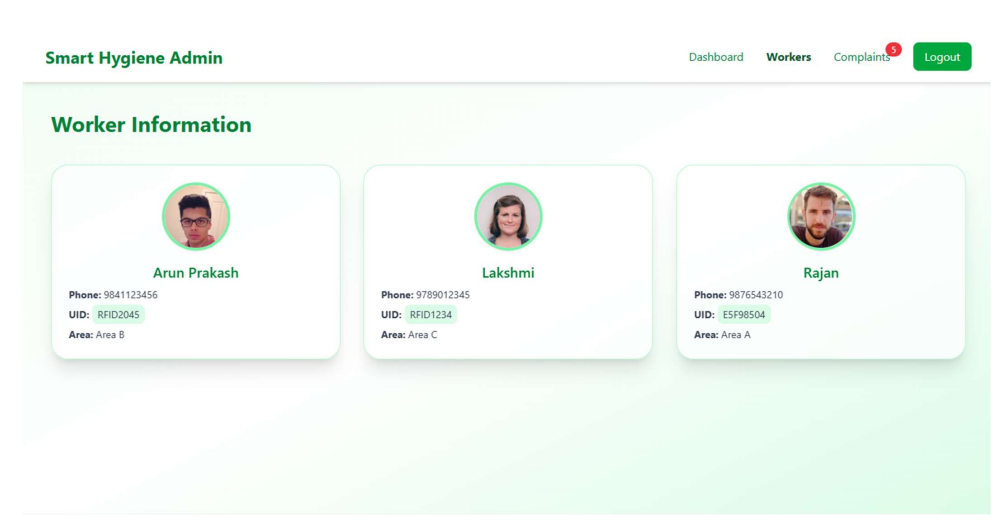
Worker Management Module
-
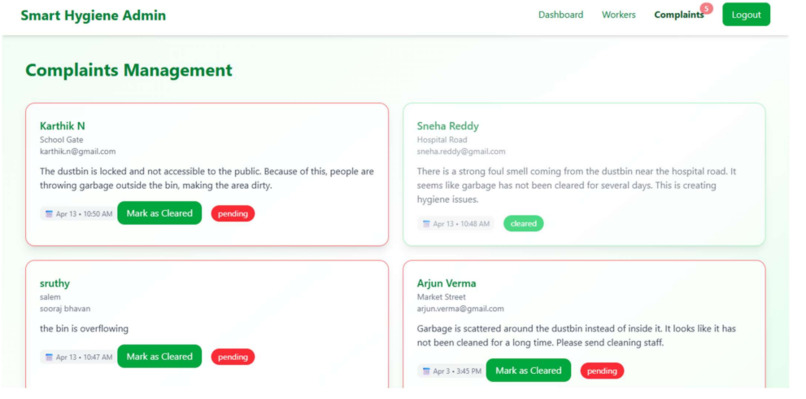
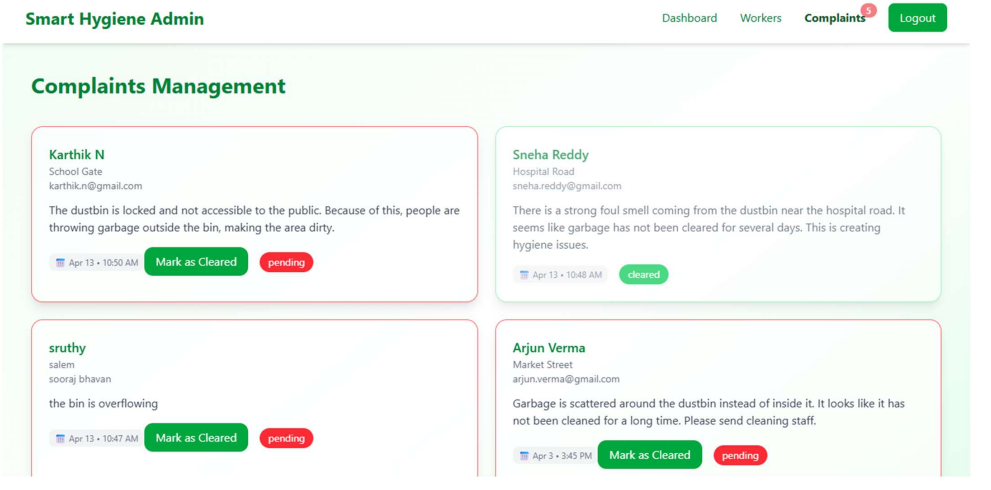
Complaint Management Module
Inspiration
Maintaining cleanliness and hygiene in colleges and public facilities is essential for creating a healthy environment. However, cleaning activities are often managed through manual inspections, fixed schedules, and paper-based records. These methods can make it difficult to identify high-priority areas, respond quickly to hygiene issues, and allocate cleaning resources efficiently.
As engineering students, we wanted to explore how Artificial Intelligence can help improve hygiene management through smarter monitoring, data analysis, and timely decision-making.
What It Does
The AI-Powered Smart Hygiene Management System is designed to help educational institutions monitor hygiene conditions, manage cleaning schedules, prioritize reported issues, and make data-driven decisions.
The system can maintain records of hygiene inspections, collect reports about unclean areas, identify areas requiring attention, and recommend cleaning priorities based on available data. An interactive dashboard presents hygiene status, pending cleaning tasks, and reports to help facility managers organize their work efficiently.
How We Built It
The proposed system combines a user-friendly web application with data analysis and AI-based decision support.
Users can submit hygiene reports containing details such as location, issue type, severity, and time of reporting. The system processes these inputs to help prioritize cleaning tasks and present recommendations through a dashboard.
The application can be developed using HTML, CSS, and JavaScript for the frontend, Python for data processing and AI functionality, and Flask for backend integration. Pandas and Scikit-learn can support data analysis and machine learning, while Chart.js can visualize hygiene reports and cleaning statistics.
Challenges We Faced
One of the main challenges is determining hygiene priorities from incomplete or inconsistent reports. Another challenge is designing a simple interface that allows users to report issues and helps facility managers understand which tasks require immediate attention.
We aim to address these challenges through data validation, clear priority criteria, suitable model evaluation, and easy-to-understand visualizations.
What We Learned
This project helps us explore the application of Artificial Intelligence, data analytics, and software development to a practical problem. It also demonstrates how engineering concepts can support better sanitation management, resource allocation, and decision-making.
Real-World Impact
The system aims to help colleges and other institutions improve hygiene management by organizing cleaning requests, identifying priority areas, and reducing delays in responding to reported issues. It can support more efficient cleaning operations and encourage greater awareness of shared-space hygiene.
Future Scope
Future improvements could include IoT-enabled monitoring, QR-code-based hygiene reporting, image-based cleanliness assessment, automated notifications, and integration with smart campus infrastructure.
The system could also be extended to hospitals, offices, schools, and public facilities.
Built With
- ai
- css
- html
- hyginemagemanet
- javascript
- python
- smartcamps

Log in or sign up for Devpost to join the conversation.