Inspiration
What it does
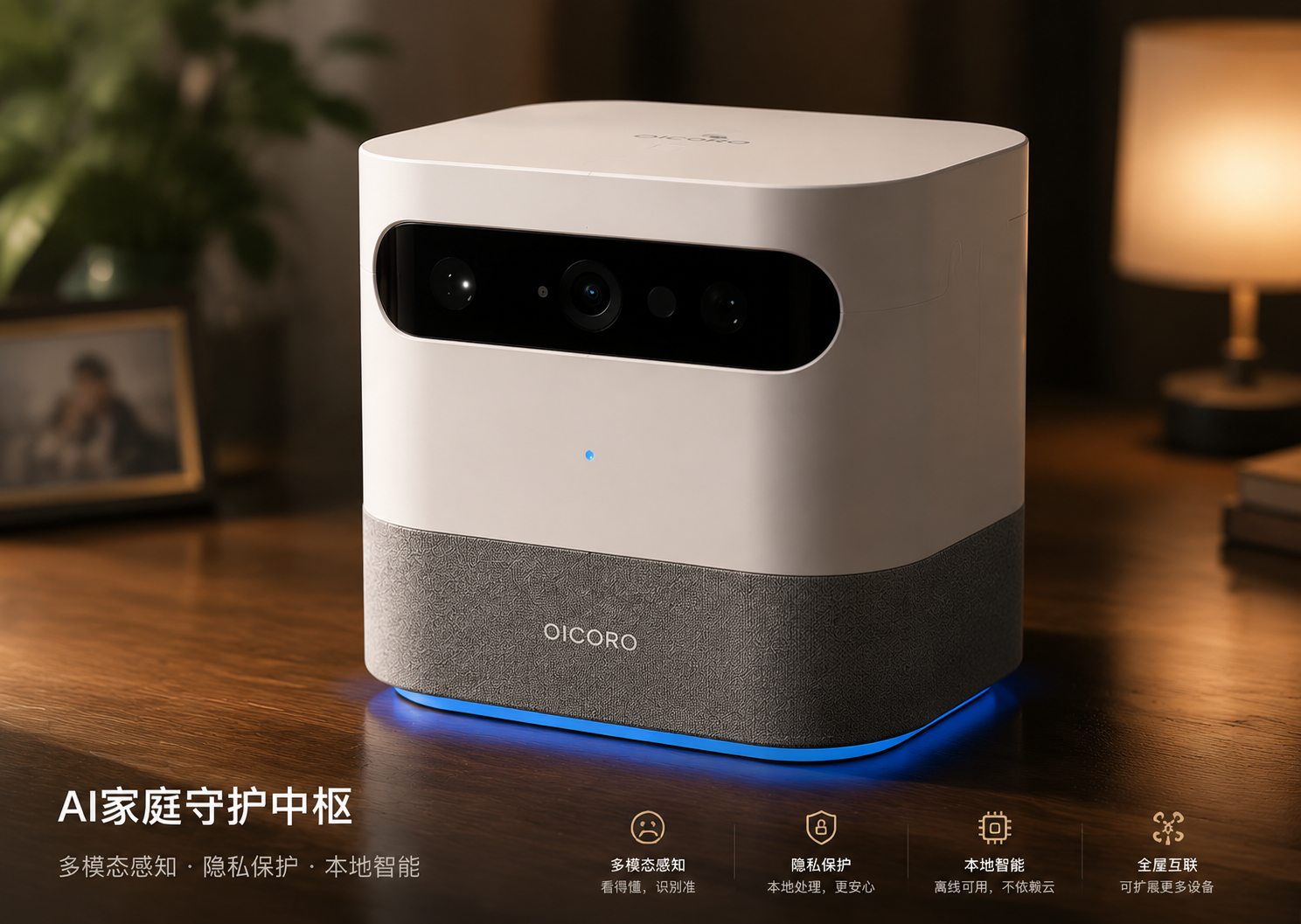
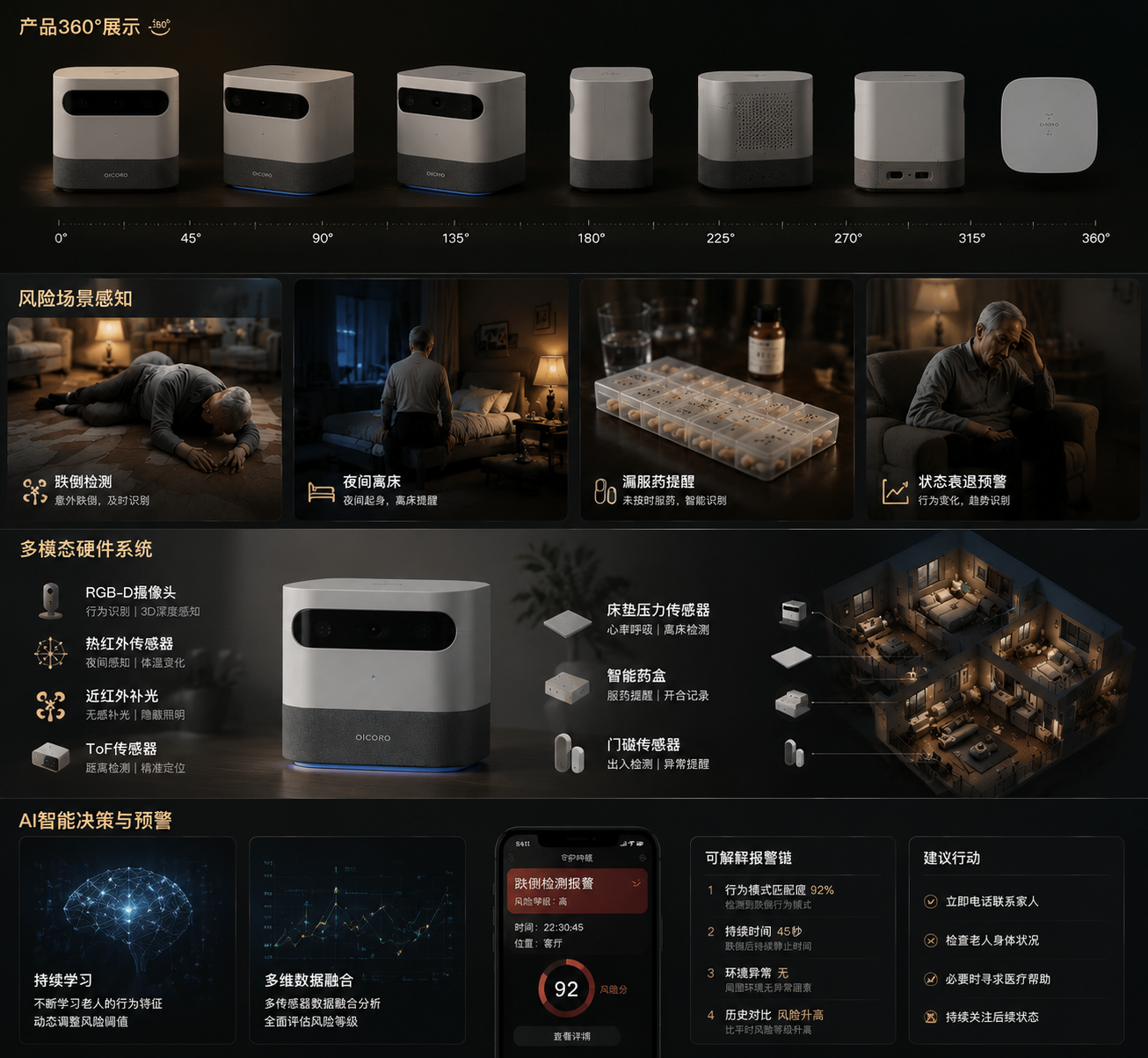
AI-Powered Smart Elderly Care Hardware
Project Repository
git clone [email protected]:Mafiav-afk/oicoro-ai.git
Repository:
[email protected]:Mafiav-afk/oicoro-ai.git
Inspiration
As the global population continues to age, more elderly people are living alone or managing chronic illnesses without continuous support.
Traditional elderly care often relies on manual check-ins, delayed emergency responses, and fragmented health information. We wanted to create an intelligent care system that could protect elderly people while preserving their independence, privacy, and dignity.
What it does
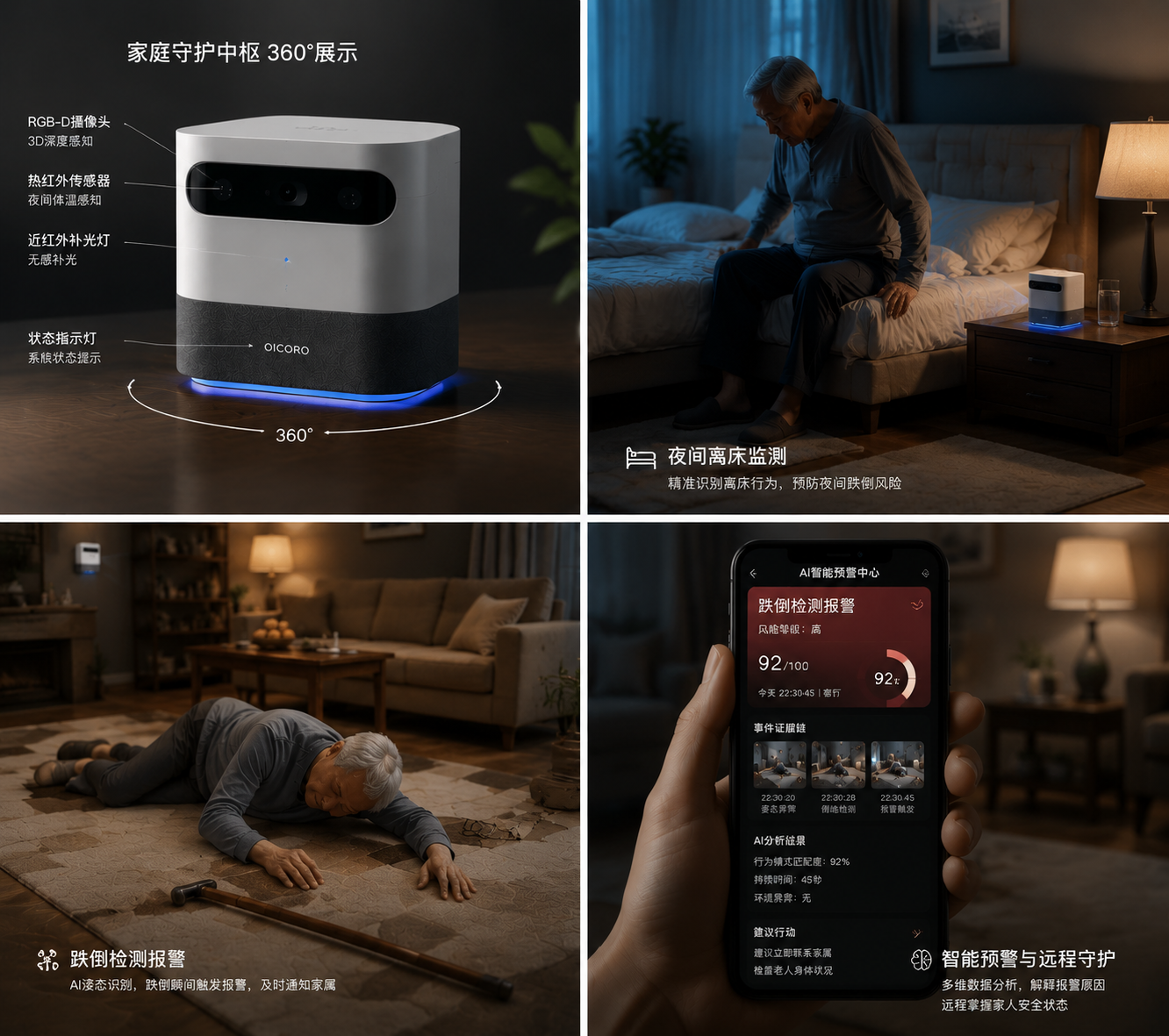
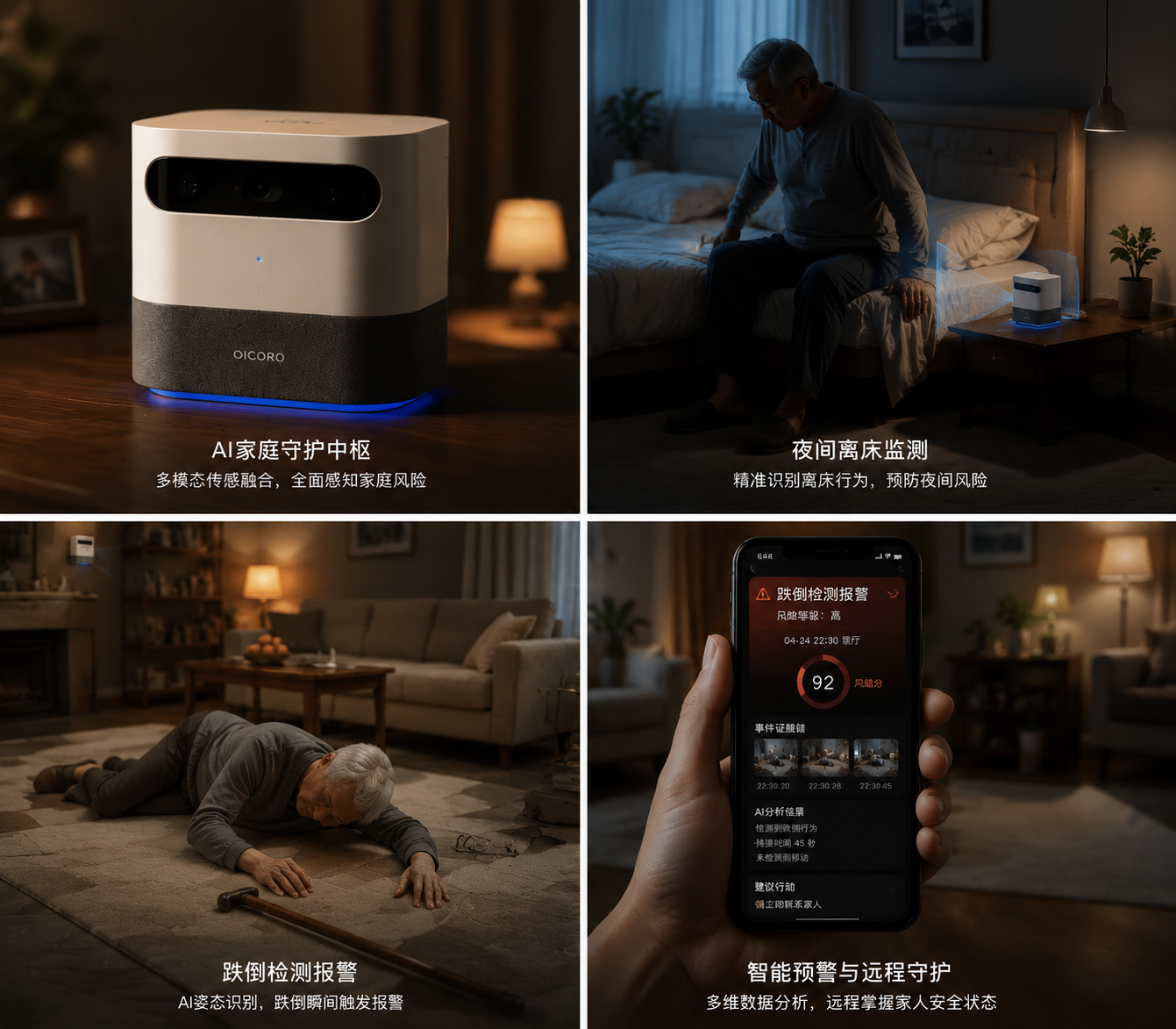
The AI-powered smart elderly care system improves daily living environments, provides assistive tools, monitors health conditions, and supports the optimization of treatment plans.
The system continuously monitors:
- Heart rate
- Blood oxygen levels
- Body temperature
- Sleep quality
- Movement patterns
- Medication routines
- Indoor environmental conditions
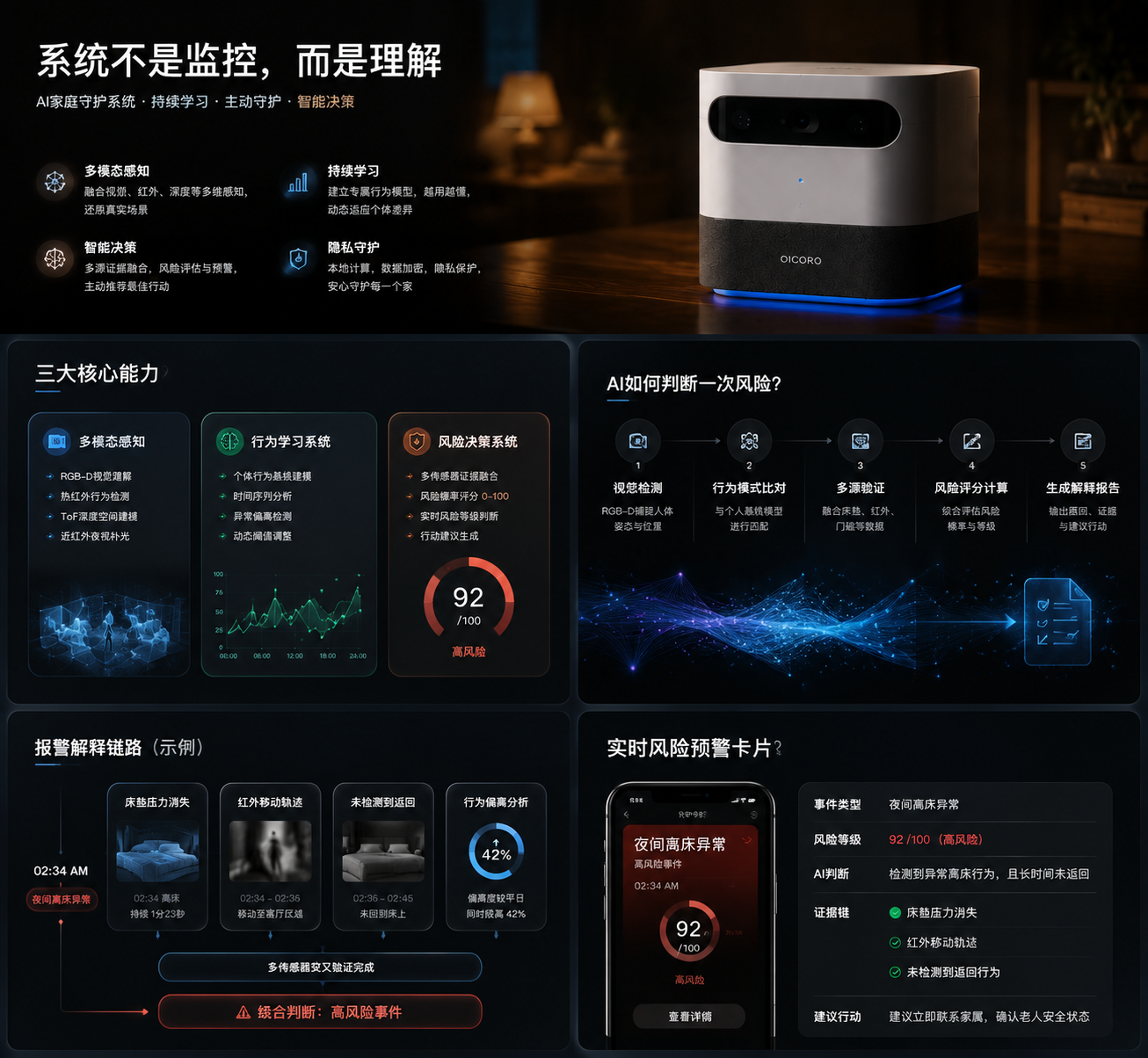
Its AI engine filters out non-essential alerts, reduces false alarms, and detects abnormal patterns that may indicate falls, breathing difficulties, cardiovascular events, or other high-risk conditions.
When a serious emergency is detected, the system can automatically:
- Activate emergency response protocols
- Notify family members and caregivers
- Share essential health information
- Contact emergency medical services
- Provide voice guidance to the elderly person
This helps ensure that elderly users receive immediate medical assistance when every second matters.
How we built it
We combined wearable devices, environmental sensors, edge-computing hardware, and an AI-powered health analysis platform.
The system collects data from devices such as:
- Heart-rate sensors
- Blood oxygen monitors
- Fall-detection modules
- Motion sensors
- Smart medication boxes
- Bed-pressure sensors
- Temperature and air-quality sensors
- Cameras and depth sensors
Machine-learning models analyze long-term behavioral and physiological patterns to create a personalized health baseline for each user.
Edge computing handles urgent risk detection locally, while cloud services support historical analysis, caregiver dashboards, remote updates, and treatment recommendations.
Challenges we ran into
One of the biggest challenges was distinguishing real emergencies from normal daily activities.
Elderly users may move slowly, sleep irregularly, or experience temporary changes in vital signs. These situations can easily trigger unnecessary alerts.
Other major challenges included:
- Reducing false alarms
- Protecting user privacy
- Maintaining reliable monitoring during network failures
- Supporting users who forget to wear monitoring devices
- Integrating data from different sensors
- Making AI decisions understandable and explainable
- Designing hardware that is comfortable and easy to use
Accomplishments that we're proud of
We developed a system that goes beyond simple health monitoring.
The system can understand individual behavior patterns, identify meaningful risks, and respond according to the severity of each situation.
We are especially proud of:
- The intelligent alert-filtering system
- Personalized health baselines
- Real-time fall and emergency detection
- Local emergency detection without internet access
- Automated emergency response protocols
- Privacy-focused edge AI processing
- A simple dashboard for families and caregivers
Most importantly, the system supports independent living while giving families and caregivers greater peace of mind.
What we learned
We learned that successful elderly-care technology must be human-centered rather than technology-centered.
Accuracy alone is not enough. The system must also be:
- Simple
- Respectful
- Unobtrusive
- Comfortable
- Reliable
- Easy to understand
- Easy to trust
We also learned that personalized health baselines are more effective than applying the same health thresholds to every user.
AI should support caregivers and healthcare professionals rather than replace them. The best elderly-care system combines intelligent automation, human judgment, clear explanations, and reliable emergency procedures.
What's next for AI-powered smart elderly care hardware
The next step is to develop smaller, more affordable, and more comfortable hardware that can be deployed in ordinary homes, nursing facilities, hospitals, and community healthcare centers.
Future versions may include:
- Multimodal AI health analysis
- Voice-based companionship
- Early disease-risk prediction
- Personalized rehabilitation guidance
- Intelligent medication management
- Remote family and caregiver communication
- Integration with hospitals and family doctors
- Support for users with visual, hearing, or mobility impairments
- Privacy-preserving edge AI
- Personalized digital health profiles
Our long-term goal is to transform elderly care from passive emergency response into proactive, continuous, intelligent, and compassionate health protection.
How we built it
Challenges we ran into
Accomplishments that we're proud of
What we learned
What's next for AI-powered smart elderly care hardware
Built With
- accurately-identifies-impending-high-risk-conditions
- and-automatically-initiates-emergency-response-protocols
- and-optimizing-treatment-plans.-the-system-monitors-vital-signs-in-real-time
- elderly
- ensuring
- filters-out-non-essential-alerts
- immediate
- it-assists-the-elderly-by-improving-daily-living-environments
- medical
- monitoring-health
- providing-assistive-tools
- receive
- the

Log in or sign up for Devpost to join the conversation.