-
-
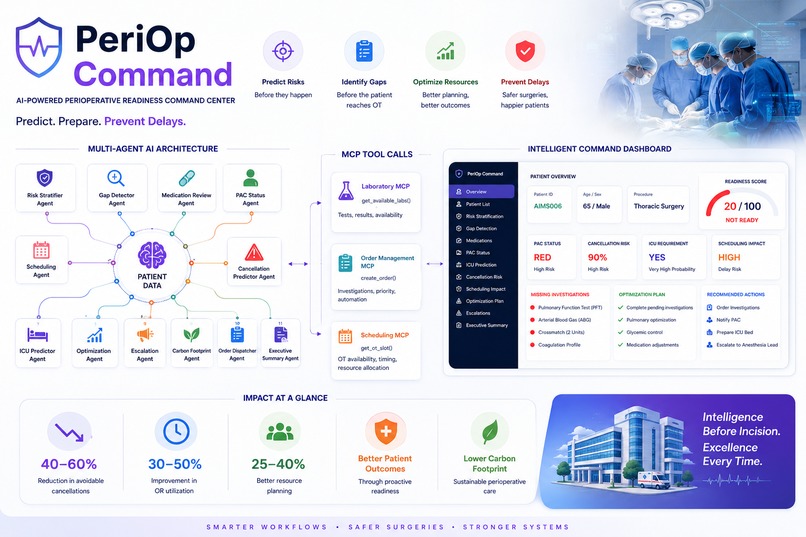
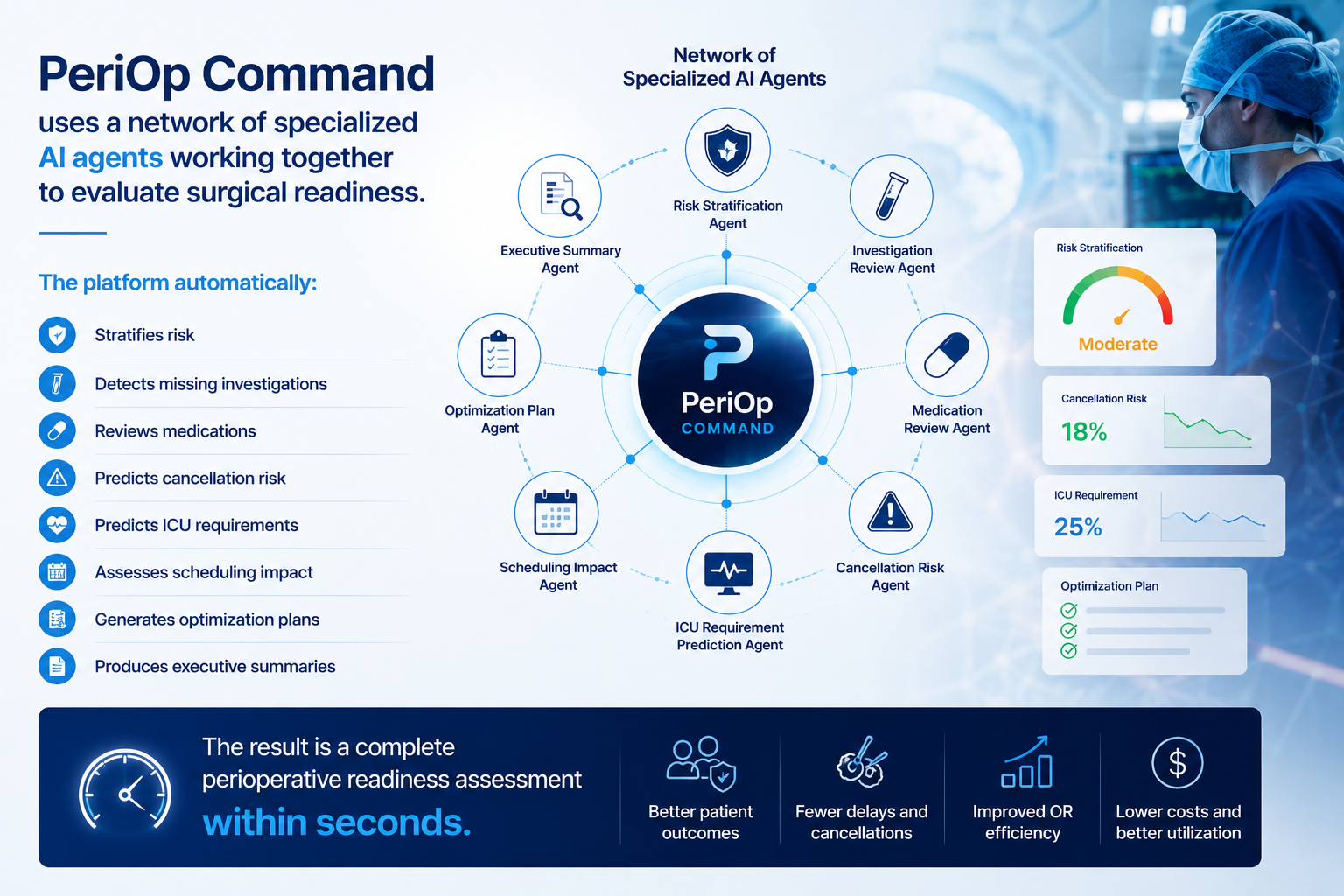
AI-Powered Perioperative Command Center transforming surgical readiness from reactive workflows to predictive intelligence.
-
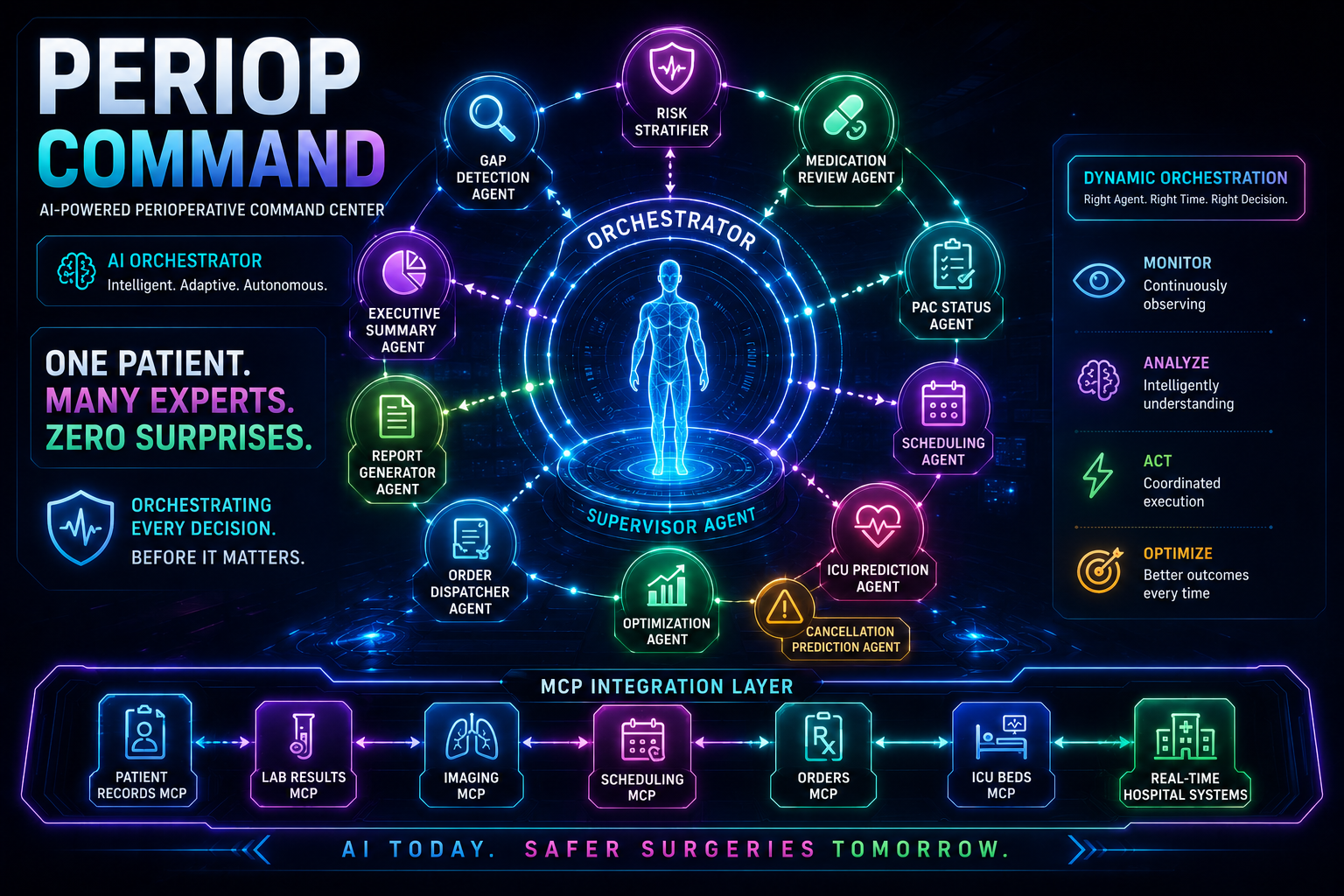
MCP-enabled healthcare intelligence connecting patient data, investigations, scheduling, and clinical decision support
-
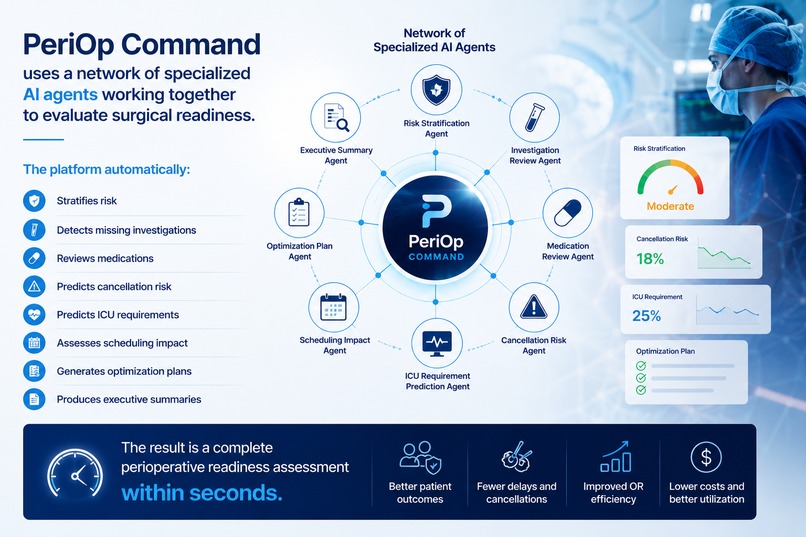
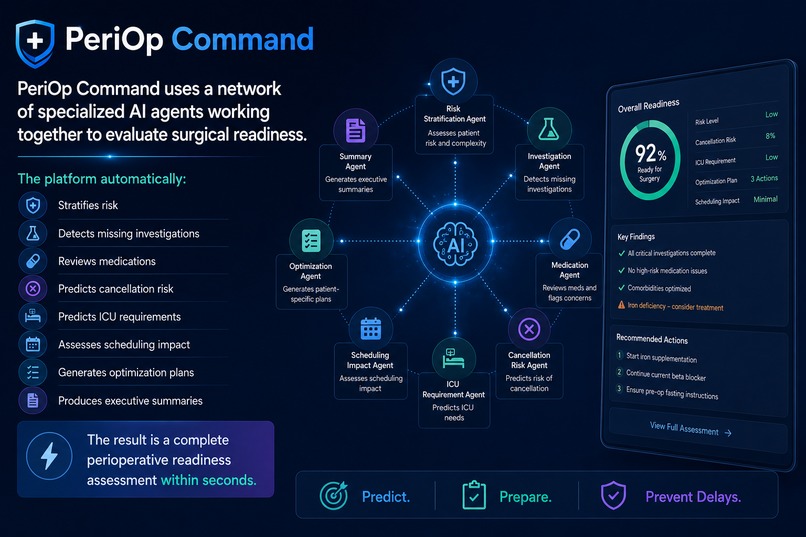
Selective AI agent orchestration: only the right agents activate when clinically relevant, reducing noise and complexity.
-
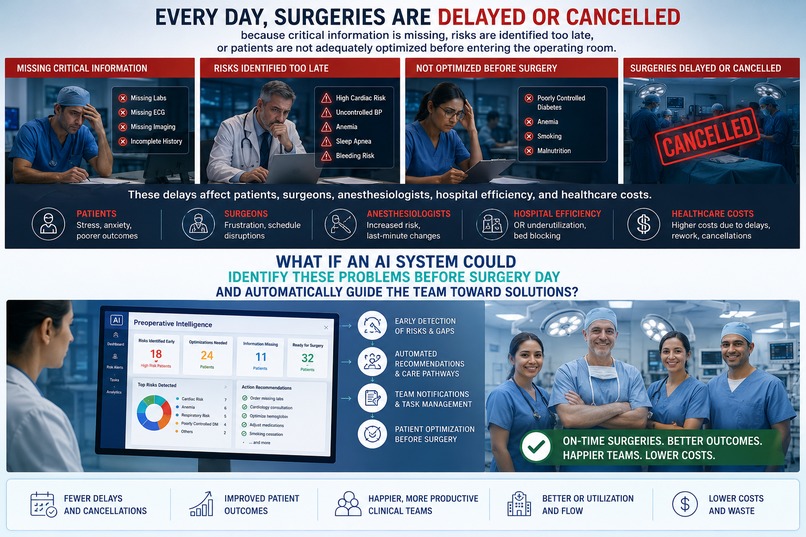
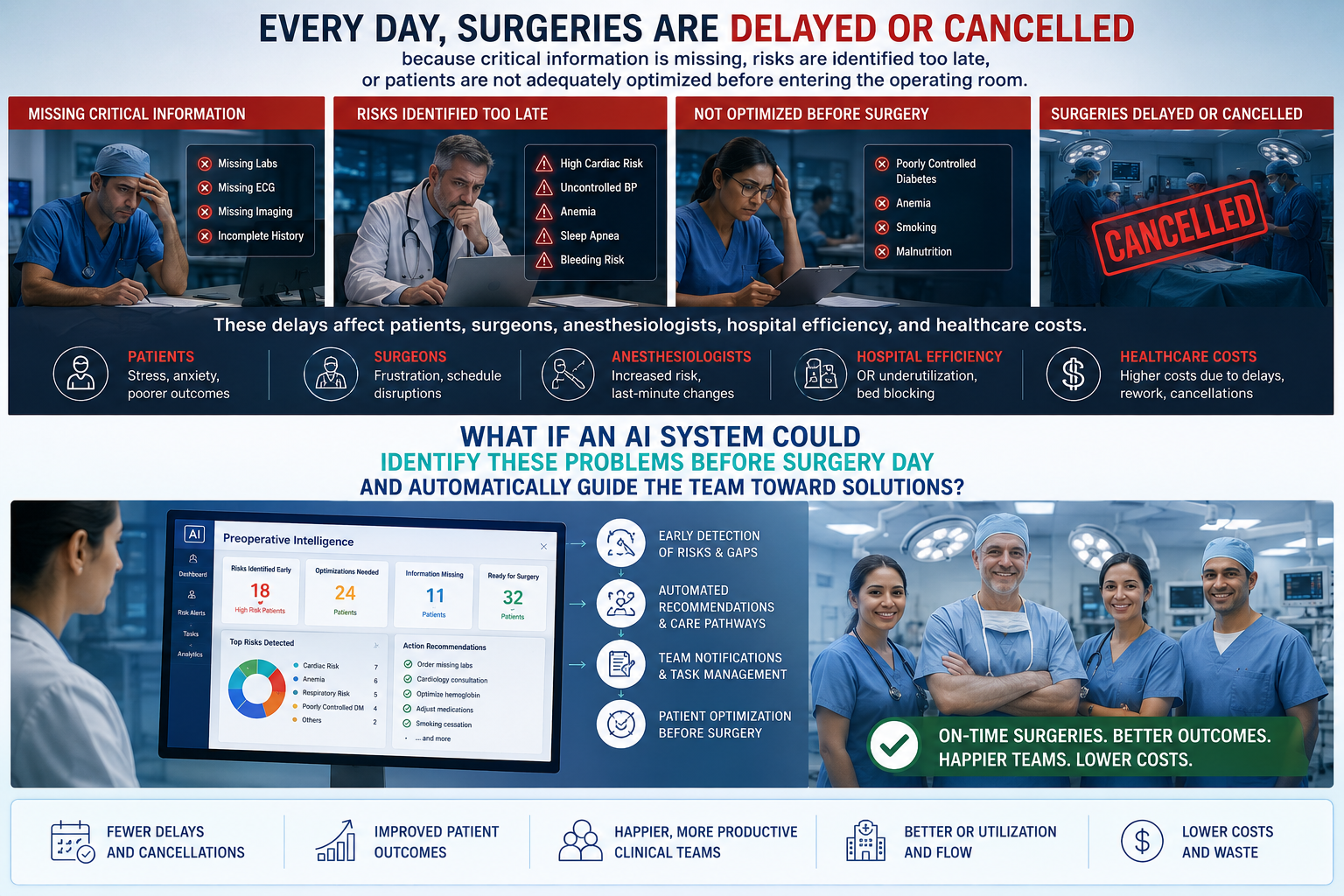
Every delay has a cause. PeriOp Command identifies risks, gaps, and optimization opportunities before surgery day
-
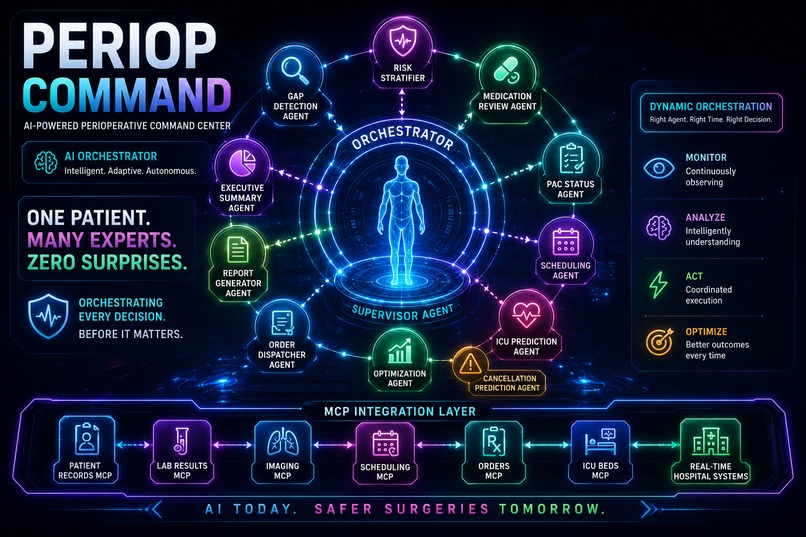
Intelligent Orchestration Layer for Healthcare — activating the right AI agent, at the right time, with the right MCP tools.
-
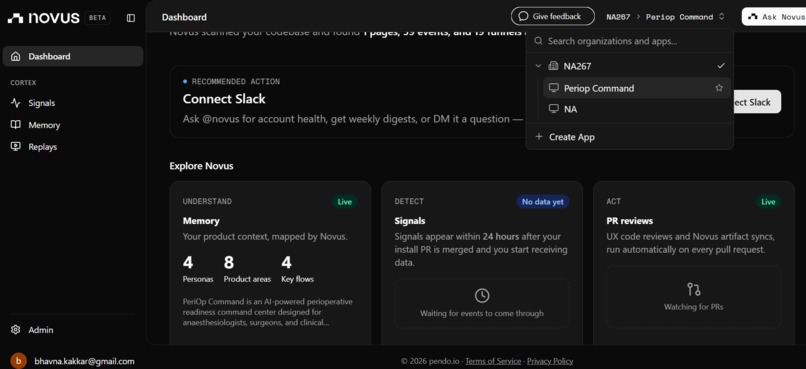
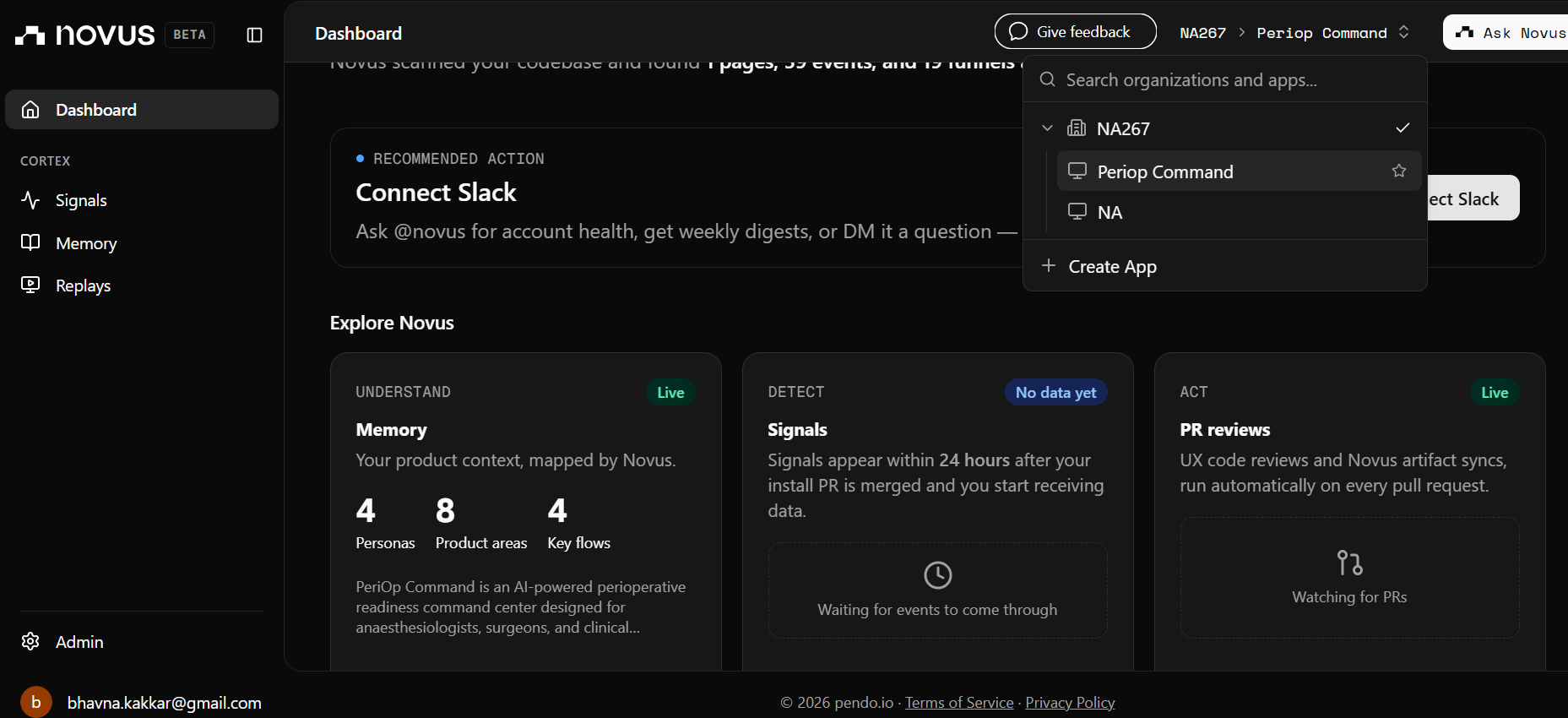
A screenshot of the Novus dashboard showing the connected application has been provided as proof of installation.
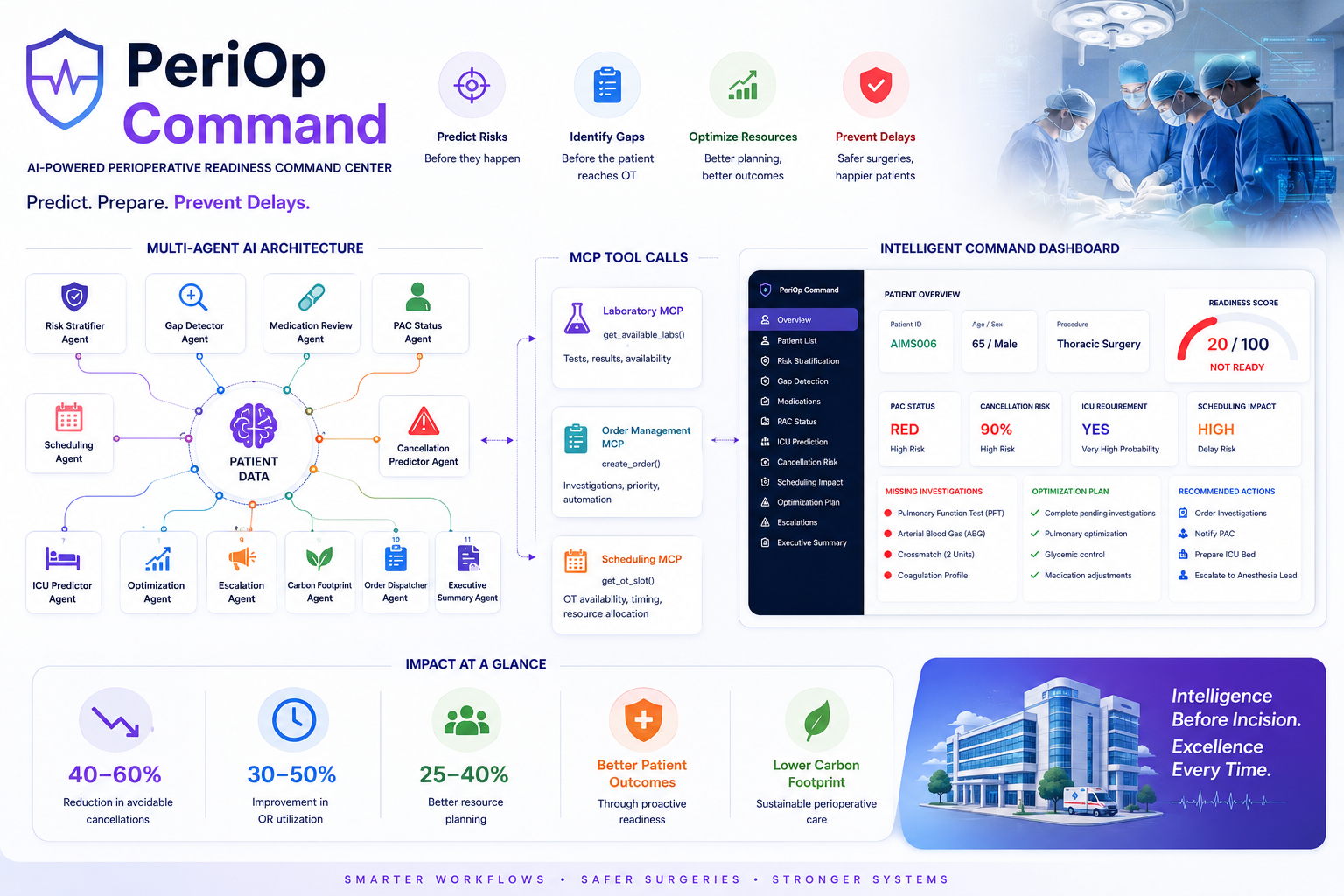
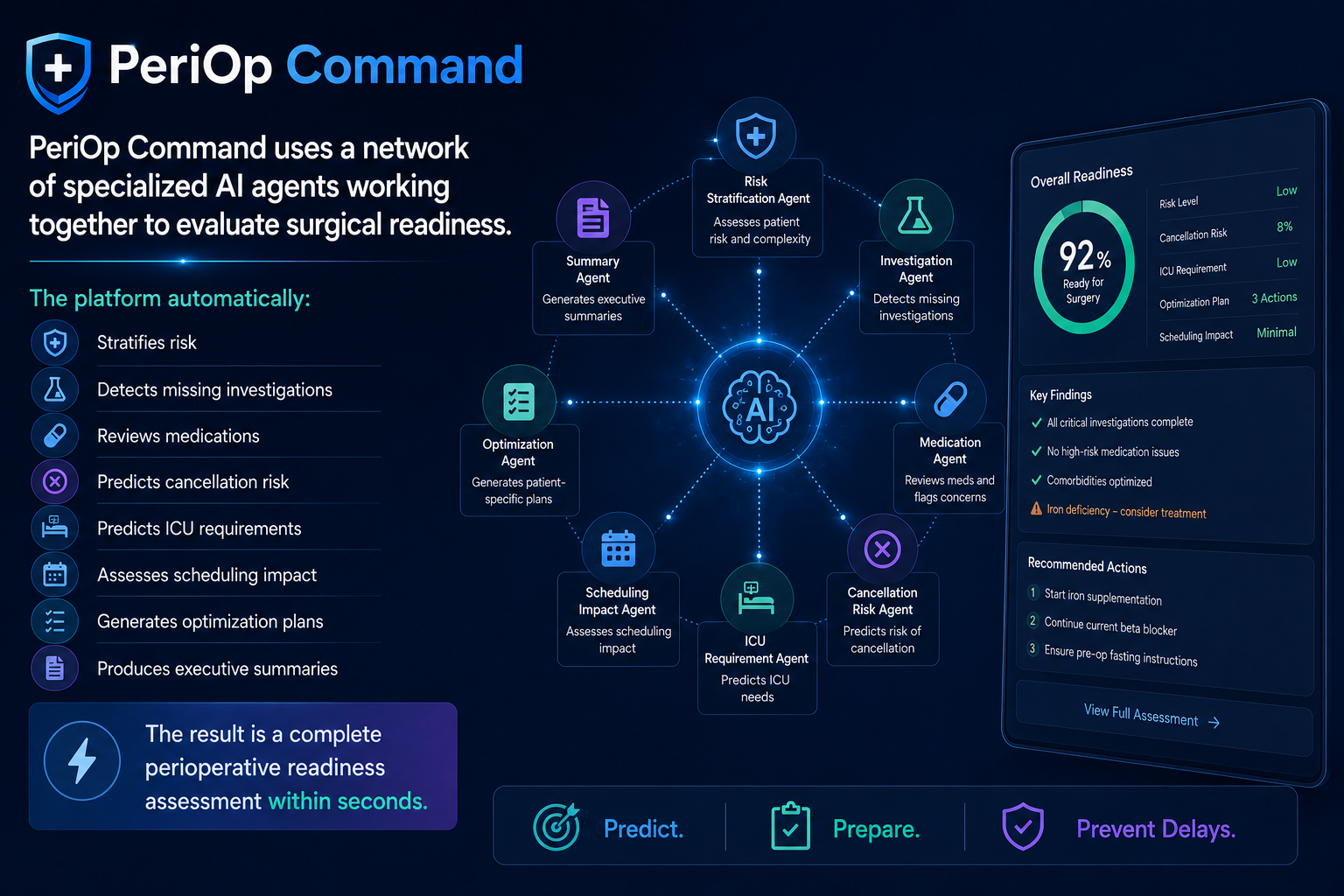
PeriOp Command – AI-Powered Perioperative Intelligence Platform
🚀 What I Built
PeriOp Command is an AI-powered perioperative command center designed to help anesthesiologists, surgeons, and perioperative teams identify surgical readiness gaps before the day of surgery.
Every year, millions of surgeries are delayed or cancelled because of missing investigations, incomplete pre-anesthesia workups, unoptimized comorbidities, unavailable ICU resources, or scheduling conflicts.
PeriOp Command acts as a digital perioperative operations center that continuously evaluates patient readiness, predicts risks, identifies missing requirements, and recommends actionable next steps.
Instead of relying on a single AI response, the platform uses a coordinated network of specialized AI agents that think like a multidisciplinary perioperative team.
The result is a clear recommendation:
- 🟢 GO
- 🟡 GO AFTER OPTIMIZATION
- 🔴 NO GO
with complete clinical reasoning, auditability, and explainability.
💡 Inspiration
As an anesthesiologist, I see the same problem repeatedly:
A patient arrives for surgery only for the team to discover a missing ECG, pending blood work, absent crossmatch, uncontrolled diabetes, or an unassessed cardiac condition.
The consequences are significant:
- Delayed surgeries
- Last-minute cancellations
- Increased costs
- Frustrated patients
- Wasted operating room time
- Resource allocation challenges
I wanted to build something that could think like an entire perioperative team rather than a simple chatbot.
The vision became:
What if an AI command center could continuously review surgical patients, identify readiness gaps early, and coordinate optimization before surgery day?
That vision became PeriOp Command.
🎯 What It Does
PeriOp Command performs comprehensive perioperative readiness analysis.
The platform can:
- Assess surgical readiness
- Identify missing investigations
- Review perioperative risks
- Predict cancellation probability
- Assess ICU requirement
- Evaluate scheduling readiness
- Generate optimization plans
- Create escalation recommendations
- Produce executive summaries
- Provide explainable clinical decision traces
- Maintain audit trails for governance and compliance
The platform transforms fragmented patient information into actionable perioperative intelligence.
🏗️ How I Built It
Frontend
- Streamlit
AI Layer
- Gemini AI
- Multi-Agent Orchestration
Data Layer
- MongoDB Atlas
- Assessment Persistence
- Audit Logging
Product Intelligence
- Novus.ai Analytics
Development
- GitHub
- AI-assisted development workflows
- Rapid prototyping with modern AI tooling
🤖 Multi-Agent Architecture
PeriOp Command uses specialized AI agents that independently evaluate different aspects of perioperative care.
Core Agents
- Risk Stratifier Agent
- Gap Detector Agent
- Medication Review Agent
- PAC Status Agent
- Scheduling Impact Agent
- Cancellation Predictor Agent
- ICU Prediction Agent
- Optimization Agent
- Escalation Agent
- Executive Summary Agent
MCP Tools
The platform also supports Model Context Protocol (MCP) integrations for:
- Laboratory Services
- Investigation Ordering
- Operating Room Scheduling
- Patient Information Retrieval
This architecture allows the platform to function more like a perioperative command center than a traditional chatbot.
🧠 Clinical Decision Explainability
One of the biggest challenges in healthcare AI is trust.
PeriOp Command includes a Decision Trace Panel that explains:
- Why a patient received GO / NO GO status
- Which criteria contributed to the decision
- Which investigations are missing
- Which agents influenced the recommendation
- What actions should be taken next
This makes the system transparent, auditable, and clinically understandable.
🔒 Security & Governance
Healthcare AI must be secure and accountable.
PeriOp Command includes:
- Role-Based Access Control (RBAC)
- Authentication & Authorization
- MongoDB-backed persistence
- Audit trails
- Session management
- User activity tracking
- Explainable recommendations
Every assessment can be traced back to the user and workflow that generated it.
📊 Novus Integration
PeriOp Command includes Novus analytics integration for:
- User journey tracking
- Feature adoption monitoring
- Product usage analytics
- Workflow optimization insights
This allows continuous improvement based on real user behavior.
⚔️ Challenges I Ran Into
Building healthcare AI is very different from building a typical AI application.
Major challenges included:
- Coordinating multiple AI agents
- Maintaining clinical consistency across agents
- Designing explainable recommendations
- Building auditability into every workflow
- Integrating MongoDB persistence
- Creating secure role-based access controls
- Balancing clinical realism with hackathon timelines
The largest lesson was that healthcare workflows are often more complex than the AI itself.
🏆 Accomplishments I'm Proud Of
Clinical Impact
Built an AI system that addresses a real healthcare problem encountered daily in hospitals.
Multi-Agent Intelligence
Created a coordinated network of specialized perioperative agents instead of relying on a single model.
Explainability
Implemented transparent decision tracing rather than black-box recommendations.
Governance
Added authentication, authorization, persistence, audit trails, and clinical accountability.
Product Thinking
Focused on a real workflow that clinicians could actually use rather than creating another AI demo.
📚 What I Learned
This project reinforced several important lessons:
- Workflow design matters more than model selection.
- Explainability is essential for healthcare adoption.
- Multi-agent systems can outperform isolated AI interactions.
- Shipping quickly creates more learning than endless planning.
- Product thinking and clinical thinking must work together.
Most importantly:
Building a product people can actually use is far more valuable than building a perfect prototype.
🔮 What's Next
The current version is a functional proof of concept.
Future development includes:
- Electronic Health Record integration
- PACS and imaging connectivity
- Live laboratory integration
- Automated investigation ordering
- ICU bed forecasting
- Real-time operating room scheduling
- Hospital-wide readiness dashboards
- Predictive perioperative command center capabilities
- Sustainability and carbon reporting
- Enterprise deployment support
The long-term vision is to create an AI-powered perioperative operating system that improves safety, reduces cancellations, and enhances patient outcomes.
🏥 Architecture Overview
Patient Data
      │
      ▼
Risk Stratifier Agent
      │
      ▼
Gap Detector Agent
      │
 ┌────┼────┐
 ▼    ▼    ▼
PAC  ICU  Cancellation
 │    │      │
 └────┼──────┘
      ▼
Optimization Agent
      ▼
Escalation Agent
      ▼
Executive Summary
      ▼
GO / GO AFTER OPTIMIZATION / NO GO
📈 Clinical Impact
The core hypothesis behind PeriOp Command is simple:
$$ Better\ Readiness \rightarrow Fewer\ Delays \rightarrow Better\ Outcomes $$
and
$$ AI + Clinical\ Workflows + Explainability + Governance = Smarter\ Perioperative\ Care $$
🌍 Why This Matters
Operating rooms are among the most resource-intensive environments in healthcare.
Even a single preventable cancellation can impact:
- Patients
- Families
- Surgeons
- Anesthesiologists
- ICU resources
- Hospital efficiency
PeriOp Command aims to identify these problems before they happen.
The goal isn't just better AI.
The goal is safer surgery, fewer cancellations, and better patient care.


Log in or sign up for Devpost to join the conversation.