-
-
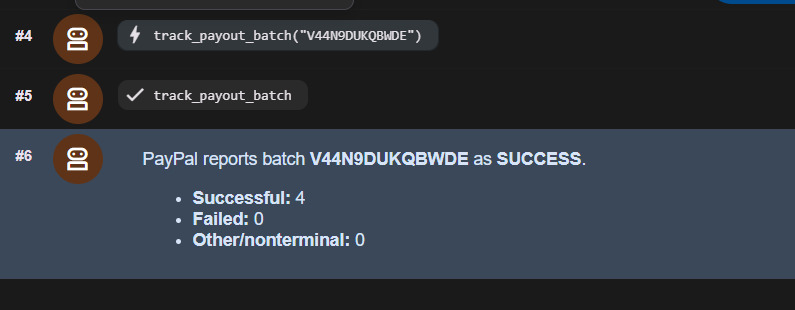
Items result
-
Basic image
-
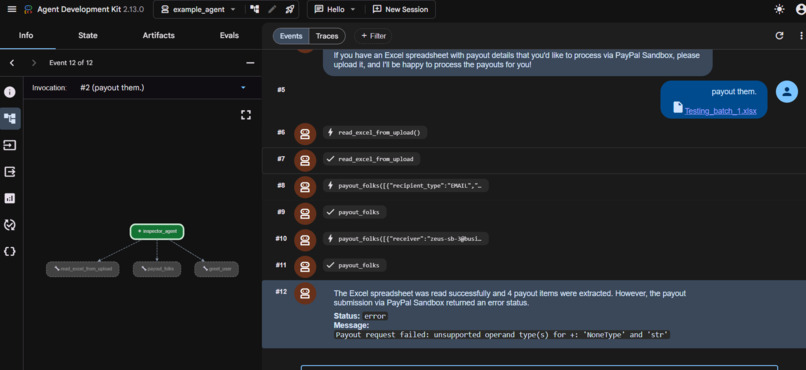
Web interace
-
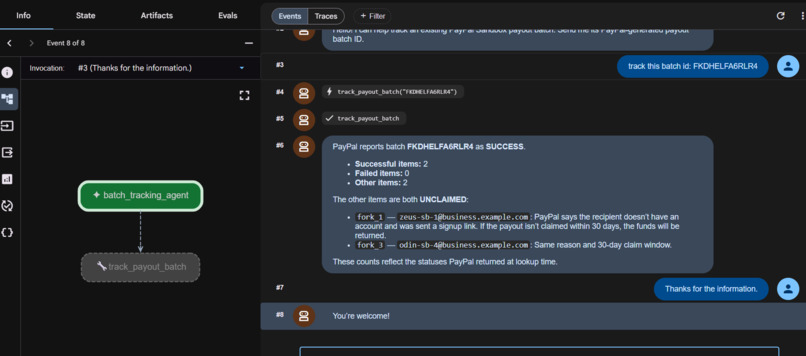
Working tools
-
Structured outputs
AI Powered PayPal Payout Automation
Inspiration
Managing bulk payments manually can be time-consuming, error-prone, and difficult to track. Businesses often rely on spreadsheets to manage employee payments, freelancer payouts, vendor transactions, and other bulk disbursements.
I wanted to simplify this process by bringing AI-powered automation into PayPal's payout ecosystem. Our inspiration was to build an intelligent agent that doesn't just initiate payments but also understands transaction data, handles payout execution, monitors batch statuses, and helps resolve failures with minimal human intervention.
What it does
AI Powered PayPal Payout Automation is an intelligent, agent-driven solution that automates bulk payment processing and transaction tracking through PayPal.
Key capabilities include:
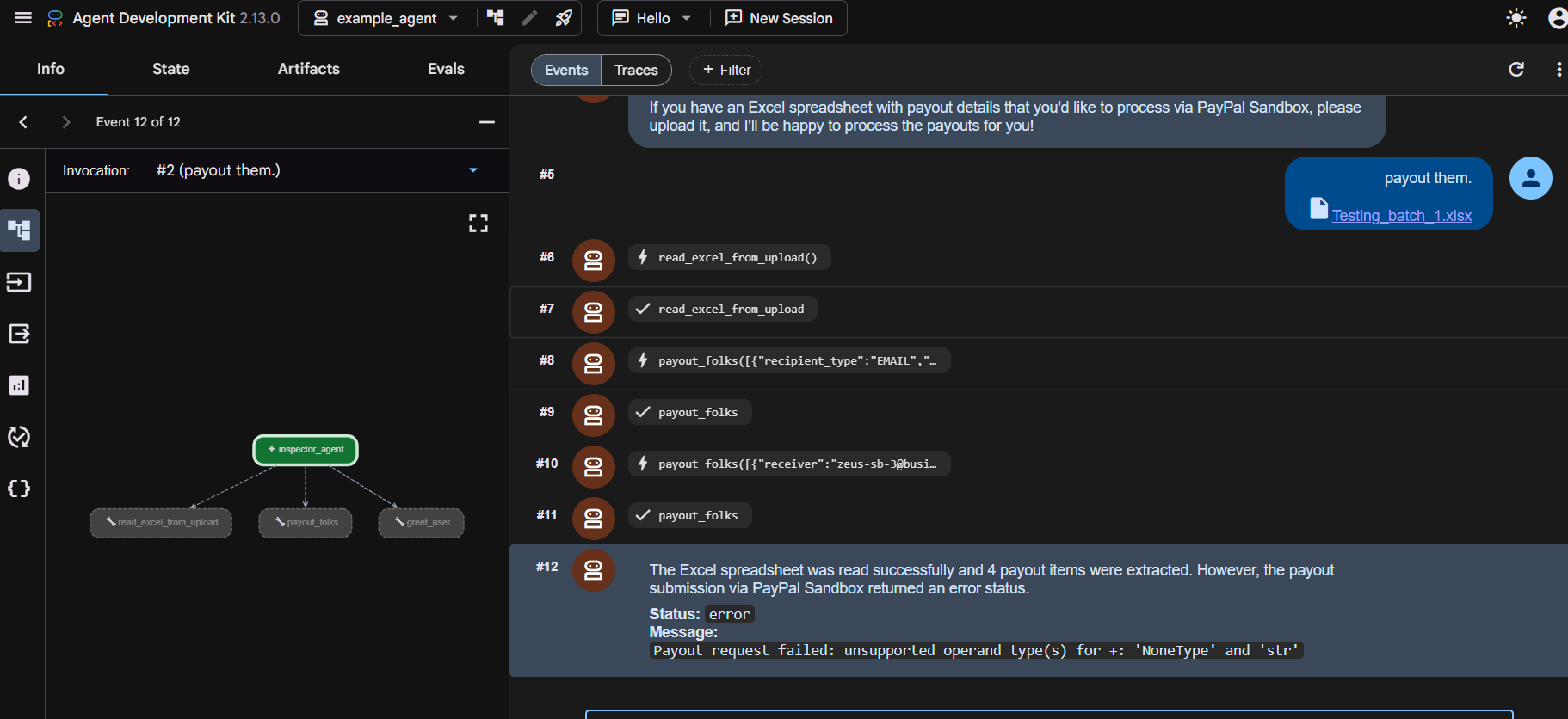
- Automated Data Extraction: Accepts Excel spreadsheets and publicly accessible Google Sheets URLs to extract recipient names, PayPal email addresses, and payout amounts.
- Intelligent Data Processing: Converts extracted spreadsheet data into the structured JSON format required by the PayPal Payouts API.
- Bulk Payout Execution: Uses PayPal's Payouts API to initiate bulk payments and generate payout batch IDs.
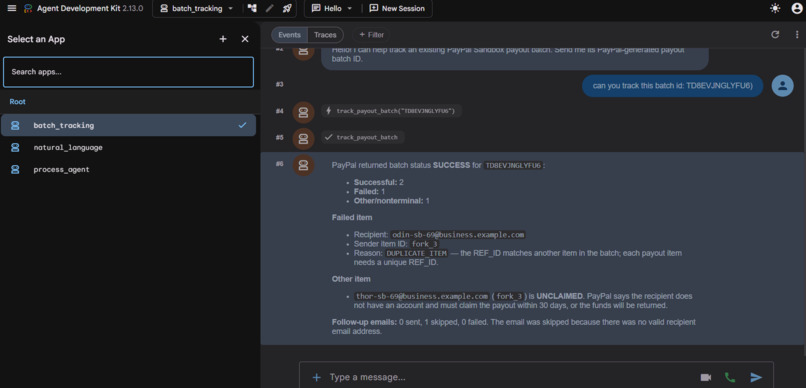
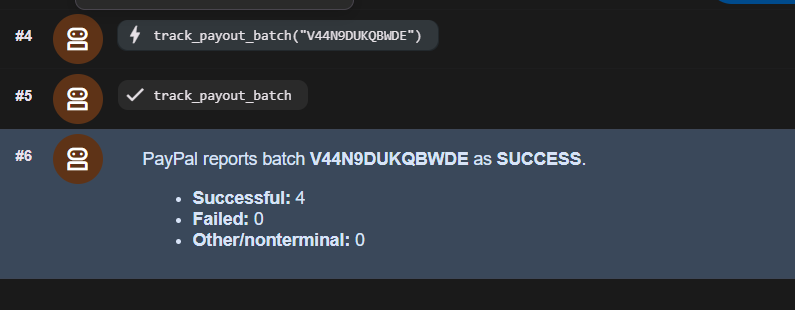
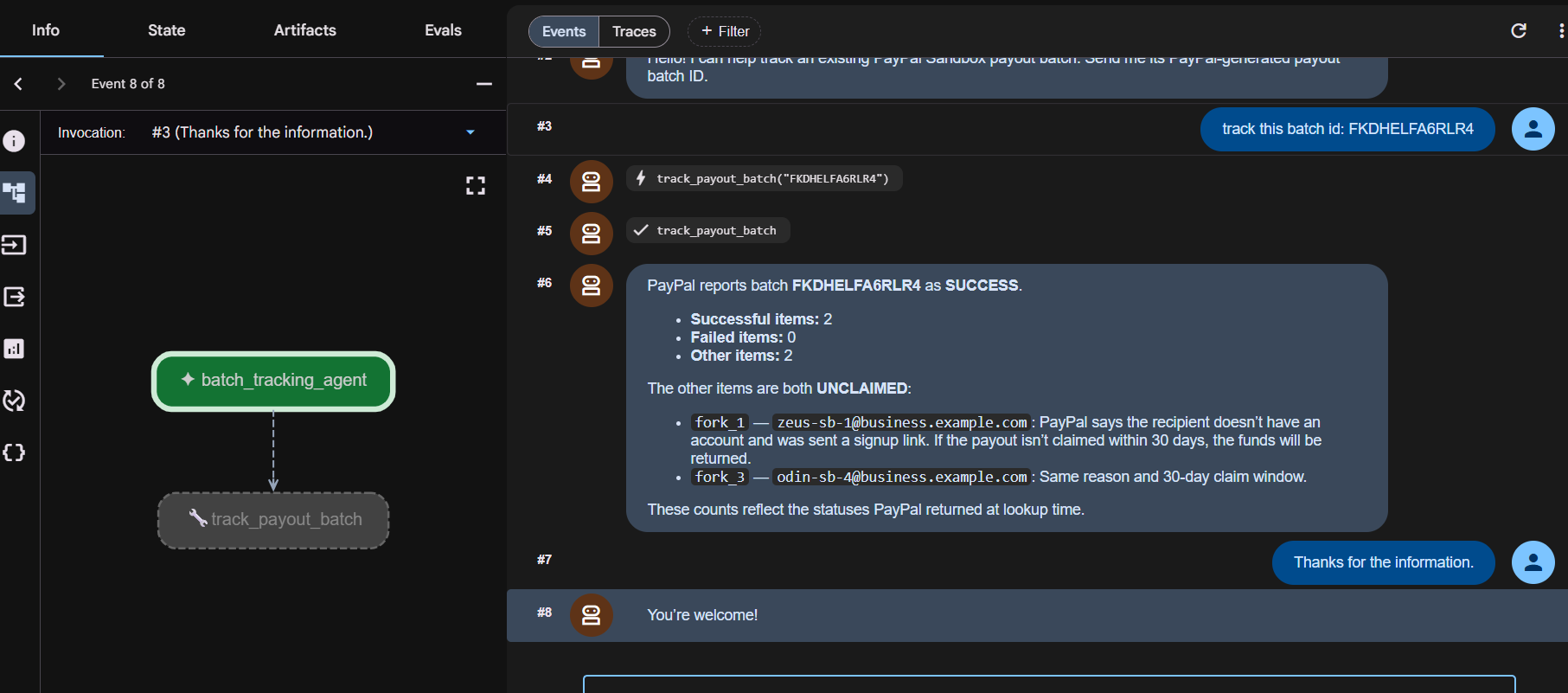
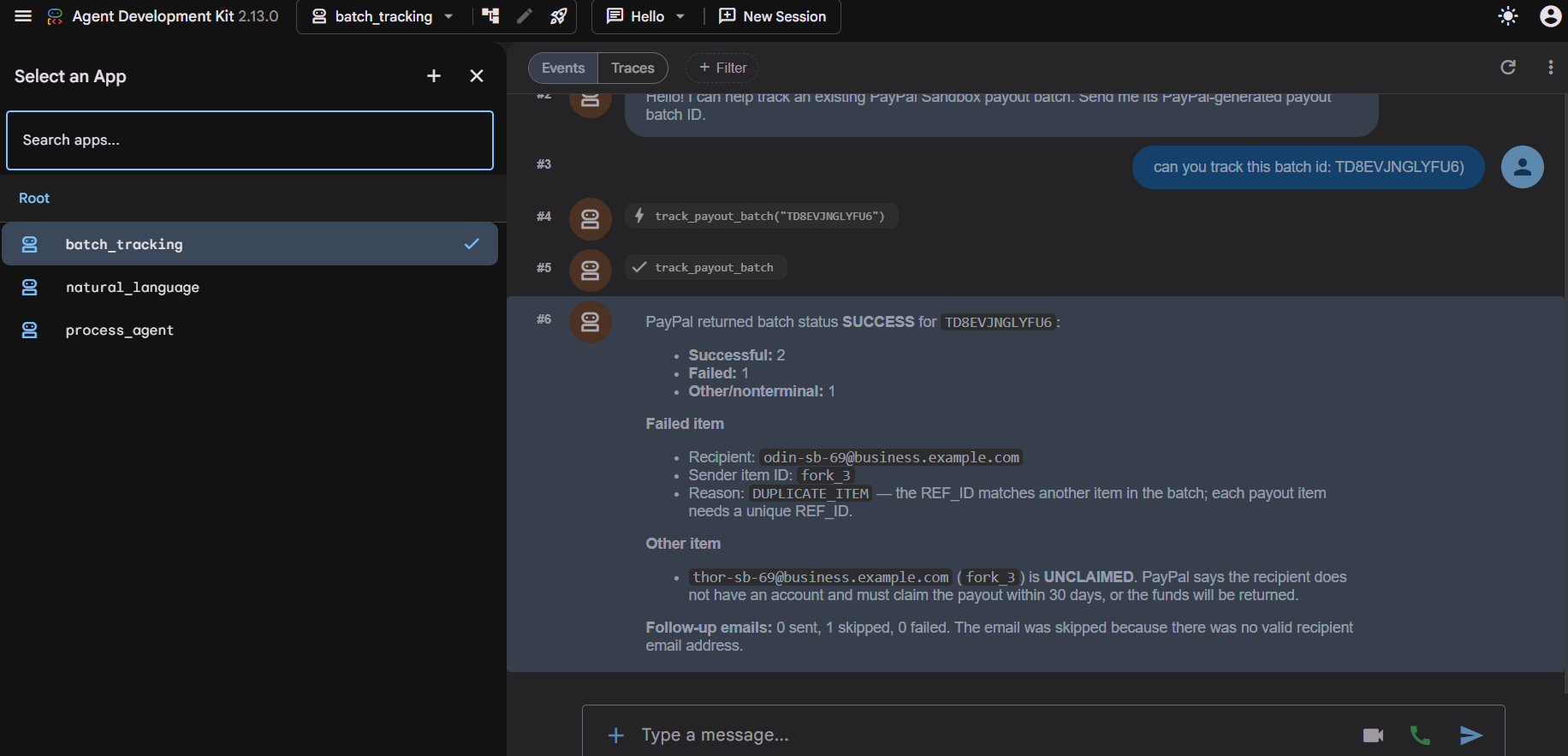
- Batch Tracking: Retrieves transaction details, identifies successful and failed payments, and provides failure reasons.
- Intelligent Error Handling: Helps identify recipient-related issues, such as invalid PayPal email addresses, and distinguishes them from operational issues requiring internal attention.
The goal is to provide an end-to-end payout workflow through natural language interactions.
How i built it
I built the solution using a multi-agent architecture powered by Google Agent Development Kit (ADK).
Our core technology stack includes:
- Google ADK: Orchestrates AI agents and tool execution.
- LLM (via LiteLLM): Understands user instructions, interprets spreadsheet data, and coordinates tool calls.
- PayPal Payouts API: Handles actual payout creation and batch processing.
- Python: Implements backend logic, API integrations, and data processing.
- Pandas: Extracts and validates recipient information from Excel spreadsheets.
- Google Sheets: Supports spreadsheet data ingestion through publicly accessible URLs.
- Database: Maintains payout-related records for transaction tracking and future reconciliation.
I designed the workflow around specialized agents:
- Payout Agent: Extracts recipient information, structures payout requests, and executes bulk payments through PayPal.
- Batch Tracking Agent: Retrieves payout batch information, analyzes successful and failed transactions, and reports failure reasons.
Instead of sending every transaction detail to an LLM for processing, i used deterministic Python tools for data extraction, API execution, and transaction handling. The LLM primarily handles orchestration and decision-making.
Challenges i ran into
Some of the major challenges i encountered were:
- PayPal Sandbox Restrictions: Initially encountered country-based payout restrictions and had to configure US-based sandbox accounts to successfully test the Payouts API.
- Data Formatting: Ensuring spreadsheet data was converted into the exact JSON structure expected by PayPal's Payouts API.
- Agent Tool Orchestration: Making sure tools execute in the correct sequence, particularly spreadsheet extraction followed by payout execution.
- Transaction Tracking: Understanding PayPal's asynchronous batch processing mechanism, where a successful API submission (HTTP 201) does not necessarily mean every individual payout has succeeded.
- Failure Analysis: Distinguishing recipient-side failures from operational issues and presenting meaningful explanations rather than raw API error responses.
- LLM Reliability: Ensuring that critical financial operations are handled through deterministic backend functions instead of relying entirely on LLM-generated outputs.
Accomplishments that i am proud of
- Successfully integrated Google ADK with the PayPal Payouts API.
- Implemented an end-to-end bulk payout workflow using spreadsheet inputs.
- Successfully submitted payout batches and received valid PayPal batch IDs with HTTP 201 responses in the sandbox environment.
- Built a separate batch tracking agent to analyze individual transaction statuses and failure reasons.
- Enabled spreadsheet ingestion through both Excel uploads and public Google Sheets URLs.
- Implemented sequential tool execution to ensure data extraction and payout processing happen in the correct order.
- Designed the architecture to reduce unnecessary LLM calls by delegating data processing and API operations to Python tools.
Most importantly, we moved beyond building a simple AI chatbot and developed an agentic system capable of interacting with a real payment API and executing financial workflows.
What i learned
Throughout this project, i gained practical experience in:
- Building multi-agent systems using Google ADK.
- Integrating LLM-powered agents with external financial APIs.
- Understanding PayPal's Payouts API, batch processing, and transaction lifecycle.
- Designing reliable tool-calling workflows and sequential agent execution.
- Handling structured and unstructured spreadsheet inputs.
- Implementing deterministic backend operations alongside LLM-based orchestration.
- Designing error-handling and transaction-monitoring mechanisms for financial automation.
I also learned an important lesson: AI agents in financial applications should not replace deterministic business logic. They should intelligently orchestrate it.
What's next for AI Powered PayPal Payout Automation
We envision expanding this project into a more comprehensive AI-powered financial operations platform.
Our future roadmap includes:
- Automated Failure Resolution: Automatically identify failed recipients, notify them to correct their PayPal email addresses, and facilitate retry workflows where appropriate.
- Intelligent Notifications: Send automated emails to recipients and internal finance teams based on transaction outcomes.
- Historical Batch Retrieval: Allow users to retrieve and analyze previously processed payout batches.
- Advanced Analytics Dashboard: Visualize payout volumes, success rates, failure trends, and transaction histories.
- Automated Reconciliation: Compare submitted payout records against PayPal transaction results and generate downloadable Excel reports.
- Enhanced Security: Introduce role-based access control, approval workflows, audit logs, and safeguards against duplicate payments.
- Production Deployment: Move beyond sandbox testing toward a secure, scalable production-ready solution.
Our ultimate vision is to make bulk payment management conversational, intelligent, transparent, and significantly less manual.

