-
-
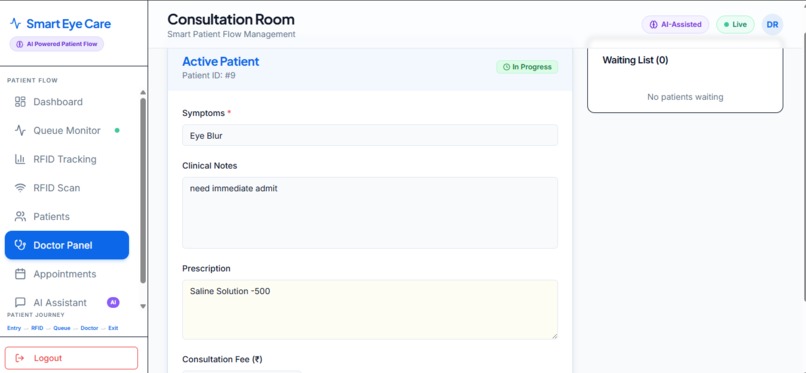
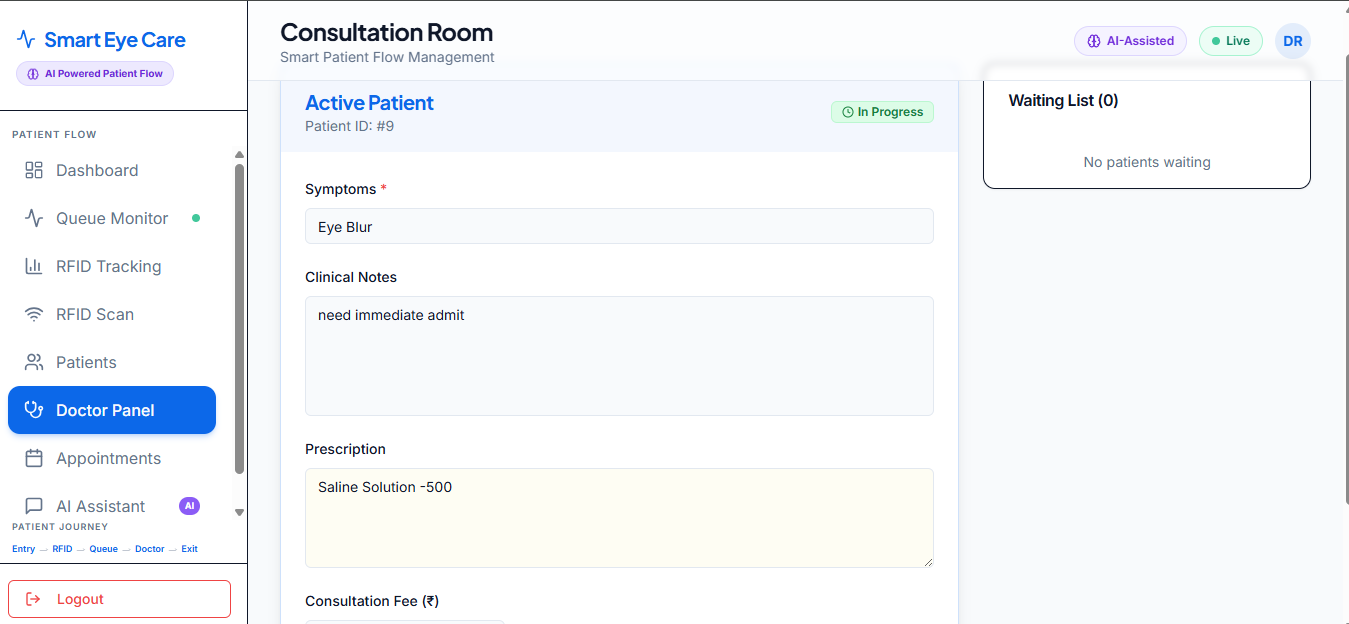
Doctor Panel
-
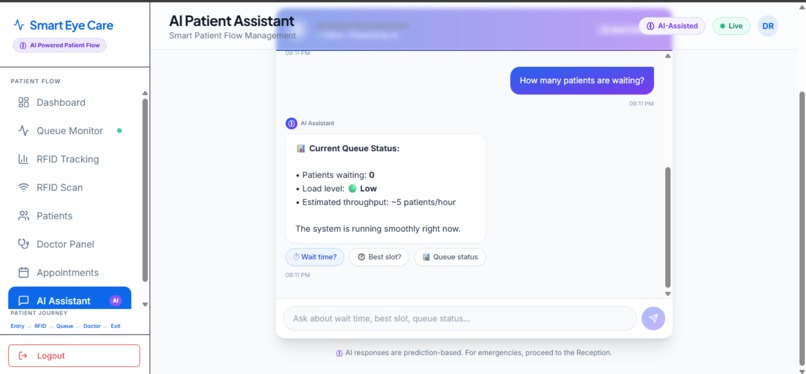
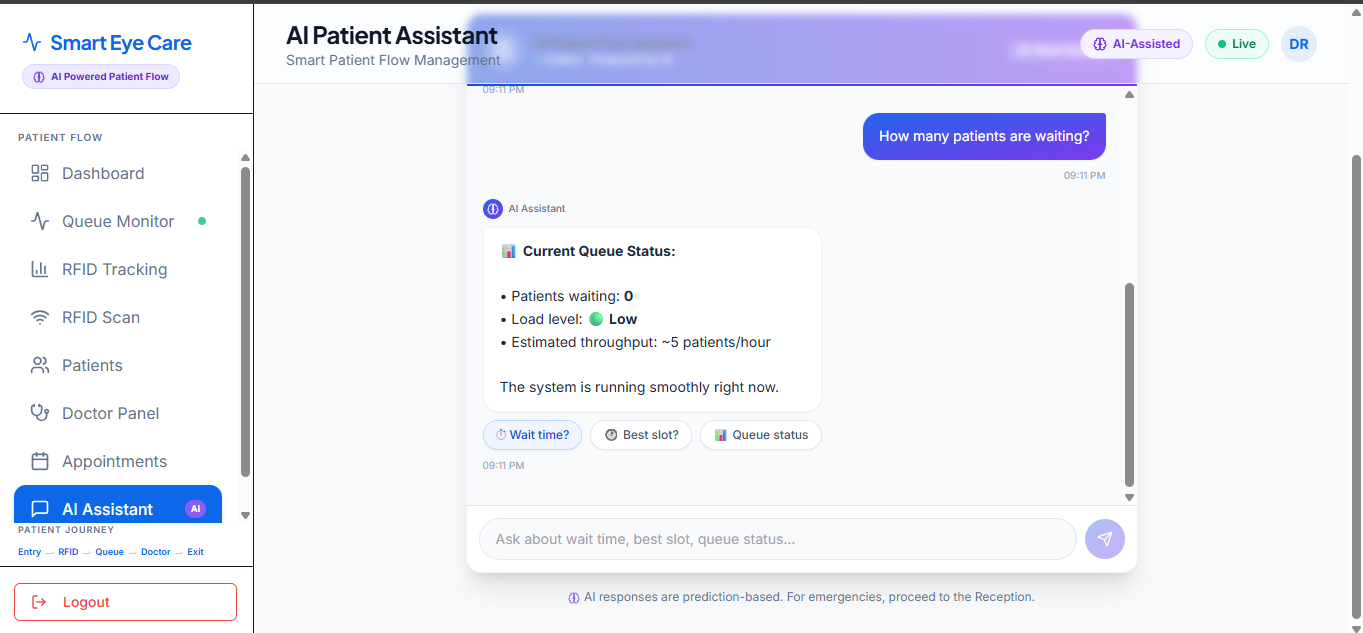
AI Assistance
-
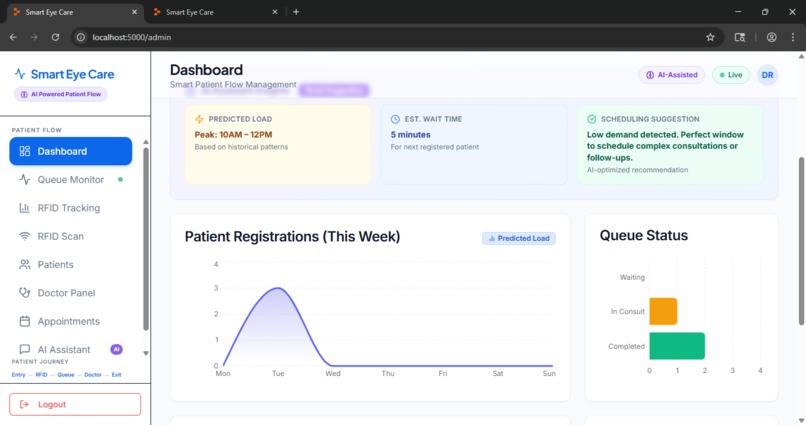
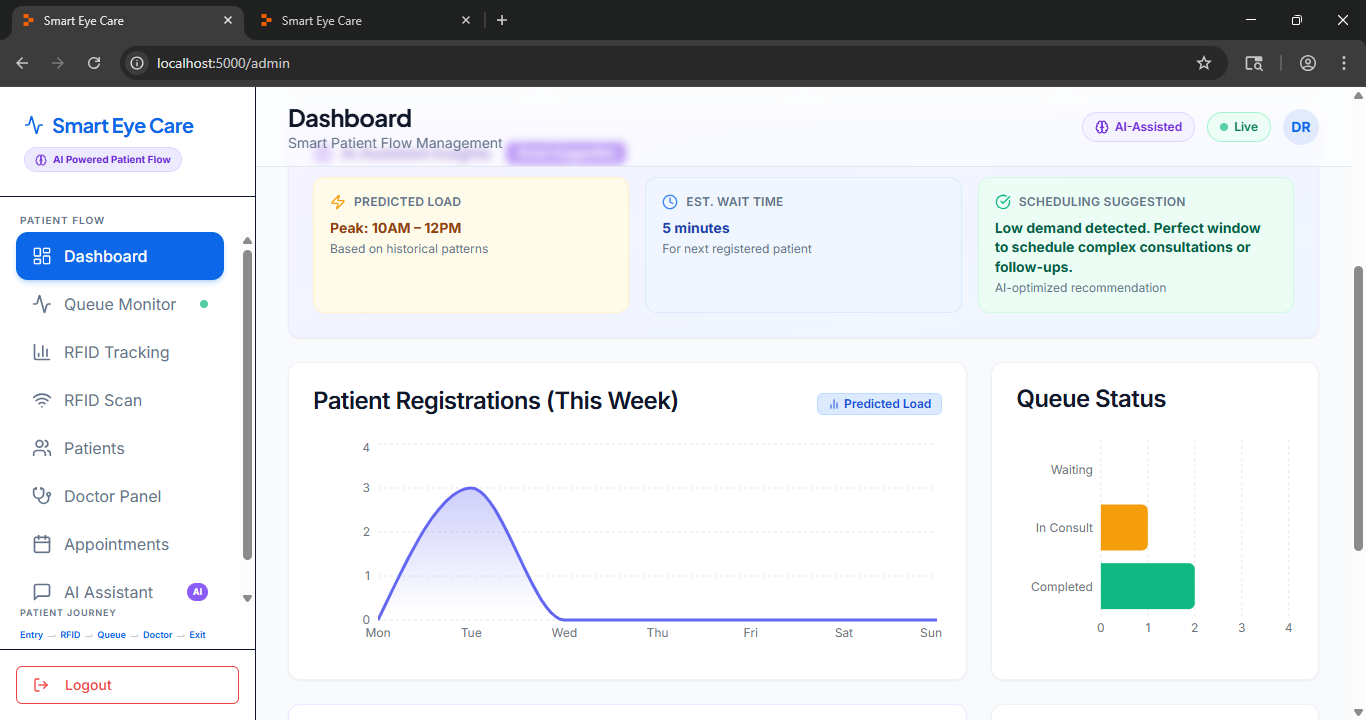
Dashboard
-
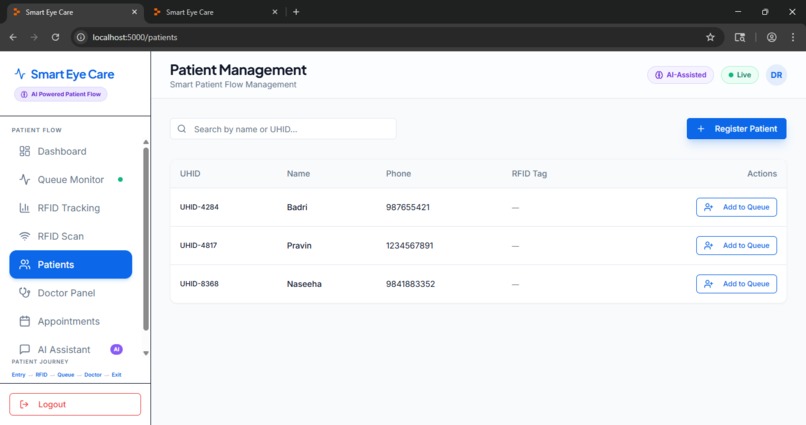
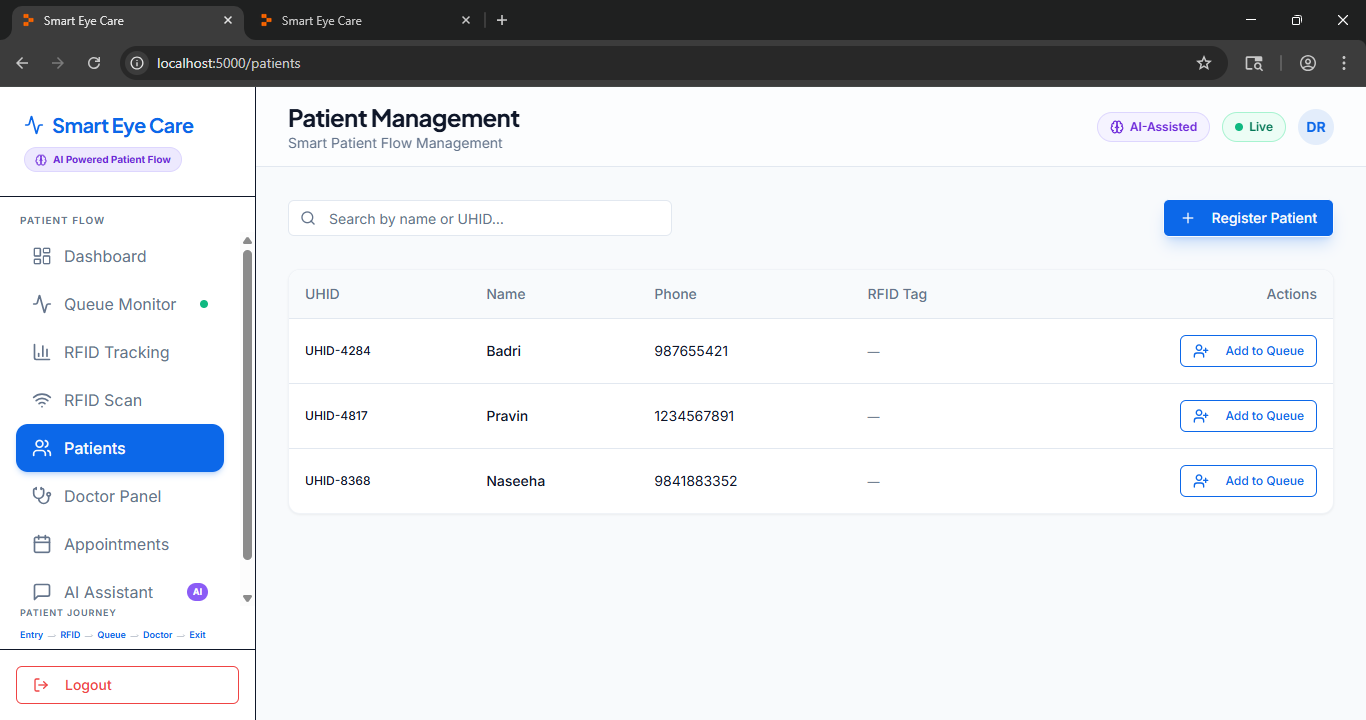
Patients
-
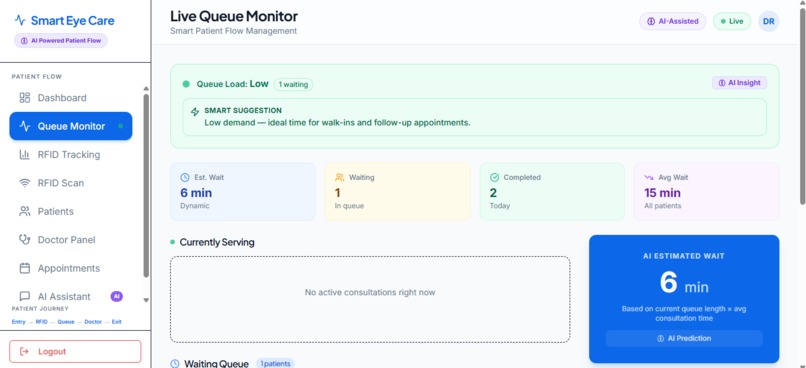
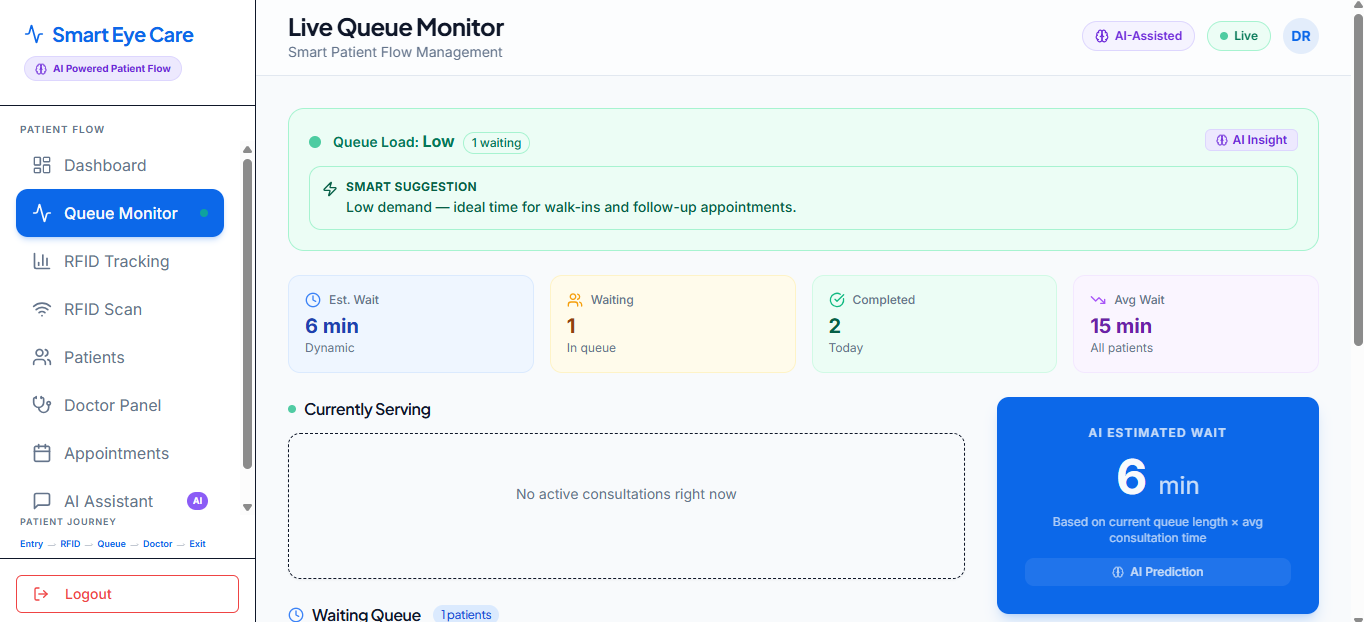
Queue Monitoring
-
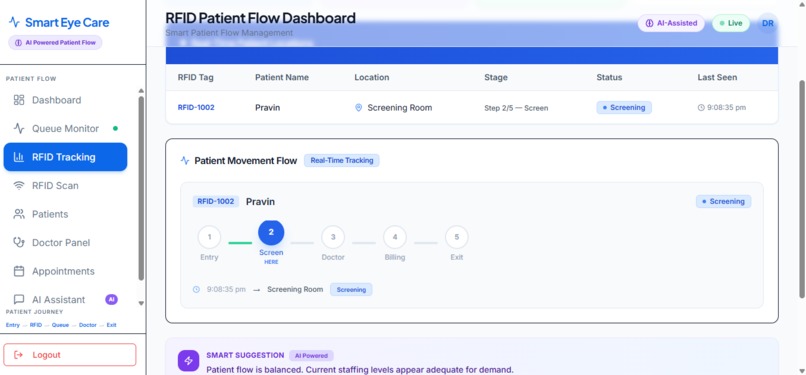
RFID Tracking
-
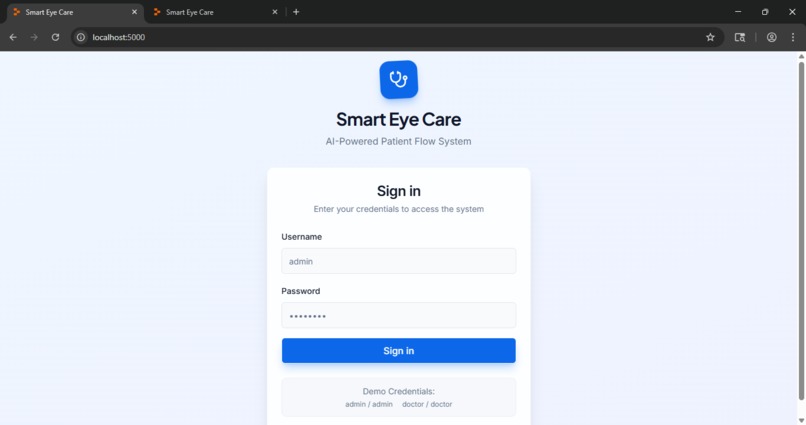
Sign In
Inspiration
During hospital visits, I observed a common issue in eye care centers: long waiting times, overcrowded queues, and lack of real-time coordination between patients and doctors. These inefficiencies affect both patient experience and hospital workflow. This inspired me to build a system that not only manages but optimizes patient flow.
What it does
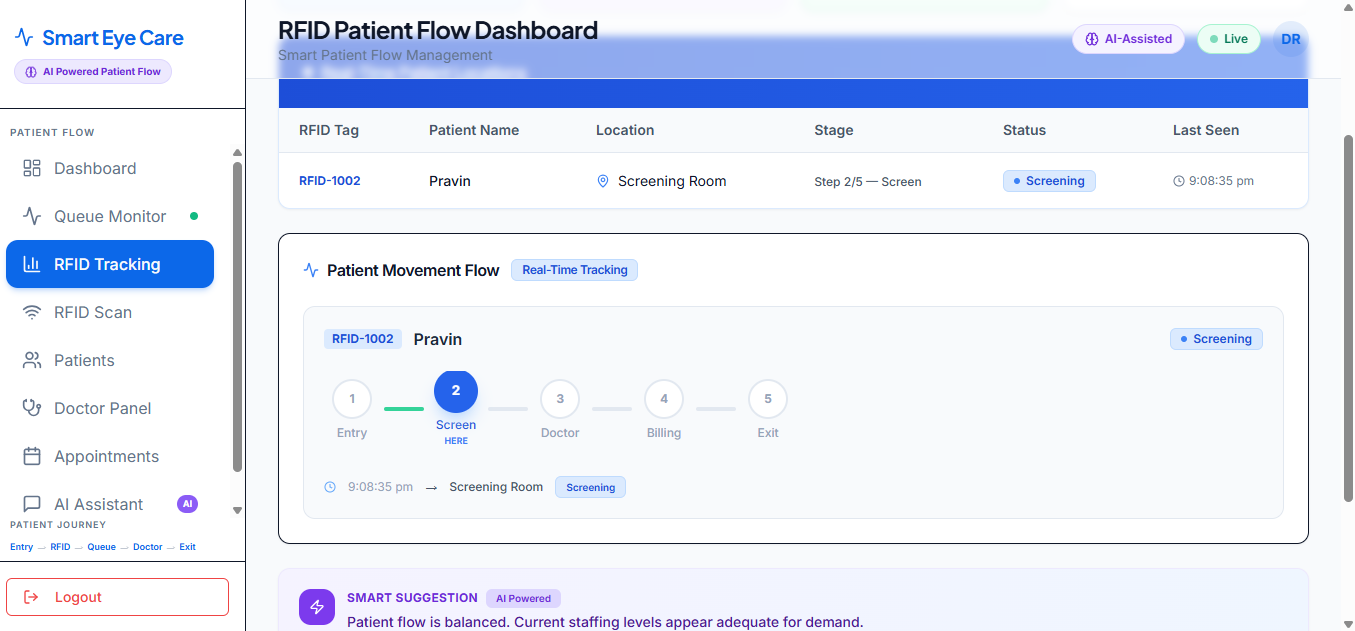
The Smart Eye Care Flow System is designed to monitor and optimize patient movement inside a hospital. It uses RFID-based tracking to follow patient flow in real time, manages queues efficiently, and provides intelligent insights such as predicted waiting time and optimal scheduling suggestions.
The system includes patient registration, appointment handling, queue monitoring, and a centralized dashboard that gives a complete view of hospital operations.
How I built it
I developed the system using a full-stack approach with React for building a responsive user interface and structured components for scalability. The system is designed with modular architecture, allowing seamless integration of patient tracking, queue monitoring, and dashboard analytics.
Basic predictive logic is used to estimate patient load and waiting time, making the system appear intelligent and decision-support oriented.
Challenges I faced
One of the main challenges was integrating multiple features into a single clear workflow without making the system complex. Managing real-time updates for queue and patient tracking required careful structuring.
Another challenge was ensuring the interface remained simple and intuitive while handling multiple modules like RFID tracking, dashboard analytics, and scheduling.
What I learned
Through this project, I learned how to design a real-world healthcare solution with a focus on usability and efficiency. I gained experience in structuring scalable frontend systems, integrating multiple modules, and presenting data in a meaningful way.
I also understood the importance of simplifying complex systems for better user experience.
Future Scope
The system can be enhanced by integrating advanced AI models to predict patient inflow more accurately. Real-time notifications and mobile integration can improve accessibility.
Further improvements include advanced analytics, automated scheduling, and deeper integration with hospital infrastructure.
Built With
- css3
- git
- github
- html5
- javascript
- react.js
- rest-api-design


Log in or sign up for Devpost to join the conversation.