Inspiration
Parkinson’s disease often goes undiagnosed in its early stages due to lack of awareness and limited access to specialists. We were inspired by the idea of using AI to support early detection and make healthcare insights more accessible. Seeing how artificial intelligence, especially tools like Gemini, can assist in understanding complex medical data motivated us to build a solution that can help patients and caregivers take informed steps at the right time.
What it does
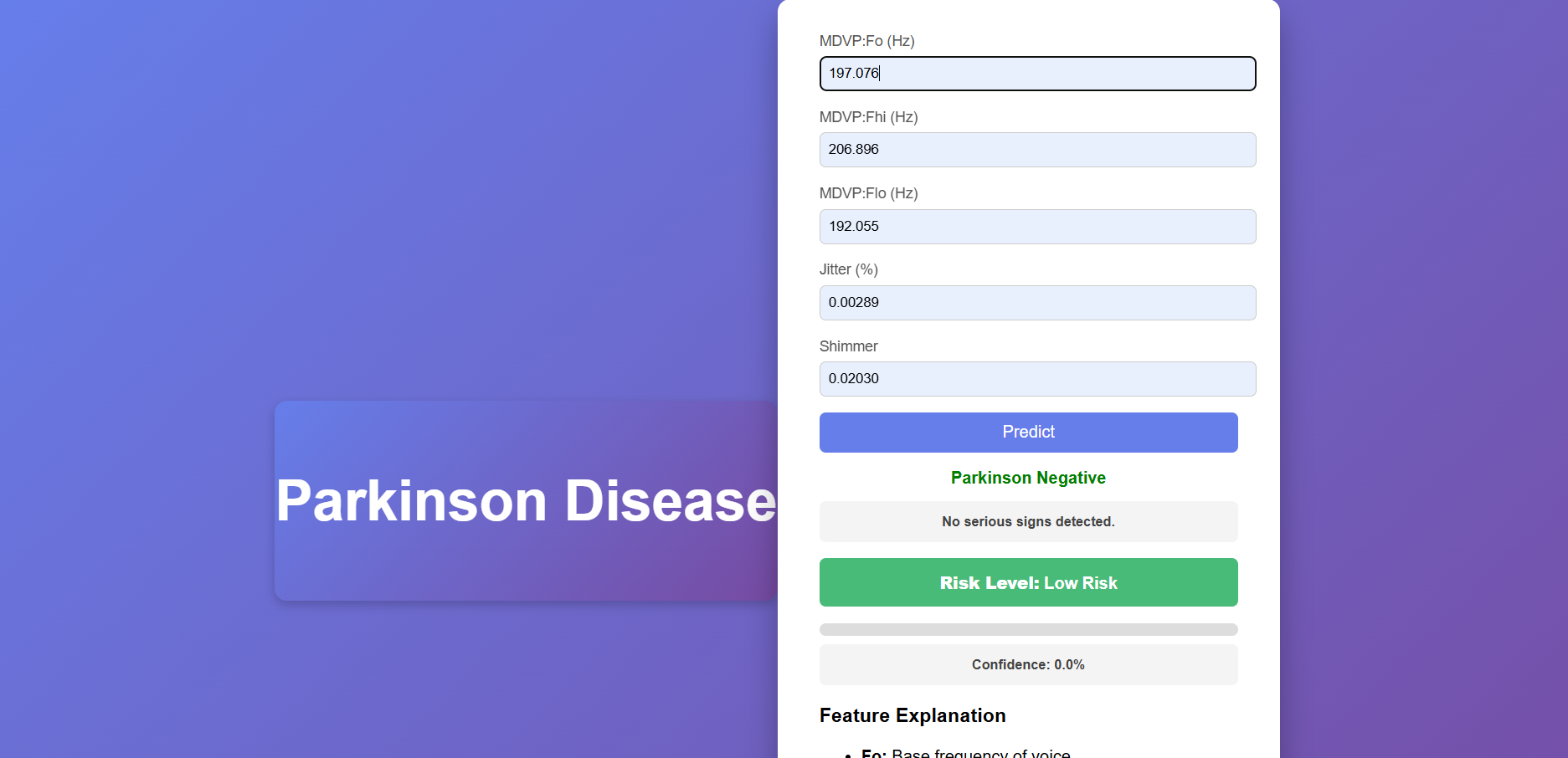
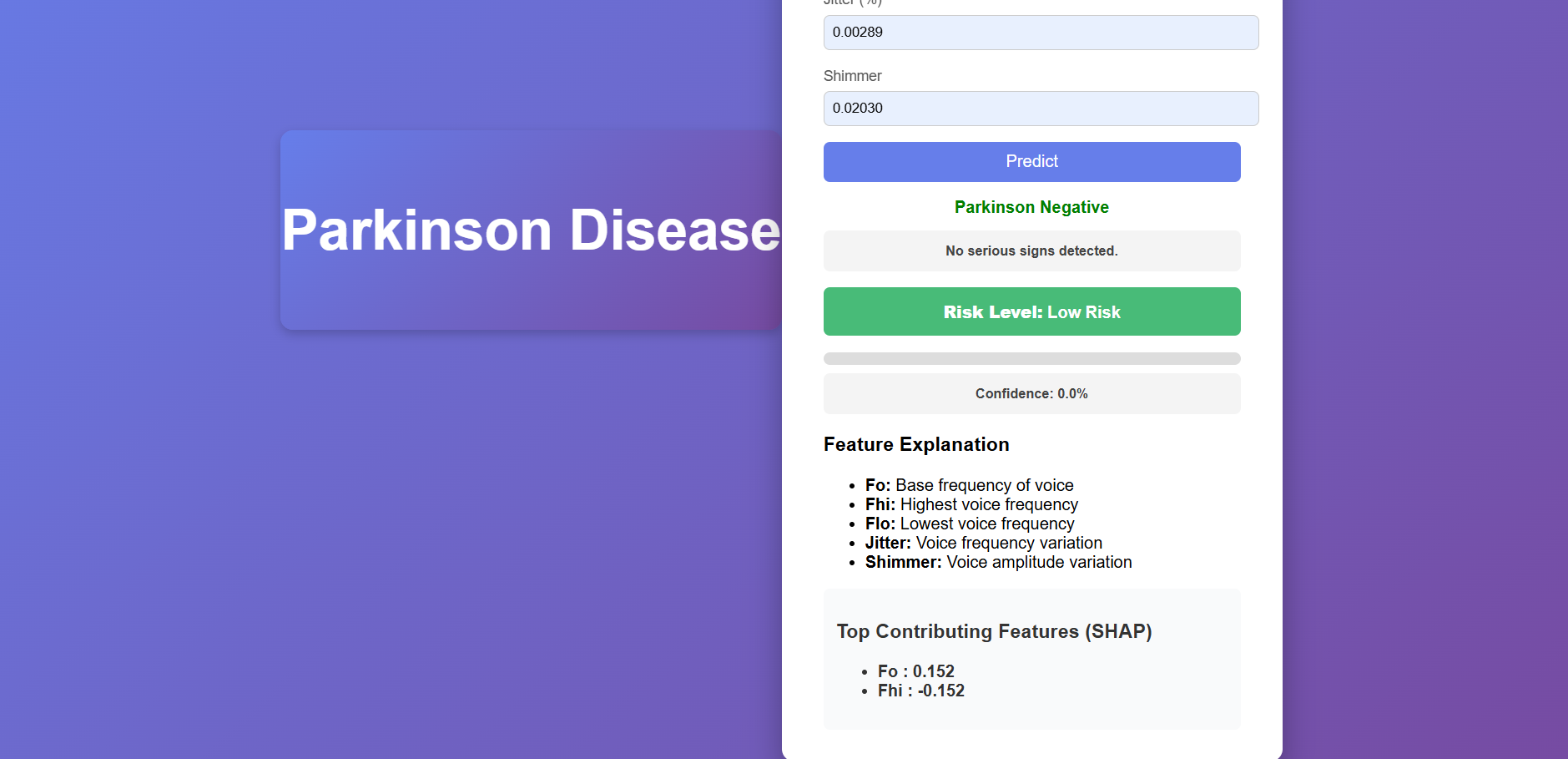
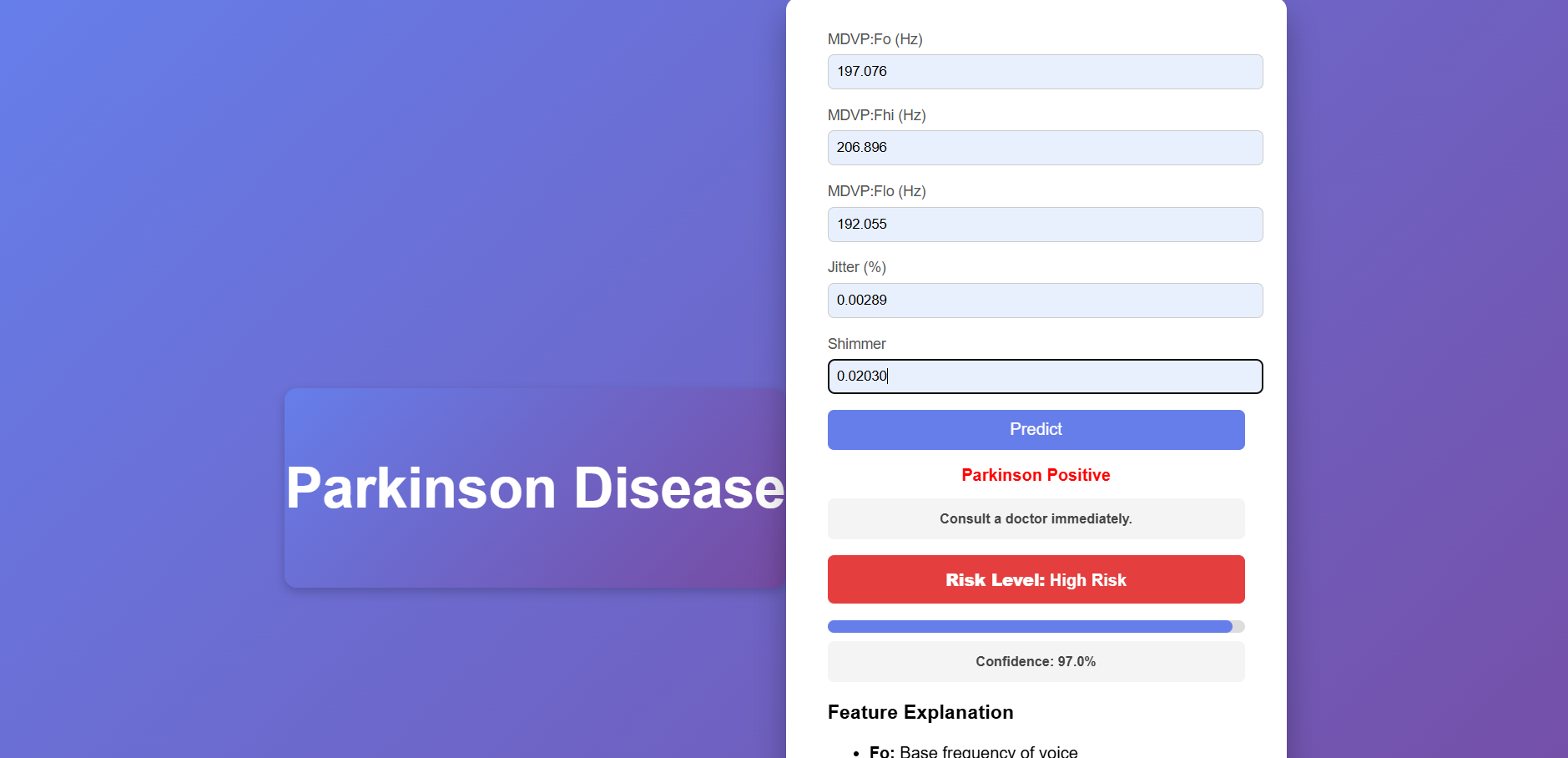
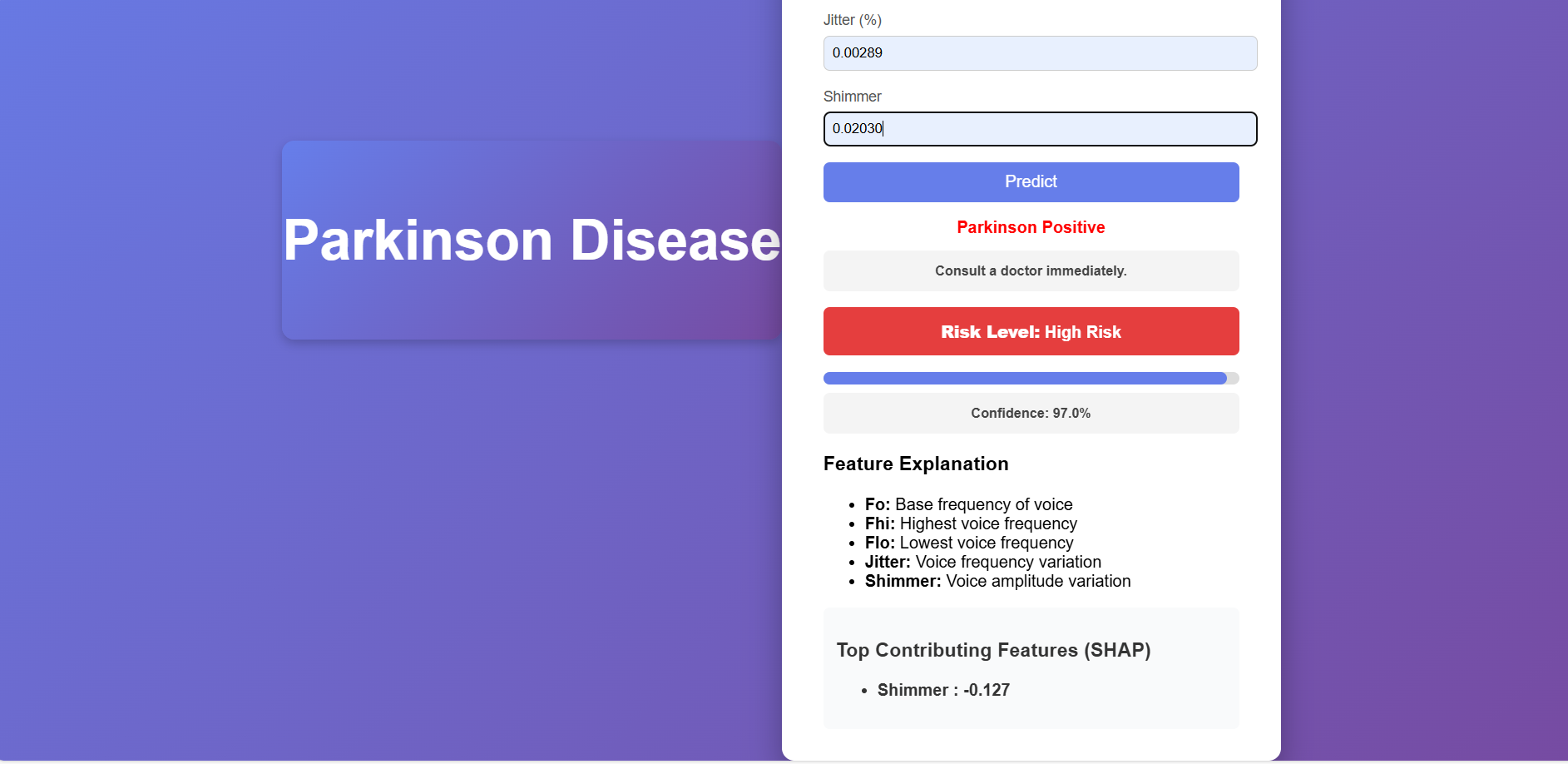
This project predicts whether a person is likely to have Parkinson’s disease by analyzing medical features using machine learning. Gemini AI is used to explain the prediction results in simple language and provide helpful insights for better understanding.
How we built it
We used a Parkinson’s disease dataset and trained a machine learning model using Python. Data preprocessing and feature selection were performed to improve accuracy. Gemini API was integrated to generate AI-based explanations for the prediction results.
Challenges we ran into
Handling medical data carefully and making AI explanations accurate yet simple was challenging. Integrating Gemini meaningfully into the project required experimentation.
Accomplishments that we're proud of
We successfully built an AI-based system for early detection of Parkinson’s disease using machine learning. One of our key accomplishments is integrating Gemini AI to explain prediction results in simple and understandable language, making the system more accessible to non-technical users. We are proud that our project addresses a real-world healthcare problem and demonstrates how AI can be used responsibly to support early diagnosis and awareness.
What we learned
We learned how Gemini can enhance AI healthcare applications by adding explainability and user interaction. This project improved our understanding of machine learning and responsible AI usage.
What's next for AI-Powered Parkinson’s Disease Detection using Gemini
In the future, we plan to improve the accuracy of the model by training it on larger and more diverse medical datasets. We aim to integrate additional features such as voice analysis, handwriting analysis, and real-time symptom tracking for more comprehensive detection. We also plan to enhance the Gemini integration to provide personalized insights, continuous monitoring suggestions, and multilingual support. Ultimately, the goal is to develop this system into a reliable clinical decision-support tool that can assist healthcare professionals and increase early diagnosis rates.
Built With
- api
- gemini
- jupyter
- learning
- machine
- numpy
- pandas
- python
- scikit-learn

Log in or sign up for Devpost to join the conversation.