-
-
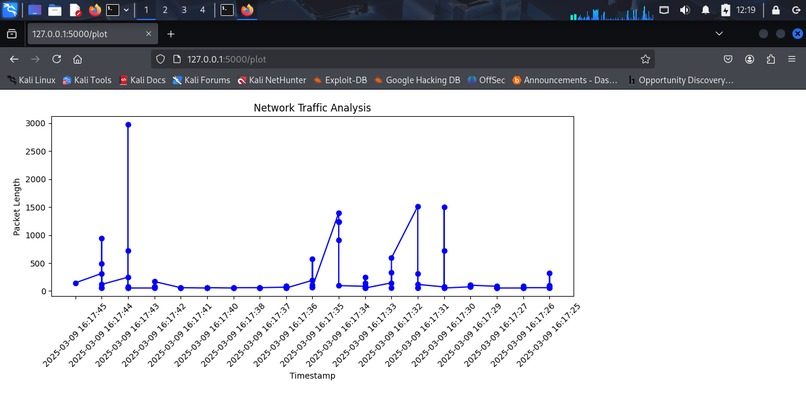
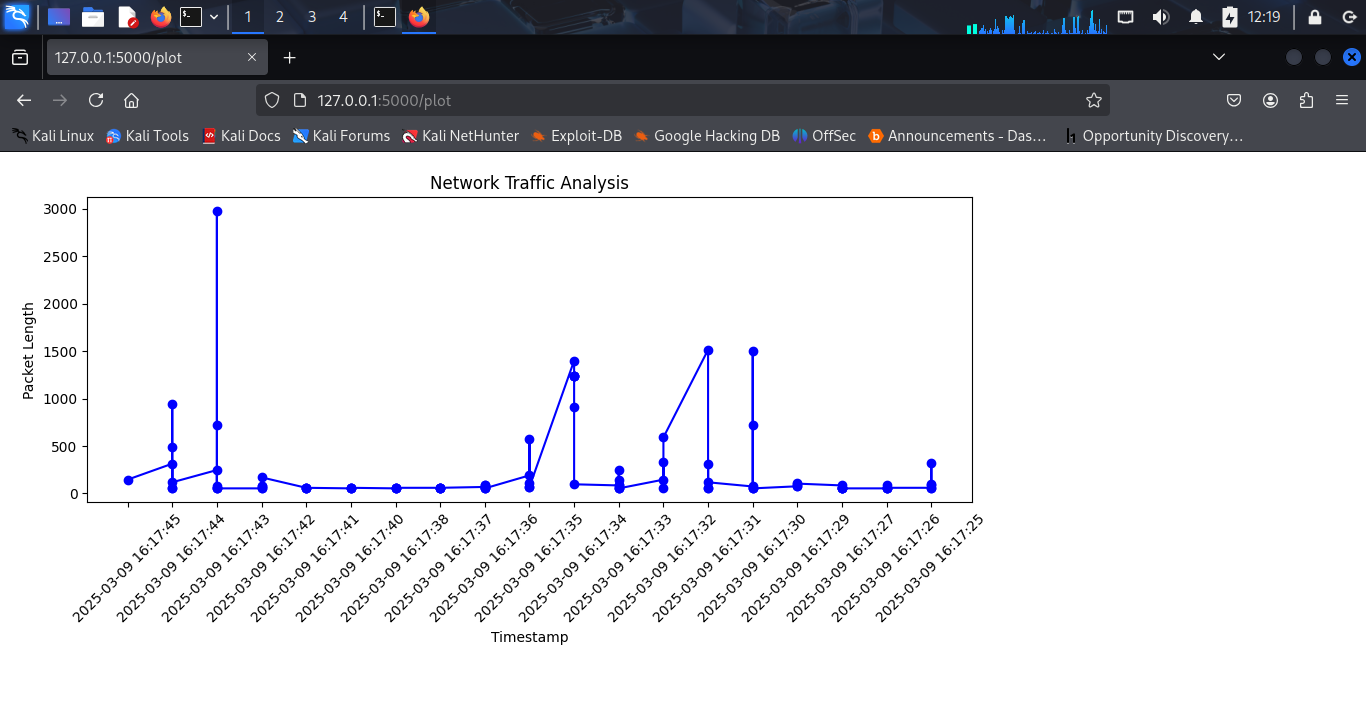
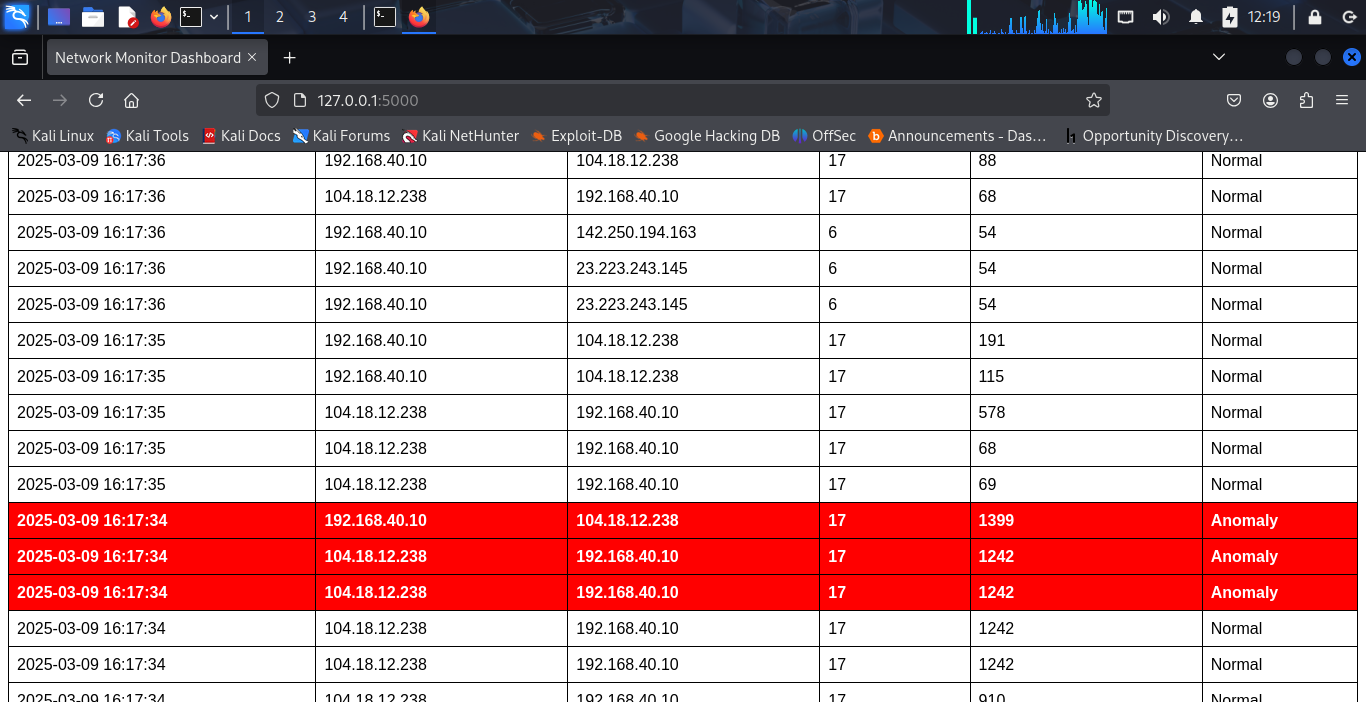
Visualization o find out the Anomaly behaviours
-
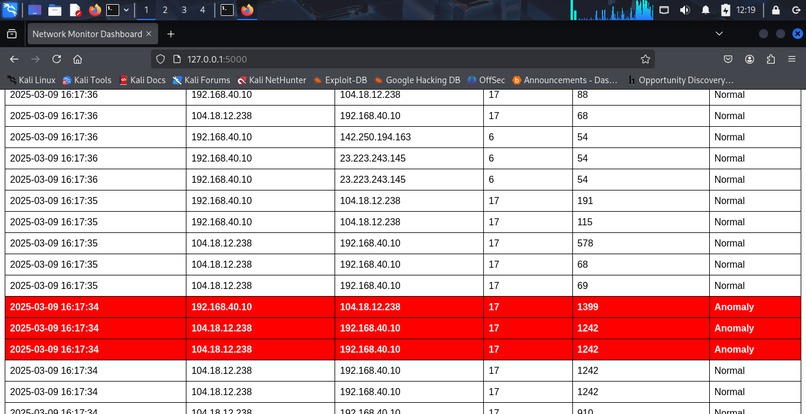
find out the anomaly packet
-
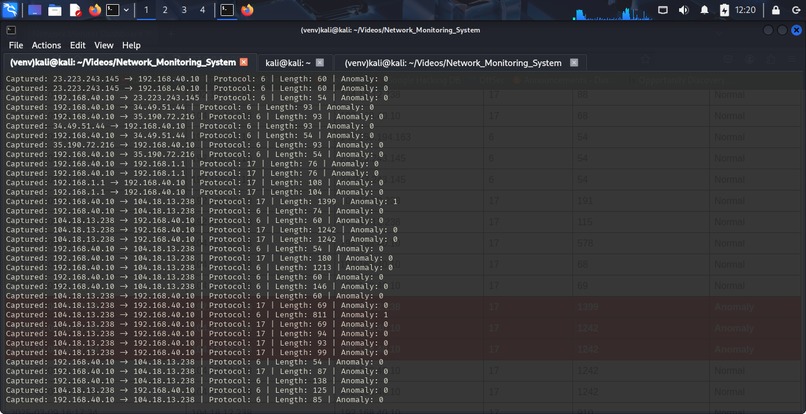
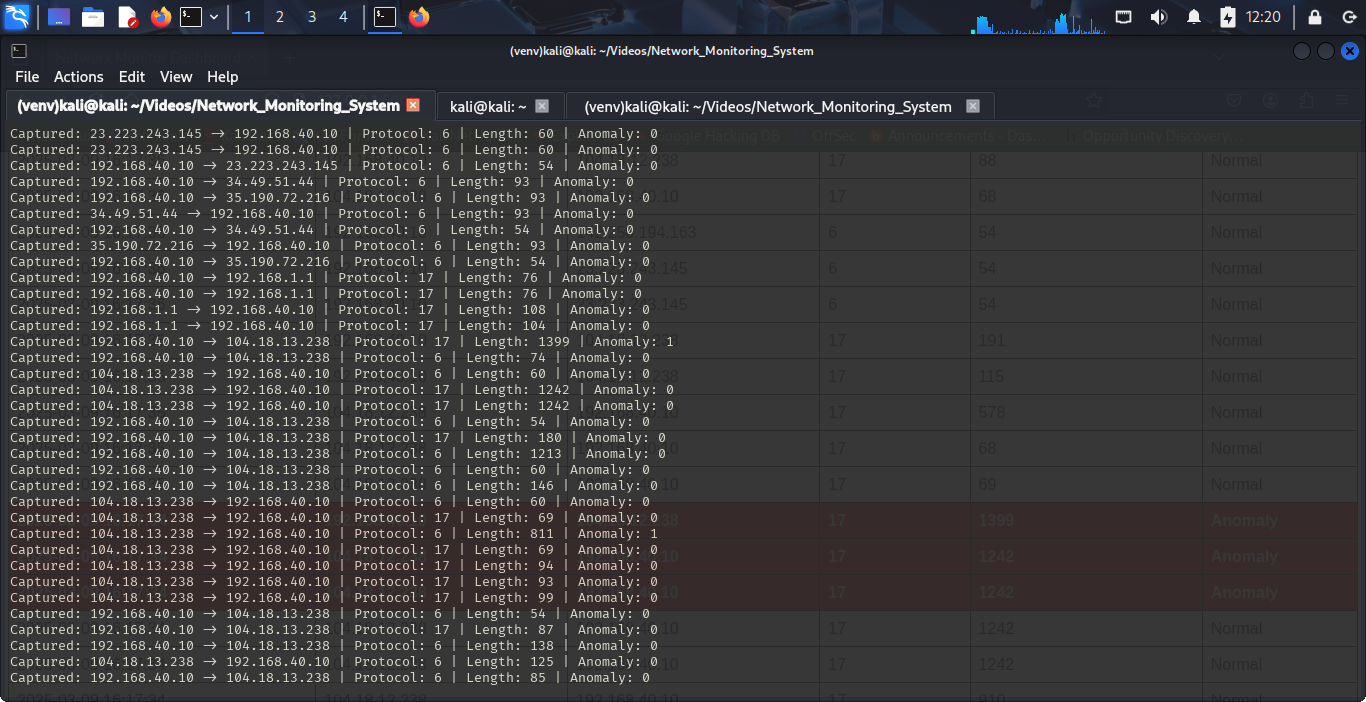
Showing the all packet communication
Inspiration
With the increasing number of cyber threats, organizations face challenges in identifying and mitigating security breaches in real time. Traditional rule-based network monitoring solutions struggle to detect sophisticated and evolving attacks. Inspired by the need for proactive cybersecurity, we developed an AI-powered anomaly detection system that leverages machine learning to automate threat detection and reduce response time to potential intrusions.
What it does
This system monitors network traffic in real time, detects anomalies using an Isolation Forest machine learning model, and logs suspicious activity. It features:
Packet Capture & Logging: Captures network packets and stores metadata (IP addresses, protocol, length, etc.) in an SQLite database. Anomaly Detection: Classifies packet anomalies based on their statistical behavior using AI. Web Dashboard: Visualizes traffic trends, displays anomaly logs, and generates network traffic graphs for analysis.
How we built it
We combined machine learning, real-time packet capture, and web-based visualization using:
Python & Scapy for network packet sniffing. SQLite for structured log storage. Scikit-learn for training and applying the Isolation Forest model. Flask & Matplotlib for the interactive web dashboard with real-time data visualization.
Challenges we ran into
Efficient Data Handling: Managing and processing a large volume of network packets without performance bottlenecks. Tuning the Model: Optimizing the Isolation Forest parameters to reduce false positives while maintaining detection accuracy. Real-Time Processing: Ensuring anomaly detection runs in real time without slowing down network traffic analysis. Frontend-Backend Synchronization: Keeping the web dashboard updated with live network data dynamically.
Accomplishments that we're proud of
Successfully trained an AI model to detect network anomalies with high accuracy. Developed a real-time monitoring system that detects threats as they occur. Built an interactive and intuitive web dashboard for security teams to analyze traffic trends. Created a scalable and modular architecture that can be enhanced with more features.
What we learned
The importance of feature engineering in anomaly detection for network traffic. How to integrate AI-based security models into real-world applications. Real-time packet capture and database optimization techniques for efficient storage and querying. Best practices in backend development, API creation, and frontend data visualization.
What's next for AI-Powered Network Anomaly Detection System
Enhancing the ML Model: Implementing deep learning for more advanced anomaly detection. Signature-based Detection: Adding rule-based checks alongside AI to improve detection accuracy. Threat Intelligence Integration: Cross-referencing anomalies with known attack databases. Real-Time Alerts: Implementing email/SMS notifications for detected threats. Cloud Deployment: Scaling the system to a cloud-based environment for enterprise use.
Built With
- base64
- fastapi
- flask
- http-redirect-chain-enumerator
- io
- matplotlib
- numpy
- python
- scapy
- scikit-learn
- sqlite
- venv

Log in or sign up for Devpost to join the conversation.