-
-
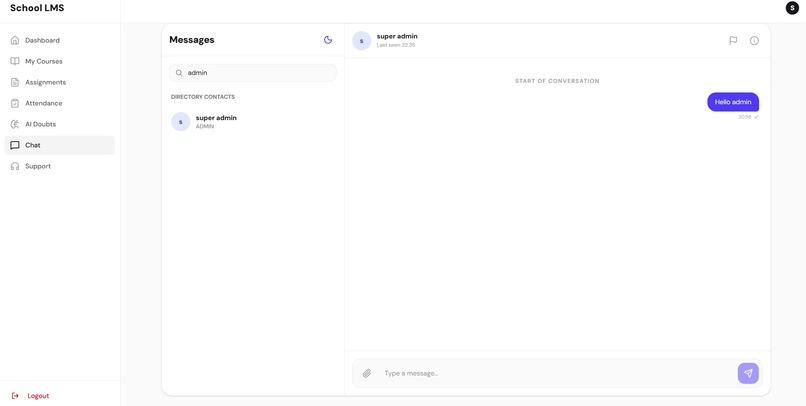
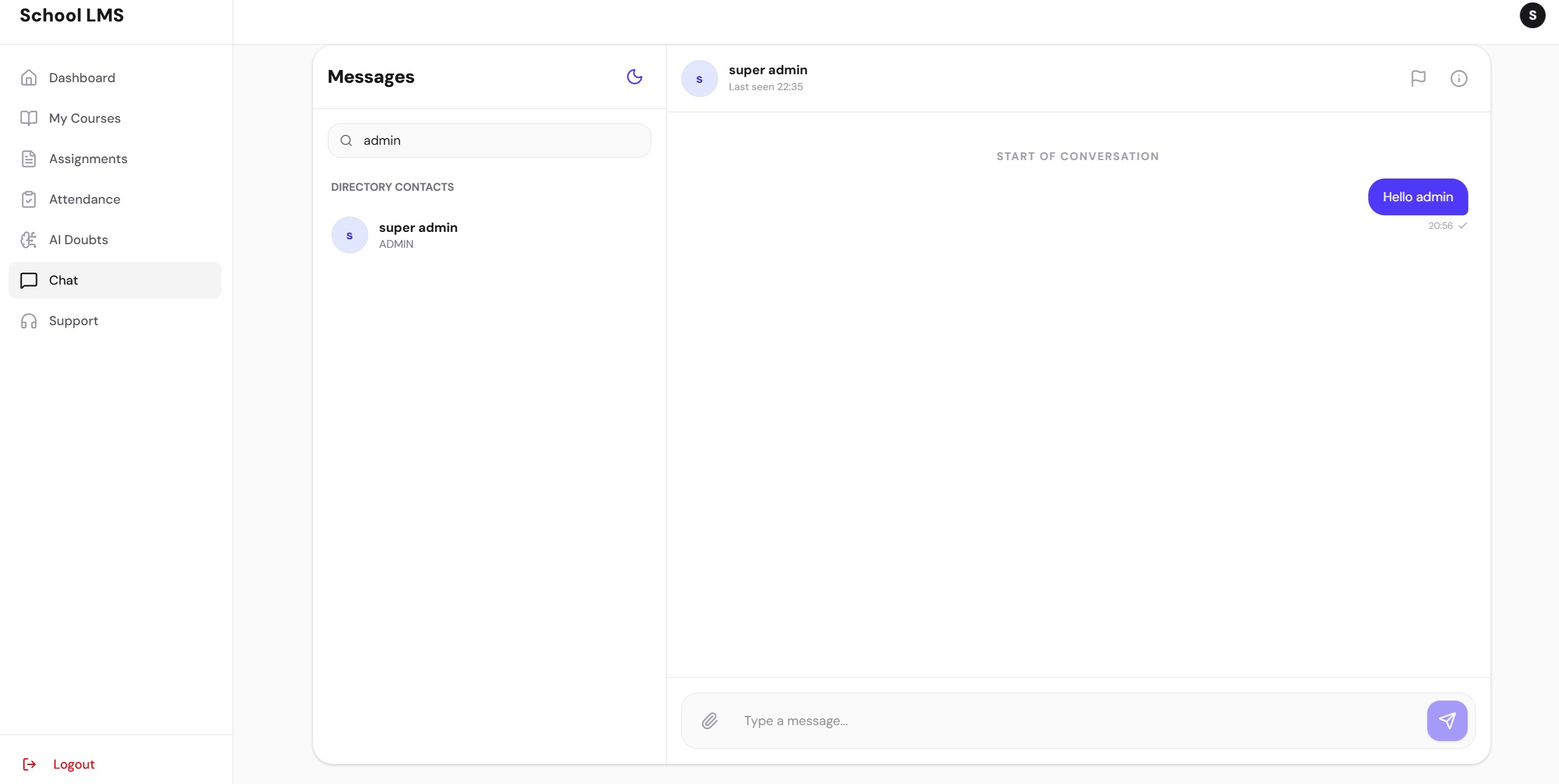
Chat and messaging service right in the platform
-
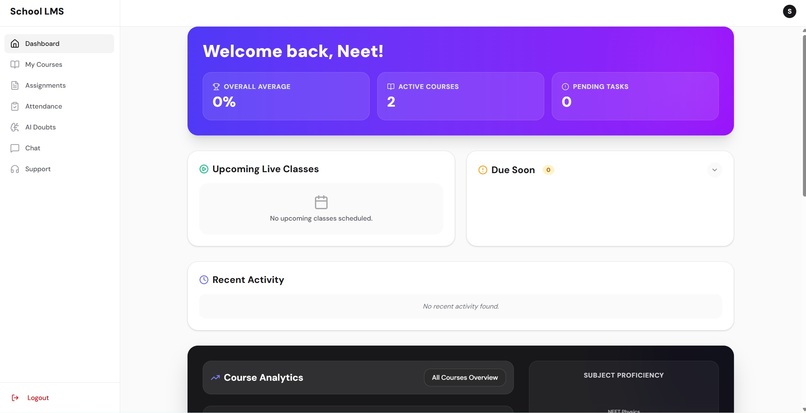
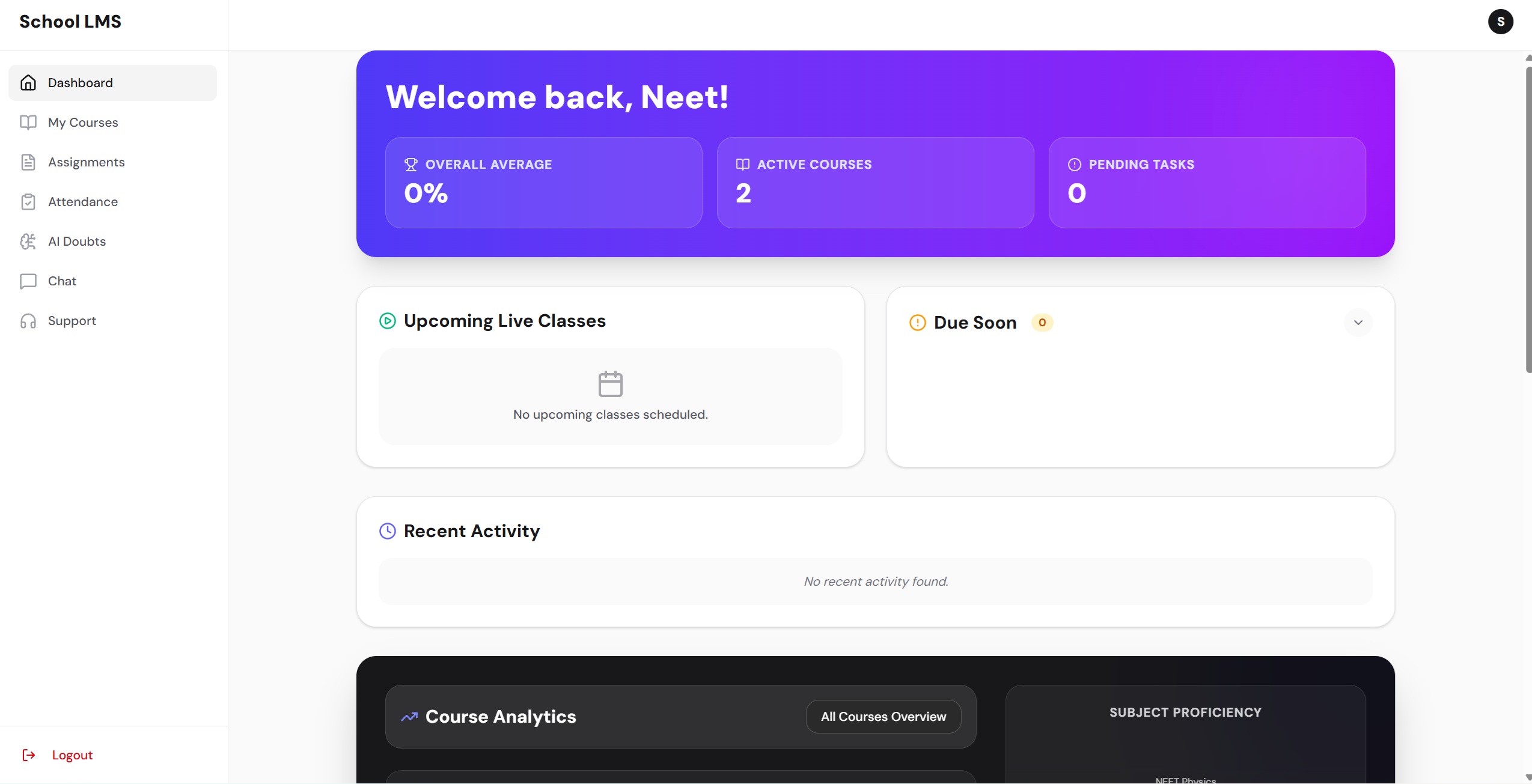
Interactive Student Dashboard
-
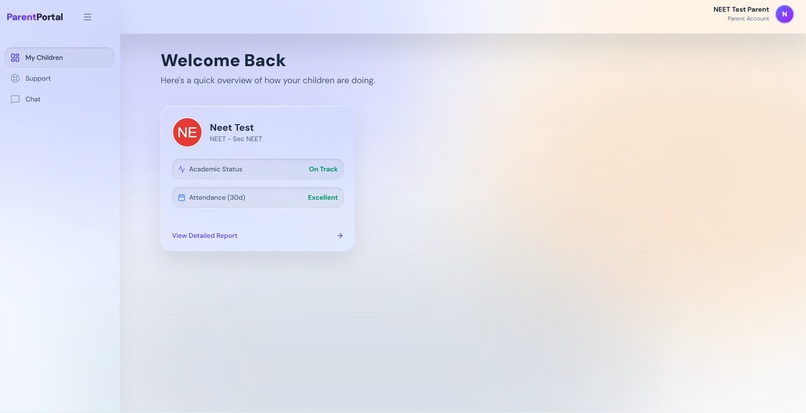
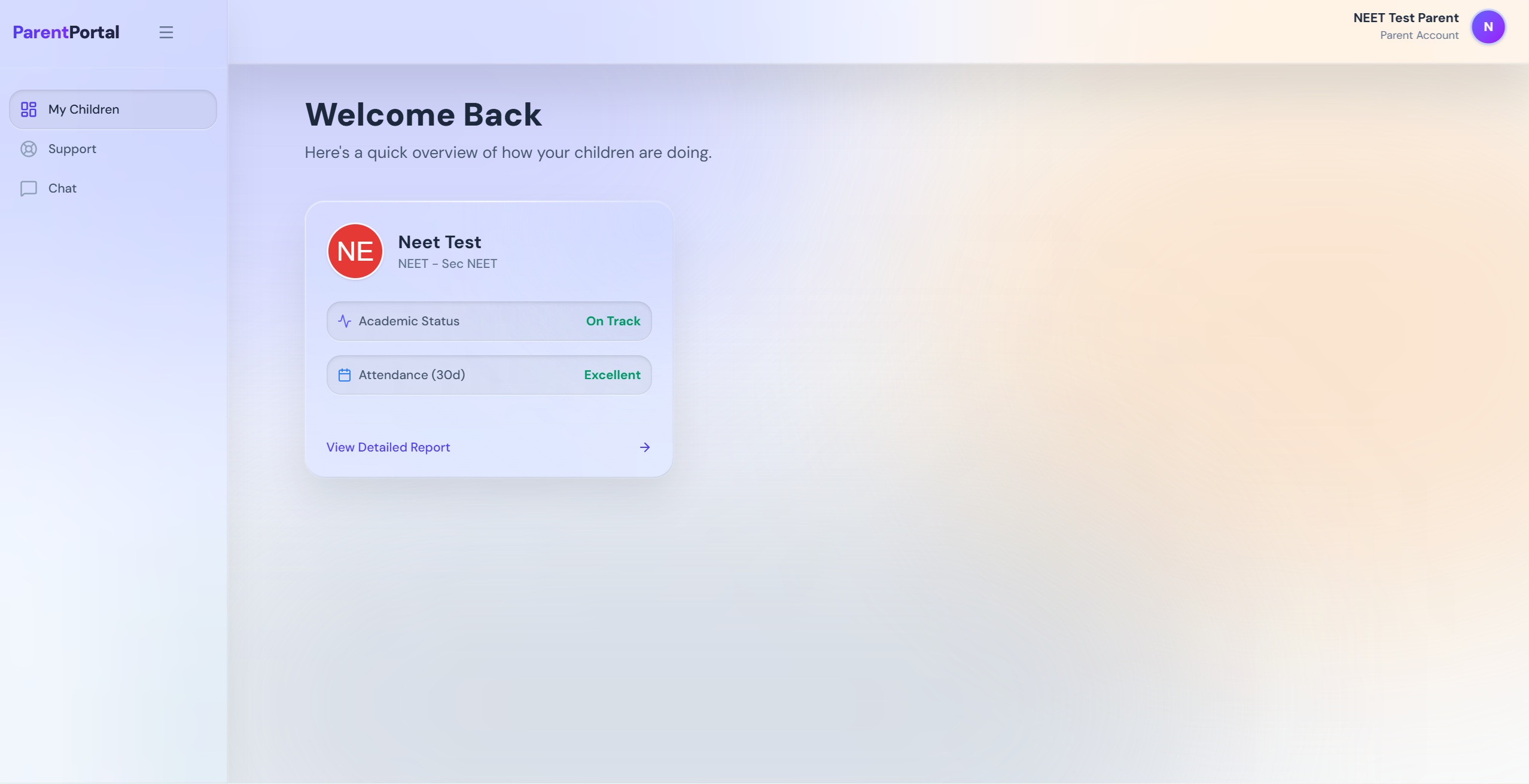
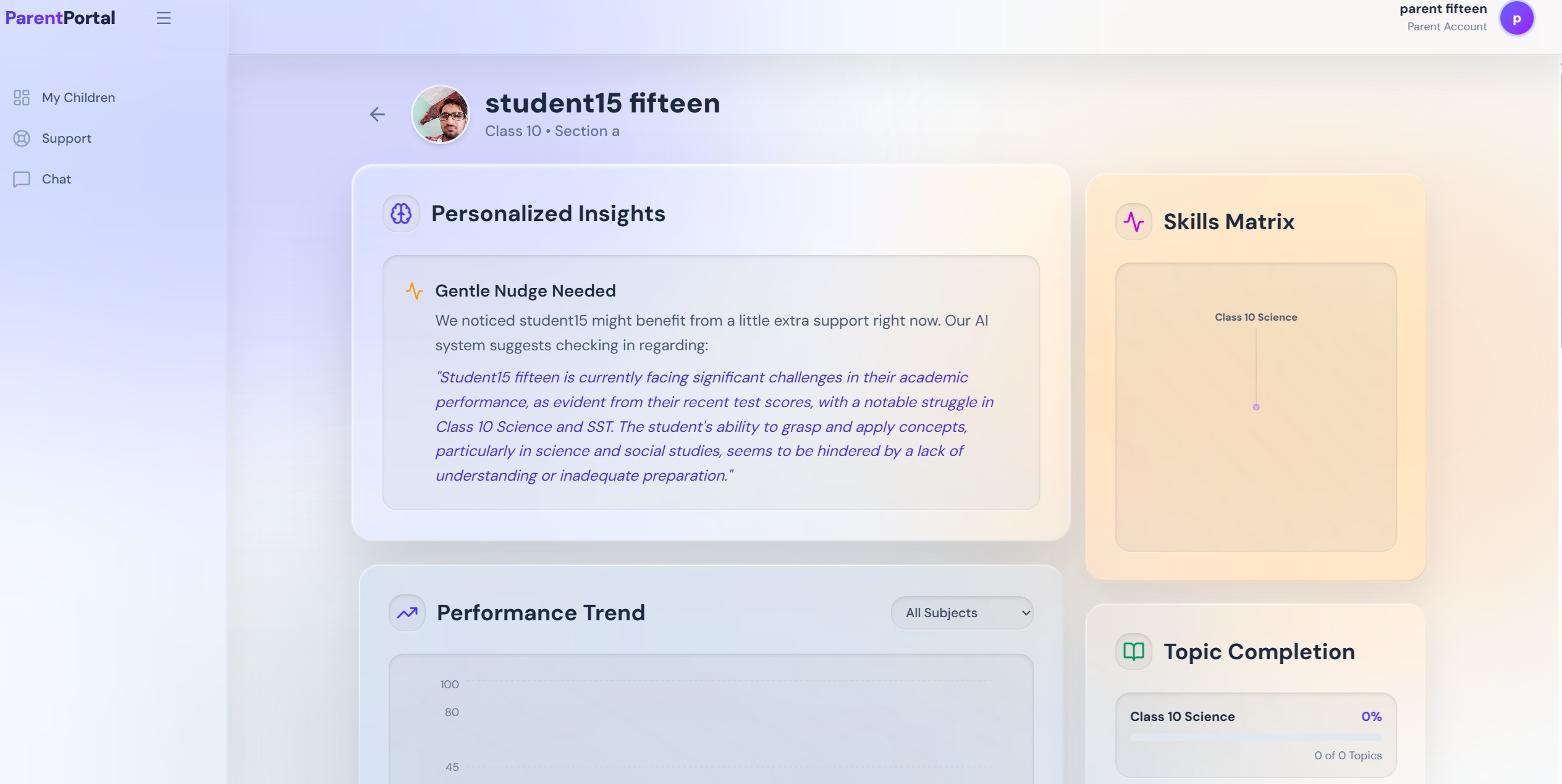
Parent Portal Dashboard
-
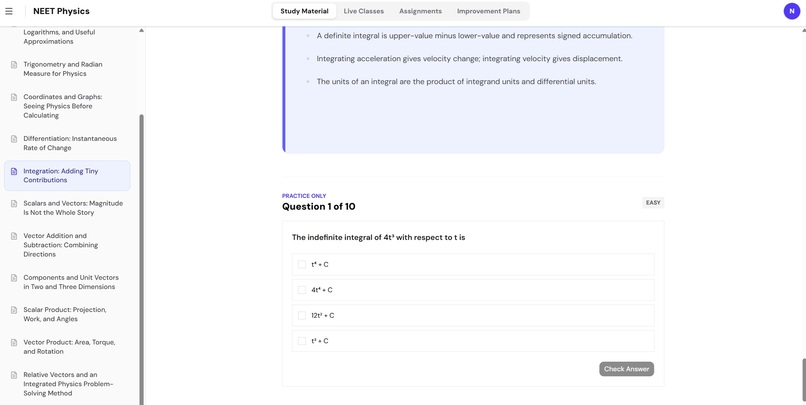
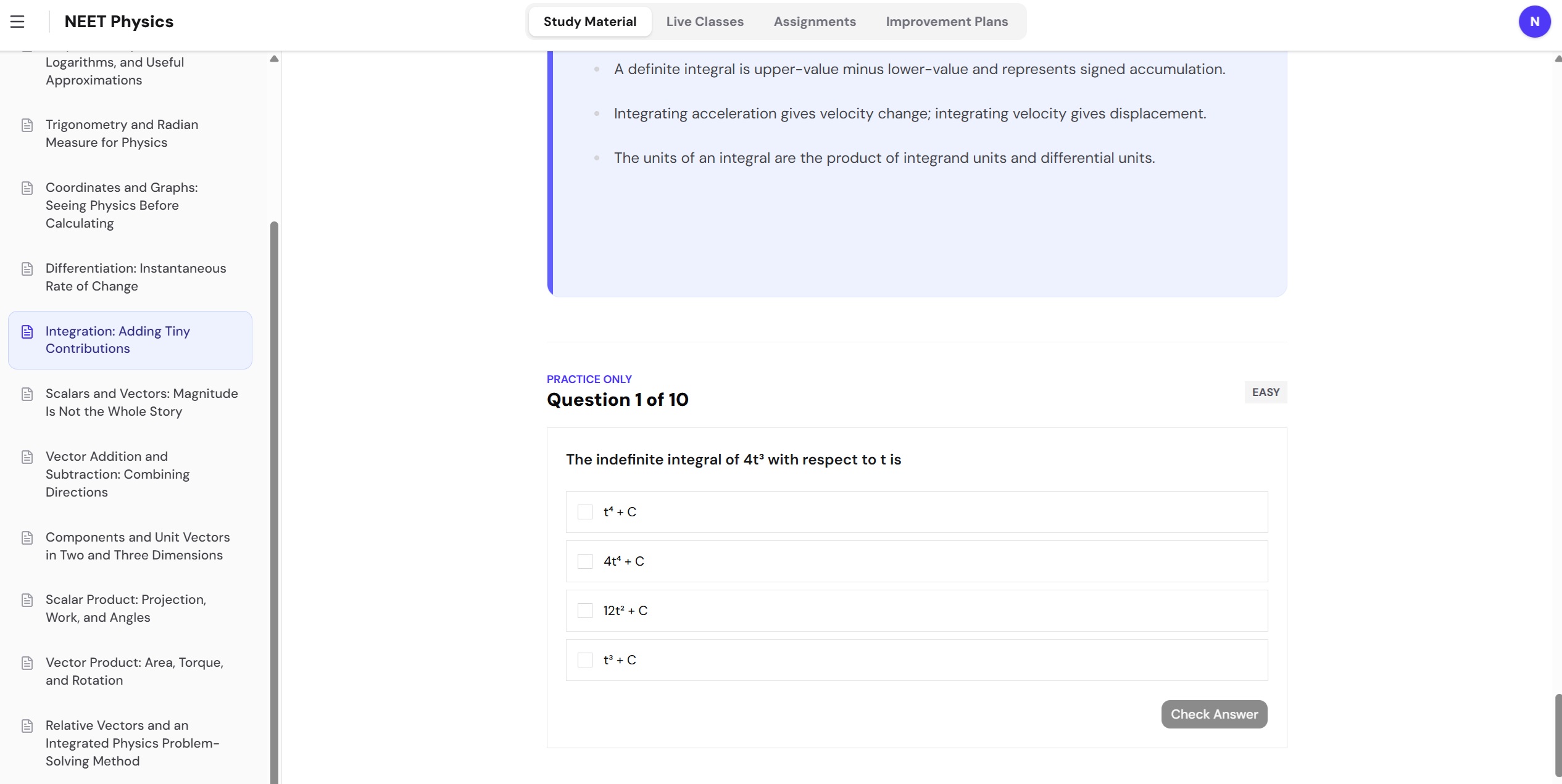
In topic Practice question and AI summary
-
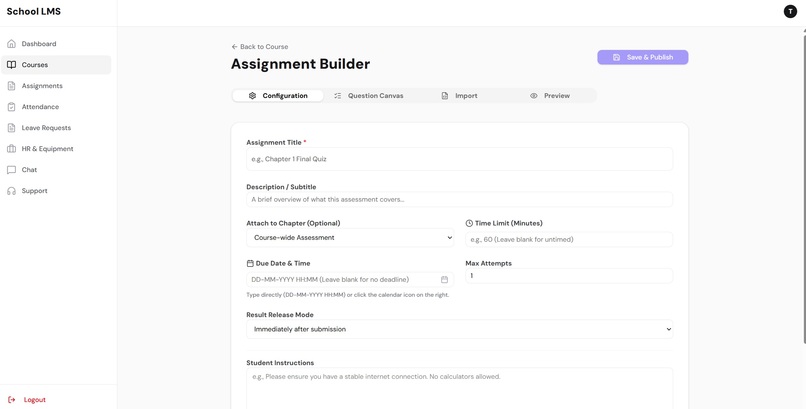
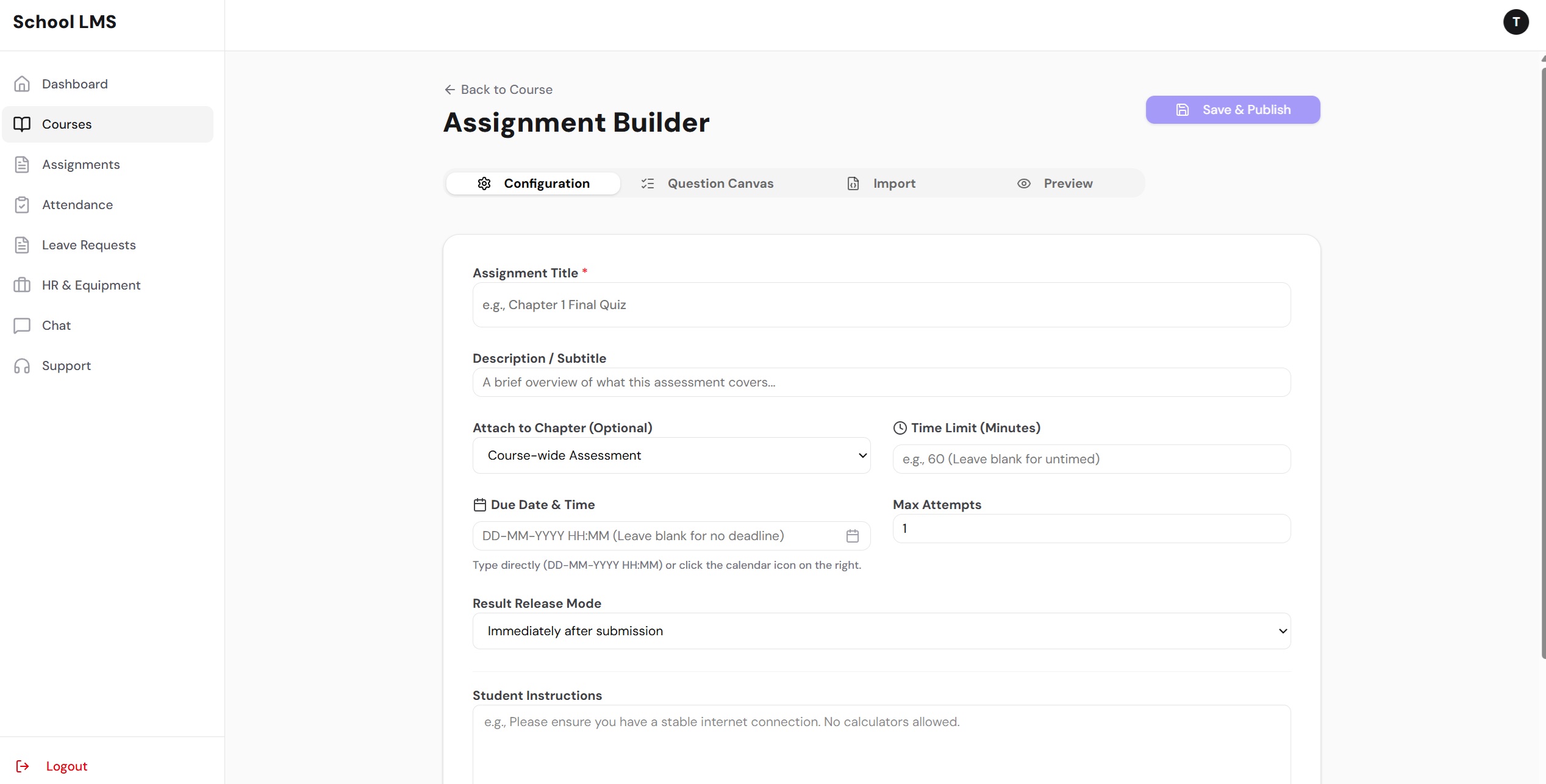
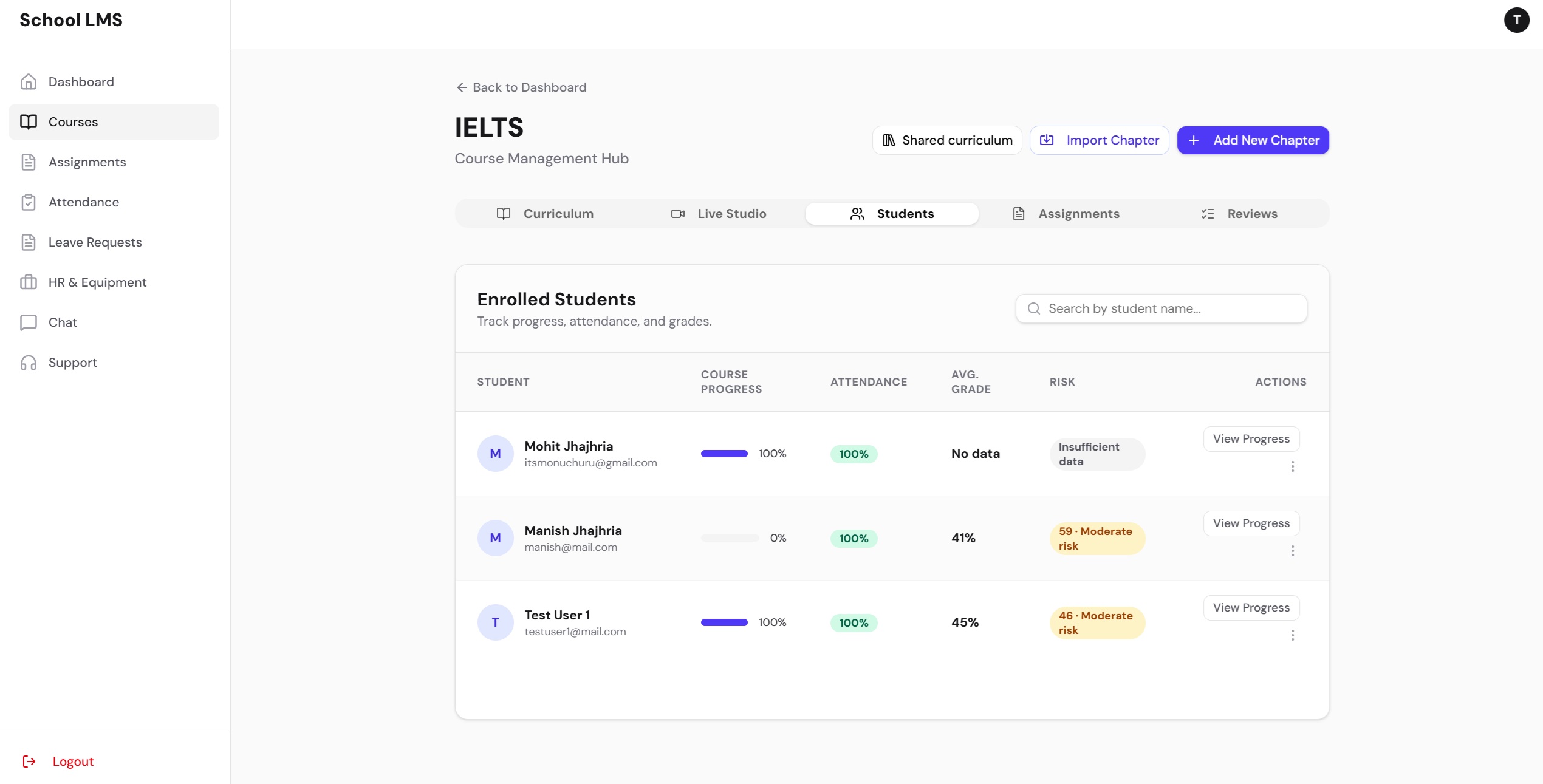
Assessment building Engine
-
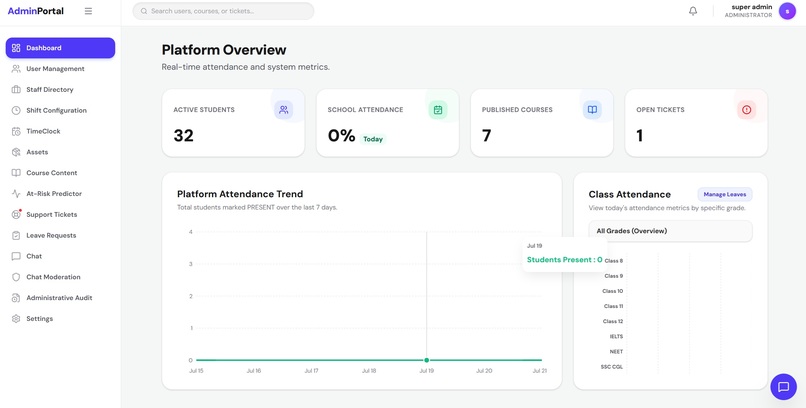
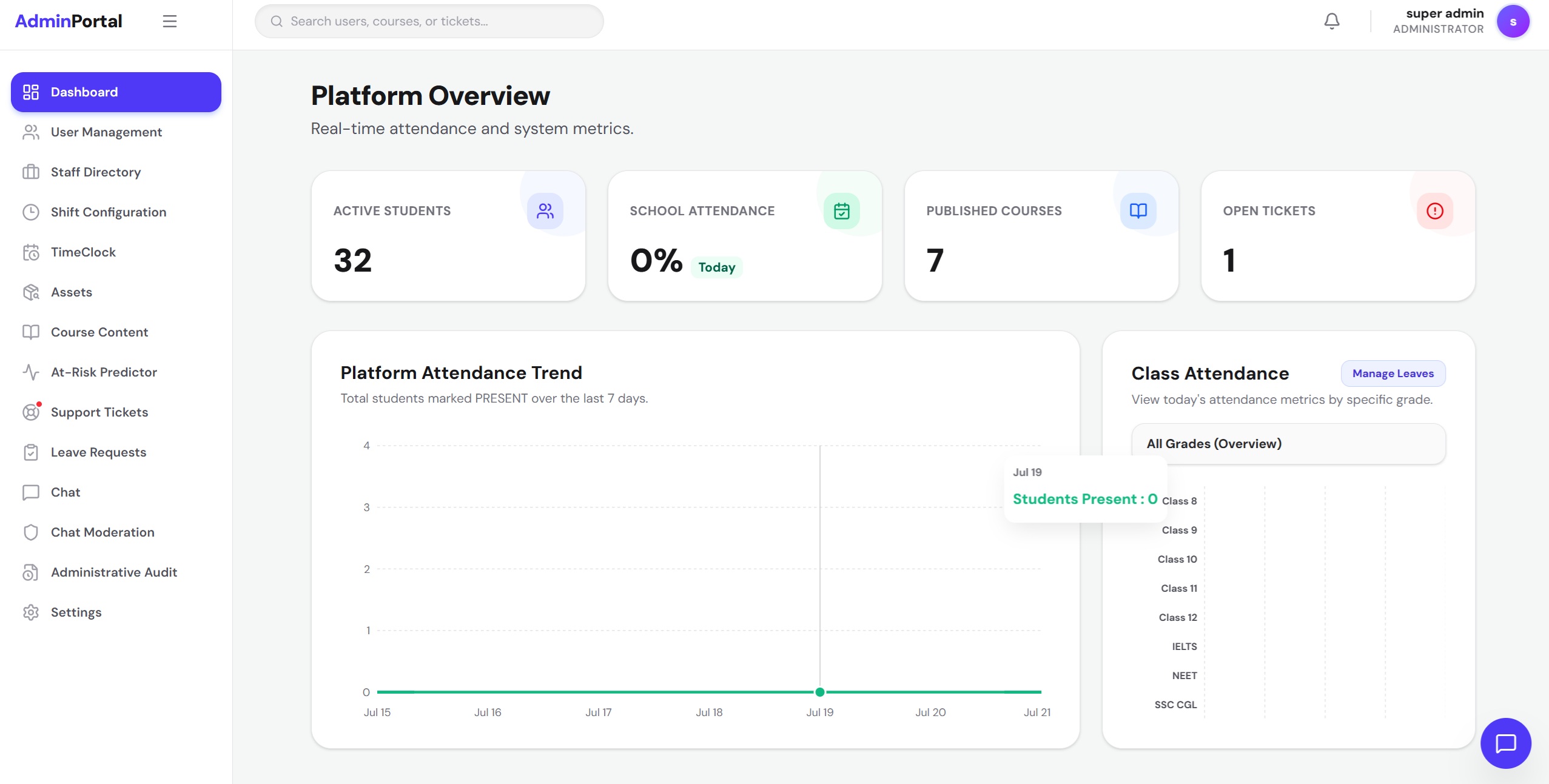
Admin Dashboard
-
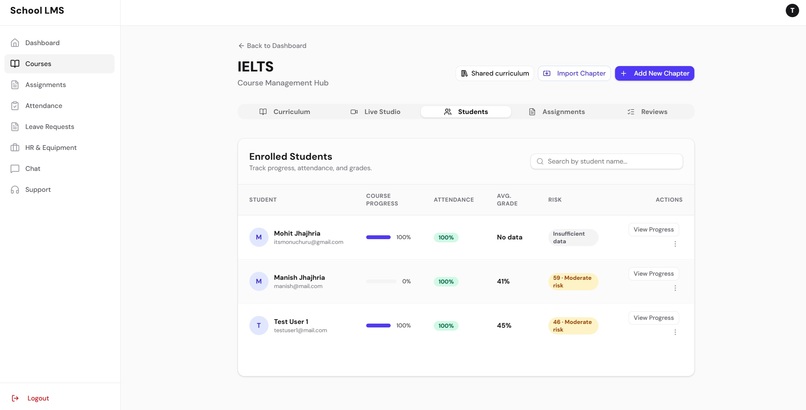
One glance student performance which can be extended for a specific student
-
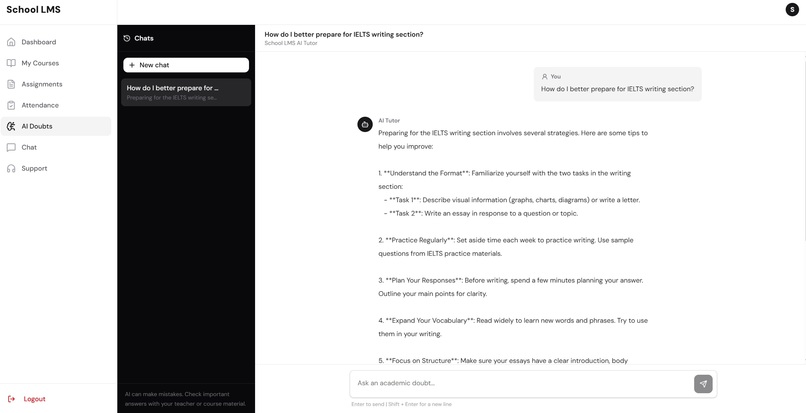
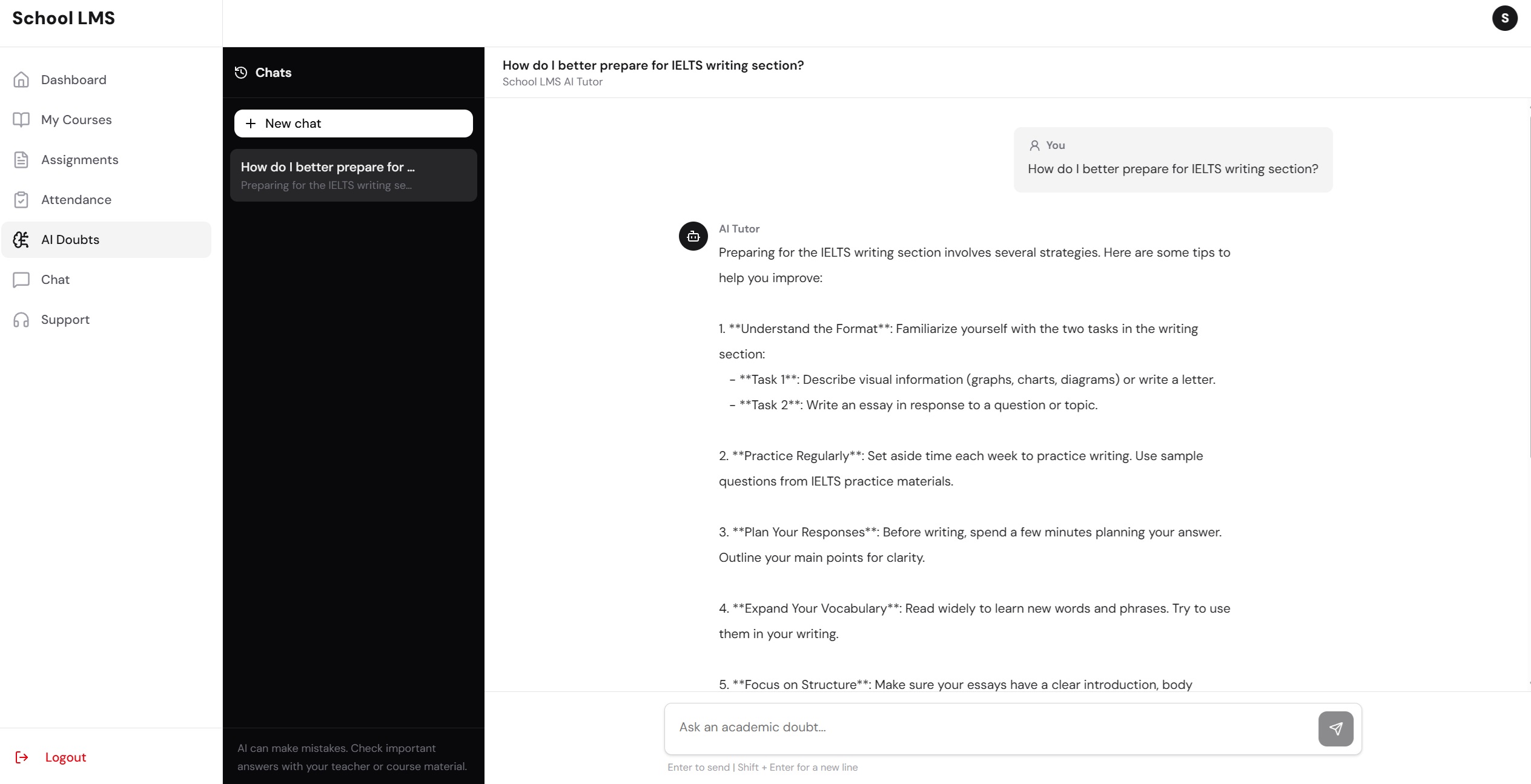
In-built AI Doubt helper
-
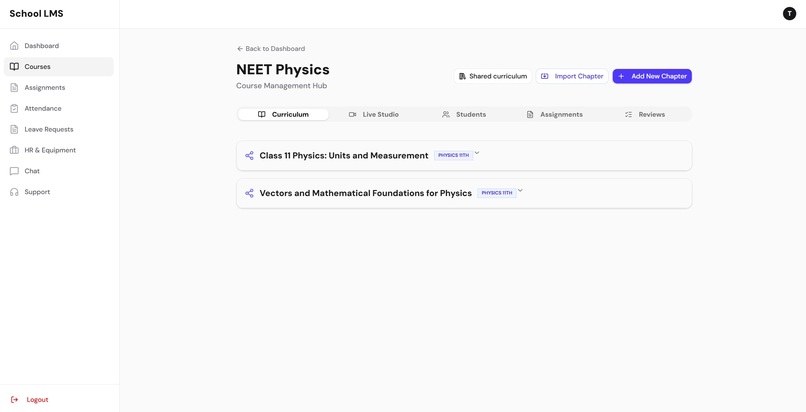
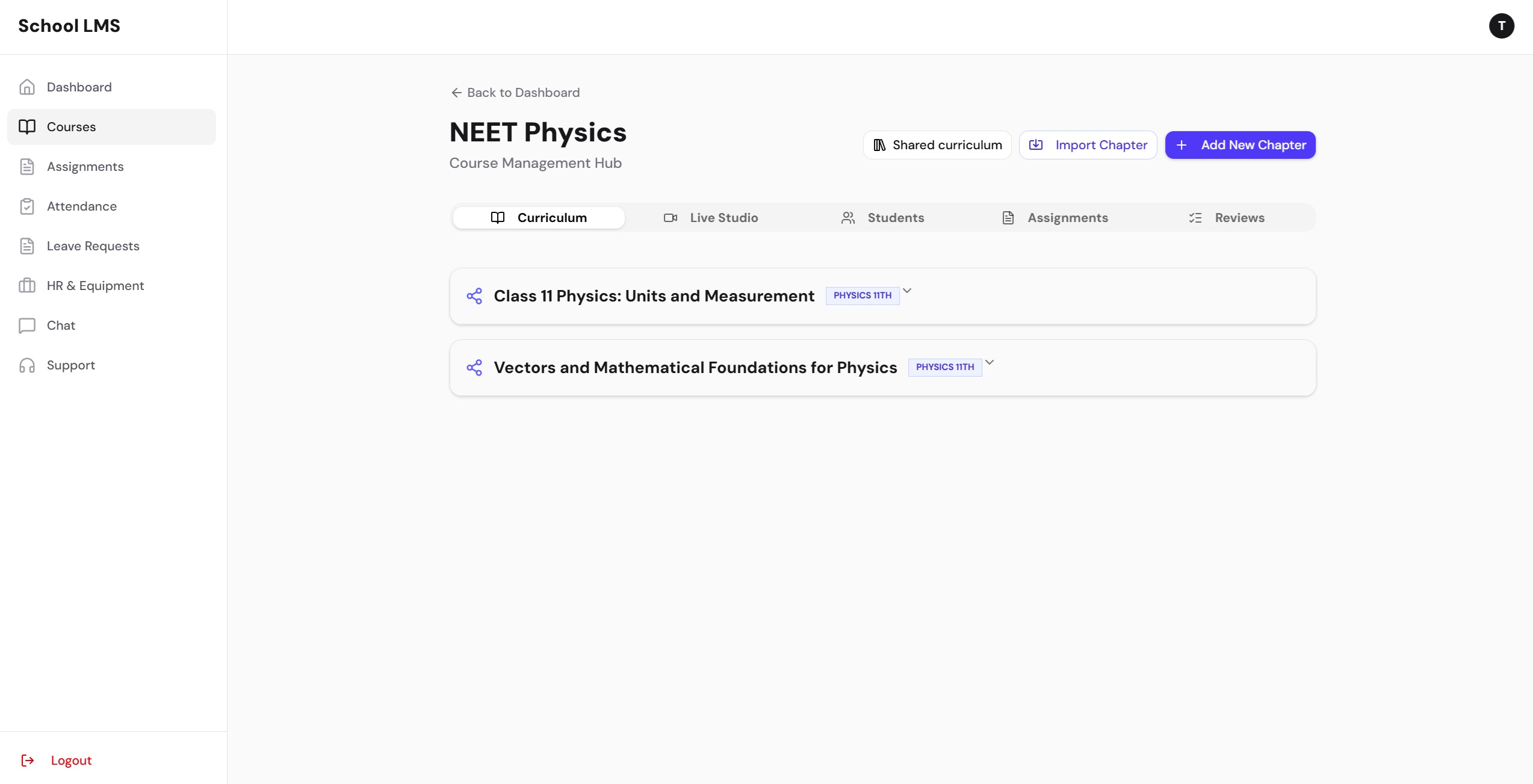
Teacher Course builder portal
-
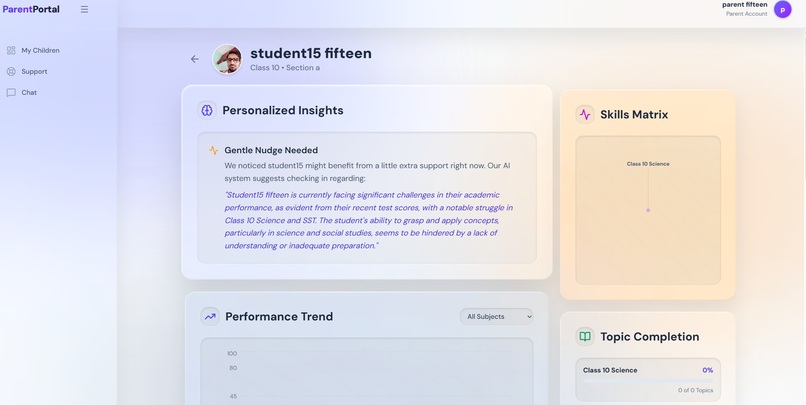
Detailed View of a student for parents side
-
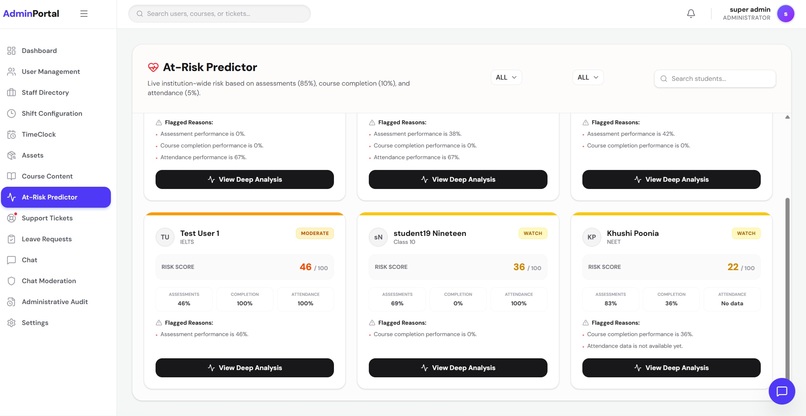
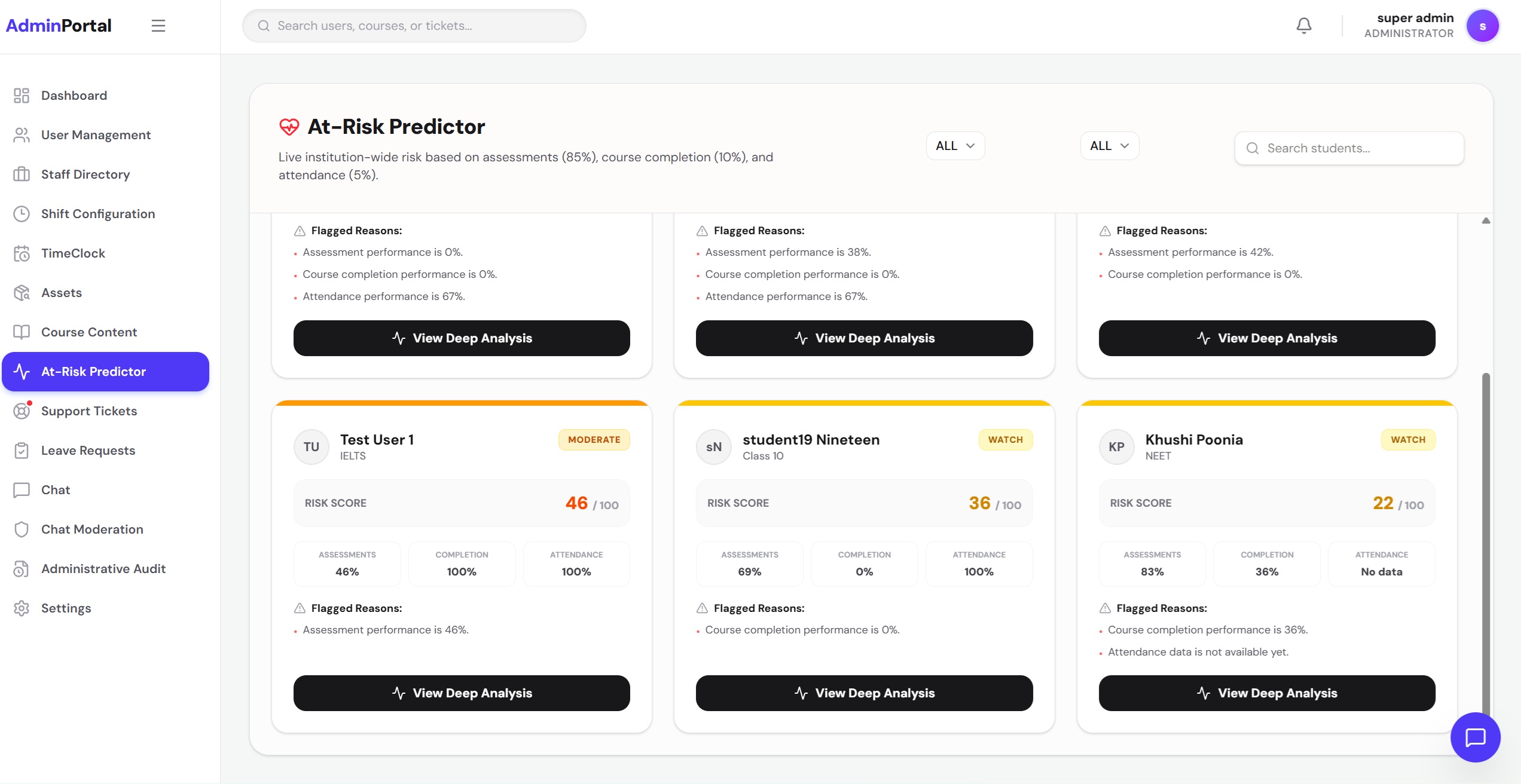
At-Risk Predictor
-
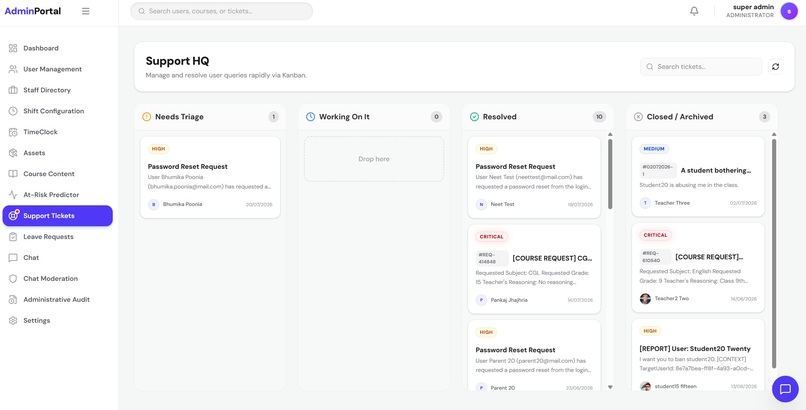
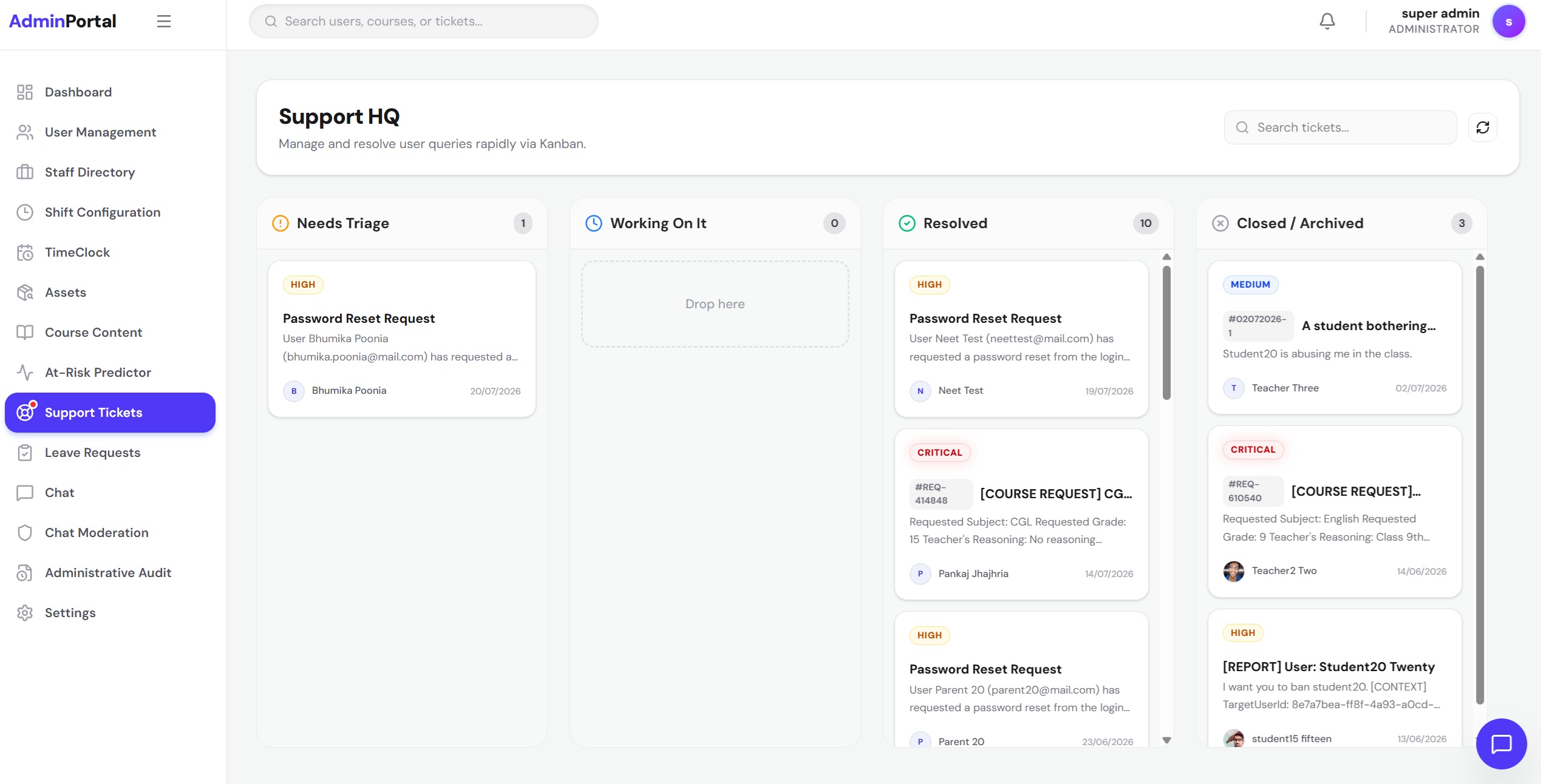
Admin Support hub
-
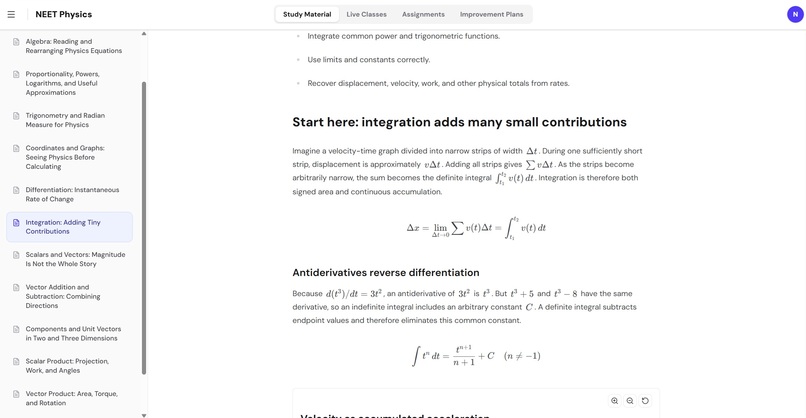
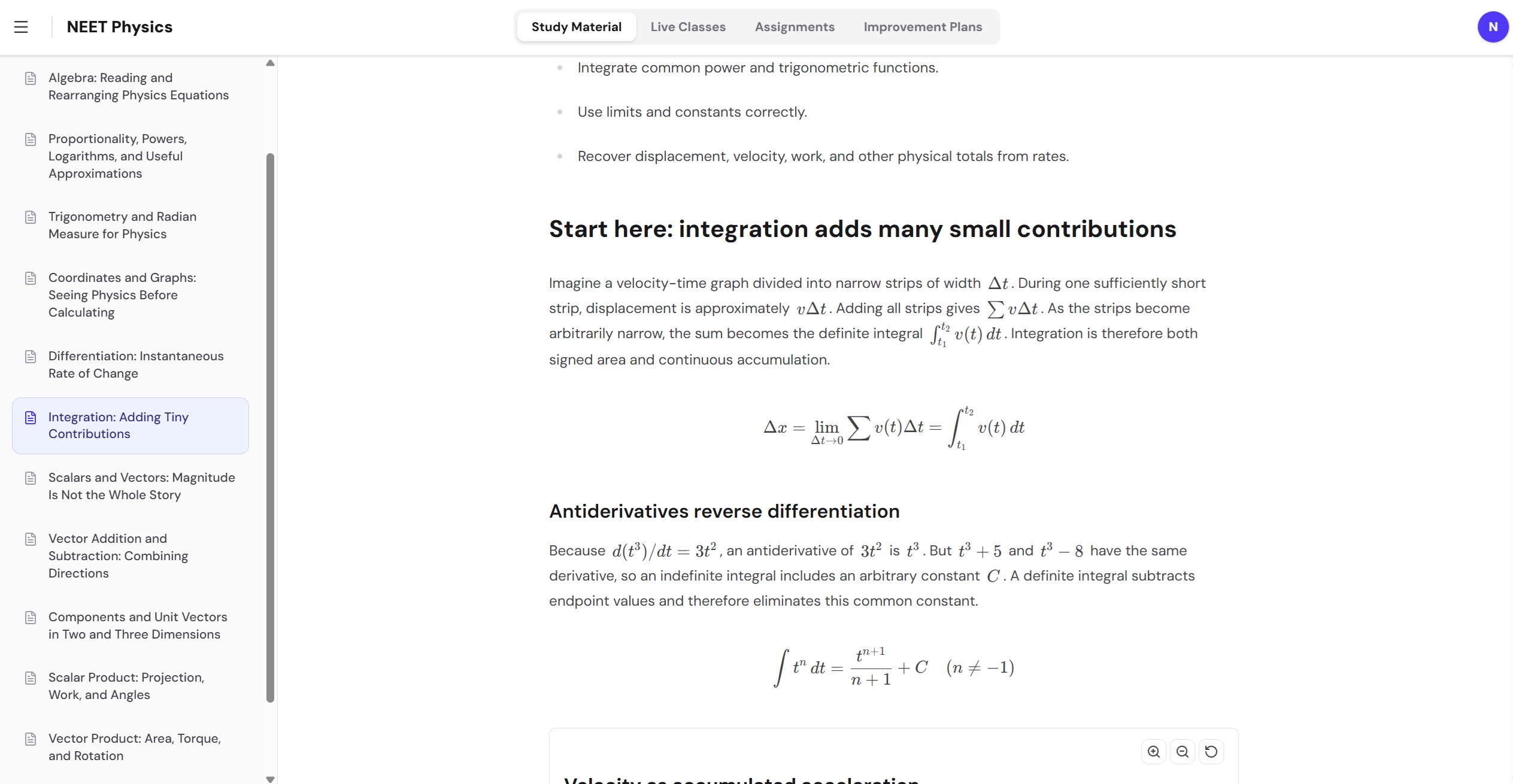
Static Learning Material
-
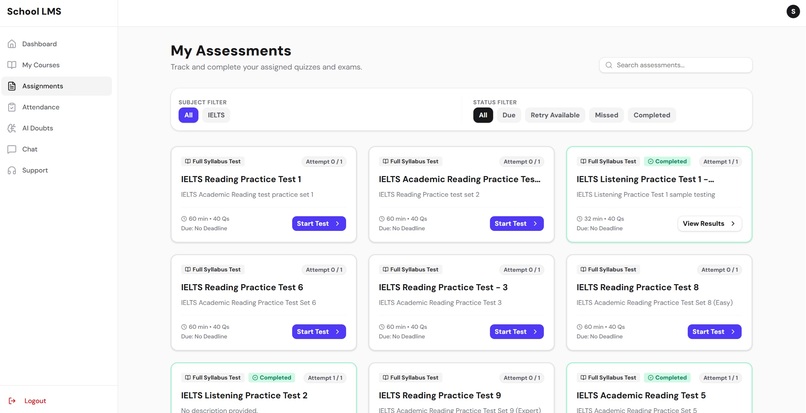
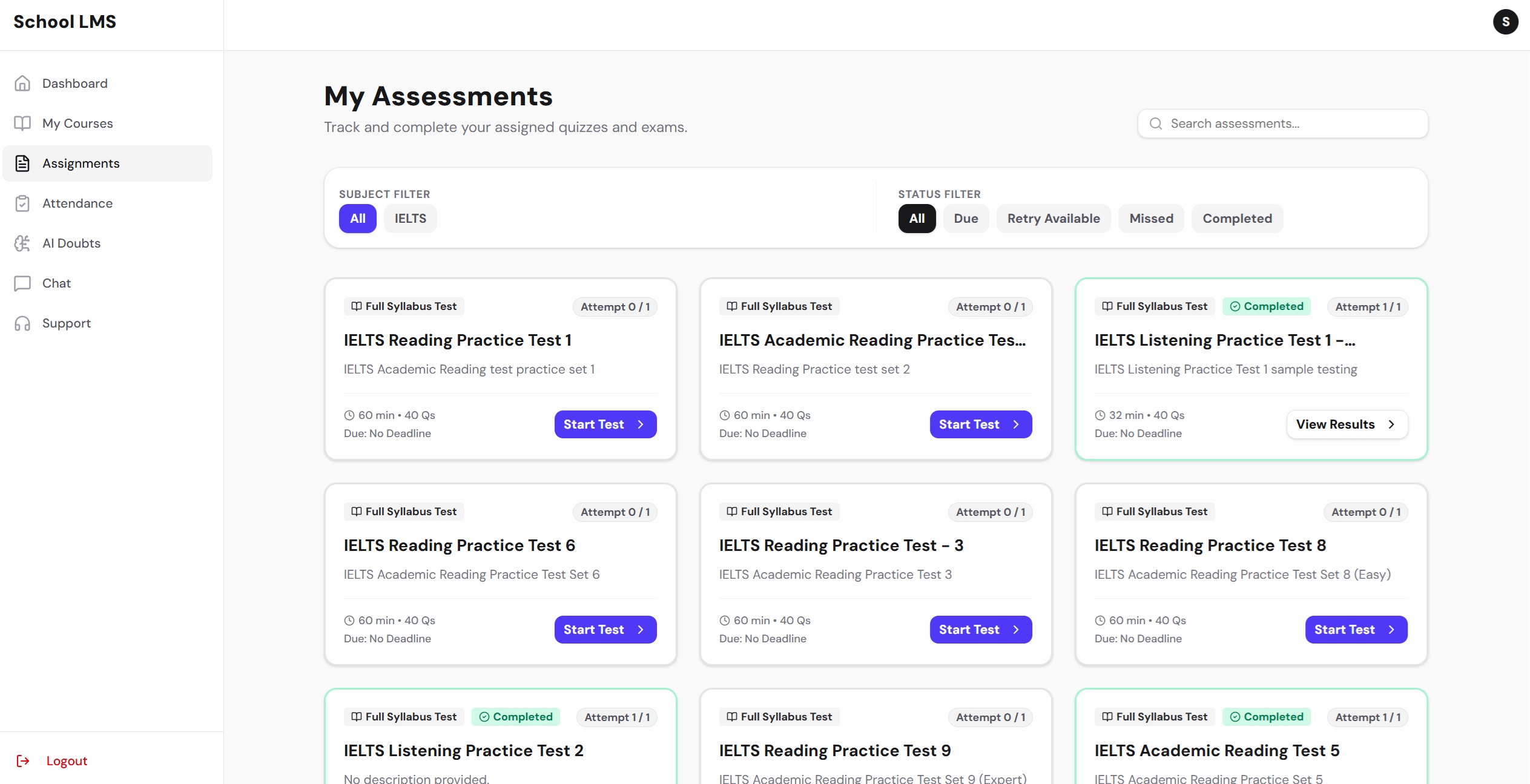
Assignments Section for students
-
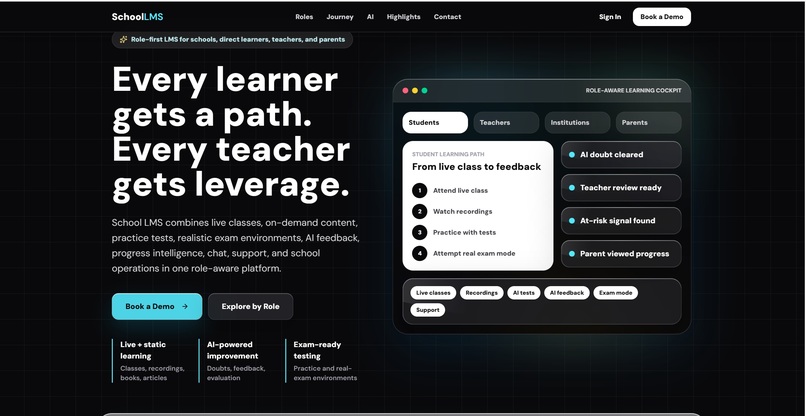
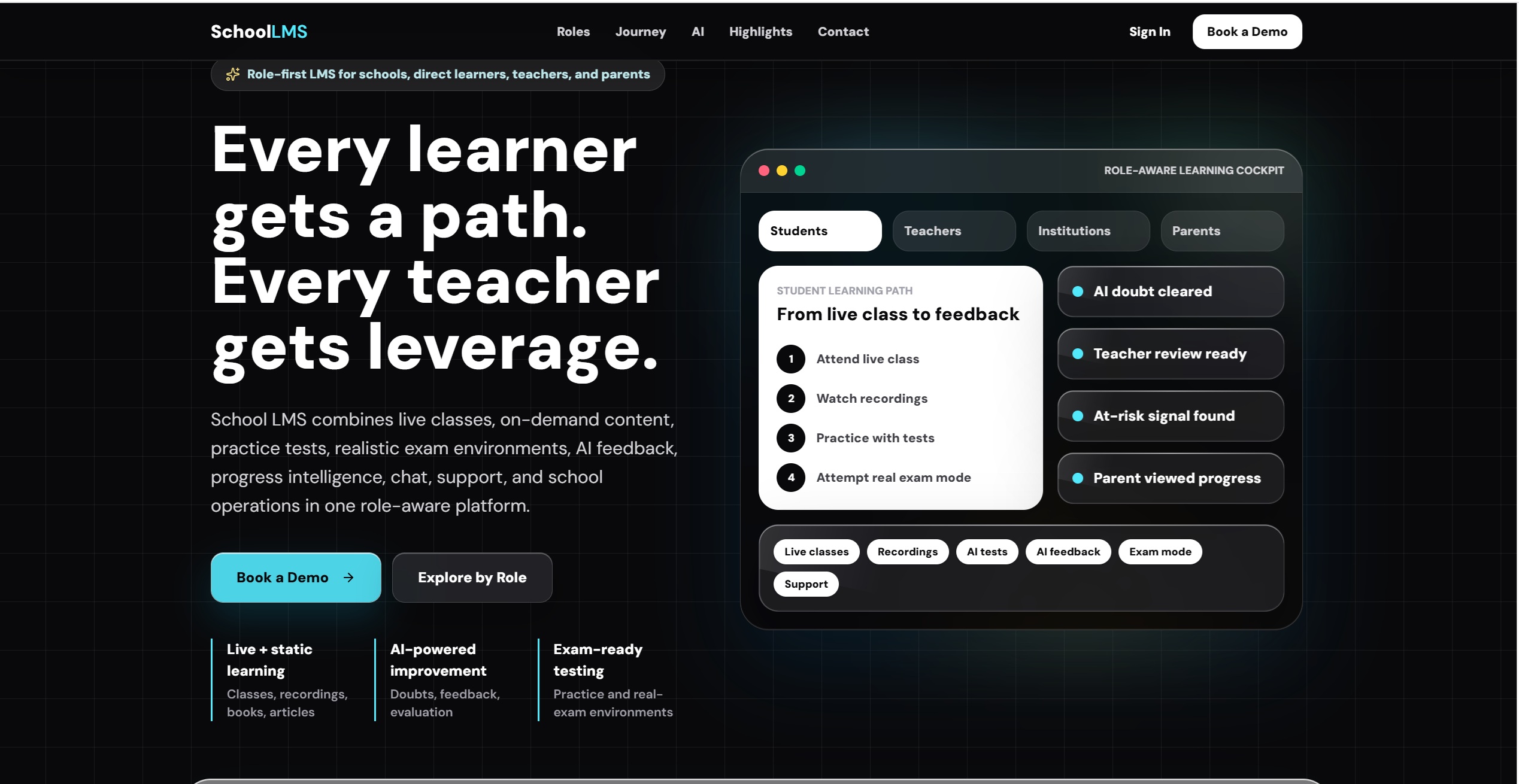
Landing Page
Inspiration
Schools, universities, and coaching institutions often rely on separate tools for learning content, live classes, assessments, communication, attendance, parent updates, and administration. That fragmentation makes accountability harder: teachers lose time switching systems, parents lack a clear view of progress, and students who need extra support can fall behind unnoticed. I wanted to build one connected platform where students, teachers, parents, and administrators work from the same source of truth. The motivation is especially personal in the Indian education context, where a teacher may be responsible for 50 or more students. Even the most committed teacher cannot give every learner the same level of individual attention every day. School LMS uses AI as a support layer—not a replacement for teachers—to help identify gaps earlier, provide timely feedback, and give more learners a realistic opportunity to succeed.
What it does
School LMS is a role-aware learning platform that connects learning, assessment, feedback, communication, and institutional operations. For students, it provides on-demand learning materials, live classes, objective and subjective online assessments, topic practice, AI-assisted feedback, course-level progress, attendance history, in-platform chat, support, and IELTS-style Reading, Listening, and Writing practice. For teachers, it provides tools to create and organize curriculum, import structured chapters and topics, build assessments, review student work, and communicate with learners. AI-assisted curriculum and assessment workflows reduce the time needed to turn structured material into usable learning content. Subjective-answer evaluation and teacher review tools help teachers spend less time on repetitive grading and more time helping students improve. For parents, School LMS creates a clearer view of a child’s attendance, results, progress, and teacher feedback. The goal is to help families notice learning gaps early and stay connected to the student’s academic journey. For administrators, the platform provides oversight across users, courses, support, communication, analytics, and institutional workflows. AI-assisted at-risk insights can help identify students who may need intervention, while teachers and administrators remain responsible for the final decisions and support plans.
How I built it
I began developing School LMS in March 2026, starting with the core vision of a connected, role-aware education platform. During OpenAI Build Week, I meaningfully extended and hardened the platform with GPT-5.6 through Codex. Codex became the turning point in the project: it helped me identify architectural and security gaps, strengthen workflows, improve validation, build rich-content assessment capabilities, and accelerate testing. The Build Week work includes richer curriculum and assessment authoring, accessible image and graph support, structured imports, improved student practice flows, stronger authorization and security controls, and broader automated test coverage. I made the product and engineering decisions; GPT-5.6 and Codex accelerated the implementation. Features that would normally take weeks of repetitive development work could be prototyped, reviewed, tested, and refined in hours—while I remained responsible for requirements, validation, and final decisions.
Challenges we ran into
The first challenge was choosing a technology stack that could support a large, role-based platform without becoming difficult to maintain. AI-assisted research and coding support helped me compare options and make practical architecture decisions. A major challenge came while building IELTS-style Listening assessments. I could write original practice scripts, but creating original audio at scale was difficult and expensive. I built a supporting workflow with GPT-5.6 and Codex to help create original listening-assessment assets. This makes it possible to produce independent IELTS-style practice content at a dramatically lower cost than traditional production methods. Security was another major challenge. As the platform grew, it became clear that role-based education software needs strong protection around student data, teacher permissions, uploads, assessment attempts, and AI-backed endpoints. GPT-5.6 in Codex helped surface important security and architecture issues that I then addressed through authorization checks, safer validation, rate limits, privacy-focused controls, and automated regression tests.
Accomplishments that we're proud of
-Building a connected workflow for students, teachers, parents, and administrators instead of another -isolated learning tool. -Reducing the effort required to create structured curriculum and assessments through import and AI-assisted workflows. -Supporting both objective assessment grading and AI-assisted subjective-answer evaluation with teacher oversight. -Creating realistic IELTS-style Reading, Listening, and Writing practice flows in one platform. -Helping teachers save time on repetitive assessment and feedback tasks so they can focus on higher-value student support. -Making learning progress visible across lessons, practice, assessments, attendance, feedback, and improvement plans. -Designing for accessibility, including support for readable content, accessible descriptions for visual material, and more inclusive interaction patterns. -Establishing privacy, authorization, and security foundations informed by education-data protection principles. This is an ongoing commitment, not a claim of legal certification.
What we learned
Building an institution-scale learning platform is far more than building pages and dashboards. It requires thoughtful workflows for every role, safe handling of sensitive student data, clear permissions, accessible design, reliable assessments, and a product experience that works for real teachers and learners. I also learned that AI is most valuable when it strengthens human judgment instead of replacing it. Codex and GPT-5.6 made it possible for a small builder to move faster on architecture, implementation, testing, and security—but the product still depends on deliberate decisions about education, trust, accessibility, and responsibility. Traditional development of a platform at this scope can require a large team, many months, and substantial cost. AI-assisted development has made it possible to reach a working, non-trivial product much more efficiently. These are early internal estimates, but the productivity gain has been transformative.
What's next for AI-Powered LMS
Next, I plan to expand School LMS with curriculum coverage for more Indian school grades and major examinations, then run pilots with five educational institutions. The long-term goal is a sustainable model: offer the platform free or at very low cost to selected institutions in underserved areas, while commercial partnerships with well-resourced schools help fund continued development, support, and access. I want to make learning more accessible, affordable, engaging, and relevant to the modern world. Education should not be limited to blackboards, paper records, and disconnected tools when students, teachers, and families need better ways to learn, support one another, and make progress visible.

Log in or sign up for Devpost to join the conversation.