-
-
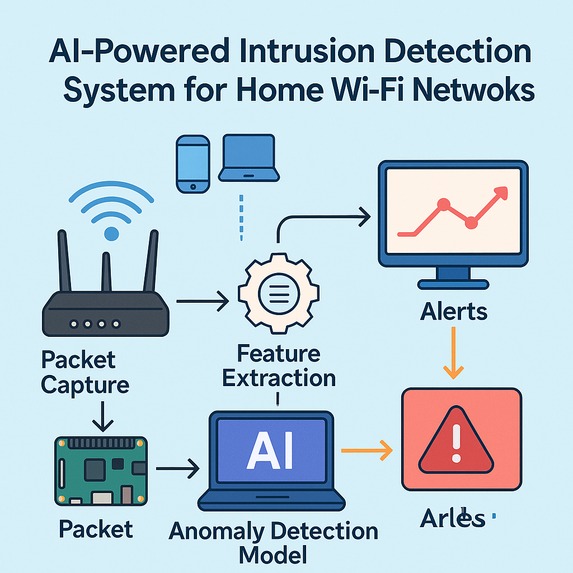
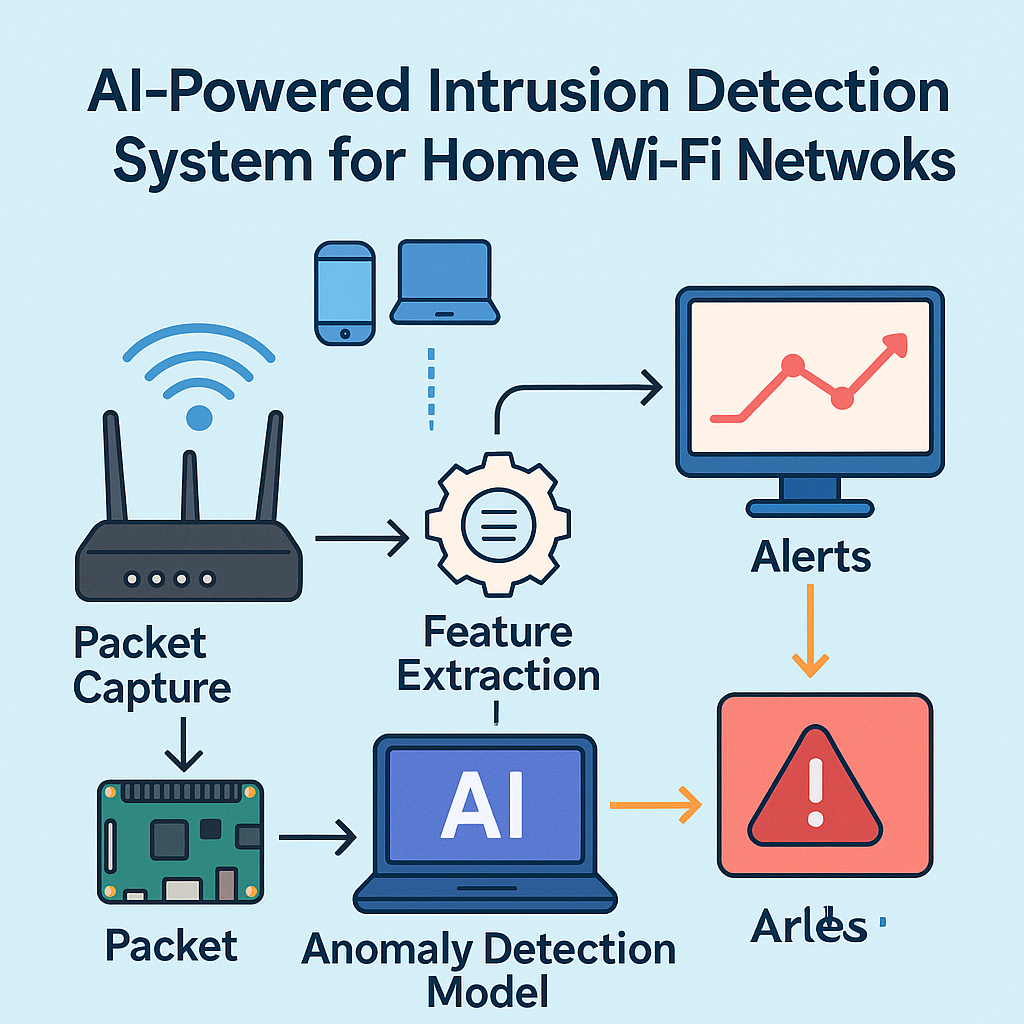
CONNECTIONS AND PROCESS
-
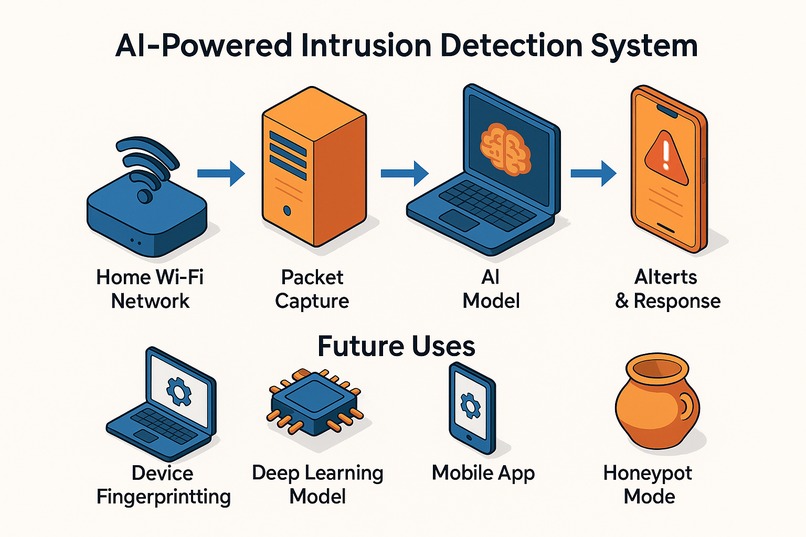
FLOWCHART
-
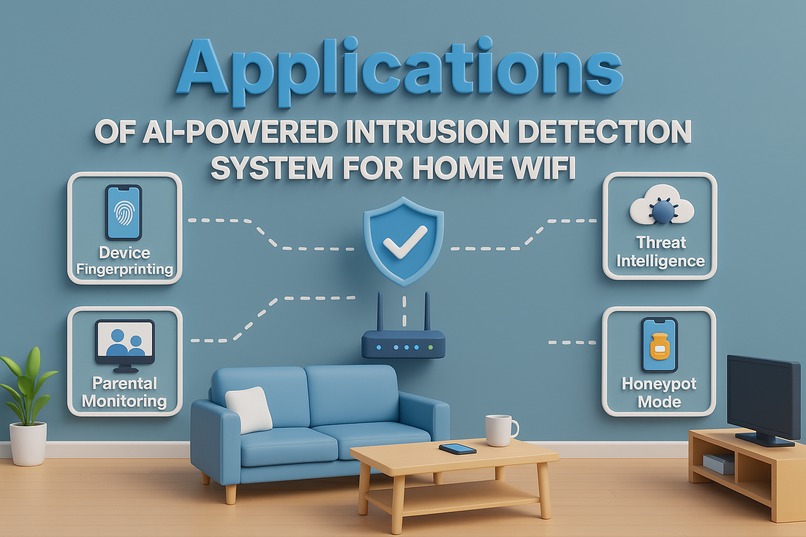
APPLICATIONS
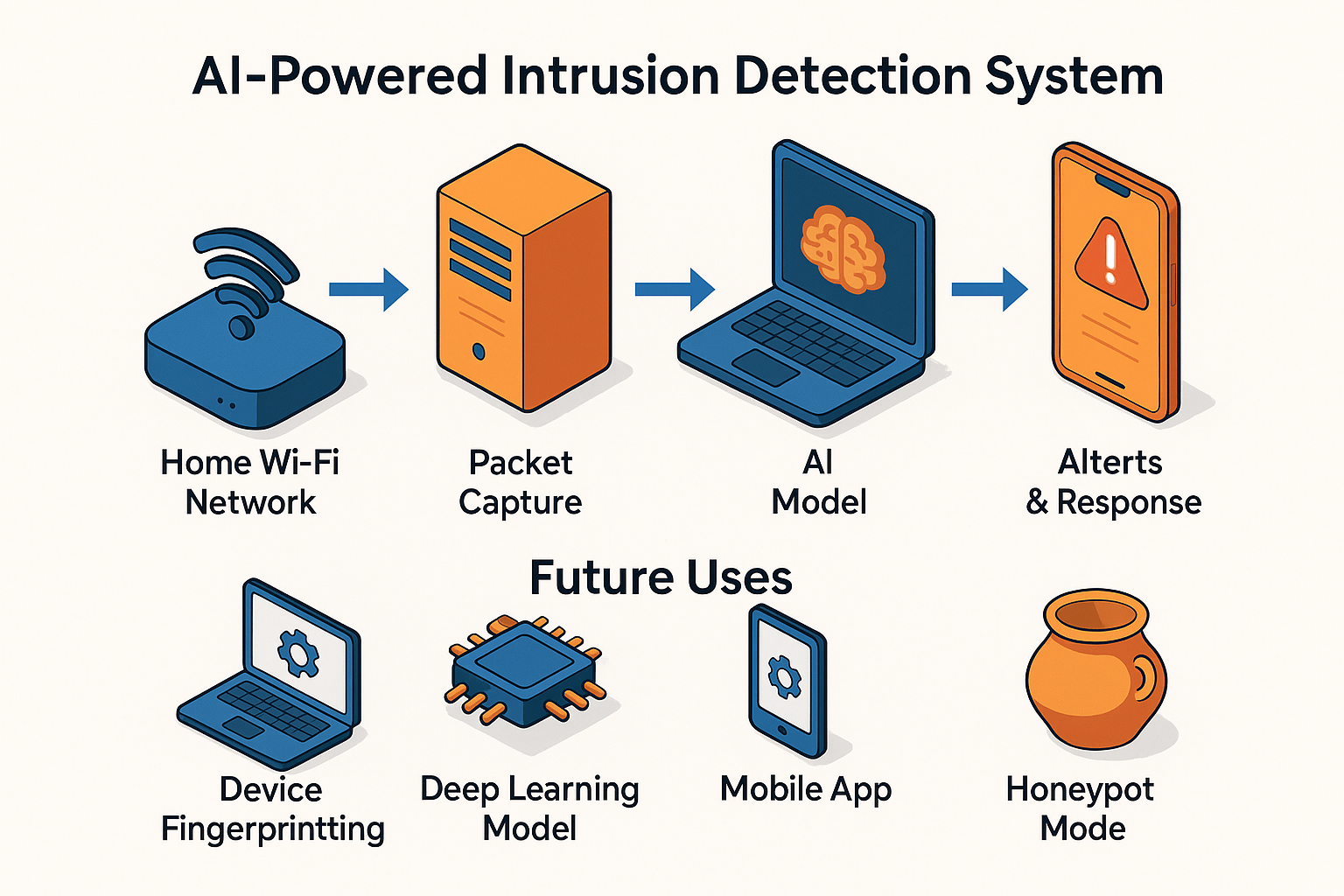

Inspiration Home WiFi networks are becoming more vulnerable as more devices—phones, smart TVs, IoT gadgets—connect to them. Most home routers in India still rely on weak security features and offer no real-time intrusion detection or AI-based protection. We wanted to create a simple, affordable, and intelligent system that can detect suspicious activity automatically, protect families from cyber threats, and bring enterprise-level security to home networks.
What it does
Our AI-Powered Intrusion Detection System for Home WiFi Networks:
Monitors all network traffic in real time
Uses AI/ML to detect abnormal behavior or unknown attacks
Identifies rogue devices connecting to the WiFi
Generates alerts instantly (Telegram notifications / dashboard)
Auto-blocks suspicious MAC addresses (optional)
Provides a clean dashboard showing device activity, anomalies, and threat reports
Works even on low-cost hardware (Raspberry Pi / normal laptop)
How we built it
We followed a full end-to-end pipeline:
- Packet Capture Module
Used Scapy and Tshark to capture WiFi traffic (JSONL format).
Extracted metadata like MAC, length, protocol, timestamps, etc.
- Feature Extraction Engine
Converted raw packets into per-device behavior profiles using sliding windows.
Extracted features such as packet count, byte count, port variety, ARP frequency, deauth indicators, etc.
- AI Anomaly Detection Model
Trained an Isolation Forest on normal home WiFi traffic.
Classified unusual behavior as anomalies (scores).
- Detection Service
Runs every 10 seconds
Uses the AI model to detect anomalies
Sends suspicious events to the controller
- Alert + Auto-Response System
Built using FastAPI
Sends Telegram alerts
Optional router-based MAC blocking
- Dashboard (Frontend)
Built a simple web dashboard (Flask/React option)
Shows connected devices, live anomalies, and threat timeline.
- Demo
Showcased using synthetic abnormal traffic + replayed pcaps for safe testing.
Challenges we ran into
Getting stable packet captures across different WiFi cards and routers
Avoiding false positives (normal spikes in home traffic looked suspicious at first)
Training the model with clean “normal” data without noise
Ensuring the system works on low hardware like Raspberry Pi
Integration between modules (sensor → model → controller → dashboard)
Designing a dashboard that updates in real time without lag
Ensuring safe and ethical testing without actual harmful attacks
Accomplishments that we're proud of
Built a fully functional AI-powered IDS in a short time
Achieved real-time detection with low latency
Created a clean and understandable pipeline from capture → AI → alerts
Successfully detected abnormal traffic patterns during testing
Integrated Telegram alerts + optional MAC blocking
Designed a simple but powerful dashboard
Made the solution hardware-friendly so families can actually use it at home
Followed safe testing practices throughout
What we learned
How to process and analyze raw WiFi packets
How network anomalies differ from normal user behavior
How sliding-window feature engineering improves detection accuracy
How unsupervised ML models (like Isolation Forest) identify unknown threats
How to deploy ML models in real-time services
Building clean APIs with FastAPI
Creating lightweight dashboards for cybersecurity monitoring
The importance of ethical, safe cybersecurity experimentation
What's next for AI-Powered Intrusion Detection System for Home WiFi Networks
We plan to extend the project with:
🔹 Device Fingerprinting
Identify device types (phone, laptop, IoT) based on traffic patterns.
🔹 Deep Learning Model Upgrade
Replace IsolationForest with a deep autoencoder or graph neural network for better anomaly detection.
🔹 Mobile App
Build an Android/iOS companion app for instant notifications.
🔹 Cloud Threat Intelligence
Fetch known malicious IP/MAC databases for stronger detection.
🔹 Honeypot Mode
Create a decoy access point to trap and study attacker behavior.
🔹 Parental Monitoring
Detect risky browsing patterns for smart home safety.
🔹 Smart Router Integration
Direct integration with OpenWrt routers for seamless protection.
Built With
- chart.js
- fastapi
- numpy
- pandas
- pyshark
- scapy
- scikit-learn
- tshark
- uvicorn


Log in or sign up for Devpost to join the conversation.