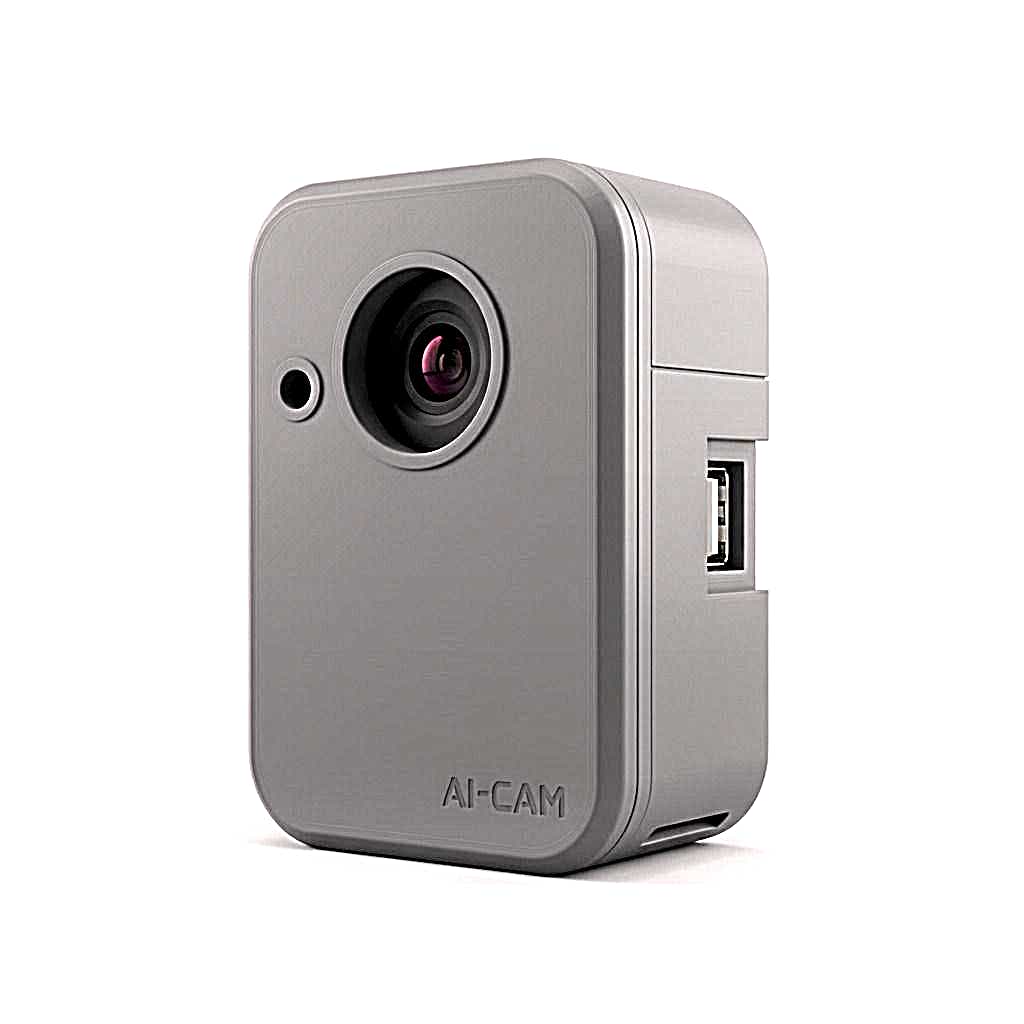
💡 Inspiration We noticed a glaring gap in modern education: Learning has become synonymous with "Screen Time."
For children with Dyslexia or visual impairments, standard tablets and apps often increase cognitive load without solving the root problem. They struggle with "Mirror Letters" (confusing 'b' vs 'd', 'p' vs 'q'), and traditional OCR (Optical Character Recognition) tools frequently misidentify these letters because they lack context.
We wanted to build something tactile, screen-free, and affordable. We asked ourselves: Can we build a device that "sees" like a human and "speaks" like a teacher, but costs less than $50?
This led to the creation of the AI-Powered Interactive Learning System—a physical companion that brings the power of Google Gemini into the hands of early learners.
🤖 What it does The system is a dual-node IoT device that acts as an intelligent visual assistant:
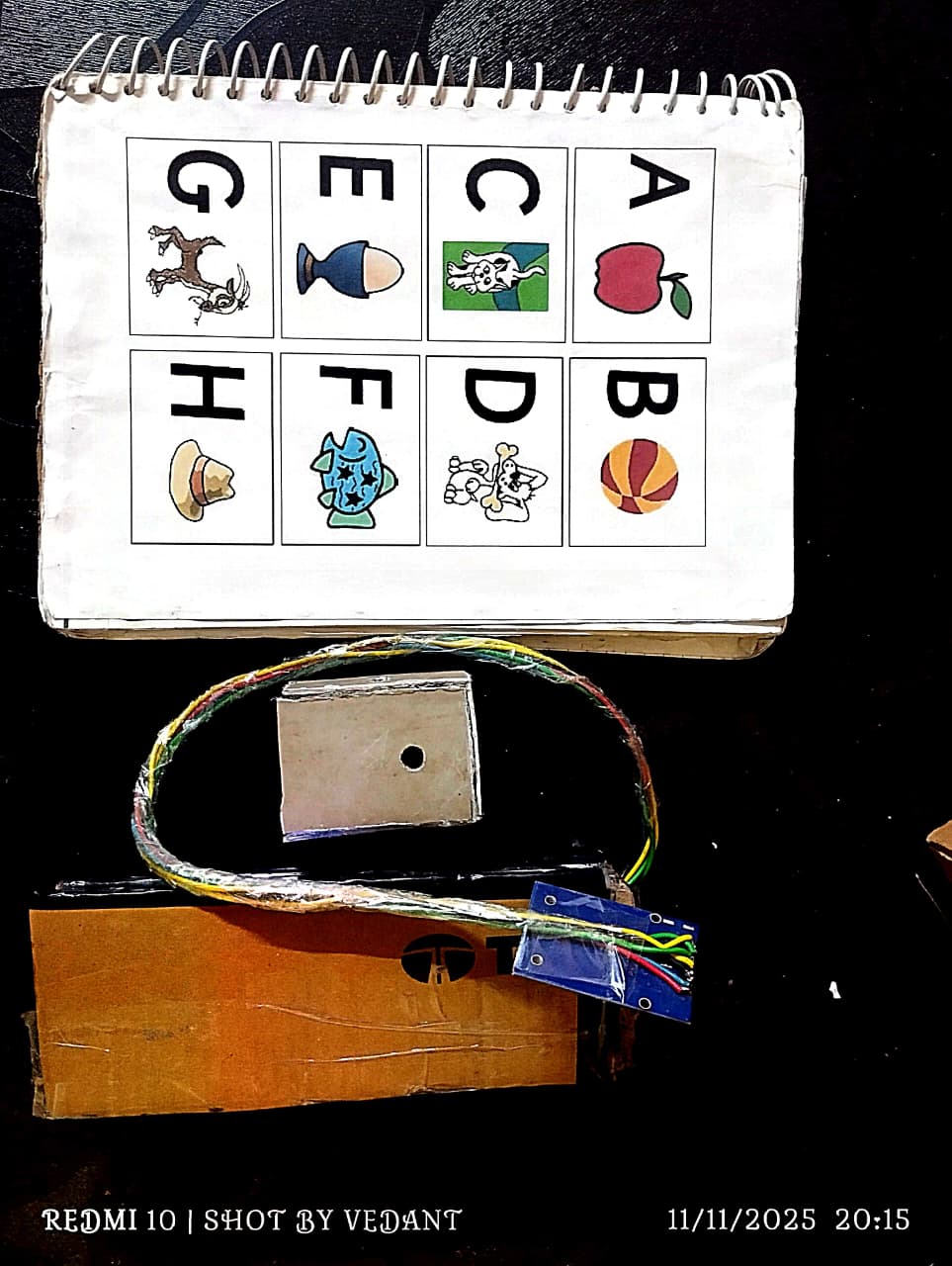
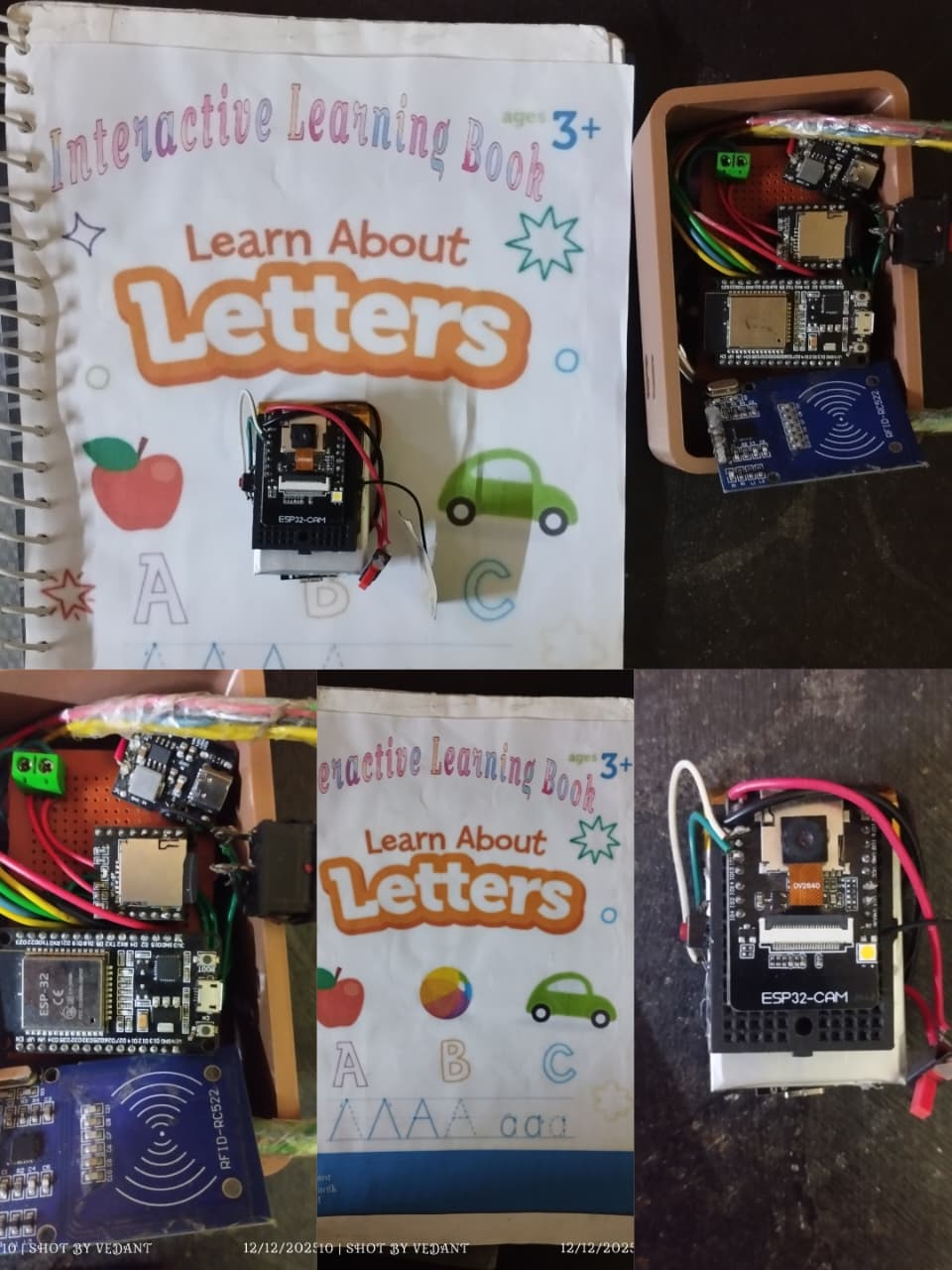
See: A child places an RFID card (for phonics) or any physical object (like a toy or flashcard) in front of the device.
Think: The Vision Node captures an image and sends it to Google Gemini. Unlike standard OCR, Gemini analyzes the visual context to determine if the user is holding a letter 'b' or 'd', or if they are holding a physical "Red Apple."
Speak: The device immediately speaks the description out loud (e.g., "This is the letter B, as in Ball"), providing instant, multisensory reinforcement.
⚙️ How we built it We utilized a Distributed IoT Architecture to keep the device fast and affordable.
The Brain (AI): We used Google Gemini 1.5 Flash for its multimodal capabilities. It doesn't just "read text"; it interprets the scene. We engineered specific prompts to ensure Gemini returns short, conversational responses suitable for Text-to-Speech (TTS).
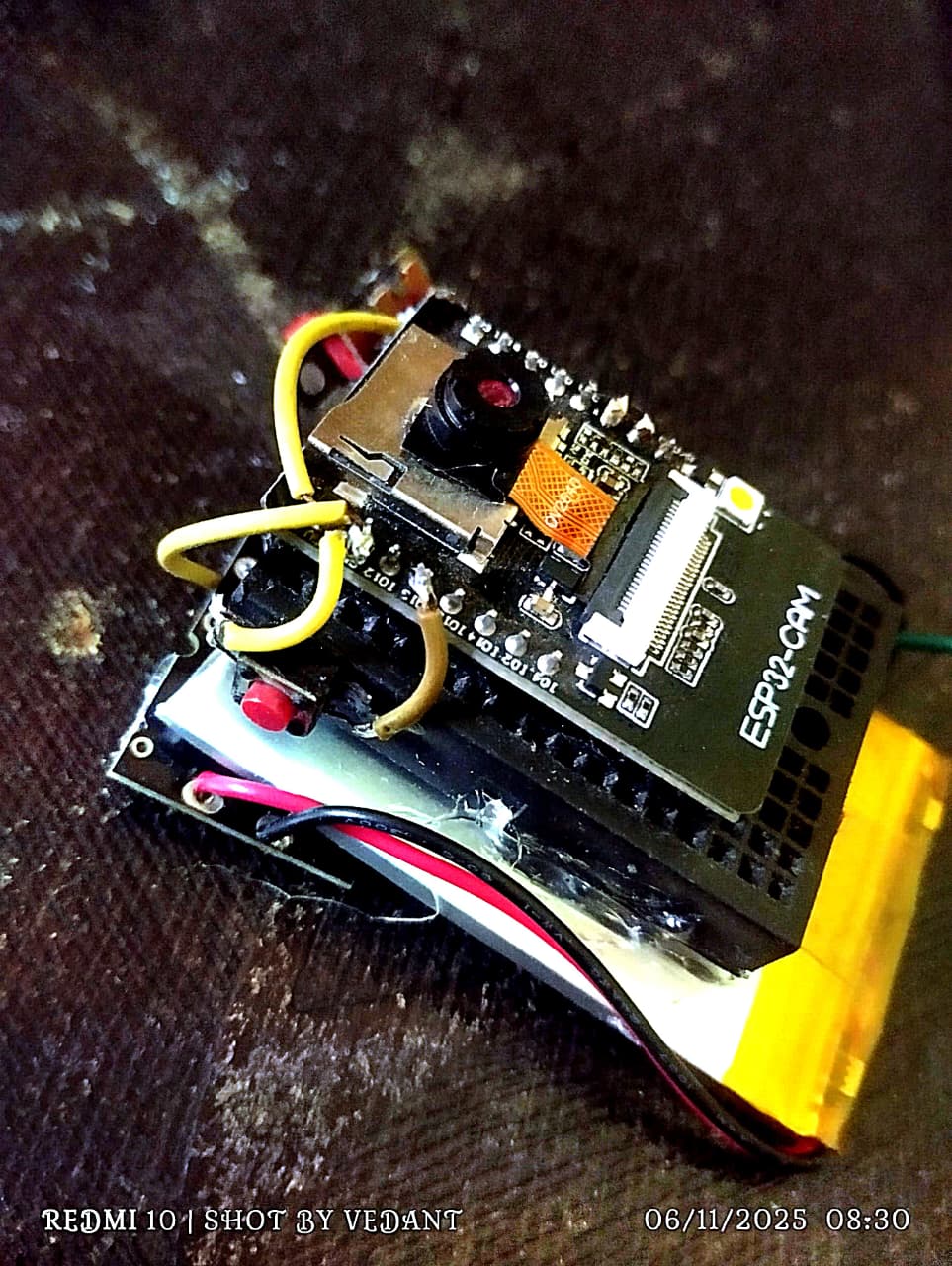
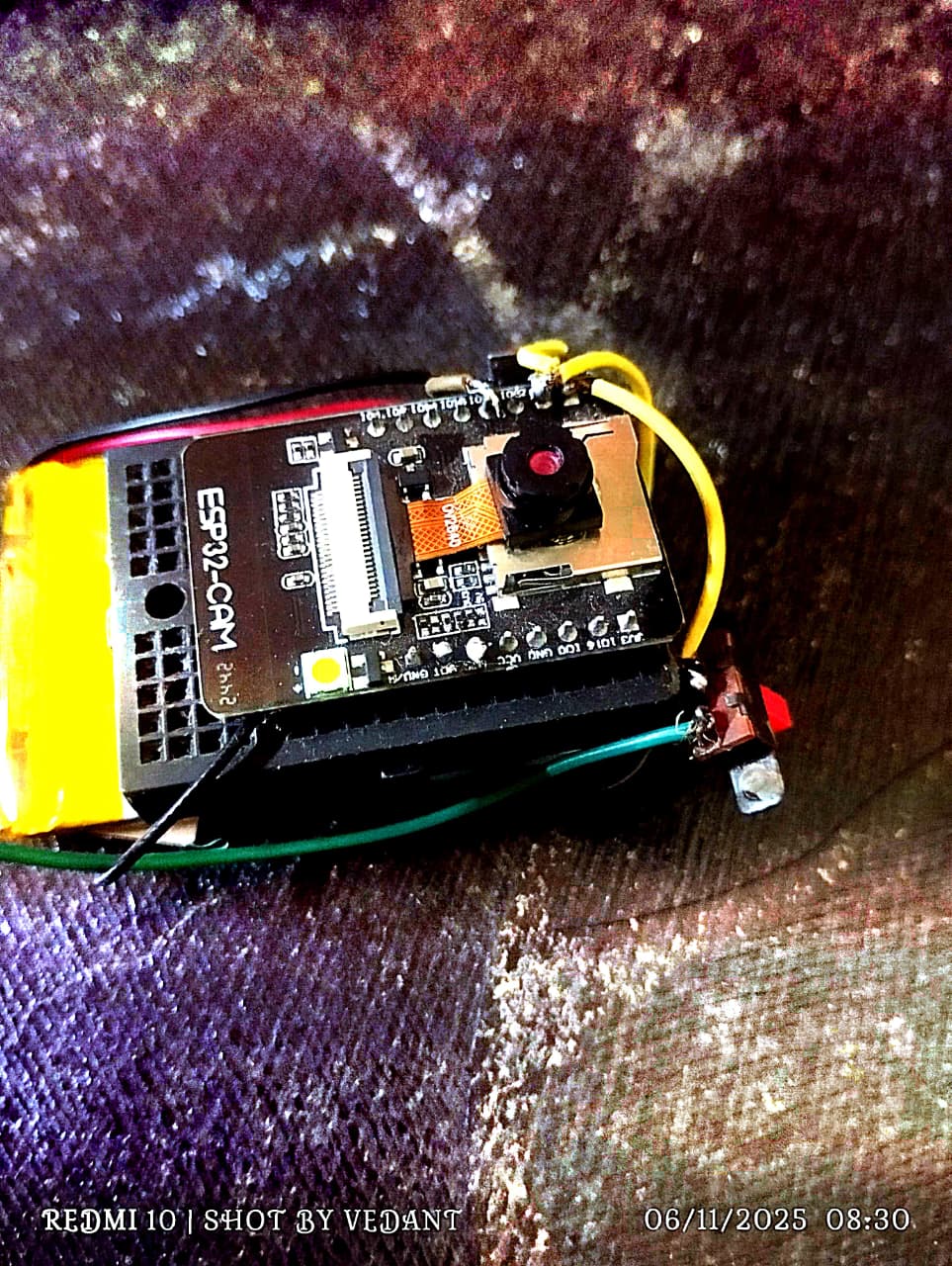
The Vision Node: Built on the ESP32-CAM. It handles image acquisition and communicates securely with our Python Flask backend.
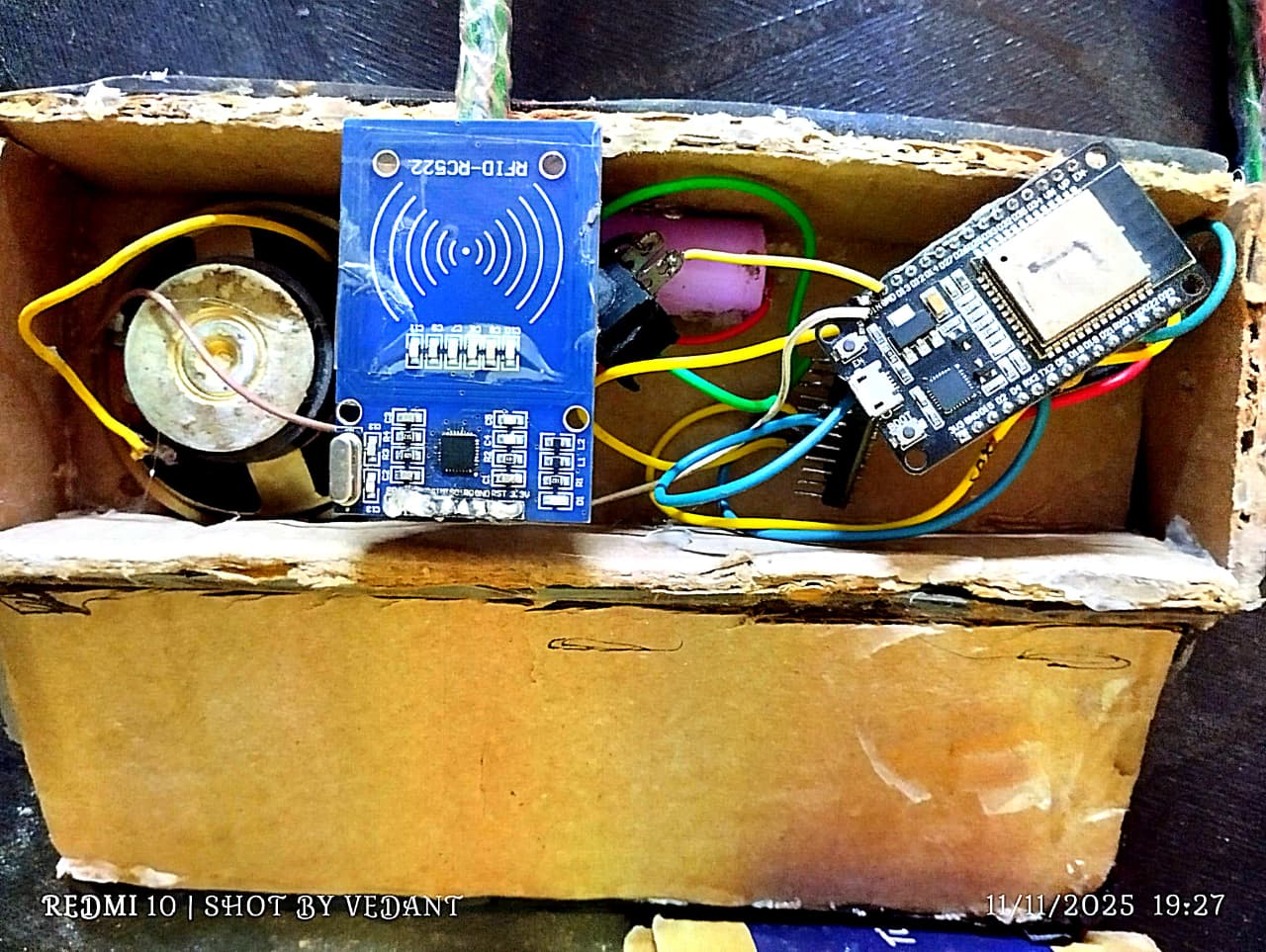
The Interaction Node: Built on a standard ESP32 Dev Module. It manages the RFID (RC522) input for structured learning and the DFPlayer Mini for audio output.
The Bridge (Connectivity): This was our breakthrough. Instead of clogging the Wi-Fi bandwidth, we used ESP-NOW, a connectionless peer-to-peer protocol, to transmit commands between the Vision and Audio nodes.
🚧 Challenges we ran into The "Mirror Letter" Problem: Standard OCR libraries (like Tesseract) constantly failed to distinguish between 'b', 'd', 'p', and 'q' when on a flashcard.
Solution: We leveraged Gemini's multimodal reasoning. By feeding it the image and asking it to consider the orientation and surrounding artwork, accuracy improved dramatically.
Latency Lag: Initially, the delay between "taking the picture" and "hearing the audio" was 5+ seconds—too long for a child.
Solution: We optimized the pipeline by switching internal device communication to ESP-NOW (reducing overhead) and using Gemini 1.5 Flash (lower latency model).
Hardware Constraints: The ESP32-CAM has limited RAM. Uploading high-res images caused crashes.
Solution: We implemented an efficient image compression algorithm on the edge before transmission.
🏆 Accomplishments that we're proud of True Multimodality: We successfully moved beyond text. The device can identify a physical toy car just as easily as a flashcard, making it a versatile tool for discovery.
Affordability: While medical-grade assistive devices (like OrCam) cost upwards of $2,000, our prototype was built for under $40, democratizing access to special education technology.
Context Awareness: Proving that a microcontroller can harness the power of a Large Language Model (LLM) to "understand" the world, not just process data.
📚 What we learned Prompt Engineering is Hardware Engineering: We learned that how you ask the model is just as important as the code you write. Tweak the prompt, and you save 500ms of audio generation time.
The Power of Edge + Cloud: Combining the low-power ESP32 with the infinite compute of Google Cloud creates possibilities that neither could achieve alone.
🚀 What's next for AI-Powered Interactive Learning System TinyML Integration: We plan to move basic phonics recognition entirely offline using TensorFlow Lite for Microcontrollers, reserving Gemini for complex object analysis.
Vernacular Support: Adding support for local Indian languages (Hindi, Marathi) to help rural students.
Battery Optimization: Implementing "Deep Sleep" cycles to allow the device to run for a full school day on a single charge.


Log in or sign up for Devpost to join the conversation.