-
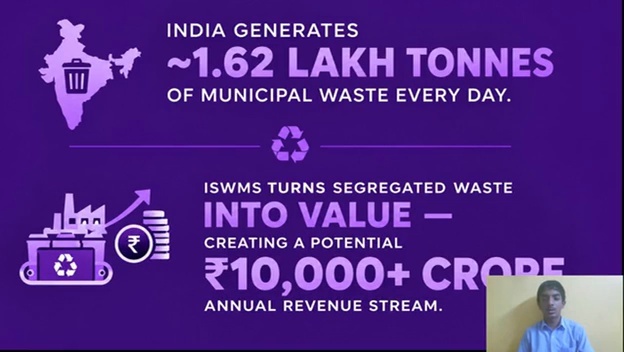
iswms video
-
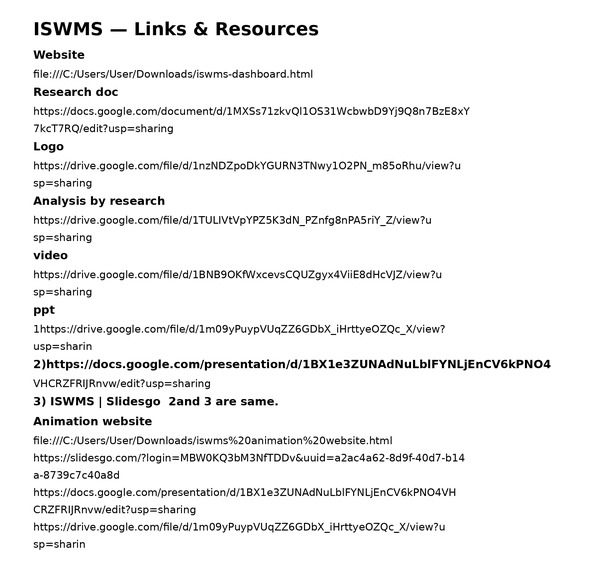
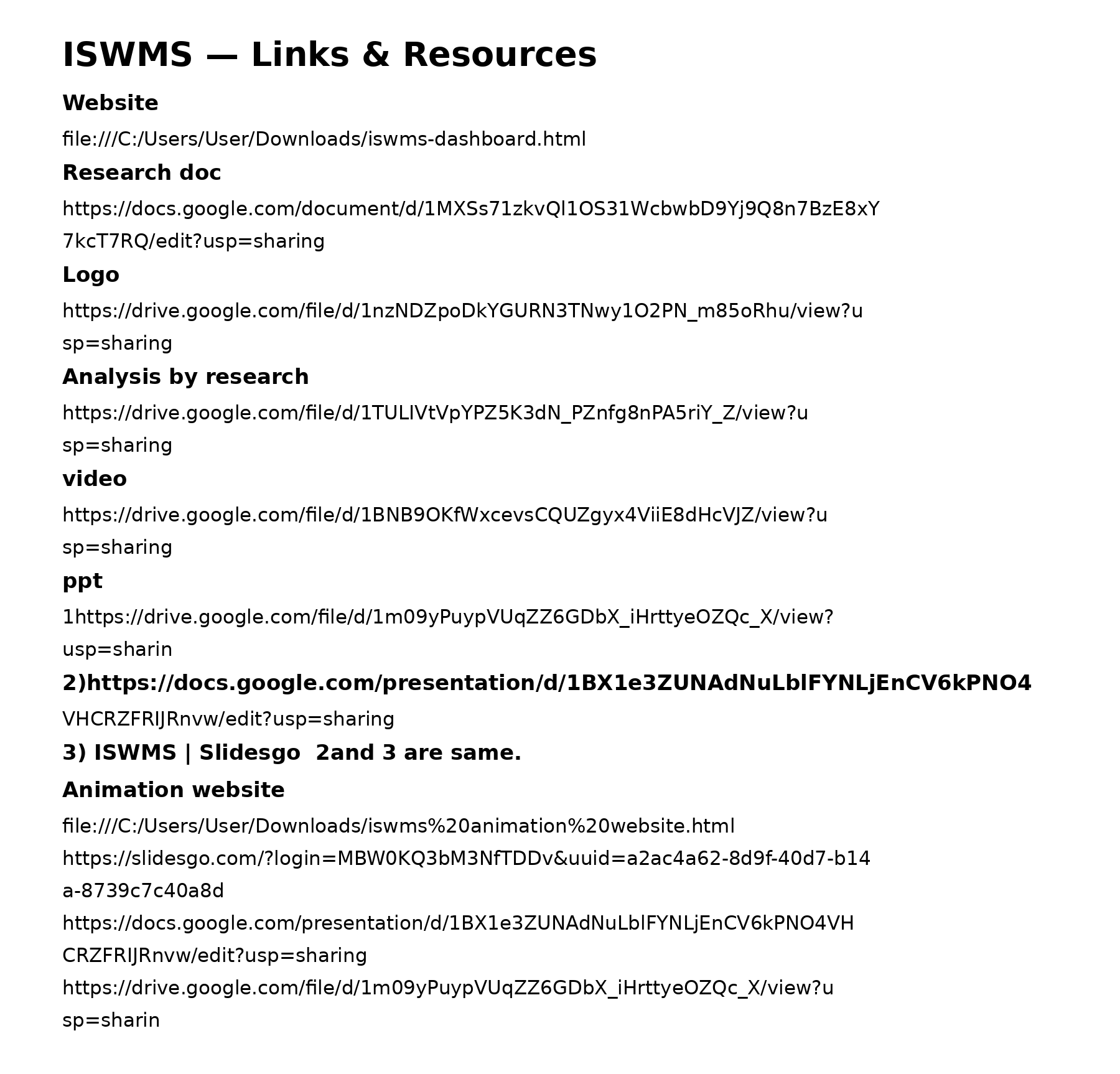
links
Inspiration
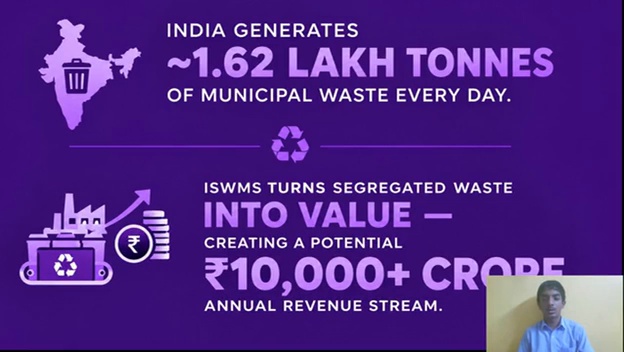
We were inspired by the growing waste-management challenges in cities—mixed waste, overflowing bins, littering, inefficient collection, pollution, and loss of recyclable resources. India generates around 1.5 lakh tonnes of municipal solid waste every day, showing the scale of the problem. We wanted to build a system that treats waste not only as garbage, but also as a recoverable resource with environmental and economic value.
What it does
AI-Powered Integrated Smart Waste Management System (ISWMS) uses AI/ML, IoT, sensors, automation, and robotics to make waste management smarter. It identifies different types of waste, automatically segregates them into dedicated categories, stores them in separate underground units, monitors storage levels, and supports efficient collection. Robotic systems can also help detect and collect roadside litter.
How we built it
We combined AI/ML-based waste classification, Arduino-based control systems, sensors, RFID, servo motors, motors, underground storage units, and IoT monitoring. The prototype demonstrates automated waste identification, segregation, storage, and monitoring. We designed the system to be scalable so that it can eventually connect with smart-city and government waste-management platforms.
Challenges We Ran Into
One of our biggest challenges was integrating AI, hardware, automation, and waste segregation into one practical system. We also had to design a compact underground mechanism, coordinate multiple components, and think about how the system could work reliably in real-world environments while keeping the solution affordable.
Accomplishments We're Proud Of
We are proud of developing an integrated concept rather than a simple smart dustbin. ISWMS combines AI waste identification, automated segregation, underground storage, IoT monitoring, hazardous-waste awareness, and robotics into one system. We also developed a physical prototype to demonstrate how the concept could work in a real smart-city environment.
What We Learned
We learned that solving a real-world problem requires more than just technology. We gained practical experience in AI/ML, Arduino, IoT, sensors, robotics, automation, system design, prototyping, and problem-solving. Most importantly, we learned how to connect different technologies into one useful system.
What's Next
Our next goal is to move ISWMS from a prototype toward a real-world pilot system. We want to improve the AI classification accuracy, strengthen the automated mechanisms, add more environmental sensors, develop a complete monitoring dashboard, improve robotic collection, and explore collaboration with municipalities, recycling companies, and smart-city initiatives.
Our long-term vision is to create a scalable system that helps cities reduce waste, recover valuable resources, lower management costs, improve cleanliness, and build a more sustainable future.
Built With
- ai
- automation
- circulareconomy
- goverment
- iot
- lift
- ml
- raspberry-pi
- recycling
- rfid
- robotics
- segregation
- ultrasonic
- wastemanagment

Log in or sign up for Devpost to join the conversation.