-
-
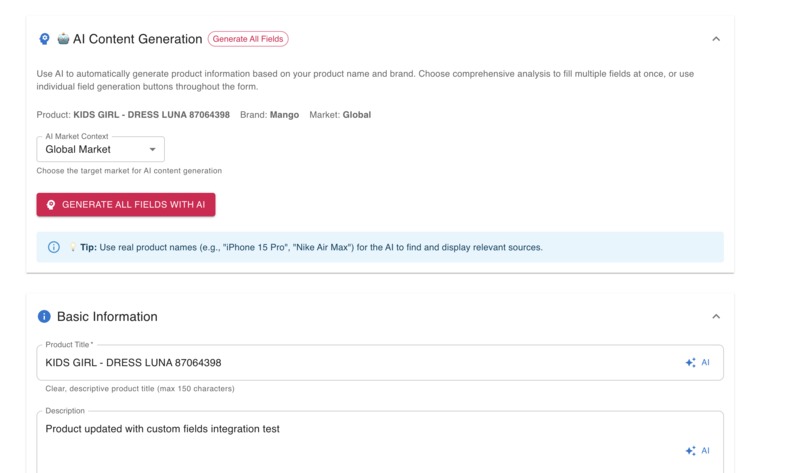
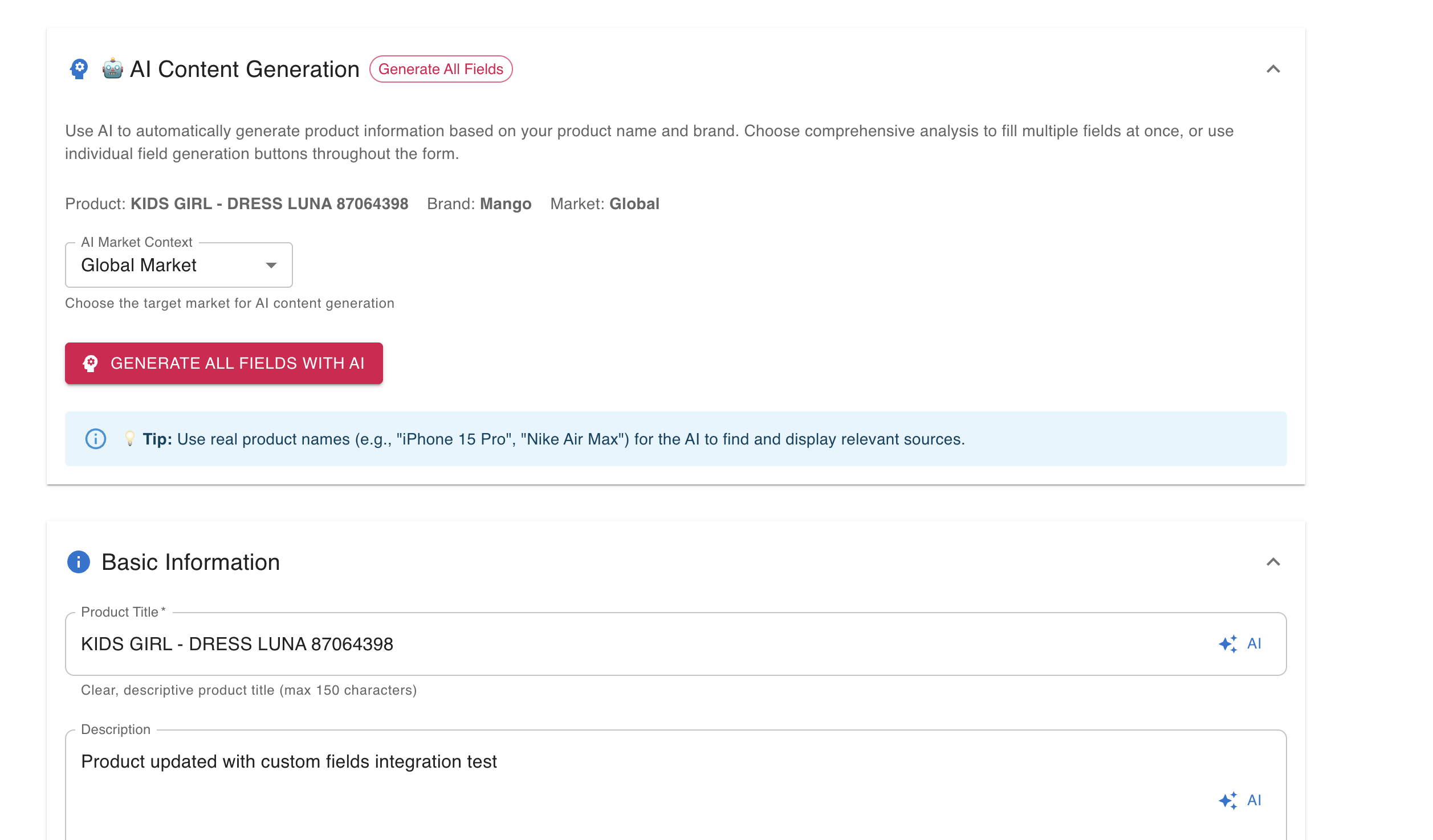
Product detail page with option to generate content using AI
-
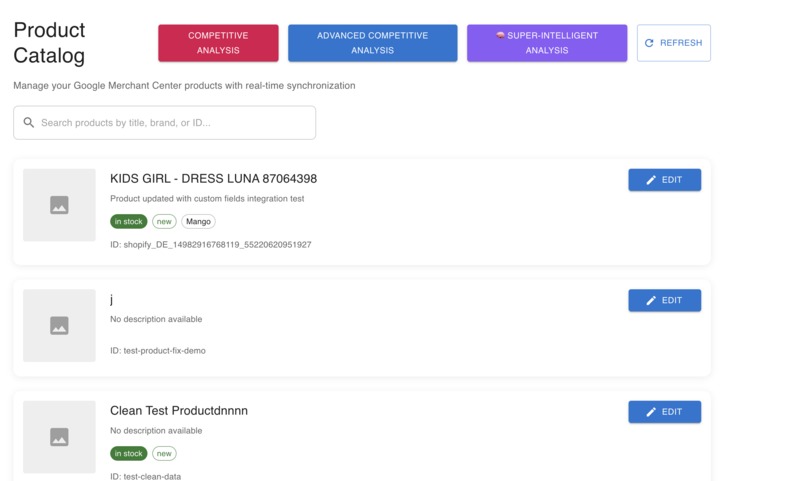
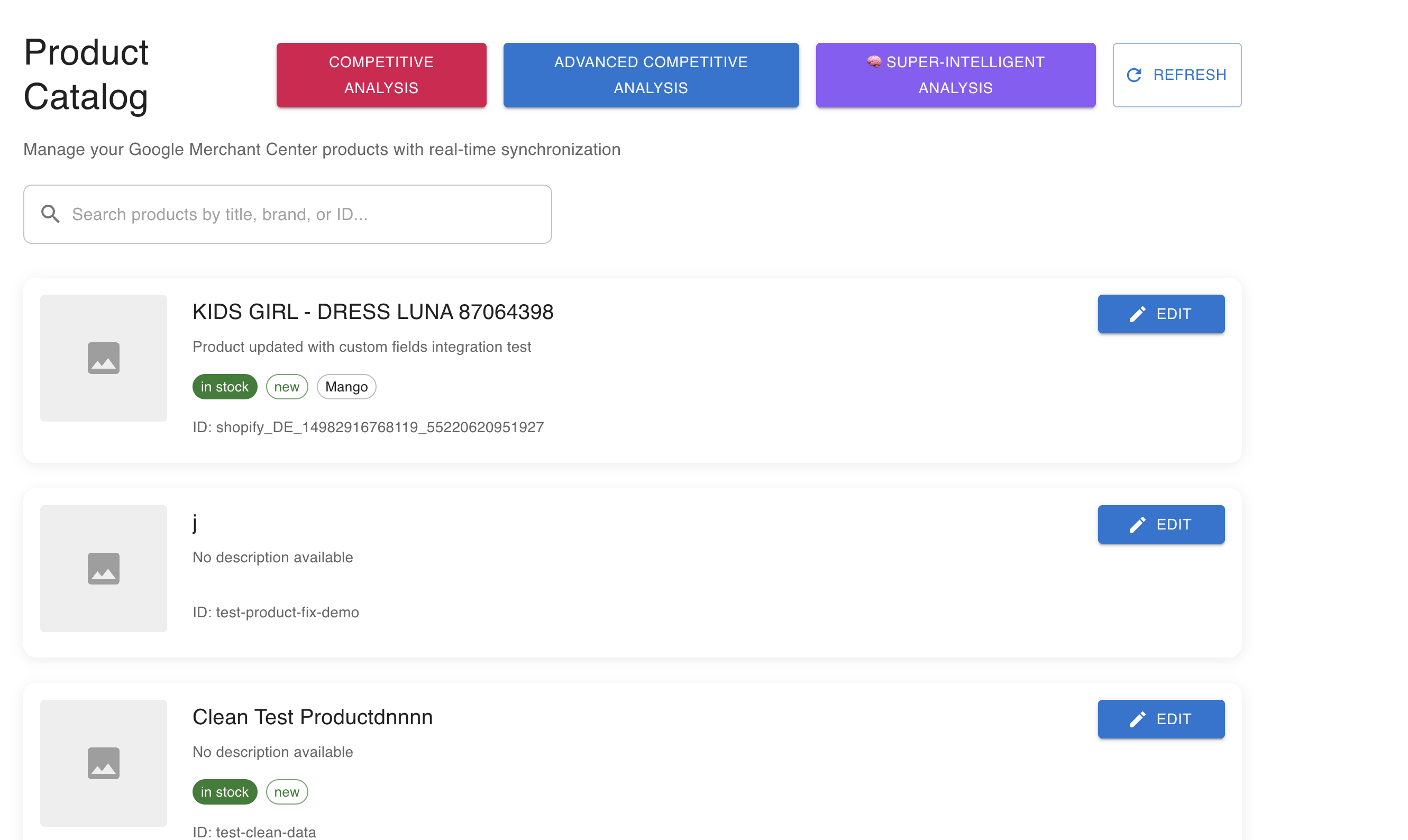
Opening Screen
-
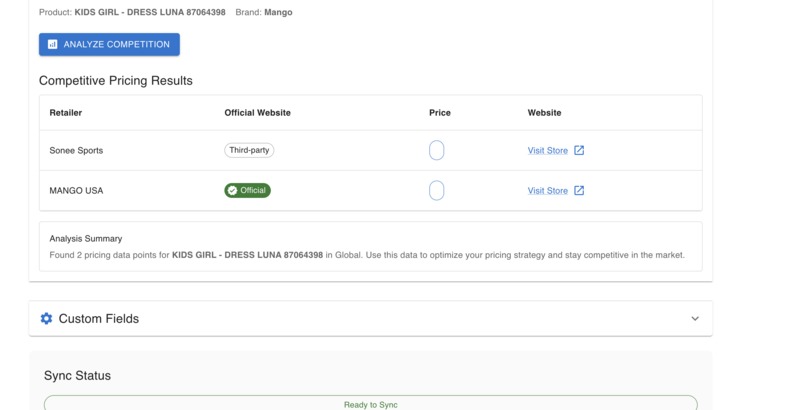
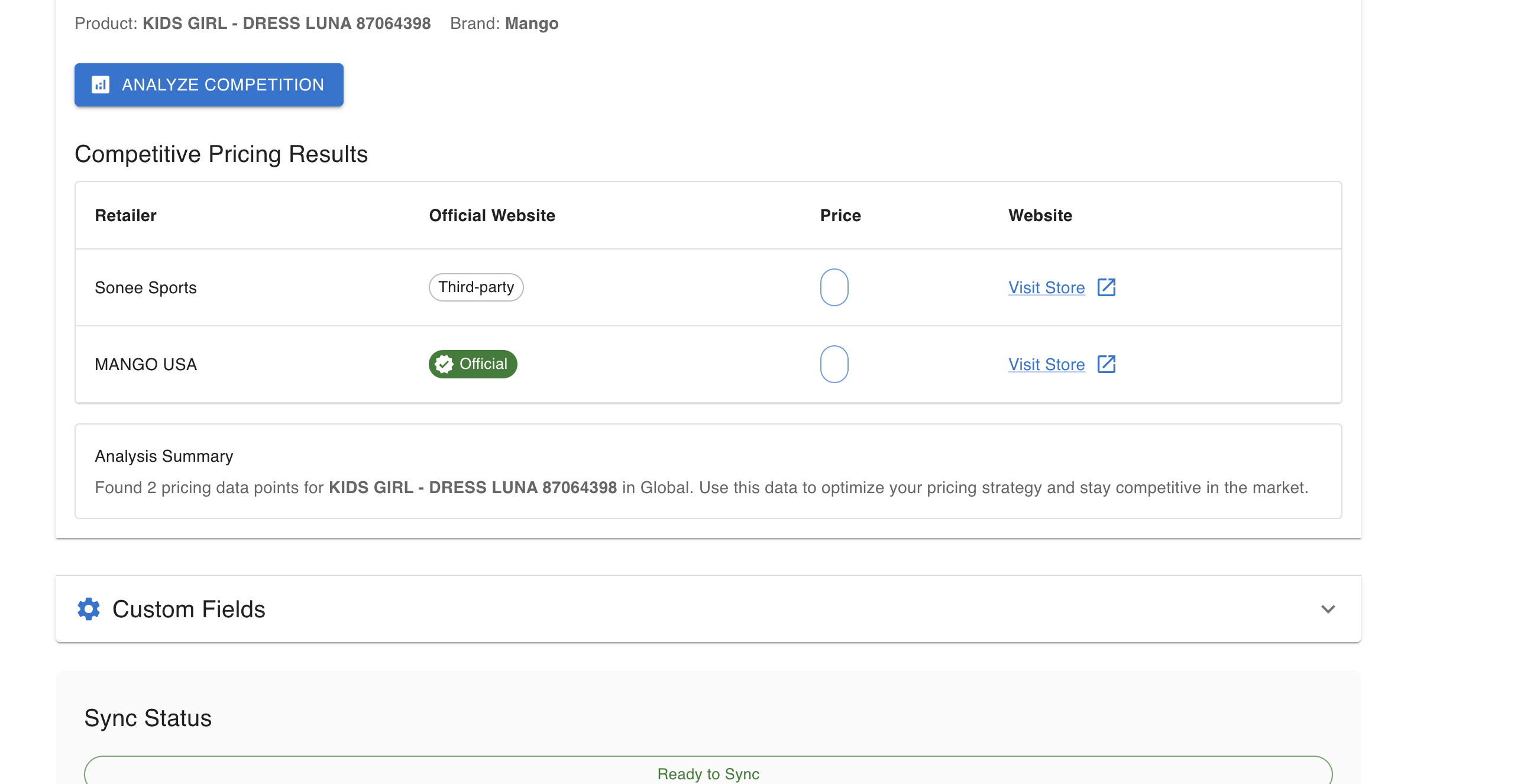
Competitive Analysis AI Page
-
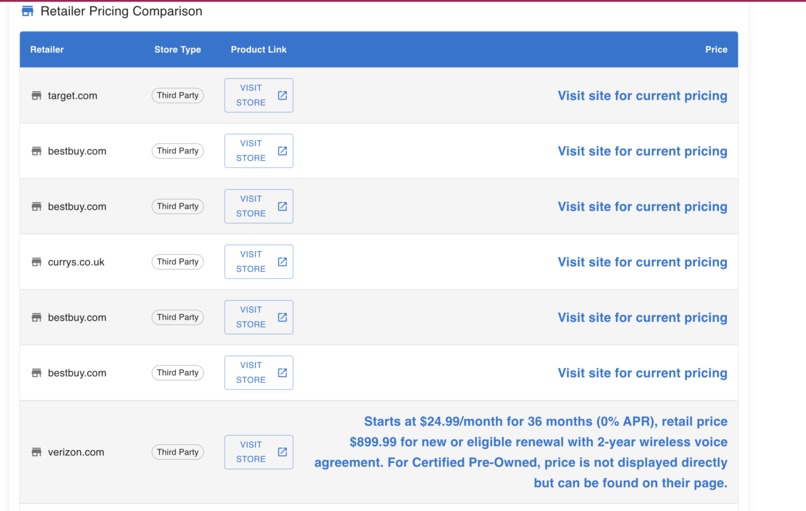
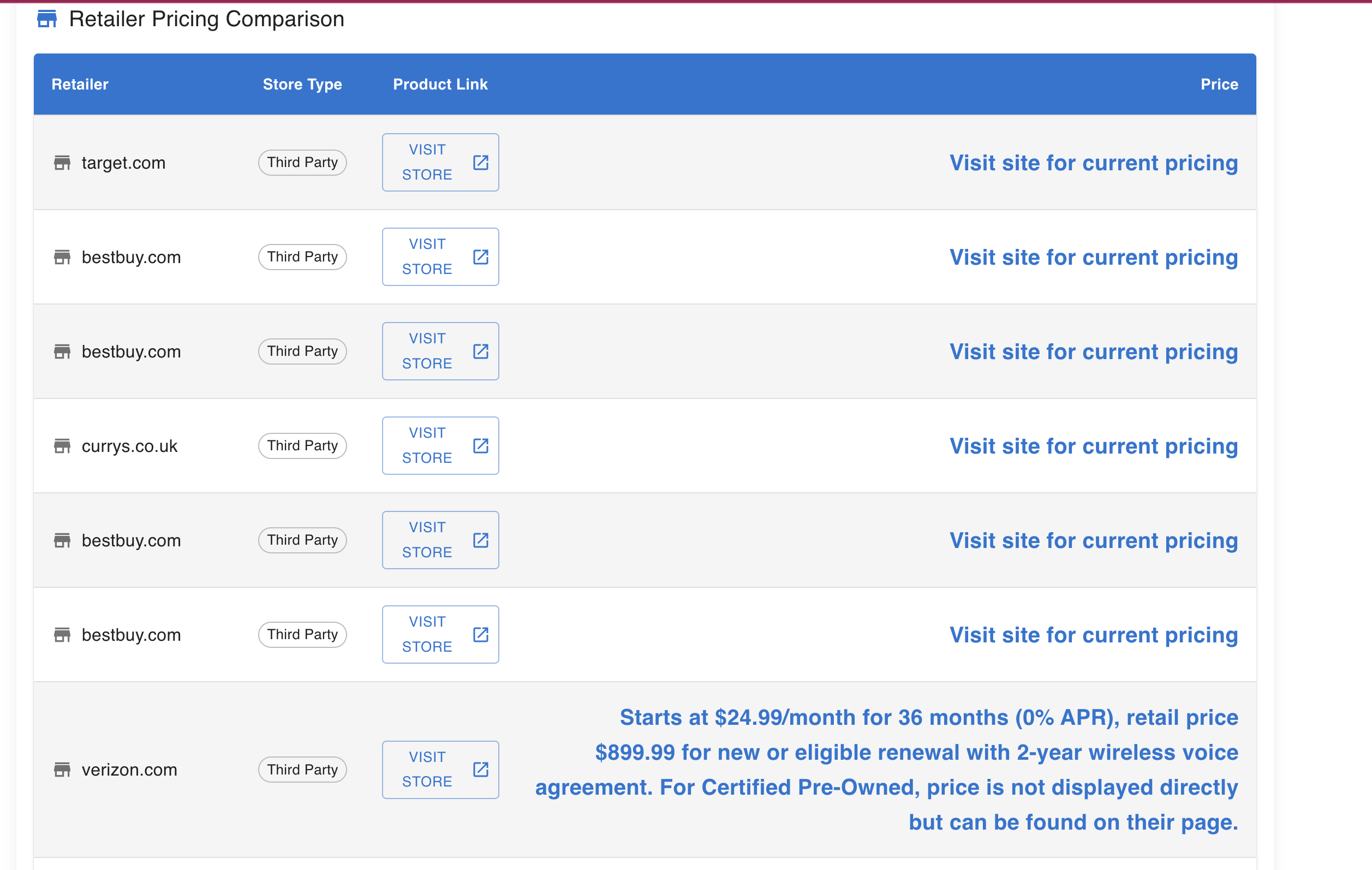
Advanced competitive analysis screen
-
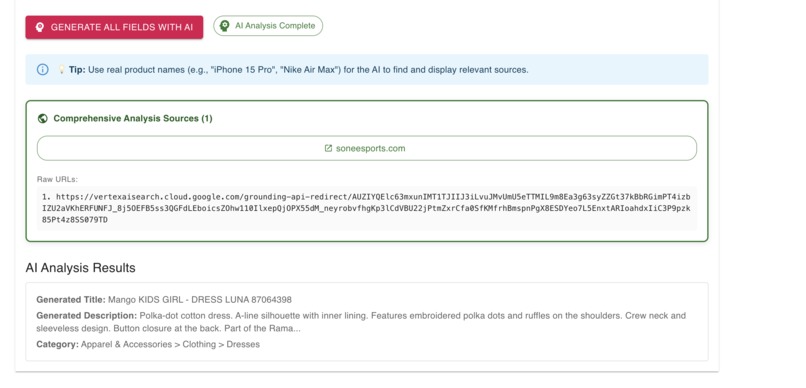
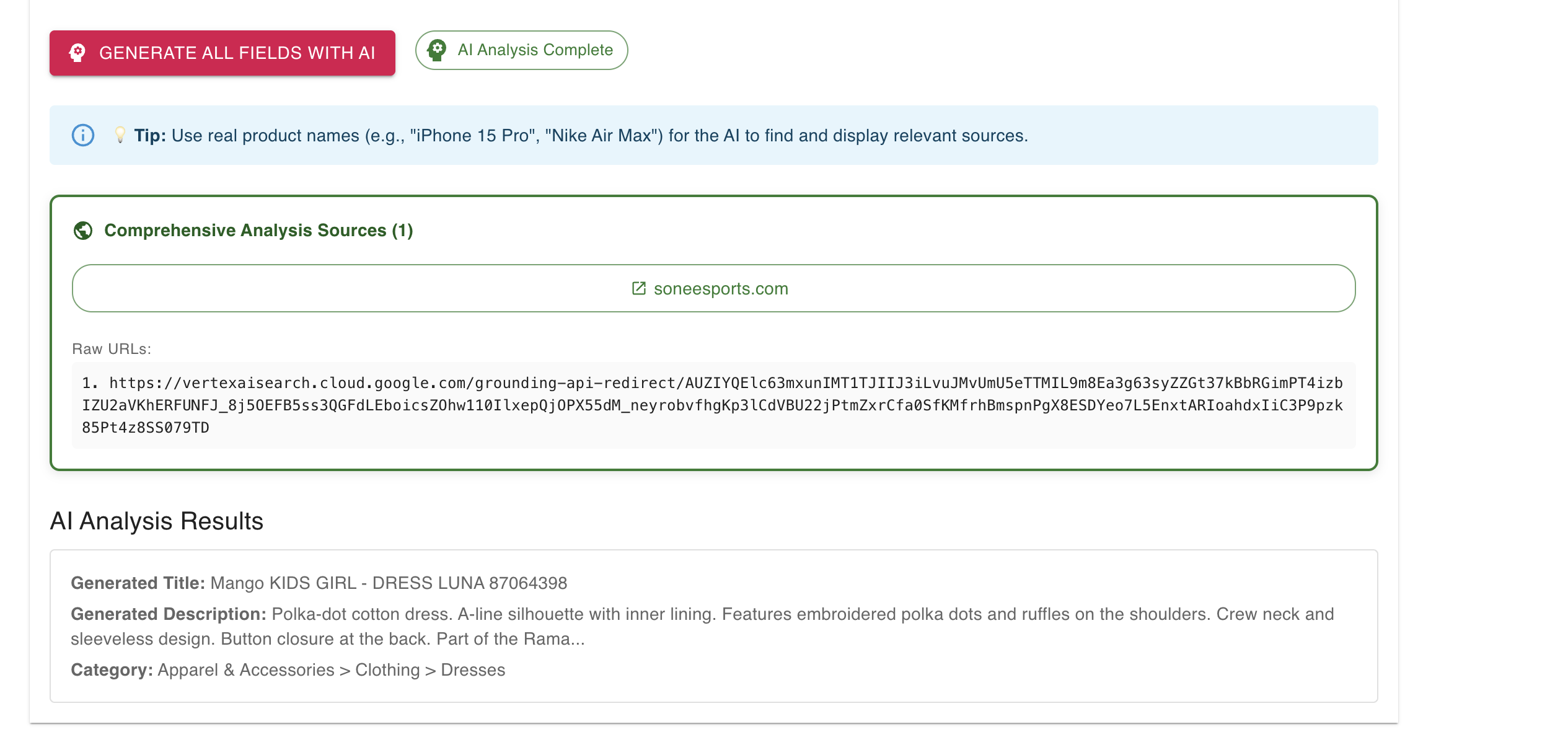
AI content display with sources
The Google Shopping ecosystem is highly competitive, with millions of products fighting for visibility. Many merchants struggle with Google Merchant Center optimization, often having:
- Generic, non-optimized product titles and descriptions
- Poor SEO/AEO performance in Google Shopping results
- Manual, time-intensive product data enhancement processes
- Lack of competitive intelligence for Google Shopping positioning
- Difficulty maintaining optimized content across large product catalogs
We were inspired by the opportunity to bridge Google Merchant Center with advanced AI capabilities to automatically enhance product listings for better search performance. The vision: Connect → Enhance → Publish → Rank Higher.
Traditional product management tools don't understand Google's ranking algorithms or provide AI-powered optimization specifically for Google Shopping and Search. We saw the potential to create a direct integration that could transform raw product data into highly optimized, search-friendly content that actually ranks.
What it does
Merch Manager is an AI-powered Google Merchant Center enhancement platform that creates a seamless Connect → Enhance → Publish workflow for optimizing product listings:
🔗 Google Merchant Center Integration
- Direct API Connection: Seamlessly connects to Google Merchant Center using Google APIs
- Product Data Sync: Imports existing product catalogs with all attributes and metadata
- Two-Way Communication: Fetches product data for enhancement and publishes optimized results back
- Bulk Operations: Handles large product catalogs efficiently with batch processing
🤖 AI-Powered Product Enhancement
- SEO/AEO Optimization: AI specifically trained on Google Shopping ranking factors
- Title Optimization: Generates keyword-rich, compelling product titles that rank higher
- Description Enhancement: Creates detailed, search-optimized descriptions with proper keyword density
- Attribute Improvement: Optimizes product attributes, categories, and custom labels for better visibility
� Search Performance Optimization
- Google Shopping Focus: Content specifically optimized for Google Shopping algorithm
- Keyword Intelligence: AI analyzes search trends and competitor keywords
- Ranking Factor Analysis: Considers all known Google Shopping ranking signals
- A/B Testing: Tests different content variations to find highest-performing versions
💰 Competitive Intelligence for Google Shopping
- Google Shopping Competitor Analysis: Monitors competitor listings in Google Shopping results
- Price Positioning: Recommends pricing strategies based on Google Shopping competition
- Market Share Insights: Analyzes visibility and performance vs competitors in search results
� Automated Publishing Workflow
- One-Click Publishing: Enhanced product data published directly back to Google Merchant Center
- Change Tracking: Monitors which optimizations improve search performance
- Performance Analytics: Tracks SEO/AEO improvements and ranking changes
- Rollback Capability: Easily revert changes if performance decreases
How we built it
Architecture & Technology Stack
- Frontend: React 18 + TypeScript + Material-UI for a modern, responsive interface
- Backend: Node.js + Express + TypeScript for scalable API architecture
- AI Integration: Python scripts integrated with external AI services (OpenAI, custom ML models)
- Cloud Infrastructure: Google Cloud Platform with containerized deployment on Cloud Run
Key Technical Innovations
- Hybrid Language Architecture: Combined Node.js for web services with Python for AI/ML processing
- Multi-Agent AI System: Implemented coordinated AI agents with specialized roles and capabilities
- Real-Time Progress Tracking: Built polling-based progress updates for long-running AI analysis
- Microservices Design: Modular architecture with separate services for different analysis types
Development Process
- Container-First Development: Docker containers for consistent development and deployment
- Multi-Stage Builds: Optimized container images for production deployment
- Cloud-Native Design: Built specifically for Google Cloud Run auto-scaling capabilities
- Security-First Approach: Implemented comprehensive security with CORS, rate limiting, and secret management
Challenges we ran into
1. Complex AI Integration
- Challenge: Coordinating multiple AI agents while maintaining response reliability
- Solution: Implemented robust error handling, timeouts, and fallback mechanisms
2. Container Platform Compatibility
- Challenge: Docker images failing on Cloud Run due to architecture mismatches
- Solution: Implemented platform-specific builds with
--platform linux/amd64
3. Long-Running Process Management
- Challenge: AI analysis taking 1-2 minutes while maintaining user engagement
- Solution: Built real-time progress tracking with phase-by-phase updates
4. Python-Node.js Integration
- Challenge: Seamlessly integrating Python ML scripts with Node.js backend
- Solution: Used child processes with structured JSON communication and proper error handling
5. API Rate Limiting & Costs
- Challenge: Managing external AI API costs while providing responsive service
- Solution: Implemented intelligent caching, request optimization, and timeout management
Accomplishments that we're proud of
🏗️ Technical Achievements
- Successfully deployed a hybrid language architecture (Node.js + Python) on cloud infrastructure
- Built a real-time progress tracking system for long-running AI processes
- Implemented multi-agent AI coordination with specialized roles and capabilities
- Created a responsive, modern UI with Material-UI and real-time updates
🚀 Innovation Highlights
- 10X Smarter Analysis: Multi-agent system provides insights beyond traditional single-AI approaches
- Seamless User Experience: Complex AI processing hidden behind intuitive interface
- Production-Ready Deployment: Fully containerized and deployed on Google Cloud Platform
- Scalable Architecture: Microservices design ready for enterprise scaling
📊 Business Impact
- Democratized AI Intelligence: Made enterprise-grade market analysis accessible to small merchants
- Time Savings: Reduced manual competitive analysis from hours to minutes
- Decision Support: Provided data-driven insights for pricing and product strategies
What we learned
🔧 Technical Insights
- Container Orchestration: Mastered Docker multi-stage builds and Cloud Run deployment
- AI Integration Patterns: Learned effective strategies for coordinating multiple AI services
- Real-Time Communication: Implemented polling-based progress updates for better UX
- Error Handling: Built robust error handling for external API dependencies
🏢 Architecture Lessons
- Microservices Benefits: Modular design enabled independent scaling and deployment
- Security Importance: Comprehensive security layers essential for production deployment
- Performance Optimization: Container layer caching and API response optimization critical for speed
💡 Product Development
- User-Centric Design: Complex AI capabilities must be wrapped in simple, intuitive interfaces
- Progress Communication: Users need clear feedback during long-running processes
- Fallback Strategies: Always provide meaningful responses even when AI services fail
What's next for AI Powered Google Merchant Manager
🚀 Immediate Roadmap (Next 3 Months)
- Fix Super-Intelligent Analysis: Resolve the 90% progress issue and optimize Python script execution
- Enhanced Error Handling: Improve error messages and fallback responses for AI failures
- Performance Optimization: Implement caching for frequently requested analyses
- Mobile Responsiveness: Optimize interface for mobile and tablet devices
🎯 Short-Term Features (3-6 Months)
- WebSocket Integration: Replace polling with real-time WebSocket communication
- Advanced Dashboard: Add customizable analytics dashboards with drag-and-drop widgets
- Batch Processing: Enable bulk product analysis for large catalogs
- API Documentation: Comprehensive API docs for third-party integrations
🌟 Medium-Term Vision (6-12 Months)
- Machine Learning Pipeline: Train custom models on merchant-specific data
- Marketplace Integrations: Direct integration with Amazon, eBay, Shopify, etc.
- Automated Actions: Auto-adjust prices and update content based on AI recommendations
- Multi-Tenant Architecture: Support multiple merchant accounts with role-based access
🚀 Long-Term Goals (1+ Years)
- Enterprise Features: Advanced reporting, custom integrations, and white-label solutions
- Global Expansion: Multi-language AI analysis and region-specific market intelligence
- Predictive Inventory: AI-powered inventory management and demand forecasting
- Social Commerce: Integration with social media platforms for omnichannel intelligence
💡 Innovation Opportunities
- Computer Vision: Analyze competitor product images for design and feature insights
- Voice Analytics: Analyze customer reviews for sentiment and feature requests
- Blockchain Integration: Transparent pricing history and market data verification
- Edge Computing: Reduce latency with edge-deployed analysis capabilities
Built With
- analytics
- gcp
- gemini
- merchant-center-api
- oauth-2.0
- openai
- python
- react
- shopping-api
- typescript
- vite

Log in or sign up for Devpost to join the conversation.