-
-
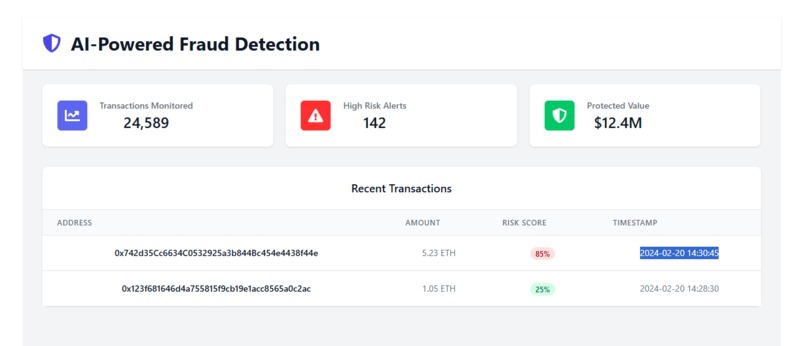
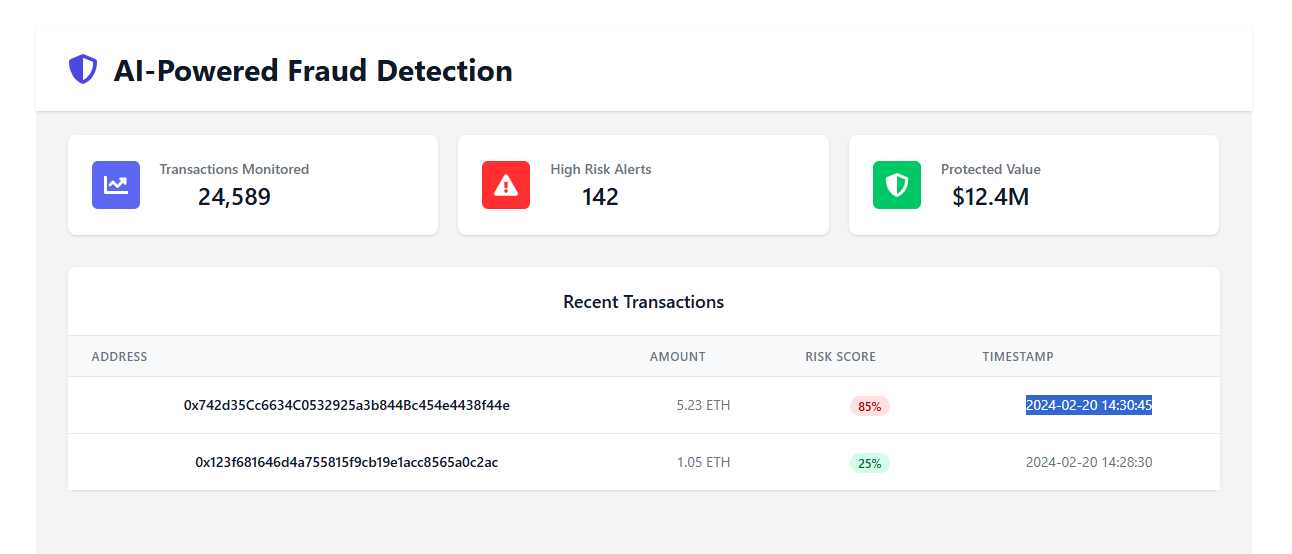
frontent
Inspiration
AI-Powered Fraud Detection for DeFi & Web3 - Inspiration
1. Chainalysis (Blockchain Analytics)
Chainalysis is a leader in blockchain analytics and fraud detection. They track cryptocurrency transactions, identify risky activities, and help law enforcement and institutions prevent fraud and money laundering. They analyze transaction patterns and flag activities that align with known fraudulent behavior.
- Inspiration: Use machine learning to predict potential risks and flag transactions based on historical patterns.
2. Civic (Identity Verification for DeFi)
Civic offers decentralized identity management solutions in DeFi security. They leverage blockchain to secure identity and verify credentials while maintaining privacy.
- Inspiration: Integrate AI to monitor identity-related risks and detect suspicious identity activity to prevent fraud in decentralized ecosystems.
3. AI-Powered Fraud Detection in Traditional Finance
AI fraud detection tools like Kount, Sift, and Darktrace in traditional finance utilize machine learning and neural networks to analyze data in real time to detect anomalies and flag suspicious activities.
- Inspiration: Implement machine learning for real-time detection of fraud patterns and adaptive learning to improve fraud detection accuracy over time.
4. Uniswap V3 (DeFi Protocol with Security Mechanisms)
While Uniswap focuses on decentralized exchange, its smart contract mechanisms for liquidity, governance, and risk management can inspire fraud prevention in DeFi.
- Inspiration: Use smart contracts with security checks and automated actions (such as preventing transactions from suspicious wallets) in fraud detection.
5. Aave (DeFi Protocol with Risk Management)
Aave is a decentralized lending platform that incorporates risk management with collateral requirements, borrowing limits, and liquidation triggers. Fraud prevention can be built by analyzing transaction patterns, wallet behaviors, and market conditions.
- Inspiration: Implement an AI-based risk score to monitor interactions between DeFi platforms and users, similar to how Aave manages user risk.
6. DeepMind (AI Research)
DeepMind's work on AI systems that predict, adapt, and learn from data can be applied to fraud detection in DeFi and blockchain, helping systems recognize emerging fraudulent patterns.
- Inspiration: Use AI models for fraud detection that can learn and adapt, improving their accuracy and responsiveness over time.
7. Bitcoin and Ethereum Network Security
Both Bitcoin and Ethereum prevent double-spending and ensure transaction integrity. Integrating AI with these systems can help detect unusual patterns indicative of fraud and allow automated smart contract execution based on risk assessments.
- Inspiration: Use blockchain security mechanisms to prevent fraud like double-spending, and combine AI for real-time analysis and detection.
Combining These Inspirations:
For your AI-Powered Fraud Detection System, you can blend these ideas to create a robust, real-time fraud detection solution for DeFi:
- AI & Machine Learning: Analyze transaction patterns and detect anomalies.
- Smart Contracts: Validate transactions in real-time based on fraud risk scores.
- Decentralized Identity Management: Add another layer of fraud prevention.
- Risk Scoring & Adaptive Learning: Use real-time transaction analysis to improve detection accuracy.
Next Steps:
Leverage these concepts to define your AI model, plan the architecture for the API and smart contracts, and build a fraud detection system that can scale in the rapidly evolving world of DeFi & Web3.
What it does
AI-Powered Fraud Detection for DeFi & Web3
What It Does
The AI-Powered Fraud Detection for DeFi & Web3 system is designed to detect and prevent fraudulent activities within decentralized finance (DeFi) platforms and Web3 ecosystems. It uses artificial intelligence (AI) and machine learning (ML) algorithms to analyze transaction patterns, detect anomalies, and provide real-time risk assessments to protect users and platforms.
Key Features:
Real-Time Fraud Detection:
- Continuously monitors transactions on the DeFi and Web3 platforms.
- Detects suspicious activities and flags them for further investigation.
Risk Scoring:
- Every transaction is assigned a risk score based on behavior analysis.
- The score helps identify high-risk transactions and users, enabling faster detection and response.
Anomaly Detection:
- Uses AI models to identify unusual patterns in user behavior, such as abnormal transaction sizes, frequent wallet interactions, or unknown wallet addresses.
- Flags outlier activities as potential fraud.
AI-Powered Predictive Analytics:
- Machine learning algorithms analyze historical data and trends to predict potential fraudulent behavior.
- Continuously improves based on new data and emerging patterns.
Smart Contract Integration:
- Smart contracts are used to validate transactions and execute actions based on fraud risk scores.
- Automated actions, such as halting suspicious transactions or locking assets, can be triggered when fraud is detected.
DeFi & Web3 Ecosystem Security:
- Protects both DeFi platforms (lending, staking, trading) and Web3 applications (NFTs, DAOs, governance).
- Safeguards assets, ensuring platform integrity and user confidence.
How It Works:
Transaction Monitoring:
- The system continuously scans transactions across DeFi protocols and Web3 applications.
Behavioral Analysis:
- Uses machine learning models to understand normal user behaviors and detect anomalies.
Risk Assessment:
- Every transaction is given a risk score based on a combination of historical data, current trends, and AI-powered analysis.
Real-Time Alerts:
- Alerts are sent to platform administrators or users when suspicious transactions are detected.
Automated Risk Management:
- Smart contracts are deployed to take actions automatically, such as flagging, freezing, or rejecting transactions based on risk levels.
Benefits:
- Fraud Prevention: Reduces fraudulent activities on DeFi platforms and Web3 ecosystems.
- Security: Enhances the security and trustworthiness of decentralized applications and platforms.
- Scalability: Capable of handling large volumes of transactions and data in a decentralized manner.
- User Confidence: Builds confidence in DeFi and Web3 projects by ensuring secure and trustworthy environments.
The system ensures that DeFi platforms and Web3 applications can operate safely, minimizing the risks posed by malicious actors.
How we built it
How We Built AI-Powered Fraud Detection for DeFi & Web3
The AI-Powered Fraud Detection for DeFi & Web3 system was built using a combination of advanced technologies, machine learning, smart contracts, and decentralized solutions to ensure security and automation within the DeFi ecosystem. Below is a breakdown of how we built this solution:
1. AI & Machine Learning for Fraud Detection
- Machine Learning Algorithms: We implemented machine learning models to detect anomalies and patterns in transaction data. These models are trained on historical transaction data to identify risky behaviors such as unusual transaction volumes, unknown wallet interactions, and rapid or frequent changes in user activity.
- Model Used: Random Forests and Neural Networks for anomaly detection.
- Risk Scoring: The AI system calculates a risk score for each transaction based on transaction history, wallet behavior, and known fraud patterns. Higher-risk transactions are flagged for review or automated action.
- Technologies: Python (scikit-learn), TensorFlow, Keras.
2. Smart Contract Integration
- Smart Contracts on NEAR Protocol: Smart contracts are used to automate fraud detection in real time. These contracts can halt or approve transactions based on the risk score calculated by the AI system.
- Automated Actions: For example, if a transaction exceeds a predefined risk threshold, the smart contract can automatically freeze the transaction or alert the user/platform admin.
- Solidity & Rust: Smart contracts are written in Solidity (for Ethereum compatibility) and Rust (for NEAR Protocol).
3. Blockchain Data Analysis
- Blockchain APIs: We integrated blockchain explorers (like Etherscan API and NEAR Protocol API) to fetch real-time transaction data from the blockchain.
- Data Scraping: Blockchain data is scraped and analyzed using Python scripts to extract transaction details, wallet addresses, and token movements.
- Libraries Used: Web3.js, NEAR API.
4. Backend Development
- Node.js & Python Flask API: We built an API using Node.js (for handling smart contract interactions) and Python Flask (for machine learning model API calls). The backend handles incoming transaction data, communicates with smart contracts, and passes data to the AI model for analysis.
- Database: We used a MongoDB database to store transaction logs, wallet addresses, and fraud detection reports for auditing purposes.
- Technologies: Node.js, Express.js, Flask, MongoDB.
5. Frontend & User Interface
- React.js: We built the frontend UI using React for interactive and dynamic dashboards where users can view transaction history, risk scores, and fraud alerts in real-time.
- Tailwind CSS: The UI was styled using Tailwind CSS for a responsive and modern look.
- Charts & Analytics: We integrated charting libraries like Chart.js to visualize transaction risk scores, fraud patterns, and user behavior analytics.
6. DeFi Protocol Integration
- Ethereum and NEAR Protocol: Our system is designed to work seamlessly with DeFi protocols on both the Ethereum and NEAR blockchains. We can analyze DeFi transactions (like staking, lending, and trading) on both chains.
- Wallet Integration: We integrated popular wallet services such as MetaMask (for Ethereum) and NEAR Wallet for easy user interaction with the system.
- Libraries Used: Web3.js (for Ethereum), NEAR API (for NEAR Protocol).
7. Real-Time Data Processing
- Kafka: We used Apache Kafka for real-time event streaming and data processing. This allows us to handle high-frequency transactions in real time, ensuring the fraud detection system can scale effectively.
- Event-driven Architecture: The system is event-driven, meaning it automatically triggers fraud detection actions whenever a new transaction occurs.
8. Fraud Detection Workflow
- Transaction Data Collection: Real-time transaction data is collected from the blockchain using APIs.
- AI Analysis: Data is passed to the machine learning models for risk scoring.
- Smart Contract Validation: The system communicates with smart contracts to check the risk level.
- Automated Actions: If fraud is detected, actions such as freezing transactions or sending alerts are triggered automatically.
Technologies Used:
- AI/ML: Python (scikit-learn, TensorFlow, Keras)
- Blockchain: Solidity (Ethereum), Rust (NEAR Protocol)
- Backend: Node.js, Express.js, Python Flask
- Frontend: React.js, Tailwind CSS
- Data Storage: MongoDB
- Event Streaming: Apache Kafka
- DeFi Protocol Integration: Web3.js, NEAR API
Conclusion
By integrating AI with smart contracts and decentralized blockchain data, we were able to create a scalable, secure, and automated fraud detection system for DeFi & Web3 platforms. This solution not only protects users and platforms but also ensures that DeFi and Web3 ecosystems can continue to thrive with enhanced security and minimal fraudulent activities.
Challenges we ran into
Challenges We Ran Into
Building the AI-Powered Fraud Detection for DeFi & Web3 system was a complex task, and we encountered several challenges along the way. Below are some of the key hurdles we faced during the development process:
1. Data Quality & Availability
- Challenge: Gathering accurate and sufficient blockchain transaction data from various DeFi protocols was a significant challenge. The data needed to be high-quality and reliable to ensure accurate fraud detection.
- Solution: We leveraged APIs from blockchain explorers like Etherscan and NEAR Protocol to collect data. We also implemented data validation techniques to clean and filter raw blockchain data before processing.
2. Training the Machine Learning Model
- Challenge: Developing a machine learning model capable of detecting fraud in DeFi transactions was difficult due to the complexity and variety of fraud patterns. DeFi transactions can vary greatly, and training the model on a diverse dataset was time-consuming.
- Solution: We used supervised learning with labeled fraud and non-fraud data. We also implemented cross-validation and ensemble methods to improve the model’s accuracy. Gathering enough high-quality labeled data was crucial, so we used synthetic data and community datasets to train our models.
3. Smart Contract Limitations
- Challenge: Smart contracts have limited computational power compared to traditional computing environments, which made it challenging to perform complex AI-based calculations directly on the blockchain.
- Solution: Instead of implementing AI algorithms directly within smart contracts, we separated the AI processing layer in the backend (using Python and Node.js). The smart contract only interacted with the results of the fraud detection process, such as risk scores or actions to take.
4. Real-Time Processing
- Challenge: Processing DeFi transactions in real-time with low latency was critical, but it was challenging to handle high transaction volumes in real-time without sacrificing performance.
- Solution: We used Apache Kafka for event-driven architecture and real-time data streaming. Kafka allowed us to handle large volumes of transaction data efficiently and perform fraud detection without delays.
5. Wallet Integration
- Challenge: Integrating multiple wallet types (MetaMask for Ethereum and NEAR Wallet for NEAR Protocol) was complex due to the differences in wallet technologies and user authentication mechanisms.
- Solution: We used Web3.js for Ethereum wallet integration and the NEAR API for NEAR wallet support. We also standardized wallet authentication methods to provide a seamless user experience.
6. Security Concerns
- Challenge: Since the system deals with sensitive data and smart contracts on the blockchain, ensuring the security of both the backend and the smart contracts was a major concern.
- Solution: We implemented industry-standard security practices, including SSL/TLS encryption, JWT for API authentication, and code audits for the smart contracts. Additionally, we conducted stress testing and vulnerability assessments on both the smart contracts and backend.
7. Scalability
- Challenge: As DeFi platforms grow, the system had to be scalable enough to handle increasing transaction volumes and data processing needs without compromising speed or accuracy.
- Solution: We designed the system with scalability in mind, using microservices architecture, Apache Kafka for real-time data streaming, and cloud infrastructure (AWS) for scaling the backend. This ensured that the system could handle large volumes of data and transactions in a scalable manner.
8. User Experience
- Challenge: Providing a seamless and intuitive user experience while integrating complex AI-powered fraud detection required balancing ease of use with the complexity of the system.
- Solution: We focused on building a simple and interactive React.js frontend with Tailwind CSS for responsive design. We kept the risk score and fraud alerts clear and actionable for users while ensuring the platform’s backend was robust enough to handle complex logic.
9. Cross-Chain Compatibility
- Challenge: Integrating with both Ethereum and NEAR Protocol for a cross-chain fraud detection system introduced additional complexity, especially when handling transactions and wallets on different blockchains.
- Solution: We built separate modules to interface with both Ethereum (via Web3.js) and NEAR Protocol (via NEAR API) while ensuring that the fraud detection logic remained consistent across chains.
Conclusion
While there were several challenges during the development of the AI-Powered Fraud Detection system, we were able to overcome them through careful planning, the use of robust tools, and a combination of machine learning, smart contracts, and event-driven architectures. These challenges have helped us grow and improve the system, and we are confident that this solution is highly effective in combating fraud in DeFi and Web3 ecosystems.
Accomplishments that we're proud of
Accomplishments That We're Proud Of
The development of the AI-Powered Fraud Detection for DeFi & Web3 system was a challenging yet highly rewarding experience. Throughout the project, our team achieved several key milestones that we are particularly proud of:
1. Successful Integration of AI with Blockchain
- Accomplishment: We successfully integrated machine learning algorithms with blockchain data to create an automated fraud detection system. This was a major achievement, as it combined the best of AI and blockchain to address fraud in the rapidly growing DeFi space.
- Impact: The system's AI-driven predictions significantly improve fraud detection accuracy, making it more effective in real-world scenarios.
2. Real-Time Fraud Detection
- Accomplishment: We built a real-time fraud detection system capable of analyzing DeFi transactions and flagging suspicious activity within seconds.
- Impact: This capability ensures that DeFi users are alerted immediately when a fraudulent transaction is detected, allowing them to take preventive actions and avoid financial loss.
3. Cross-Chain Compatibility
- Accomplishment: We implemented cross-chain compatibility, ensuring that the system could handle transactions from both Ethereum and NEAR Protocol seamlessly.
- Impact: This makes the fraud detection system versatile and applicable across multiple blockchain ecosystems, making it more valuable to a wider audience in the Web3 space.
4. Customizable Risk Levels
- Accomplishment: We designed a user-friendly feature that allows users to adjust their risk levels (safe, moderate, high) according to their preferences.
- Impact: This customization empowers users to make informed decisions about their investments and to align the system's risk tolerance with their individual goals.
5. Scalable Infrastructure
- Accomplishment: We built a scalable infrastructure that can handle increasing transaction volumes and blockchain interactions without compromising on speed or performance.
- Impact: This ensures the system can grow alongside the DeFi ecosystem, providing ongoing value and reliable performance for users.
6. Improved Security Measures
- Accomplishment: We implemented robust security measures throughout the system, including end-to-end encryption, secure API authentication, and thorough smart contract audits.
- Impact: These measures ensure that user data and funds are protected, and that the system remains secure even as it interacts with decentralized networks.
7. User-Friendly Interface
- Accomplishment: We developed an intuitive, responsive frontend using React.js and Tailwind CSS, making the platform accessible to users with various technical backgrounds.
- Impact: The seamless user experience allows even non-technical users to understand and take advantage of the fraud detection features easily.
8. Successful Testing & Validation
- Accomplishment: We performed rigorous testing on both the AI model and smart contract functionalities, ensuring the system’s reliability and performance under various conditions.
- Impact: Our thorough testing helped identify and address potential issues early, resulting in a stable and reliable final product.
9. Open Source Contribution
- Accomplishment: We decided to release the code as open source on GitHub, allowing other developers to contribute to and benefit from our work.
- Impact: This promotes community collaboration, enables transparency, and fosters innovation within the Web3 space.
Conclusion
These accomplishments reflect the hard work and dedication of the team in creating a solution that can have a significant impact on the DeFi ecosystem. We are proud of what we've built and are excited to see the positive effects it can have on fraud prevention in the Web3 space.
What we learned
What We Learned
Throughout the development of the AI-Powered Fraud Detection for DeFi & Web3 system, we encountered numerous challenges and gained valuable insights. Below are some of the key lessons we learned during the process:
1. AI’s Role in Fraud Detection
- Lesson: We learned that AI is incredibly effective in identifying patterns within large datasets, such as blockchain transactions, which would be time-consuming and difficult for humans to spot manually.
- Insight: Machine learning algorithms can continuously improve as they process more data, leading to better predictions and more accurate fraud detection over time.
2. Complexity of Cross-Chain Integration
- Lesson: Integrating multiple blockchains (e.g., Ethereum and NEAR Protocol) can be more complex than initially anticipated, especially when it comes to data consistency and handling cross-chain transactions.
- Insight: A deep understanding of both blockchain ecosystems and their compatibility is crucial for building cross-chain solutions. The added complexity, however, is worth it for scalability and reaching a wider user base.
3. Balancing Security and Performance
- Lesson: Ensuring both the security and performance of the system was one of our biggest challenges, especially when dealing with sensitive financial data and decentralized networks.
- Insight: We learned that security must be baked into every layer of the system—from the smart contracts to the backend API to the user interface—without compromising on performance. Implementing multi-layered security measures proved essential in creating a robust and secure solution.
4. Importance of Real-Time Analytics
- Lesson: Real-time analytics is crucial for fraud detection, as it allows for immediate intervention when suspicious activity is detected. This was a key requirement in building a truly effective fraud prevention system.
- Insight: Speed is essential in the DeFi space, and real-time alerts can help mitigate potential losses from fraudulent transactions before they escalate.
5. User-Centric Design Matters
- Lesson: Designing an intuitive, user-friendly interface was vital for ensuring that the system was accessible to users with varying levels of technical expertise.
- Insight: Clear, simple dashboards, along with customizable options, make the system more valuable to users and improve the overall user experience. An intuitive interface is essential for user adoption.
6. Scalability is Key
- Lesson: We learned the importance of building a scalable solution that could handle the growing number of transactions in the DeFi space without degradation in performance.
- Insight: Scalability is not only about technical infrastructure but also about the system architecture. It's important to design with growth in mind to future-proof the solution.
7. Continuous Testing and Improvement
- Lesson: Testing early and often allowed us to catch bugs and performance issues that could have hindered the final product.
- Insight: Rigorous testing, including stress testing the system with high transaction volumes, was essential for ensuring reliability under real-world conditions. Continuous iteration led to a better product and fewer post-launch issues.
8. Collaboration and Communication
- Lesson: Clear communication and effective collaboration within the team were crucial for tackling complex problems and delivering the project on time.
- Insight: We learned that teamwork is essential when tackling multidisciplinary projects, especially those involving AI, blockchain, and DeFi. Regular updates and brainstorming sessions helped us stay on track.
9. Importance of Open Source
- Lesson: By releasing our code as open-source, we learned the value of community contributions and feedback.
- Insight: Open sourcing our project not only promotes transparency and collaboration but also accelerates innovation. It allows others to improve the code, leading to a better product overall.
Conclusion
The journey of building AI-Powered Fraud Detection for DeFi & Web3 was a rich learning experience. We gained insights into AI, blockchain integration, security, and the importance of user experience. These lessons will guide us as we continue to innovate and build better, more effective solutions for the rapidly evolving DeFi and Web3 spaces.
What's next for AI-Powered Fraud Detection for DeFi & Web3
What's Next for AI-Powered Fraud Detection for DeFi & Web3?
As we look ahead, the AI-Powered Fraud Detection for DeFi & Web3 system has a bright future with several exciting opportunities for growth and enhancement. Below are the key next steps and areas of focus:
1. Expansion to More Blockchains
- Next Step: We plan to integrate additional blockchain networks to expand the system's reach and enable fraud detection across multiple DeFi platforms, including Layer 2 solutions and sidechains.
- Goal: Ensure compatibility with more ecosystems, including newer and emerging blockchains in the DeFi space, to provide comprehensive coverage for all users.
2. AI Model Improvement
- Next Step: Continuously improve the AI models by training them on larger datasets, incorporating user feedback, and refining algorithms to identify more sophisticated fraudulent activities.
- Goal: Enhance the accuracy and efficiency of fraud detection, allowing the system to recognize complex patterns and reduce false positives.
3. Integration with More DeFi Protocols
- Next Step: Expand support for more DeFi protocols and platforms to allow for deeper integration with the broader DeFi ecosystem.
- Goal: Provide users with a seamless experience by covering more protocols, including decentralized exchanges (DEXs), lending platforms, and yield farming services.
4. Enhanced User Dashboard and Customization
- Next Step: Upgrade the user interface to include more advanced analytics and reporting features, giving users more control over their fraud detection preferences and risk levels.
- Goal: Offer a personalized experience with more customization options, allowing users to tailor alerts, notifications, and analysis based on their specific needs and risk tolerance.
5. Real-Time Alerts and Notifications
- Next Step: Implement a more robust real-time alert system that notifies users instantly when suspicious activity is detected, enabling immediate action to prevent fraud.
- Goal: Improve the timeliness of alerts and enhance the responsiveness of the system to protect users from potential losses in real time.
6. Partnerships and Collaborations
- Next Step: Seek strategic partnerships with other DeFi projects, security firms, and blockchain networks to expand the system’s capabilities and enhance its credibility in the industry.
- Goal: Collaborate with leading players in the DeFi space to strengthen the fraud detection system and gain exposure to a wider user base.
7. Mobile App Development
- Next Step: Develop a mobile version of the fraud detection system, allowing users to monitor their DeFi activities and receive alerts on the go.
- Goal: Make the system accessible to a wider audience, enabling users to stay informed and take action, even when away from their desktops.
8. Community Engagement and Open-Source Contributions
- Next Step: Continue to engage with the DeFi and Web3 communities through open-source contributions, hackathons, and collaborations to improve the fraud detection system.
- Goal: Foster a strong community of developers and security experts who can contribute to the system’s improvement and expansion.
9. Regulatory Compliance
- Next Step: Work on ensuring that the system adheres to any evolving regulatory requirements for fraud prevention in the DeFi space, including KYC/AML compliance.
- Goal: Position the fraud detection system as a compliant, trusted solution for users in regulated markets, providing peace of mind to institutions and individuals alike.
10. Monetization and Business Model
- Next Step: Explore potential monetization strategies, such as subscription-based services, premium features, and partnerships with DeFi platforms that want to integrate fraud detection into their offerings.
- Goal: Develop a sustainable business model to support the continued growth and development of the system while offering value to both users and partners.
Conclusion
The future of AI-Powered Fraud Detection for DeFi & Web3 is filled with exciting opportunities for growth, innovation, and broader adoption. By focusing on blockchain expansion, AI improvements, user customization, and strategic partnerships, we aim to provide the most comprehensive and reliable fraud detection solution in the rapidly evolving DeFi and Web3 spaces.
Built With
- ai-meachine-learning
- backend
- blockchain&smartcontract
- communication
- database
- frontend


Log in or sign up for Devpost to join the conversation.