Inspiration
Students often spend a significant amount of time reading lengthy PDFs, identifying important concepts, creating notes, and preparing flashcards manually. This becomes especially challenging during exams, interviews, and technical preparation when quick and effective revision is important.
I wanted to build a practical AI-powered solution that could transform existing study material into an interactive learning experience. This idea led to AI Powered Flashcard Engine – Study Assist, which combines AI-generated flashcards with spaced repetition to make revision faster and improve knowledge retention.
What it does
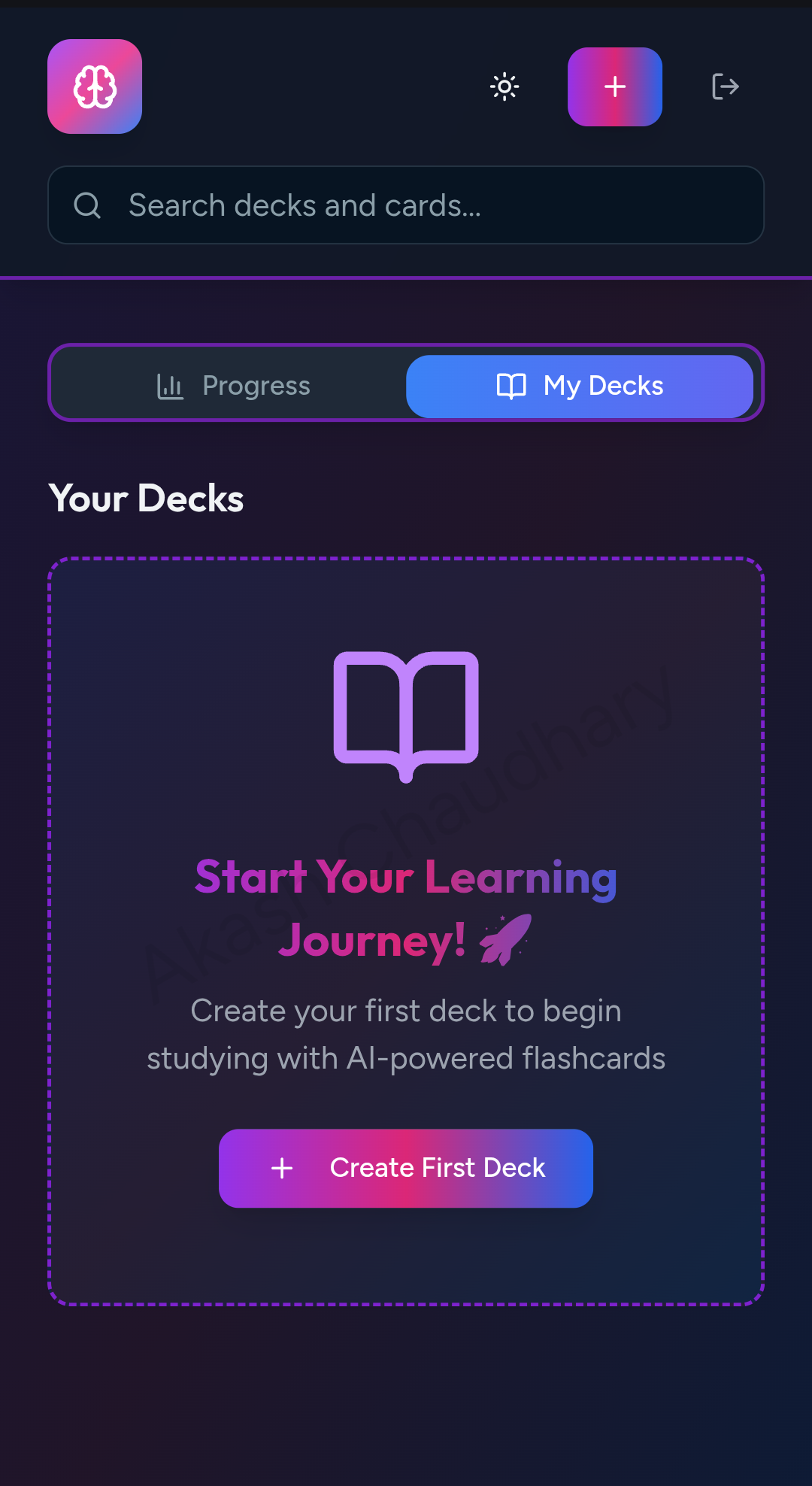
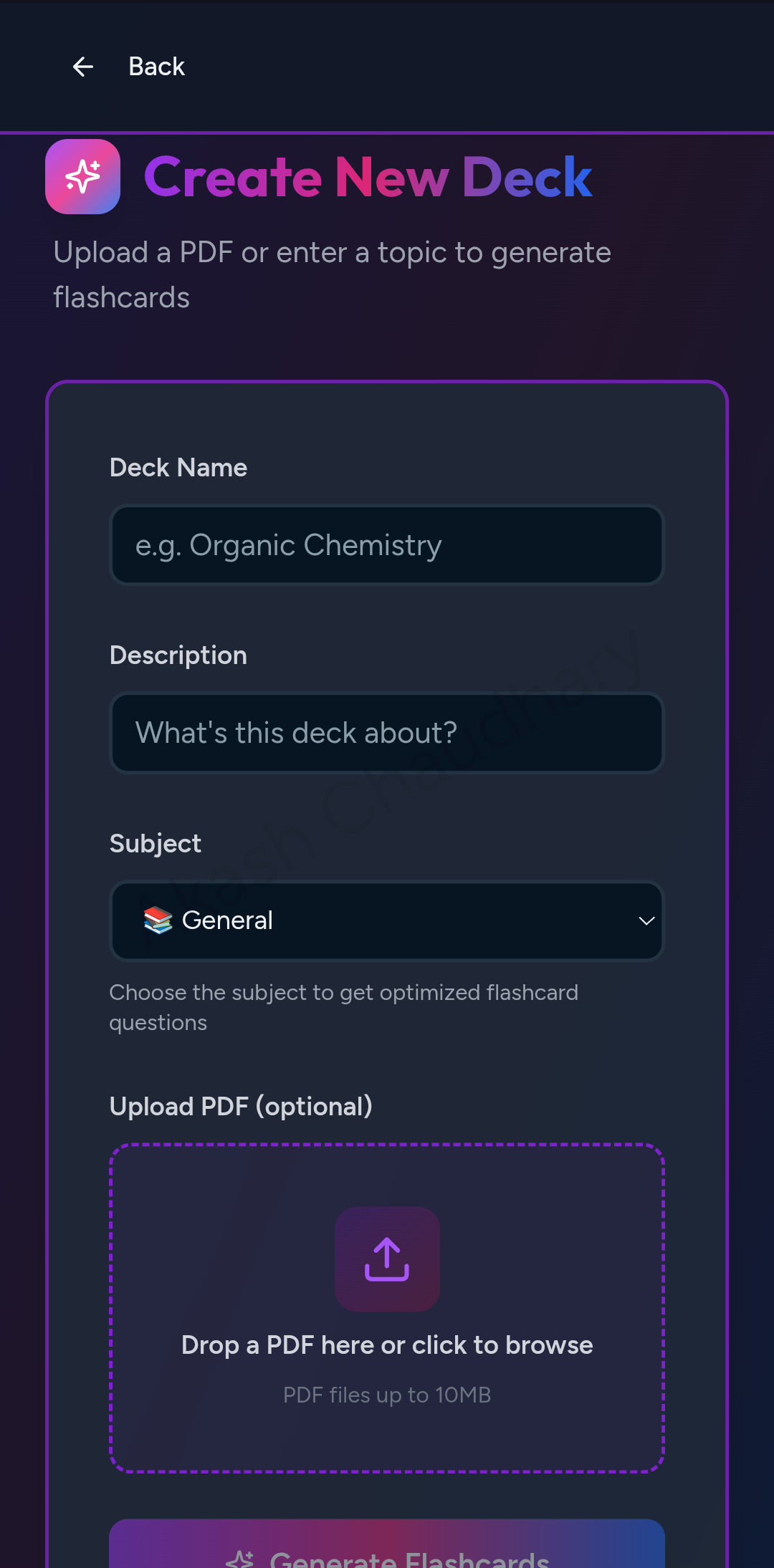
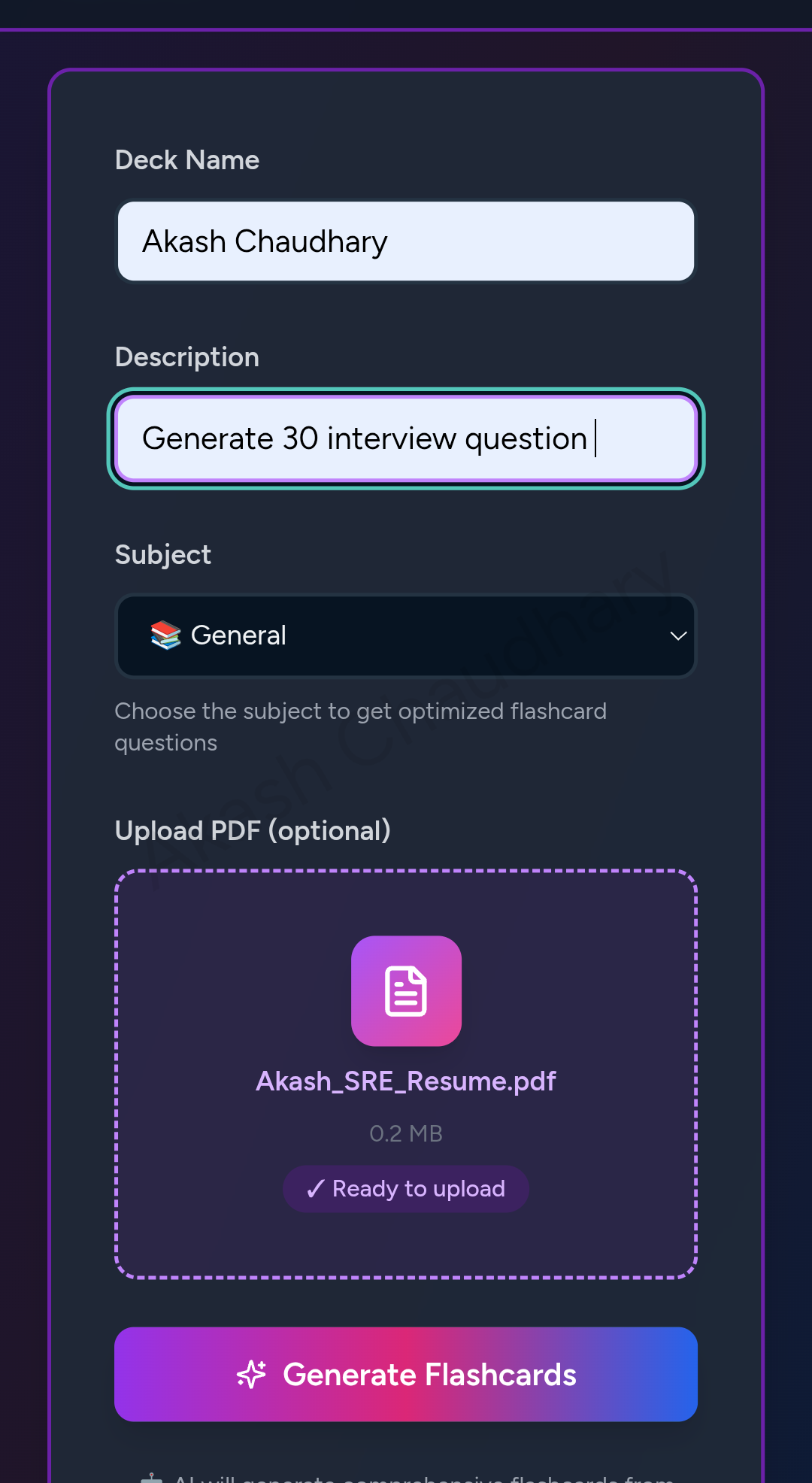
Study Assist allows users to upload PDF-based study material and automatically converts the content into meaningful, topic-focused flashcards.
Instead of manually creating questions and answers, the system processes the document and uses AI to identify important concepts and generate concise flashcards. Users can then review these flashcards interactively.
The project also incorporates the SM-2 spaced repetition algorithm, which helps schedule flashcards based on the user's performance. Difficult concepts can be reviewed more frequently, while concepts that are already well understood can be reviewed at longer intervals.
The main goal is to combine AI, active recall, and spaced repetition into a single study assistant that makes learning more efficient.
How we built it
The project was built using a modern web architecture with a Python-based backend and an interactive frontend.
The backend was developed using FastAPI, which handles document processing, API requests, flashcard generation, and communication between different components of the application.
The system extracts text from uploaded PDFs and processes the extracted content before sending it through the AI-powered generation pipeline. The generated output is structured into question-and-answer flashcards so that it can be easily consumed by the frontend.
The frontend provides the interface for uploading study material and reviewing generated flashcards. We also implemented the spaced-repetition logic using the SM-2 algorithm to support personalized revision.
Environment variables were used to manage API credentials and configuration securely, while the application was tested across different stages of development to ensure reliable communication between the frontend and backend.
Challenges we ran into
One of the major challenges was extracting useful information from PDFs because different documents can have different layouts, formatting, and structures. Extracted content sometimes required preprocessing before it could be effectively used for flashcard generation.
Another challenge was maintaining the quality and relevance of AI-generated flashcards. Simply sending large amounts of raw text to an AI model could result in repetitive, overly broad, or poorly structured questions. We addressed this by structuring the input, processing the extracted content, and validating the generated responses.
We also faced challenges related to API integration, environment variables, frontend-backend communication, and deployment. Debugging these issues helped us improve error handling and understand how different components of a full-stack AI application work together.
Accomplishments that we're proud of
We are proud of building a complete working pipeline that takes a user's PDF and transforms it into interactive AI-generated flashcards.
The project successfully combines multiple concepts that are useful for real-world learning applications:
- PDF content extraction and processing
- AI-powered flashcard generation
- Interactive flashcard-based learning
- Spaced repetition using the SM-2 algorithm
- Frontend-backend API integration
- Secure environment-based configuration
We are particularly proud that the project focuses on a practical problem rather than using AI only as a text-generation feature. The AI output is integrated into an actual learning workflow designed around active recall and long-term retention.
What we learned
This project gave us practical experience in building and integrating AI into a real-world application.
We learned how to process unstructured document content, design structured inputs for AI systems, validate AI-generated output, and connect AI functionality with a full-stack application.
We also gained a better understanding of spaced repetition and how algorithms such as SM-2 can be used to personalize learning. Beyond the AI component, we improved our skills in FastAPI, API integration, frontend-backend communication, debugging, deployment, and application architecture.
Most importantly, we learned that building a useful AI application requires more than generating good responses. The AI output needs to be reliable, structured, and directly connected to a meaningful user workflow.
What's next for AI Powered Flashcard Engine Study Assistant
We plan to expand Study Assist into a more personalized learning platform.
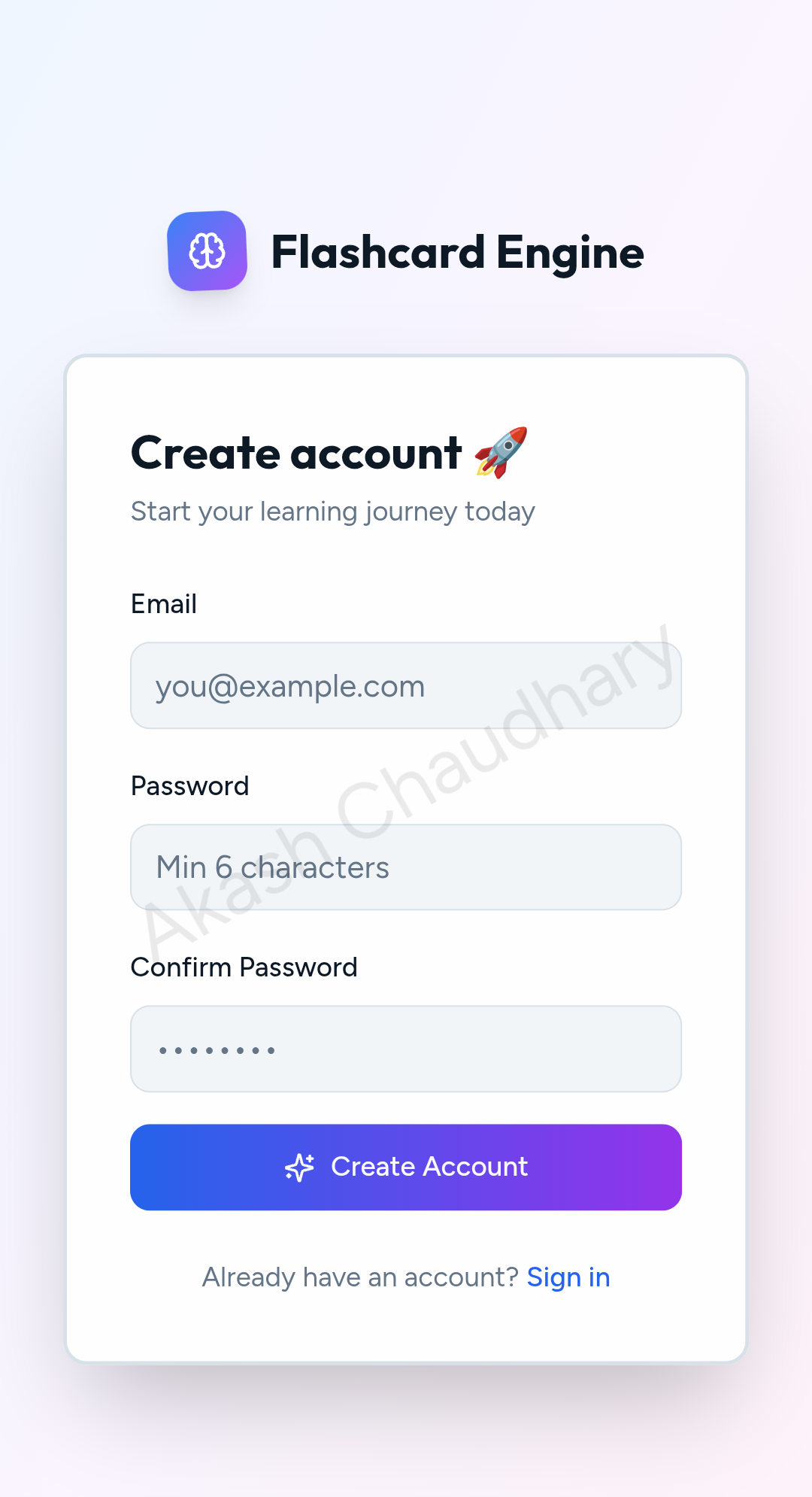
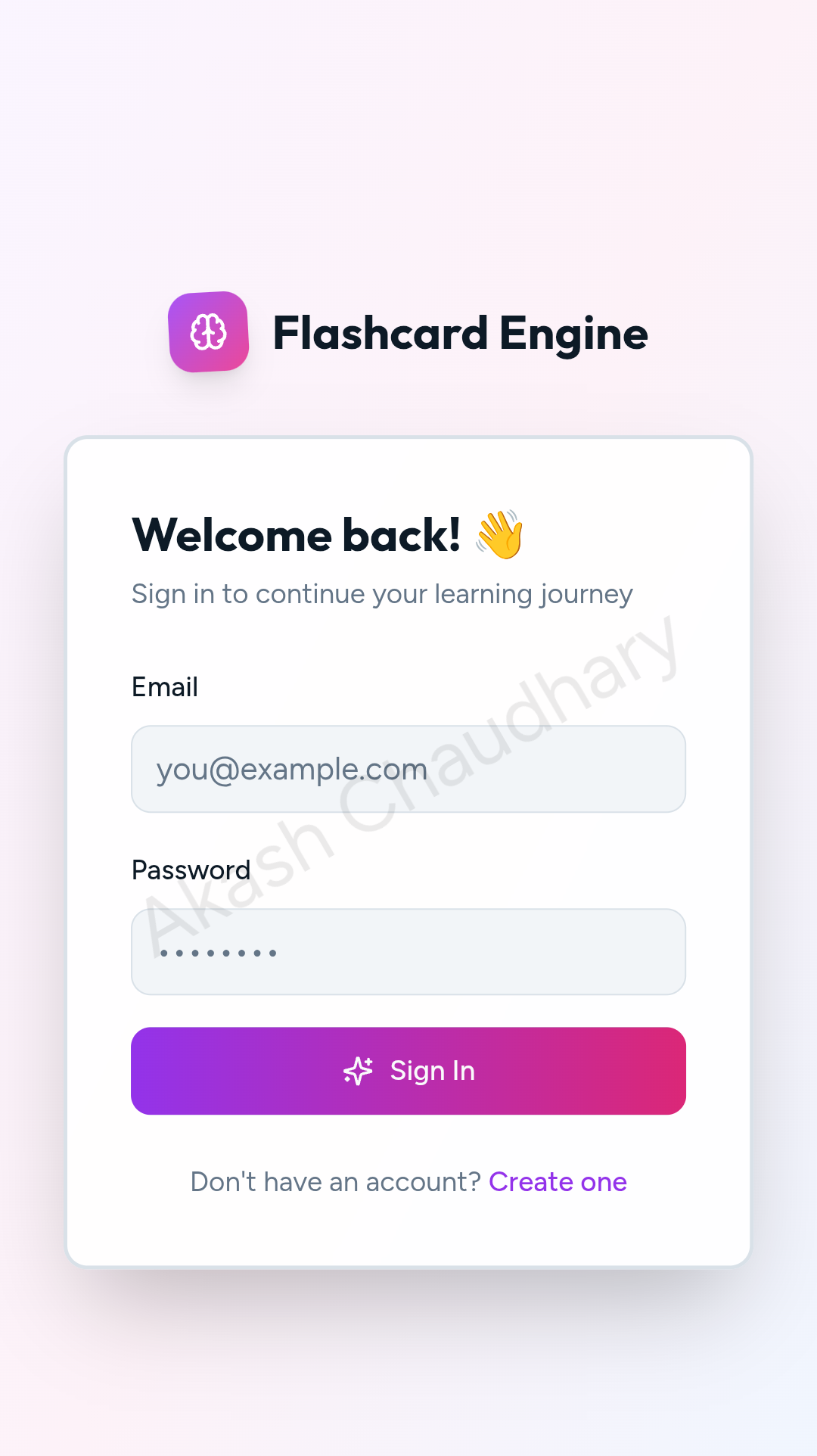
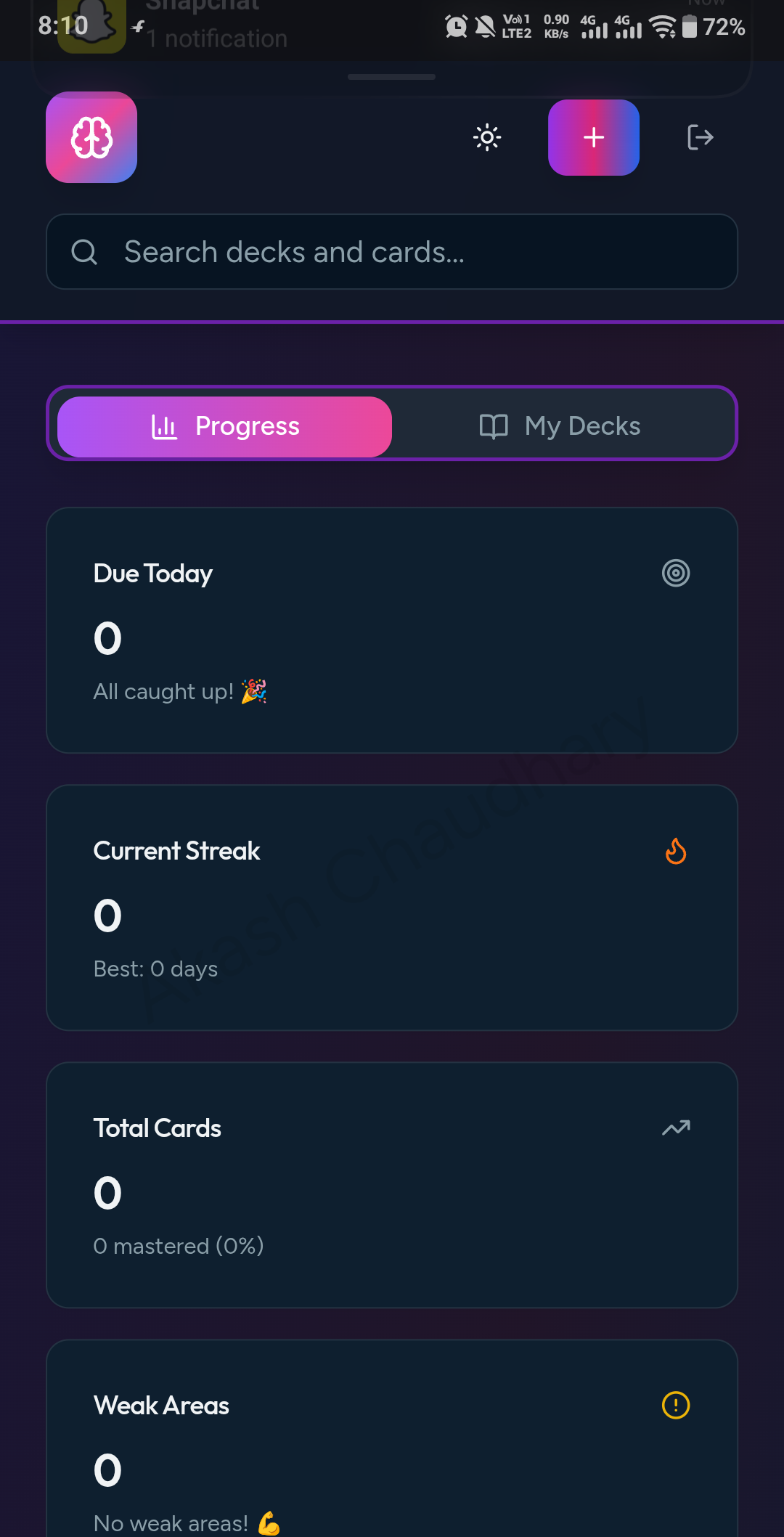
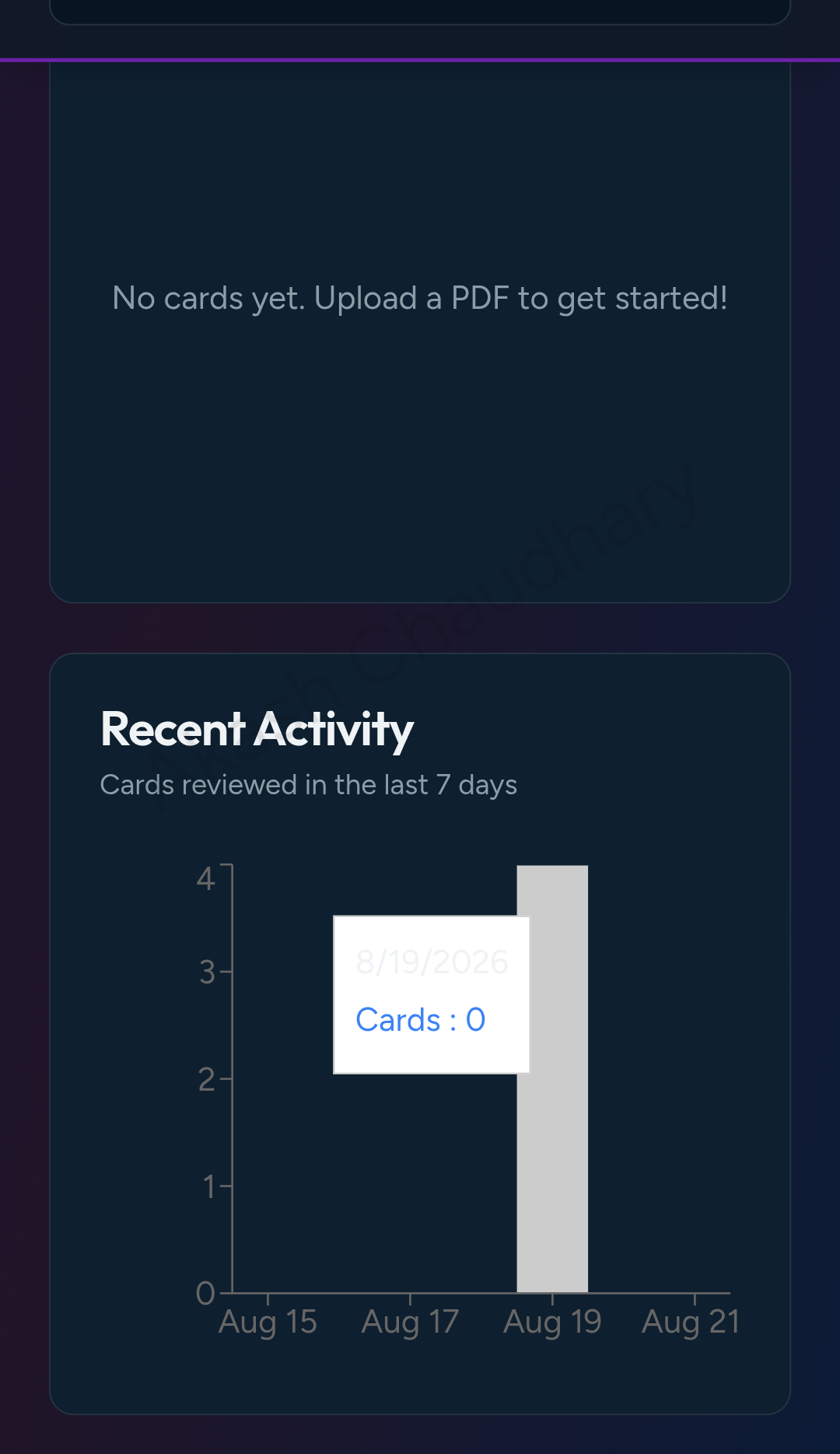
Future improvements include supporting additional document formats, user accounts and learning profiles, detailed learning analytics, customizable difficulty levels, improved flashcard personalization, progress tracking, and better adaptation of the spaced-repetition schedule based on individual performance.
We also plan to explore additional AI-powered features such as topic-wise quizzes, automated study plans, concept explanations, and performance-based recommendations.
The long-term goal is to make Study Assist a complete AI-powered study companion that helps learners understand, revise, and retain knowledge more effectively.
Built With
- ai
- css
- fastapi
- generative-ai
- html
- javascript
- pdf-processing
- python
- react
- rest-api
- sm-2-algorithm
- spaced-repetition
- vite


Log in or sign up for Devpost to join the conversation.