-
-
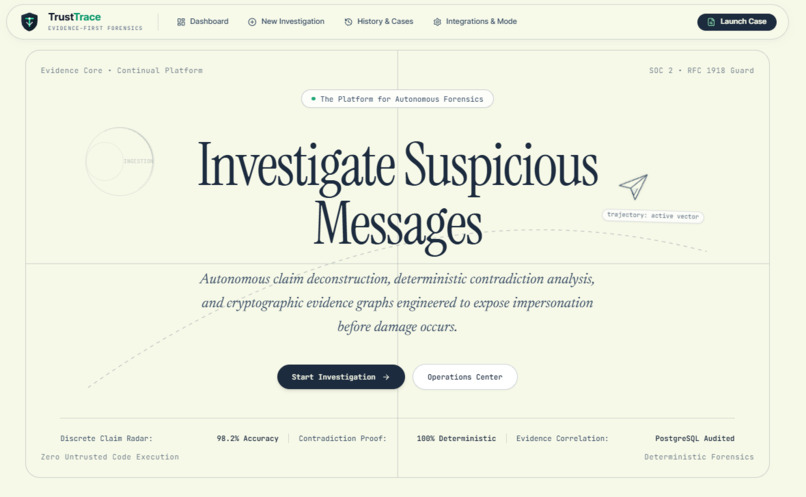
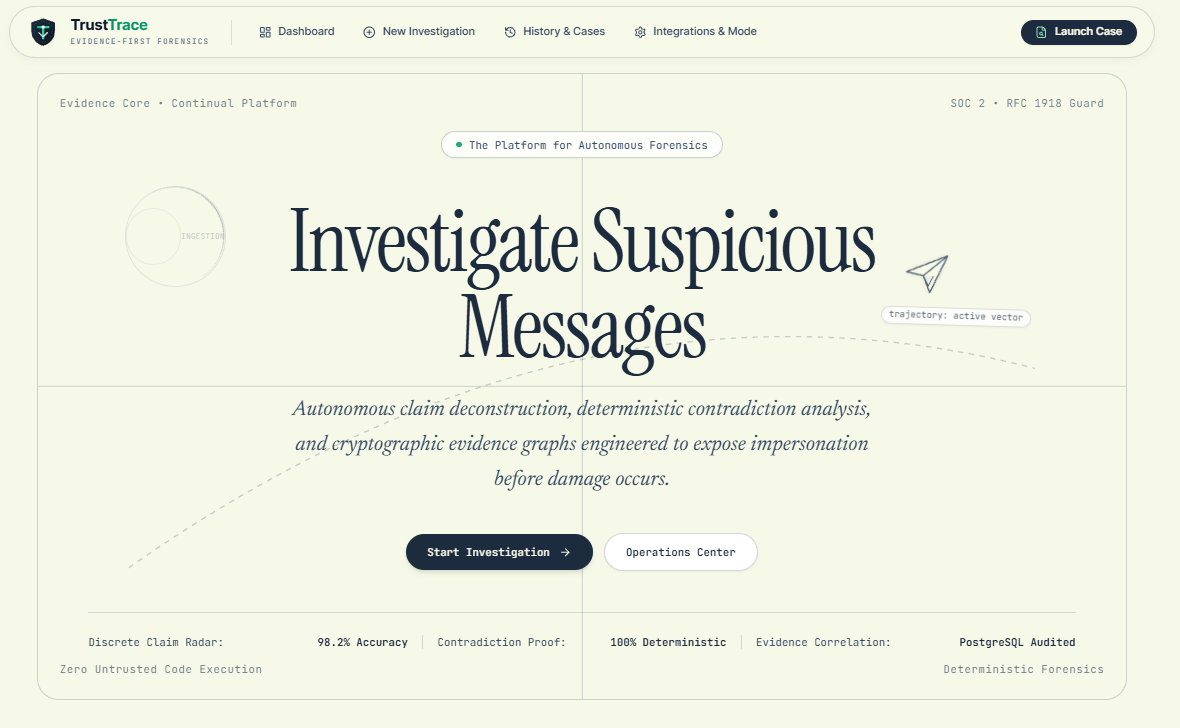
landing page
-
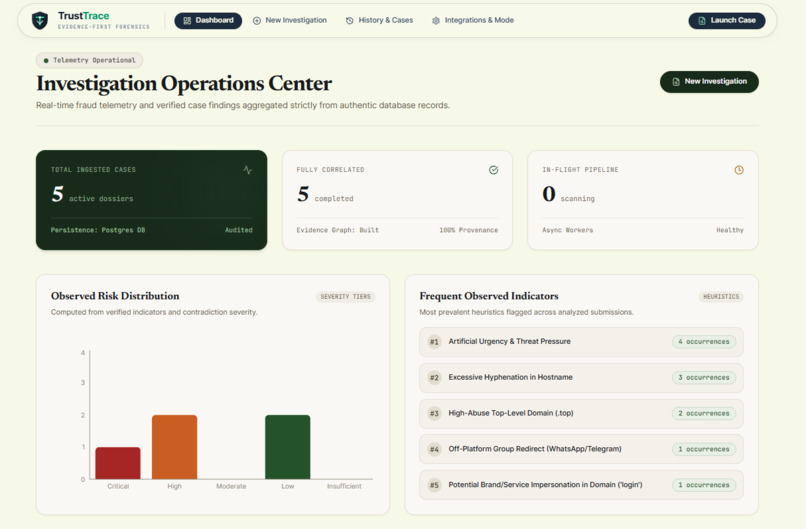
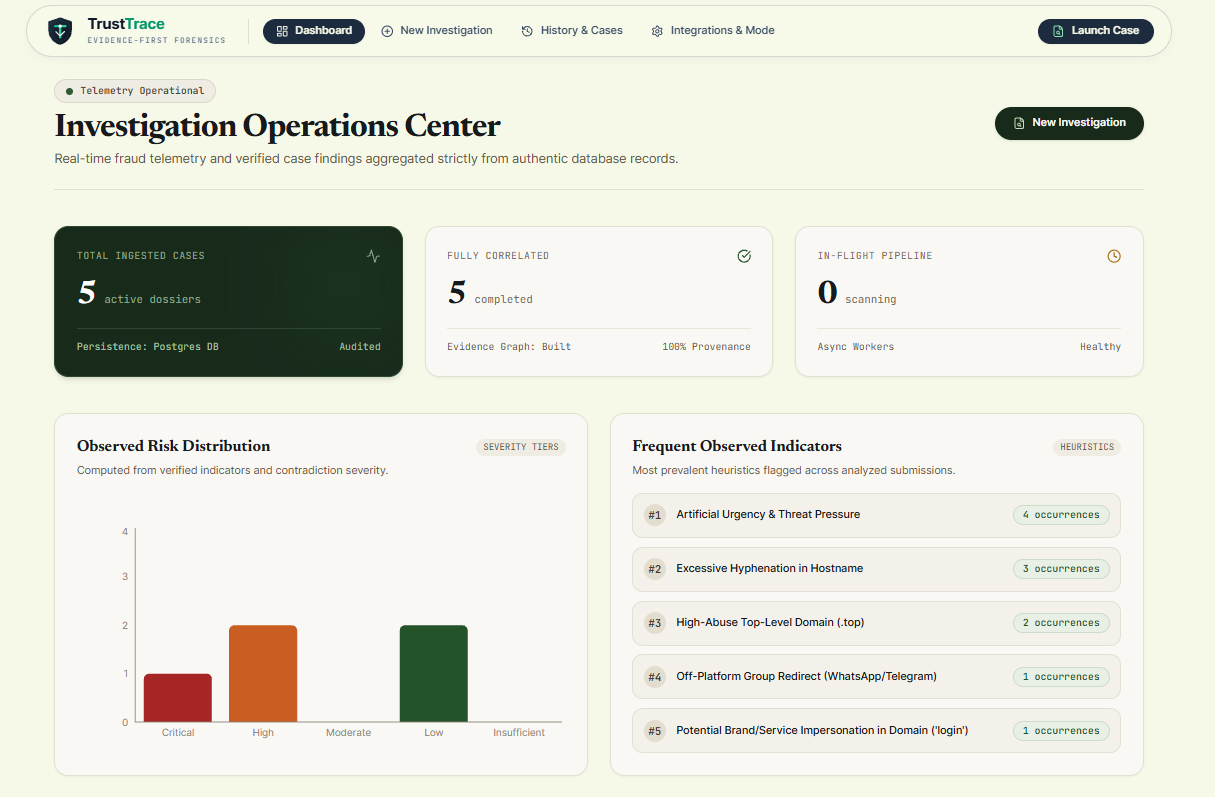
Investigation dashboard
-
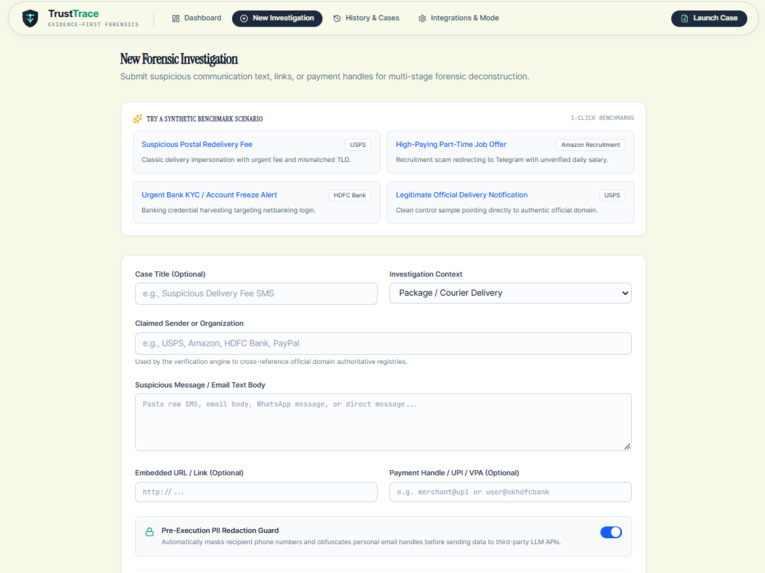
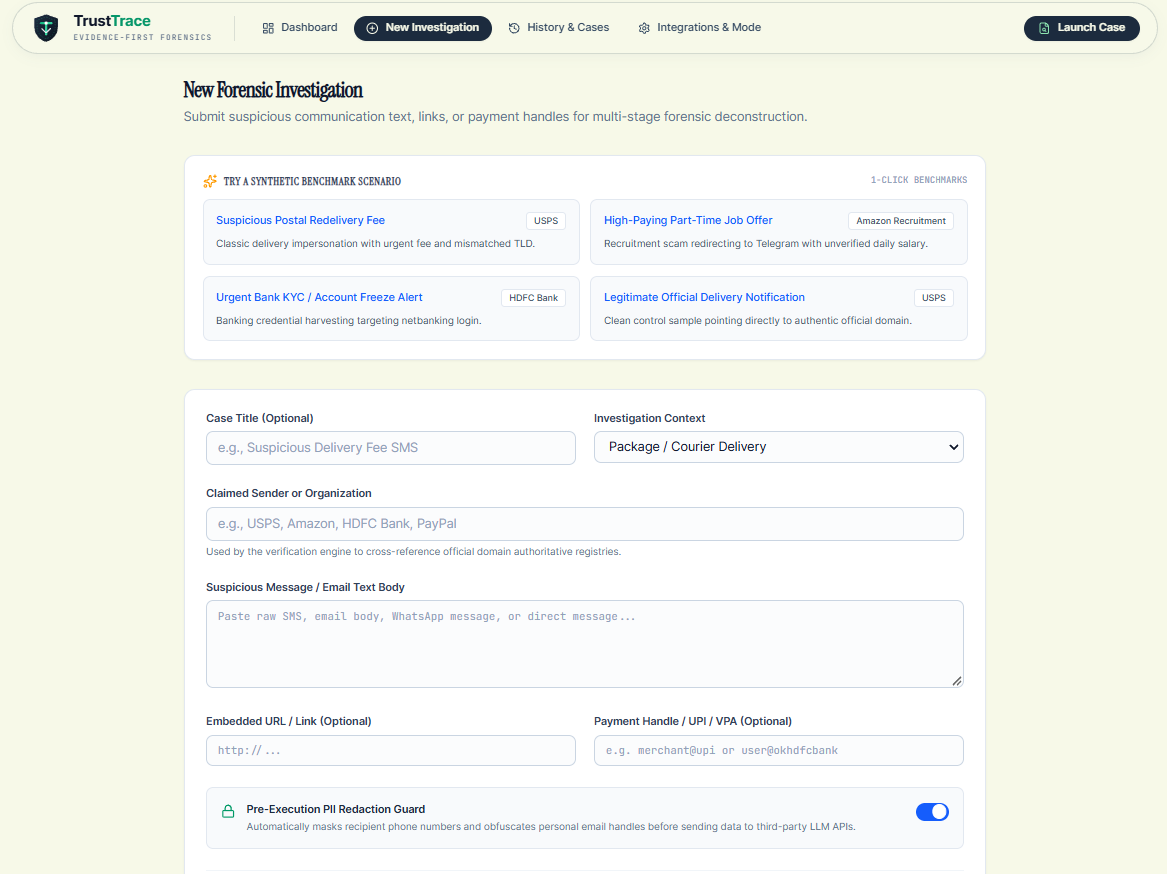
Investigation Workflow
-
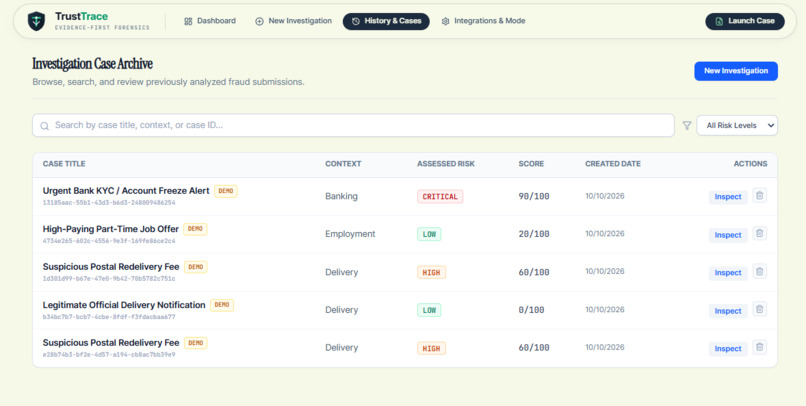
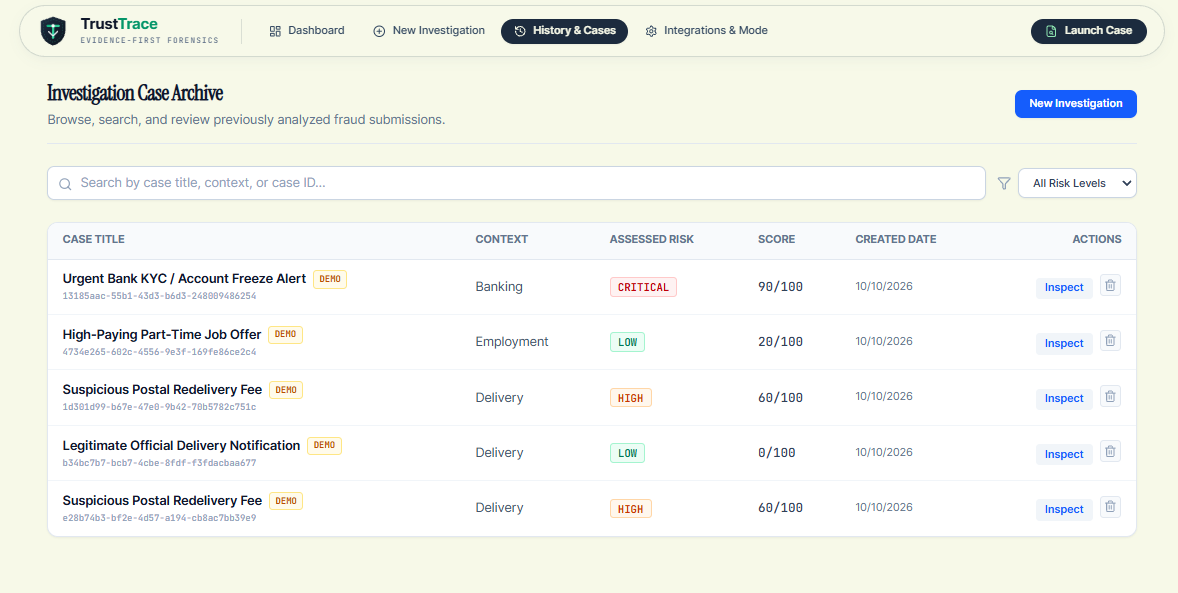
Past Investigations
Inspiration
Online fraud and phishing messages often imitate trusted organizations to pressure people into clicking malicious links or sharing sensitive information. We wanted to build a tool that helps investigators go beyond simply labeling a message as suspicious and instead understand the evidence behind that assessment.
What it does
TrustTrace is an AI-powered, evidence-first fraud investigation platform that analyzes suspicious messages and URLs. It extracts key claims, examines indicators, identifies potential contradictions, calculates an explainable risk score, and organizes findings into an interactive evidence graph.
The platform also supports investigation history, privacy-conscious PII redaction, recommendations for next steps, and Markdown or JSON report exports. Its goal is to make fraud analysis more transparent and easier to understand.
How we built it
We built the frontend using React, TypeScript, Vite, and Tailwind CSS, with React Flow for interactive evidence visualization. The backend uses Python and FastAPI, with Pydantic for data validation and SQLAlchemy for database operations.
Mistral AI is used for structured claim extraction, with a deterministic fallback when AI inference is unavailable. The platform also includes integrations designed for threat intelligence checks, including Google Safe Browsing and URLhaus, when configured credentials and connectivity are available.
Challenges we ran into
One major challenge was making AI-generated findings useful without treating them as unquestionable facts. We designed the workflow around structured claims, evidence correlation, and explainable risk assessments. We also worked on handling unavailable AI services, protecting sensitive information, and validating suspicious URLs safely.
Another challenge was presenting technical investigation results in a clear visual format that users can explore and understand.
Accomplishments that we're proud of
We brought together message analysis, claim extraction, URL investigation, explainable risk scoring, and an interactive evidence graph in one platform. We are especially proud of the evidence-first approach, which aims to show why a message may be risky instead of relying only on a warning label.
What we learned
We learned that useful AI security tools need more than model predictions. They also need transparent reasoning, careful handling of sensitive data, reliable fallback behavior, and clear communication of uncertainty. We also gained experience integrating a modern frontend with a Python API and designing a complete investigation workflow.
What's next
Next, we plan to expand verified threat intelligence integrations, improve evidence correlation, evaluate detection quality against more phishing scenarios, and strengthen deployment and authentication security. We also want to make investigation reports more useful for security teams and everyday users.
Built With
- ai
- css
- fastapi
- flow
- mistral
- python
- react
- sqlalchemy
- sqlite
- tailwind
- typescript
- vite

Log in or sign up for Devpost to join the conversation.