Inspiration
The project was inspired by the increasing challenges faced by the elderly, including health monitoring, medication adherence, and social isolation. Recognizing the potential of AI to address these issues, the goal was to develop a solution that combines voice interaction, real-time health tracking, and emergency assistance to enhance the quality of life for seniors.([bluefrogrobotics.com][1])
What It Does
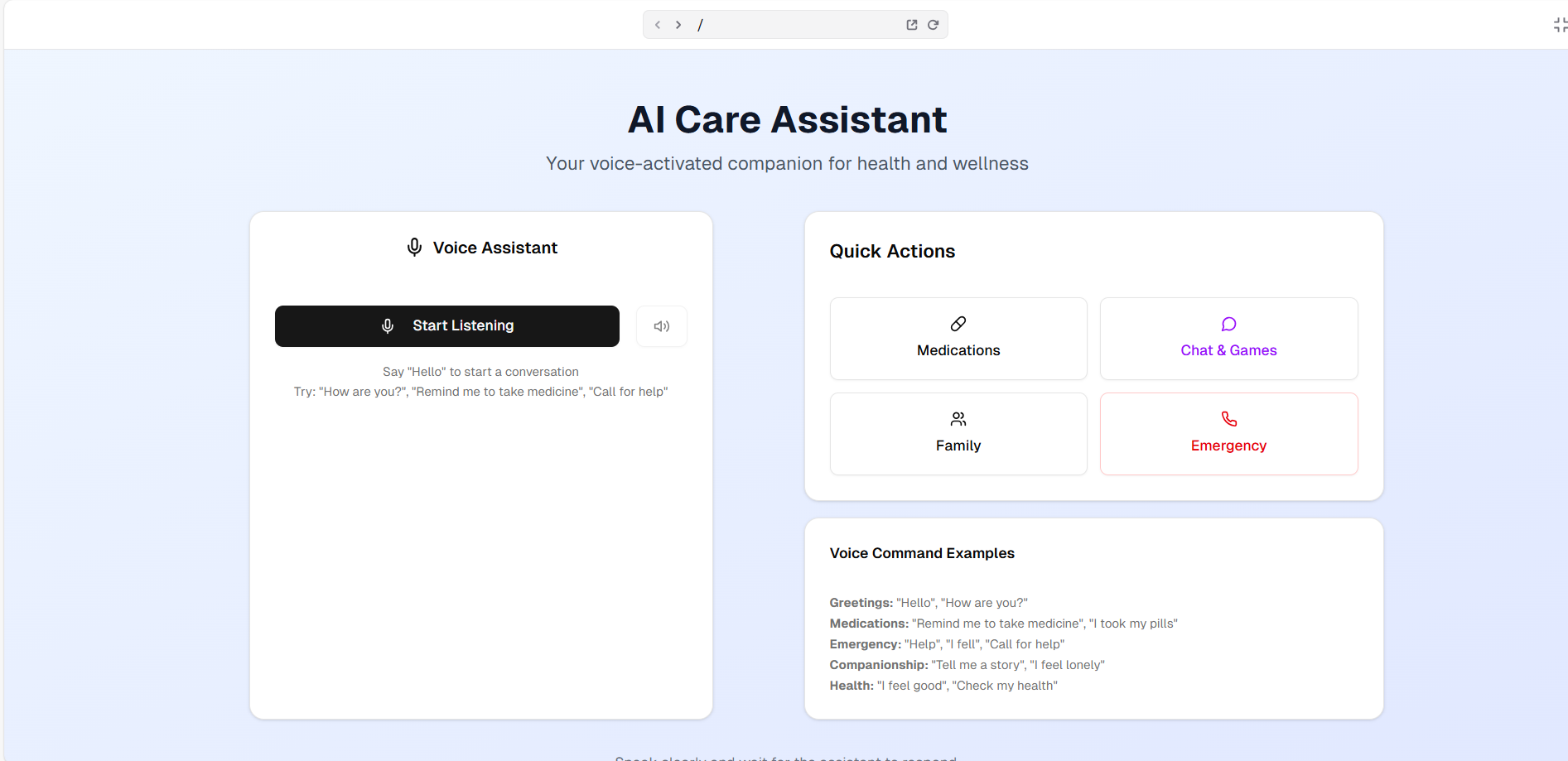
The AI-Powered Elderly Care Assistant is a smart, voice-enabled application designed to support elderly individuals in their daily healthcare, safety, and wellness needs. Key features include:
Voice Interaction: Allows seniors to interact with the assistant using natural language.([Matellio][2])
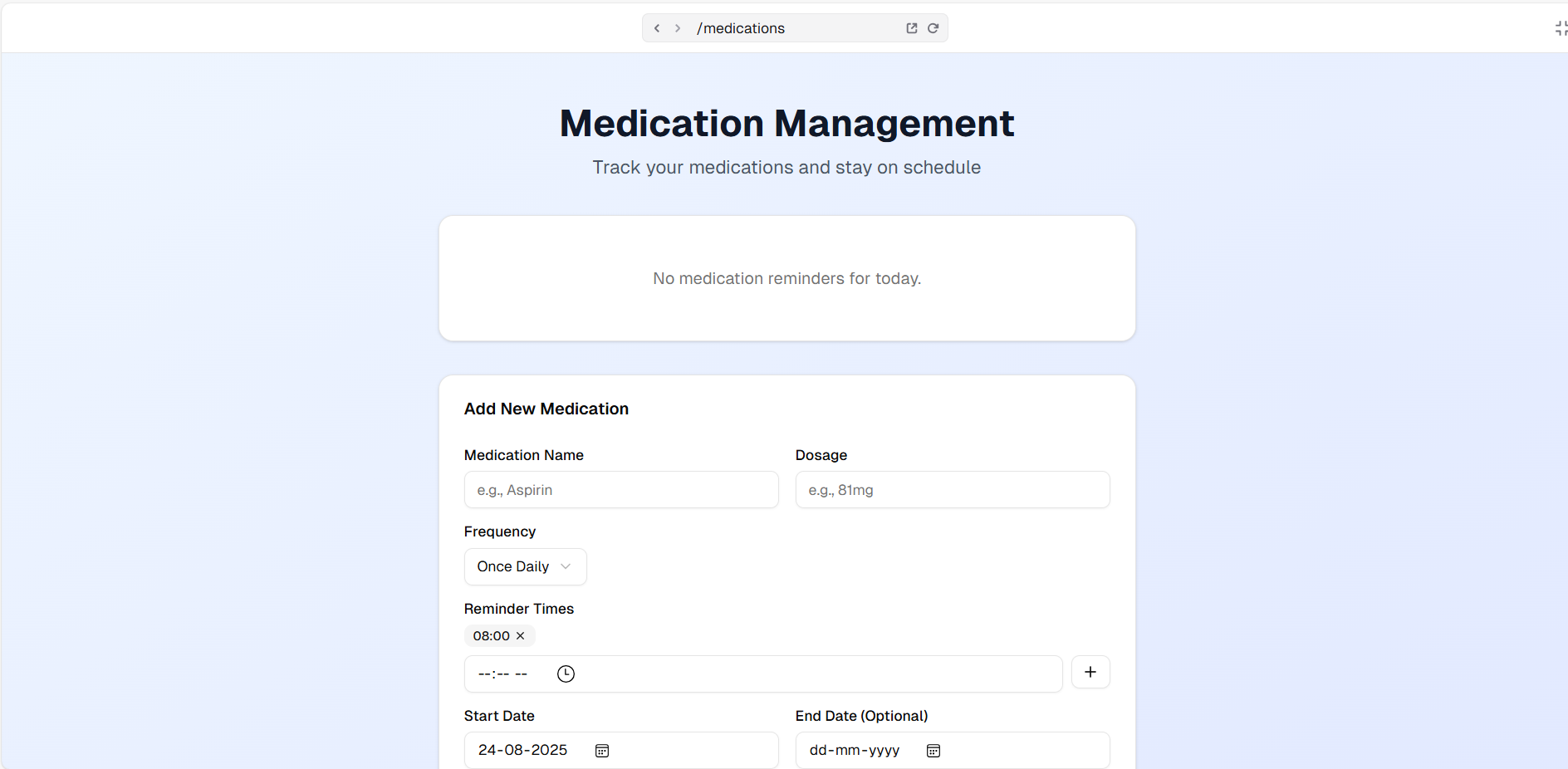
Health Monitoring: Tracks vital signs and provides reminders for medication and appointments.([The Investor][3])
Emergency Assistance: Detects falls or distress signals and alerts caregivers or emergency services.([bluefrogrobotics.com][1])
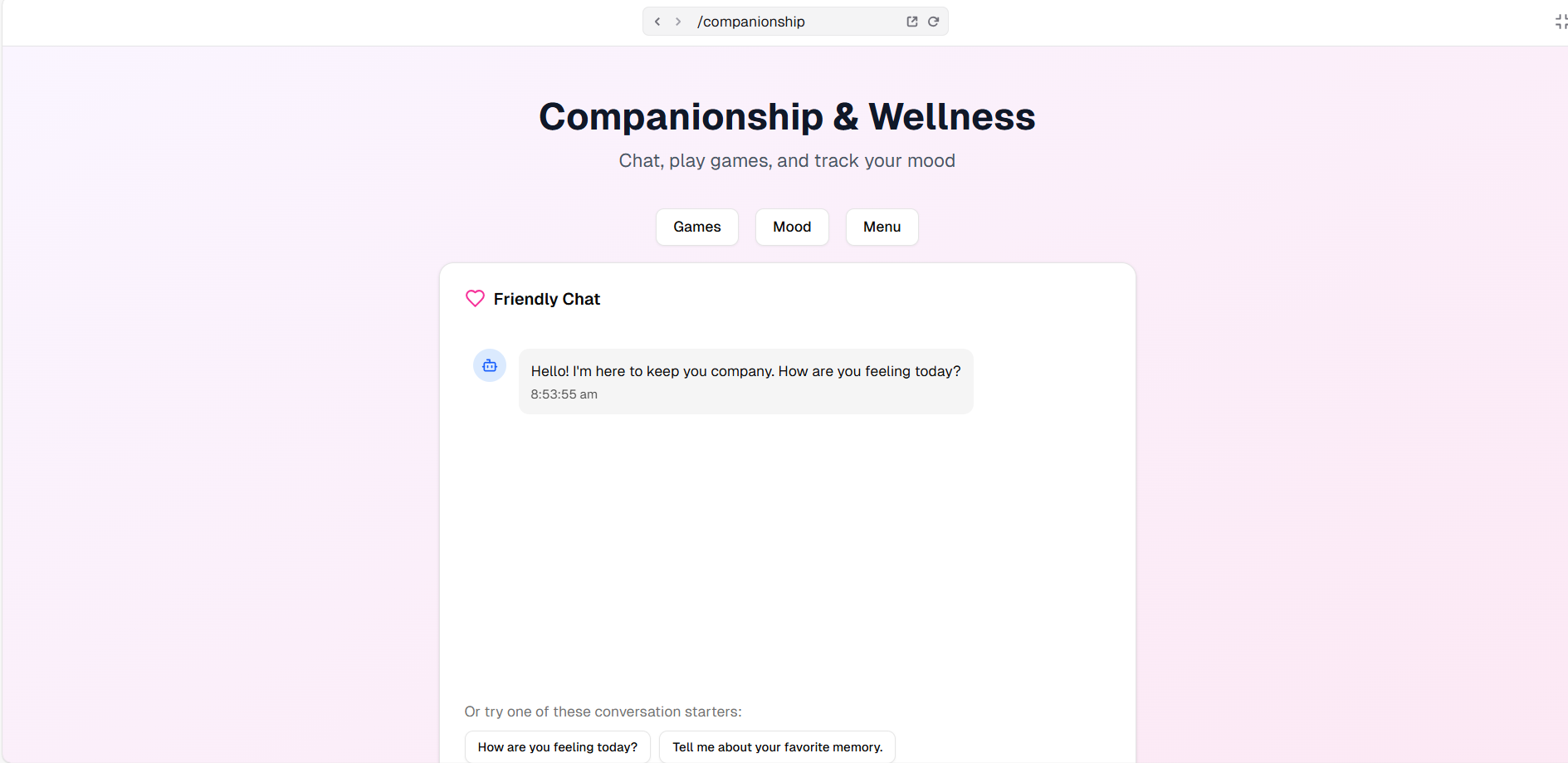
Social Engagement: Facilitates communication with family and friends to reduce feelings of isolation.
How I Built It
The application was developed using the following technologies:
Frontend: React for building the user interface.
Backend: Node.js with Express for server-side logic.
Database: MongoDB for storing user data and health records.
Voice Recognition: Web Speech API for voice input processing.
Deployment: Deployed on Vercel for frontend and Heroku for backend services.
The development process involved integrating various APIs for health data tracking and emergency services, ensuring real-time responsiveness and reliability.
Challenges I Ran Into
Voice Recognition Accuracy: Ensuring accurate voice input recognition, especially in noisy environments, was challenging.
Data Privacy: Implementing robust security measures to protect sensitive health information.
User Interface Design: Creating an intuitive interface that caters to the elderly, considering factors like font size and ease of navigation.
Integration with Health Devices: Synchronizing data from various health monitoring devices posed technical difficulties.
Accomplishments That We're Proud Of
User-Centric Design: Developed an interface tailored to the needs of elderly users, with large fonts and simple navigation.([Matellio][2])
Real-Time Health Monitoring: Implemented features that allow continuous tracking of vital signs and immediate response to emergencies.
Positive Feedback: Received encouraging feedback from initial users and caregivers, highlighting the application's potential impact.
What I Learned
Importance of Accessibility: Designing for accessibility is crucial to ensure that the elderly can effectively use the application.
Voice Interaction Challenges: Accurate voice recognition is essential, and continuous training of the system is necessary to improve performance.
Data Security: Prioritizing data security and compliance with health data regulations is vital in healthcare applications.
What's Next
Enhanced Voice Capabilities: Integrate advanced AI models for better understanding and response to voice commands.
Expanded Device Integration: Broaden compatibility with a wider range of health monitoring devices.
Mobile Application: Develop a mobile version of the assistant for greater accessibility.
Community Engagement: Collaborate with healthcare providers to expand the application's reach and effectiveness.
Built With
- express.js
- heroku
- mongodb
- node.js
- openai
- react
- vercel
- web-speech-api


Log in or sign up for Devpost to join the conversation.