About the Project
Inspiration
Modern drug discovery spans chemistry, biology, clinical science, and vast bodies of literature-yet these domains are still analyzed largely in isolation. Molecular docking outputs, experimental binding tables, clinical trial summaries, and research papers often live in separate tools and formats, slowing hypothesis generation and decision-making.
This project was inspired by the idea of building an AI-powered drug discovery agent that can reason across these domains simultaneously, much like a multidisciplinary research team. The goal was not just prediction, but scientific synthesis-connecting molecules, experiments, and clinical outcomes to generate testable hypotheses.
What I Learned
Building this project highlighted several key lessons:
Multimodal reasoning requires discipline
Combining text, tables, and molecular representations demands strict schemas and validation to avoid hallucinated connections.Model evaluation matters more than model size
Reliability, structured output compliance, and consistency are critical for scientific workflows.Tooling shapes outcomes
Using Gemini AI Studio enabled rapid experimentation with long-context, multimodal reasoning while exposing real-world constraints such as quotas and output variability.
Built Using Gemini AI Studio
The project was built and iterated using Gemini AI Studio, leveraging Gemini’s strengths in:
- Long-context understanding for scientific literature
- Reasoning over structured experimental tables
- Multimodal synthesis across text, numeric data, and molecular representations
- Fast prototyping and evaluation of multiple model variants
Gemini AI Studio served as the primary environment for testing prompts, refining structured outputs, and validating multimodal reasoning before integrating the models into a modular Python-based agent architecture.
Architecture Overview
The system follows a model-agnostic, agent-oriented design:
- Adapters abstract the underlying foundation models
- Agents specialize in molecular analysis, literature synthesis, and hypothesis generation
- Schemas enforce structured outputs for predictions such as binding affinity and molecular attributes
- An evaluation harness systematically tests model behavior using synthetic drug-discovery tasks
This architecture makes it easy to swap models, compare performance, and scale evaluations without rewriting core logic.
Challenges Faced
Strict output enforcement
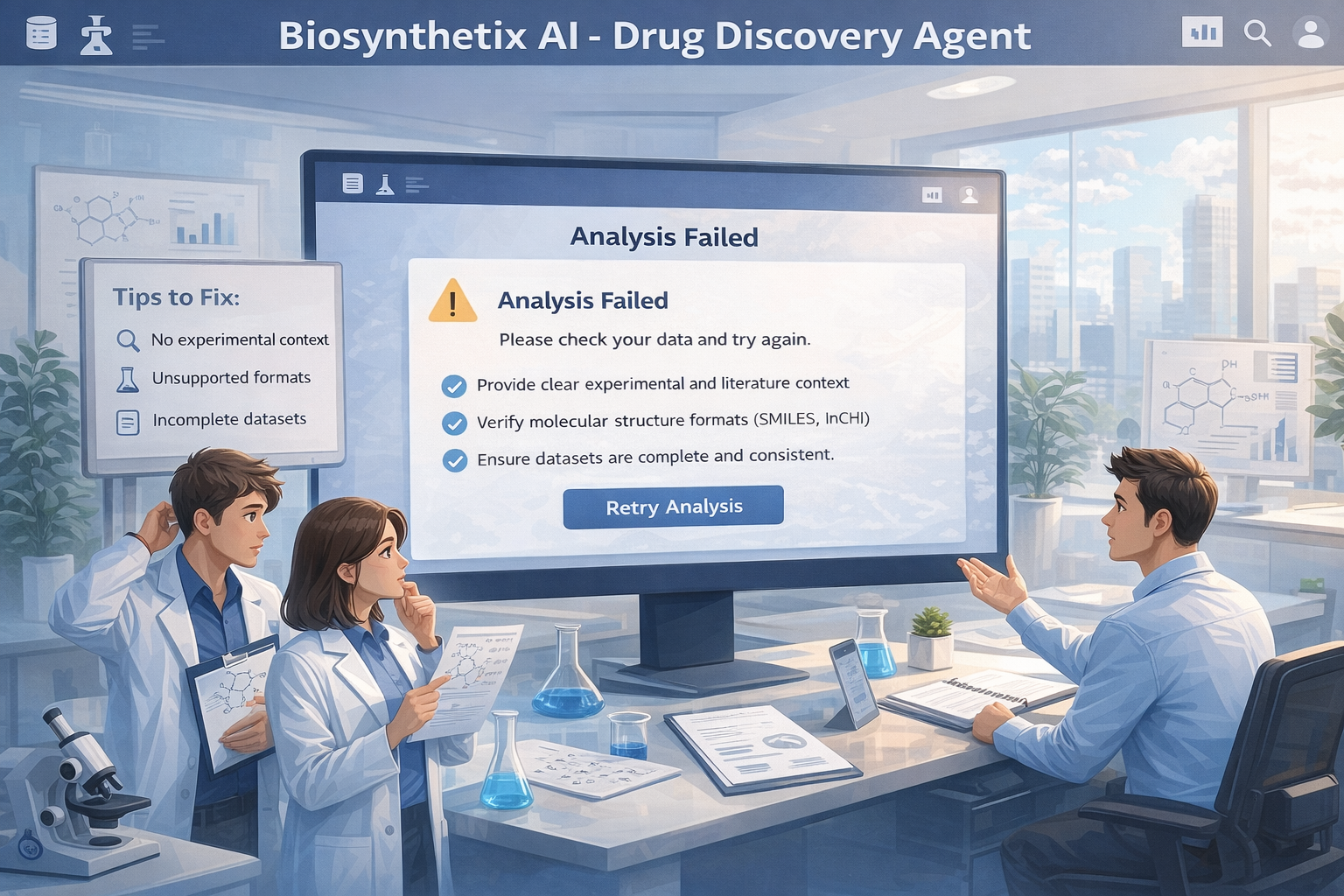
Large language models are optimized for natural language, not structured scientific data. This required schema validation, retries, and output repair mechanisms.Quota and rate limits
Free-tier constraints influenced model selection and reinforced the need for robust evaluation workflows.Scientific grounding
Ensuring that hypotheses were traceable to experimental and clinical evidence was essential to maintain trust and interpretability.
Outcome
The result is a working AI-driven drug discovery agent built using Gemini AI Studio, capable of:
- Synthesizing molecular, experimental, and clinical data
- Producing structured predictions alongside scientific narratives
- Supporting systematic model evaluation and down-selection
- Reflecting real-world R&D constraints
Rather than replacing scientists, the system acts as a multimodal research assistant, accelerating insight generation while keeping humans in the loop.
Looking Ahead
Future work includes deeper multimodal reasoning (e.g., molecular images), physics-informed validation, and expanded hypothesis testing pipelines—moving toward a more integrated, AI-native drug discovery workflow.

Log in or sign up for Devpost to join the conversation.