-
-
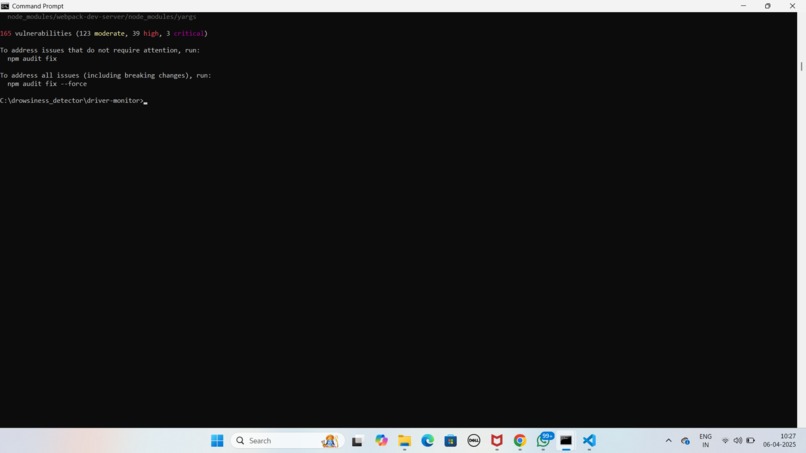
FRONTEND WORKING IN THE CMD PROMPT
-
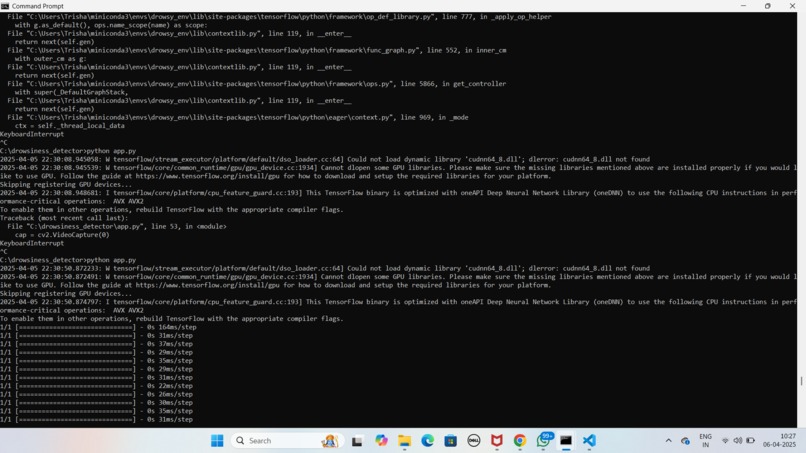
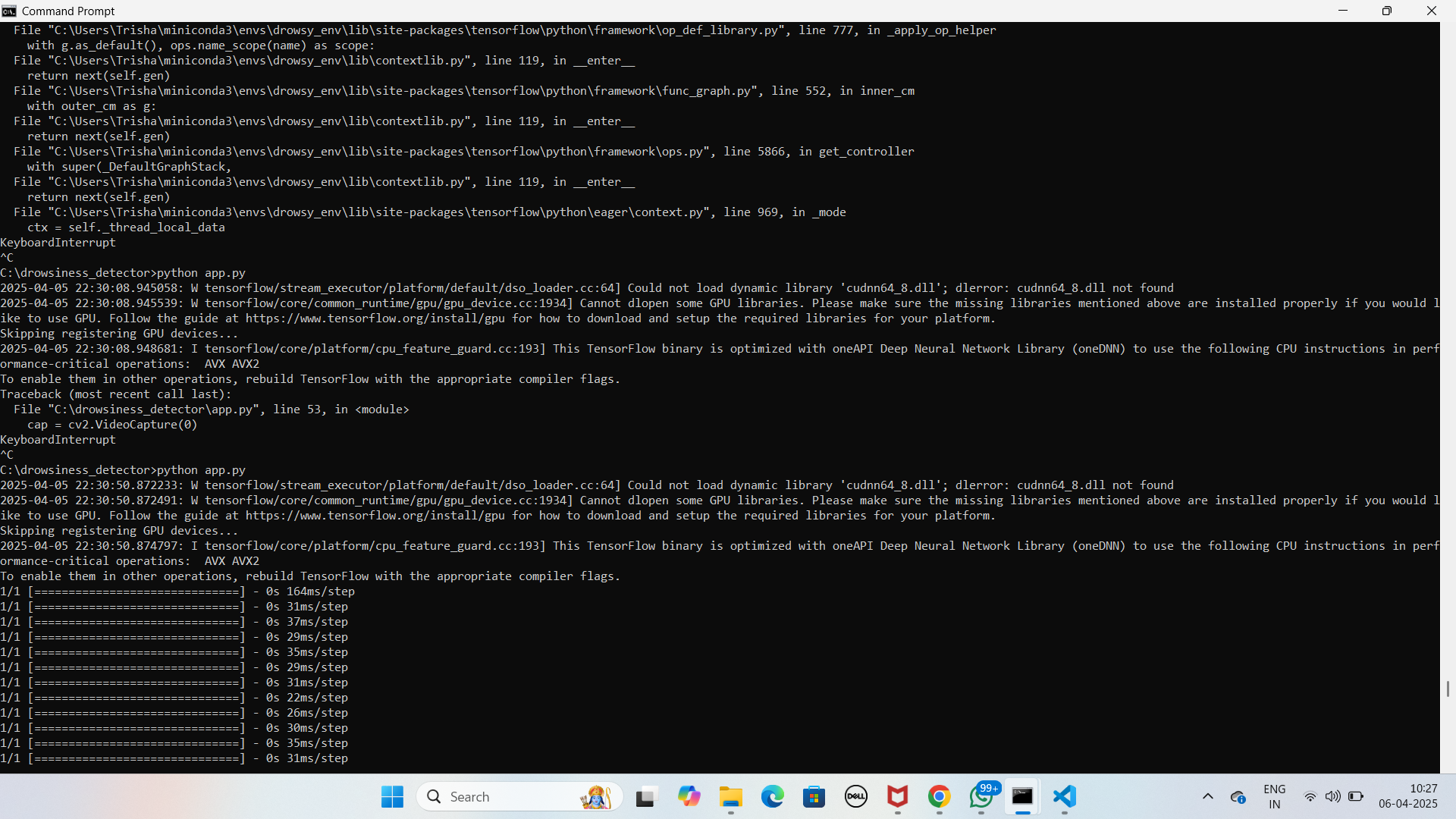
BACKENDWORKING IN THE CMD PROMPT
Inspiration
Every year thousands of road accidents happen due to driver drowsiness and fatigue. We wanted to build something that could prevent such accidents using AI & Computer Vision. This project was inspired by the idea of using technology for real-time driver safety and alertness monitoring.
What it does
Our AI-powered drowsiness detector monitors the driver's eye movements and facial patterns using a webcam. If signs of drowsiness or closed eyes are detected for a certain duration, the system triggers a loud alarm to wake the driver and avoid accidents.
How we built it
- Python for backend logic
- OpenCV for real-time video processing
- MediaPipe FaceMesh for detecting eye landmarks
- Dlib for facial analysis
- Pygame for sound alerts
- Streamlit for creating an easy-to-use web interface
- Trained custom model for eye aspect ratio detection
- Deployed the solution locally for demo purposes
Challenges we ran into
- Accurate detection of drowsiness without false alarms
- Real-time video processing with low latency
- Handling different lighting conditions and face angles
- Integrating all libraries seamlessly
- Optimizing the detection model for speed and accuracy
Accomplishments that we're proud of
- Successfully detecting drowsiness with good accuracy
- Real-time alert system working smoothly
- Clean and user-friendly interface
- Deployment-ready project within hackathon time limits
What we learned
- Real-time computer vision implementation
- Facial landmark detection techniques
- Integration of multiple Python libraries for a common goal
- Handling video feeds and audio alerts simultaneously
- Deploying ML projects in production-ready formats
What's next for AI powered drowsiness detector
- Deploy it as a mobile application
- Add cloud storage & monitoring for driver analytics
- Integrate GPS location tracking during drowsiness
- Improve model accuracy using deep learning
- Deploy for public transport vehicles and fleet management systems


Log in or sign up for Devpost to join the conversation.