-
-
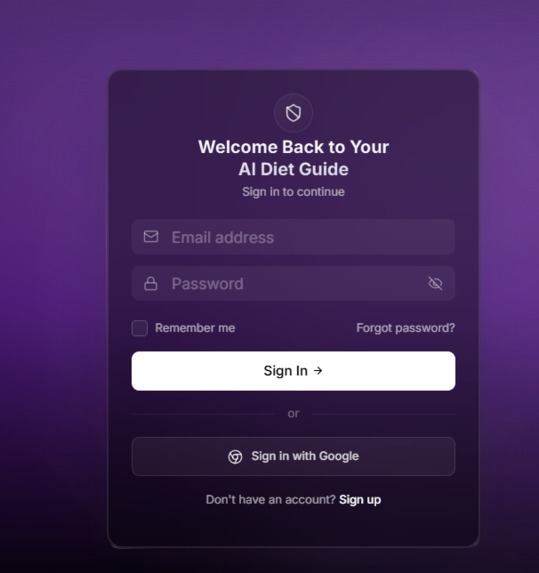
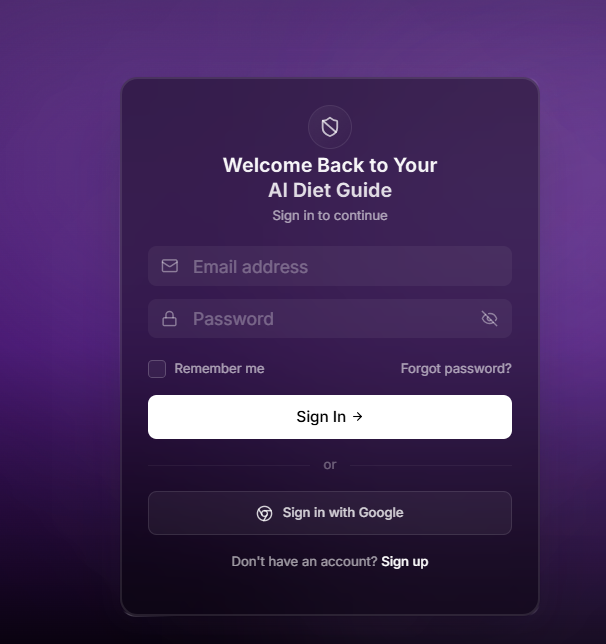
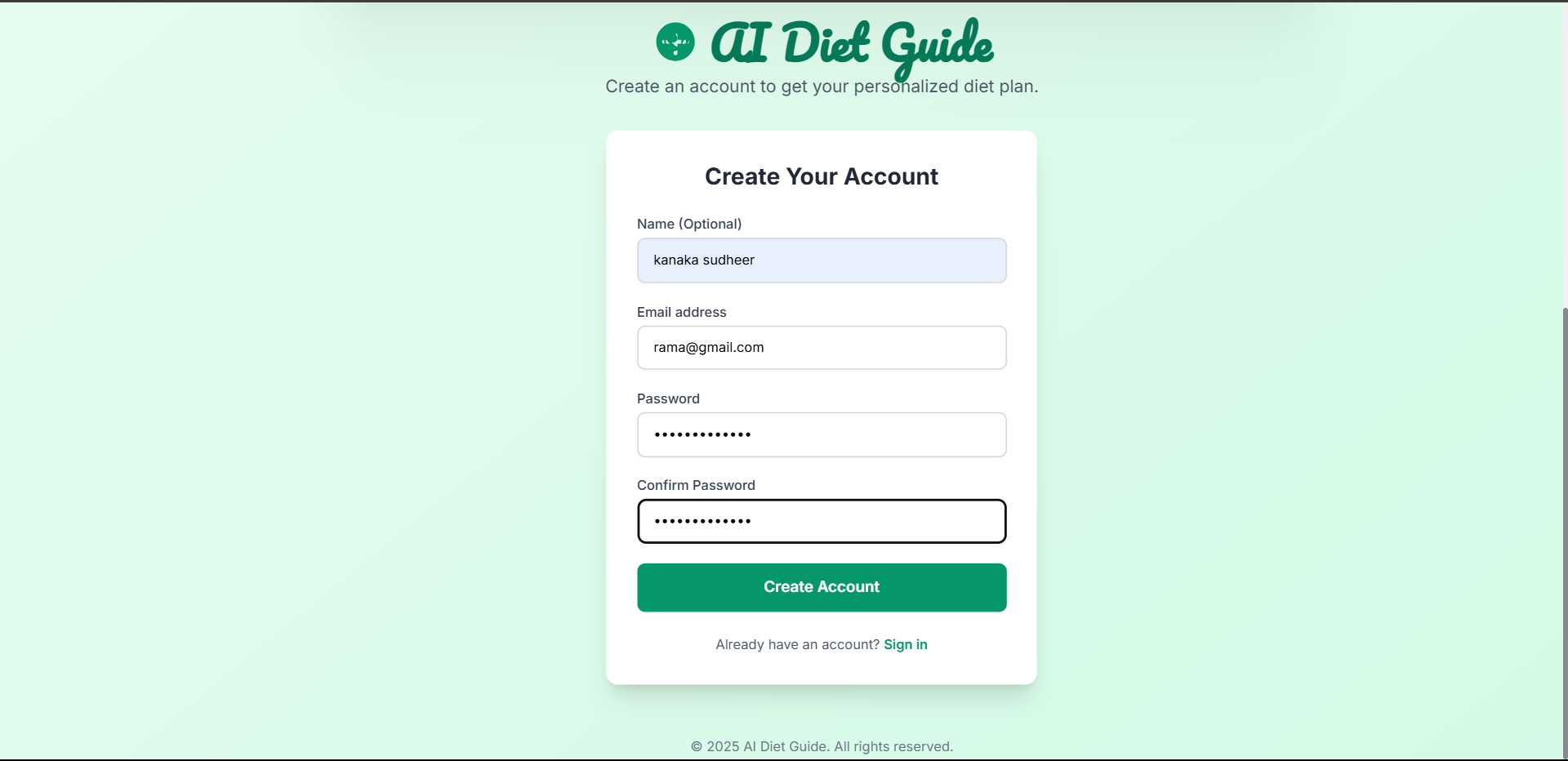
Sign-in Page
-
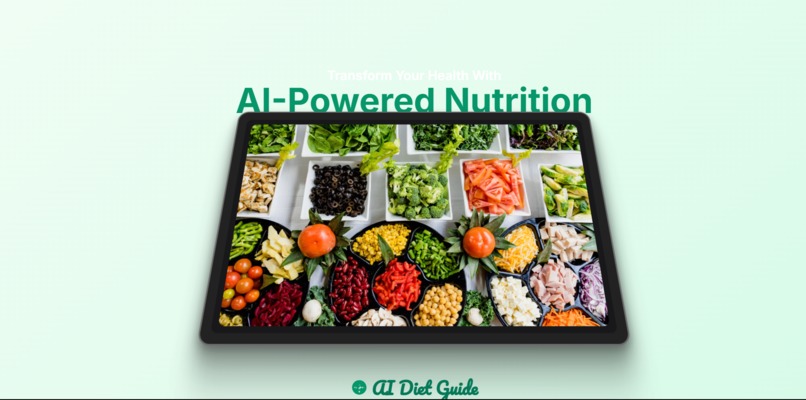
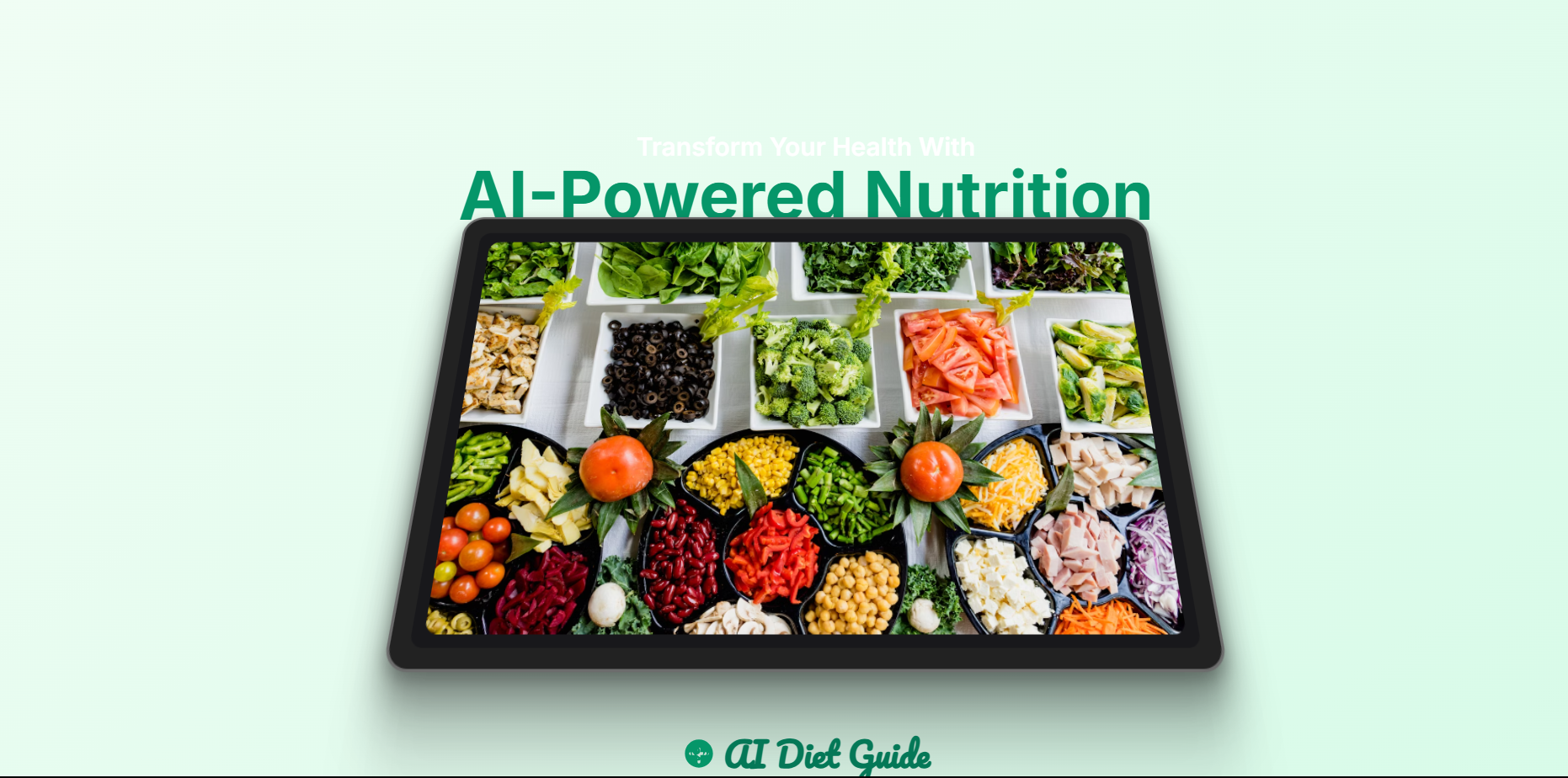
Ai-Powered Nutrition
-
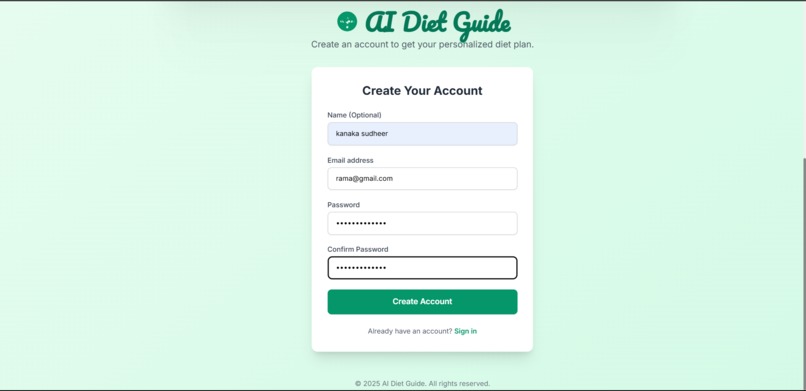
Create Your Account
-
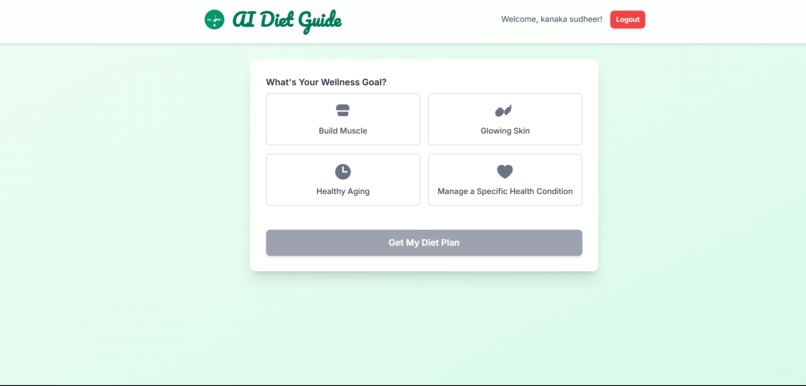
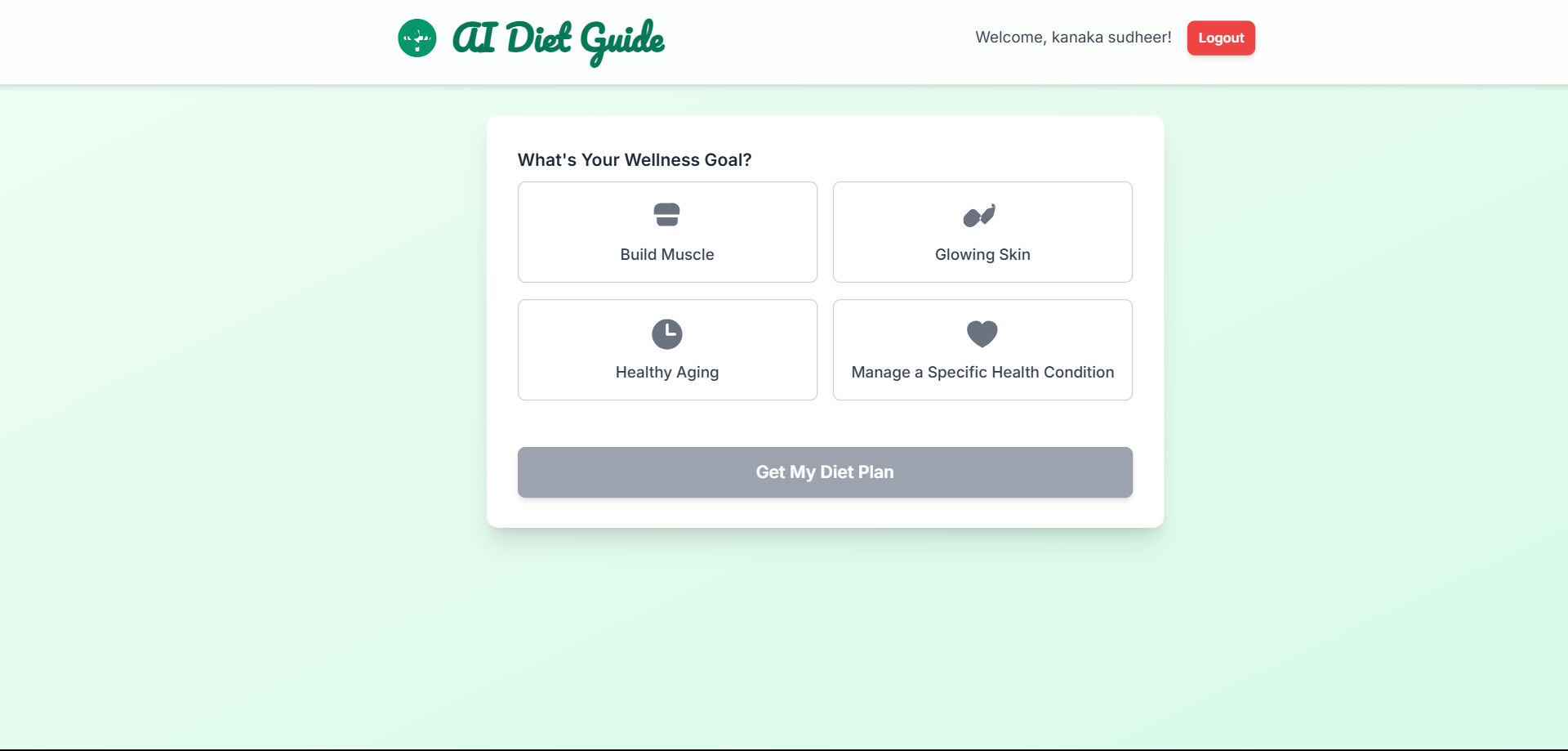
Ai-Diet Guide
-
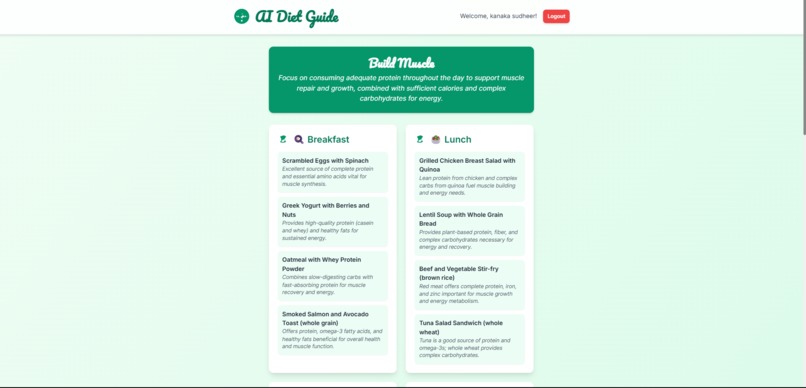
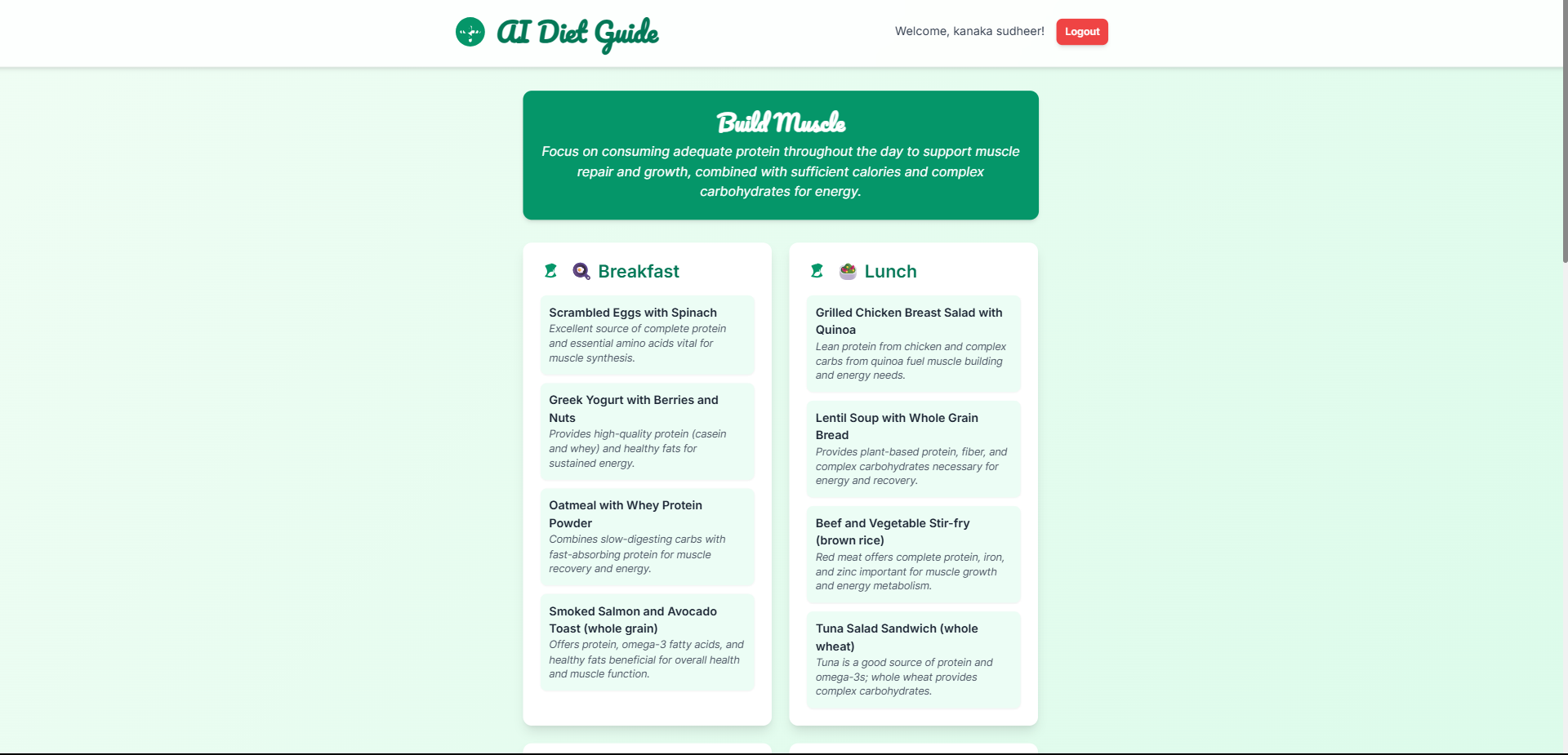
Output-1
-
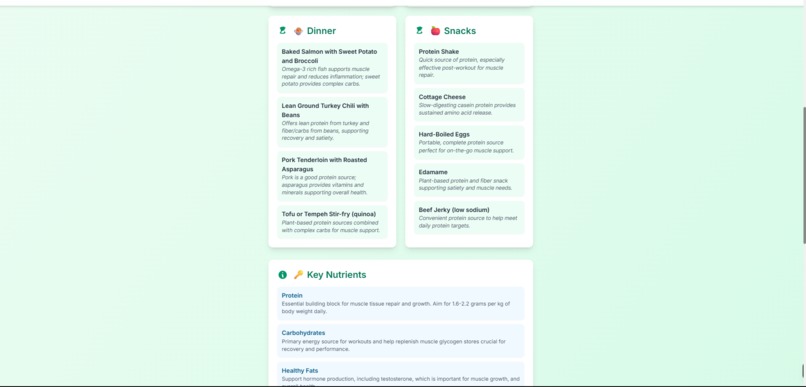
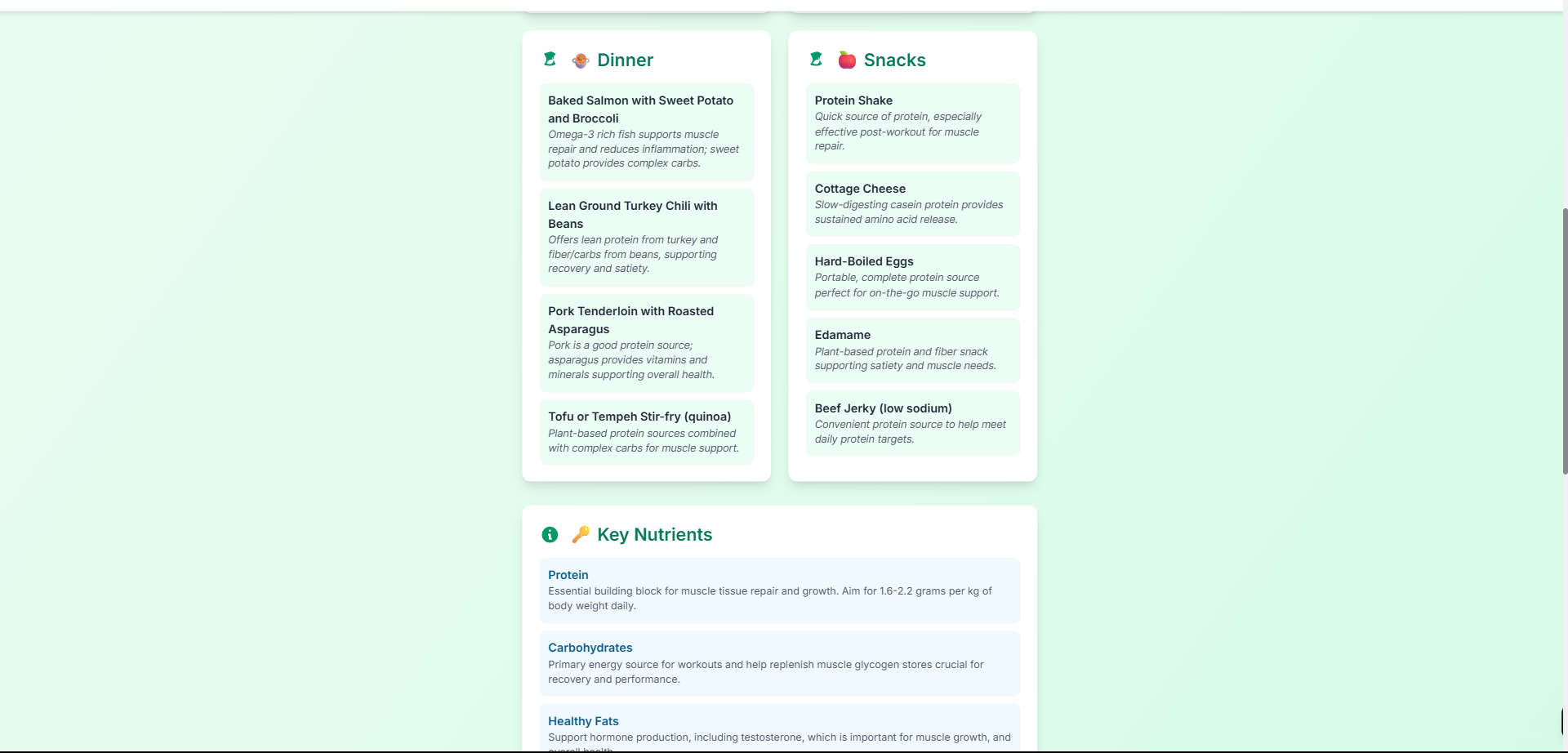
output-2
About AI-Powered Diet Guide
Inspiration
The inspiration behind the AI-Powered Diet Guide stems from a desire to make personalized nutrition accessible and understandable for everyone. In today's world, navigating the vast and often conflicting information about diet and wellness can be overwhelming. We envisioned a tool that could cut through the noise, leveraging the power of artificial intelligence to provide tailored, actionable dietary advice. The goal was to empower users to take control of their health journey by providing them with clear, science-informed (as guided by the AI's training) recommendations based on their unique wellness aspirations.
What it does
AI-Powered Diet Guide is an interactive web application designed to provide users with personalized diet plans. Users can:
- Create an Account/Login: Securely access their profile and saved preferences.
- Set Wellness Goals: Choose from a range of goals such as "Build Muscle," "Glowing Skin," "Healthy Aging," or specify a "Specific Health Condition" they wish to manage through diet.
- Receive AI-Generated Diet Plans: Based on the selected goal (and any specified condition), the application queries the Google Gemini API to generate a comprehensive diet plan.
- View Detailed Plans: The diet plan includes:
- An overview of the dietary approach.
- Specific meal suggestions for breakfast, lunch, dinner, and snacks, along with the benefits of each food item.
- A list of key nutrients to focus on, with explanations.
- Foods to limit or avoid, with reasons.
- General dietary and lifestyle tips.
- An overview of the dietary approach.
- User-Friendly Interface: Experience a clean, responsive, and engaging interface with smooth animations and clear presentation of information.
The application aims to be a helpful companion for individuals looking to improve their dietary habits in line with their health objectives.
How we built it
The AI-Powered Diet Guide was built using a modern web development stack:
Frontend:
React: A JavaScript library for building user interfaces, enabling a component-based architecture.TypeScript: For static typing, improving code quality and maintainability.Tailwind CSS: A utility-first CSS framework for rapid UI development and styling.Framer Motion: For creating fluid animations and transitions, enhancing the user experience.- The application is served via a standard
index.htmlwhich loads the React application bundled throughindex.tsx.
AI Integration:
- Prompt Engineering: Carefully crafted prompts are sent to the Gemini API, instructing it to return diet plans in a specific JSON format, tailored to the user's selected wellness goal and any specified health conditions.
- JSON Parsing: The frontend robustly parses the JSON response from the API to display the diet plan.
UI/UX Components:
- Key interactive components include
GoalSelectorfor choosing wellness objectives,DietPlanDisplayfor presenting the AI-generated plan, andLoginForm/RegistrationFormfor user authentication. - Visual enhancements like the
ContainerScrollanimation on the login/registration pages aim to create a more engaging initial experience.
State Management:
- React's built-in state management (
useState,useCallback,useEffect) is used to handle application data, UI state, and asynchronous operations.
Local Storage:
- Basic user session management (remembering the current user) is implemented using browser
localStoragefor persistence across sessions in this demonstration.
Challenges we ran into
- Prompt Engineering for Consistent JSON: One of the primary challenges was designing prompts that would consistently yield valid JSON from the Gemini API, adhering to the precise schema required by the frontend. This involved iterative refinement of instructions, especially regarding output structure and content constraints (e.g., conciseness of benefits).
- API Response Variability & Error Handling: LLMs can sometimes produce unexpected variations in their output. Implementing robust parsing and validation for the API's JSON response, along with graceful error handling for malformed data or API errors (like invalid API keys), was crucial.
- Ensuring Safe and Responsible AI Output: While the AI provides suggestions, it's critical to remind users that these are not substitutes for professional medical advice. The prompt includes instructions for the AI to act as an expert nutritionist, but the disclaimer in the UI is vital.
- Balancing UI/UX with Information Density: Presenting a comprehensive diet plan in an intuitive and aesthetically pleasing manner without overwhelming the user required careful design choices for layout, typography, and animations.
- Asynchronous Operations: Managing loading states, API calls, and UI updates smoothly during asynchronous operations (like fetching the diet plan) required careful state management.
Accomplishments that we're proud of
- Successful Gemini API Integration: Seamlessly integrating the
@google/genaiSDK to fetch and display dynamic, AI-generated content is a core achievement. - Personalized User Experience: The ability for users to receive diet plans tailored to their specific wellness goals, including managing particular health conditions.
- Polished and Responsive UI: Creating a visually appealing, animated, and responsive user interface using Tailwind CSS and Framer Motion that works well across different screen sizes.
- Structured Data Handling: Effectively prompting for and parsing structured JSON data from the AI, which is then rendered into meaningful UI components.
- Component Reusability: Building modular React components (
GoalSelector,DietPlanDisplay, etc.) that enhance code organization and maintainability. - End-to-End User Flow: Implementing a complete user journey from authentication (login/registration) to goal selection and diet plan generation.
What we learned
- The Power of LLMs: Gained a deeper appreciation for the capabilities of modern LLMs like Gemini in generating complex, contextual information based on well-crafted prompts.
- Criticality of Prompt Engineering: Learned that the quality and specificity of the prompt are paramount in obtaining desired outputs from an LLM, especially when requiring structured data like JSON.
- Importance of Output Validation: Realized that client-side validation of AI-generated data is essential to ensure application stability and a good user experience.
- Modern Frontend Tooling: Enhanced our skills in using React, TypeScript, Tailwind CSS, and Framer Motion to build dynamic, interactive, and aesthetically pleasing web applications.
- Iterative Development: The process of refining prompts, UI elements, and error handling was highly iterative, highlighting the importance of testing and adapting based on results.
- Responsible AI Implementation: Acknowledging the limitations of AI and the importance of disclaimers, especially in health-related applications.
What's next for AI-Powered Diet Guide
The AI-Powered Diet Guide has a strong foundation, and there are many exciting directions for future development:
- Expanded Goal & Dietary Preference Options: Introduce more wellness goals, and allow users to specify dietary restrictions or preferences (e.g., vegan, vegetarian, gluten-free, allergies).
- Meal Logging & Progress Tracking: Enable users to log their meals and track their progress towards their goals.
- Nutritional Analysis: Provide more detailed nutritional information for suggested foods and meals (e.g., calories, macronutrients, micronutrients).
- Shopping List Generation: Automatically generate a shopping list based on the suggested diet plan.
- Image-Based Food Logging: Explore integrating image recognition (potentially using multimodal Gemini capabilities) to allow users to log meals by taking photos.
- Integration with Wearables/Health Apps: Connect with popular fitness trackers or health data platforms to incorporate activity levels and other health metrics for even more personalized advice.
- Google Search Grounding: For queries about specific foods, current nutritional research, or recipes, integrate Google Search grounding to provide up-to-date information and cite sources.

Log in or sign up for Devpost to join the conversation.