

Inspiration We noticed that most websites have static FAQs or chatbots with limited capabilities. We wanted to build a dynamic, AI-powered agent that could provide real-time, intelligent support by extracting live information directly from any website.
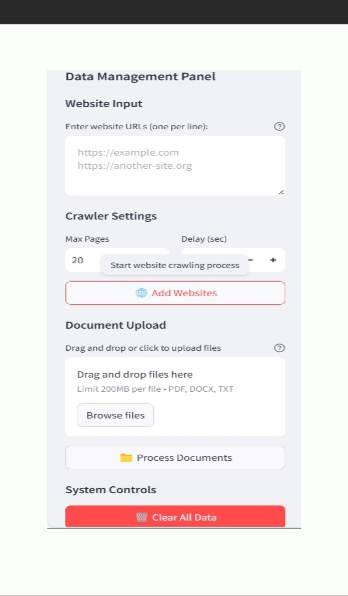
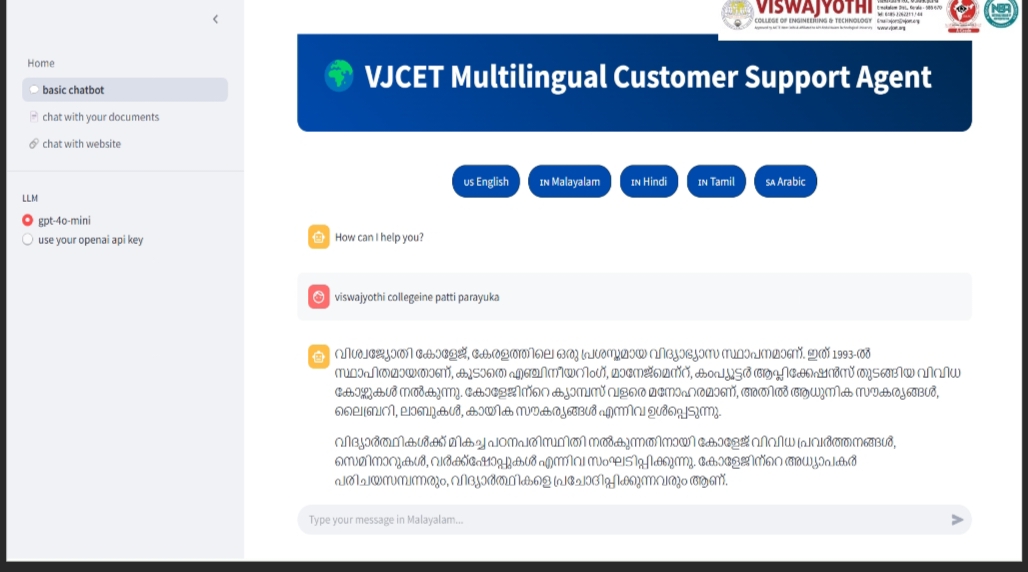
What it does Our AI-powered chatbot uses natural language processing to understand user queries and dynamically scrapes website content to provide relevant, up-to-date answers. It supports multilingual queries, offers different modes (basic, document-based, and web-scraping), and can escalate to human assistance if needed.
How we built it We used Streamlit for the frontend, Python for backend logic, and integrated web scraping tools like BeautifulSoup and Requests. We structured scraped content into JSON format and used NLP techniques to generate dynamic responses based on user input.
Challenges we ran into Making real-time web scraping fast and accurate
Handling ambiguous user queries and matching them with relevant data
Designing a clean, responsive UI within Streamlit’s limitations
Ensuring multilingual support without excessive complexity
Accomplishments that we're proud of Built a fully functional multi-mode chatbot from scratch
Successfully implemented dynamic website scraping
Created an intuitive and clean Streamlit UI
Enabled support for multiple languages and fallback responses
What we learned How to integrate web scraping with NLP in real-time applications
Streamlit’s strengths and limitations for interactive apps
How to manage and structure unstructured data from websites
Importance of user-friendly design in chatbot interactions
What’s next for AI-powered customer service agent Integrate a database layer for more efficient data retrieval
Add voice input/output features for accessibility
Improve response quality with LLM-based summarization
Enable chatbot deployment as an API for other platforms

Log in or sign up for Devpost to join the conversation.