-
-
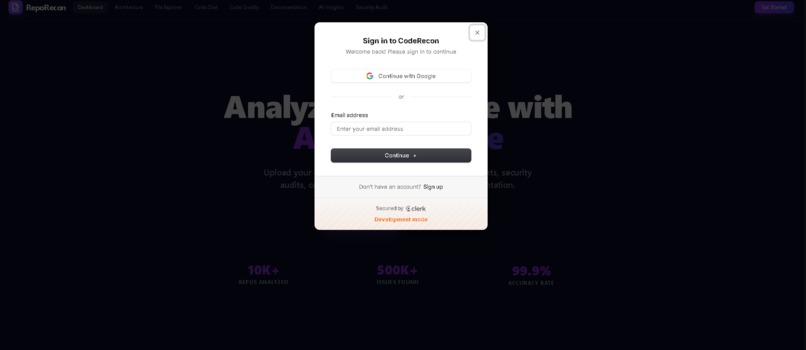
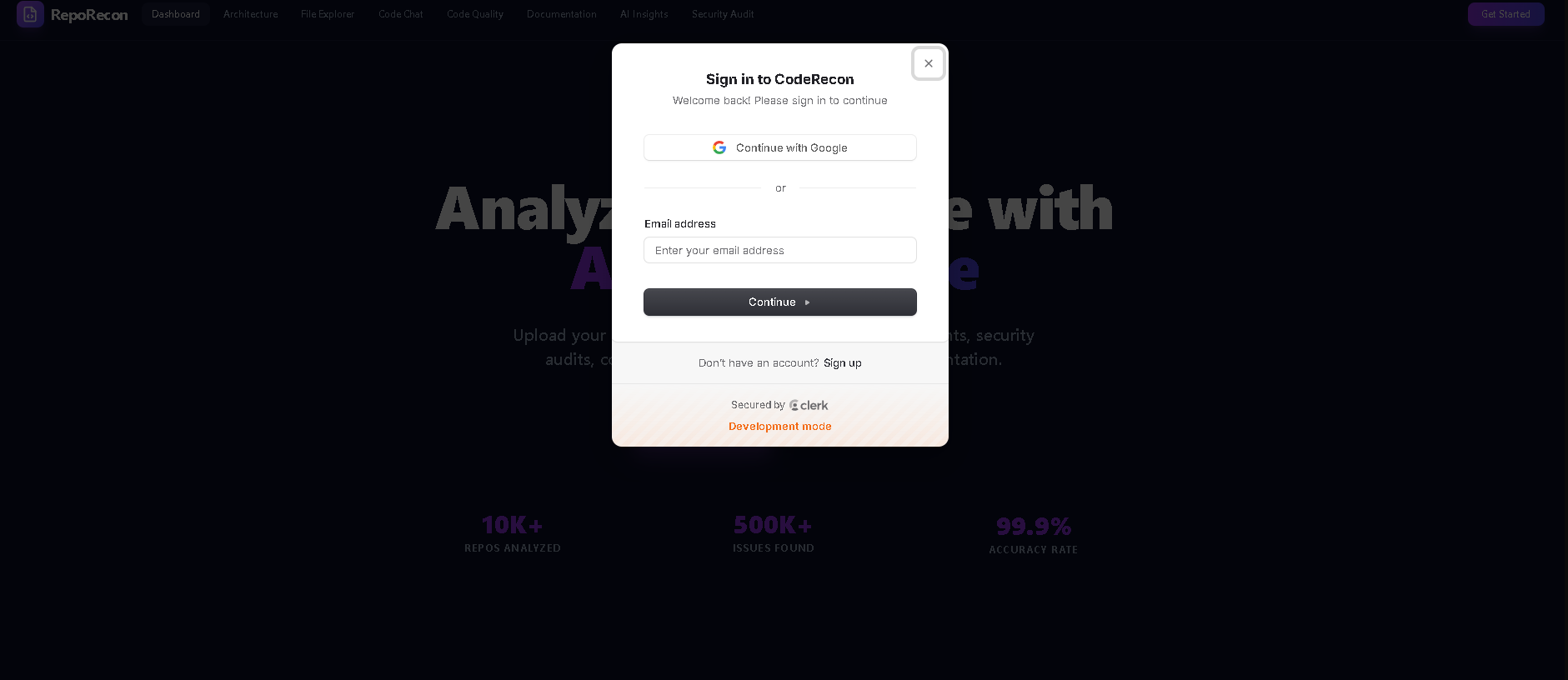
Login Page
-
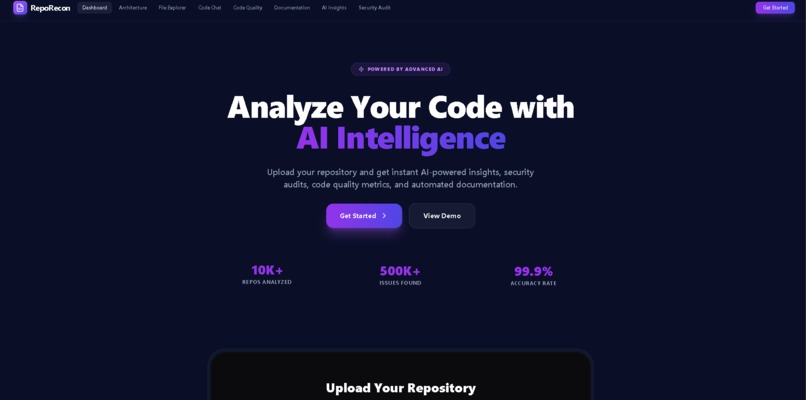
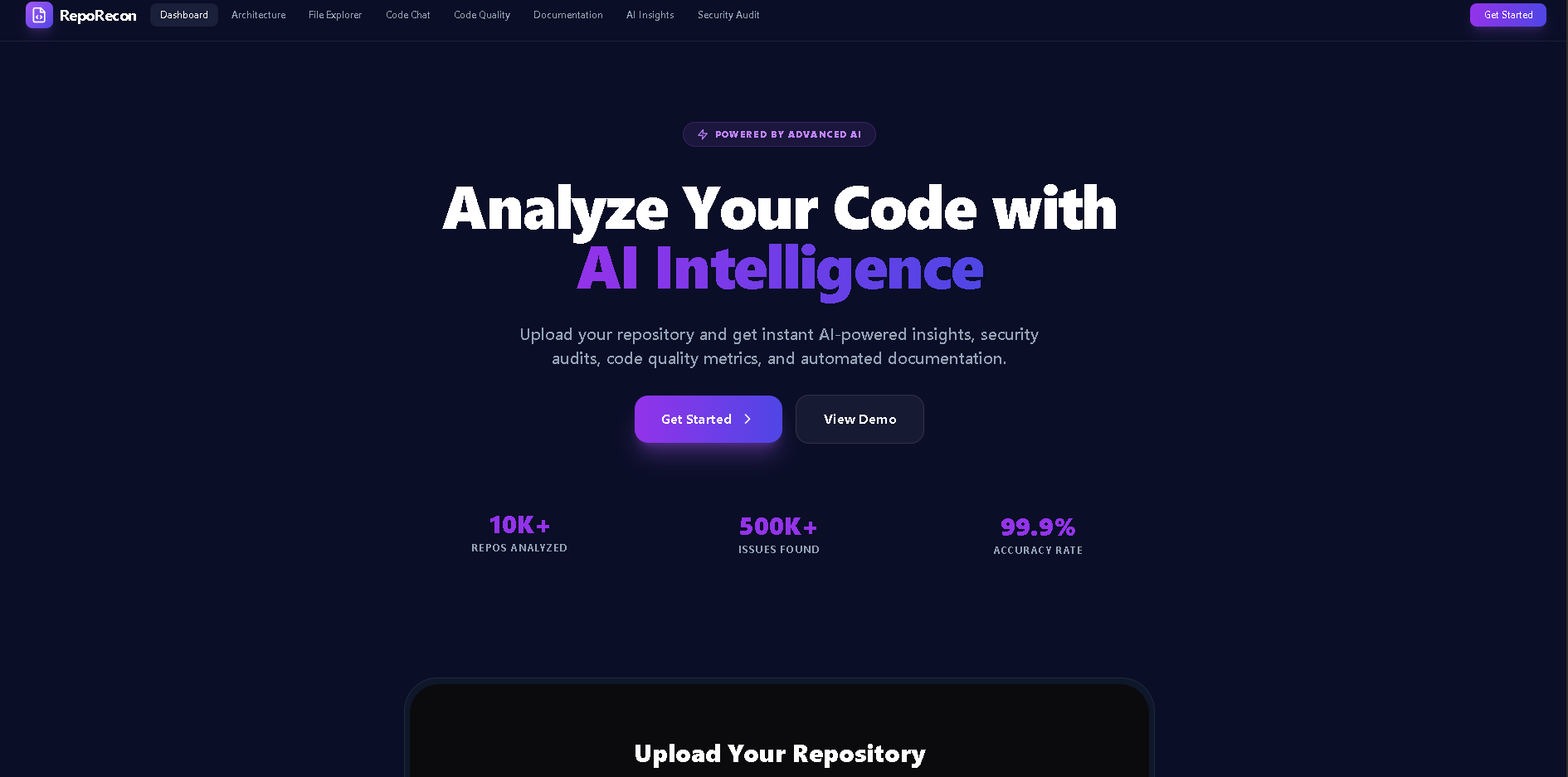
Dashboard Page
-
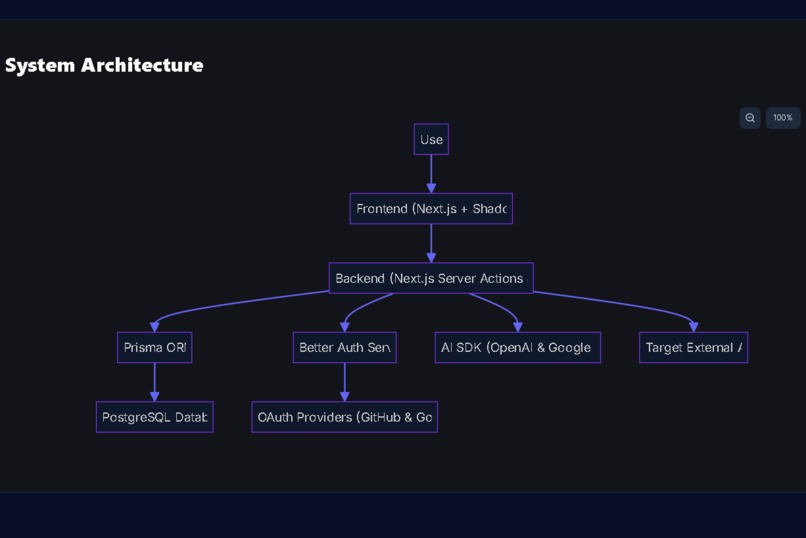
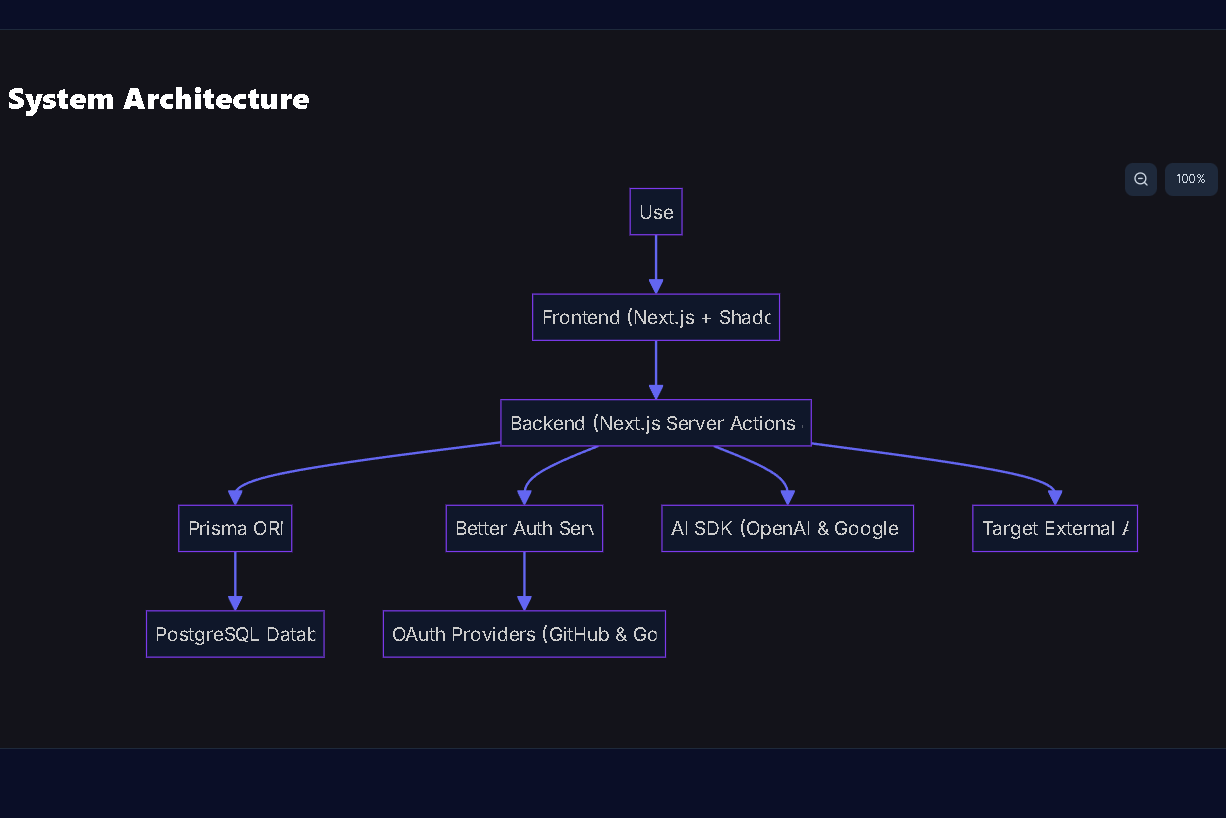
System Architecture Page
-
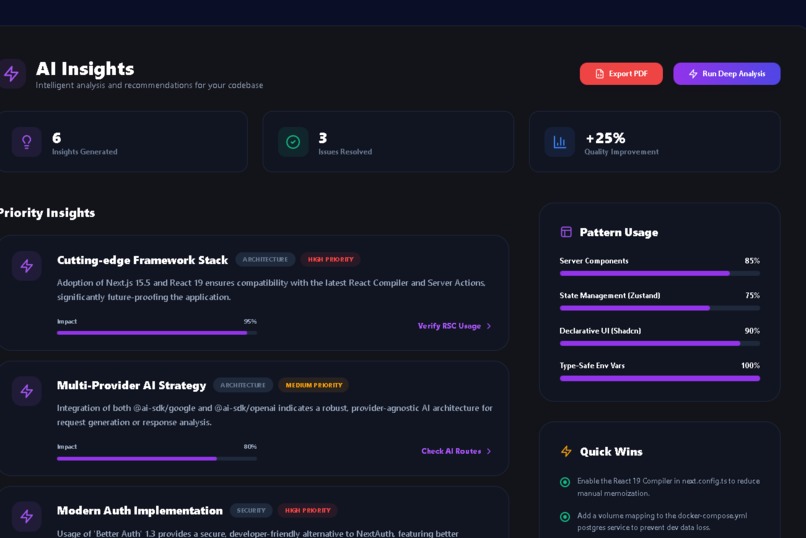
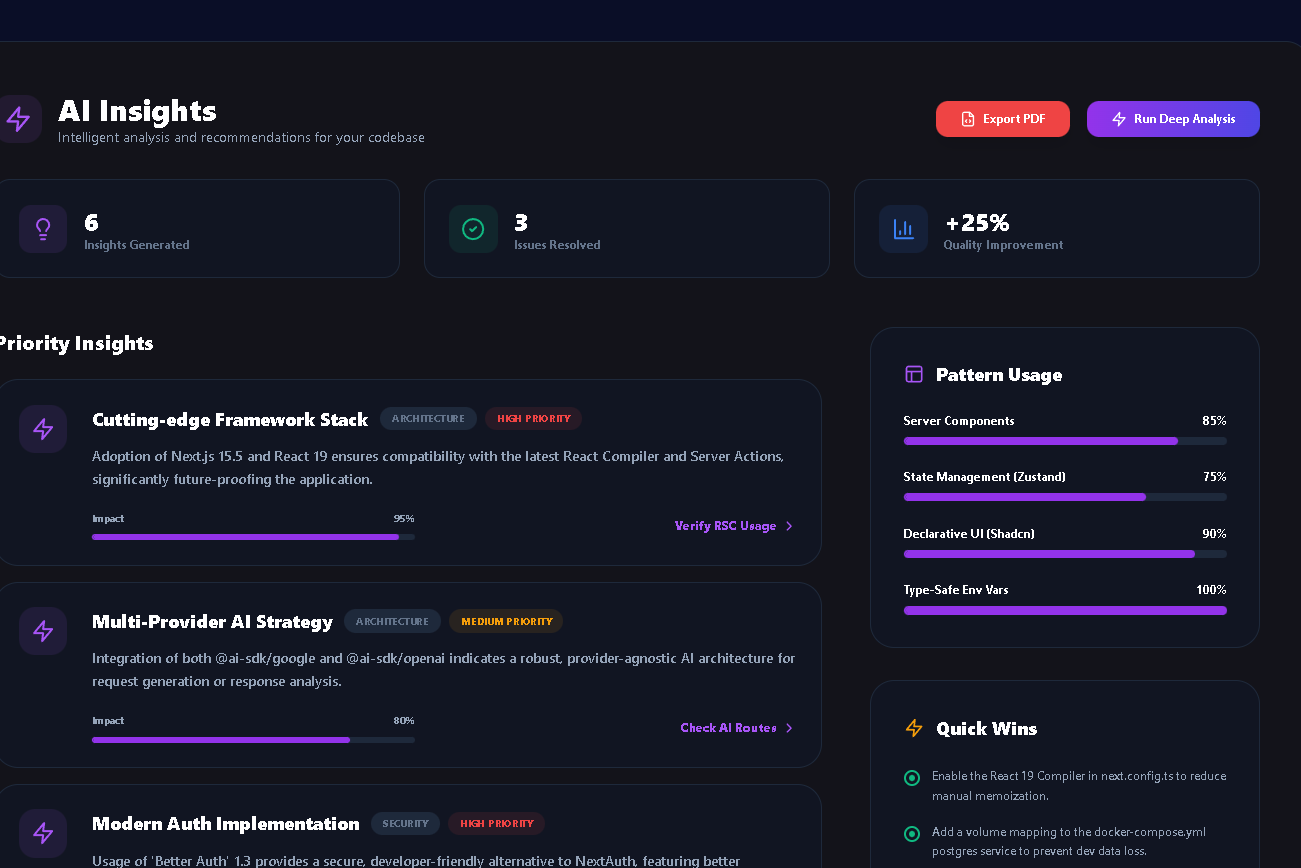
AI Insights Page
-
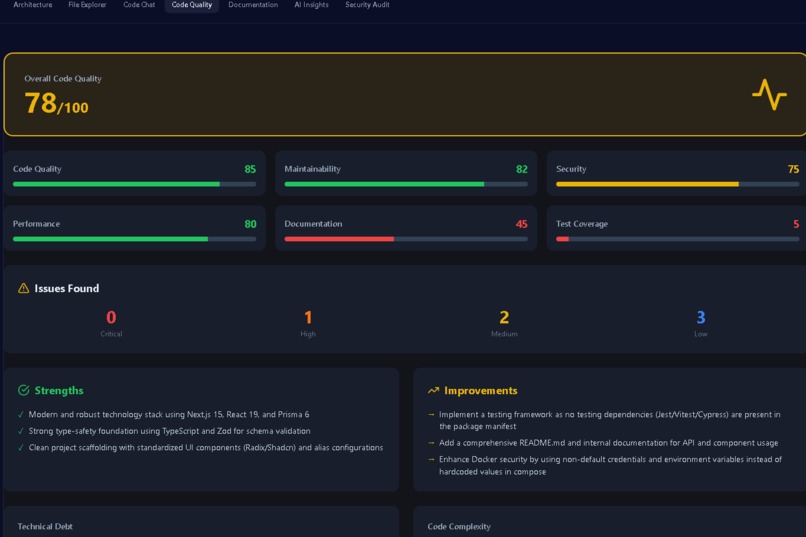
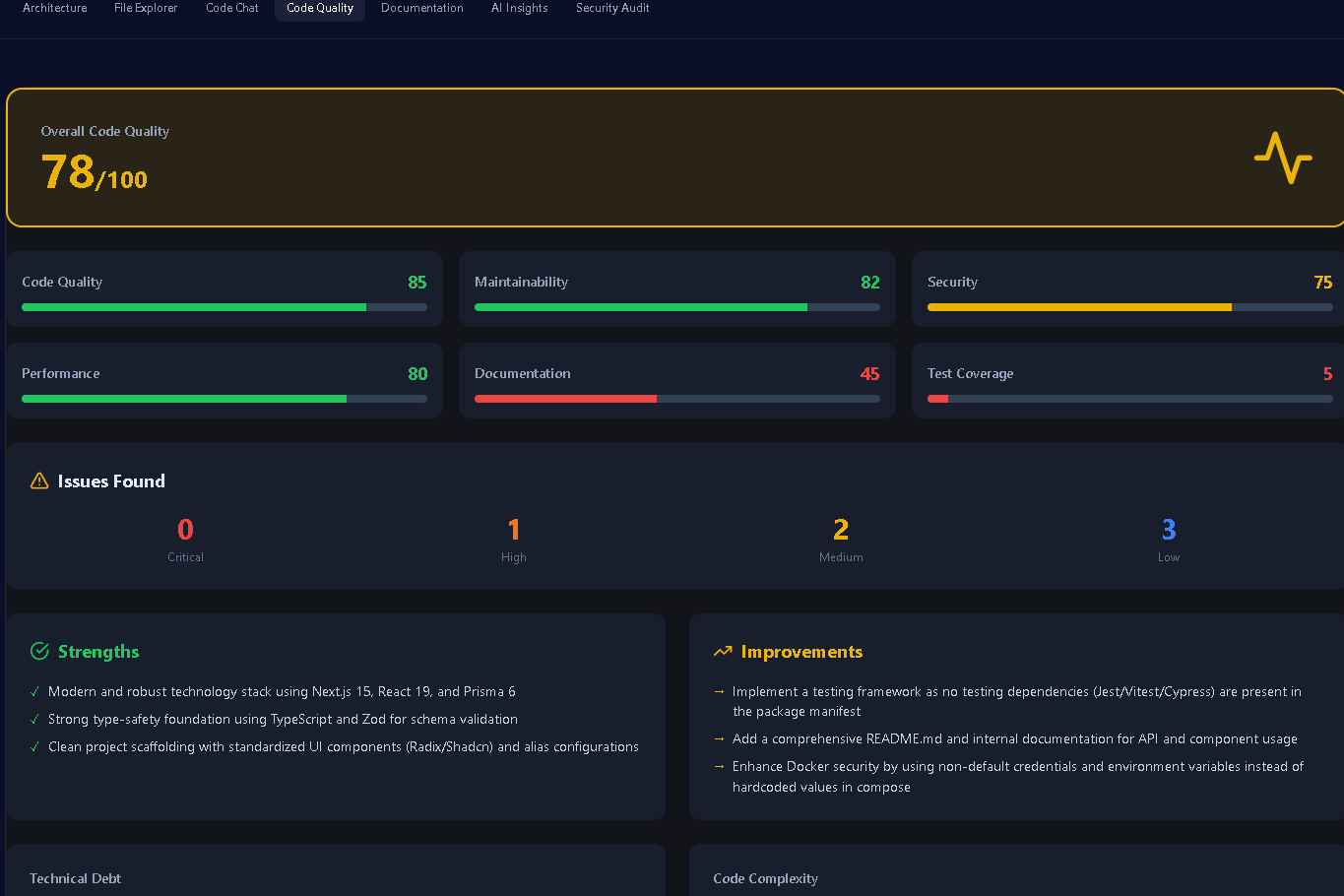
Code Quality Page
-
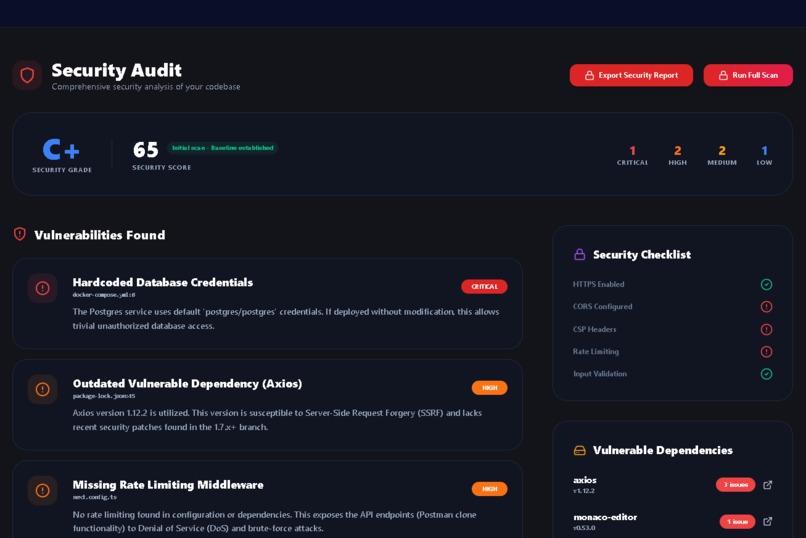
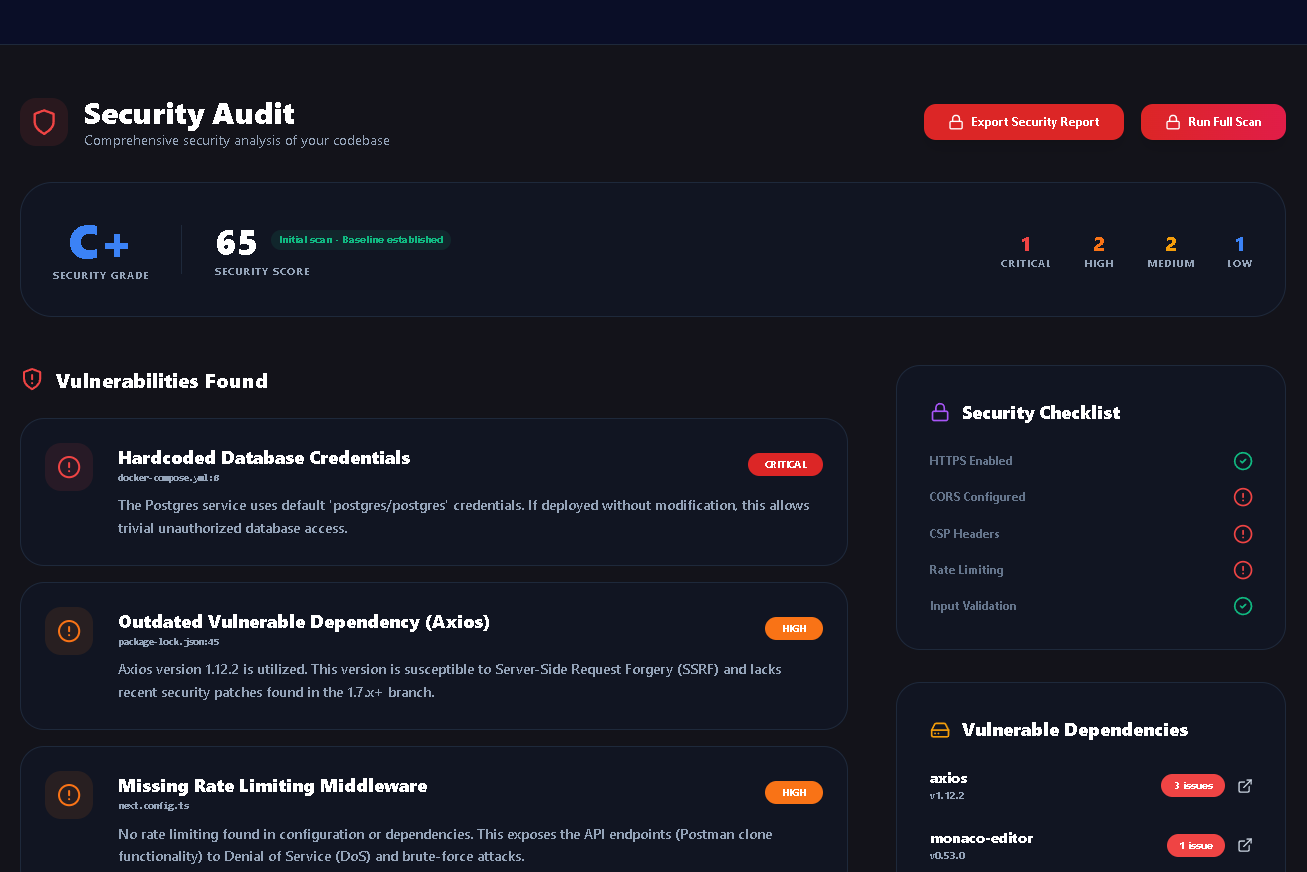
Security Audit Page
-
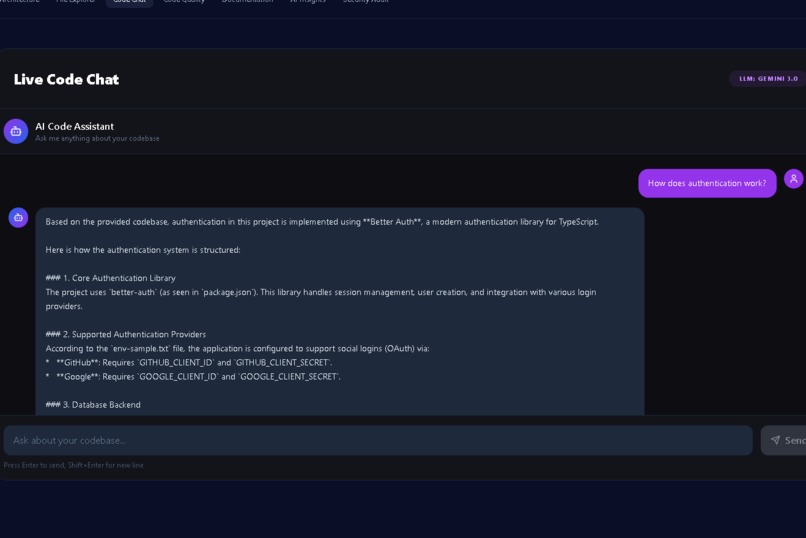
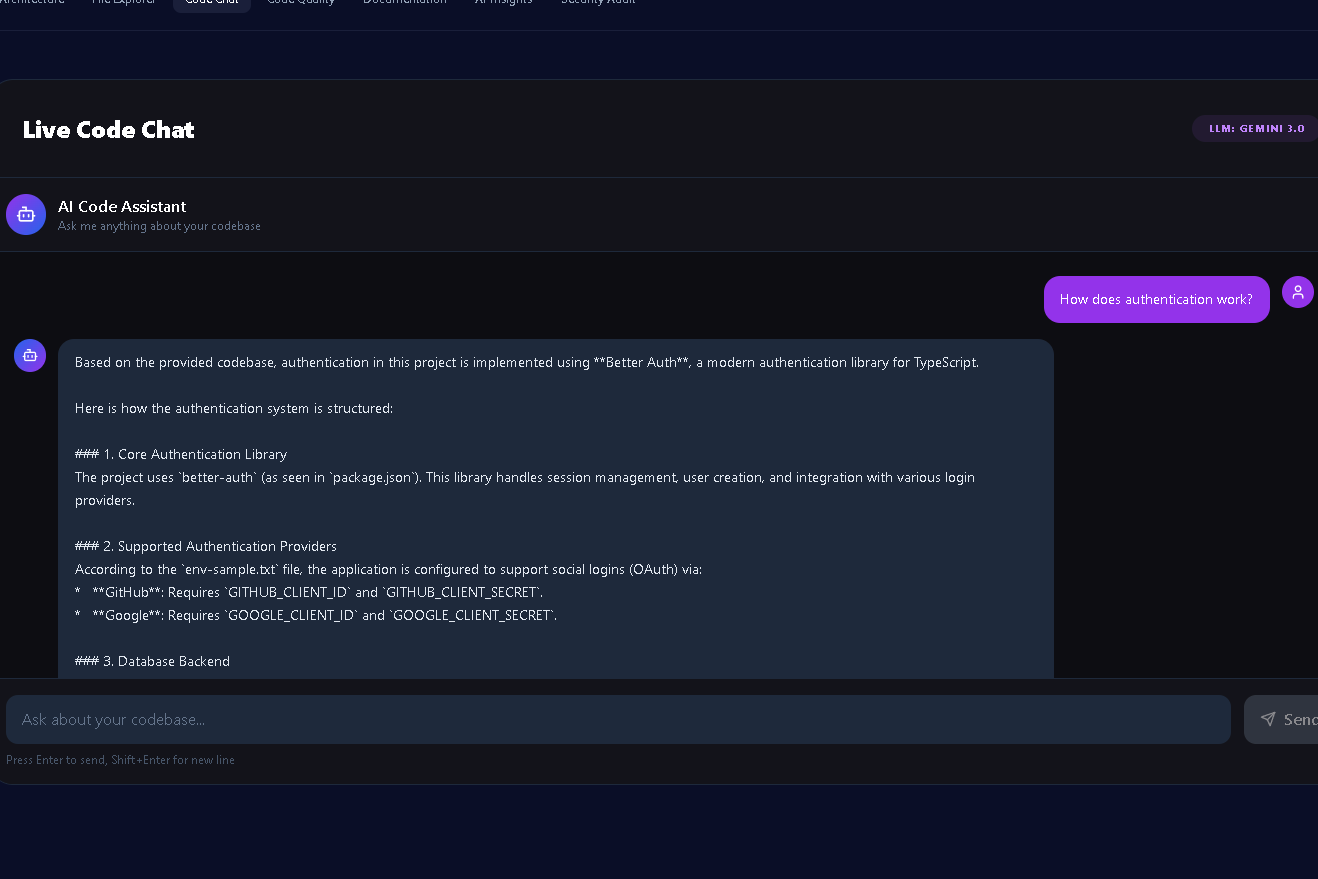
Live Code Chat Page
-
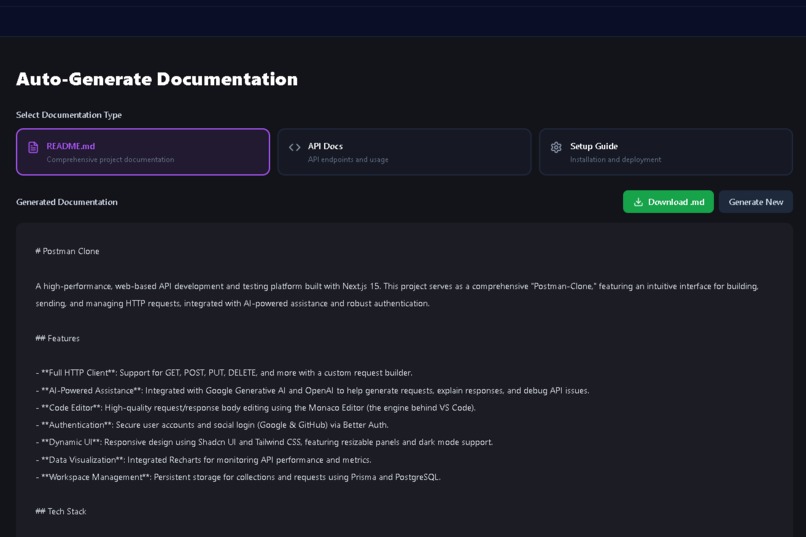
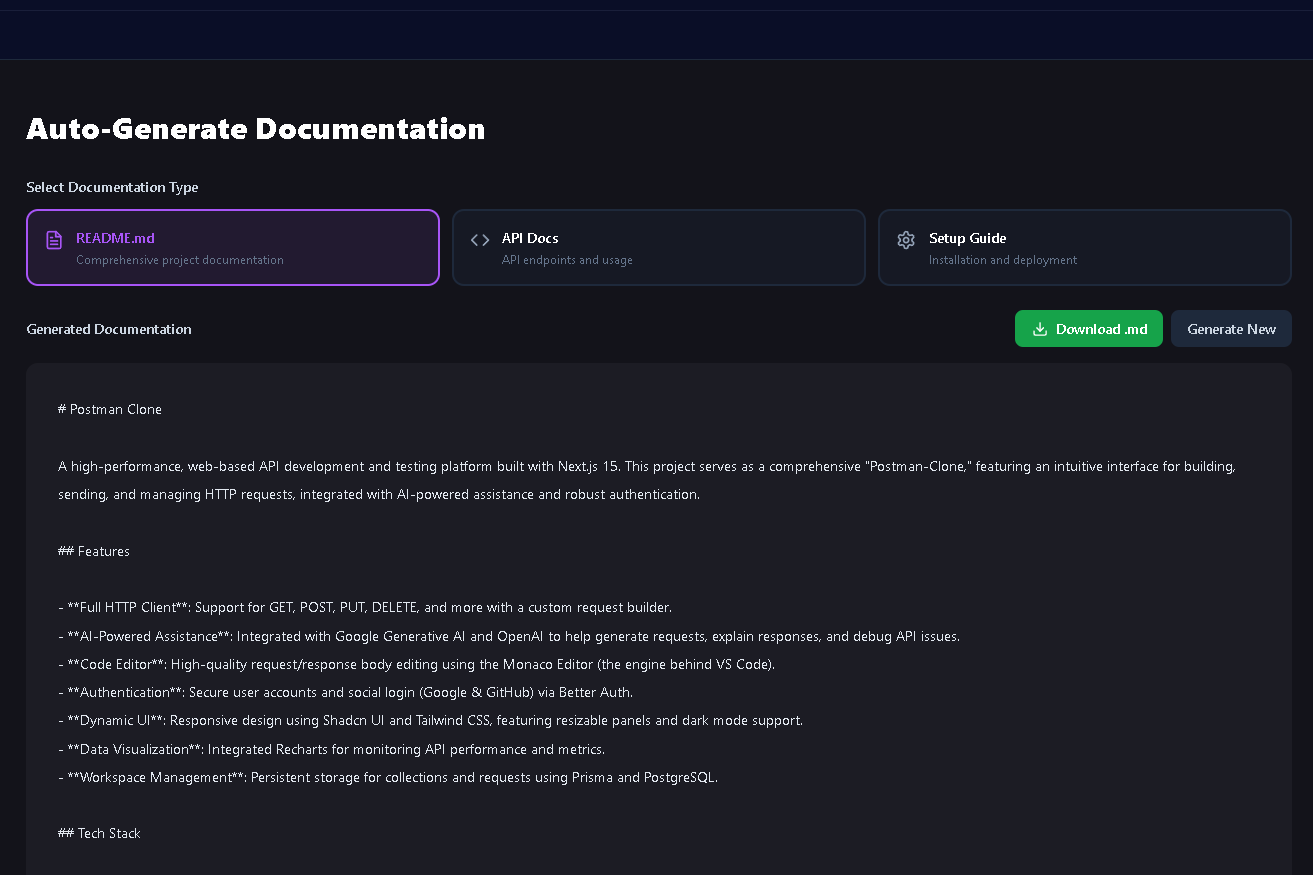
Auto Generate Documentation Page
CodeRecon - AI-Powered Code Analysis Platform
Inspiration
Code reviews are the backbone of high-quality software, yet they are often time-consuming, inconsistent, and prone to human error. We've all been there—staring at a pull request for hours, missing subtle security vulnerabilities, or struggling to visualize the architecture of a new codebase. We wanted to build a tool that doesn't just "lint" code but truly understands it. CodeRecon was born from the desire to give every developer an intelligent pair programmer ensuring their code is secure, efficient, and well-architected before it ever hits production.
What it does
CodeRecon is a comprehensive AI-powered platform that transforms how developers analyze and maintain their code. It acts as an automated senior engineer that provides:
- System Blueprints: Automatically maps out the entire system architecture, identifying components, dependencies, and technology stacks.
- Deep AI Insights: Uses Google Gemini to perform intelligent code reviews, offering specific refactoring suggestions, performance optimizations, and best practice recommendations.
- Security Audits: Scans for vulnerabilities (OWASP Top 10) and security flaws, providing actionable fixes and severity classifications.
- Automated Documentation: Generates comprehensive documentation, including API specs, READMEs, and inline code comments, saving hours of manual work.
- Visual Architecture: Creates interactive Mermaid diagrams to visualize data flow and component relationships.
- Trend Analytics: Tracks code quality, security posture, and technical debt over time, allowing teams to visualize their improvement.
How we built it
We built CodeRecon using a modern, high-performance tech stack:
- Frontend: Built with React 18 and Vite for lightning-fast performance. We used Tailwind CSS for a premium, responsive design and Framer Motion for smooth, engaging animations. Lucide React provides a consistent icon system.
- Backend: Powered by FastAPI (Python) for high-performance async processing.
- AI Engine: Integrated Google Gemini Pro via the Google GenAI SDK to drive the core analysis, code understanding, and generation capabilities.
- Database & Auth: Leveraged Supabase for its robust PostgreSQL database and real-time capabilities. We utilized Row Level Security (RLS) to ensure strict data isolation and security. Authentication is handled via Supabase Auth with JWT tokens.
- Integration: Used PyGithub to fetch and analyze repositories directly from GitHub URLs.
- Visualization: Implemented Mermaid.js for rendering dynamic architecture diagrams.
Challenges we ran into
- Context Window Management: Analyzing large codebases with LLMs is tricky. We had to develop smart chunking strategies to feed relevant code context to Gemini without hitting token limits while maintaining analysis accuracy.
- Architecture Visualization: Translating raw code analysis into meaningful, visual diagrams was complex. We had to fine-tune our prompts to get Gemini to output valid Mermaid syntax that accurately reflected the system structure.
- Real-time Feedback: Ensuring the UI remained responsive while performing heavy backend analysis required careful implementation of async tasks and optimized database polling.
- Dependency Conflicts: Managing a complex Python environment with various AI and database libraries led to some tricky dependency hell, which we solved by strictly pinning versions and using virtual environments.
Accomplishments that we're proud of
- Seamless AI Integration: We successfully tamed the power of Gemini to provide outputs that are structured, consistent, and immediately useful—not just generic chat responses.
- The "System Blueprint" Feature: Seeing the tool automatically generate an accurate architecture diagram of its own codebase was a "wow" moment for the team.
- Premium UI/UX: We didn't settle for a basic admin panel. The dark-themed, animated interface feels professional and polished, making the complex data easy to digest.
- Secure by Design: Implementing Row Level Security (RLS) from day one means our application is enterprise-ready and secure by default.
What we learned
- The Power of Specialized Prompts: We learned that the quality of AI output is directly proportional to the quality of the system monitoring and prompting context.
- Modern React Patterns: Deepened our understanding of React 18's concurrent features and effective state management for complex data visualization.
- Supabase is Powerful: We discovered just how much backend boilerplate Supabase saves, allowing us to focus on the unique AI features rather than CRUD APIs.
What's next for AI Powered Code Reviewer
- IDE Extension: Bringing CodeRecon directly into VS Code to catch issues as you type.
- Team Collaboration: Adding shared workspaces, comments, and task assignments for engineering teams.
- CI/CD Integration: A GitHub Action to automatically run simple analyses on every pull request.
- Custom Rules Engine: Allowing teams to define their own specific architectural or coding standards for the AI to enforce.

Log in or sign up for Devpost to join the conversation.