-
-
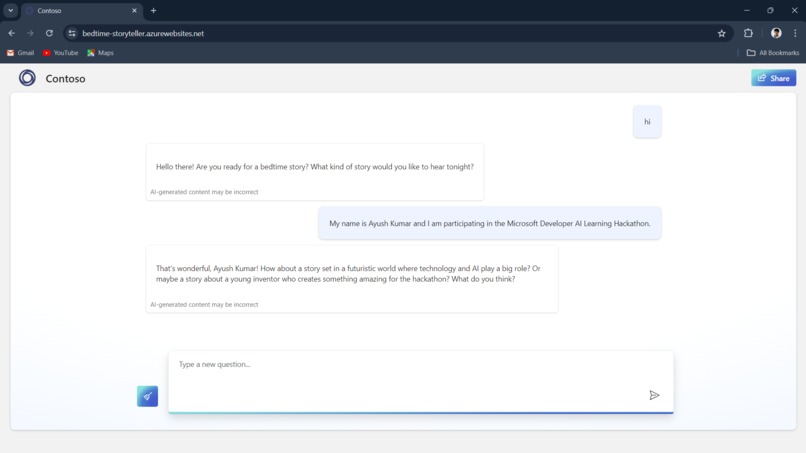
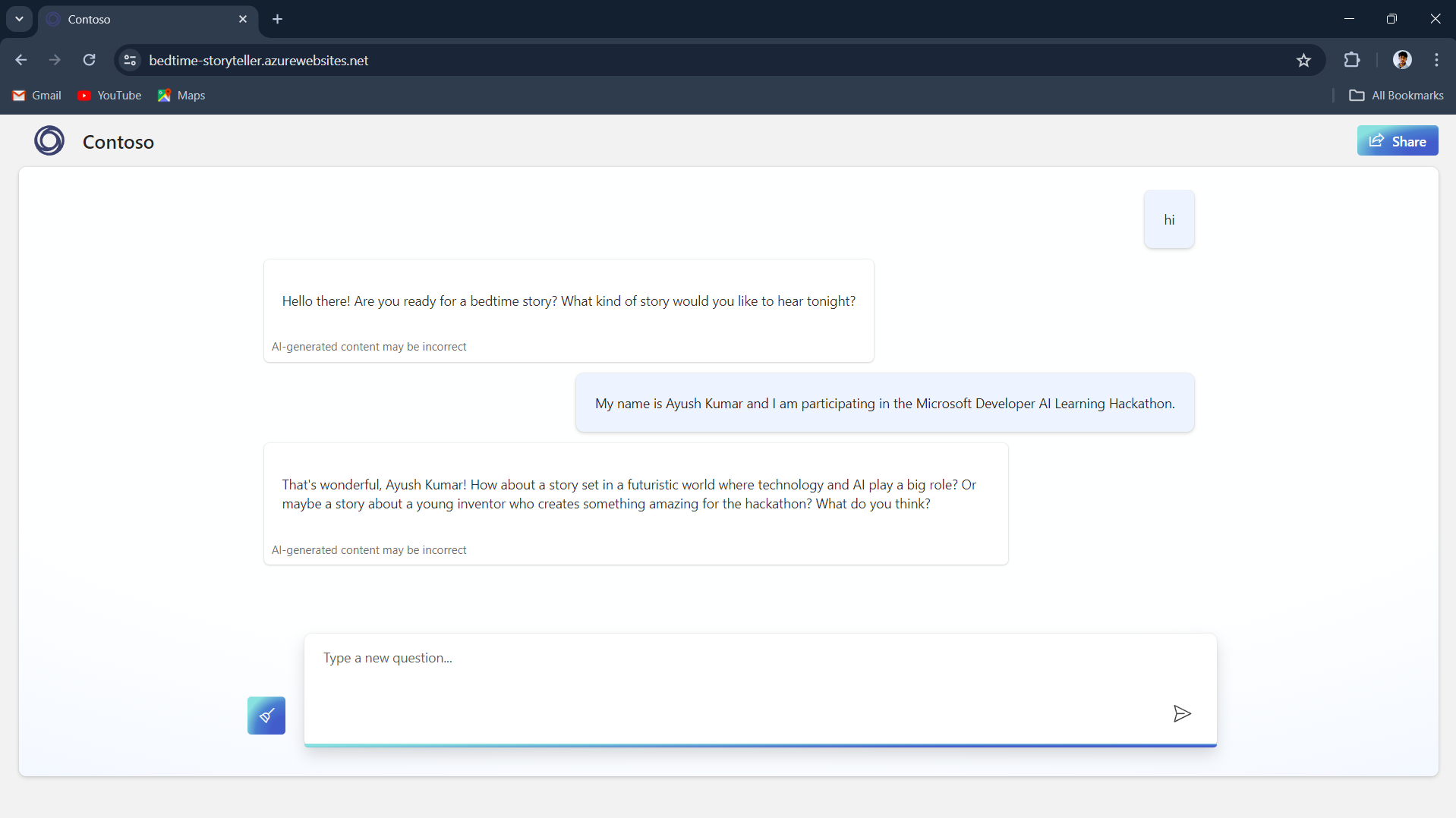
Ai Copilot Screenshot
-
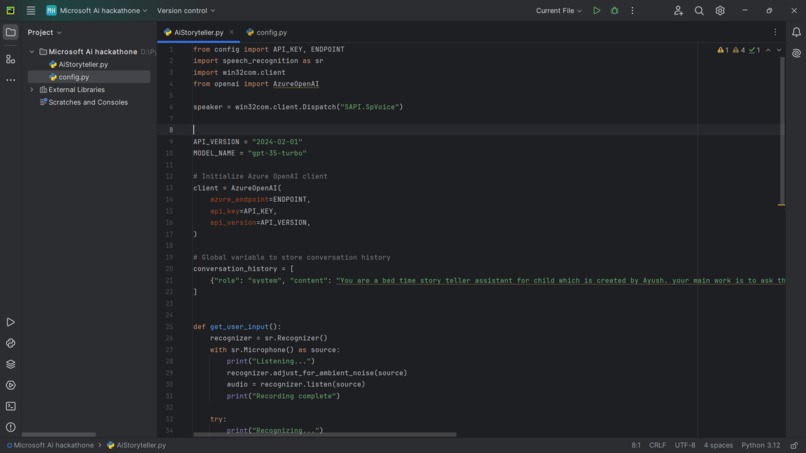
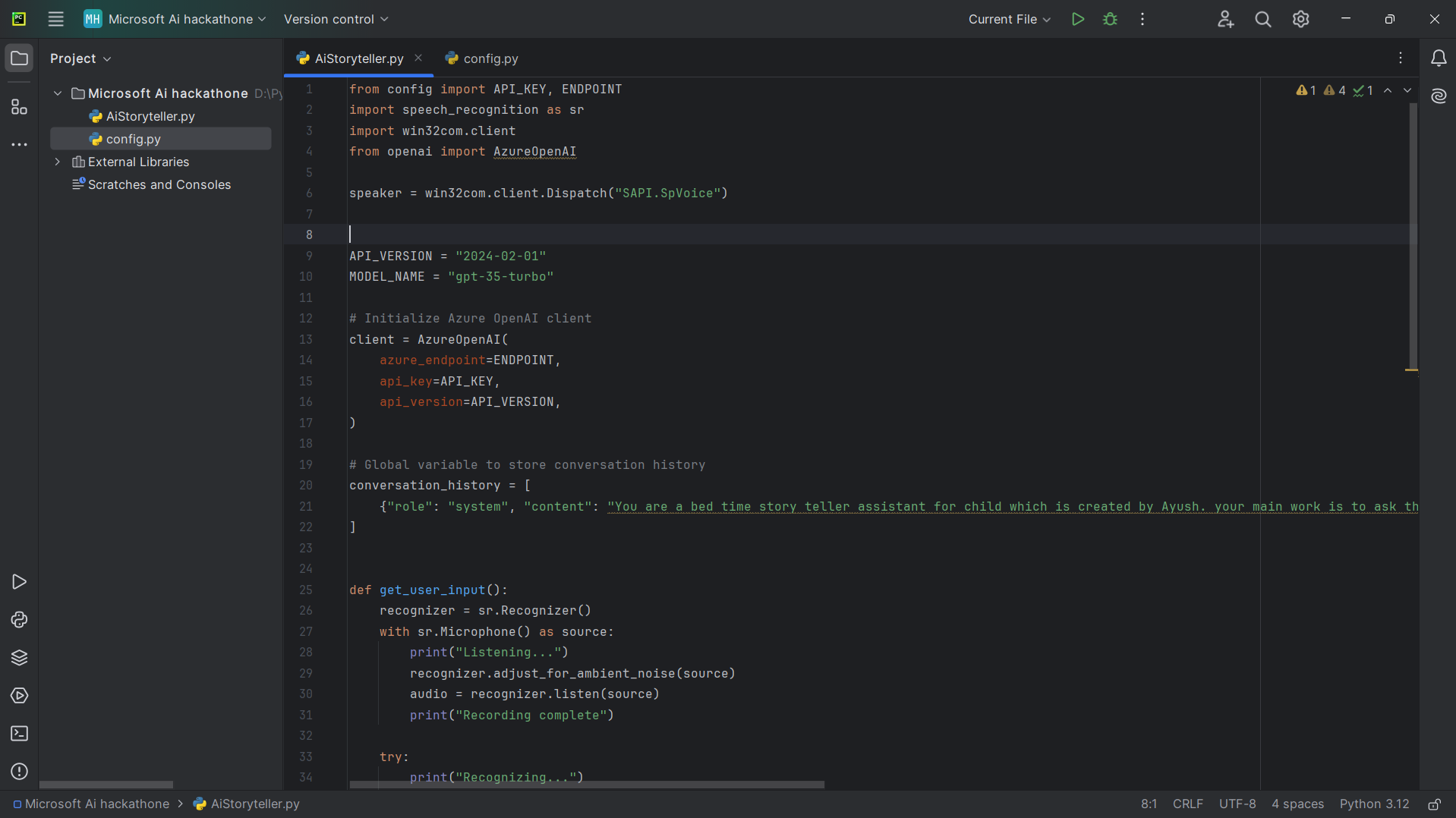
You can see all the import files and how the AzureOpenAI Key, endpoint and the version is used.
-
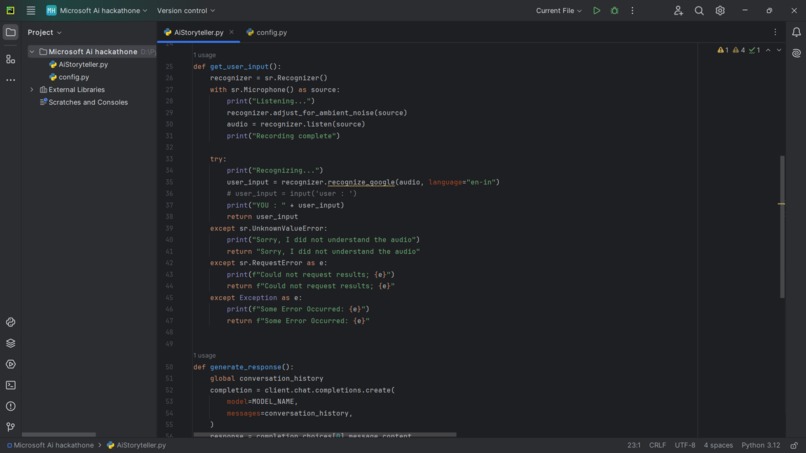
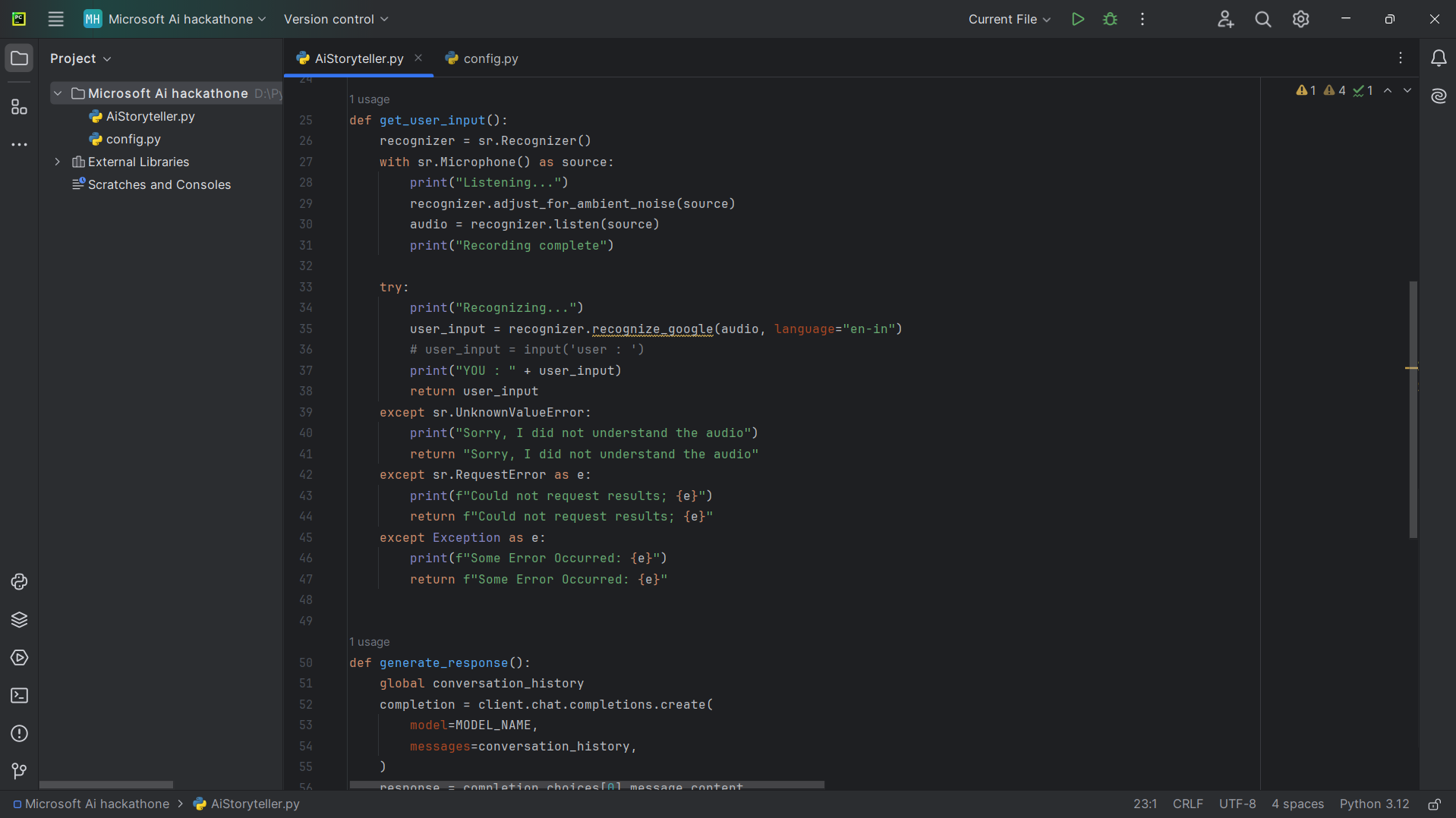
code for getting user input. speech to text conversion is done here.
-
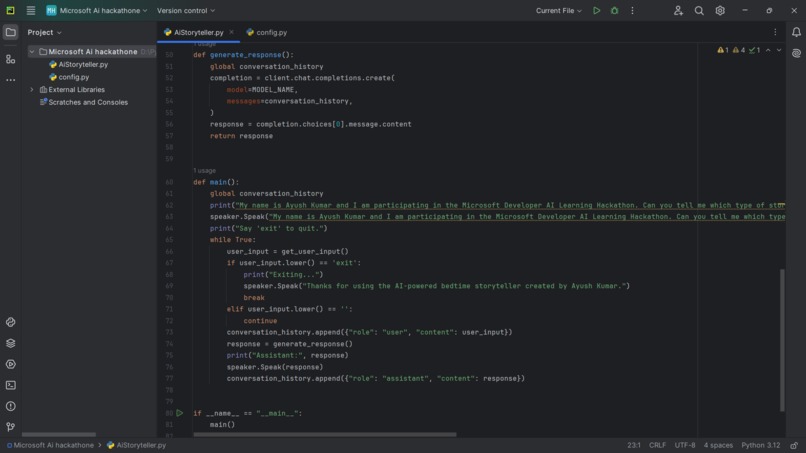
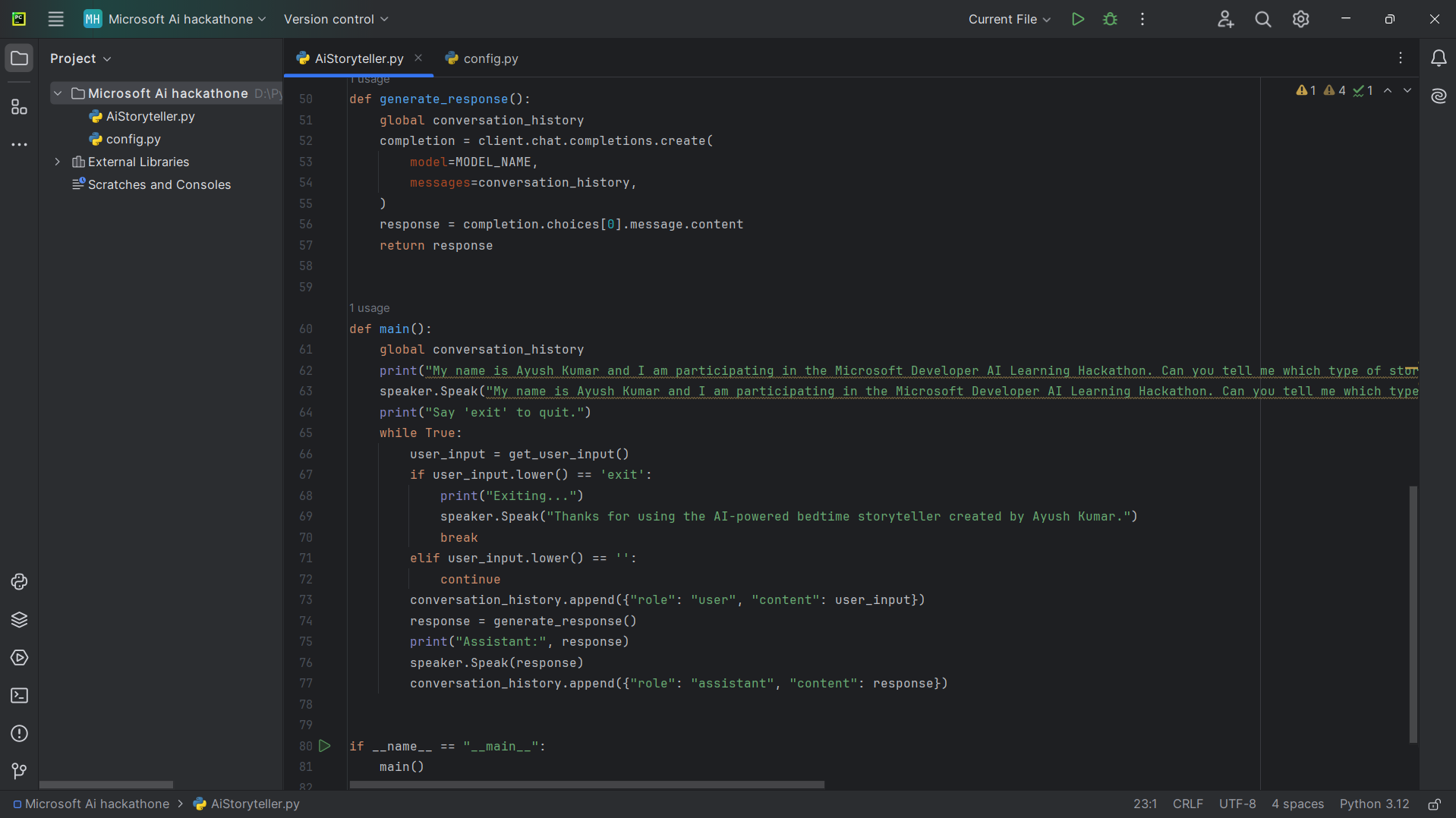
Here we are generating the text response and converting it into speech.
-
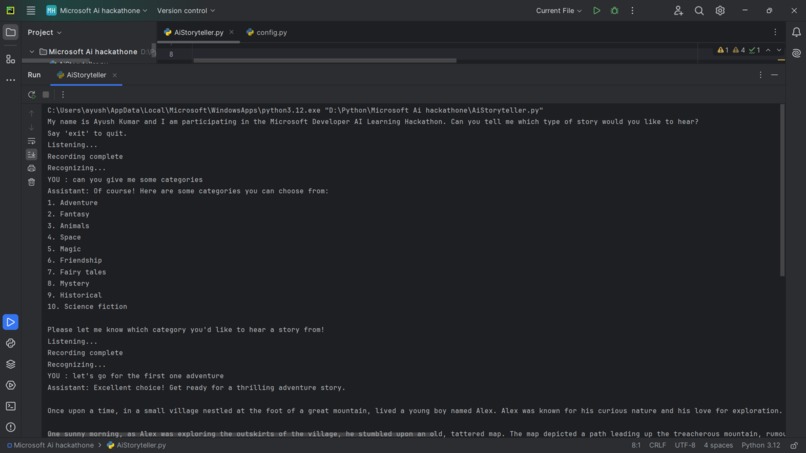
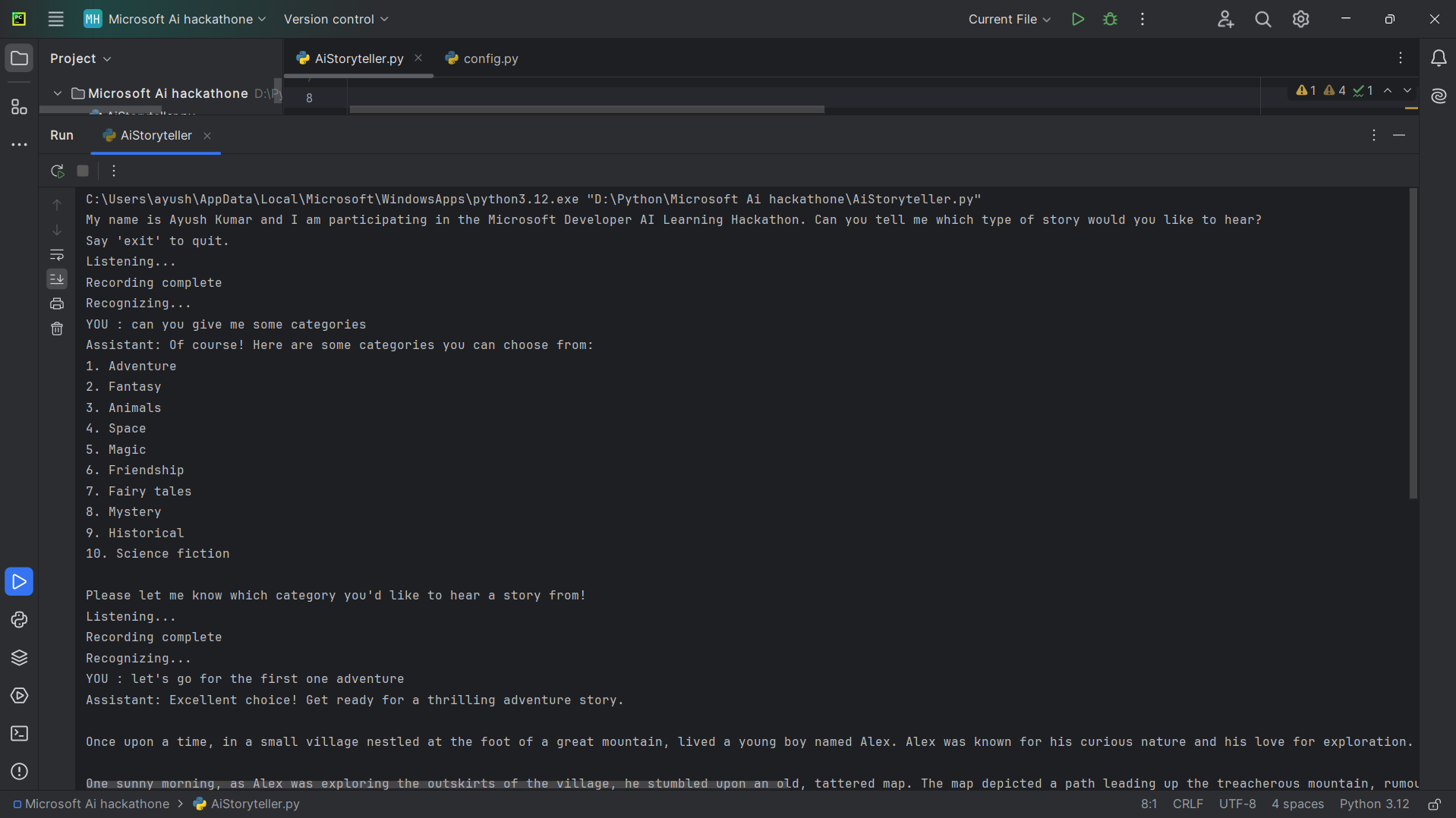
This is the text output of our response where we are getting to choose the categories of story.
-
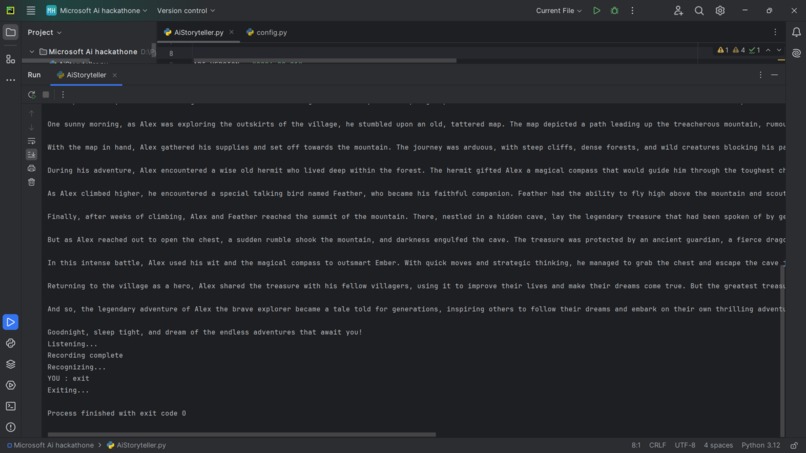
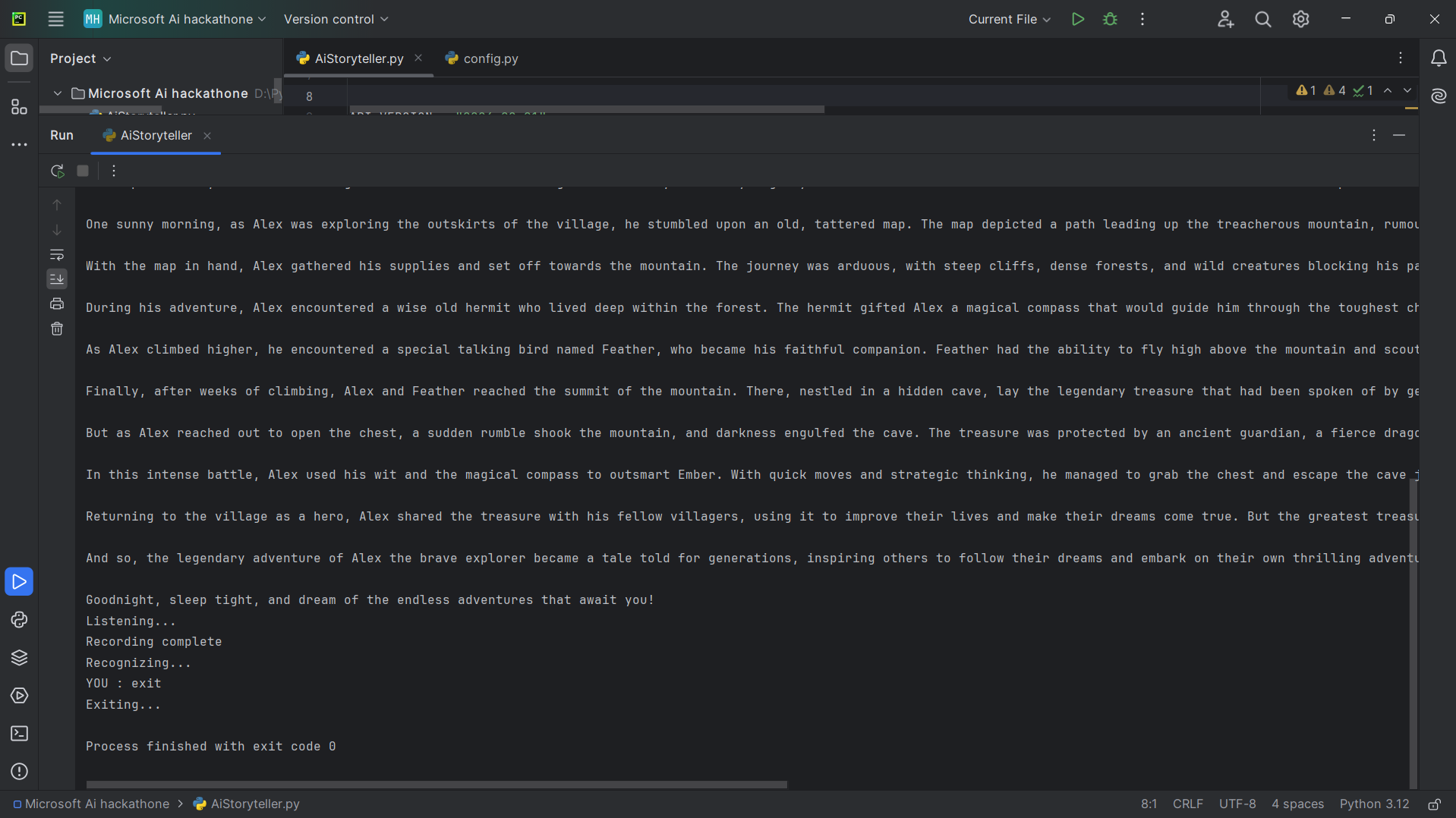
This is the text output of the story we chosen.
Inspiration
The inspiration for the AI-powered Bedtime Storyteller stems from my fond childhood memories of my grandmother's bedtime stories. Her tales were filled with wonder, sparking my imagination and instilling a love for storytelling. I wanted to recreate that magical experience using modern AI technology, enabling children to enjoy personalized and enchanting bedtime stories every night.
What it does
The AI-powered Bedtime Storyteller is an interactive application that generates and narrates personalized bedtime stories for children. Utilizing speech recognition and synthesis, the application engages in natural conversation with the child, gathering preferences such as favorite characters and themes. It then uses Azure OpenAI to generate dynamic and contextually appropriate stories tailored to the child's interests. The stories are narrated with captivating voices, creating a magical bedtime experience.
How we built it
We built the AI-powered Bedtime Storyteller using Python and integrated it with Azure OpenAI for story generation. Speech recognition and synthesis libraries were employed for natural interaction with the user. The application's core functionality revolves around gathering user preferences, generating stories, and narrating them seamlessly. Extensive testing and iteration were conducted to refine the user experience and ensure the application's reliability.
Challenges we ran into
- Speech Recognition Accuracy: Achieving accurate speech recognition, especially in noisy environments, posed a challenge.
- Maintaining User Engagement: Designing the AI to maintain an engaging conversation flow while generating personalized stories requires careful consideration.
- Integration Complexity: Integrating multiple technologies, including speech recognition, AI generation, and speech synthesis, presented technical complexities that needed to be addressed.
Accomplishments that we're proud of
We're proud to have created an AI-powered application that brings joy and wonder to children's bedtime routines. The seamless integration of speech recognition, AI story generation, and narration has resulted in a captivating and personalized storytelling experience. Seeing children immerse themselves in the stories and creating cherished bedtime memories is a testament to the success of the project.
What we learned
Throughout the project, we gained valuable insights into AI technology, speech recognition, and natural language processing. We learned how to effectively leverage Azure OpenAI for dynamic content generation and how to create engaging user experiences through interactive storytelling. Additionally, we honed our skills in speech synthesis and integration with external APIs.
What's next for AI-powered Bedtime Storyteller
In the future, we plan to further enhance the AI-powered Bedtime Storyteller by incorporating more advanced AI capabilities and expanding the library of available stories. We aim to introduce features such as multi-language support, interactive visuals, and personalized recommendations based on user feedback. Additionally, we envision integrating the application with smart home devices to seamlessly integrate into children's bedtime routines. Ultimately, our goal is to continue spreading joy and fostering imagination through storytelling.


Log in or sign up for Devpost to join the conversation.