savantè
AI Powered Advisor
When I applied to UTA late, I didn’t get to meet my advisor until two weeks after classes began. By then, I had already registered on my own, confused by the four-digit course numbers, prerequisites, and how to plan my week. I remember thinking — I wish there was something that could guide me through this. That’s where the idea for our AI Academic Advisor began: a system that helps students make smart class decisions instantly, without waiting weeks for an appointment.
Inspiration
The project started from a simple problem: many students struggle to plan their first semester. Some, like me, don’t get early access to advisors; others just find the process stressful or confusing. We wanted to build something that could act as a friendly guide — explaining degree plans, suggesting courses based on progress, and even helping choose professors and time slots that fit your schedule. My teammate Usman said it best: “This should exist on every campus.”
What We Built
We created an AI advisor that helps students:
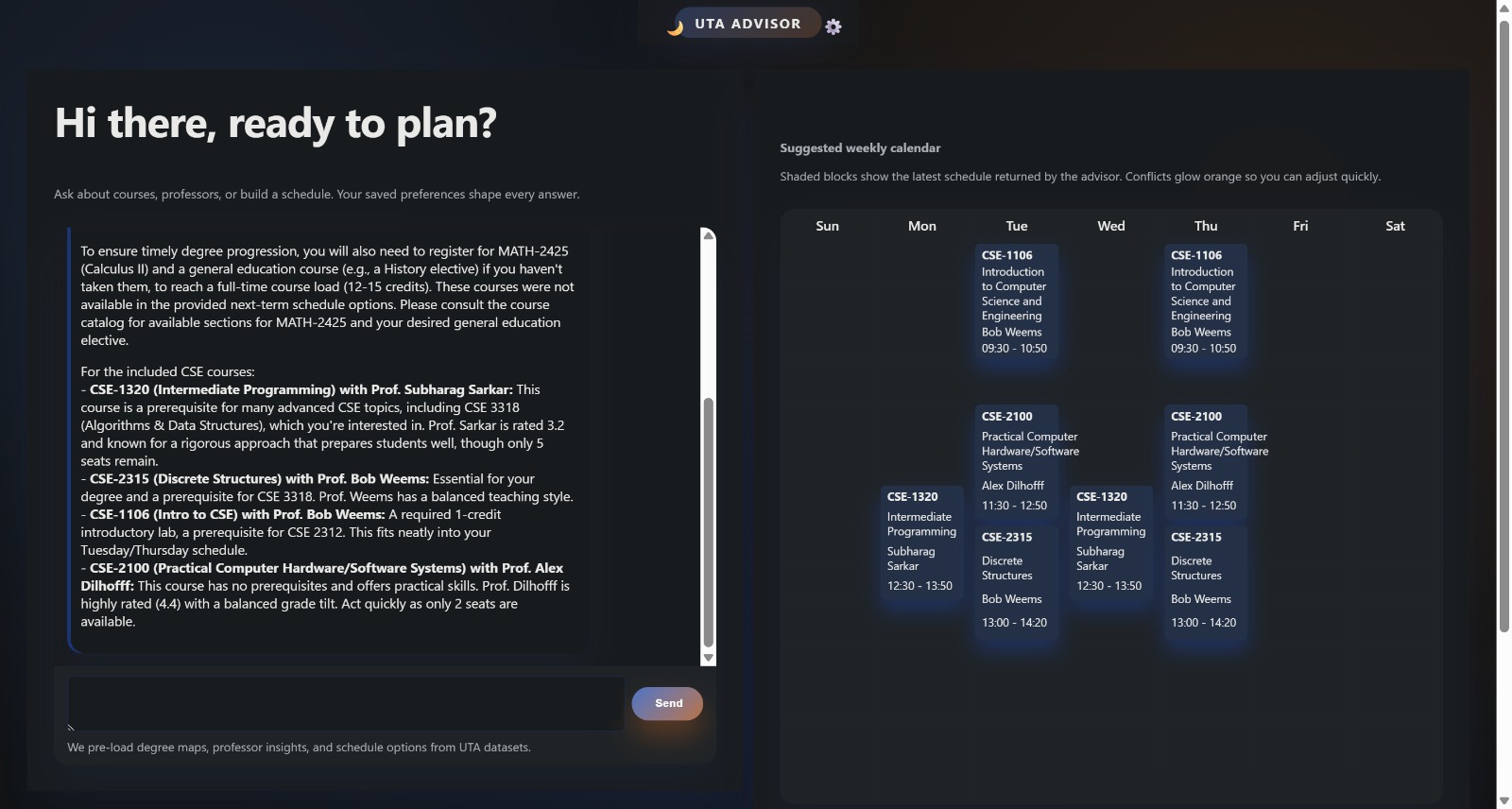
- Build a class schedule based on their preferred days and times.
- Check prerequisites automatically using degree data.
- Recommend electives that match their hobbies.
- Suggest professors using stored ratings and feedback.
- Explain each course in simple language.
It’s like having an instant academic guide who knows your degree plan and personal preferences.
How We Built It
We used Python (Flask) for the backend and HTML, CSS, and JS for the frontend. The system loads information from structured JSON files for degree plans, schedules, and professors. The backend uses a rules engine to check for conflicts and prerequisites, while the AI model (Gemini 2.5 Flash) focuses on explaining results and answering student questions. This split keeps results accurate while still feeling natural and conversational.
How It Works
The advisor models each course as a node in a graph, where edges represent prerequisites. Once a student’s completed courses are known, it unlocks the next possible ones automatically. Then, it finds the best schedule by maximizing ratings and personal preferences while avoiding time conflicts.
subject to one section per course, no overlapping times, and meeting credit limits.
Challenges
We faced challenges with real data since most campus systems are private. To work around that, we built local JSON “mock data” that mimics UTA’s structure. Another big challenge was keeping the AI’s advice transparent — students should always understand why a class was recommended. Finally, we focused a lot on ethics and privacy, making sure no student data is shared or stored.
What We Learned
We learned that the best AI tools don’t replace humans — they prepare students before they meet their advisor. Combining strict rules with AI explanations gave us both accuracy and empathy. We also realized how many students at different universities face the same issue, which means this solution can easily expand beyond UTA.
Impact
Our project helps students plan faster, learn smarter, and feel more confident about their choices. It removes confusion from the registration process and ensures no one has to wait weeks to start their journey. What began as a small idea to fix my own problem could soon help students all over the world find their academic path with clarity and confidence.


Log in or sign up for Devpost to join the conversation.