-
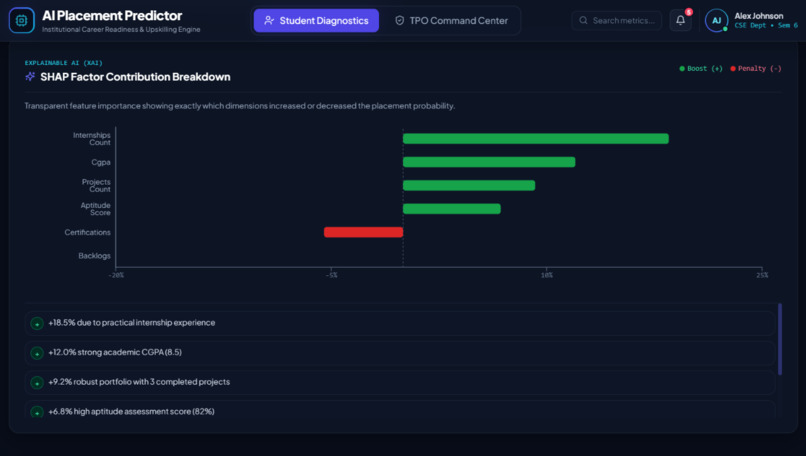
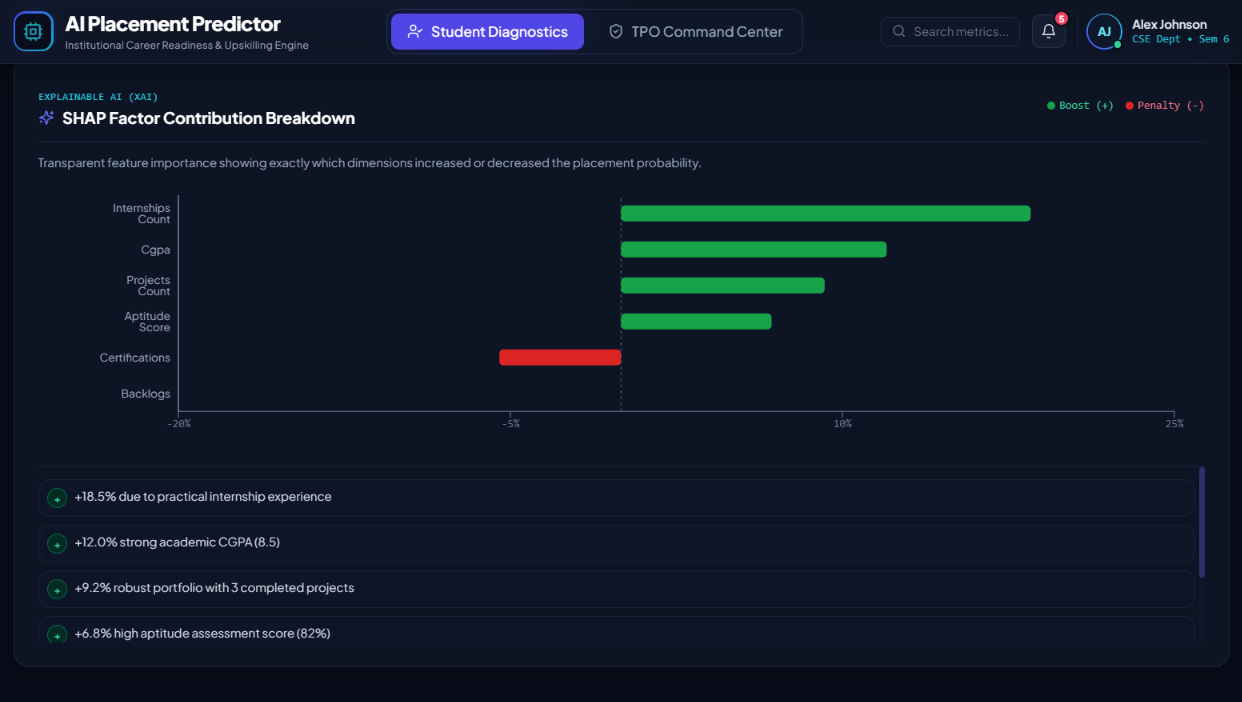
SHAP/LIME Explainable AI Feature Contribution View
-
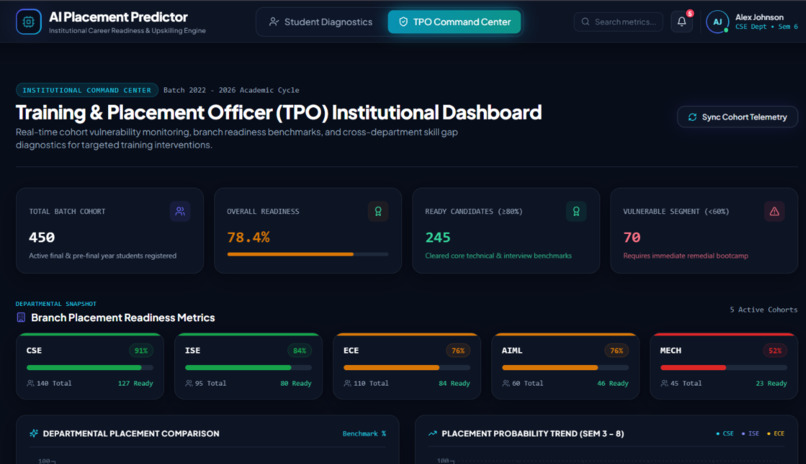
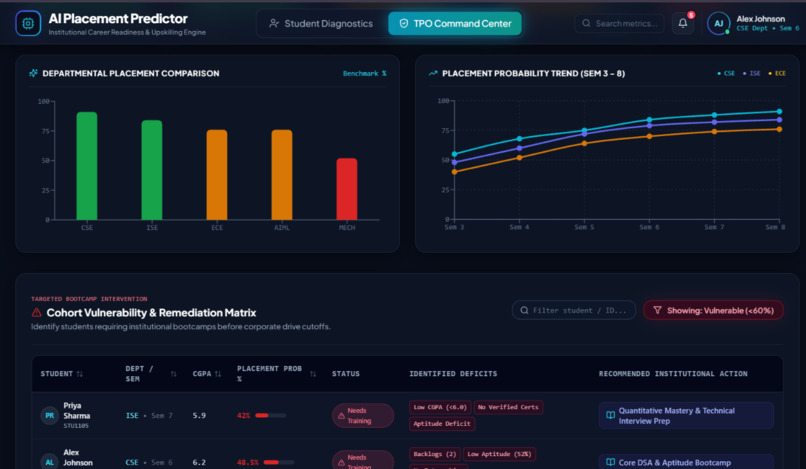
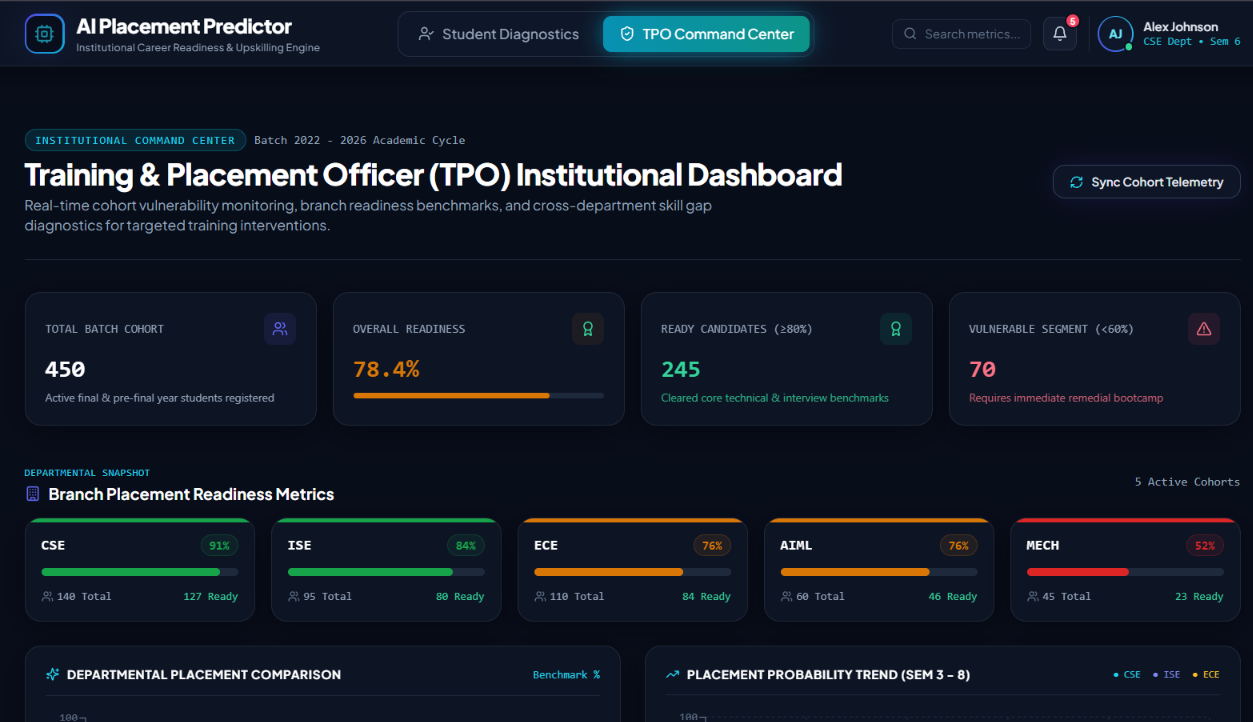
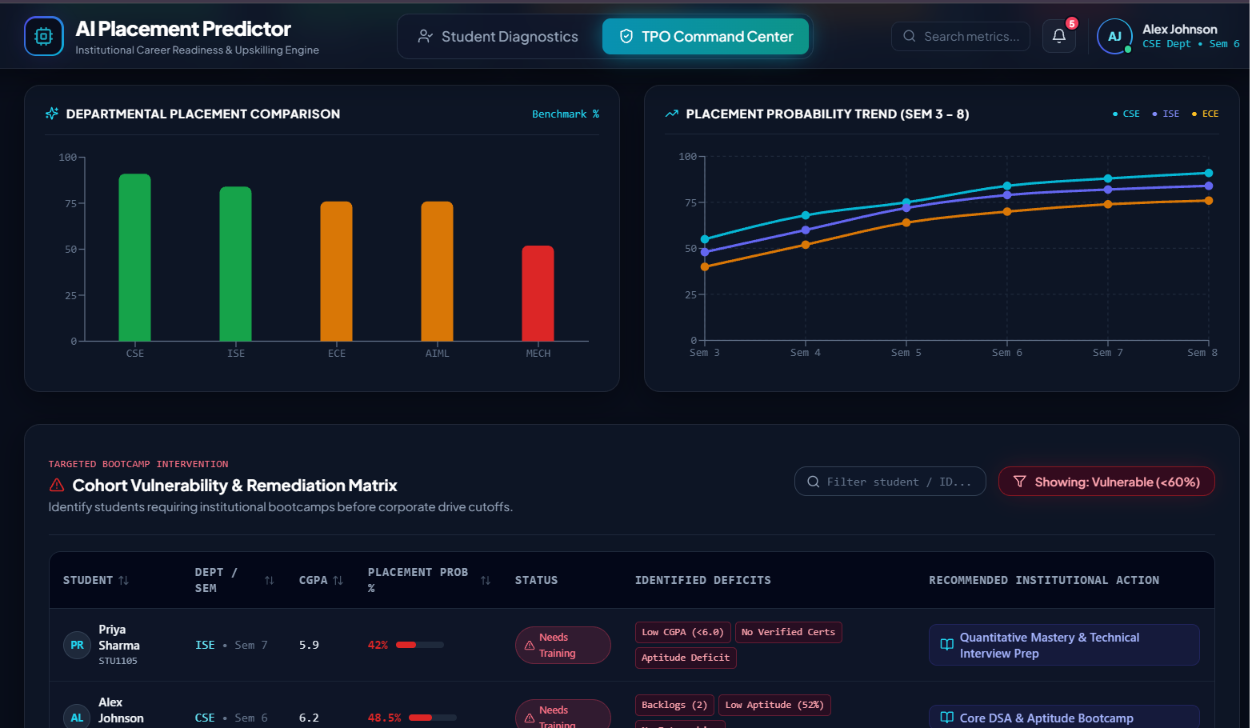
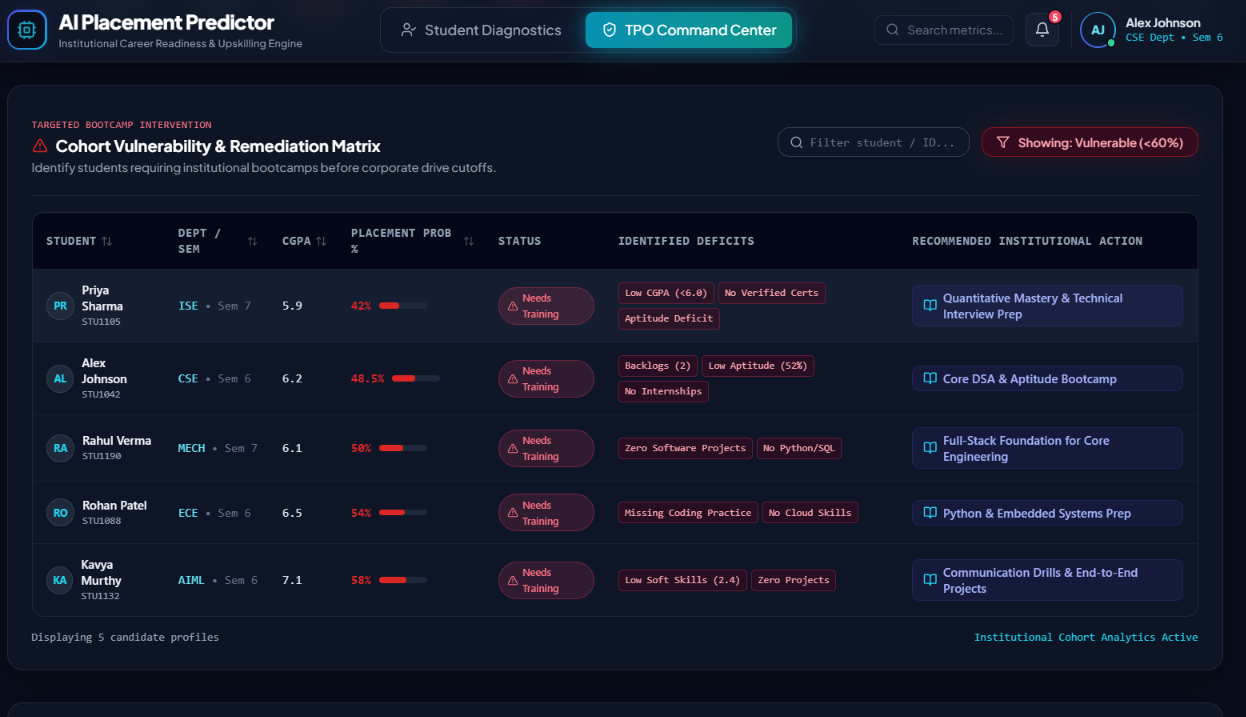
TPO Analytics Dashboard & Department-Wise Readiness View
-
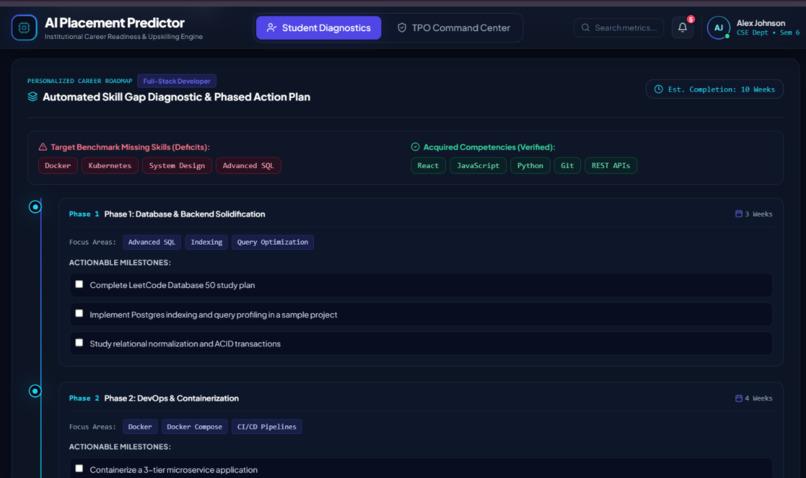
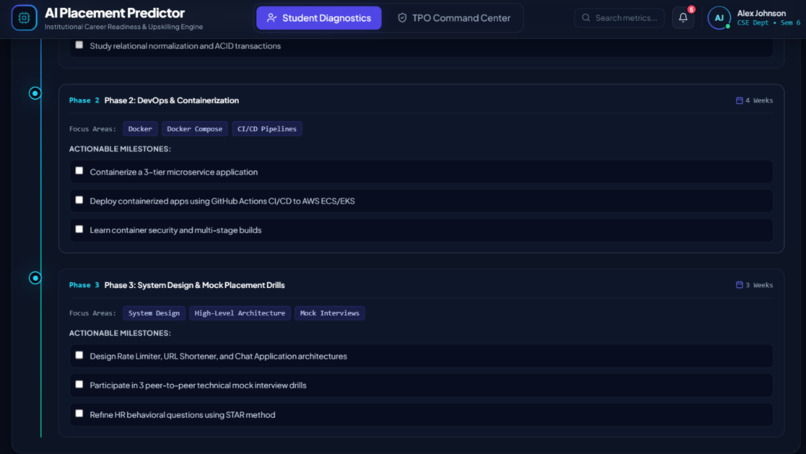
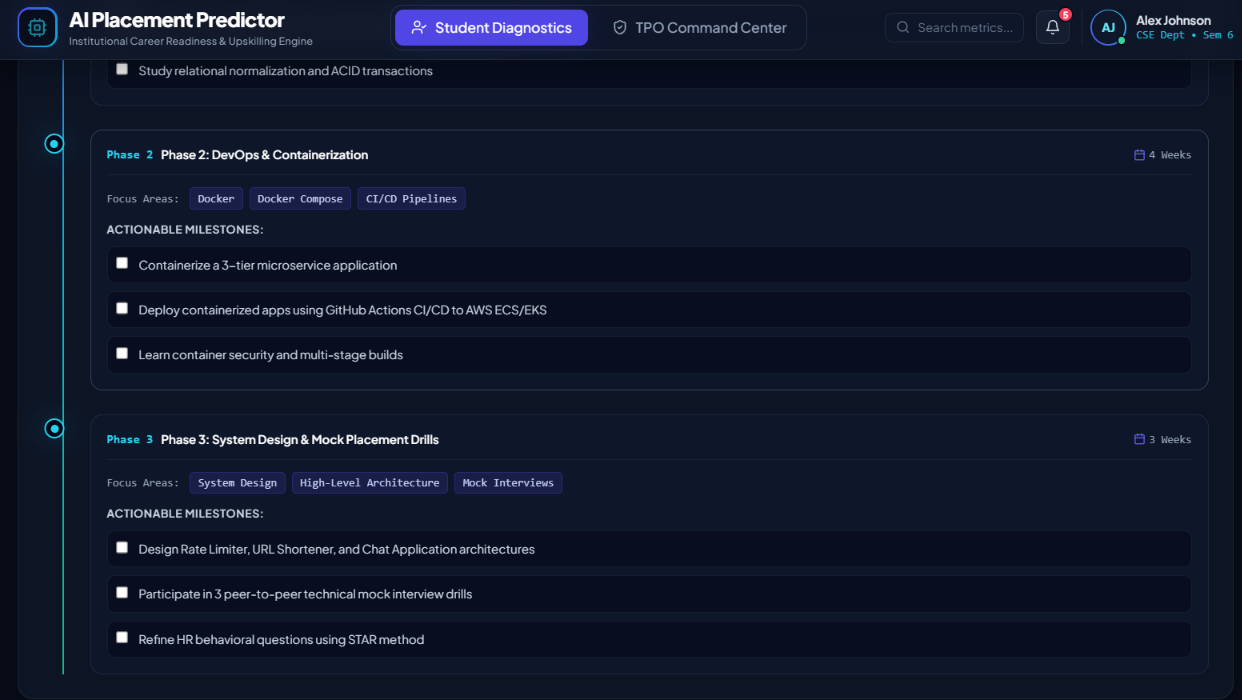
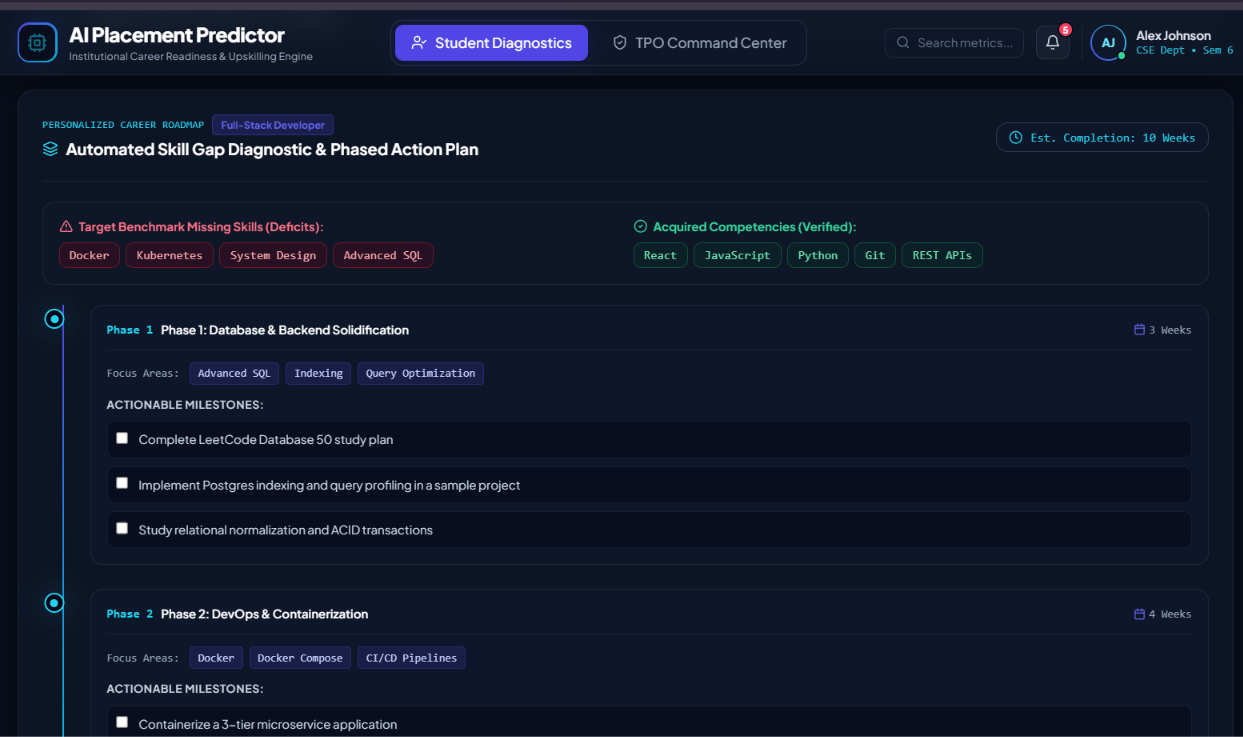
Personalized Skill Gap Diagnosis & Phased Upskilling Roadmap
-
Automated Resume & GitHub Parsing Engine
-
LLM-Powered Personal Mentor & Interactive Roadmap Guidance
-
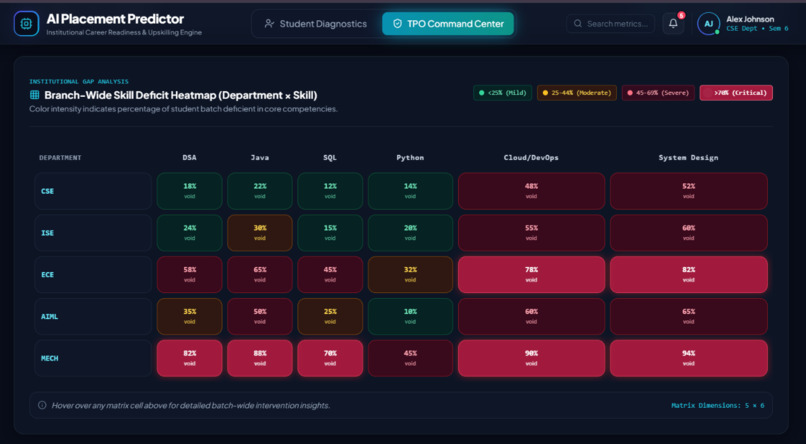
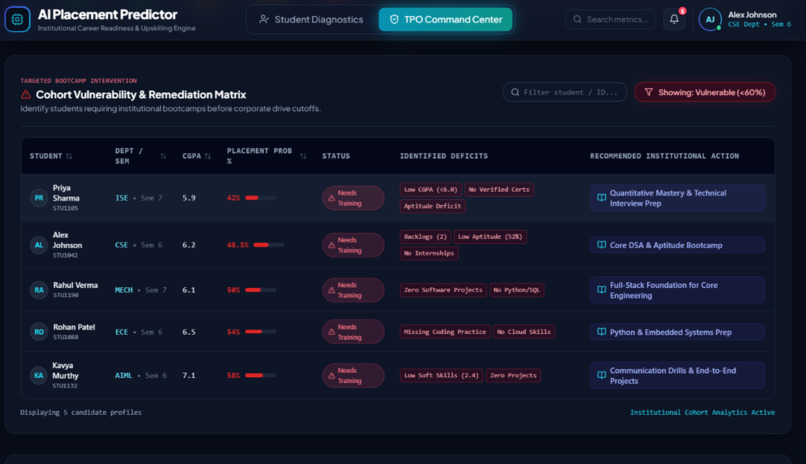
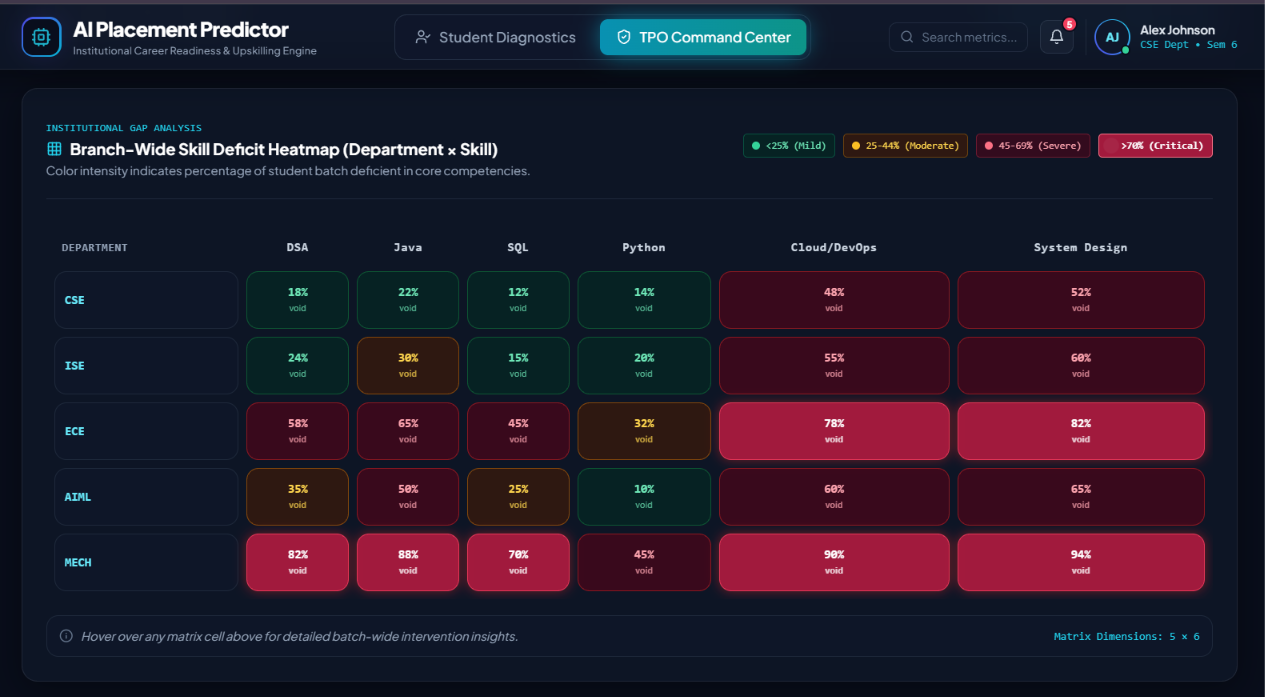
Department-Wise Skill Deficit Heatmap & At-Risk Student Flags
-
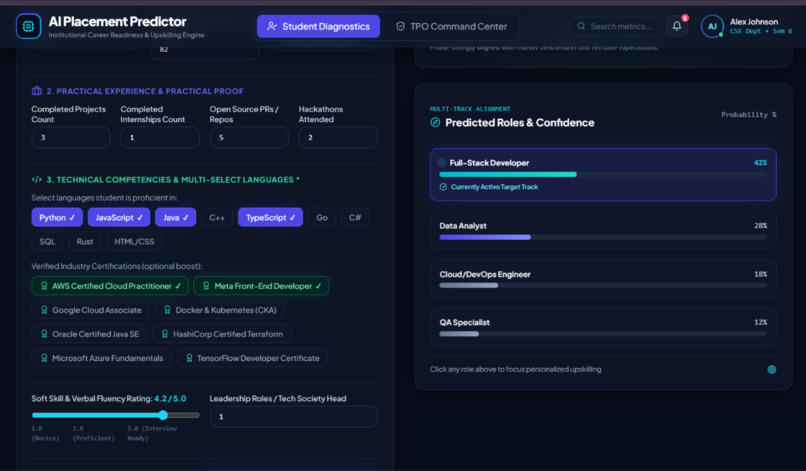
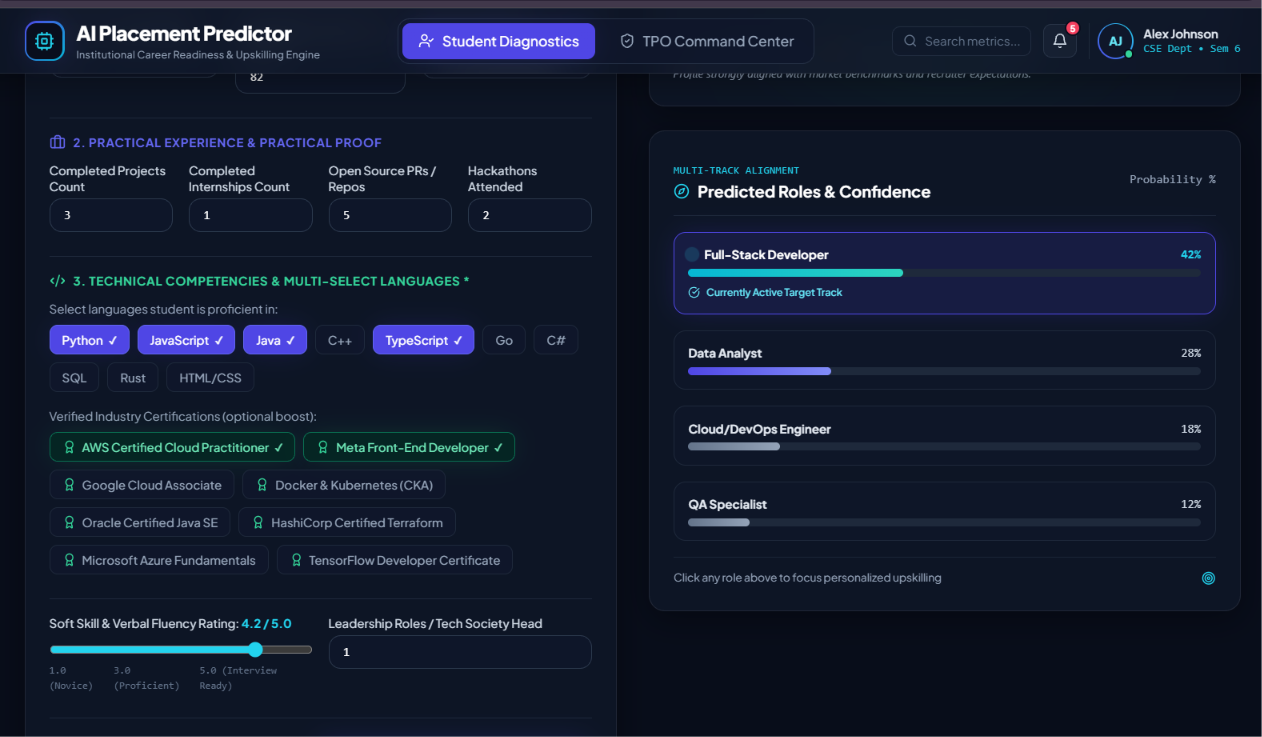
Career Track Mapping & Role Confidence Breakdown
-
Live Mock Interview & Soft-Skill Scoring Module
-
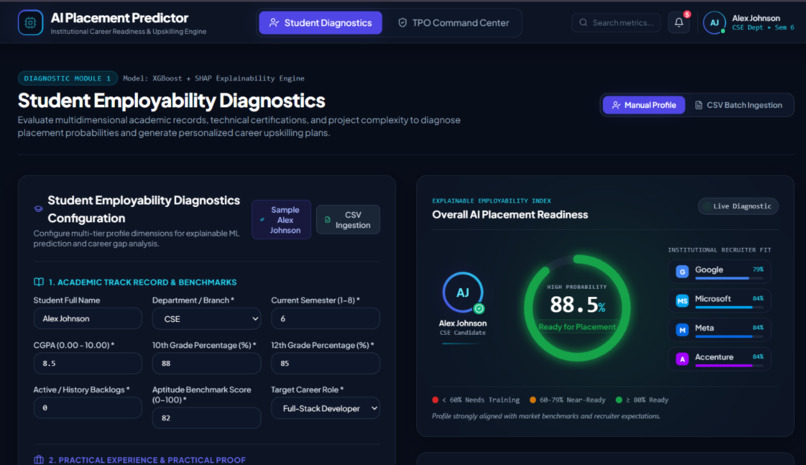
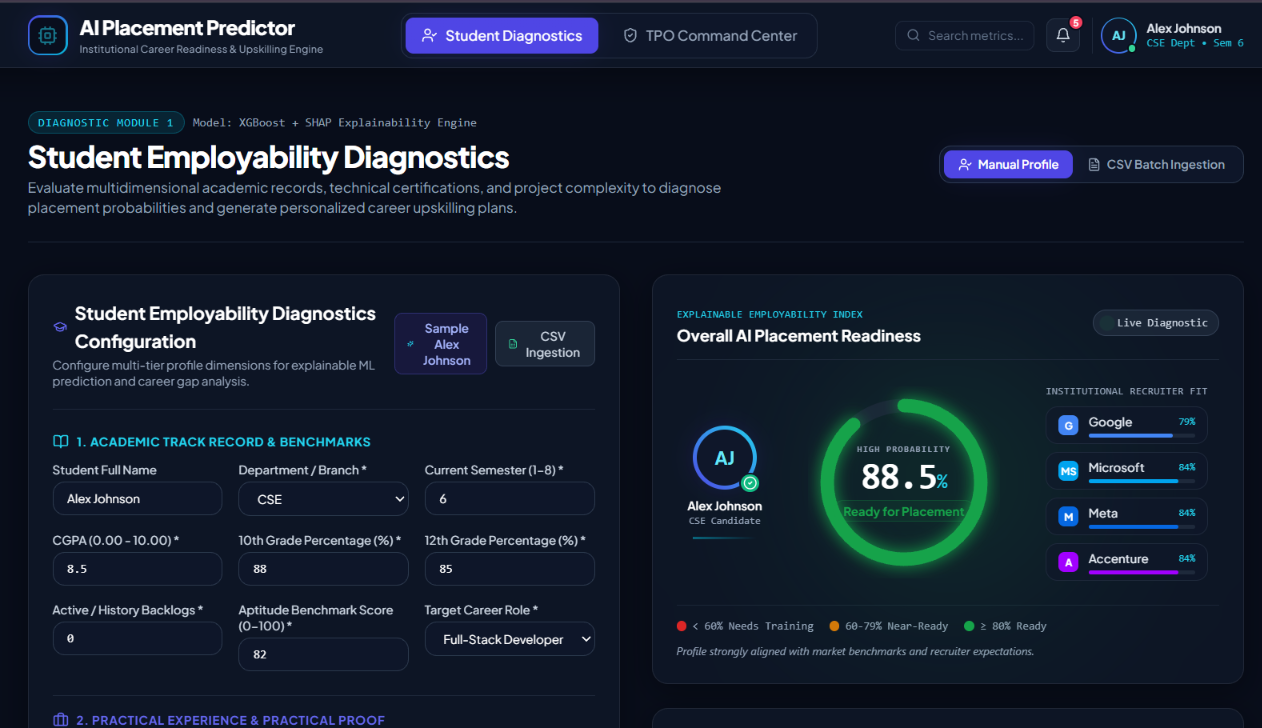
Student Profile Dashboard & Placement Probability Score
Inspiration
Every year, placement offices struggle to answer one question: which students are truly placement-ready, and who needs help? Most students only find out after being rejected, with no idea why. Placement readiness depends on much more than CGPA: certifications, projects, internships, aptitude, communication and extracurriculars all matter. We wanted to build a system that gives students clear, explainable answers and gives Training & Placement Officers (TPOs) data to act early.
What it does
AI Placement Predictor: Employability DNA Engine is an internal institutional platform for students and TPOs.
- Student Profile & Data Ingestion: Students enter their academic, technical, project, aptitude, soft-skill and extracurricular details manually or by CSV upload.
- ML Placement Probability: A trained model gives a 0-100% placement probability and a readiness status: Ready, Near-Ready or Needs Training.
- Career Track Mapping: Predicts alignment and confidence for tracks like Full-Stack Developer, Data Analyst, Cloud/DevOps Engineer and QA Specialist.
- Explainable AI: SHAP/LIME visualizations show which factors boosted or reduced the score (e.g., "+18% due to full-stack internship, -14% due to missing database certification").
- Skill Gap Diagnosis & Roadmap: Compares the student's skills with career-track benchmarks and generates a phased upskilling plan with courses, project ideas, interview drills and time estimates.
- TPO Dashboard: Shows department-wise readiness, flags students below 60% readiness for targeted bootcamps, and displays skill-deficit heatmaps (e.g., "64% of 6th-semester students lack SQL").
How we built it
- Frontend: React.js with Tailwind CSS and Plotly/Recharts for interactive dashboards (or Streamlit for rapid prototyping)
- Backend: FastAPI REST APIs for prediction, explanation, skill-gap, roadmap and TPO analytics
- ML Pipeline: Python, Pandas, NumPy and Scikit-learn for preprocessing and evaluation, with XGBoost / Random Forest as the main model and Logistic Regression as a baseline
- Explainability: SHAP and LIME for per-student feature contributions
- Skill-Gap Engine: Benchmark-based comparison against career-track profiles to generate roadmaps
- Data: Anonymized/synthetic student dataset plus CSV upload; SQLite for storage
- Tools: GitHub, Google Colab, Postman
The system runs entirely inside the college ecosystem, with no external job portals or scraping.
Challenges we ran into
- Building a realistic synthetic dataset that reflects real placement patterns without using private student data
- Keeping the model accurate while still making its predictions easy to explain
- Turning SHAP outputs into simple, student-friendly insights instead of raw numbers
- Designing role benchmarks and roadmaps that are realistic and time-bound
- Fitting the full pipeline, from data to model to explanation to dashboard, into a short time frame
Accomplishments that we're proud of
- A complete end-to-end design covering prediction, explanation, diagnosis and institutional analytics in one platform
- An explainability-first approach, so no student gets a score without knowing why
- A dual-purpose design: it helps individual students improve and helps TPOs plan department-wide training
- A privacy-conscious architecture that works on anonymized data and keeps everything inside the institution
What we learned
- Explainability builds trust: students act on predictions they can understand
- Employability is multidimensional, and academics alone are a weak predictor
- Good ML work depends heavily on clean data, thoughtful feature engineering and honest evaluation
- Institutional tools need both an individual view for students and an aggregate view for administrators
What's next for AI Placement Predictor: Employability DNA Engine
- Train on real anonymized historical placement data from the institution
- Add more career tracks and company-specific readiness profiles
- Integrate mock interview and aptitude test modules for live skill assessment
- Add an LLM-powered mentor to personalize roadmap guidance
- Track student progress over semesters to show improvement trends
- Add role-based login, notifications for at-risk students, and multi-college support
Built With
- explainable-ai
- fastapi
- github
- google-colab
- javascript
- joblib
- lime
- logistic-regression
- machine-learning
- numpy
- pandas
- plotly
- postman
- python
- random-forest
- react
- rest-api
- scikit-learn
- shap
- sql
- sqlite
- tailwindcss
- uvicorn
- xgboost

Log in or sign up for Devpost to join the conversation.