-
-
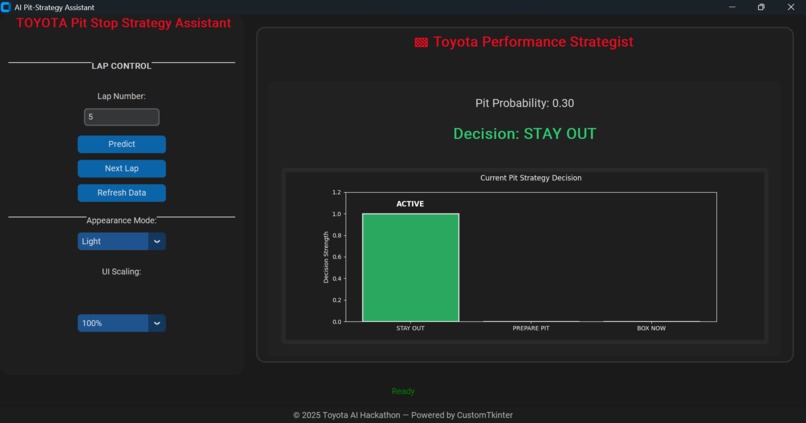
AI Pit Strategy Assistant Interface
Inspiration
As a F1 fan dreaming of becoming a motorsport software engineer, I ve always been fascinated by pit stop strategy the delicate balance between tire wear, track position, and race conditions. When Toyota provided real-world racing data for this hackathon, it felt like stepping into the very role I aspire to, it was a dream come true for me .
What it does
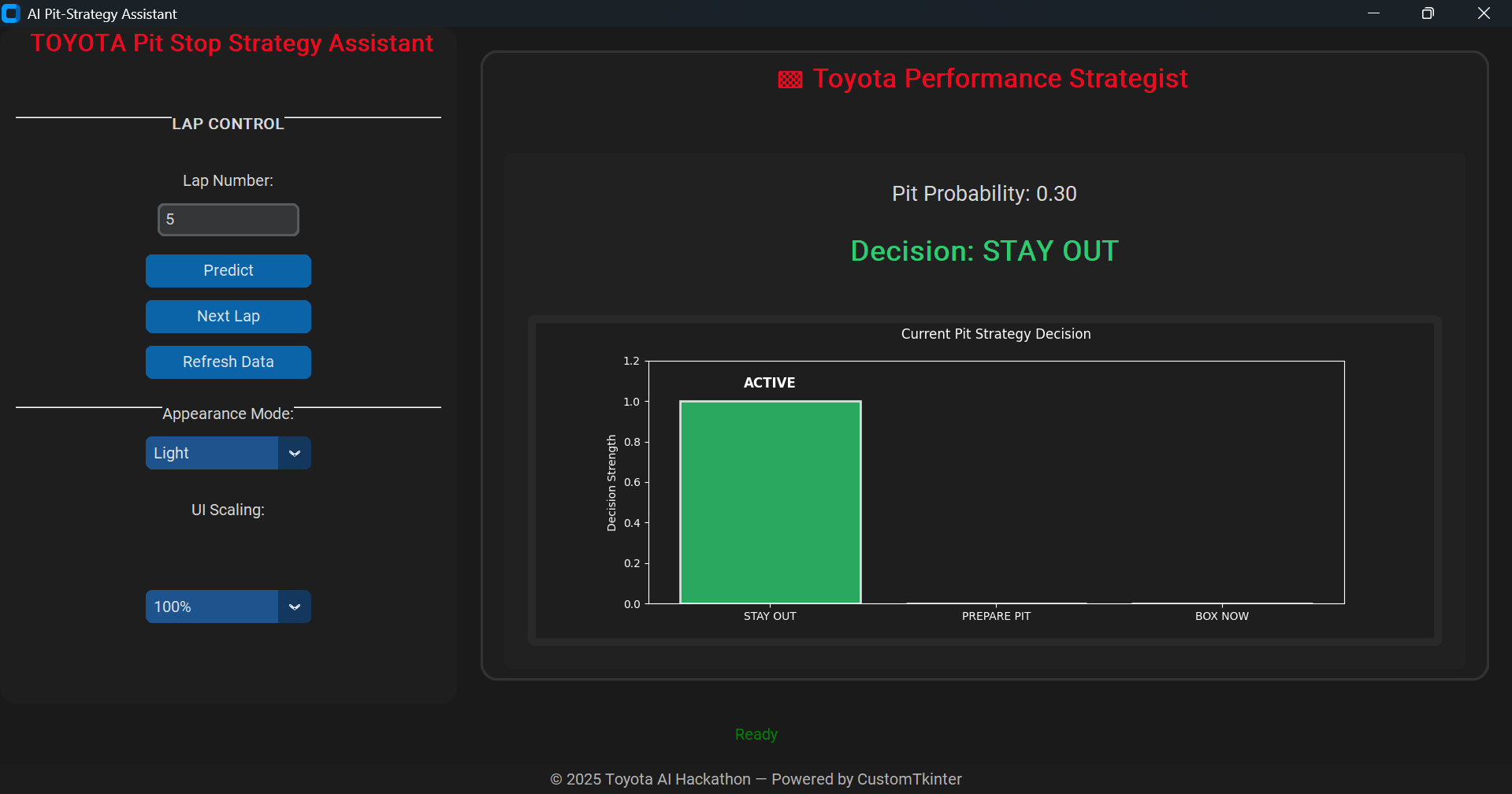
The AI Pit Strategy Assistant analyzes real time racing telemetry to predict optimal 1-2 lap pit windows. It processes live data on tire performance, weather conditions, and race position to provide three clear recommendations: "BOX NOW" for immediate pits, "PREPARE PIT" for upcoming windows, or "STAY OUT" to maintain current strategy.
How we built it
I developed a complete machine learning pipeline starting with data cleaning of raw telemetry, followed by exploratory analysis to understand racing patterns. I engineered domain-specific features like performance degradation metrics and tire wear indicators, then trained an XGBoost model using temporal cross validation. The system culminates in an interactive GUI built with CustomTkinter that simulates real race conditions and provides visual decision support.
Challenges we ran into
Working with real racing data presented unexpected complexities telemetry gaps, sensor inconsistencies, and the challenge of translating racing intuition into mathematical features. Understanding how factors like track temperature and tire compounds interact required deep domain research. Building the entire pipeline alone meant constantly switching between data science, software engineering, and UX design mindsets
Accomplishments that we're proud of
Creating my first end-to-end ML project that achieves 83% accuracy in pit window predictions. I'm particularly proud of the professional interface that would be usable in real race scenarios and the domain-specific feature engineering that captures genuine racing intelligence. The system successfully bridges the gap between raw data and strategic decision-making.
What we learned
This project taught me the importance of specialized teamwork how having experts focused on specific components creates better outcomes. I gained practical experience in temporal validation to prevent data leakage and learned to think like a race engineer when designing features. Most importantly, I discovered that building production ready systems requires considering not just model accuracy but also interpretability, latency, and user experience.
What's next for AI Pit Strategy Assistant
I'm excited to connect this to live telemetry feeds and see how it performs in real racing conditions. The dream would be testing it during actual race weekends and getting feedback from professional strategists. I'd also love to expand it to handle full team strategies managing multiple cars and pit stops simultaneously and incorporate more advanced factors like safety car probabilities and competitor behavior patterns.
Built With
- customtkinter
- excel
- joblib
- jupyternotbook
- lightgbm
- matplotlib
- numpy
- pandas
- python
- scikit-learn
- seaborn
- xgboost


Log in or sign up for Devpost to join the conversation.