-
-
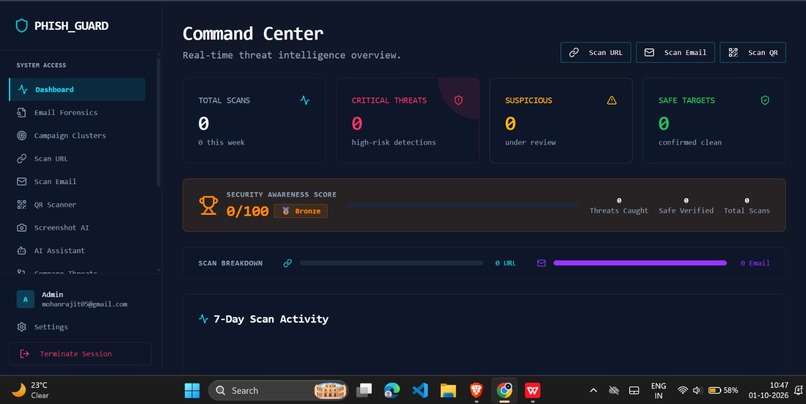
DashBoard
-
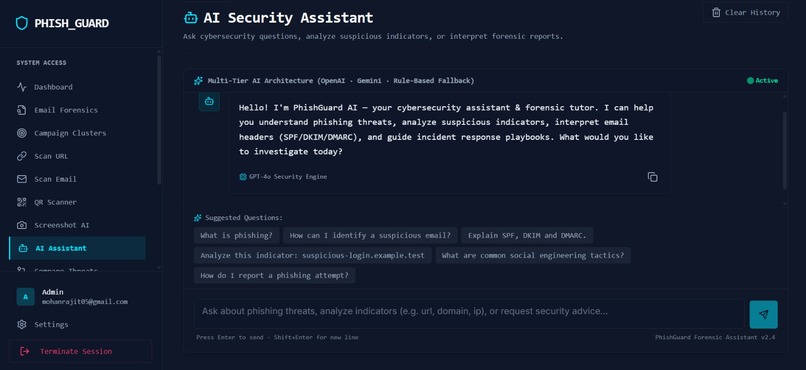
AI Security Analyst
-
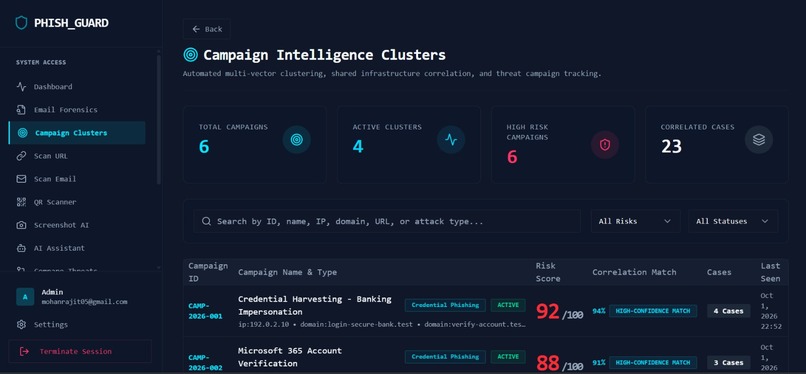
Campaign Clusters
-
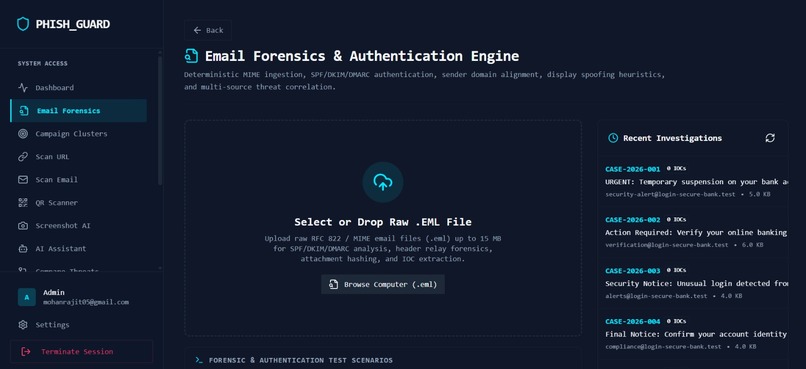
Email-Forensic
-
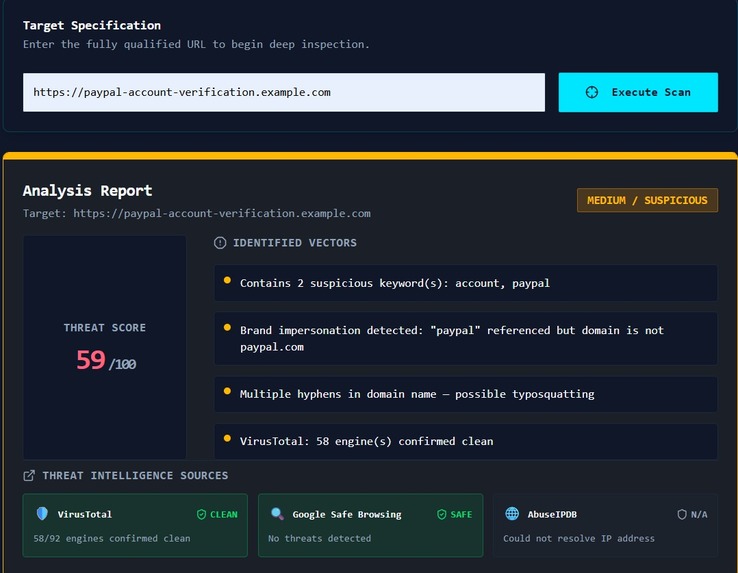
Anaysis Report
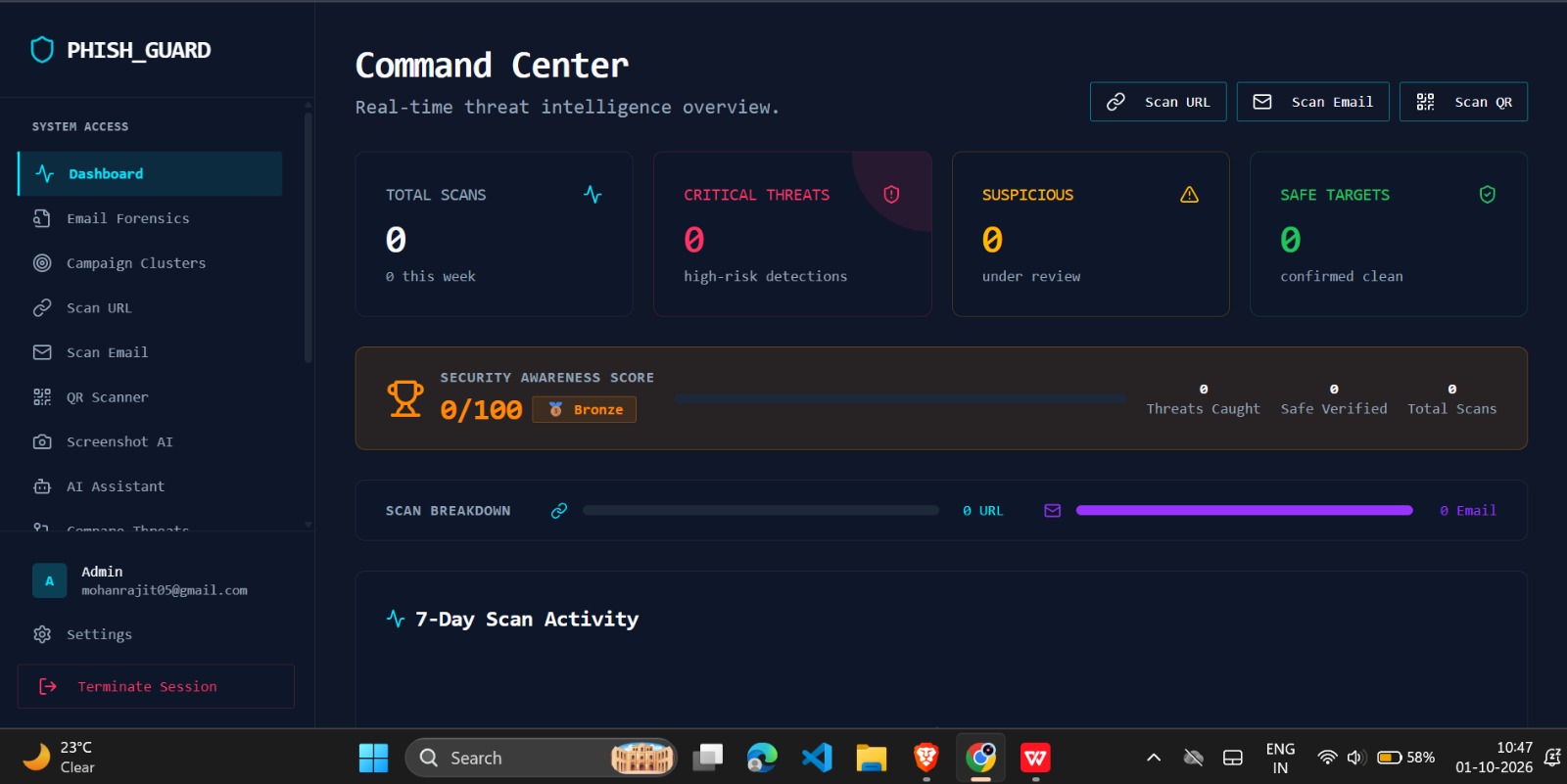
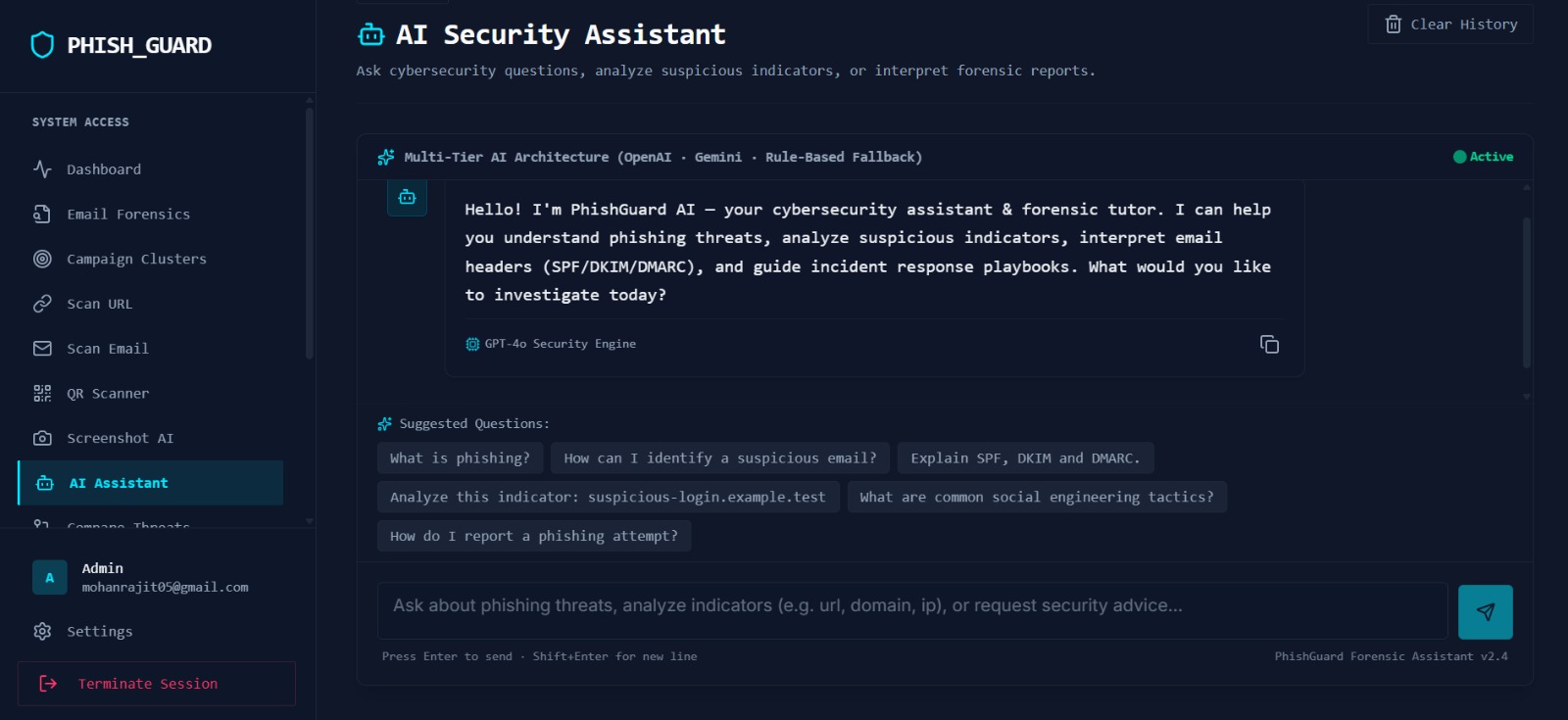
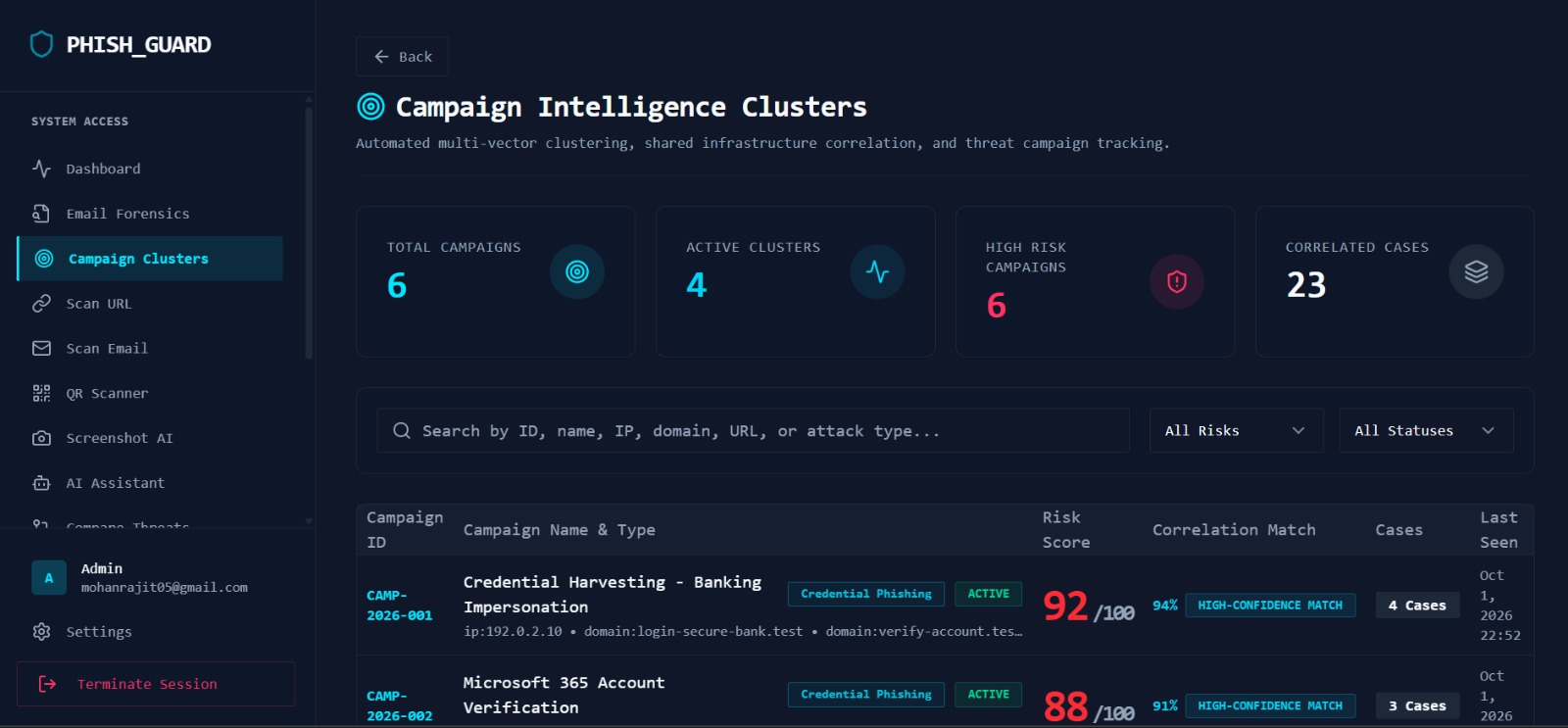
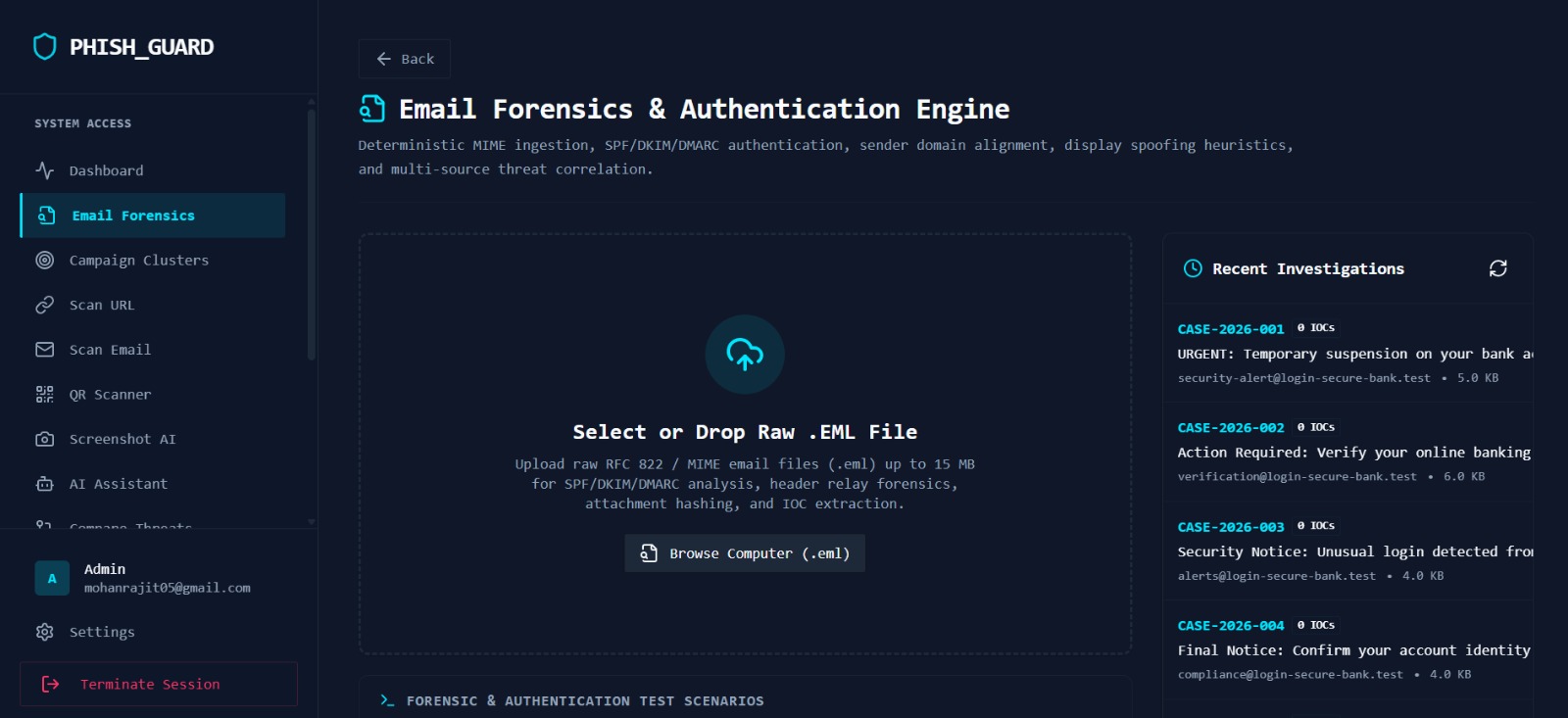
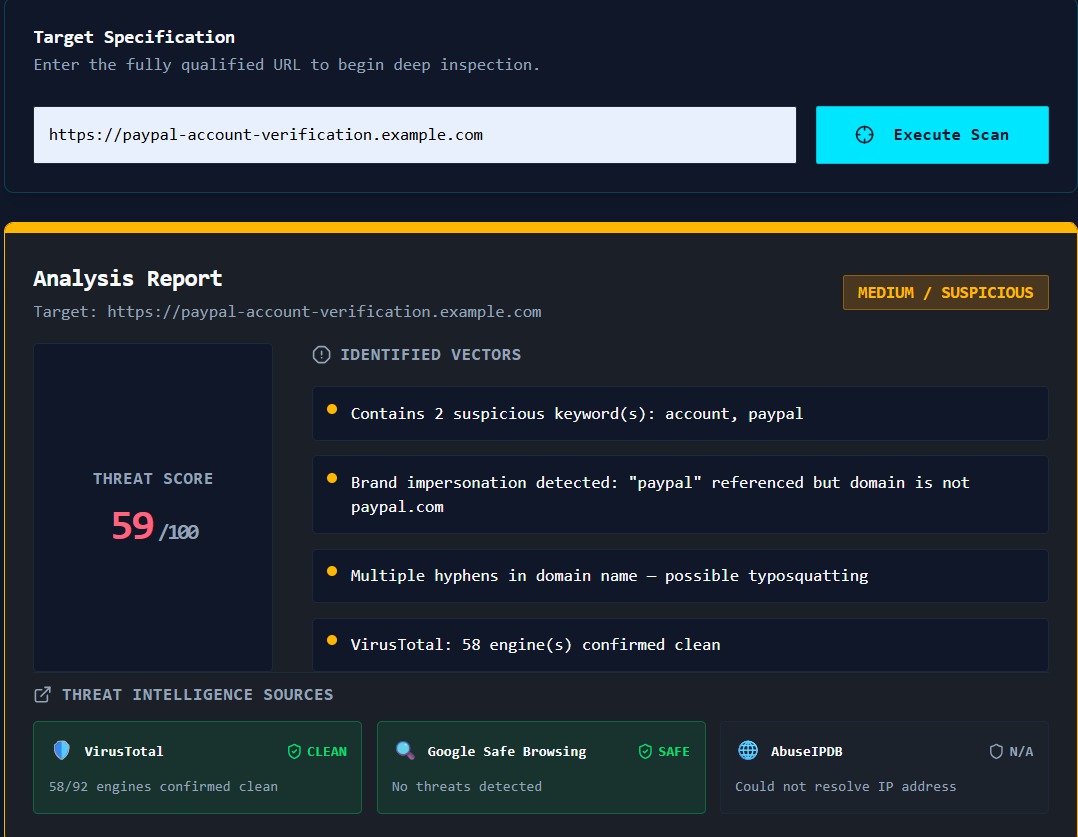
Phishing attacks are becoming more sophisticated and can arrive through different channels—not just suspicious links, but also emails, QR codes, and screenshots. This inspired us to build PhishGuard AI, a unified platform that helps users analyze suspicious digital content and understand the level of risk before interacting with it.
🛠️ What We Built
PhishGuard AI is an AI-powered phishing detection and threat intelligence platform that provides multiple analysis workflows:
🔗 URL Scanner — analyzes suspicious URLs and identifies potential threats. 📧 Email Scanner — analyzes email content for phishing indicators. 📱 QR Code Scanner — extracts and analyzes destinations encoded in QR codes. 🖼️ Screenshot AI — analyzes screenshots to identify suspicious links, messages, and phishing indicators. 🔍 Threat Intelligence & IOC Analysis — helps investigate indicators associated with suspicious activity. ⚠️ Risk Classification — presents analysis through risk categories such as High Risk, Suspicious, and Low Risk/Safe.
The goal was to bring these different analysis capabilities into a single, easy-to-use security platform instead of requiring users to rely on scattered tools.
🧩 How We Built It
The application was developed as a modern web platform using technologies such as React, Vite, TypeScript, Tailwind CSS, Node.js, Express.js, PostgreSQL/Supabase, REST APIs, and AI-assisted analysis.
The overall workflow follows:
User Input → Validation & Pre-processing → Analysis → Threat Intelligence → Risk Classification → Security Result
This approach allows different types of suspicious content to be processed through dedicated scanners while presenting the results through a consistent interface.
📚 What We Learned
Building the project provided practical experience in:
Web application development and API integration Frontend and backend architecture Threat intelligence concepts and Indicators of Compromise (IOCs) Security-focused input validation Integrating multiple analysis workflows into one platform Designing interfaces for presenting security results clearly Testing different phishing scenarios and handling unexpected inputs Debugging API, database, and deployment issues 🚧 Challenges We Faced
One of the major challenges was dealing with the different formats and characteristics of phishing indicators. A URL, email, QR code, and screenshot require different processing approaches.
We also faced challenges around API integration, validation, error handling, database connectivity, and presenting complex security information in a simple way. Iterative testing and debugging helped us improve the reliability and usability of the platform.
🎯 Outcome
PhishGuard AI evolved into a centralized platform for multi-channel phishing analysis, combining detection workflows, threat intelligence, IOC-oriented investigation, and risk-based results in one application.
Detect • Analyze • Classify • Investigate
Built With
- ai
- analysis
- apis
- css
- cybersecurity
- detection
- express.js
- intelligence
- ioc
- javascript
- node.js
- phishing
- postgresql
- react
- rest
- supabase
- tailwind
- threat
- typescript
- vite

Log in or sign up for Devpost to join the conversation.