Inspiration
As a lifelong pet parent, I grew frustrated with disjointed pet care tools—vet reminders lost in notebooks, diet advice scattered across blogs. I wanted a single hub rooted in scientific pet care, designed for how we actually care for our furry family members.
What it does
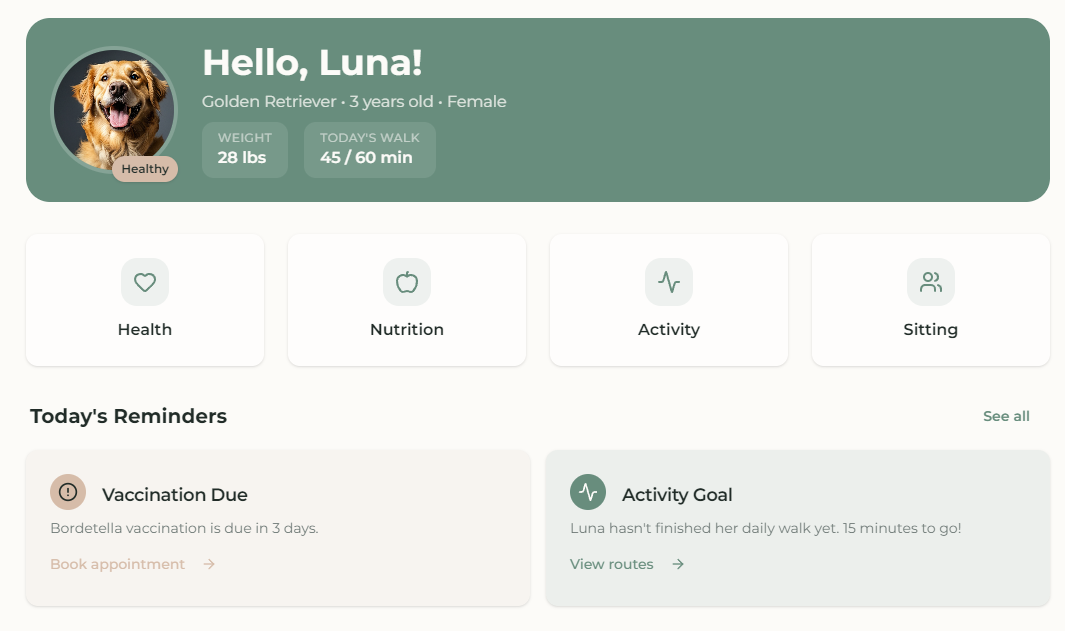
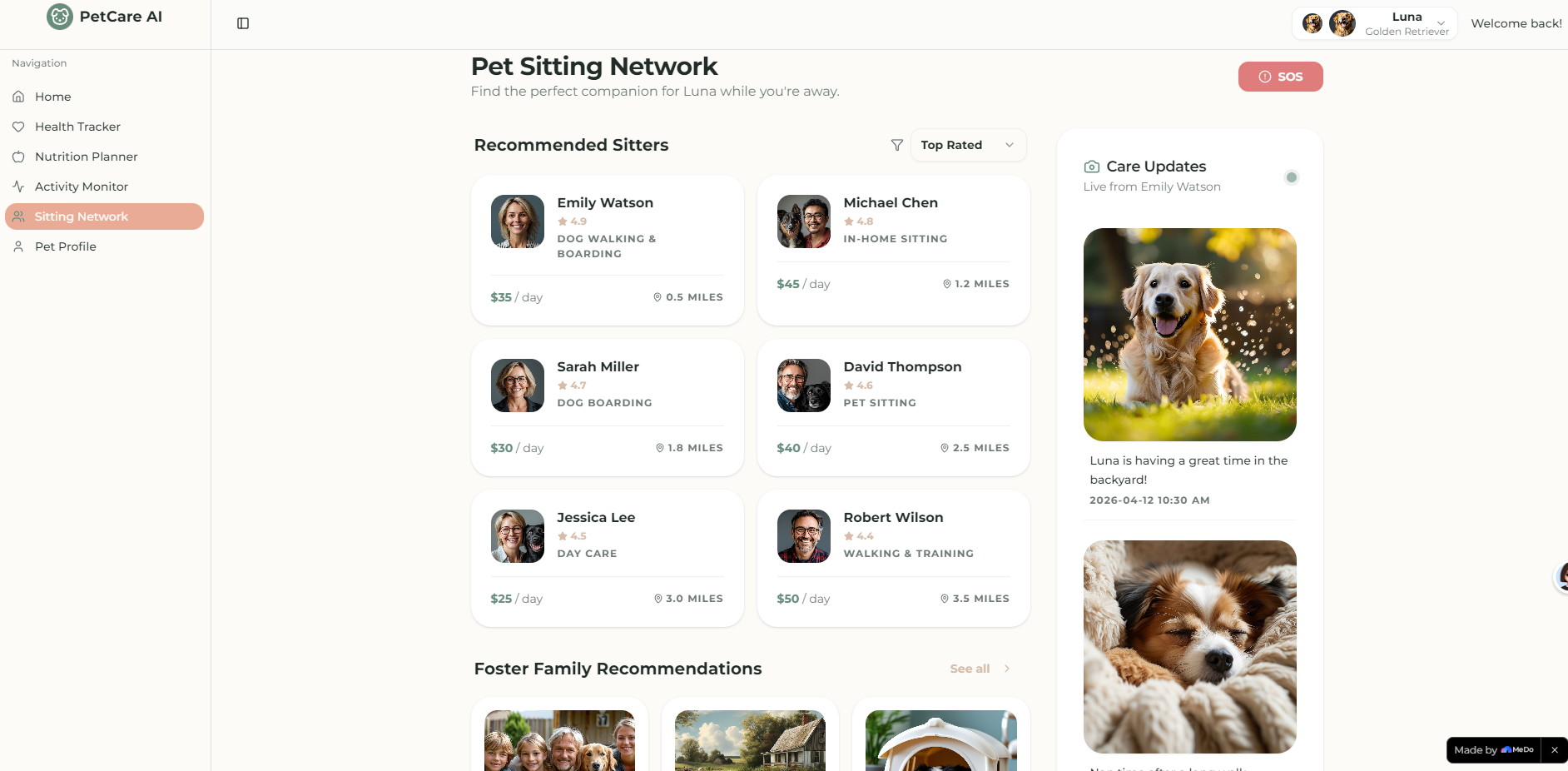
AI Pet Care Assistant unifies four core pillars: health tracking (vaccinations, weight, symptom checks), nutrition planning (tailored diet recs, allergy tracking), activity monitoring (exercise, walking routes, training), and a trusted pet sitting network—all aligned to your pet’s unique needs.
How we built it
I began with Figma to craft a warm, intuitive UI (mirroring mainstream pet app aesthetics), then built the core with React/TypeScript. I integrated Chart.js for visualizing weight and activity data, and structured modular navigation to keep the app easy to navigate daily.
Challenges we ran into
Balancing data-rich features (e.g., nutrition metrics) with simplicity was tough—too much detail overwhelmed users. I also struggled to refine sitter filtering logic to feel natural, not rigid.
Accomplishments that we're proud of
Creating a cohesive experience where every feature ties back to the pet’s profile—no siloed tools. The design feels empathetic, not clinical, making pet care less stressful for busy owners.
What we learned
Empathy trumps technical complexity for pet care tools—functionality only matters if it makes parents feel supported. Iterative UI testing was critical to simplifying complex pet health data.
What's next for this project
Expand to multi-pet profiles, sync with real vet clinics for appointment reminders, and add a community layer for pet parents to share science-backed tips—keeping care personal and informed.

Log in or sign up for Devpost to join the conversation.