-
-
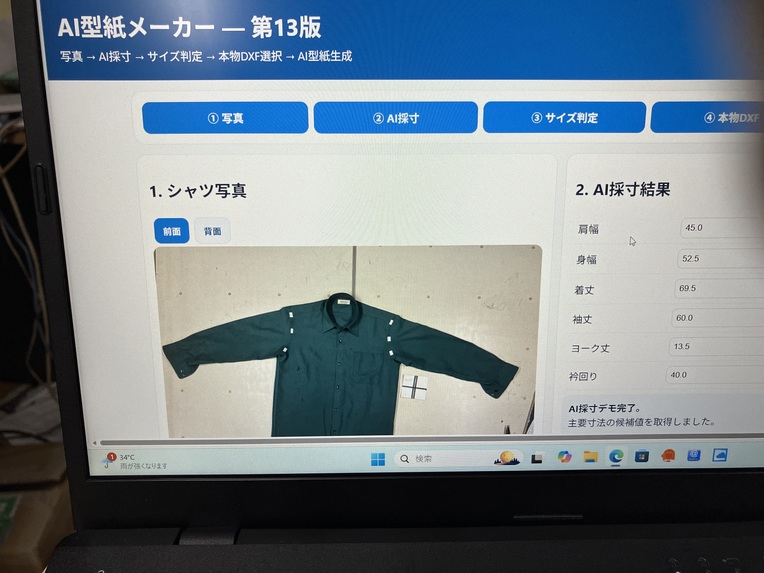
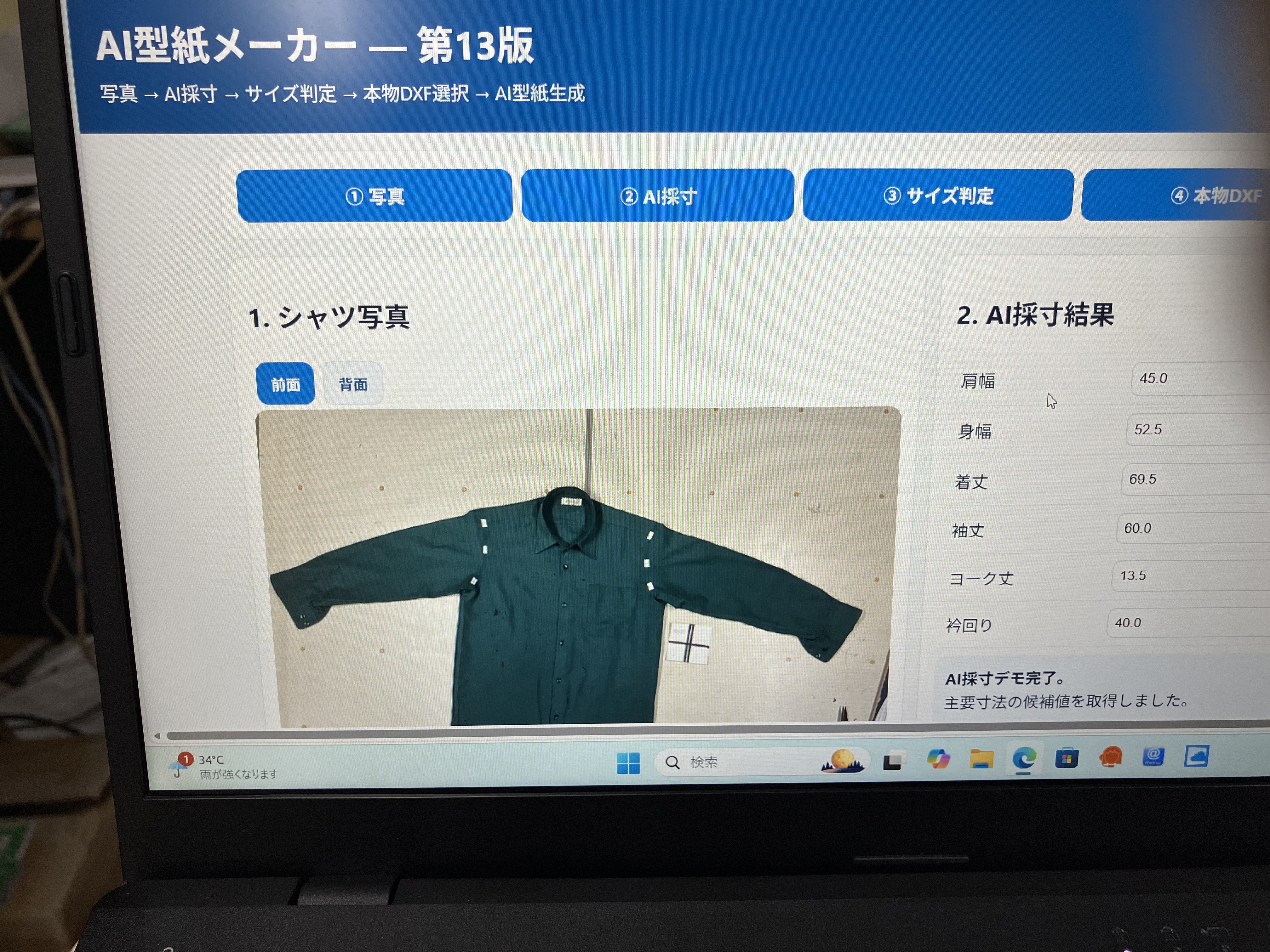
AI Measurement – Garment photo analyzed to estimate key shirt dimensions.
-
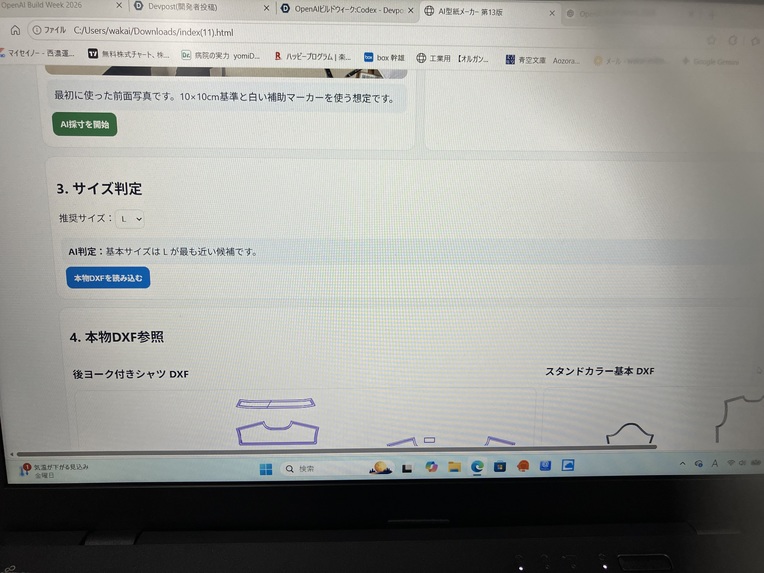
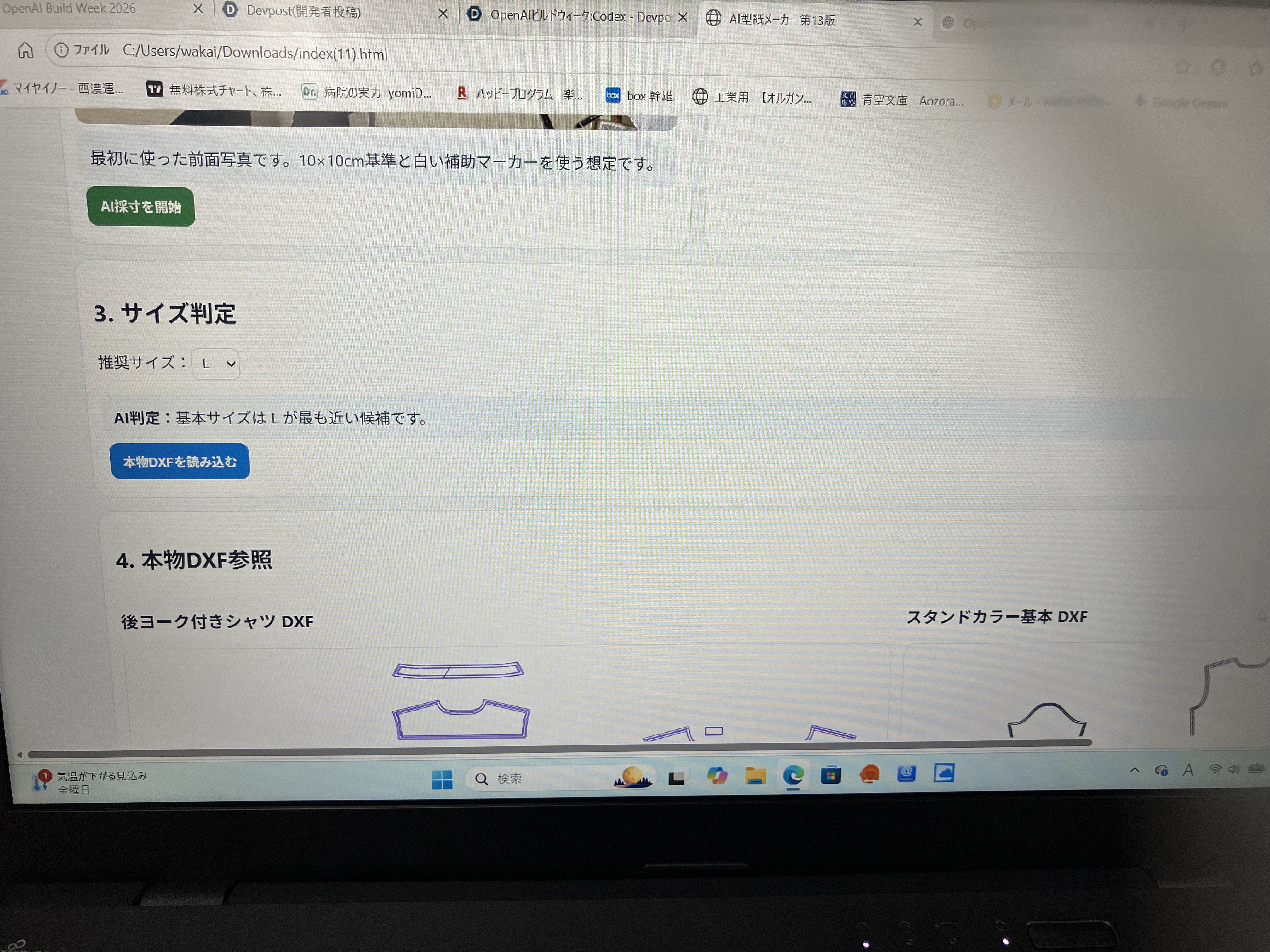
Size Recommendation – AI compares measurements and recommends the closest base size.
-
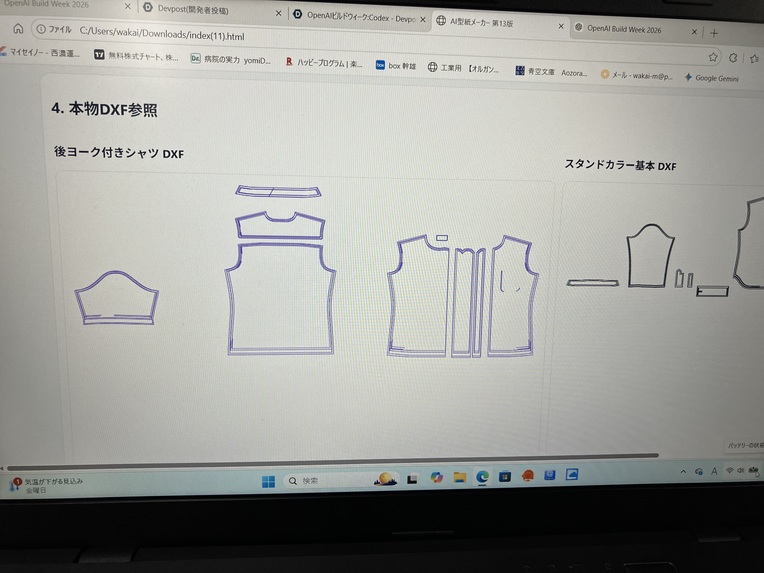
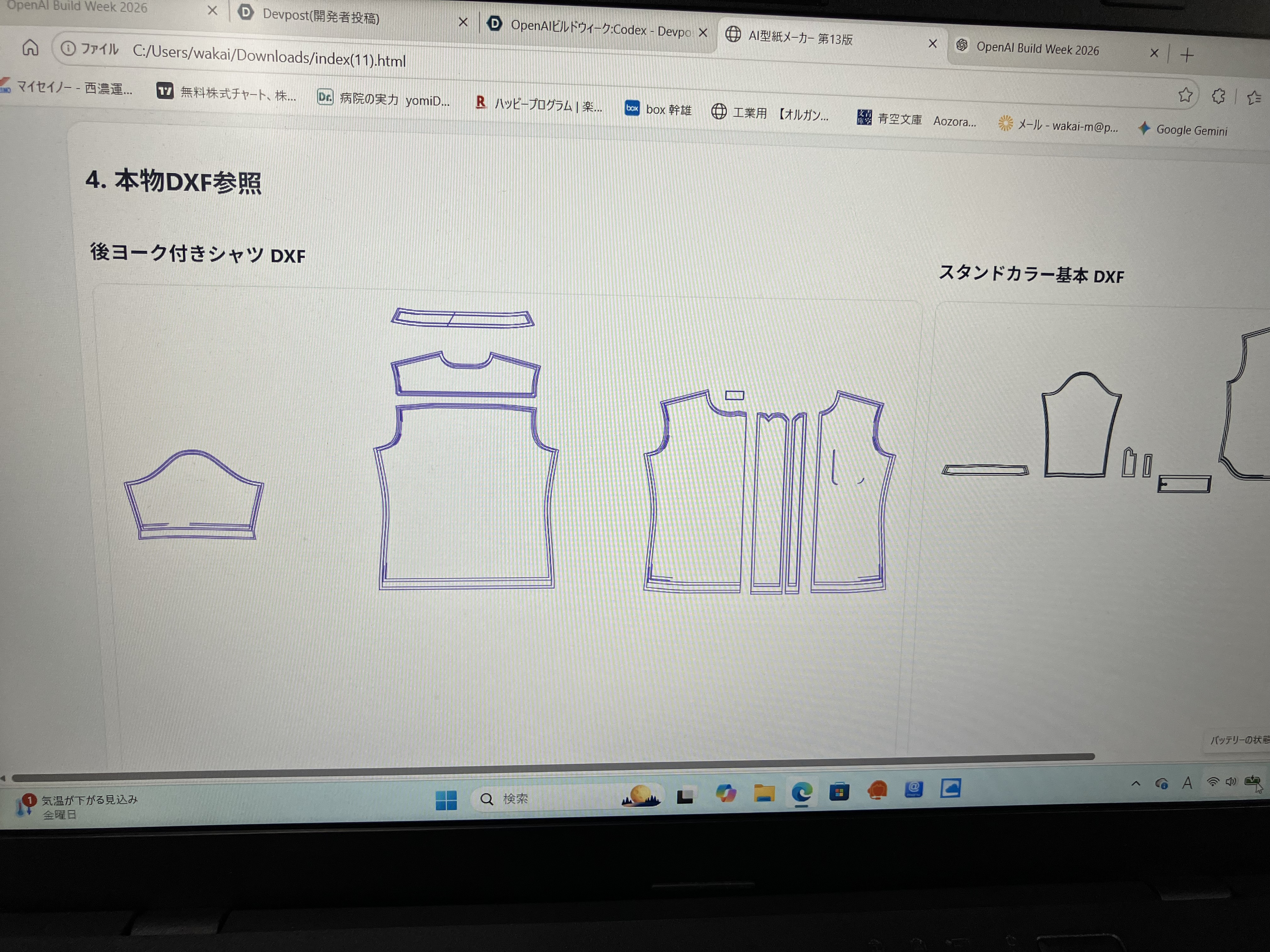
DXF Reference – Real garment DXF patterns are used as professional reference data.
-
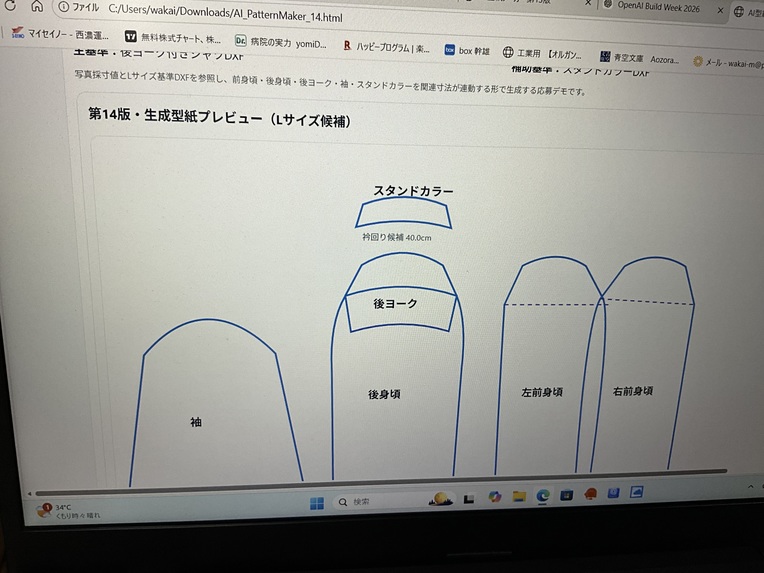
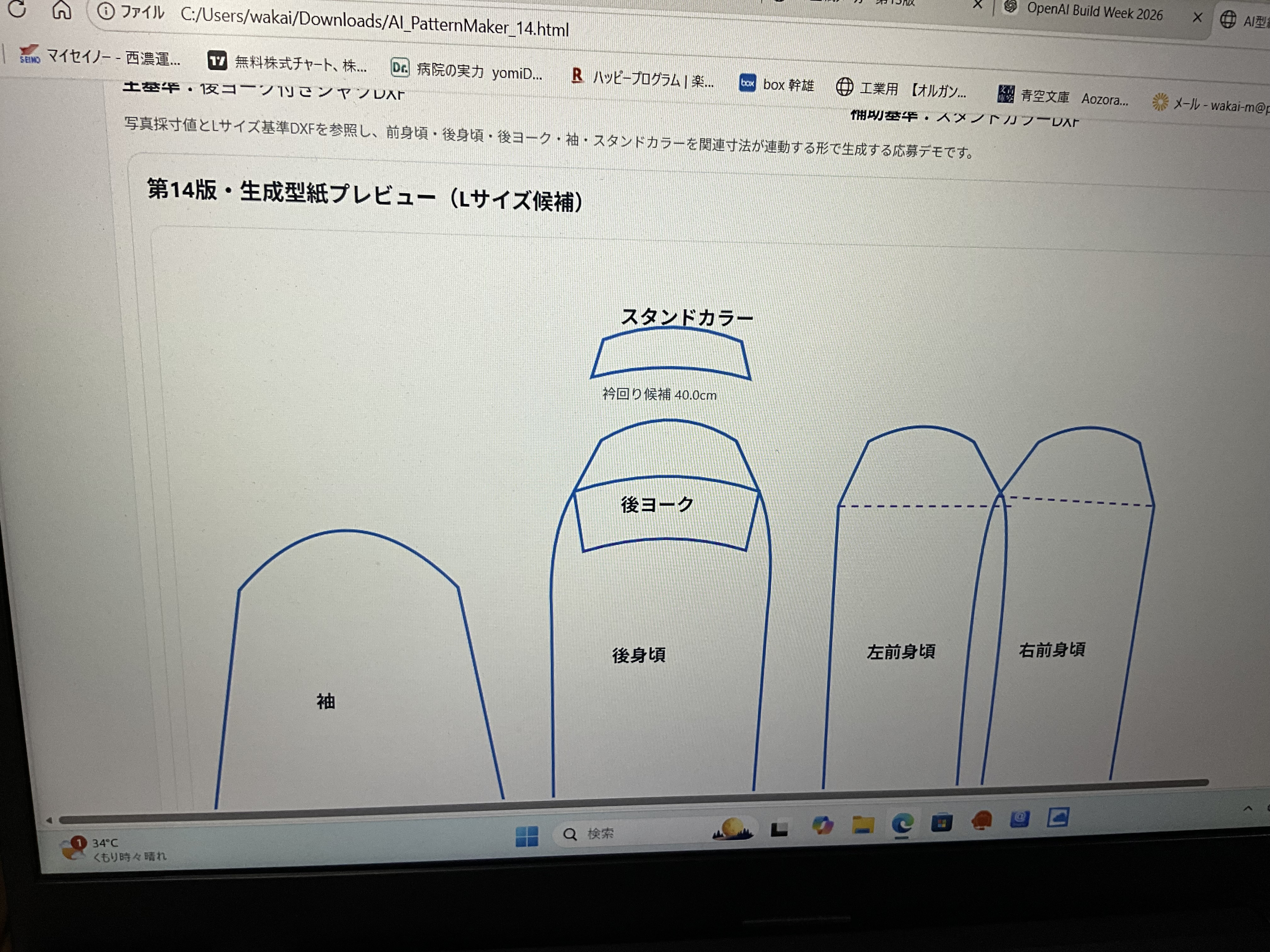
AI Pattern Generation – Final pattern pieces generated from photo measurements and DXF references.
Inspiration
Inspiration
I have worked in garment sewing and manufacturing for about 50 years. Pattern making is one of the most skilled and time-consuming parts of clothing production. My idea was simple: could AI look at a photograph of a real garment, estimate its measurements, and help create a usable sewing pattern?
This project combines decades of practical garment-making experience with modern AI.
What it does
AI PatternMaker is a prototype workflow that aims to turn garment photographs into measurements and sewing-pattern components.
A garment is photographed flat together with a 10 cm x 10 cm reference marker. Front and back photographs provide visual information about the garment's proportions and construction.
The system concept then:
- Uses the reference marker as a scale.
- Identifies important garment boundaries and construction points.
- Estimates dimensions from the photograph.
- Uses garment construction knowledge and reference patterns to generate pattern components.
- Presents pattern pieces such as the front body, back body, back yoke, sleeve, and collar.
The long-term goal is to connect the generated patterns with professional apparel CAD workflows and formats such as DXF.
How I built it
I started with photographs of a real long-sleeve shirt and placed a 10 cm x 10 cm reference marker beside it.
During testing, AI had difficulty identifying some boundaries, especially shoulder and armhole seam positions. I added visible markers around important seam locations and used both front and back photographs to make the structure clearer.
I also used authentic professional CAD pattern data as a reference for realistic garment construction. Through repeated prototype versions, I improved the pattern layout to better represent the front, back, back yoke, sleeve, and collar.
ChatGPT was used as an AI development partner to help turn my garment-manufacturing knowledge into a working prototype and interface.
Challenges
The biggest challenge is that a single photograph does not contain perfect three-dimensional information. Fabric wrinkles, perspective, hidden seams, and garment construction can all affect measurement accuracy.
Another challenge is converting visual measurements into pattern geometry that is actually meaningful for sewing. A sewing pattern is not simply the outline of a garment. It requires knowledge of seam relationships, armholes, sleeve caps, collars, yokes, ease, and construction methods.
This is where combining AI with experienced garment-making knowledge becomes especially important.
What I learned
I learned that AI can be much more useful when it works together with real-world professional knowledge.
AI alone may not immediately understand why a shoulder seam, armhole, yoke, or collar must have a particular relationship. However, by giving it reference photographs, scale information, seam markers, and real pattern examples, the system can be progressively improved.
What's next
The next step is to connect real image analysis to automatic measurement and improve pattern accuracy using a library of professional reference patterns.
Future versions could:
- automatically detect garment landmarks and seams,
- estimate measurements more accurately,
- select the closest reference pattern,
- adjust the pattern to match the photographed garment,
- generate graded sizes,
- export patterns to DXF or apparel CAD systems,
- and learn from corrections made by experienced pattern makers.
My goal is to preserve decades of garment-making knowledge and make professional pattern creation more accessible with AI.
What it does
How we built it
Challenges we ran into
Accomplishments that we're proud of
What we learned
What's next for AI PatternMaker-Photo to SewingPattern
Built With
- ai
- computervision
- css
- dxf
- html
- javascript

Log in or sign up for Devpost to join the conversation.