-
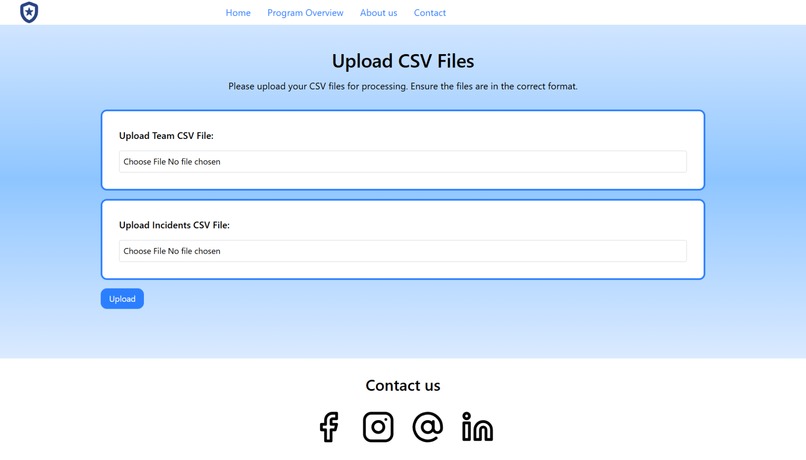
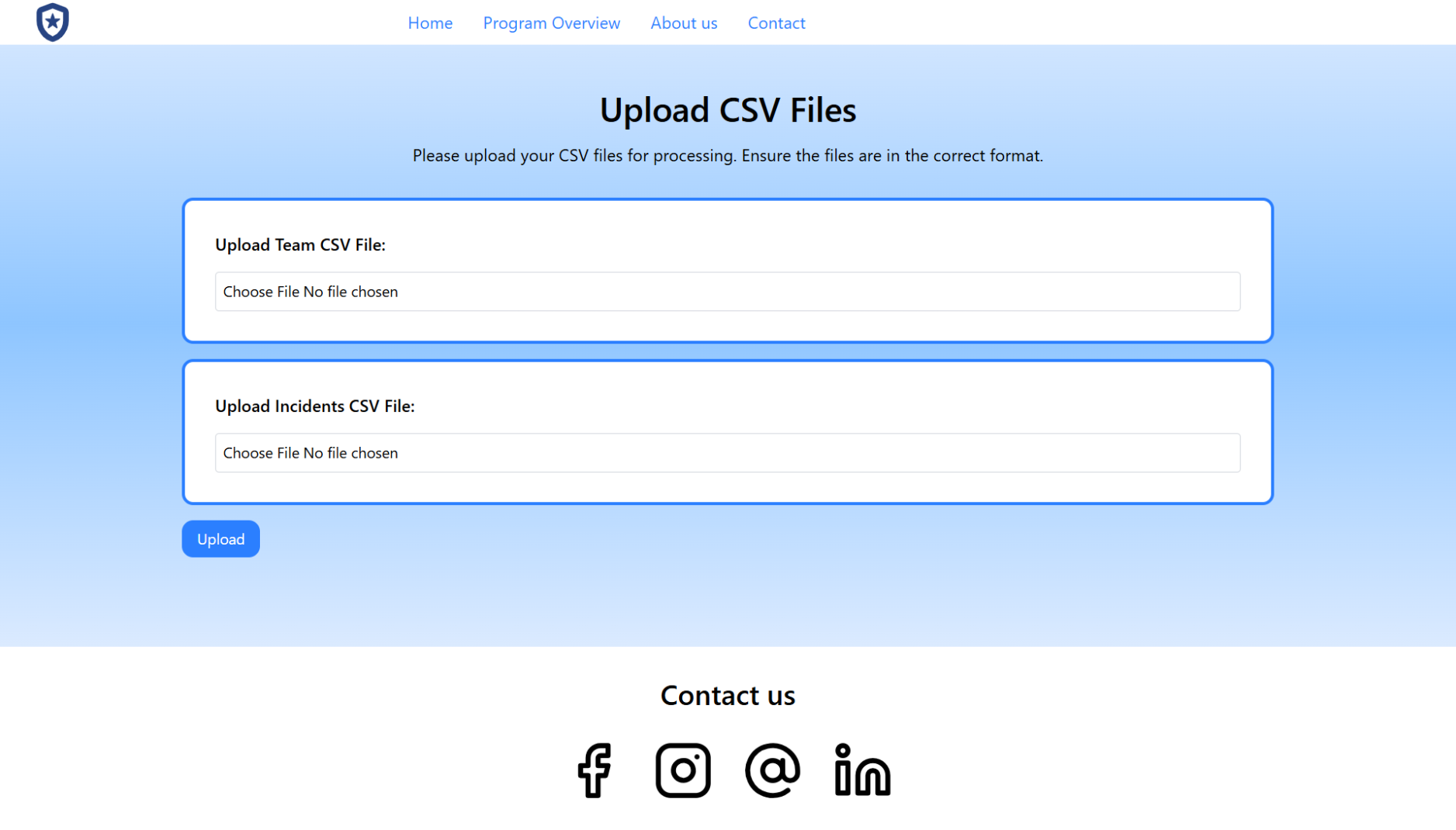
Upload page
-
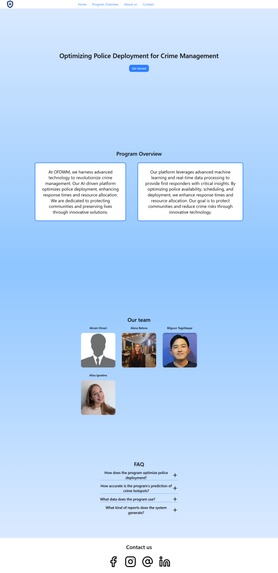
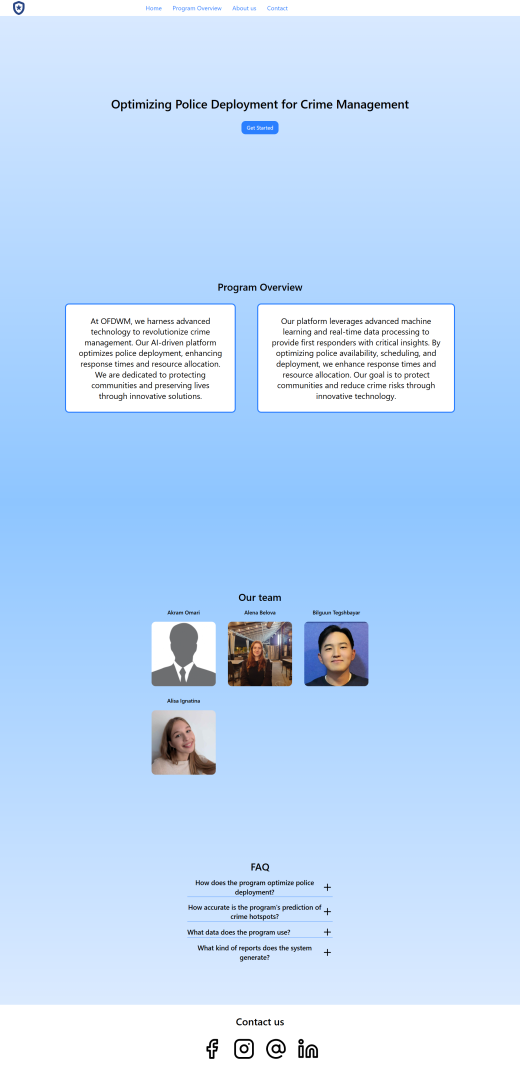
Home page
Inspiration
(AI-enhanced patrol and incident response)
Law enforcement agencies face challenges in efficiently allocating patrol units to incidents while balancing resource availability, response times, and severity prioritization.
Traditional dispatch systems often rely on static rules, leading to suboptimal unit assignments.
Our goal was to leverage AI and reinforcement learning (RL) to create a smarter, data-driven dispatch system that optimizes police unit deployment for faster and more effective incident responses.
What it does
AI-PatrolDispatch is an AI-powered scheduling and dispatching system that dynamically assigns patrol units to incidents based on:
✔ Incident severity and type (e.g., theft, assault, armed robbery)
✔ Team capabilities (units available, specialization, power level)
✔ Minimization of over-assignment and underutilization
✔ Real-time updates based on incident status ("open," "in progress," "closed")
The system evaluates potential over-assignments, misallocation of resources, and ensures optimal patrol coverage using a reinforcement learning (RL) model.
How we built it
- Data Handling: Processed incident and team datasets from CSV files
- Scheduling Algorithm: Implemented a rule-based heuristic for initial scheduling
- Optimization: Designed an evaluation system to penalize inefficiencies (over-assignment, unassigned incidents, overused teams)
- AI Component: Integrated Reinforcement Learning (RL) to iteratively improve team assignments
- Technology Stack: Python, Pandas, NumPy, RL-based optimization
Challenges we ran into
- Balancing power allocation: Avoiding both underpowered and overpowered team assignments
- Handling real-time updates: Managing incident status changes dynamically
- Scaling the model: Optimizing RL for large datasets and continuous learning
- Refining the algorithm: Tweaking the scheduling and evaluation logic to improve efficiency
Accomplishments that we're proud of
- Successfully implemented dynamic patrol unit dispatching that adapts to incident severity and real-time updates.
- Integrated Reinforcement Learning (RL) for optimizing unit assignments, improving response times.
- Designed a cost-effective deployment strategy that minimizes over-assignments and balances unit workloads.
- Built a fully functional prototype with AI-driven decision-making within the limited hackathon timeframe.
- Seamless collaboration using AI tools like ChatGPT and GitHub Copilot to enhance productivity and debugging.
- Smooth Front-end using UI/UX tool like Figma to enhance better visualization.
What we learned
- AI in Resource Optimization: We deepened our understanding of how RL-based optimization can improve real-world dispatching systems.
- Data-Driven Decision Making: Learned how to process and analyze large-scale incident data to make informed dispatch decisions.
- Handling Uncertainty: Managing real-time status changes in incidents and ensuring efficient patrol unit allocation was a crucial challenge.
- The Power of AI Assistance: Leveraging ChatGPT and Copilot helped us debug, optimize, and accelerate our development process.
What's next for AI-PatrolDispatch (AI-enhanced patrol and incident response)
- Deploying in a real-world setting: Expanding the project to integrate live police data streams for actual law enforcement use.
- Improving AI Decision-Making: Fine-tuning the reinforcement learning model for better predictions and adaptability in different cities.
- Adding Predictive Capabilities: While we focused on real-time dispatching, future iterations could predict crime hotspots to pre-position patrols effectively.
- Expanding to Other Emergency Services: The platform could be adapted for firefighter or paramedic deployment to optimize public safety resources.
This project represents a significant step toward modernizing emergency response using AI and data-driven decision-making.
By integrating reinforcement learning, real-time data processing, and AI assistance, AI-PatrolDispatch provides an innovative approach to law enforcement resource optimization.
Our work lays the foundation for smarter, more efficient policing systems that improve response times and ensure public safety.


Log in or sign up for Devpost to join the conversation.