-
-
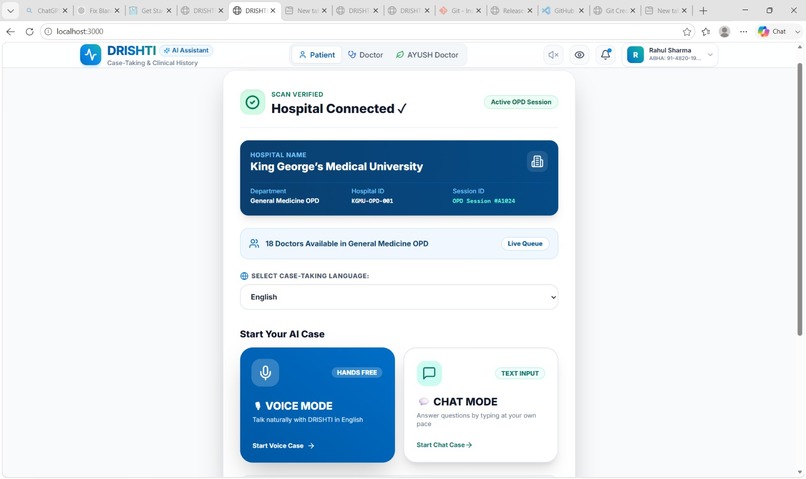
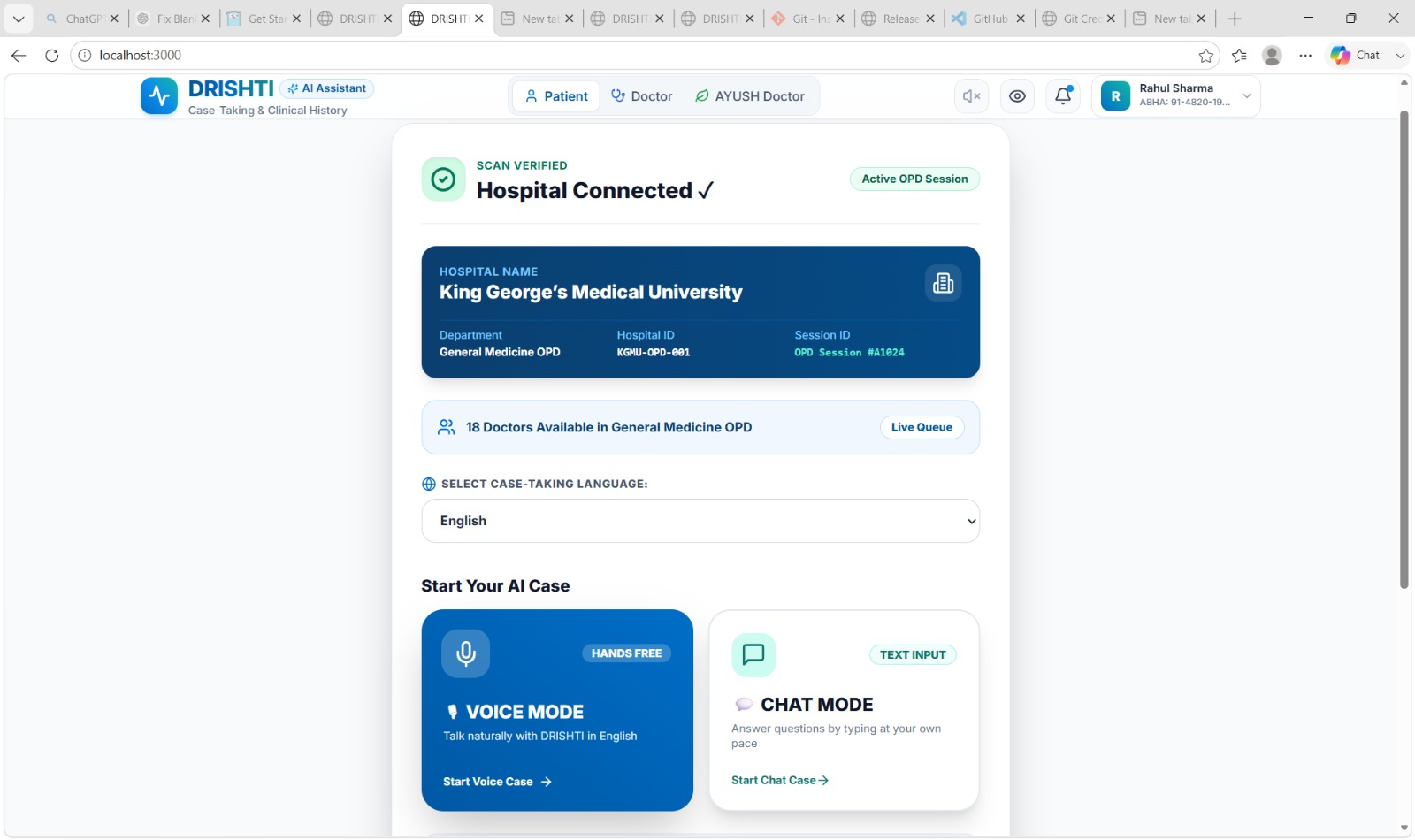
AI Case Setup — Choose Language and Start Voice or Chat-Based History Taking
-
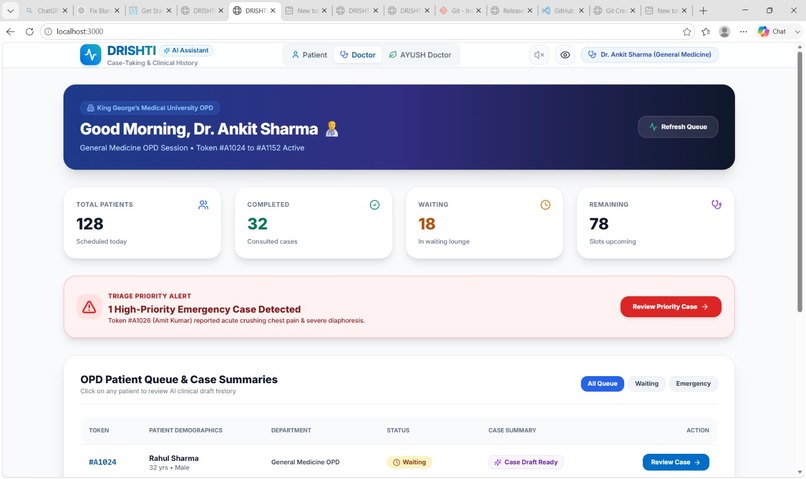
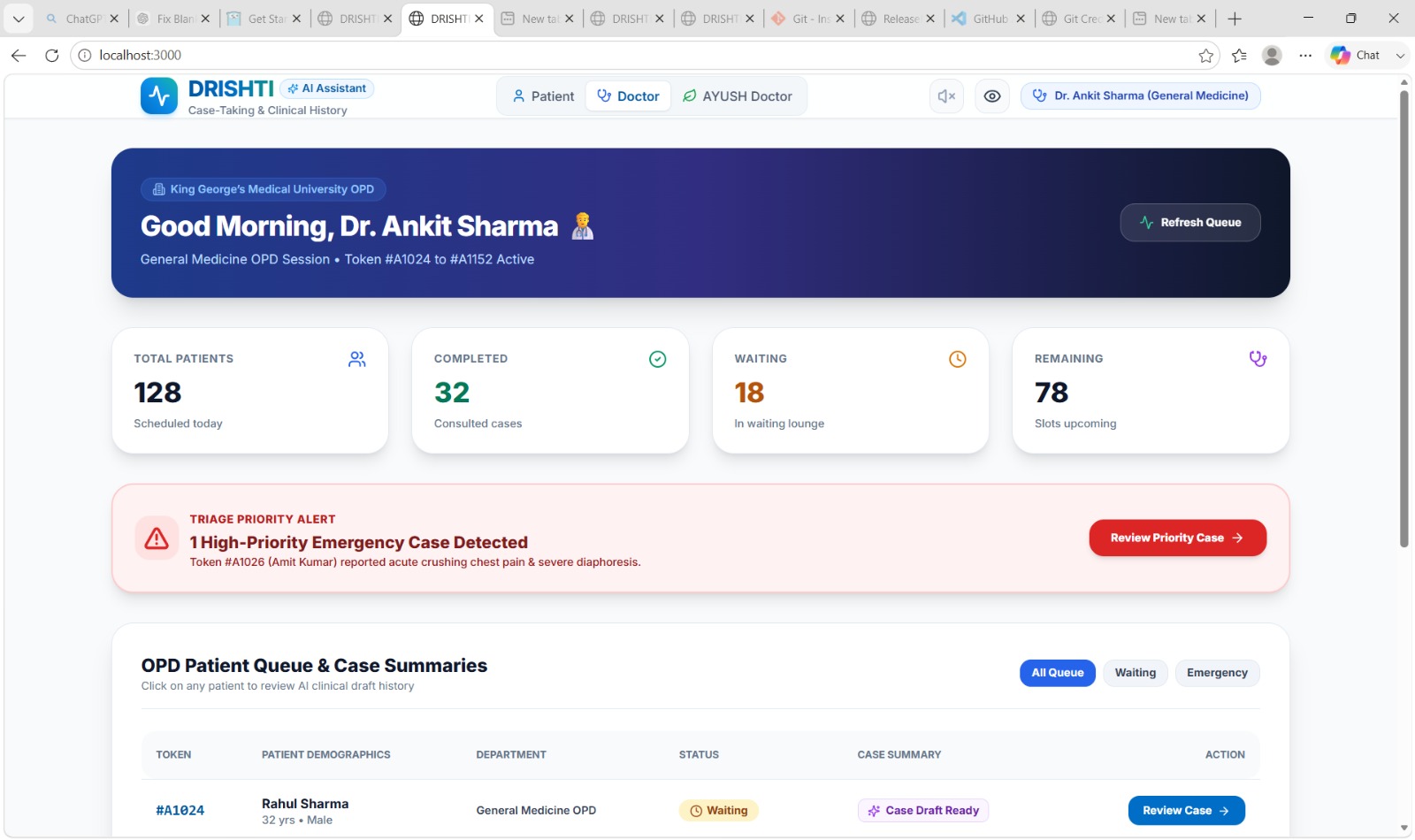
Doctor Dashboard — Review Patient Queue & AI-Generated Case Summaries
-
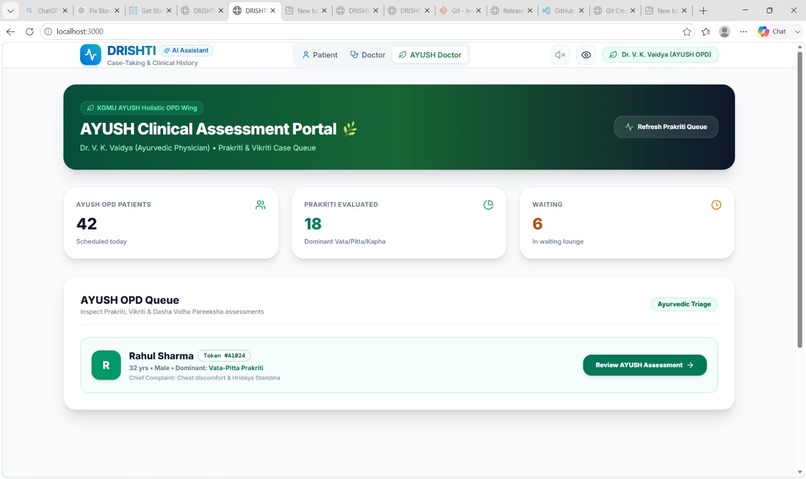
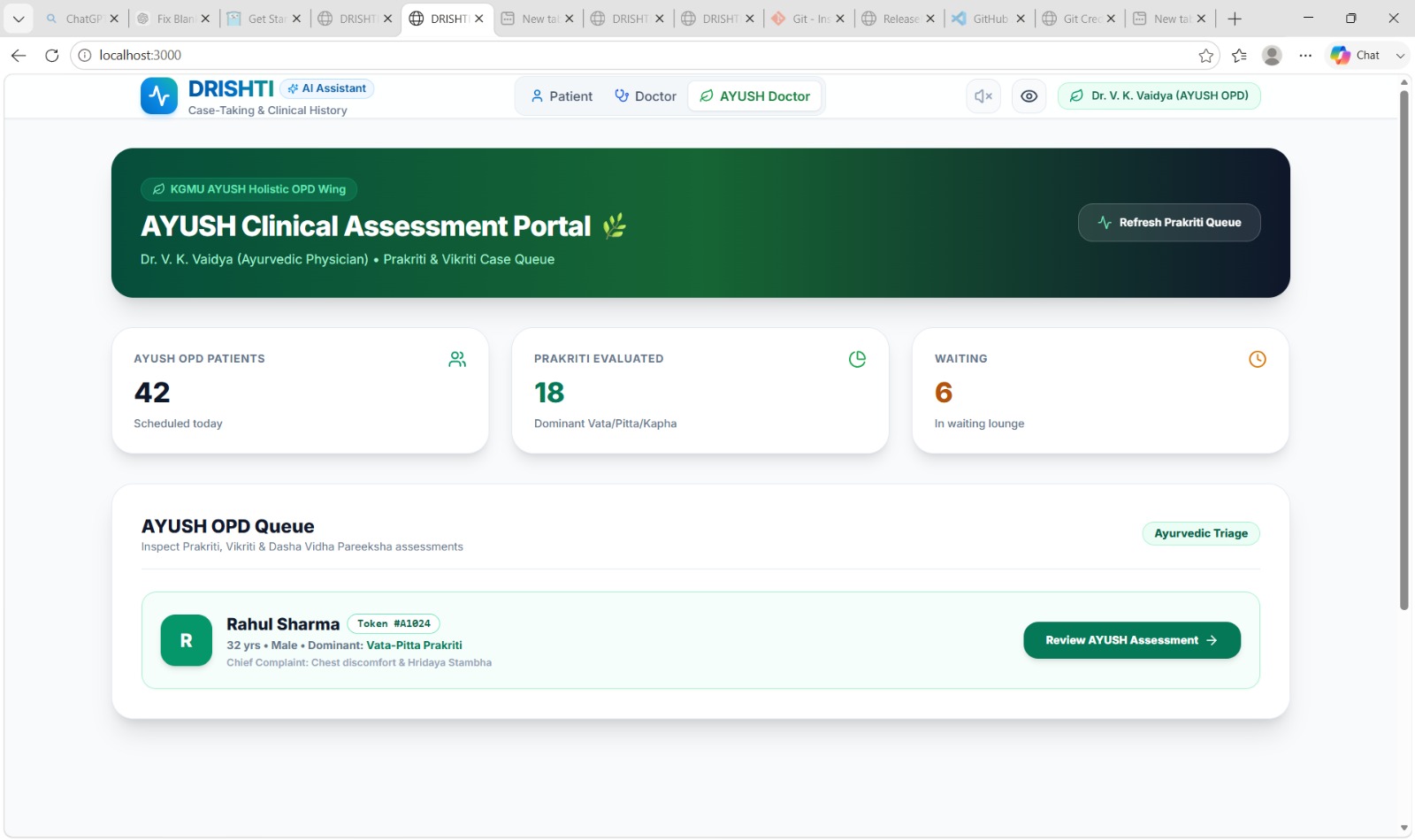
AYUSH Doctor Portal — Ayurvedic Patient Assessment & Prakriti Analysis
-
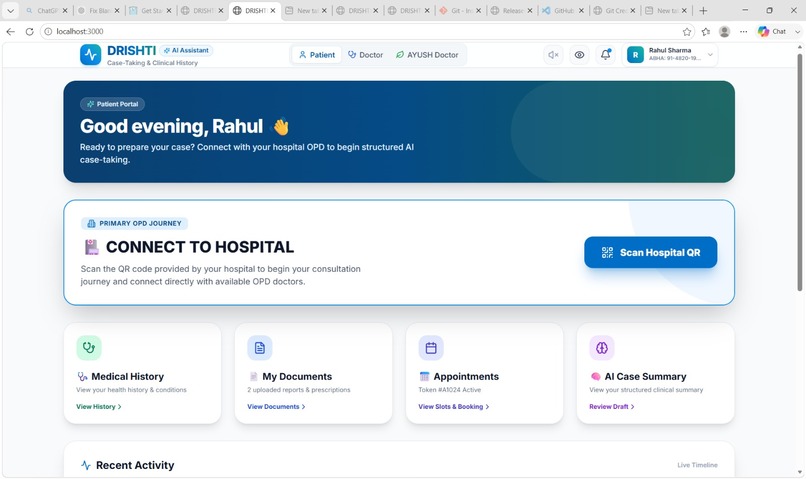
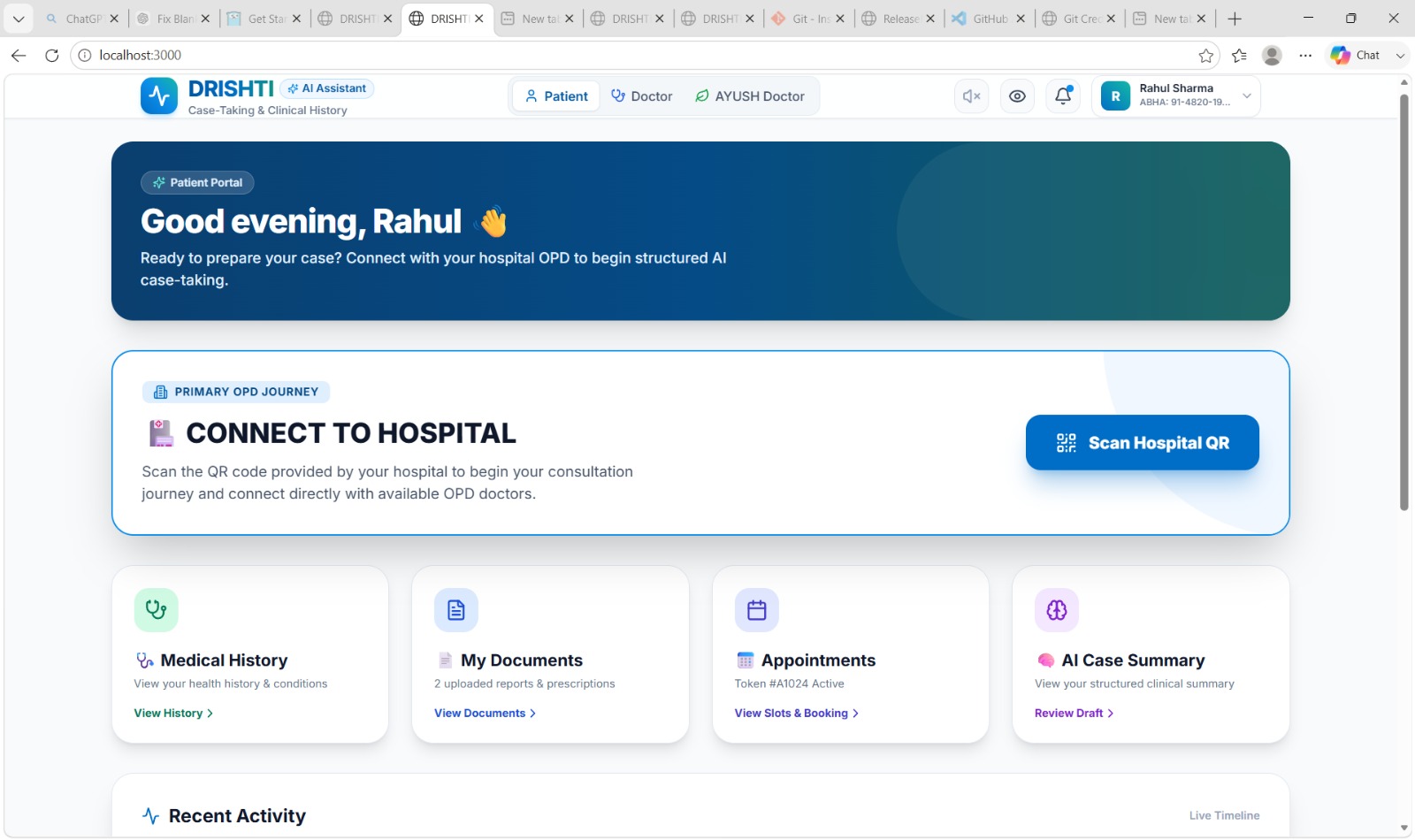
Patient Dashboard — Manage Medical History, Documents & Appointments
-
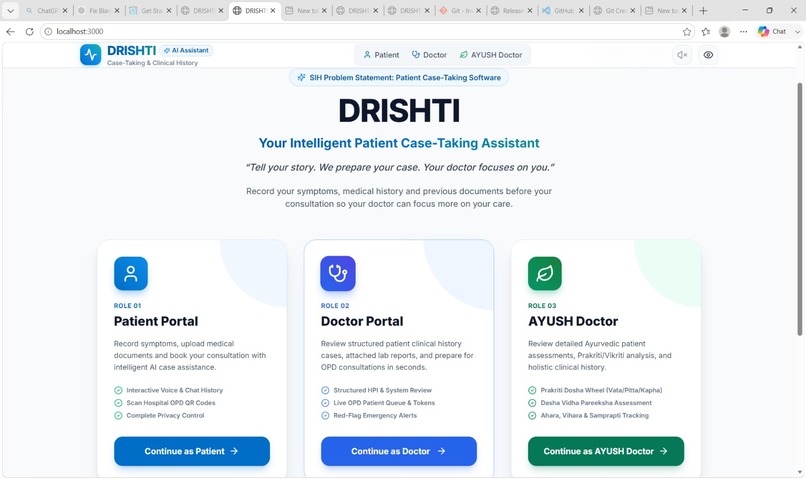
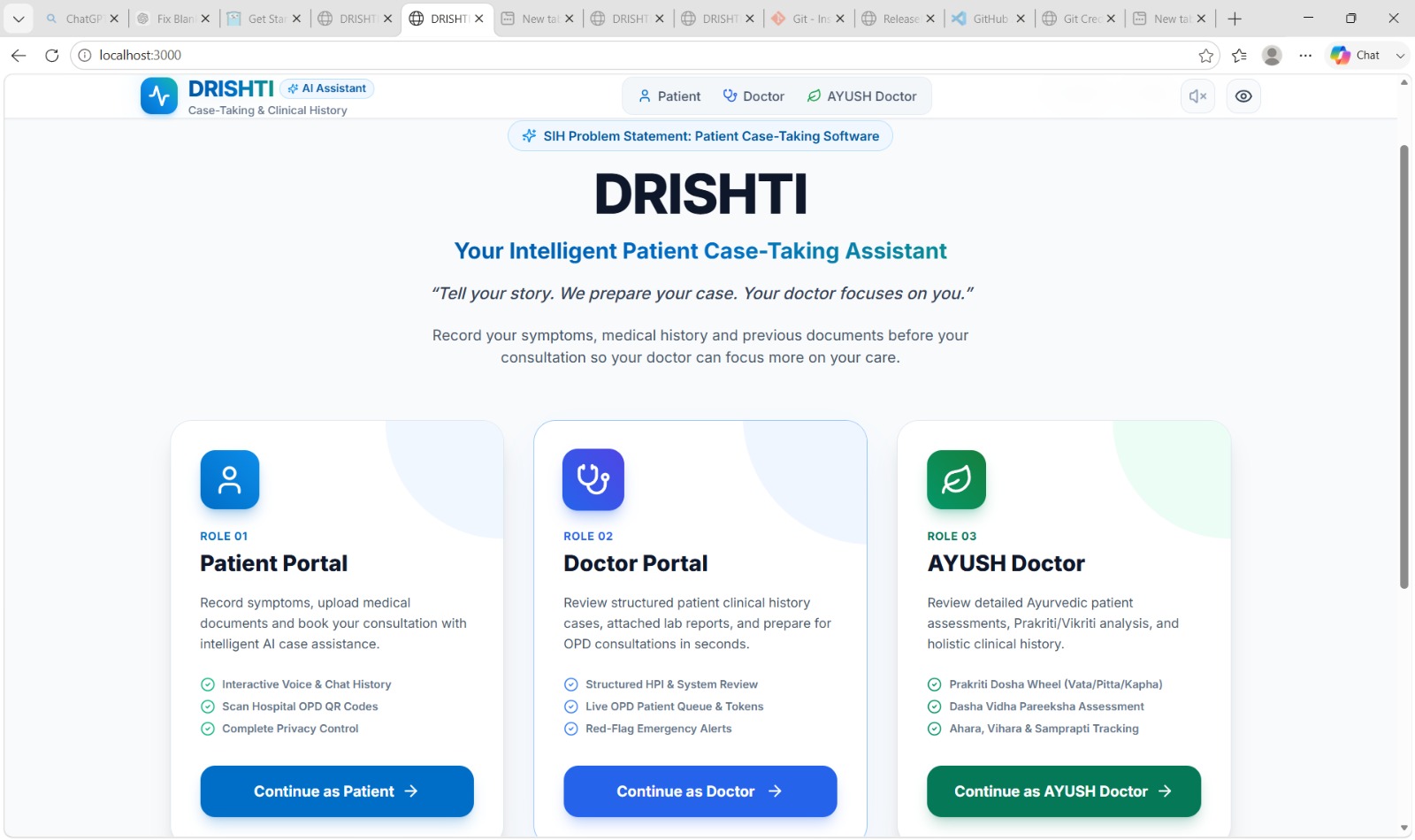
Landing Page — AI-Assisted Patient Case-Taking Platform
Inspiration
In hospitals, doctors often have to spend a lot of time collecting a patient's history before they can focus on the actual diagnosis. During busy hours, this process can become repetitive and time-consuming. We also noticed that patients may describe their problems differently depending on their language, comfort level, or understanding of medical terms.
This gave us the idea to build IntelliCase-AI, an AI-assisted patient history and case-taking platform.
Our main goal was not to replace doctors, but to reduce the time spent on basic history collection and documentation. We wanted to create a system where a patient can explain their problems using voice or text, and AI can organize that information into a structured case summary that can be reviewed by a doctor.
The idea behind our tagline, DRISHTI — Digital Revolution In Smart Healthcare Through Intelligent Technology & Innovation, is to use technology in a practical way to make the healthcare workflow simpler and more efficient.
What it does
IntelliCase-AI helps collect and organize patient information before the doctor consultation.
The platform allows patients to provide their information through voice or text input. The AI assistant can ask relevant questions and collect details such as symptoms, duration, previous medical history, medications, and other basic information.
The collected information is then processed and converted into a structured patient case summary/report that can be reviewed by the doctor.
Some of the main features we focused on are:
- AI-assisted patient history and case taking
- Voice and text-based interaction
- Multi-language support for better accessibility
- Automatic summarization of patient responses
- Structured medical case/report generation
- Different user roles such as patient, doctor, and Ayush doctor
- Easy-to-understand interface
- Reducing repetitive documentation work for healthcare professionals
The final medical decisions are still made by healthcare professionals. The AI is mainly used to assist with information collection, organization, and summarization.
How we built it
We divided the project into different parts so that each component could be developed and tested separately.
First, we designed the patient case-taking workflow. We decided what information should be collected from a patient and how the AI should ask follow-up questions based on their responses.
For the AI part, we used Python and Generative AI techniques to process the patient's responses and generate a structured summary. We also explored LangChain and LangGraph for creating the AI workflow and managing the different steps involved in the case-taking process.
The basic workflow is:
Patient → Voice/Text Input → AI Questioning → Information Processing → Case Summary → Doctor Review
For voice interaction, the system converts the patient's speech into text, which can then be processed by the AI. Text input can also be used directly.
We designed the backend to handle the patient information and AI processing, while the frontend focuses on making the interaction simple for patients and doctors.
We also considered multilingual interaction because healthcare should not become difficult just because a patient is more comfortable speaking in a regional language.
Challenges we ran into
One of the biggest challenges was deciding how much the AI should ask. If it asks too many questions, the process becomes tiring for the patient. If it asks too few questions, important information can be missed.
Another challenge was dealing with natural human responses. Patients don't always answer questions in a fixed format. Someone might explain several symptoms in one sentence, change the topic, or provide information in a different order.
Voice input also introduced additional challenges, especially with pronunciation, background noise, and different languages.
We also had to think carefully about the reliability of the generated medical summary. Since this is a healthcare-related project, we don't want the AI to confidently create information that the patient never provided. Because of this, we focused on making the AI summarize the collected information rather than allowing it to independently make a final diagnosis.
Working on all these components together was also challenging because we had to connect the frontend, backend, AI workflow, voice processing, and data handling into one working system.
Accomplishments that we're proud of
We are proud that we were able to turn a healthcare problem that we observed into a working AI-based concept.
One of the things we are particularly happy about is the AI-assisted case-taking workflow. Instead of simply creating a chatbot, we tried to design the conversation around the actual process of collecting a patient's history.
We also worked on combining voice + text + AI summarization + multilingual interaction in one platform.
Another important accomplishment for us was learning how different technologies can work together. This project required much more than just writing an AI prompt. We had to think about the complete user flow, backend logic, data processing, and how a doctor would actually use the generated information.
Most importantly, this project gave us experience in building an AI solution for a real-world problem rather than just a demonstration project.
What we learned
While building IntelliCase-AI, we learned that developing an AI project is very different from simply calling an LLM API.
We learned how important it is to design the workflow before writing the code. We also learned about prompt design, structured outputs, voice processing, AI pipelines, API development, and connecting different components of an application.
Working with healthcare data also made us think more seriously about privacy, reliability, validation, and human oversight.
We learned that AI should not always try to do everything. Sometimes its most useful role is to handle repetitive tasks and organize information so that humans can make better decisions.
This project also improved our teamwork because we had to divide responsibilities, discuss problems, test different approaches, and make decisions within a limited amount of time.
What's next for IntelliCase-AI
There is still a lot we want to improve.
In the future, we want to make the voice interaction more natural and improve support for Indian regional languages and different accents.
We also want to add better integration with hospital workflows so that the generated case summary can be directly available to the doctor during consultation.
Some features we are considering for future versions include:
- Better multilingual voice conversations
- More personalized follow-up questions
- Integration with Electronic Health Records (EHR)
- Doctor dashboard for reviewing patient cases
- Secure patient data storage and access control
- Patient history timeline
- AI-assisted department/doctor routing
- Better validation of AI-generated summaries
- Analytics to identify common workflow bottlenecks
- Deployment as a scalable healthcare platform
Our long-term vision for IntelliCase-AI is to make patient history collection faster, more accessible, and less repetitive while keeping doctors at the center of the decision-making process.
IntelliCase-AI — DRISHTI: Digital Revolution In Smart Healthcare Through Intelligent Technology & Innovation.
Built With
- ai-based-text-summarization-platforms-&-tools:-git
- css-frameworks-&-libraries:-fastapi
- fastapi-apis
- faster-whisper-ai/ml:-generative-ai
- github
- html
- javascript
- langchain
- langgraph
- languages:-python
- large-language-models-(llms)
- llm-api-other:-voice-input
- multilingual-processing
- speech-to-text
- streamlit
- text-processing
- vs-code-database:-sqlite-/-postgresql-apis:-rest-api


Log in or sign up for Devpost to join the conversation.