-
-
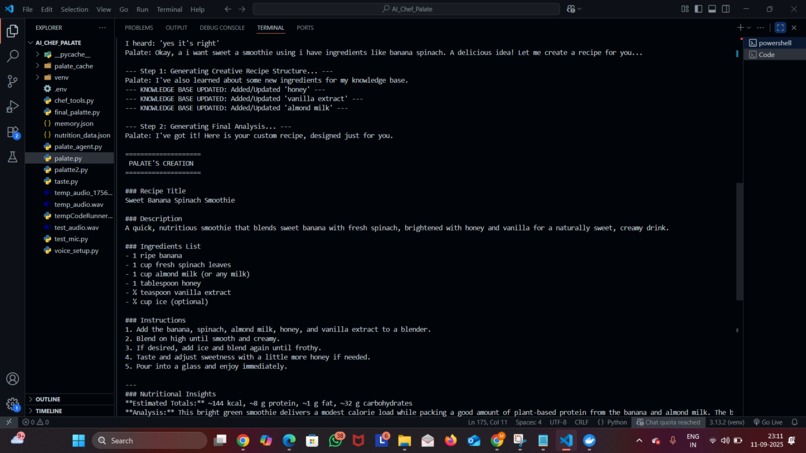
palate creation
-
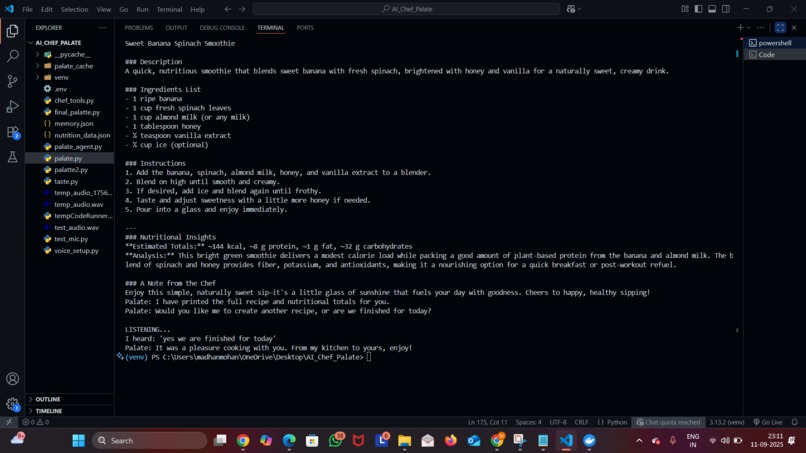
palate creation
Inspiration
We were inspired by a simple problem: standing in front of the fridge with lots of food but no ideas. This often leads to boring meals and wasted food. We wanted to build an "AI companion" for the kitchen to bring back creativity and fun to daily cooking.
What it does
AI Palate is a voice-controlled kitchen helper. You tell it what ingredients you have, and it does two things:
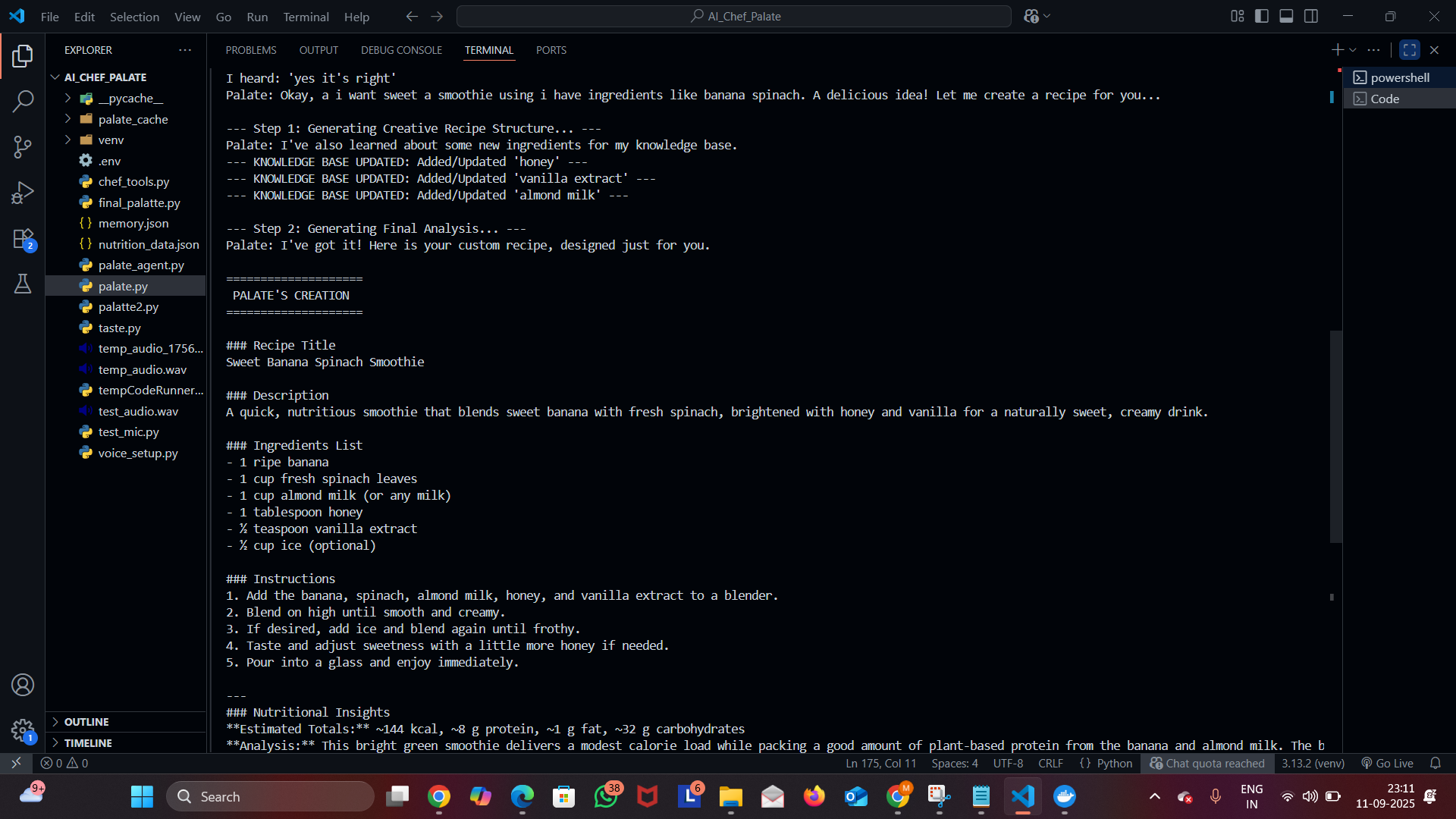
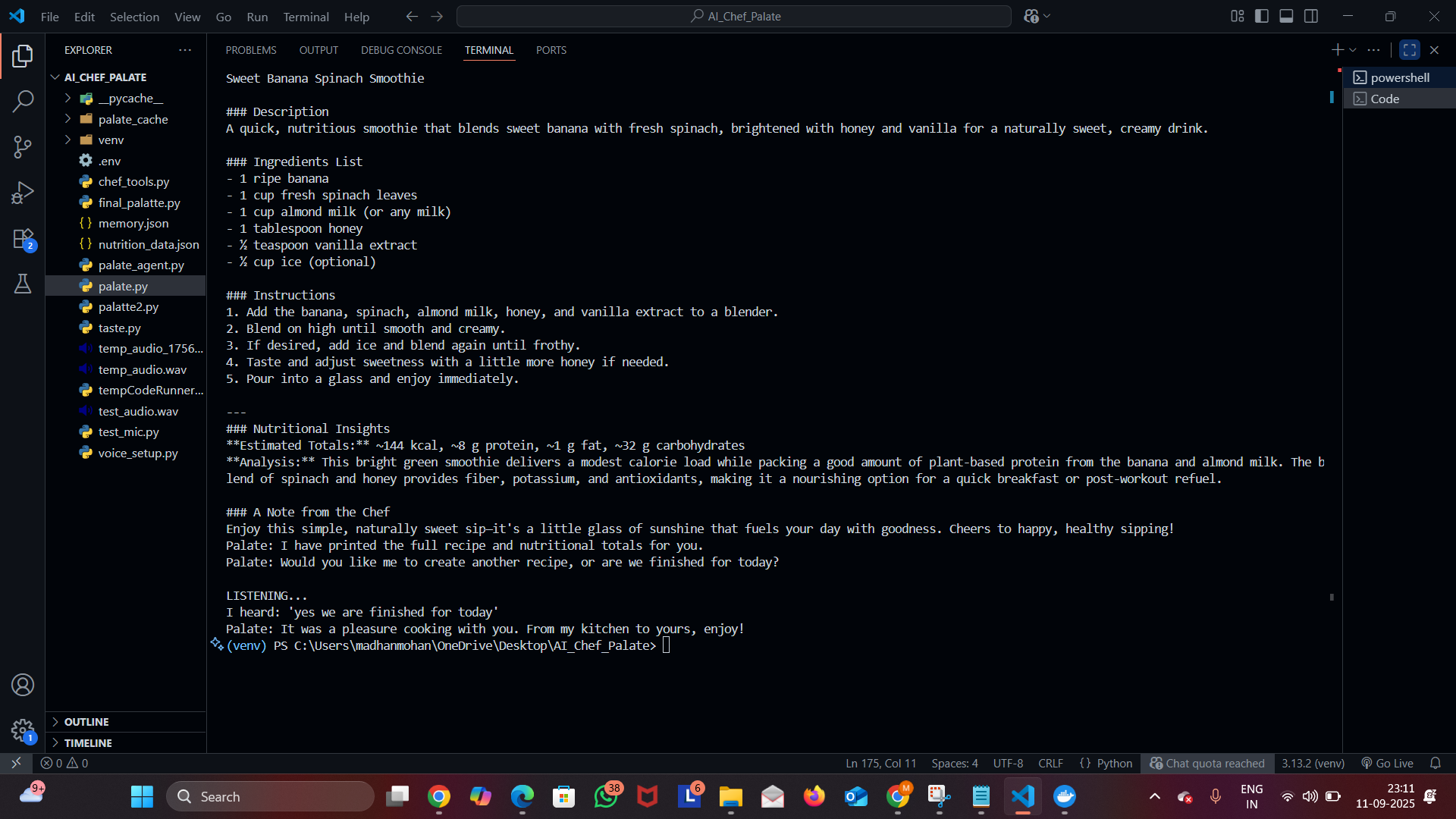
It invents a unique recipe for you on the spot.
It calculates the nutritional information for that meal.
It’s a hands-free way to turn your random food into a great meal.
How we built it
We built Palate using a few key tools:
Python for the main code.
The gpt-oss-120b model as the "brain" for creating recipes and analyzing nutrition.
SpeechRecognition and gTTS libraries to handle the voice conversation.
A nutritions.json file to act as a simple, learning database.
Challenges we ran into
The hardest part was making the voice conversation feel smooth and natural. It took many tries to get the agent to listen, think, and speak back clearly. It was also a challenge to get the AI's creative recipe output into a clean format that our code could analyze for nutrition.
A Note on Our Technical Approach
Our initial goal was to build a fully local agent by running the gpt-oss-120b model directly on our machines. However, we quickly encountered a significant hardware constraint.
We discovered that the model requires a dedicated GPU with at least 12 GB of VRAM to run effectively. While our development laptops have 16 GB of system RAM, they do not have the specialized GPU VRAM required for a model of this size.
Instead of being blocked by this challenge, we adapted our strategy. We made the strategic decision to build our agents to interact with the model via its API endpoint. This approach not only solved the hardware problem but also made our projects more lightweight and accessible, allowing anyone to test them without needing a powerful and expensive GPU. This demonstrates our ability to adapt to real-world technical constraints and make smart design choices to deliver a successful project.
Accomplishments that we're proud of We are proud that we built a complete, voice-controlled app that works from start to finish. Our "two-part AI brain"—which is both a creative chef and a smart nutritionist—is our favorite accomplishment. It solves a real problem we all face.
What we learned
We learned a lot about building voice apps in Python. We also got much better at writing clear instructions (prompts) for a powerful AI model to get it to do complex, multi-step tasks.
What's next for AI Palate
This is just the start. Next, we want to:
Build a simple and friendly user interface (UI).
Create a dual-mode system for both voice and text chat.
Connect Palate to live recipe websites to make it even smarter.


Log in or sign up for Devpost to join the conversation.