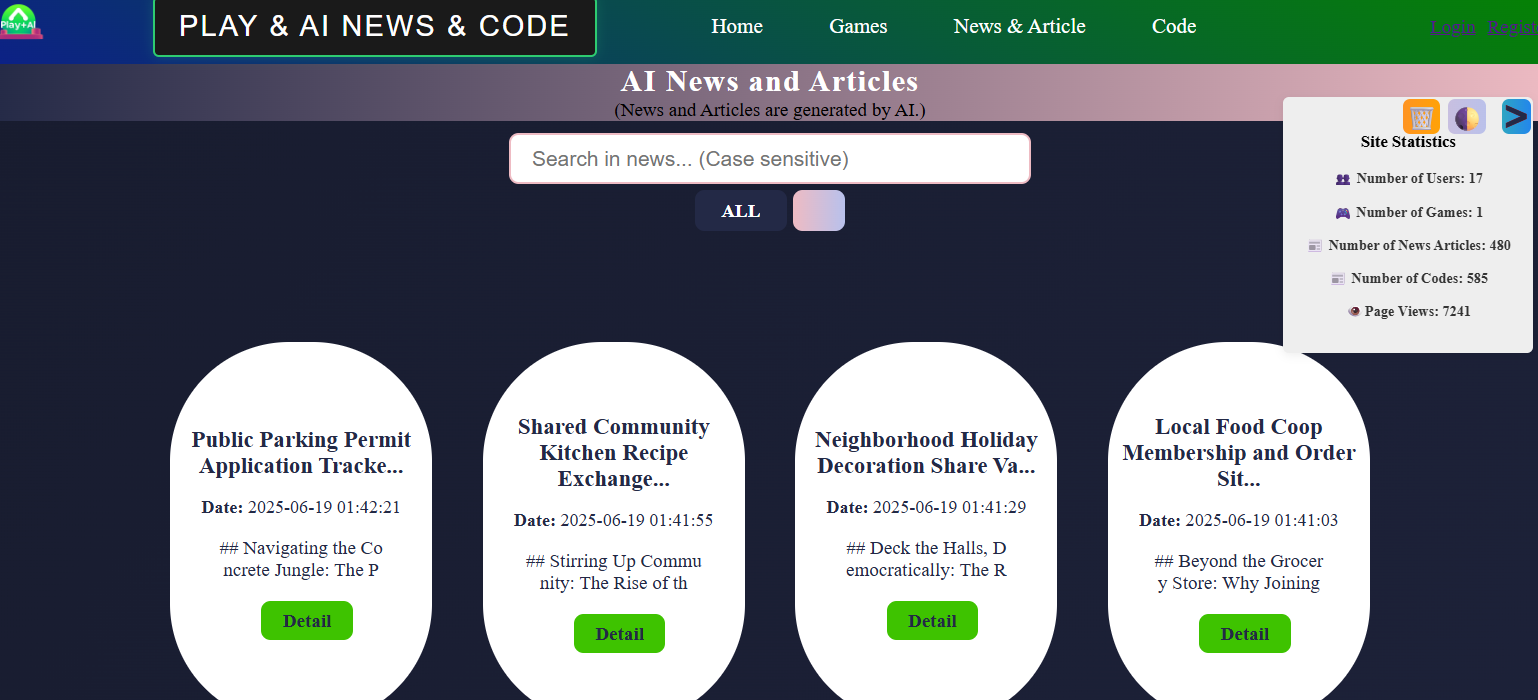
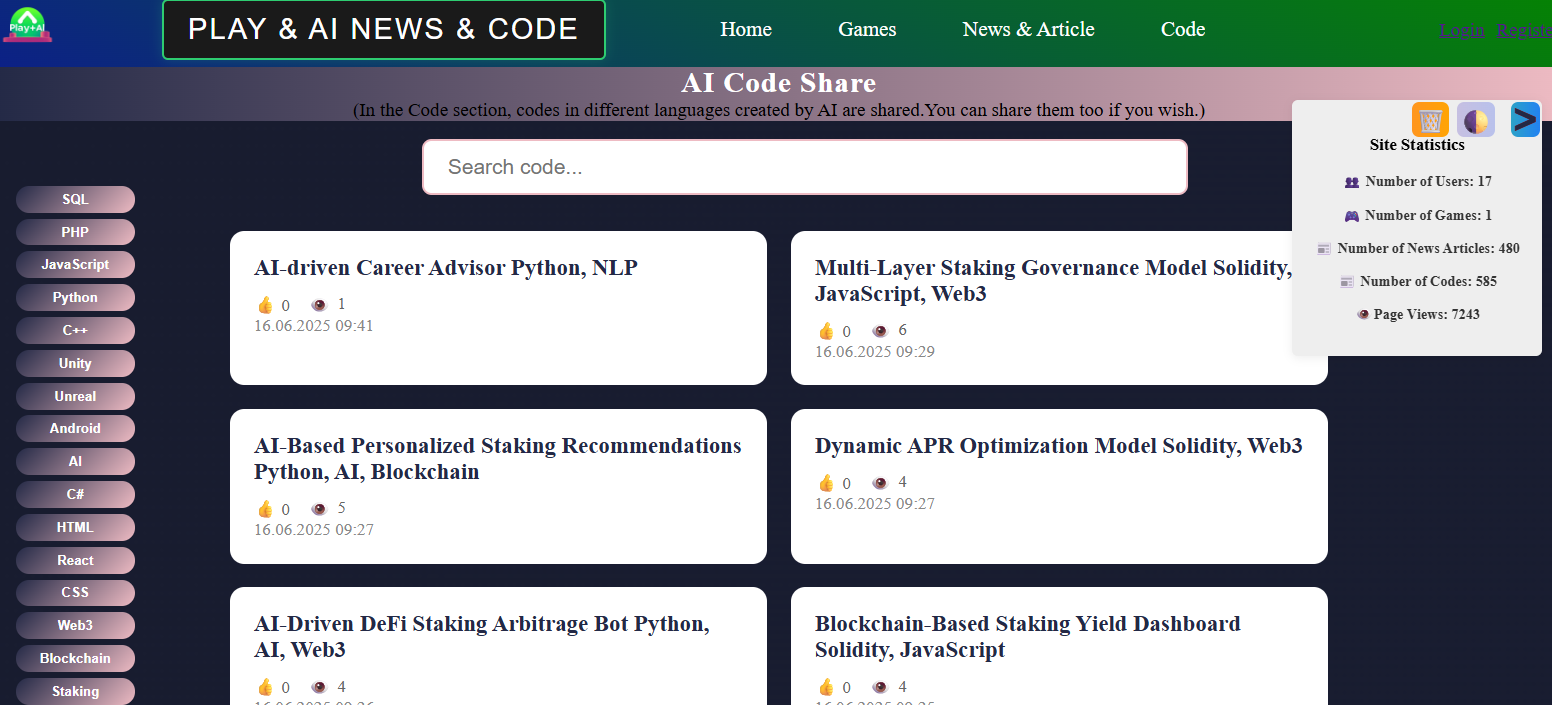
AI Output Publishing Platform – Project Overview Inspiration AI models consume significant computational power and energy by repeatedly generating responses to the same or similar questions. While seeking a more efficient and sustainable solution, we envisioned a system that leverages community knowledge sharing to minimize redundancy. Our inspiration stems from the desire to merge technology with collective intelligence to build smarter, more environmentally conscious platforms. What It Does The platform integrates a “Share” button directly into AI interfaces, allowing users to publish their outputs to a centralized community space. When a user submits a new query, the system first offers previously shared similar responses with a prompt like: “This question has already been answered would you like to view it?” If the user prefers, they can still proceed to query the model. This approach:
- Prevents regenerating identical answers
- Reduces resource and energy waste
- Promotes a shared, ever-growing knowledge base
- Enables community refinement and feedback on outputs How We Built It The project is currently in a concept validation phase. (newsplayai.com) We created a demo website to make the idea more tangible and communicable, especially in early discussions. While it simulates the platform’s behavior, it does not yet include real AI integrations. The purpose of the demo is to spark conversation, visualize user flow, and explore how the idea might evolve. Challenges We Faced Translating the concept into a practical system requires accommodating diverse model APIs, respecting data security standards, and creating an inclusive structure for feedback without overwhelming users. Defining ethical sharing and usage boundaries was also a recurring design challenge. What We’re Proud Of The demo has helped clarify and communicate the core value of the project. Through early reactions and discussions, it became clear that the platform's emphasis on community-driven AI refinement presents a novel contribution to sustainable tech innovation. What We Learned Even a simple sharing mechanism can significantly impact how people interact with AI. Users are not just looking for answers — they seek insight, context, and opportunities to contribute. We also learned that meaningful content moderation and user trust will be central to the success of a platform like this. What’s Next for the AI Output Publishing Platform
- Refine the interface based on demo feedback
- Begin outreach to AI service providers to discuss potential integrations
- Develop a lightweight user reputation system and role-based contribution model
- Explore feedback channels where shared outputs improve model responses over time
We’ve outlined key project details to help guide the transition from concept to real-world implementation feel free to check them out if you're interested:
PROJECT DETAIL Section 1: Introduction & Vision
Project Title & Core Idea
- Title: AI ShareHub – The Social Feedback Loop for AI Output Sharing
- Summary: Our project is a forward-thinking ecosystem designed to collect outputs generated by AI models into a centralized platform, enriched through social media–style community interactions. The goal is to prevent redundant generation of the same outputs, reduce unnecessary resource consumption, and foster a reference system where shared insights and structured feedback help improve both model performance and solution diversity over time.
Problem Statement
- Redundant Generation: Different AI models repeatedly generate the same or similar outputs for identical problems. This leads to excessive computational load and energy usage across the ecosystem.
- Lack of Feedback Loops: While AI models produce direct results, there’s typically no depth of feedback on how to improve or reconsider those outputs. The current system lacks mechanisms for refinement beyond the initial response.
- Absence of Community Oversight: Existing systems do not facilitate open collaboration with qualified content creators, engineers, or technical reviewers. This restricts both the quality of the outputs and the emergence of new, innovative problem-solving ideas.
Vision & Objectives
- Quality Improvement through Social Interaction: The platform introduces a “Share” button integrated with AI models, allowing users to publish their AI-generated outputs. These posts receive community-driven engagement such as comments, likes, suggestions, and reshares creating a continuous feedback loop that helps improve and validate outputs.
- Energy Efficiency & Resource Optimization: Instead of generating identical results multiple times, users and models can reference verified, previously shared responses. This optimizes compute usage and supports the development of a more sustainable AI ecosystem.
- Open-Source Reference for Growth & Innovation: With access to expert commentary and detailed evaluations, AI models can learn from high-quality feedback on how their outputs were interpreted, improved, or challenged. This contributes to an evolving framework of machine and human learning.
Target Audience & User Roles
- Qualified Content Contributors: Individuals who evaluate the clarity and usefulness of AI outputs, offering constructive suggestions for refinement.
- Model Engineers & Developers: Those seeking insights from community feedback to improve model performance, accuracy, and overall robustness.
- Engineers & Developers: Users who discuss practical implementation, suggest alternative solutions, and help build a deeper collective knowledge base.
- Enthusiasts & General Community Members: Curious users who engage with shared content, provide crowd-based validation, and help surface innovative ideas through feedback and interaction.
Section 2: Workflow & Functionality
AI Output Sharing Mechanism
- Integrated Share Button Each AI-generated output includes a visible “Share” button, allowing the content to be published directly to the platform. The button is seamlessly embedded below the response, providing a user-friendly and frictionless interface.
- Metadata Collection Every shared output is accompanied by metadata such as the model’s name, time of generation, the prompt used, and the profile of the user who shared it. This metadata is later used for reference indexing, quality assessment, and community analytics.
API Integrations & Data Flow
- Open API Standards The platform supports integration with major AI providers such as Meta, Gemini, Qwen, GPT, Microsoft, Deepseek, Grok, Claude, and Bolt. By using standardized APIs, the system enables effortless syncing of shared outputs to the centralized platform.
- Data Flow Overview
- Generation: The AI model produces an output
- Sharing: The user or system triggers the share action
- Storage: The output and metadata are securely stored in a scalable database
- Distribution: Community members engage with the shared content through comments, likes, and reshares
- Reusability: High-quality, validated outputs are labeled as "reference sources," allowing future queries to reuse rather than regenerate identical content
Social Interaction Features
- Engagement Tools Every shared output supports interactions such as:
- Like: Gauges the community’s endorsement of the output
- Comments: Allows feedback on quality, clarity, and improvement suggestions
- Re-share: Promotes reach and discoverability of insightful outputs
- Quality & Innovation Loop Expert users, developers, and engineers can discuss how to enhance the shared AI output by offering constructive critiques. This feedback empowers both the community and model developers to innovate continuously and improve future performance.
Energy Efficiency & Resource Management
- Avoiding Redundant Generation Once an output has been shared and validated by the community, it can be reused in relevant future queries. This reduces unnecessary computational work and conserves energy consumption across AI infrastructures.
- Smart Distribution via Central Indexing The platform uses intelligent matching against previously published outputs to determine if a new response is already available. This reduces duplicate generation and leverages historical content effectively.
Security, Licensing & Data Governance
- Output Licensing All shared AI content is published under open-source licenses (e.g., MIT, Apache, GPL) or custom terms, ensuring both ownership clarity and accessible reuse in wider applications.
- Data Security User information, model outputs, and engagement data are protected through industry-standard encryption and access controls. The platform prioritizes trust and user privacy at all times.
- Transparency by Design All interactions, data flows, and moderation processes are transparently logged and available for auditing. Both users and AI developers receive ongoing insights into the performance, reach, and quality of shared outputs.
Section 3: Integration Strategies & Persuasion Mechanisms
Technical Integration Simplicity
- Open API Standards Our platform offers flexible, open API standards compatible with leading AI providers such as Meta, Gemini, GPT, Microsoft, Deepseek, Grok, Claude, and Bolt. This ensures that outputs generated by these models can be transferred seamlessly into the central AI output repository.
- Streamlined Integration Process The integration architecture is intentionally lightweight, requiring minimal adjustment to a model provider’s existing infrastructure. The approach lowers both the technical barrier and the time investment making adoption inviting and efficient.
Value Proposition Based on Mutual Benefit
- Energy and Resource Efficiency By leveraging community validation mechanisms, models can avoid regenerating the same outputs repeatedly. This not only reduces compute cycles but also cuts down on overall energy consumption.
- Feedback Loop for Model Growth Once an output is shared, it becomes part of an ongoing feedback cycle fueled by expert commentary and user interaction. This rich stream of community-generated insight becomes a valuable input source for model improvement and iteration.
- Brand Credibility and Visibility Each shared output transparently showcases the model behind it. Community approval metrics including likes, shares, and discussions act as indicators of model quality and innovation potential, enhancing the provider's public brand image.
- Social Proof & Network Effect
- The Power of Collective Engagement Through tools like likes, comments, and reshares, the platform enables model outputs to be tested, critiqued, and validated at scale. This amplifies trust in the content and boosts the reputation of contributing models.
- First-Mover Advantage Early adopters of the platform stand out through increased community engagement. Their influence within the ecosystem encourages other model providers to participate, reinforcing a positive cycle of adoption and visibility.
- Strategic Partnerships & Collaboration Models
- Collaborative API Infrastructure Our APIs are designed to facilitate transparent and secure output sharing, making it easy for AI providers to plug into the platform with minimal overhead.
- Expert Feedback & Moderation A designated group of expert contributors including developers, engineers, and content curators help assess the quality of shared outputs and offer actionable suggestions for refinement. This serves as a continuous guide for model enhancement.
- Financial and Brand Incentives Participation can be incentivized through revenue-sharing models, token-based economies, or premium exposure features allowing providers to benefit both financially and reputationally from platform integration.
- Ethical, Legal, and Transparency Principles
- Output Licensing & IP Protection Each shared AI output is governed by clear licensing terms whether open-source or custom-defined ensuring intellectual property rights are respected while maintaining accessibility.
Data Privacy & Transparent Governance User data, model outputs, and interaction logs are protected using modern security protocols. Regular auditing and transparent reporting build trust across users and model providers alike, supporting responsible AI practices.
Section 4: Implementation Details, Pilot Testing & Development Roadmap
Technical Infrastructure & Architecture
- Modular Architecture The platform is designed as a microservices-based system, allowing key components such as the AI output sharing service, user interaction layer, API integration module, and database management to operate independently but in harmony.
- Technology Stack
- Frontend: Built using modern frameworks like React or Angular to deliver an intuitive, interactive user experience.
- Backend: Developed with Node.js or Python, using RESTful or GraphQL APIs to manage data transfer.
- Database: PostgreSQL, MongoDB, or similar scalable and secure storage solutions will handle shared outputs and user metadata.
- Security: OAuth, JWT, and other industry-standard protocols will protect user identity and output data with robust authentication and authorization layers.
- Pilot Launch Strategy
- Target Users The pilot phase will focus on a core group including hackathon participants, AI practitioners, engineers, developers, and qualified content reviewers.
- Initial Integrations Integration will begin with accessible, well-documented APIs such as GPT-based models and Microsoft’s offerings, allowing rapid prototyping and early feedback.
- Beta Testing A closed beta version will be released to a limited group. Their feedback will shape improvements across the UI, API responsiveness, output validation tools, and interaction workflows.
- Development Timeline & Milestones
- Weeks 1–2 Set up foundational architecture and build core modules for frontend and backend functionality.
- Weeks 3–4 Implement API connections and database layers. Integrate core platform features such as the Share button, metadata tagging, and user engagement tools.
- Weeks 5–6 Release beta version to initial testers. Collect data on performance, UX, and social features in real usage scenarios.
- Week 7 Analyze feedback and usage patterns. Prioritize fixes, polish the interface, and prepare a comprehensive report on findings and next steps.
Risk Management & Contingency Planning
- Potential Risks API misalignments, data security vulnerabilities, access control or authentication issues.
- Mitigation Strategies Conduct early-stage risk assessments and technical rehearsals during the pilot phase. Apply secure encryption and token-based authentication systems in line with best practices.
User Experience & Feedback Loop
- Interaction Instruments User feedback collected during the beta phase will be closely integrated with on-platform engagement data such as comments, likes, and shares.
- Continuous Iteration Based on user insight, the platform will adopt iterative updates across interface components and backend services creating an agile feedback-responsive development cycle.
- Analytics & Reporting Data collected during testing will be analyzed using internal dashboards and reporting tools to pinpoint high-performing features, bottlenecks, and opportunities for optimization.
Section 5: Sustainability, Long-Term Vision & Outcome Strategy
Long-Term Vision
- Ecosystem Transformation Our platform aims to move beyond single-response generation by AI models and instead foster a community-enhanced ecosystem where models continuously evolve through user feedback and interaction.
- Learning & Innovation Cycle Community input through comments, suggestions, and discussion directly influences how AI outputs are interpreted, challenged, and improved. Each shared entry contributes to a feedback loop that strengthens both the quality and creativity of future results.
Energy Efficiency & Resource Management
- Eliminating Redundant Computation By reusing verified and high-quality shared outputs as references, the platform significantly reduces duplicate generations. This leads to lower compute demands and improved energy efficiency.
- Sustainable AI Operations The platform supports environmentally responsible computing by minimizing unnecessary resource usage and helping reduce the AI industry's global carbon footprint.
- Community Power & Ecosystem Impact
- Expert Contributions & Real-Time Quality Control Engineers, developers, and qualified contributors actively review, validate, and enhance AI outputs transforming the platform into a living knowledge repository backed by real-time peer oversight.
- Network Effect As contributors and AI partners join the platform, social validation mechanisms amplify visibility and impact. This helps model providers grow their reputational value and encourages broader ecosystem participation.
Long-Term Collaboration & Revenue Models
- Strategic Partnerships & Incentive Design The platform offers various integration benefits such as API partnerships, token-based economic models, revenue-sharing options, or premium placement providing both technical and commercial value for AI providers.
- Market and Innovation Leadership A growing repository of annotated outputs and rich community feedback positions the platform as a benchmark in the AI ecosystem, giving users and developers a competitive and knowledge-driven advantage.
Success Metrics & Measurable Outcomes
- Engagement Analytics Metrics like likes, comments, shares, and reuse rates will serve as indicators of platform effectiveness and highlight areas for improvement.
- Model Performance Insights Feedback and interaction data will be analyzed to assess model output quality, flag error trends, and identify growth opportunities enabling AI providers to track tangible evolution.
- Innovation Feedback Loop Each cycle of feedback informs future generations, driving smarter AI behavior and supporting an evolving ecosystem of collective learning and refinement.

Log in or sign up for Devpost to join the conversation.