-
-
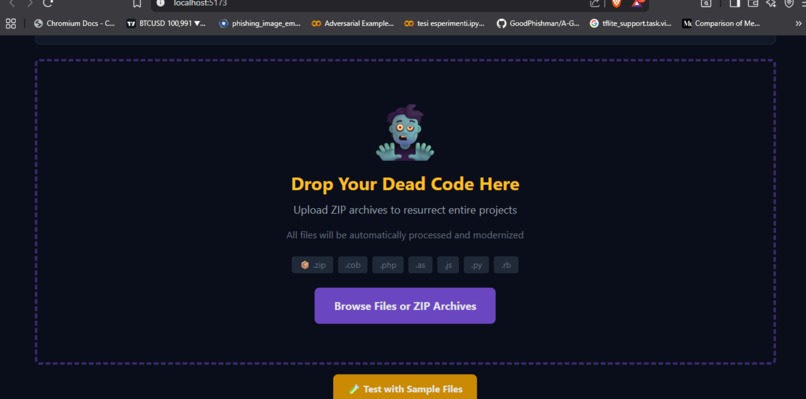
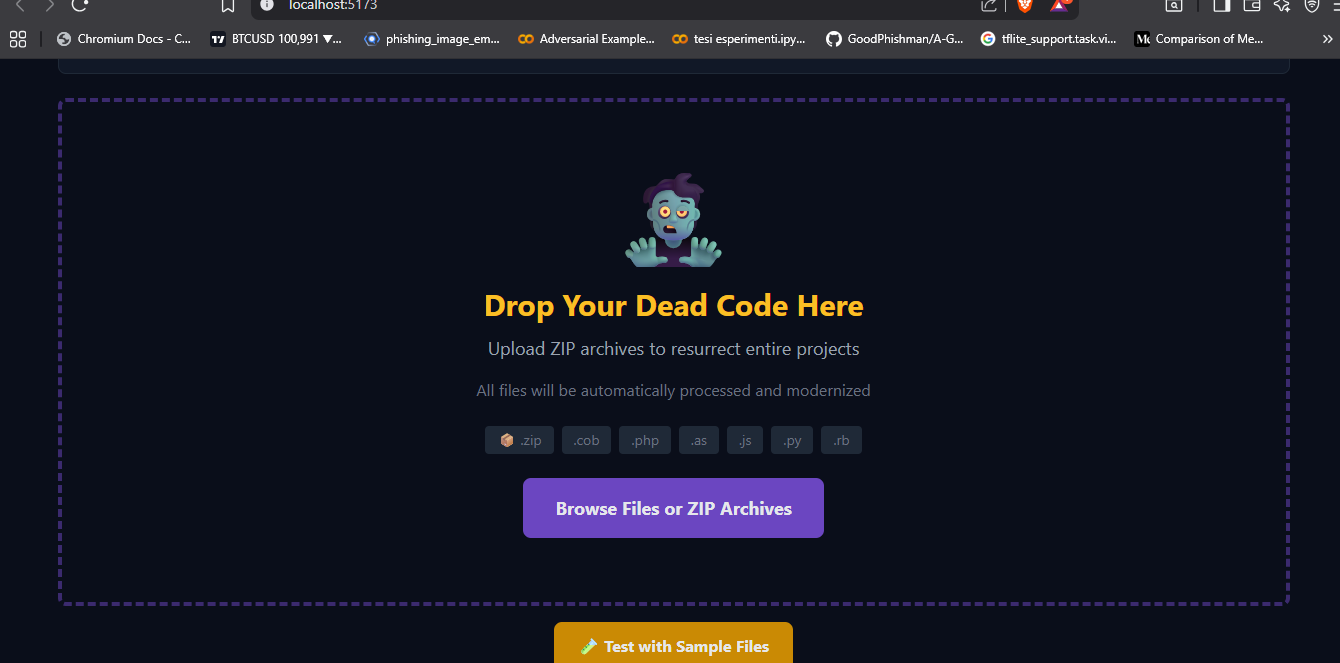
upload section
-
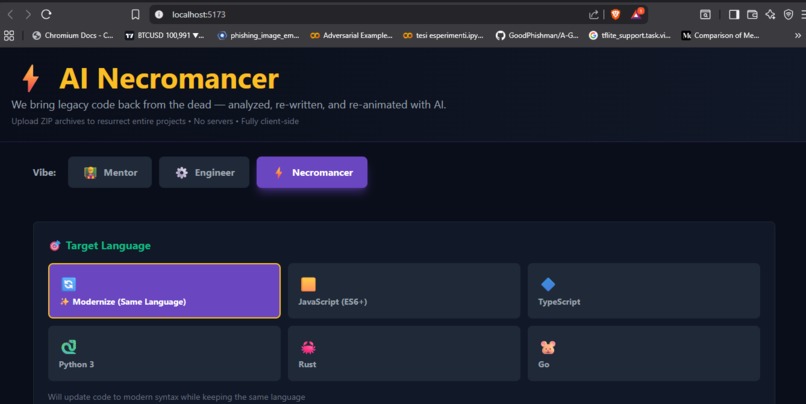
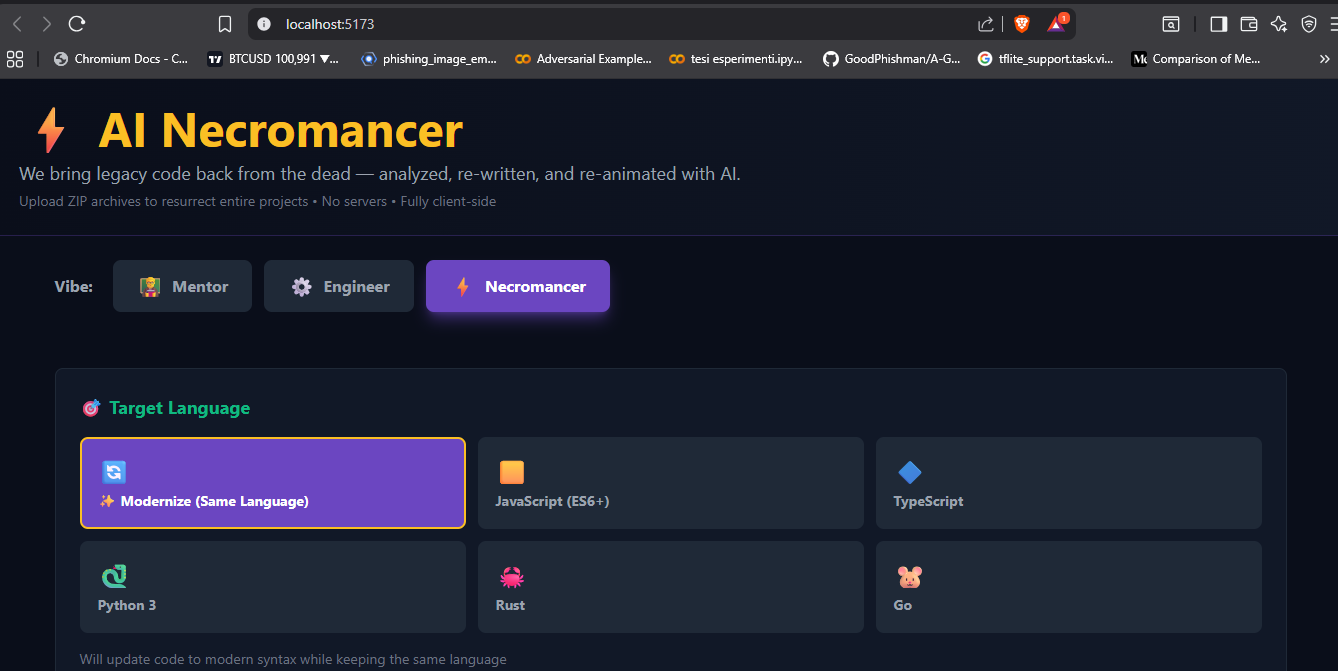
homepage
-
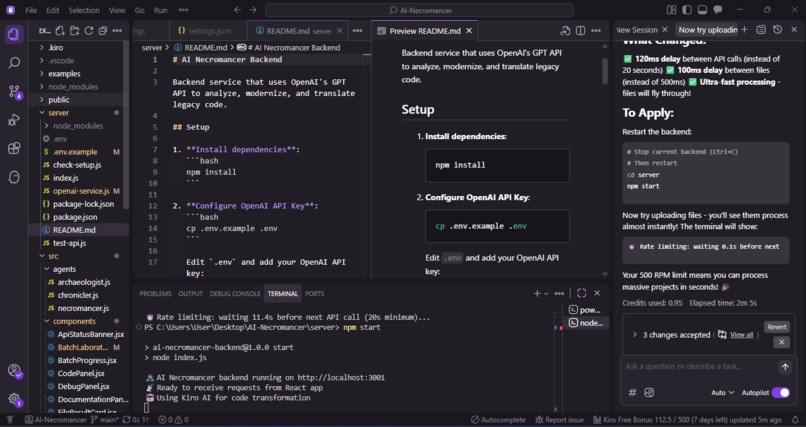
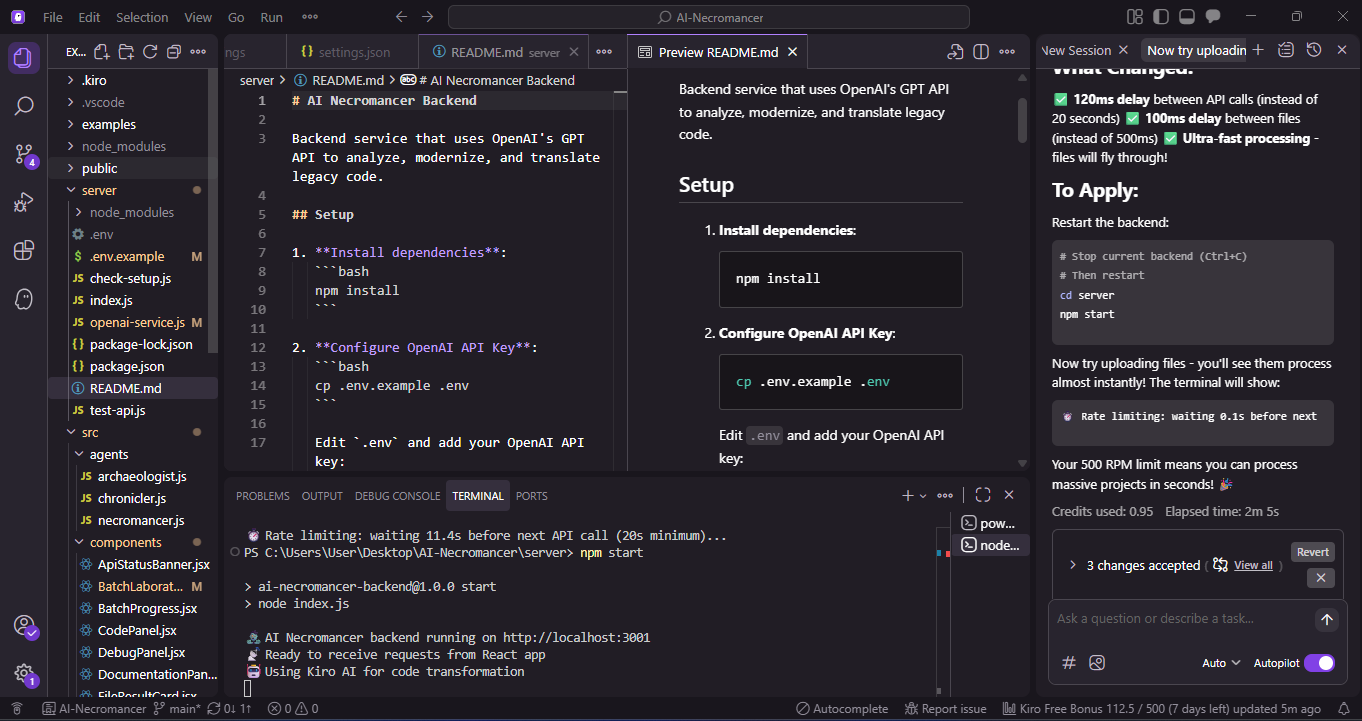
code
Inspiration
Legacy software is everywhere — from universities to banks to small businesses — and it slows innovation. Modernizing old code is expensive, risky, and painfully slow. We wanted a way to “resurrect” dead projects instantly using AI.
What it does
AI Necromancer analyzes any legacy codebase, reconstructs its architecture, detects issues, and automatically rewrites it into modern, secure, production-ready code. It’s a codebase defibrillator: upload → revive → ship.
How we built it
We combined a multi-agent architecture with parallel code-analysis threads:
A Scanner Agent maps the project and identifies languages, dependencies, and dead regions.
A Forensics Agent extracts logic, architecture, and intent.
A Rewriter Agent generates modern equivalents.
A Validator Agent tests, lint-checks, and ensures compatibility. The pipeline runs in a browser interface backed by on-device/open-source LLMs.
Challenges we ran into
Normalizing wildly inconsistent legacy code.
Getting agents to agree on architecture and naming conventions.
Preserving business logic while modernizing syntax.
Handling mixed languages and corrupted files.
Accomplishments that we're proud of
Automatically reviving multiple real broken/abandoned repos.
Stable multi-agent loops that converge instead of drifting.
Clean rewrite output that compiles and passes tests.
A frontend that makes the whole process look like magic.
What we learned
Multi-agent orchestration is powerful but requires strict guardrails.
Legacy code often hides undocumented logic that AI can still infer.
Proper validation layers are essential to prevent hallucinated APIs.
What's next for AI Necromancer
Support for full project containerization (Dockerfile generation).
Automatic database-schema migration.
Marketplace of community “revived” open-source projects.
Enterprise edition for banks, universities, and government upgrades.
Built With
- node.js
- openai


Log in or sign up for Devpost to join the conversation.